Hi All,
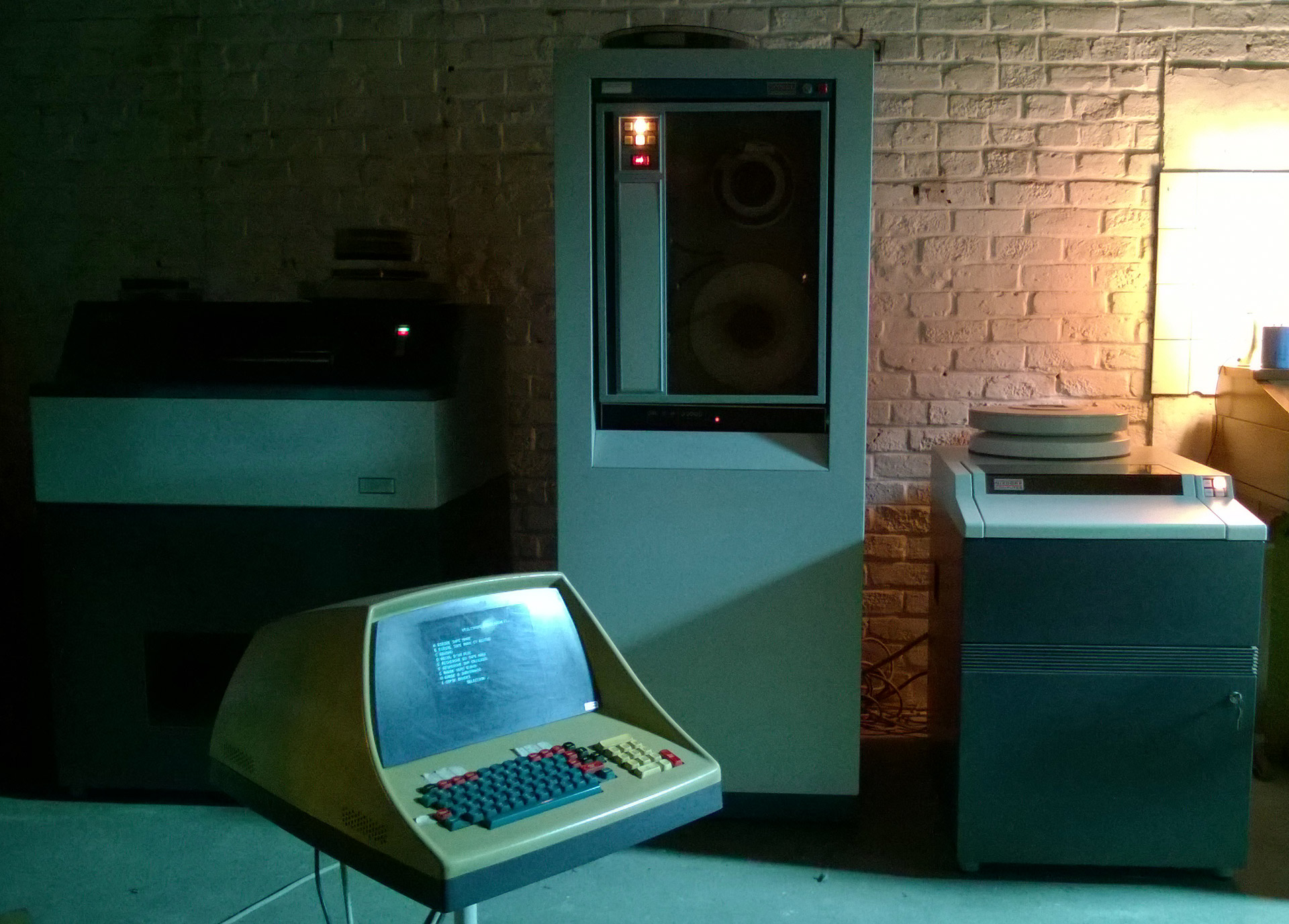
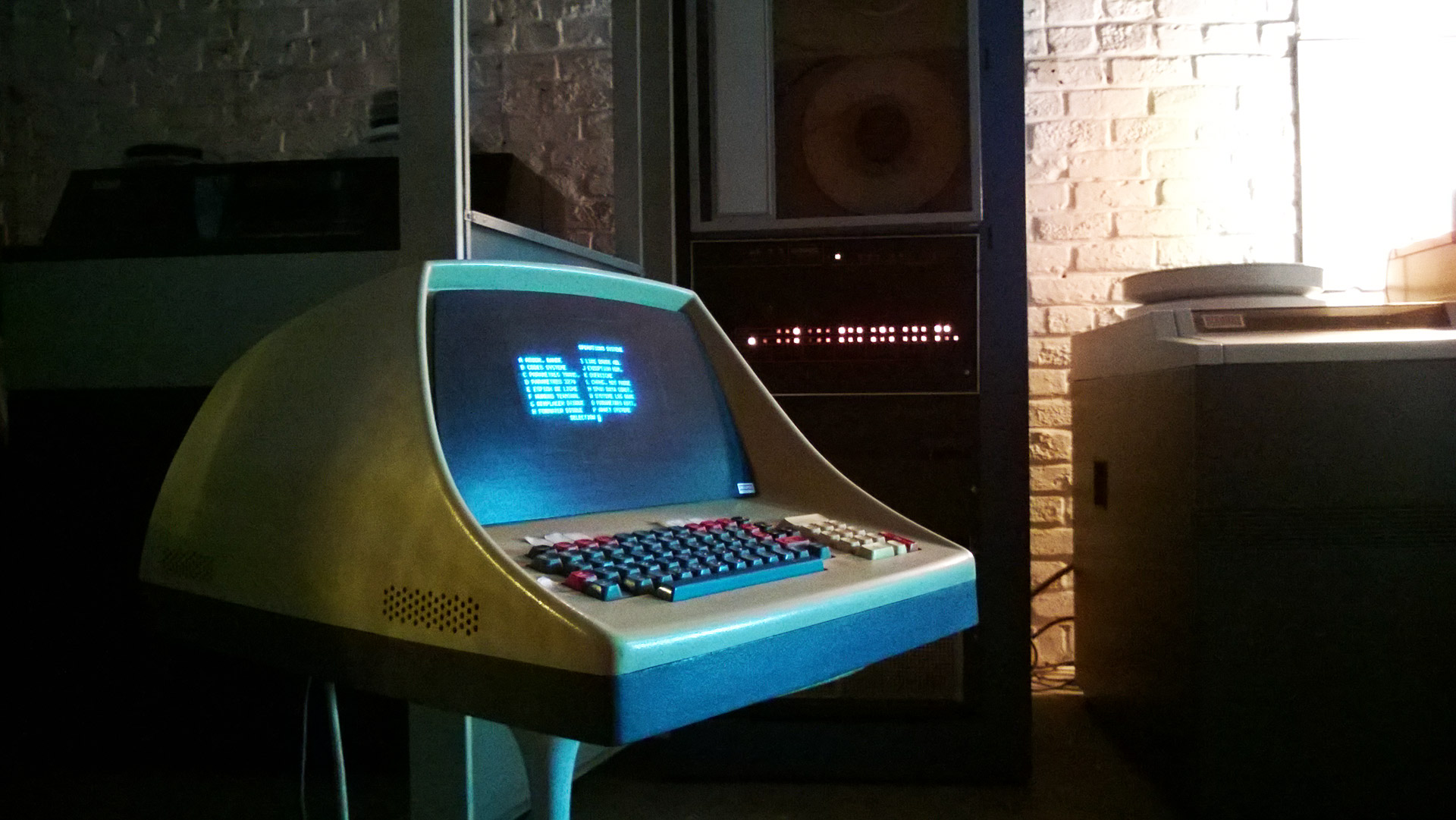
I got a lovely Televideo 970 terminal from another list-member over the
weekend. Aside from some PSU capacitor issues, it needs a little TLC:
1) The EMI filter had gone open-circuit - it's one of those metal can types
which is integrated with the IEC power input connector. Are these still
obtainable anywhere? It seems like equipment these days just has the
filtering directly on the PSU board, rather than as a separate module. I've
just bypassed it for testing, but I don't want to leave it like that.
2) I have a faulty back-tab, left shift and return key (return's simply
unresponsive, while the other two stick down). Do the keycaps on these
terminals simply pull off, or is there some trick to removal? I did some
experimental prying, but didn't want to try too hard and risk snapping the
switch stem.
I don't know if switches are still available, but worst-case I can swap the
faulty ones with ones for some of the 'special' keys that I'm extremely
unlikely to ever use.
cheers
Jules
I have some sun3/vme systems
Several 3/60
3/260
sparcstation 4/370
SMD disk array for 3/260
The 3/260 and 4/370 have some oddball boards for data (cosys) and
video acquisition (Aviv).
I also have some spare sparcstation 10s and 20s.
I haven't seen sun3 stuff for sale much. Does anyone know approximate
valuations for tested systems?
Regards,
Kevin
> From: Chuck Guzis
> Really, is this any worse than the gold bugs scrapping whole systems
> for the prospective precious metal content?
Well, the latter are presumably in it as a business, whereas it seems these
people do it for 'fun'.
Now there's an idea: perhaps we could convince them that pulling the wings
off flies is a more entertaining hobby?
Noel
I acquired a copy of CP/M-68K and am trying to pull together the
parts for a 9816 to run it. I have Nimitz keyboards, but would like
to find its little brother that matches the size of the 9816
> From: Paul Koning
> The nominal OD of RG-8/U is .. within spec for Ethernet cable.
Oh, OK. I was just used to the 10Mb cable we used being slightly larger than
the 3Mb cable we used.
> Also, Ethernet requires a solid inner conductor (for the tap) while
> RG-8/U may come stranded. (Maybe only in some variants, I'm not sure.)
As can be seen in the photos, the 3Mb stuff (at least, the stuff we used) was
also solid. The diameter of the center was a little smaller on the 3Mb than on
the 10Mb; .16mm versus .23mm; not sure if that was just happenstance, or what.
Noel
A few notes:
The experimental Ethernet speed was in fact 2.94 MHz: It's the Alto clock
divided by 2.
The Alto based printer was called "SLOT" -- Scanning Laser Output
Terminal. It was plugged into the Alto backplane and presented itself as a
hardware peripheral controlled by microcode (as was the case for all Alto
I/O). It was an Alto task, of course.
The vampire tap transceiver used RG-8 cable originally. That's before they
added the lines around the cable and added additional shielding.
The XGP was used at the Stanford AI Lab and was, as mentioned early, a dry
process. And it did use a roll of paper.
> From: Paul Koning
> I[t] just dawned on me that the subject is Apollo the company bought by
> HP, not Apollo the spacecraft. Oh well...
Actually, that stuff has all been saved, and run under simulators; there's
a very comprehensive site here:
http://www.ibiblio.org/apollo/index.html
which will keep anyone entertained for hours.
(I have this bit set that at one point there was a 'project history' page,
but I don't see it, looking quickly now.)
Noel
Greetings to the List from the Snowy Rocky Mountains.
Beautiful clear sunny day here at +9F :)
The SCSI controller on the 68K development system (VMEbus) that I
have cobbled together occasionally hangs after I reset one of the
processor boards (there are four MVME177-005 68060 boards in the VME rack).
The hang then happens when my software touches the SCSI drives via
the ROM'd 68K/Bug I/O primitives and the hang will not go away even
after another reset until I cycle power.
I have never before dealt with SCSI as a programmer - does this sound
like something is configured incorrectly?
There is not much to configure.
I point out that I am not certain that I have the termination
resistors correct.
Thoughts?
I appreciate any advice.
Regards,
Jack
Evergreen Colorado
----------------------------------------------------------------------------------
Jack Harper, President
Secure Outcomes Inc
2942 Evergreen Parkway, Suite 300
Evergreen, Colorado 80439 USA
303.670.8375
303.670.3750 (fax)
http://www.secureoutcomes.net for Product Info.
Jim -
I appreciate the great SCSI information.
The hang is not at all frequent.
I do resets many times during a programming
session as my "marvelous" code hangs or otherwise
goes crazy and into thew weeds :) and I only
see a SCSI hang every few days.
Regards,
Jack
At 10:28 AM 1/23/2018, jim stephens wrote:
>Scsi controllers are very sensitive to resets
>and getting out of step with the state of the bus the initiators they control.
>
>Scsi can have multiple initiators, and you may
>of course have a system which acts as a target,
>but i'm guessing since you said drives, you have
>a pretty common setup, a system with drives
>attached, where the scsi device on your system is the initiator.
>
>One thing that throws off scsi is to do a reset
>which comes from somewhere the initiator doesn't
>know about.? many are not friendly when that
>happens and just end up hung up.? Reset tells
>all the devices to stand down, and it is
>expected that an enumeration of the bus will
>take place by all the initiator(s).
>
>That may have happened if you reset your other
>processors or did something which affected the
>initiator.? And the resets on most systems
>usually hit all components, so I'd be surprised
>if only the one processor was affected.
>
>thanks
>Jim
----------------------------------------------------------------------------------
Jack Harper, President
Secure Outcomes Inc
2942 Evergreen Parkway, Suite 300
Evergreen, Colorado 80439 USA
303.670.8375
303.670.3750 (fax)
http://www.secureoutcomes.net for Product Info.
Hello Bill -
Yes, there are two 4GB (32-bit addressing) SCSI
drives on the system and they do have different drive numbers.
I will double check the SCSI termination resistor things.
Motorola documentation is very sparse on this -
"attach the termination resistor" - nothing on
exactly where or what the resistor thing looks like.
I am far stronger in software than hardware.
I appreciate the adive.
Regards,
Jack
Evergreen, Colorado
At 09:47 AM 1/23/2018, william degnan wrote:
>On Tue, Jan 23, 2018 at 11:33 AM, Jack Harper
>via cctalk <<mailto:cctalk at classiccmp.org>cctalk at classiccmp.org> wrote:
>
>Greetings to the List from the Snowy Rocky Mountains.
>
>Beautiful clear sunny day here at +9F :)
>
>The SCSI controller on the 68K development
>system (VMEbus) that I have cobbled together
>occasionally hangs after I reset one of the
>processor boards (there are four MVME177-005 68060 boards in the VME rack).
>
>The hang then happens when my software touches
>the SCSI drives via the ROM'd 68K/Bug I/O
>primitives and the hang will not go away even
>after another reset until I cycle power.
>
>I have never before dealt with SCSI as a
>programmer - does this sound like something is configured incorrectly?
>
>There is not much to configure.
>
>I point out that I am not certain that I have
>the termination resistors correct.
>
>
>Thoughts?
>
>I appreciate any advice.
>
>
>Regards,
>
>Jack
>Evergreen Colorado
>
>
>
>Jack,
>Yes, two things that I'd be checking
>1) Make sure all drives are assigned a different number
>2) Make sure you have termination somewhere.
>
>Depending on the OS there are commands to
>display the scsi devices attached, as the OS sees them.
>
>Bill?
----------------------------------------------------------------------------------
Jack Harper, President
Secure Outcomes Inc
2942 Evergreen Parkway, Suite 300
Evergreen, Colorado 80439 USA
303.670.8375
303.670.3750 (fax)
http://www.secureoutcomes.net for Product Info.
> From: Daniel Seagraves
> The Saturn software, which is what actually flew from Earth to the
> moon, was lost.
You mean the Instrumentation Unit on top of the S-IVB stage? That was
discarded when the S-IVB and CSM separated shortly after leaving Earth orbit
(about 6 hours after launch), so I'm not sure it's accurate to say it's "what
actually flew from Earth to the moon". Yes, it put the CSM on the injection
orbit, but...
A very cool computer (the first one to have all its critical components
triplicated for reliabilty, I gather), and yes, it would be nice to have its
software too.
Noel
Come join us in Seattle on February 10th and 11th for the first VCF PNW.
We have 20 exhibits, six speakers, and a panel discussion planned. There
will be a consignment area for buying and selling vintage gear, and of
course there is an entire museum (Living Computers:Museum+Labs) to check
out as well. The show is free with museum admission.
More information can be found at https://goo.gl/AUoLU2 . You can also
email questions to me. And lastly, we need your help - spread the word!
Thanks,
Mike
I scanned a nice little booklet I found in my fathers stuff.
"MY COMPUTER LIKES ME when i speak in BASIC" by Bob Albrecht.
http://www.datormuseum.se/documentation-software/my-computer-likes
If someone feel like they can straighten it up, please do! I didn't feel
like ripping it apart to have it scanned so it was troublesome to scan it
perfectly in my page scanner.
So did we ever get an answer to the original question (the value of
a Sun3)? All I saw was 'you'd have to pay to recycle them'.
> From: Grant Taylor
>> Before that, if you were lucky enough to be at Stanford, MIT, or CMU,
>> you could use the Dover and Altos that were part of Xerox's University
>> Grant Program.
> What made the Dover and Altos special in this context?
Sorry, I don't understand the question. (I assume you're not simply asking
'what made the Dover and Altos special'.) Which context? (As in 'what's the
connection between the Sun3 query, and Dovers and Altos'? If so, I think it
was just thread drift via the laser printers.)
> This is the 2nd time I've heard about 3 Mbps Ethernet.
That's the 'original' Ethernet; PARC did the 3Mbit one first, and the 10 Mbit
one came along quite a few years later.
I'm trying to remember what kind of cable it used; IIRC it was black coax,
with a woven shield (i.e. not solid like CATV), not quite as large in
diameter as the yellow 10Mbit stuff. To connect up to it, one clamped on a
connector thingy, which had a threaded hole in it over the cable; one then
screwed in a cylindrical cutter which made a hole through the shield, and one
then screwed in a transceiver (which was a box about 2"x2"x4", IIRC).
Hopefully someone has a picture somewhere?
Noel
> I just found a piece, I'll put up a photo.
Here ya go:
http://gunkies.org/wiki/File:3MegEthernetCable.jpghttp://gunkies.org/wiki/File:10MegEthernetCable.jpg
I should have put a ruler in, for scale. The 3M is about 2/3 of the thickness
of the 10M. The center conductor is about 2mm - pretty heavy!
> From: Guy Sotomayor Jr
> The XGP printed on roll paper. It was a laser type process
Plain paper? Well, my memory of it being thermal paper could easily be wrong;
it's been a _long_ time, and I didn't use it much.
Noel
> From: Grant Taylor
> What makes the copies of papers printed on them special?
Well, the Dover was the first device (that I know of) that could print _very_
high-quality graphical/multi-font output, and on ordinary paper. It was also
pretty darned fast - a couple of seconds per sheet, IIRC. The whole package
just blew us all away (I was a MIT when we got ours).
There was a prior device (from quite a few years before) called a 'Xerox
Graphics Printer', but i) IIRC it printed on thermal paper (think
poor-quality thermal fax paper); ii) the resolution was nothing like as high
as that of the Dover (which was, IIRC, in the 100's of DPIs - which it needed
to produce the very-high quality printout with type-faces), and iii) it was
quite slow.
What they did with the Dover was take a high-end Xerox copier (one of the
things the size of a couple of desks),and rip out the optical front end
(which copied an image of the page being copied, onto the drum), and replaced
it with a scanning laser that was fed an amplitude-controlling bit-stream
>from an interface card in the Alto.
>> That's the 'original' Ethernet; PARC did the 3Mbit one first, and the
>> 10 Mbit one came along quite a few years later.
> I assume this has something to do with the Digital / Intel / Xerox as
> in the DIX connector.
Right, a couple of years later Xerox, DEC and Intel did a consortium to make
Ethernet widely available, and produced the 10Mbit version. Technically, it
was little different from the 3MBit version. The low-level packet format was
different (because of the higher speed, and larger maximum size), and the
addresses used the later PARC thinking (UID's for interfaces), but those were
not major changes.
>> I'm trying to remember what kind of cable it used
> That sounds like typical Radio Grade cable.
Yeah, I just found a piece, I'll put up a photo.
> I'm not quite sure what you mean by "solid like CATV".
The CATV that used a heavy foil ground layer.
> That sounds like a description of what I've heard called a "Vampire
> Tap". My understanding is that's the poor way to connect to (what is
> effectively) the Ethernet bus.
Vampire taps worked fine on 3MB Ethernet. As the speeds went up, less so.
> I suspect that Wikipedia's article on 10Base5 has some decent pictures:
Nothing of the 3MB, and it doesn't show how the clamp-on connector and
vampire worked.
Noel
Hi all --
I picked up this little toy at VCF West last summer:
https://1drv.ms/i/s!Aqb36sqnCIfMouYd0HV0ZThE3FnE_Q
As far as I can tell, it's supposed to be a clock and I assume it was a
kit -- this one was definitely hand-assembled.? It's powered by two AA's
(apparently, there are no markings), has a 4 digit LED display, and at
the moment it does not work at all.
Can't find anything about this item at all.? At the moment I'm curious
what the 28-pin IC at the top is -- there are no markings of any kind
anywhere on the chip.? It has an interesting construction -- blue
plastic on both sides with a metal cap over the die.? The two other ICs
are RCA 3081 and RCA 3082 which are simply transistor arrays for driving
the 4-digit LED display.? I assume the 28-pin IC is a simple
microcontroller with built-in ROM, or perhaps it's a device specifically
designed to run a digital clock.? Whatever it is, I'd love to know what
it does so I can debug this thing and possibly source a replacement.
I realize this is not a lot of information to go on, but on the
off-chance someone's seen something like this before I figured I'd give
it a go...
Thanks,
Josh
Hello friends,
I am totally ignorant about hp9000 machines. I am considering acquiring this machine for fun and learning about the 9000. It has a 9153A and 9134D with other accessories. The system currently boots up to BASIC 4.0
I have read that this machine can also support HP/UX. Can anyone advise if HP/UX can be installed on such a machine? Perhaps using internal drive for HP/UX and the external hard drive to boot to BASIC? Both hard drives have BASIC 4.0 installed.
What would be involved to install HP/UX?
Thanks very much
Eugene
Hi all --
I'm in the middle of repairing a console for a Symbolics 3640. This uses
the earlier Phillips-based monitor and it employs a TIPL757A transistor in
the deflection circuit. The one in mine is toast and I haven't been able
to find a suitable replacement.
The datasheet (or at least a page of it) is here:
http://pdf1.alldatasheet.com/datasheet-pdf/view/108034/TI/TIPL757.html
The base current rating seems to be important in this application; I tried
replacing it with a BUX48 (which meets the other specs but only has a 4A
continuous base current rating) and it blew in a few minutes. I haven't
found a source of 757As, and I haven't found another TO-3 transistor that
matches its specifications.
If anyone's sitting on a pile of these, knows a good source for them, or
knows of a transistor to substitute, please let me know.
Thanks!
Josh
> From: Al Kossow
> vt11 is integrated into the 11/05 backplane on the gt40
Right (although I had forgotten that); I listed the 11/05 separately since I
do have data on how much they've been going for - in an attempt to roughly
value the lot. The GT40, however, no idea. (I recall one was for sale on eBay
for many thousands, but I don't know if that was ever sold, and how much for.)
Noel
On Thu, Jan 18, 2018 at 6:58 PM, Adrian Graham via cctalk
<cctalk at classiccmp.org> wrote:
> I could, but I guess by the time I?ve sourced a replacement I might as well have bought an AHA-1522A instead, I have a couple of scouts out looking for them as we speak :) The 1522A is a full pass for TESTFDC.
Has anyone using one of these cards made use of the SCSI function? It
has a Centronics 50 connector, which isn't terribly useful unless
you've got the right cable, but if you're building an all-in-one
imaging machine, it might be handy to have SCSI capability as well.
It seems the driver hasn't been in Linux for quite a few versions.
Not sure about the BSDs.
Hi folks,
On the weekend I rescued some old software. It gave me an excuse to get my
first micro out of its box and stretch its legs.
Accounting packages hardly set the world alight but being a Dick Smith
release for the System 80, it does have its place in Australasian computer
history. Anyway, if anyone is interested, here is the URL.
http://www.classic-computers.org.nz/blog/2018-01-12-rescuing-more-dick-smit…
Terry (Tez)
Sorry for the off topic post.
I'm hoping that someone here might have seen a (what I consider to be) a
computer lore type story about a contractor that was brought in part way
through a project to consolidate three DCs into one. - In the end he
managed to do it early and under budget. The kicker is that they quite
literally physically moved and re-connected everything the way that it
was. Meaning that there were still WAN circuits (local only of course)
between equipment that was previously in different DCs.
I would like to find a copy of this story and save it in my archive. But
I've not been able to do so. Thus I'm asking a wider audience to see if
anyone might be able to give me a pointer.
--
Grant. . . .
unix || die
I'm pulling together a timeline of optical computer data storage and having
fun with the early ones. A copy of Rothchild's Optical Memory Report, From
the early 80's would be appreciated - hardcopies are at the CHM so maybe
I'll have to drive over there
I'm told by a reliable source and am trying to confirm that Philips and
Toshiba were first circa 1980 so can anyone identify and provide any
details about any 12-inch WORM disk drives and media that were shipped by
either around 1980.
FWIW the earliest WORM I can identify is the OSI Laserdrive 1200 which
shipped in 1983. OSI was a joint venture of Philips and CDC and in turn a
successor to their earlier joint ventures, Optical Media Laboratory in
Holland and Optical Peripherals Laboratory in Colorado. So the Laserdrive
might be a rebadged or enhanced version of the earlier Philips product.
I have no clue as to any early Toshiba WORM
FWIW, in 1981 Matsushita demonstrated of a 200 mm diameter WORM disk with
a capacity of 15,000 still pictures but this wasn't a data disk. Not clear
when and if it shipped as a product. [source:
http://www.wtec.org/loyola/opto/ad_matsu.htm ]
There is also an indication that Thompson CF also had an optical data
storage system circa 1981 but I can find nothing about it.
Any recollections and all literature would be appreciated.
Tom
> From: Kyle Owen
> A tenth the price of the Twiggy Lisa makes that auction look almost
> affordable! Final price was $5600.
Yeah, whoever bought that got, IMO, a pretty good deal (as I predicted). It's
a fair amount of money, but they got a _ton_ of stuff (probably literally :-).
I mean, look what's included (with rough guesses as the value):
$600 H960 rack
$600 H960 rack
$400 RK05 drive
$600? RK03 drive
$700? RK11-C controller
$2000 PDP-8/F
$2000 PDP-11/05
$?? GT40 display hardware
$400 BA11-F with ?? inside
%? Teletype
------
$7300
Some of the things are so rare (e.g. the RK03 and RK11-C) I don't have any
comparables (RK11-D's go for $500 or so, FWTW); and on the GT40 I have no
idea whatsoever. (This one doesn't have the usual GT40 display, but a
rack-mounted VRxx?)
Still, it's pretty clear that whoever bought this got a deal. And I haven't
even included the packs ($30 each, another $900 or so), all the Grass analog
gear, etc, etc.
Noel
> From: Jonathan
> if someone wants to sticky this (here or in other forums), I think this
> would be a valuable resource for anyone wanting to use ImageDisk on
> non-PC formats.
How about someone doing an ImageDisk page on the Computer History Wiki; we
could include an 'External link' to the new registry (and also the original
one, etc).
Noel
Hello again, Folks!
I've listed yet another batch of S-100 goodies:
http://www.vcfed.org/forum/showthread.php?61192-Sellam-s-S-100-Hardware-Sof…
The latest batch includes a new Processor Technology kit, a BYT-8 front
panel, a Commodore PET to S-100 interface board, a couple Wameco
backplanes, a gaggle of Cromemco boards, and much more.
Thanks!
Sellam
I'd been trying to reach Dave Dunfield with new TestFDC results since
apparently August with no results. So, I wrote a new TestFDC registry into
my site:
https://services.theglitchworks.net/ng/testfdc_results
This registry currently includes Dave's last registry update from 2007.
There's now a form for entering your results, you can find it as a link
>from the registry, or here:
https://services.theglitchworks.net/ng/testfdc_results/new
Result submissions have to be manually approved currently so that the
registry doesn't get spammed. Text export forthcoming. Any suggestions
welcome!
Moderators, if someone wants to sticky this (here or in other forums), I
think this would be a valuable resource for anyone wanting to use ImageDisk
on non-PC formats.
Thanks,
Jonathan
> From: Warner Losh
> I'm curious: does it inter-operate with modern TCP/IP implementations?
This just a guess, but 'sort of'? It _is_ TCP/IPv4, so it's got compatible
headers, but I don't know if other parts have changed enough to make it not
work.
E.g. it probably only supports class A addresses, for instance, which is going
to influence the code for picking the first-hop router.
Also, the only driver is, IIRC, for an ARPANET interface.
Noel
On Thu, Jan 18, 2018 at 10:39 AM, Grant Taylor via cctalk <
cctalk at classiccmp.org> wrote:
> I was not aware that there was code that supported /only/ Class A (/8)
> addresses and /not/ Class B (/16) or Class C (/24) addresses.
>
> I /thought/ that everything was either classful (as in supports all three
> classes: A, B, and C) or classless (as in supports CIDR).
>
Years ago I added a configurable "bozo-arp" feature to the Telebit
NetBlazer router, which would respond to ARP requests for non-local
addresses and reply with the router's MAC address (on that interface),
specifically in order to make classful-only hosts work on a CIDR network.
Later someone paid me to write a NetBSD daemon ("anyipd") to do the same
thing, though for an entirely different reason. Recently I've needed that
functionality on Linux, as I have multiple old systems that only understand
classful, including the AT&T UnixPC (7300 or 3B1). I suppose I should
rewrite and open-source it.
> From: Grant Taylor
>> It is TCP/IPv4, so it's got compatible headers
> Are you referring to the 802.3 Ethernet (vs Ethernet II) frame type
No, I meant the IP and TCP headers. Those are end-end; the Ethernet stuff is
just a local wrapping, and can be substituted.
> I was not aware that there was code that supported /only/ Class A (/8)
> addresses and /not/ Class B (/16) or Class C (/24) addresses.
> I /thought/ that everything was either classful (as in supports all
> three classes: A, B, and C) or classless (as in supports CIDR).
> Is my networking history missing something else?
Yes. There was a stage before A/B/C. See RFC-760.
> Please clarify ... what you mean by ARPANET interface? Are you
> referring to host specific hardware that was used to communicate
> with an IMP?
Basically, yes.
The ARPANET supported several different kinds of interfaces between the IMPs
(the switching nodes in the ARPANET) and hosts, but the 'usual' one was
either 'Local Host' (LH) or 'Distant Host' (DH) which were _basically_
identical except at the very lowest level - LH was TTL, and DH was
differential pair.
Those interfaces were a custom bit-serial thing with a handshake (with
"there's-your-bit", "ready-for-next-bit" lines, etc); see BBN Report #1822:
http://www.bitsavers.org/pdf/bbn/imp/BBN1822_Jan1976.pdf
So the "ARPANET interface" in the host is a piece of custom hardware (some
were DMA; I also used one which was interrupt per byte) which went on the
host, which talked 1822 (as it was called), of either the DH or LH physical
form.
(There was also an Host/IMP interface called VDH, but that used a modem, and
a _lot_of software; see here:
https://en.wikipedia.org/wiki/Talk:Network_Control_Program#Layer_locations
for a bit more about it.)
> Do the necessary emulators support the ARPANET interface?
Dunno, but they shouldn't be too hard to add.
The real problem is going to be 'what do you hook the simulated ARPANET
interfaces up to, and how'? I know they have IMP code running in simulators:
http://mailman.trailing-edge.com/pipermail/simh/2013-November/007672.html
but I dunno how one would hook _that_ simulation up to a simulated host
running a simulated ARPANET interface.
Easier, to get this old TCP/IP running, might be to write a Unix V6 driver for
an Ethernet card (one the simulators do support - I know Ersatz-11 does the
Interlan NI1010A/2010A, which is nice and simple) and write an Ethernet
network interface module for that TCP, which talks to said driver; i.e. just
replace the ARPANET interface stuff completely.
Noel
> From: Lars Brinkhoff
> Richard Cornwell wants to implement DL10 for his KA10/KI10 simulator,
> but he doesn't have any documentation for it. Any leads?
Well.... The "decsystem10 System Reference Manual (DEC-10-XSRMA-A-D) -
available online:
http://bitsavers.org/www.computer.museum.uq.edu.au/pdf/DEC-10-XSRMA-A-D%20D…
has a definition for the -10 side of the interface on pages C-21 and
following (page 365 of the PDF). It just specifies the I/O instructions and
bits, there's no description of how it works.
Still, that will help understand code that uses it; the complete ITS code is
available.
I couldn't find anything on the PDP-11 side of the interface; ITS' IOELEV >
does define a "DLXCSR", and the bits in it, but ... it seems to be a memory
location, not a register?
The DL10 was used in two DEC system products, the DC76 Asynchronous
Communication System, and the DN87 and DN87S Universal Communication System
Front Ends. I couldn't find any documentation on the former, but complete
prints for the latter are available:
http://www.bitsavers.org/pdf/dec/pdp10/periph/MP00068_DN87_Universal_Comm_S…http://www.bitsavers.org/pdf/dec/pdp10/periph/MP00109_DN87S_Universal_Comm_…
It includes a complete set of prints for the DL10. From this, and also from:
http://pdp-10.trailing-edge.com/bb-d549g-sb/01/boot11.mem.html
it appears that the PDP-11's connected to the DL10 have a special console
which has a cable which goes to the DL10 which allows the PDP-10 to start and
stop the PDP-11; the PDP-11's UNIBUS runs into the DL10 and is plugged into
the DL10.
Anyway, it's going to be some hard work to create a DL10 programming manual
>from those dribs and drabs, but there is enough info there that it can be
done.
Noel
Alan, my apologies for the confusion here. The email subject still said
S/50, but I believe we had switched topics mid-thread.
On Mon, Jan 15, 2018 at 6:16 AM, dwight <dkelvey at hotmail.com> wrote:
> Years ago, we used one of the Convergent machines. I recall playing rats
> on it. It had a green screen. It was a 8086 processor and had some
> Multibus slots in it.
>
I was replying to Dwight with a link to my AWS machine when Dominique
chipped in with the Burrows comment.
I believe that Dominique was referring to my AWS that I show at
http://mightyframe.blogspot.com/2017/03/convergent-technolog
ies-workstation.html
And I agree with you wholeheartedly on your points. They look nothing
alike, and are based on totally different processors.
|Alan Perry via cctech <cctech at classiccmp.org>
|
|As I mentioned elsewhere, I worked on software for them at Burroughs
('86-'89). I
|picked up a bunch of B25 stuff in '03, but I could never find any software
for
|them. In retrospect, I wish that I has stashed away B25 (and B1000 (I was
one
|of the last people in the office supporting software onthe B1000)) stuff,
rather
|than return everything, when I left the company.
|
|alan
That's very cool that you worked on the software. And, yes, Alan, agreed
about wishing to keep a few of them around...But, I may be able to get the
one that I have running soon. I'll be working on it on and off this year.
I plan on trying trying to restore the Convergent CTOS on this, rather than
the Burroughs BTOS, at least at first anyway...
I'll keep you posted here on my progress on that.
Thanks, all!
Best,
-AJ
On Wed, Jan 17, 2018 at 11:02 AM, Alan Perry via cctech <
cctech at classiccmp.org> wrote:
> Are you sure?
>
> The B20, B21, B22 looked like this - http://www.computerhistory.org
> /collections/catalog/102662660 - and nothing like the 3B1 or the S/50.
> The B25 and subsequent models (which are often referred to as B20s) are
> modular systems that are box-shaped and got wider as "slices" were added.
> The B20s were x86-based and the 3B1 (and presumably the CT S/50) was
> 68k-based.
>
> alan
>
>
> On 1/17/18 2:41 AM, Dominique Carlier via cctech wrote:
>
>> It's interesting, I had exactly the same machine a long time ago, but
>> with a different label. It was a Burroughs B20 distributed by Unisys
>>
>> Dominique
>>
>> On 17/01/2018 06:45, AJ Palmgren via cctalk wrote:
>>
>>> Did it happen to be one of these older-style Convergent AWS machines?
>>>
>>> http://mightyframe.blogspot.com/2017/03/convergent-technolog
>>> ies-workstation.html
>>>
>>>
>>>
>
-
I'm just wondering if anybody here did (or knows who) bought this one.
http://ebay.to/2DaRr13
Even though these were all manufactured by Convergent Technologies, this
one is actually BRANDED by Convergent, as their model S/50.
And there's software included here. I tried to buy myself, but just missed
it.
I'd really like to connect with the buyer here, to see if we can do a more
expansive documentation project on this machine, as well as an archival of
the software that was included.
As far as I know, this is the only Convergent S/50 I've ever seen that has
survived, especially with all the CONVERGENT software and manuals (vs the
AT&T ones)!
Thanks!
-AJ
http://MightyFrame.com
On Tue, 16 Jan 2018, David C. Jenner via cctalk wrote:
> This isn't malware, but back in 1962 when I was taking a college class in
> assembly language programming for the IBM 709, my innocence led to the
> following.
We might as well all contribute.
Back in college in 1969 we would submit our Fortran IV assignments on
punched card of course. One day I got back junk and discovered that it was
not my card deck under the account ID card so I went through the pile of
returned decks and printouts and found that another student had swiped my
deck and put his name on top so I took back the deck and shuffled his deck
well before returning his ID card to the top and resubmitting it. I never
heard a thing about that episode but I sometimes wonder what his next
output looked like.
--
Richard Loken VE6BSV : "...underneath those tuques we wear,
Athabasca, Alberta Canada : our heads are naked!"
** rlloken at telus.net ** : - Arthur Black
To the list:
It is with deep personal sadness that I write that young list member
Marc Grenville-Cleave, of Dorset UK, has passed away. He was known
personally to several list members.
I did not have the pleasure of meeting him in person but as he was a
longtime friend I wanted to write a brief celebration of his life and
interests.
Most relevant to this list, Marc was an avid DEC collector and PDP-11
enthusiast and rescuer: http://marc.cleave.me.uk//pdp11/index.htm
He was also the proud owner of a VAX-11/750, among other computers:
http://marc.cleave.me.uk/collection.htm
He was self-taught in many skills, including electronics, and had
natural gifts as an engineer. Around the age of 14 he designed an 8-bit
TTL CPU, which he called "Titan". You can read more here:
http://marc.cleave.me.uk/cpu/ &
https://github.com/bootnecklad/Titan-Specifications
The machine was wire-wrapped and soldered with his trademark meticulous
care, as you can see from the photos on the first site linked.
Here is a picture of Marc with some of his favourite machines (Titan in
the background): http://i.imgur.com/CCinlCS.jpeg
Many people knew him on irc, as "bootnecklad" or "bnl", in the
#classiccmp Freenode channel and elsewhere. His sense of humour was
unique, sparkling and irreverent.
Aside from his electronics and retrocomputing interests, he restored his
beloved Range Rover Classic over a long period and finally got it
roadworthy in 2016. He was a perfectionist in this project as in
everything else.
Most recently Marc was a Electronic and Computer Engineering student at
the University of Nottingham.
He will be painfully missed by very many people.
--Toby
Hi,
An acquiantance was wondering about more details on this part:
https://imgur.com/a/p1GQ2
It seems to be a core memory stack? But of what type? CDC?
Any info appreciated.
--Toby
> From: Charles Anthony
> it was shipped has an "unbundled" product.
Ah. I assumed that what had happened was that the set of source files at MIT
was just what was in the 'last release', and the NCP code had been discarded
by then.
I wonder if it's on a backup tape that MIT retained, somewhere?
So now I'm curious - weren't many other pieces of important software similarly
"unbundled", and if so, were those missing too?
Noel
While I'm thinking about it, for any/all who might be interested, just last
week, I created a step-by-step video for disassembling a UNIX PC 7300 (with
a few comments/comparisons for the 3b1)
https://youtu.be/vYKS-jOdcsQ
I've always found them tricky to work on with the way they are packed
together, so I hope this could help others who might want to take a crack
at a repair/restoration (or, heaven forbid...a "part-out")
--
Thanks,
AJ
http://MightyFrame.comhttp://QICreader.comhttp://UnixPC.blogspot.com
> From: Phil Budne
> I asked around for v6 Unix with "NCP" code when the IMP code was
> resurected, but never found it....
Yeah, that one was retrieved only recently, when Chuck managed to read an old
dump tape I had of the MIT-CSR PWB1 Unix PDP-11. We didn't run NCP on that
machine, but I had squirreled away that code (and the BBN code) on it (in
case we ever had any use for it).
Noel
On 09/21/2017 08:52 AM, Fred Cisin via cctalk wrote:
> On Thu, 21 Sep 2017, Mike Loewen via cctalk wrote:
>> ? Mike Thompson at the RICM is going to look for a number on the key
>> for their 2108A, this weekend.
>
> Ask if he can snap a few good close-up pictures of it.? While
> measurement from a picture isn't reliable, it doesn't have to be, if the
> picture is clear enough to decide whether a given cut is a 2 cut or a 3
> cut.
>
Did this get resolved? I have an HP-2108A with key as pictured here:
https://rikers.org/gallery/hardware-hp2108a/20050415_132446
Hello,
What software, hardware, simulators, emulators, etc are there that could
run ARPAnet today?
- ITS has support for NCP, but I don't know if it works.
- There's source code for the IMP.
- TENEX seems ok at a quick glance.
- WAITS, likewise.
- Multics NCP has not been located.
- Unix?
- IBM mainframes?
- NOS?
- VMS?
Does anyone have any host tables between 1975 and 1981?
Classic regards,
Lars Brinkhoff
I wrote about Spectre and Meltdown recently: INTEL took its time to inform
the world! Did it inform the world back in earlier days about potential
flaws? Not to blame INTEL only: What about Zilog, etc.? Or did pre-Internet
era protect us computer-classic users? What about running emulation
software as I?ve been doing with ADAM?
Happy computing!
Murray J
> From: Jay West
> I'm wary of just sending the tape through the mail for imaging....
Why? I sent some tapes out to Chuck to get read, those went by USPS, and no
problem (well, one had some drop-outs, but they were old and not in great
shape; the other one read fine).
Noel
So why are reels of DECtape selling for unbelievable prices on eBait? See,
e.g. here:
https://www.ebay.com/itm/372186744906
and here:
https://www.ebay.com/itm/372186745609
I can't believe there are hordes of TU55/TU56 owners out there who desperately
need media; so what is it? People who think DECtapes were super cool and have
to have a reel, even though they don't have a drive? Or are there actually
TU55/TU56 owners (remember, it takes two bidders to put the price up) who
really need media?
Anyway, it looks like this person:
https://www.ebay.com/itm/202183912961
who got four for the 'bargain' price of $80 got a 'deal'!
Noel
Think 101-C's are rare ?
This weekend a Teletype model 35 came home with me and the attached
Western Electric 101-A modem is missing its boards.
https://photos.app.goo.gl/rZNAt20Vh9CXAflA3
-pete
> From: Fritz Mueller
> Definitely an RK11-C
Ah; the dual-wide plug-in connector soldered onto the back kind of threw me a
bit!
> And it would make sense with the diablo and the RK05 in there.
Right, but I wonder if the RK05 is on the same controller as the Diablo, or if
the PDP-8 has an RK controller, too.
Noel
What the subject says. For control & analog aficionados.
http://blog.presentandcorrect.com/27986-2
source: https://lobste.rs/s/ziu1uu/collection_soviet_control_rooms
--
Regards,
Tomasz Rola
--
** A C programmer asked whether computer had Buddha's nature. **
** As the answer, master did "rm -rif" on the programmer's home **
** directory. And then the C programmer became enlightened... **
** **
** Tomasz Rola mailto:tomasz_rola at bigfoot.com **
Dominique,
Just checking in with you on this, and to thank you for posting your
interest in this system here.
Do you have any updates, or perhaps new videos of it operating?
Thank you!
-AJ
On Wed, Oct 4, 2017 at 1:33 PM, Dominique Carlier via cctalk <
cctalk at classiccmp.org> wrote:
> Hi all
>
> I start here another topic concerning my research about a new Operating
> System for my freshly restored DCC-116 E.
>
> http://www.zeltrax.com/classiccmp_forum/second_boot/04.jpg
> http://www.zeltrax.com/classiccmp_forum/second_boot/02.jpg
>
> I originally intended to install RDOS on my machine but it seems very
> difficult to find the files needed to make a system installation tape.
>
> I do not know well the subject yet, I don't found clear information about
> the compatibility of my clone with the original RDOS from Data General.
> Thus, before trying the impossible, I would like to know if another OS are
> available for my machine ?
>
> I would like to be able to do basic things like :
>
> - Be able to manage my devices, copy files from tape to disk or vice versa.
> - Be able to list directories, create subdirectories.
> - Write and read text files that I could send on my drum printer.
> - Have some communication software, tty, rs-232 (for the day I find a comm
> board).
> - Some diagnostic tools to check core memory, disk, tapes.
> - Being able to write in a simple programming language such as BASIC would
> be great.
> - Be able to use simultaneously more than one Entrex terminal.
> - Maybe a database software ... ?
>
> Of course I am also interested in anything that goes beyond that. I also
> have more bizarre projects with this machine like generating algorithms to
> trace small animations on an analog oscilloscope and ... well, another
> chapter ;-)
>
>
> To recap, here the specifications of my system:
>
> Computer : D-116, clone of a DG Nova 1230 with 17 slots, also known as
> "Entrex 480" and "Nixdorf 620"
> Core memory : 64 kW
> Terminal : ENTREX DATA/SCOPE
> Disk Cartridge : Diablo Model 40
> Mag-tape : Pertec 8840A (800 bpi)
> Line drum printer : Data Products model 2230
>
> As the machine was distributed by Nixdorf, the identification of the tape
> and disk controllers is a bit difficult, but I can take detailed pictures.
>
> Thanks a lot for your help !
>
> Dominique
>
>
I saw Pauls post about old DECtapes which reminded me about a bunch of
DECtapes I had lying here.
On my workbench I have a PDP-11/10 with TC11 and TU56 setup which works
nicely so I decided to image a few more DECtapes. For those interested in
old diagnostics and other things it can be worth looking into.
http://storage.datormuseum.se/u/96935524/Datormusuem/dectapes-1.tgz
Some comments:
I have not tried to boot any tape natively since my M9312 need a TC boot
PROM, need to burn one.
I have tried to boot most of them in SimH, but many of them fail with a
HALT somewhere. Need to test this further on real hardware as soon as I
have a TC bootstrap.
D1.DSK had an I/O Error so it is not the full dump.
D2.DSK however boots to a prompt:
DDP1-V001 28K RSTRT: 155766
.DIR
.
DIR .BIN 003 17-NOV-71
DTCOPY .BIN 006 17-NOV-71
D0AA .BIN 014 17-NOV-71
What is DDP1-V001? Some early diagnostics monitor? The filesystem seems to
be DOS-11 as RT-11 FILEX is able to read the directory with /S
D5.DSK is also a DOS-11 file structure and apart from quite some
diagnostics also contain FOCAL1.BIN
DT5.DSK contain a binary MOON.BIN which according to the label is some
variant of Moonlander / Lunarlander.
So, yes. I do have a system up and running that can Image that RSX11-D VT30
tape if needed. However it will be moved on the 27th of January.
/Mattis
Hello,
I'm searching a source of good tape for a TU80 and a TU81 I have.
I acquired some media from eBay, but all of that suffers of sticky problem
and is unusable.
Anybody has some to sell, or for give an advice of a seller of proven good
tape?
I wish prefer a seller in EU or UK, but even overseas could be considered,
if I don't find a nearer solution.
Thanks
Andrea
> From: Paul Anderson
> I wonder what happened to the third rack...
And the TU-56...
I'm going to disagree with Al, though - I don't think it's going to go for
that much, it's 'local pickup only'. That's going to severely limit the
bidder pool.
Noel
> From: Ali
> why is there potential for the system to go for insane amounts of money?
I'm going to guess that Al had the GT40 in mind. (I wonder if that was named
after the car, BTW?) I don't see anything else there that's _that_ desirable -
the Diablo (aka RK02/RK03) is pretty rare, and that exposed backplane above it
_might_ be an RK11-C, but I don't think either of them is _that_ desirable.
Although maybe he was just thinking of the whole package... Those plus the RK05,
the PDP-8, two complete H960's - it adds up...
Noel
Paul Koning <paulkoning at comcast.net> wrote:
> I have two items that I'd like to send to a good home. That
> means, someone who can read the item in question and make it
> available so it's preserved.
> 1. A DECtape labeled "VT30 distribution for RSX11D V06-B".
> VT30 is a DEC CSS product, a color alphanumeric terminal.
I have a DECtape TU56 drive and a PDP-11/34, along with
RSX for same, so I could copy it for posterity. However,
the drive and the PDP-11 are in different rooms right now,
and it would be several months before I could unite them
and copy the tape. If you cannot find someone who can do
it quicker, I will be happy to do the job.
(I will be out of town until Tuesday 1/16 and unable to
access email.)
Alan Frisbie
Hello Paul,
I have a VT30 board set, it would be nice to receive a copy, if not the
original, of related bits you have!
Maybe also some documentation?
Thanks
Andrea
> From: Liam Proven
> I had a major WTF moment at that. The actress had a prior or parallel
> career as an engineer?
Why not? Hedy Lamarr:
https://en.wikipedia.org/wiki/Hedy_Lamarr
invented spread spectrum communications! :-)
> From: Dave Mitton
> I could ask John Shriver ;^)
Sure, not a bad idea. He was on the edge of that (he wasn't really part of
the IETF world), but perhaps he has some memory that would bear.
Noel
> I'm to[o] busy right now to dig back through my ancient records (paper
> and email) to find details
So while I didn't have time to do either of these (my Proteon email, if I
still even have it, will be on a magtape I'd have to get Chuck to read; and
the paper records are mixed in with a giant pile of other stuff - I was on the
IESG while I was at Proteon, and it's all mixed in together), I did take a
quick look online to see if I could locate anything from that time period -
knowing how bad human memory really is, I wanted to make sure my memory wasn't
playing me false.
I didn't have high hopes, since stuff from the late 80's is hard to find
online, and I my expectations weren't disappointed (at least, in the brief
time I could put into it), but I did happen to turn up this:
John T. Moy, "OSPF: Anatomy of an Internet Routing Protocol"
which I'd vaguely heard about, but don't have (although I have everyone else's
books; I'll have to get a copy), wherein one may find (pg. 303) this:
"OSPF considered, but did not use, IS-IS as a starting point."
which seems fairly definitive, and straight from the horse's mouth.
I do wish I had access to more contemporary documents to, to give it a bit
more detail. As I recall the circumstances, I had previously wanted to do a
link-state replacement for EGP (to be called FGP) but Dave Clark (who was at
that time on the Proteon board) shot it down (IIRC, in part because he thought
it was too big a job for John - and John was not sanguine either; whereas I
had already seen enough of John to know he was quite capable of it).
That part I remember clearly, but from here on out it gets hazy (I was so busy
with goings-on in the IETF, juggling so many things with that, Proteon, etc),
alas; and it's been too many years since those memories were refreshed by use.
I do recall that we also needed a better IGP, as RIP was not really that good,
and Proteon decided they could do that - and John and I would have agreed that
a link-state design was the only way to go.
It started out as a Proteon-specific thing, for Proteon's customers, but like
SGMP (which started in similar circumstances, before morphing into SNMP), it
soon turned into an 'open' effort, in the IETF. I don't recall how (i.e. why)
that happened, but I assume it was a similar set of reasoning as with
SGMP/SNMP. It might be that if the IETF email archives from that period can be
found, they'd have some useful coverage of that.
My vague memory is that our biggest design influence was the ARPANET work, and
especially the later version which added area support (described in:
Josh Seeger and Atul Khanna, "Reducing Routing Overhead in a Growing DDN",
MILCOMM '86, IEEE, 1986
which I have in hardcopy somewhere, which I saw on the top of a pile recently,
so I can scan it if someone's interested), and also the subject of a memorable
briefing to the proto-IETF by Linda Seamonson, which I remember clearly - not
the technical details, alas, just at how good a presentation it was! :-) I
remember in particular they had a very elegant/clever method for defining the
area boundaries.
Like I said, we did 'borrow' some idea from IS-IS, in particular the sequence
number thing - but that may have come direct from Radia's paper:
Radia Perlman, "Fault-Tolerant Broadcast of Routing Information", Computer
Networks, Dec. 1983
I don't recall where the concept of a designated router stuff came from, if
IS-IS was any influence there or not.
I did interact with John quite a bit in the very early design stages (I'd been
making a deep study of routing for quite a few years, so I was really the only
person there who was steeped in routing he could talk to), but as the work
prgressed - particularly once it moved to the IETF - I got out of the loop, as
I was too busy with other things, and he clearly had things in hand. I also
seem to vaguely recall disagreeing with him about some design points, but I
can't remember what.
Anyway, probably the wrong list for this. (Internet-history would have been
better.) Sorry, I didn't mean to get into a long thing, thought I was just
correcting a bit of nth-hand 'telephone-game' type garbling of a minor point.>
Noel
> From: Phil Budne
> simulating the DL10 so you can run TVs would REALLY be bringing back a
> lost artifact!!
The Knight TV's were connected through the Rubin 10-11 interface, not a DL10.
> I'm pretty sure DN87S was a DN87 front end attached to a (KL) DTE
> (Ten/Eleven) interface instead of a DL10 (or POSSIBLY visa versa).
Ah, right you are: I just assumed from the name (without checking!) that it
was some kind of variant on the DN87 - which I guess it is, just a more major
one than I thought! :-)
I wonder why DEC sold MIT a KL with a DL10 for the second PDP-11 front end?
(The Console-11 was connected via a DTE.) Maybe it was so early in the
product run that the DN87S didn't exist yet?
Noel
This looks like fun.
http://www.avrfreaks.net/forum/decoding-old-data-casette-format
I'm not associated in any way with this.
--
David Griffith
dave at 661.org
A: Because it fouls the order in which people normally read text.
Q: Why is top-posting such a bad thing?
A: Top-posting.
Q: What is the most annoying thing in e-mail?
Gentlepeople,
I have two items that I'd like to send to a good home. That means, someone who can read the item in question and make it available so it's preserved.
1. A DECtape labeled "VT30 distribution for RSX11D V06-B". VT30 is a DEC CSS product, a color alphanumeric terminal.
2. An RA60 pack labeled "RT11 V5.6" and possibly (it's hard to see) "kit". That "kit" seems a bit unlikely, an RA60 is way bigger than makes sense for an RT11 kit. But if it were a source pack that would be a different matter.
#2 was found in an abandoned DEC facility; #1 I don't remember, possibly the same.
An RA60 pack looks physically like an RM03 pack, but its capacity is much larger so the format is entirely different. A PDP11 or VAX with an RA60 drive should be able to read it.
If you have the ability to use one or both of these and are willing to read the data and post it, please contact me.
paul
> From: jnc at mercury.lcs.mit.edu (Noel Chiappa)
>> From: Paul Koning
>> That may be the story, but I don't believe it.
>> Was anyone from whom you have heard differently _at Proteon_? If not...
I could ask John Shriver ;^)
Dave.
Sent from Mail for Windows 10
---
This email has been checked for viruses by Avast antivirus software.
https://www.avast.com/antivirus
Hi,
My apologies for cross-posting. I?m putting this on a few of the forums
I have a third party TRS-80 Model 1 expansion unit that I used with my
System 80 when I first got disk drives. I?ve decided I should add some
pics and info to the System 80 website as I know they were used here in New
Zealand with System 80?s and, also in the U.K. for the Video Genie. A
modified expansion cable was needed to convert from the System 80 expansion
bus to the TRS-80 Model 1 bus on the unit but that was straightforward.
The interface is called a DP 1000 by General Northern Microcomputers Ltd.
It has no RAM, but contains a disk controller and printer port. It was
designed for ?80s Model 1s and compatibles that had 48K of RAM under the
keyboard, rather than requiring it in the expansion unit, as was the
standard configuration. Many System 80s had their memory expanded under
the keyboard so it was ideal for these. Mine was like this, and I found my
DP 1000 worked very well with it.
Before I put some info up, I?m wondering if anyone knows any more about
General Northern Microcomputers Ltd, the company that made the DP 1000?
I?m pretty sure it?s a U.K. company.
Also, most of the chips have their ID?s shaved off (see the circuit board
image)?? Why would they do this? I can only assume it was to stop reverse
engineering?
Here are some pics:
http://www.classic-computers.org.nz/system-80/hardware_DP-1000-front-800.jpghttp://www.classic-computers.org.nz/system-80/hardware_DP-1000-back-800.jpghttp://www.classic-computers.org.nz/system-80/hardware_DP-1000-circuit-boar…
Cheers
Terry
> From: Phil Budne
> ISTR the DTE was a DMA interface, not memory mapping like the DL10
I don't know either; I could probably work it out from looking at the DTE
documentation, which I'm too lazy/busy to do... :-)
> I also seem to recall that MC was designated as a "1080" which the above
> URL says means "Model A, External channels only, tall cabs
Yup, that's what it was.
> I remember finding documentation on MC for "KLDCP" the original DEC
> front-end software (suitably defaced) which DEC later replaced with a
> modified version of RSX-11
MC, on the other hand, ran KLDCP ('KL Diagnostic Console Program') until the
end. (The sources of DEC KLDCP version 7 are still available from the MC
dumps, if anyone wants them, along with the MIT-modified version.) The console
-11 on MC ran a 'combination' of IOELEV and KLDCP - the two remained pretty
much separate, just cooperated to share the machine:
KLDCP does JSR PC, [to 03000] when it has nothing to do and 10 is
running. IOELEV should INIT if it hasn't already, then go into its main
loop. It should CLC, RTS PC if the 10 goes down; KLDCP will print
appropriate message. To go into temporary KLDCP command mode, SEC, RTS PC.
I get the impression from the IOELEV source that it ran on the -11 connected
to the DL10 first (stand-alone, by itself), and was later adapted to share the
console -11 with KLDCP.
Amusing comment in the KLDCP source:
WE HAVE GONE TO CONSIDERABLE DIFFICULTY AND EXPENSE TO ASSEMBLE A STAFF OF
SORCERERS, SHAMANS, CONJURERS AND LAWYERS TO VISIT NETTLESOME AND MYSTIFING
DISCOMFORTS ON ANY NINNY WHO ENDEAVORS TO REPRODUCE OR USE THIS PROGRAM IN
ANY FORM OR BY ANY MEANS, ELECTRONIC OR OTHERWISE, INCLUDING COMPUTERS AND
INFORMATION SYSTEMS, WITHOUT PERMISSION FROM THE DEVELOPER. WATCH YOURSELF!
> diagnostic KLINIC (sp?) line).
KLINIK, according to KLDCP stuff.
Noel
> From: Paul Koning
> That may be the story, but I don't believe it.
Well, I was right there - I was the chief architect of the Proteon router
product, for which John Moy worked, and was the person who pushed John into
doing OSPF (he didn't think he knew enough).
I'm to busy right now to dig back through my ancient records (paper and email)
to find details, but I can assure you we did not 'base' OSPF on IS-IS.
Was anyone from whom you have heard differently _at Proteon_? If not...
Noel
> From: Paul Koning
> That was then adopted by OSI as IS-IS, and further tweaked to become
> OSPF.
Err, no. OSPF was not a descendant of IS-IS - it was a separate development,
based mainly on the ARPANET's original link state routing. (I can't recall if
John Moy and I took a lot from the later 'area' version of the ARPANET link
state, although we knew of it.) I think we became aware of IS-IS as OSPF
progressed, and IIRC John 'borrowed' a few ideas (maybe the sequence number
thing).
IS-IS was later evolved to handle both OSI and IP addresses (and has, I
assume, since been extended to handle IPv6 too).
Noel
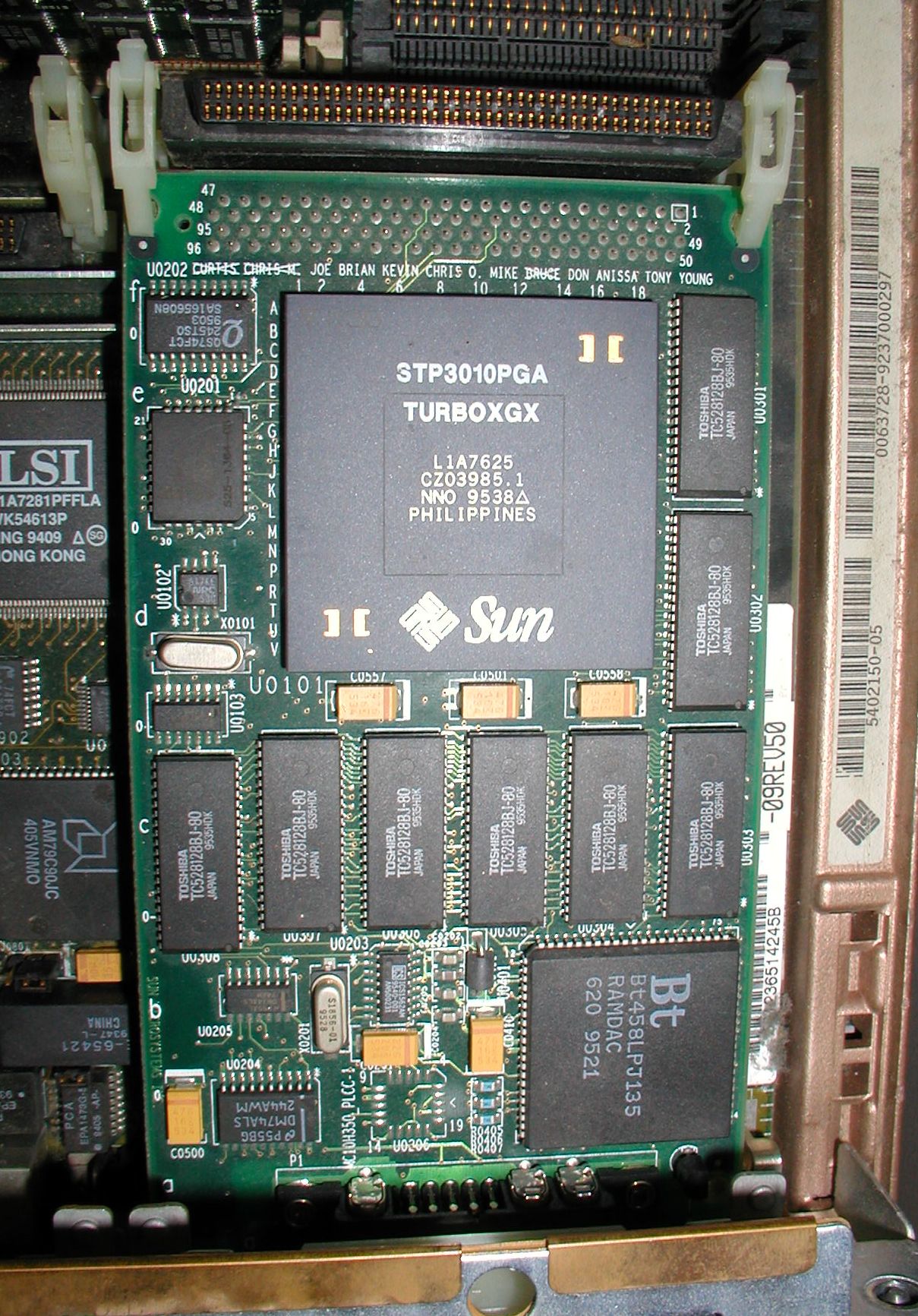
Working from this page to configure my sparcstation 10 after NVRAM
replacement:
http://www.obsolyte.com/sunFAQ/faq_nvram.html
...but curious is there an installation manual or whatever specific to the
video card in my system, a TurboXGX with STP3010GPA chip
http://vintagecomputer.net/sun/SparcStation-10/Sun_STP3010PGA_TURBOXGX.jpg
I have Solaris 4 installed. I am guessing around trying different things.
With help I have the OS installed but so far I can't get the system to
recognize the video card and Sun keyboard. With these installed it freezes
the system...so, I am using a serial terminal to interact with the system.
The video display I have is an SGI GDM-20D11
Eventually I'll poke through to the solution, this is my first Sun box, up
to this point they were "too new" but I'd like to learn how to perform a
system install.
If I find the answers I am looking for I'll post here.
Bill
Is anyone perhaps interested in any of the following?
It's essentially the remainder of some of my earlier offerings.
I took the time to provide some details (that previously may
have been missing)
I intend to clear out the majority of it by mid-December
(around the 15th), after that it will likely be hauled off
to the recycler.
---- tape drives and media
(pictures: <http://bit.ly/2AjxQYu> <http://bit.ly/2AjxQYu>,
<http://bit.ly/2jxDPkB> <http://bit.ly/2jxDPkB>,
<http://bit.ly/2AjFkeh> <http://bit.ly/2AjFkeh>, <http://bit.ly/2zBrv9S>
<http://bit.ly/2zBrv9S>,
<http://bit.ly/2AGR9Ot> <http://bit.ly/2AGR9Ot>, <http://bit.ly/2AI3Dp6>
<http://bit.ly/2AI3Dp6>)
-- Ultrium (Linear Tape Open)
- Hewlett-Packard StorageWorks Ultrium 920 (LTO-3) external
half-height tape drive SCSI U320 LVD/SE with auto-termination
- Quantum LTO-3 internal half-height tape drive SCSI U320 LVD/SE
with auto-termination
- Seagate Viper 200 LTO-1 external full-height tape drive SCSI
U320 LVD/SE with auto-termination
- Hewlett-Packard, Quantum, Maxell, Fujifilm, Sony, etc.
LTO-{1,2,3} data and cleaning tape catridges, many new and
unused, many available (see pictures)
-- Digital Data Storage
- Hewlett-Packard StorageWorks DAT72 (DDS-5) internal tape drive
SCSI U320 LVD/SE (possibly with auto-termination; not fully
sure, need to check)
- Sony SDT-D11000 DAT40 (DDS-4) external tape drive, SCSI
(LVD?/)SE
- Hewlett-Packard StorageWorks DAT160 (DDS-6) data and cleaning
tapes, several tapes, nearly all new and unused
- Hewlett-Packard StorageWorks DAT72 (DDS-5) data and cleaning
tapes, several boxes, 2~3, largely new and unused
- Hewlett-Packard, Compaq, Maxell, Fujifilm, Sony, etc.
DDS-{1,2,3,4} data and cleaning tape cartridges, various
types, many available (see pictures)
---- computer components (multi-platform, cross-architecture)
- Hewlett-Packard-branded S2io/Exar/Neterion 10Gbit (10GBASE-
SR) PCI-X NICs, including 850nm transceivers, supported on
many platforms (including Windows, IRIX and OpenVMS), around
5 available
- Hewlett-Packard, LSI, etc. PCI/-X adapters, e.g.: SCSI, FC,
FC/SCSI duo (hybrid), etc. HBAs, NICs, IEEE-1394a (FireWire/
i.Link) adapters and more, various types and (re)brandings
---- software
-- operating system
- Hewlett-Packard OpenVMS (I64) Open Source Tools (2010)
CD-ROM, in original sleeve
- Hewlett-Packard Tru64 UNIX V5.1B Documentation (2010)
CD-ROM, in original sleeve
- Hewlett-Packard Tru64 UNIX NHD-7 (New Hardware Delivery)
kit (2010), in original packaging (unopened), primarily
intended for e.g. HP AlphaStation/AlphaServer DS15/A
- Compaq OpenVMS Alpha V7.2 (1999) CD-ROM, disc 1 of 2,
in sleeve
- Compaq OpenVMS Alpha V7.2 & V7.2-1 System Crash Mandatory
Update (1999) CD-ROM, in sleeve
- Microsoft Windows 7 Home Premium, NL (Dutch), licenses
included, 2 available
- Microsoft Windows XP Pro SP2b, NL (Dutch), OEM, only
media (no license)
-- applications
- Frame (later Adobe) FrameMaker for SunOS/Solaris,
advanced typesetting software, boxed with documentation
and installation media
- Sybase Database for OpenVMS (Alpha), in original jewel
case
- Syntax TotalNET Advanced Server for SunOS/Solaris(?),
boxed
- VITec RasterFLEX (v4.0) for SunOS/Solaris, boxed
(pictures: <http://bit.ly/2AoHk4P> <http://bit.ly/2AoHk4P>,
<http://bit.ly/2j4QsE8> <http://bit.ly/2j4QsE8>, <http://bit.ly/2Auth07>
<http://bit.ly/2Auth07>)
- Sega DreamKey, internet web browser software(?) for
Sega Dreamcast, in original jewel case
---- books (mostly English and some Dutch)
- various (see picture: <http://bit.ly/2BlLtWu> <http://bit.ly/2BlLtWu>), on
computing/
computers, computer architectures (e.g. MC68000), the
history of IBM, also computer graphics, covering software
like Maya (v2.5), Houdini (v6~8) and LightWave 3D (v5.5~5.6),
etc.
---- computer input devices and other peripherals
- Wacom serial (perhaps also ADB and USB, need to check)
digitizer tablets, in various sizes
- Logitech PS/2 trackball, barely used
---- Cardbus adapters
- Sitecom USB 2.0, providing 2 ports
- SIIG IEEE-1394a FireWire
---- Apple Macintosh serial & ADB adapters
- Keyspan Mac Serial Adapter (to USB)
- Griffin iMate ADB to USB adapters, 2 available, one
includes the original packaging
---- serial cables and converters
- DeLock, generic, etc. DB9, DB25 and conversion cables,
including straight-through and 'null-modem' varieties,
fairly large amount available
---- SCSI, SAS/S-ATA and FC cabling
- multi-vendor internal SAS to S-ATA cables, several,
including in unopened packages
- multi-vendor internal and external SCSI cables,
several available
- multi-vendor internal and external SCSI terminators,
mainly LVD/SE (incl. UW and U320) but also HVD, both
active and passive, several available
- multi-vendor LC (LC to LC) fiber-optical cables
(contact me about OM type), several available and in
various lengths
---- PCs and components
- IBM-branded DDR2 RAM R-DIMMs (as kits), I believe 8GB
in total (I need to check), removed from a working IBM
x346 server at the time
- ASUS M8N-E, with AMD Athlon64 X2 CPU, 8GB DDR2 RAM and
documents
- ASUS M2N-E SLI, with AMD Athlon64 X2 CPU, 4GB DDR2 RAM
and documents
- Cooler Master 600W (AT) PSU
- Cooler Master(?) 460W (AT) PSU
---- SGI (MIPS-powered) IRIX systems and components
- SGI Tezro & O3x0 HDD sled/tray (Intel type), with
optional blanking/airflow plastic included, at least 1
(maybe 2, need to check)
- SGI DMediaPro DM10-compatible IEEE-1394a FireWire
(3.3V) PCI card with cables, SGI DMediaPro DM10 manual,
etc., boxed
- SGI IMPACT (MGRAS) 4MB TRAM module, possibly defective
-- not really interested in selling, but in theory for
sale (depending on the offer, I might be persuaded)
- SGI Indigo? IMPACT/10000, with 195MHz MIPS R10000 CPU,
1GB RAM, High IMPACT plus 4MB TRAM, IMPACT Video plus
VBOB, Plextor CD-ROM drive, intact bezel, lockbar
included, etc.
- SGI O2, with 400MHz MIPS R12000 CPU, 1GB RAM, digital
A/V (AV2) module, Toshiba DVD-ROM drive, intact bezel,
etc.
---- general 19" rack equipment
- general 1U fan (low-noise ventilator) unit, with
temperature monitoring & control
- general rack trays (vented), at least one (possibly
more)
- general rack mounting bars, cable managers and other
accessories
- general mounting fasteners (RM mounting blocks and
screws)
---- video games and peripherals
- Nintendo Super Scope for Super NES (Nintendo
Entertainment System), PAL/EUR region, including
cartridge and documentation
---- graphics monitors, cables and accessories
- Dell UltraSharp U2412M, 24" IPS LCD monitors, 1~2
available
- ATEN USB & VGA (HD15) KVMs, with documentation, about
2~3 available
- SGI 13W3 (HD13W3 to HD13W3) cable, about 2?~3 meters
in length
- generic short DVI-D cables (around ~0.5 meters /
~1.6 foot), ideal for SGI VBOB plus DM5 with DM2/DM3
- generic component monitor cables, one with RCA (tulip)
and another with BNC cabling
- generic DVI-D splitters (not sure if I still have
them, I need to check)
---- video equipment
- JVC DTV Component Multi DT-V20L1D, 22" LCD, full HD,
10-bit (Deep Color), professional multi-format
broadcast monitor, with lots of built-in I/O (HD
component, HD-SDI, HDCP-capable DVI, composite video,
etc.), with a few dead pixels
- JVC DTV Component Multi DT-V1710CG, 17" CRT, full HD,
10-bit (Deep Color), professional multi-format
broadcast monitor, with various input modules
(including SD-, HD-SDI and HD component, also available
individually, in original boxes)
- Gefen 1080p Scaler for HDMI, boxed, professional-grade
digital video scaler (picture: <http://bit.ly/2AgQjqS>
<http://bit.ly/2AgQjqS>)
- Miranda ASD-271p, professional analog-to-digital A/V
signal converter, including external PSU, ?as-is?
(untested, or not recently tested)
- generic HDMI to 3G/HD-SDI (also SD-SDI capable) bridge
- generic ~20 meter / ~66 feet, HD/3G/+-SDI BNC cable
- DeLock ~10 meter / ~33 feet, HD/3G/+-SDI BNC cables,
two available and one in the original packaging
- DeLock and generic ~0.5~1 meter / ~1.6 foot, HD/3G/+
-SDI BNC cables, around 3~5 available
- generic and various other lengths of HD/3G/+-SDI BNC
cables, several available, some in original packaging
- generic 75? BNC terminators for SDI, many available
---- photo-/cinematographic equipment
-- cameras
- Sony HDR-FX1000E, HD video camera (3-CMOS), with
optional accessories, like large Sony carrying bag
(pictures: <http://bit.ly/2BBvxAw> <http://bit.ly/2BBvxAw>)
- Blackmagic (Design) Pocket Cinema Camera (BMPCC), RAW
& 10-bit ProRES, full HD video camera, in original box,
plus optional accessories
-- BMPCC accessories:
- BMPCC batteries, multiple of Blackmagic Design and one
of Nikon (original)
- Kamerar QV-1 viewfinder magnifier (loupe)
- ... and more (contact me)
(pictures for all of the above and some of the below:
<http://bit.ly/2j43Icr> <http://bit.ly/2j43Icr>)
-- lenses and adapters
- Panasonic Lumix G II 14mm ?/2.5 prime MFT (Micro Four
Thirds) lens
- Panasonic Lumix G X Vario 14-42mm ?/3.5-5.6 Power-
O.I.S. pancake electronic zoom MFT lens
- Panasonic Lumix 45-200mm ?/4-5.6 Mega-O.I.S. zoom
MFT lens
- Metabones Speed Booster Nikon F/G to MFT (focal
reduction) lens mount adapter
- other MFT lens mount adapters (including with focal
reduction), see pictures
- Samyang 16mm T/2.2 VDSLR Nikon F mount DX/APS-C lens
- Sigma EX DG 17-50mm ?/2.8 Nikon F mount DX/APS-C lens
- KMZ Jupiter-8 50mm ?/2 Leica M39 35mm full-frame lens
- Sigma Art DN 013 60mm ?/2.8 E-mount APS-C lens
- Manfrotto 700RC2 lightweight video monopod/tripod head
- Manfrotto 585-1 ModoSteady 3-in-1, compact stabilizer
rig
---- audio equipment
- Music Group/Behringer Ultra-Match SRC-9624, 96KHz
24-bit audio interface, barely used
There might be more, but this is it for now.
Not all is directly related to computers, but most of
it has been used together with them, or can be used
together with them or to document/conserve retro
systems.
Everything is located in the Netherlands.
- MG
Hello Folks,
I've listed a bunch of new items for sale, all of them 8-bit boxed
computers and peripherals.
Apple Joystick IIe and IIc (boxed) - $65
Atari 1027 Letter Quality Printer (boxed) - $45
Commodore 64 (boxed, incomplete, bad video) - $55
Commodore MPS-803 Printer (boxed) - $50
Databar OSCAR Optical Scanning Reader for TI 99/4a (boxed, incomplete) - $40
Dauphin DTR-1 "Desktop Replacement" (boxed)* - qty. 2, both work; 2nd unit
is missing its stylus; both units require minor solder repair to power
supply connector - $250 for first unit, $150 for second unit, $350 for both
Gibson Light Pen System for Apple II/II+/IIe (boxed) - $40
IBM PC Convertible Serial/Parallel Interface (boxed) - $15
IBM PCjr Joystick (boxed, shrinkwrapped, qty. 2) - $20 each
Logitech ScanMan Handheld Scanner (boxed) - $25
Radio Shack TRS-80 Deluxe Joystick Cat. No. 26-3012A (boxed) - $35
Science Fair [Radio Shack Cat. No. 28-218] Digital Computer Kit (boxed) -
$35
Thrustmaster Rudder Control System (IBM and Mac) (boxed) - $25
Flight Link AV-C Flight Simulator Controls - hardware only; needs work; not
boxed - $250
Wico Merlin Joystick (boxed) - $20
Yamaha CX5M Music Computer (boxed) - $165
More information is available on the VCFed forums at the following link:
http://www.vcfed.org/forum/showthread.php?58709-New-Items-For-Sale-Check-th…
I also created an unboxing video for your viewing pleasure:
https://youtu.be/I-yu1EsR9Xg
The description has a video index in case you want to jump to specific
items.
As always, please reply directly to me via e-mail for the fastest response.
Thanks!
Sellam
Lars Brinkhoff <lars at nocrew.org> wrote:
> Hello,
>
> Richard Cornwell wants to implement DL10 for his KA10/KI10 simulator,
> but he doesn't have any documentation for it. Any leads?
First question is: since the DL10 is a DMA device for a handful of PDP11s,
what is intended at the other (unibus) end of it?
I have found that
http://bitsavers.trailing-edge.com/pdf/dec/pdp10/periph/MP00068_DN87_Univer…
contains the engineering drawings for the DL10.
Also, the tops-10 source file D85INT.MAC (from the unsmon directory)
contains the driver for it.
If the idea is to get more terminal lines, maybe a DC10 scanner would
be an easier starting point.
--Johnny
> From: Lars Brinkhoff
> Specifically, the DC76 supported by ITS.
>> The DL10 was used in two DEC system products, the DC76 Asynchronous
>> Communication System, and the DN87 and DN87S Universal Communication
>> System Front Ends. I couldn't find any documentation on the former
> Ouch, it's the former we want.
Eh, no problem. The DL10 part is the same, and the PDP-11 devices in the DC76
were almost certainly standard DEC PDP-11 stuff.
ITS ran its own code in the PDP-11 attached to the DL10, anyway - looking at
IOELEV (in the MX-DL section), it only supported DL11's and DH11's. Those are
very well documented.
Noel
> From: Pontus Pihlgren
> Thank you for sharing Noel.
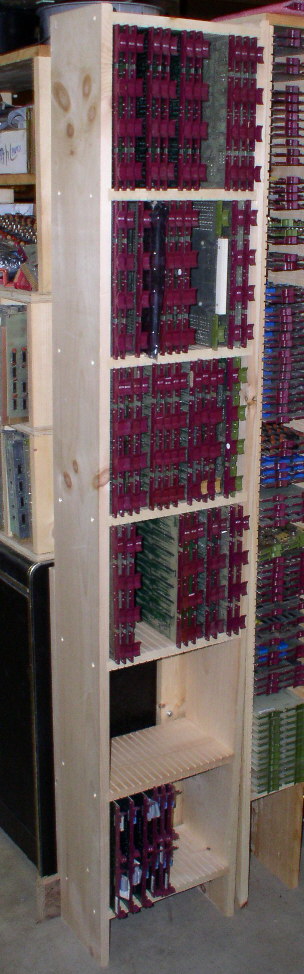
Well, I thought people might find it useful. Over time,I've made a variety of
shelf designs to hold my boards, searching for something that worked really
well, and I liked this one so much I thought it was worth passing it on.
In fact, I liked it so much that I took the dual rack (next to it in the
picture) which held boards horizontally, and re-built it into one that holds
them vertically, like the quad rack. For the duals, the shelf-shelf spacing
(i.e. bottom of one, to the top of the next) is 5" (i.e. the repeat distance
is 5-3/4", when using 3/4" planks).
> In retrospect are there any measurements you would do differently if you
> did it again?
Nope. I made another quad rack for my workshop upstairs, and built an exact
duplicate of the first one (in the picture). And I made another vertical-type
dual rack, also for upstairs.
About the only thing I'd have changed (had I thought of it in time) was to
make that second dual rack a mixture of dual and quad shelves (which you can
trivially do in this design, unlike the horizontal-format one) as I need more
quad shelves, and have an excess of dual shelves. Oh well!
> E.g. Have you found any boards that need higher clearance to the next?
Well... There are some DEC boards which have a Berg connector on the top edge,
and ones which use the later Berg (the ones with the little latch handles)
sometimes place them too close to the edge.
One example of this is the M7800 (DL11); they _just_ fit in a shelf with the
'proper' 10-1/4" spacing, but I have a couple shelves where, due to variation,
the shelf-shelf distance is only 10-1/8", and M7800's won't go into them. The
M7856 (DL11-W) is the same.
For the dual shelves, the E-Rev of the M5904 (MASSBUS transceiver) places the
top of the latches about 1mm from the edge of the board. (The F Rev has been
re-laid out, to move the connector a but further in.) I guess it would be
possible with very careful cutting to space shelves to hold that, but I
elected not to; the tolerances are so slight, a bit too far, and boards will
come out of slots. And some off-brand QBUS memory puts a resistor a little
over 1mm from the card edge, and those also won't go.
Noel
Hi Folks!
I have documentation for some forestry software, that came with my HP9816 machines.? I am not sure, but I may have a tape or disk to go with it.
It's called "MSAP", for Multispan Skyline Analysis Program, and appears to be a successor to the software documented in the following links:
http://bit.ly/2EjAC0Nhttp://bit.ly/2CFp2wk
I have no use for it, but it seems like it may be of historical value.? Would anyone here be interested in it?
dave
> From: Michael Zahorik
> Thanks for responding.
Sure. Not sure how much use it was, but...
> I do like your wood working.
Thanks..
> may give it a try. Should not be very difficult.
No, as long as you have either a radial arm saw (best), or a table saw
(preferably with a 'sled' - if you don't have one, probably worth making one)
to cut all the slots.
Like I said, if you want a drawing, let me know. A few data bits: the slot
pitch (slot center to slot center distance) is 5/8"; I used 1/8" for the depth
of the bottom slot (just enough to hold it in place), and 3/16" for the top
(some extra, to allow for board size variation). The shelf-shelf spacing (i.e.
bottom of one, to the top of the next) is 10-1/4" (i.e. the repeat distance is
11", when using 3/4" boards).
Noel
I have this board Dilog SU7 23A
Does anyone know this board?? I think it may be a SCSI controller. I
cannot tell if it is Unibus or Qbus.
Any help appriciated.
Sincerely,
John Welch
Hello,
I also have a Dilog SU723A, but never managed to find any docs for it.
My board is revision D.
It works be very nice to find something.
As the MSCP / TMSCP selection is only a matter of firmware, I wouldn't be
surprised if the MSCP SU726A was the same board with different PROM.
Andrea
On 1/6/2018 5:51 AM, shadoooo via cctalk
wrote:
> Hello,
> I have some doubt about DEC tape units and related interfaces.
>
> What I know about (right or wrong, please correct):
> - TU80 is a Pertec drive, it needs M7454 (unibus, TS11 driver) which is a
> modified Dilog DU132. No option for QBUS.
>
> - TS05 is a Pertec drive, it needs TSV05 (qbus, TSV05 driver) which is a
> modified Emulex ???)
>
> - TU81 plus is LESI or Pertec, you need KLESI (unibus / qbus, TMSCP driver).
>
> Now the questions:
> I have both a TU80 and TU81plus, and both Unibus and Qbus machines, but no
> interfaces.
> I would like to connect at least TU80 to unibus, and TU81 to qbus, but for
> backup reasons it would be better to have both drives on both busses.
>
> What are the DEC or third party card which would fit better on my drives,
> and/or which would offer better driver compatibility with various OSs (via
> switchable configuration).
>
> I'm not sure about interface compatibility (Pertec interfaces could be
> swapped),
> and driver compatibility (what is better for RT11, what for BSD, what for
> VMS).
>
> I would accept also some offer to my email, if somebody has something
> interesting to sell (better if in EU).
>
> Thanks
> Andrea
I only have SCSI tape drives, and a TS05. But take a look at the various Emulex tape controllers. I believe TS11 and TMSCP emulations are what you'd want.
TC02 Q Emulex Pertec-interface tape drive controller.
Emulates TS11. Early revisions incompatible
with VMS.
TC02 Q Emulex Pertec-interface tape drive controller.
Emulates TS11. Early revisions incompatible
with VMS. Supports 1-4 Cipher F880, CDC 92181,
Kennedy 6809, and Pertec F1000.
TC02/FS Q Emulex .5" reel-to-reel tape controller,
TC05 Q Emulex CDC Sentinel .25" cartridge tape controller.
Emulates TS11. Supports CDC 92192 Sentinel.
TC05/SX Q Emulex .5" reel-to-reel tape controller.
TC11/N U Emulex .5" reel-to-reel tape controller.
Emulating TM11/TU10.
TC11/P U Emulex .5" reel-to-reel tape controller.
Emulating TM11/TU10.
TC11/V U Emulex .5" reel-to-reel tape controller.
Emulates MT11/TU10. Needs Emulex VAX/UT software.
TC12 U Emulex .5" reel-to-reel tape controller.
Emulates TS11. 22-bit. Supports 1-4 Cipher F880,
CDC 92181, Kennedy 6809, and Pertec F1000.
TC12/FS U Emulex .5" reel-to-reel tape controller,
TC13 Q Emulex Pertec-interface tape drive controller.
Switchable TU81 TMSCP or TS11 emulation.
TC13 U Emulex Pertec-interface tape drive controller.
Switchable TU81 TMSCP or TS11 emulation. Supports
1-4 Cipher F880, CDC 92181, Kennedy 6809, and
Pertec F1000.
{above excerpted from M. Gentry's Field Guide)
- js.
I asked a while back, but thought I'd try again. I'm looking for a
replacement flyback transformer for a VT220-F, part number 16-26299-01
by TAI HO. I've found a few online, a bit higher priced than I'd like,
especially after import tax. If you have one you'd be willing to sell,
please get in touch.
Thanks,
Aaron.
--
Aaron Jackson
PhD Student, Computer Vision Laboratory, Uni of Nottingham
http://aaronsplace.co.uk
Any RS/6000 hobbyists out there?
I got my old 7009-C20 pretty tricked out and hardware carefully selected to be compatible with AIX 4.1.3, the version I'm trying to get running on it. Unfortunately, I can't get the dang thing to boot my 4.1.3 or 4.1.4 CD's. It'll boot my 4.1.5 disc, however. The 4.1.3 and 4.1.4 CD's are labeled "AIX for clients" or something like that, and I seem to recall having trouble getting other RS/6000's to boot from this 4.1.3 CD, even though it's genuine original media, and reads just fine in a working system.
Anyone know a way to check what systems an old AIX 4.1 disc supports, or have C20 or similar MCA machine running 4.1.3?
My other thought was to try to NIM boot it using my ThinkPad 860 as a NIM server (running 4.1.5), but it unfortunately doesn't have enough capacity to hold a lpp_source and a SPOT, and even then it looks like the 4.1.3 disc may not have enough stuff on it to support the C20 anyway...
Anyway, thanks in advance!
Since I know there's tons of PDP/11 geniuses here, and other gurus with a NOVA 4, and a Tektronix 4052 guy (I have the 4051):
What have you done, with microprogramming this part? In your architecture, have you changed the microcode, create an instruction to enhance your machine?
I would be interested in any hardware projects, stories (or even in the FPGA, I hear its a popular thing to copy);
I read all of Donnamaies pages, and planing to hook up, breadboard the eval kit, perhaps reproduce the PCB if you guys are interested.
What about the coding tools? ADASM? Looks long gone, how do you do microcode today?
If I forget the soldering iron, can anyone show me an example on a Xilinx board, ISE, Vivado that uses the original AMD 2900 architecture?
http://www.donnamaie.com/AMD_Vintage/AMD_2900_ED2900A.html
Donnamaie E. White - AMD 2900 Family, Bit-Slice; Am2900 ...<http://www.donnamaie.com/AMD_Vintage/AMD_2900_ED2900A.html>
www.donnamaie.com
Lecture Monograph updated. The AMD 2900 Family (Am2900) Bit-Slice and other devices were supported by a number of high-level application notes. (Generated by the AMD ...
> From: Steven Malikoff
> That's the first actual photo I've seen of the foot, and I see what you
> mean.
Oh, I can take more, then; let me know what you need.
> Let's regard the inner vertical surface where it mates to the rack as
> the normal surface.
Right; that's our reference plane.
> If you have a length of something straight .. clamp it with a .. clamp
> to that inner surface
Umm, not possible. There are two diagonal (in the horizontal plane) ribs
coming off that surface, so there's no way to clamp anything vertical to
it. The _front_ (outer) surface, parallel to the reference plane, I could get
to (and the clamp is a good idea). Here's what I wound up with:
http://ana-3.lcs.mit.edu/~jnc/tech/jpg/StabilizerMeasurement.jpg
(Yes, yes, I know, tha assumes the back face of the square is parallel to the
front; it is, pretty much - I checked with a vernier calipers.)
So the vertical distance from the horizontal plane at the bottom of the
stabilizer, at its tip, to the bottom of the 'outer surface' (as above), is
17/32". The distance from the plane of the 'outer surface' to the end of the
stabilizer is 7-9/16". The distance between the reference plane and the 'outer
surface' is 7.14mm (one thing I _could_ get a vernier calipers on :-).
Also, it turns out the right-hand vertical face of the stabilizer is _not_
perpendicular to the reference plane! The foot angles in slightly. The outer
vertical surface is a plane along its entire length, so it's hard to notice
unless you put a square on it directly:
http://ana-3.lcs.mit.edu/~jnc/tech/jpg/StabilizerAngled.jpg
(Sorry about the lens distortion; wanted to show that the square was along
the reference plane.)
I couldn't get anything clamped on to make the measurement, but the tip of
the stabilizer is about 1/2" (to a /32nd, or so) in from a vertical plane
perpendicular to the reference plane, and situated at the right-most location
on the foot (i.e. along the edge of the square, in that photo).
> A pencil rubbing on paper, or paper creasing slong eges then drawn over
> with a ruler can also help to get angled surfaces.
Sorry, couldn't figure that out?
> Another thing, CAD can make good use of non-perpendicular measurements.
> So if you're able to measure something across a diagonal or at some odd
> angle, then please do so. It can be used to triangulate and improve
> other taken measurements, like a point cloud.
What other measurements should I take?
One easy/obvious one is from the right-hand outer bottom corner of the
stabilizer to the left-hand bottom corner of the reference plane: that's
8-9/32". (A lot of these corners are rounded, so exact measurements are a
matter of choice....) The top inner corner of the right-hand face is 9-11/32"
>from the bottom outer corner of that face (same corner as above).
Noel
The subject line says it all?
I have just been given an IBM 5285 Distributed Data System, together with a
5222 printer. It appears to work (it came with an 8? disk that contains some
user application, and the system can IPL off that disk, and brings up a
prompt requesting the current date and time), but I have no keyboard with
it. This brochure
(http://bitsavers.informatik.uni-stuttgart.de/pdf/ibm/528x/G580-0274-00_5280
_Distributed_Data_System_Brochure.pdf) has a picture of the system and its
keyboard on the front page.
If anyone has one of these keyboards, please let me know!
Kind regards,
Camiel Vanderhoeven
Hi,
I now have a number of uCode diskettes for my IBM 4331. I would somehow like to image them so:
a) I have backups in case the floppies themselves go bad
b) be able to investigate their contents in case I have to ?merge? the contents of multiple floppies to
make a single good one
These are all 8? diskettes.
The complicating factors in all of this are:
a) any text (e.g. strings) are going to be in EBCDIC rather than ASCII
b) each uCode diskette was presumably serialized to the CPU it was for
c) not sure what the ?on-disk? structure looks like
d) the only 8? diskette drives that I have are in IBM (non-PC) equipment
Any ideas/comments would be welcome.
Thanks.
TTFN - Guy
Does anyone have an ADDS Envoy portable terminal, circa 1972-1976? If
so, then please let me know if what if any are the U.S. patent numbers
cited on it.
Thanks,
Evan
> From: Steven Malikoff
> Using the new bolt info, it's refined a little more:
I just took a quick glance at this, and noticed on major thing that's off:
you're showing the bottom side of the stabilizer foot as at right angles to
the vertical of the rack; it's not. See here:
http://ana-3.lcs.mit.edu/~jnc/tech/jpg/StabilizerFoot.jpg
in which I have attempted to place the ruler at a right angle to the vertical
(as available in the plate where the two horizontal bolts go through).
I _guess_ I could try and work out how to measure the amount of drop; maybe I
can get one side of a T-square onto that vertical (on the front), get a
horizontal from that, and start measuring...
> I'm assuming the plate goes on after the feet have been placed on the
> rack, and the #10 screws hold it all together.
There are two different kinds of kickplates:
http://ana-3.lcs.mit.edu/~jnc/tech/jpg/Kickplate.jpg
Both have to go on after the feet, since the bolts go through these, and then
through the feet, into the rack. The newer (I think) 'diagonal' ones don't
cover the top of the feet, so you can tighten the large vertical bolt after
the two smaller horizontal bolts. The latter are sort of necessary; there's
often some play in the stabilizer foot, even with the large vertical bolt
tightened.
(BTW: here:
http://ana-3.lcs.mit.edu/~jnc/tech/jpg/ExtensionFootBolt.jpg
is an image of one of those, which I posted a while back.)
> I'm guessing the kickplate is 16 guage sheetmetal..?
My vernier caliper says 1.66mm (including paint, of course); whatever that
turns into. Both types are the same.
Noel
Hello List,
i playing arround with my Vaxstation 4000 60....
This is a System with 40 MB Ram, 1GB Hdd, a VGA Monitor, LK201 Keyboard,
VSXXXAA.B03 Mouse, and a external SCSI-CDROm dirve.
With OpenVMS installed on it i have the grafical DecWindows System running.
Now i have installed NetBSD 7.1 from CD via the RS232 Consoleport.
My two problems now are:
1.) It is not posible to switch the console from RS232 to the VGA
Monitor and Keyboard. If i switch the S3 switch in down position i can
only see the NetBSD Kernel decompression. After that i see nothing on
VGA and RS232 console. The System starts up anyway. After some time it
is possible to connect via LAN.
2.) Is it posible to run the NetBSD X.Org on that sort of Vaxstation? If
yes... Whats to do to get that running? I Think i have to fix my point 1
first.
Marco Rauhut
I see a thread with the above title started by *MartinHepperle *concerning
the use of modern VGA flat panel displays with video from the 98204B
composite video board in the HP 9817 computer.
The problem is that the high horizontal scan rate of 25khz prevents modern
panels from locking onto the video. Mr. Hepperle mentions the possible use
of a scan converter available from that auction house, the Gonebes GBS-8200.
I write to report the successful use of this device with an HP 2009m
VGA-only flat panel monitor and the subject video board and computer. I
input the video to the "Y" input of the YPbPr inputs of the device.
I hope someone finds this useful.
Photo of converter: http://bit.ly/2qEnHV0
Resulting video: http://bit.ly/2ACPLrM
--
Cliff Miller
cliff52 at gmail.com
I see a thread with the above title started by *MartinHepperle *concerning
the use of modern VGA flat panel displays with video from the 98204B
composite video board in the HP 9817 computer.
The problem is that the high horizontal scan rate of 25khz prevents modern
panels from locking onto the video. Mr. Hepperle mentions the possible use
of a scan converter available from that auction house, the Gonebes GBS-8200.
I write to report the successful use of this device with an HP 2009m
VGA-only flat panel monitor and the subject video board and computer. I
input the video to the "Y" input of the YPbPr inputs of the device.
I hope someone finds this useful.
Photo of converter: http://bit.ly/2qEnHV0
Resulting video: http://bit.ly/2ACPLrM
--
Cliff Miller
cliff52 at gmail.com
I bought the Tek 4051 on ebay today; Jason brought it to my house and it works perfectly, with about a half hour of programming instruction my 12 old daughter was plotting a cat face.
https://www.facebook.com/Thelma.Franco/videos/10154277153852670/
I would like to get in touch with other users of this first personal computer, and find additional resources.
Do you know where I can find an archive of BASIC programs for this?
Has anybody built plug in cards in the back, mine came with a realtime clock and a "file manager", I do not know what that one does.
I have some Tek scopes with IEE-488, and I will see if I can get the IEEE interface working.
There was a DC300 tape in the machine:
biorithm
craps
blackjack
artillery
tanks
weatherwar
The belt is broken in the tape, I have ordered some new DC300's and will transplant the tape.
Any resources will be welcome!
Randy
Excellent, that's a great start.
Vince - thanks for the measurements, I will redraw a better 3-view using those. Not sure about how the extra bolt goes though.
Ethan - thanks for confirming the different leg pad to frame pad.
Noel - that is extremely useful info on the pads, I've now found them at http://www.vlier.com/product_index/leveling/sel_05_lstar.html#
Paul - yes I noticed some systems had different legs, for instance this one https://c1.staticflickr.com/3/2435/3878202215_372c46fccb_b.jpg
and any p/n info you have from better sources would be welcome.
The part number I found for the legs (H-952-BA) came from the Fall 1978 Digital Sales Catalog, page 129 which has the same p/n for both
Standard and Short cabinets.
I'll cogitate over a revised drawing and get back to the list.
Thanks again,
Steve.
I regret we haven't been able to resusciate my 4051 yet.? Still kills power to the main board.
I didn't know there were games for the 40xx machines.? I didn't think they could with the limitations of the screen design, although I kinda thought the display would work well for, say, an adventure game.
B
Sent from my Samsung device
-------- Original message --------
From: Randy Dawson via cctalk <cctalk at classiccmp.org>
Date: 2018-01-06 10:01 PM (GMT-08:00)
To: Randy Dawson <rdawson16 at hotmail.com>, "General Discussion: On-Topic and Off-Topic Posts" <cctalk at classiccmp.org>
Subject: Re: Tek 40xx computer users
This was for Mike Hass, he was not in the email chain, and I do not have his address.
But it' s a general shout out to the other Tek 40xx users out there...
Randy
________________________________
From: cctalk <cctalk-bounces at classiccmp.org> on behalf of Randy Dawson via cctalk <cctalk at classiccmp.org>
Sent: Saturday, January 6, 2018 9:54 PM
To: General Discussion: On-Topic and Off-Topic Posts
Subject: Re: Tek 40xx computer users
Hi Gary,
Well its been a year.
Some news from here:
Micheal Cranford finished his MAXIPACK and FASTGRAPHICS PACK, and the results are awesome.
50-100% increase in the graphics speed, and he put all the demos and games on the MAXIPACK.
I 3D printed the plastic case for the PACKs and they look good.
I would like to see if we can work together, to clone the ROMs out of the packs you have, or see if you are willing to sell duplicates you have.
I really need a communications PACK, my 4051 did not have the comm port.? I have no way to transfer data in and out, I was going to attempt it over GPIB, bit I did not get very far.
What is new from your end?
I think we are trying to organize a 405x users group, I am talking with a few other guys.
Cheers,
Randy
________________________________
From: cctalk <cctalk-bounces at classiccmp.org> on behalf of Mike Haas <dogaschesswarrior at gmail.com>
Sent: Thursday, October 27, 2016 8:10 AM
To: General Discussion: On-Topic and Off-Topic Posts
Subject: Re: Tek 40xx computer users
Congrats on your new Tek.??? My 4051 pile came from came indirectly from
Gary Spence, who had inhouse involvement with the model. (can't locate his
bio at the moment)? Here's what I got... somewhere:
4051, 2x 4907 Dual 8" floppys, and the "System Test Fixture" front panel, a
box of DC300 tapes
"GAS 6800"? - a Homebrew 4051? (maybe a prototype?? 4051? ???)
and? these paks:
RS232 I/O compak
dual port memorypack
UNIBURN EPROM burner pack
VIDEOFRAME digitizer
GPIB Enhancement rompack
RS232 Printer Interface
Parallel Interface
Rompack Switch
Data Communications Interface
8k Rom pack
Addressable Data Tracking backpack
IC Analyzer
Editor Pack
Filemanager Pack
Binary Program Loader Pack
Signal Processor Pack
Service Pack
Pack extender board
a few empty packs and several wired edges
On Sun, Oct 23, 2016 at 10:15 PM, Randy Dawson <rdawson16 at hotmail.com>
wrote:
> I bought the Tek 4051 on ebay today; Jason brought it to my house and it
> works perfectly, with about a half hour of programming instruction my 12
> old daughter was plotting a cat face.
>
>
> https://www.facebook.com/Thelma.Franco/videos/10154277153852670/
Log In or Sign Up to View<https://www.facebook.com/Thelma.Franco/videos/10154277153852670/>
www.facebook.com
See posts, photos and more on Facebook.
Log In or Sign Up to View<https://www.facebook.com/Thelma.Franco/videos/10154277153852670/>
www.facebook.com
See posts, photos and more on Facebook.
www.facebook.com<http://www.facebook.com>
[https://www.facebook.com/images/fb_icon_325x325.png]<http://www.facebook.com/>
Facebook - Log In or Sign Up<http://www.facebook.com/>
www.facebook.com
Create an account or log into Facebook. Connect with friends, family and other people you know. Share photos and videos, send messages and get updates.
See posts, photos and more on Facebook.
>
>
> I would like to get in touch with other users of this first personal
> computer, and find additional resources.
>
>
> Do you know where I can find an archive of BASIC programs for this?
>
>
> Has anybody built plug in cards in the back, mine came with a realtime
> clock and a "file manager", I do not know what that one does.
>
>
> I have some Tek scopes with IEE-488, and I will see if I can get the IEEE
> interface working.
>
>
> There was a DC300 tape in the machine:
>
>
> biorithm
>
> craps
>
> blackjack
>
> artillery
>
> tanks
>
> weatherwar
>
>
> The belt is broken in the tape, I have ordered some new DC300's and will
> transplant the tape.
>
>
> Any resources will be welcome!
>
>
> Randy
>
>
>
>
>
I was given three VT100 and one VT131 in not great condition.
The biggest problem is that the keyboards are missing approximately 25% of
the keys in average. For example all SETUP keys and NO SCROLL keys are
missing. God know why.
It makes little point for me try to find keytops for these four keyboards.
Besides they are not actually matching the terminals except for one of
them. Apparently the VT131 keyboard is slightly different from the VT100.
Then two of the VT100 has a different first ROM chip and also an extra char
gen chip (23-108E2 and 23-198E2). Seems to be some kind of European/
Swedish/Scandinavian chargen and keyboard layout. The keyboards I received
has US layout.
I checked two PSUs, one monitor board, and one basic video (logic board)
which seem to work OK. One keyboard tested and is working electrically.
The cases are from OK to in quite ugly shape and the CRTs are from minimal
screen burn to quite some screen burn (due to long time with inverse video).
Is there interest in a full terminal? Parts? Keytops? I will probably keep
one or two flyback transformers to keep the ones I have going.
I am in Sweden.
/Mattis
From: Murray McCullough <c.murray.mccullough at gmail.com>
>
>This may be off-topic but these latest uprocessor exploits has raised
>a question: Are the 'old/classic' uprocessors using x86 technology in
>the same boat?
>
The exploit effects the speculative execution facility, so no it's not
"all P6 forward": nothing 32-bit or PAE, nothing just OOO, etc. The
current word I have (from my risk management folks, who got it from
Intel) is the oldest chips verified to be affected are the Xeon 3400
(server) and 2nd Gen Core (desktop) processors. So, probably nothing
later than 2009 or so.
KJ
Hey Alex,
I was trolling the internet and came across you post from 2015!! I have a
GRiD 2260 in like new condition with all the attachments, software and
carrying case. Are you interested?
Thanks,
Dan Smith
dansmithmaryland at aol.com
410-841-4827
Hello,
I have some doubt about DEC tape units and related interfaces.
What I know about (right or wrong, please correct):
- TU80 is a Pertec drive, it needs M7454 (unibus, TS11 driver) which is a
modified Dilog DU132. No option for QBUS.
- TS05 is a Pertec drive, it needs TSV05 (qbus, TSV05 driver) which is a
modified Emulex ???)
- TU81 plus is LESI or Pertec, you need KLESI (unibus / qbus, TMSCP driver).
Now the questions:
I have both a TU80 and TU81plus, and both Unibus and Qbus machines, but no
interfaces.
I would like to connect at least TU80 to unibus, and TU81 to qbus, but for
backup reasons it would be better to have both drives on both busses.
What are the DEC or third party card which would fit better on my drives,
and/or which would offer better driver compatibility with various OSs (via
switchable configuration).
I'm not sure about interface compatibility (Pertec interfaces could be
swapped),
and driver compatibility (what is better for RT11, what for BSD, what for
VMS).
I would accept also some offer to my email, if somebody has something
interesting to sell (better if in EU).
Thanks
Andrea
This may be off-topic but these latest uprocessor exploits has raised
a question: Are the 'old/classic' uprocessors using x86 technology in
the same boat? The very earliest ones, i.e., 1970s and early 80's.
probably not. How many are actually in use and/or on the Net?
Happy computing!
Murray :)
Hi My Friends,
Just a quick message to let everybody know that I am starting IT Training
Monday, January 8, 2018 to get the certifications I need. When finished I
plan to have my A+, N+ and S+ certifications. For those unfamiliar with
these certifications, this is paper work proving I have the knowledge to
perform the tasks of a Computer, Network and Server Technician in that
order. These enable me to get the great jobs in IT that I am looking for.
That is my plan. Please keep me in your prayers. This will be a lot of
work, reading, labs etcetera. In December 2018, I ought to be getting a
great Christmas present! :D
I will be checking my email when I can. Take care my friends.
>> From: Jim Stephens
>> I had a meeting with Ken Omohundro on 12/7 and will be having dinner
>> with him again soon. I'll ask him about it. I know he doesn't have any
>> records left, but I could take him your notes and see what he recalls.
> Thanks very much for that offer; we do think we know more or less how it
> works
So, I have completed what I think is a pretty thorough article on the CHWiki
about the ENABLE:
http://gunkies.org/wiki/Able_ENABLE
It contains _everything_ I was able to glean from the still-extant
documentation, etc, which I have access to.
There is enough detail there to add support for it to SIMH/Ersatz-11 (hint,
hint :-).
> there are two areas in which he might be able to help.
> The first is some very low-level details of how it worked, in terms of
> the UNIBUS interaction ... I _surmise_ that it was something like it
> watches NPR/SACK for a DMA cycle .. then waits for BBSY to cycle, at
> which point it knows it's a DMA cycle
Having refreshed my memory of how DMA cycles worked, I suspect it just watched
SACK and BBSY (since technically a UNIBUS device can do DMA cycles after
grabbing the bus with BRn), so no need to watch NPR.
> The second is some details of how some of the optional stuff for using
> existing memory, non-DMA devices, etc worked. ... I'll have to go
> re-read the documentation
Having looked again, I don't think there's any mystery; probably I just hadn't
carefully read it before.
One question I do have, though: why the limit (per the documentation) to 128KB
of old memory? If I'm correcly understanding how the MemDap works (it
apparently makes the address space of the 'secondary' UNIBUS appear on top of
the EUB memory, on the EUB) it should be able to handle up to 248KB? (The top
8KB is the I/O space on the secondary UNIBUS, which, if devices on the
secondary UNIBUS are to be supported, must be visible to the CPU through the
ENABLE.)
> It would also be interesting to know why he just didn't use a 3-bus
> design .. I suspect that the answer is that they way they did it, they
> could use a stock MUD backplane ... and only one over-the-back [UNIBUS]
> connector into the ENABLE [there probably wasn't room for a second].
This too.
>> I hope to get a biography and history of his companies including Able,
>> and figure somewhere to get it stored.
> The Computer History wiki would seem an ideal place for this sort of
> content?
Reaction?
Noel
This should be public, so visible even if you don't have a FB login.
https://www.facebook.com/jserwach/posts/1804323786269276
--
Liam Proven ? Profile: https://about.me/liamproven
Email: lproven at cix.co.uk ? Google Mail/Hangouts/Plus: lproven at gmail.com
Twitter/Facebook/Flickr: lproven ? Skype/LinkedIn: liamproven
UK: +44 7939-087884 ? ?R (+ WhatsApp/Telegram/Signal): +420 702 829 053
For some time now I have had a couple of ZX Spectrum machines. Neither
works, each has a different problem. Today I got one of them out for another
look. The problem with it is that it seems to constantly reset itself, you
see the copyright screen briefly and then it disappears (the TV screen shows
the usual "snow" when there is no signal). It just cycles round doing this.
I put a logic analyser on it as well as a scope. The CPU Reset pin looks
fine, it goes high and stays high.
The logic analyser shows that it is happily reading code from the ROM during
the boot sequence and it will suddenly start fetching instructions from
address 0 again, this appears to be somewhat random. I don't have a lot of
experience with logic analysers, and I have found that some pod/probe
combinations cause the machine not to work at all, so the logic analyser is
not, unfortunately, above suspicion. However the behaviour I see appears
consistent with what the logic analyser is telling me.
My thoughts are that this must either be a bad Z80 CPU or a bad ROM. Neither
is socketed and I am reluctant to desolder ICs unless I really have to as
there is always a risk of damage to the board.
Has anyone seen a similar problem before? Could this indeed be the CPU or
the ROM, or could there be a different cause?
Regards
Rob
Hello PDP-11 crowd:
I?m thinking of starting a project that will interface to a DR11-C, which has the usual 40-pin Berg ribbon cable connectors. I thought I?d ping the collected wisdom here to see if other folks had already sourced an available modern cable connector for this that they particularly like?
cheers,
?FritzM.
Even though I've been quiet, I have been making slow progress on the
QSIC in the background.? For those who've forgotten what the QSIC
project is about, here's the description:
http://pdp10.froghouse.org/qsic/html/overview.html
We've been working away on getting communications with the SD card
working and that's basically there now.? It initializes and reads and
writes blocks.? I've also connected it through an async FIFO to the
minimal RK11 controller I had working before and that's mostly working.?
That is, it can read and write blocks under control from the QBUS PDP-11
as if it were a real RK11/RK05.? What more could you ask for?
Well, I could ask for a lot more really but that's pretty good.? There's
a lot of RK11 functionality that I haven't implemented yet and all sorts
of configuration options we need to get in there.? Also, there's a bug
where it sometimes scrambles data so it's not quite ready to boot and
run a real OS yet but it's getting awfully close.
Here's a picture to my test setup:
http://pdp10.froghouse.org/qsic/qsic-setup.jpg
And a picture of a test of some spray-on glass frosting used as a light
diffuser on the indicator panel.? In this picture you can also see the
new LEDs I found that are a much better color match to the old
incandescent bulbs than the LEDs I picked for my first attempt.
http://pdp10.froghouse.org/qsic/frosting.jpg
Now for the request.? I've decided that I'd like to put a soft-processor
in the FPGA to handle a bunch of things (configuration duties and the
USB protocol being two of the big ones).? My preference would be for
this soft-processor to be a PDP-11.? Surely there's hack value in using
a PDP-11 as the I/O processor for a PDP-11 but there are practical
advantages to this as well.? For one, we're already familiar with it and
have a suite of development tools.? Also, I can re-arrange the I/O
devices I intend to give to this soft-11 and put them directly on the
QBUS instead and do initial development there.
I'd rather not get diverted by yet another substantial development
project so I'm looking for a decent little FPGA implementation of a
PDP-11 that I could just pick up use for this purpose.? Something that's
already debugged.? I'm thinking closer to an 11/04 than an 11/70 and
likely just running out of block RAM on the FPGA.
Thanks for any pointers to such an implementation and thanks to everyone
who's given support and assistance as Noel and I have poked along on
this project.
Dave
> From: Ethan Dicks
> The rod is also smaller by quite a bit, but I don't have one in front
> of me to measure.
The two feet are quite different. The smaller one on the extender is 5/16"-18
(i.e. UNC Coarse thread); the larger one under the cabinet is 1/2"-13.
Replacements can easily be had from Vlier: Vlier part numbers are FSE302S
(for the extender feet), and FSE306S (for the main feet).
We really ought to do a group bulk build of the extension castings; if we get
a reasonable size order together, they shouldn't be that expensive. Ditto
for the special bolt needed to hold them to the H960.
Noel
I'm in need of some feet for my H960s and am intending to make a few pairs, so I thought I might
as well try and make them look close to the originals.
I have a few ideas on construction, for instance 3mm steel plate laser-cut and folded jigsaw fashion
then welded, or even simpler a basic welded steel bar with a 3D printed leg cap for asthetics.
I've been unsucessful in finding any closeup photos or drawings of these things so have used a diagram
>from one of the 11/70 manuals which is the best I have so far. Thankfully they drew it in isometric so
it was easly to overdraw in CAD and project it to this:
http://web.aanet.com.au/~malikoff/pdp11/DEC_H960_stabiliser_foot_left_A-H95…
I have some questions-
Does the (optional?) sheetmetal kickplate play any role in securing these legs to the frame?
Are the two front screws are only there to hold them on and there is some internal box section that goes
into the front of the channel on the rack to take the weight?
Is the outer side tapered? It looks straight.
If the foot a one piece casting (presumably) or fabricated in some way?
Is the foot pad thread in the centre of the front of the leg, and is it the same thread and pad as the H960?
Finally I would really appreciate if someone could run a digital caliper over one, and fill in my required
measurements A through Q in the above drawing. And if you have a radius guage that would really be great.
As usual, thanks for any help or advice.
Steve.
Just curious...can anyone id the system that used these two types of core
memory? I am thinking the first is a hand-made custom core, but the 2nd is
definitely from a commercial system. Looks kind of IBM-ish but it's
nothing I can ID. It's not an IBM 1401 I don't think.
http://vintagecomputer.net/core-memory/
Thanks
Bill
> From: Toby Thain
> If the documentation is good enough, people in the community will be
> able to provide the software.
You mean, host drivers?
Yeah, that documentation will be pretty trivial: 'there's this extra
register, just like the one in the RLV12; the top 6 bits of the DMA memory
address go in there - the bottom two bits are mirrored into the two extended
memory bits in the CSR'. For the 'extended' RP11, not much more than that.
If you mean the 'software' for additional controllers - that would be a _lot_
harder (plus to which it's an entirely different tool-chain, yadda-yadda).
'Use the source, Luke!', I'm probably afraid...
Noel
Hey everyone, Happy New Years!? I am thankful for an active community
that enjoys helping each other learn, and today I am coming with an ask
for help.
I have a SWTPC 6800 and ADM3A terminal, I can get it to boot, and when
it boots it will continue to boot for several hours.? But getting it to
successfully boot takes upwards of 100 power OFF and ON cycles.? The
other 99 times, I get a continuous stream of random ASCII characters
(see video link below).? It's my first time seeing this type of issue
that happens intermittently, and wondering if anyone has any insights in
what might be causing this.? I suspect its a faulty IC on the Processor
board that resets or controls the OS reset, will need to deep dive and
diagnose, but thought I would ask for some direction first.
https://www.youtube.com/watch?v=Ci4vhPn-3PE
Thanks in advance!
-Nick
Hi, I'm brand new to vintage computing and would love any advice. I'm
thinking of putting together a SM EVM A131-10 and would appreciate any
advice/knowledge on the unit.?
Just posting this here in case it reaches eyes not in other forums I'm on.
I decided to embark on a project that involves burning a 2708 EPROM. I've
never messed with EPROMs before, so I decided to practice. What I have is a
Microworks 2708 'burner' that came with a SWTPC 6800 machine I have. I
figured I'd start by learning how to read 2708s.
I only had one 2708 lying around to use. It was installed on a homebrew
'Dynamicro' board (also known as Jon Titus' MMD-1). It's strange because
the MMD-1 doesn't use 2708s. This board also had a bunch of ICs on it that
are not what the MMD-1 design calls for. So I thought this'd be an
interesting EPROM to read anyway, since it might yield a hint as to what the
builder was doing with this board, or if they were just using it to store
random ICs.
Anyway, I fired up the 6800 with the chip in the ZIF socket of the
Microworks board and read the contents into memory. I then punched it back
out to my PC terminal as S records. That's as far as I got. I'm wondering
now how to actually dig into the contents a bit for clues as to what it is.
I've seen posts in the past from people who were able to find strings, etc
that sort of help as clues. Does anyone know how I'd go further here?
Really curious what was on this one.
Thanks!
Brad
> From: Paul Koning
> The only asynchronous computer I can think of is the Dutch ARRA 1
Isn't the KA10 basically asynchronous? (I know, it has a clock, but I'm
not sure how much it is used for.)
The thing is I recall reading (where, I don't now remember) that the CPU is
organized with 'go' pulses leading from one block of circuity to another, and
it uses delay lines to time out the passage of these pulses, so if you wanted
the CPU to be as fast as possible, you went around to each delay line and
tweaked them down until things started to fail, and then backed off a bit.
Other CPUs of that era might be the same. There's an amusing description
of the Multics CPU here:
http://www.multicians.org/mga.html#6180
"The 6180 processor was among the last of the great non-microcoded engines.
Entirely asynchronous, its hundred-odd boards would send out requests,
earmark the results for somebody else, swipe somebody else's signals or data,
and backstab each other in all sorts of amusing ways which occasionally
failed (the 'op not complete' timer would go off and cause a fault). Unlike
the PDP-10, there was no hint of an organized synchronization strategy:
various 'it's ready now', 'ok, go', 'take a cycle' pulses merely surged
through the vast backpanel ANDed with appropriate state and goosed the next
guy down."
Noel
> From: Mark J. Blair
> I wonder if it might also be useful in any of the QBUS MicroVAXen?
Hardwarewise, it should be fine. Softwarewise... well...
The issue is that we're currently only planning to emulate the RK11 and RP11,
because we're not up for the hassle involved in emulating more recent
controllers. (That's not an issue for the systems we want to run.)
We looked at the RP04, and _full_ emulation even of that one is a significant
amount of work. (I stress the 'full' because a partial, simple emulation
might not be too bad, but since we have no idea what various OS's will expect
to be there, it's not clear how much use such a partial emulation would be.)
However, that presents a problem. There are no 22-bit versions of either (in
fact, there's no QBUS RP11 at all; and the QBUS RK11 is restricted to Q16,
for reasons that surpass me). 22-bit operation is needed to make them really
useable as mass storage under Unix, for swapping (because all file system
access is buffered through low memory, purely file system use would be OK
without Q22 support) - at least on -11's with more than 256KB of memory.
(Probably DEC OS's too, but I know nothing of them.)
So, in addition to the dead-stock emulations of the two, we will also support
slightly 'adjusted' versions of the controllers, to have an 'address
extension' register (in exactly the same way the RLV12 has an extra register
over the RLV11).
(And we're also going to have an adjusted version of the RP11, which extends
the size of the disk, using unused bits/values in the disk address registers,
to allow up to 1TB on an 'RP11-D', as we're calling it. Hey, if you're going
to change the controller _at all_... But I digress.)
Anyway, you can see where this is going. For people who can tweak their
drivers, no biggie. The changes aren't major - a line or two. For people who
want to run stock software...
I don't know enough about how the QBUS VAX systems use their disks. Will uVAX
OS's run with only an RKV11-D for mass storage? Somehow I doubt it..
I assume on the later ones (the ones with the private memory bus so they can
have more than 4MB of memory) there's some sort of QBUS map, to map from the
QBUS' 22-bit address space, to the full memory. But does the hardware and
software expect to use the entire 22-bit address space, or are they prepared
to limit it (e.g. for working with an RKV11-D), or what?
I suppose we could add the RLV12 to the list of things we emulate; that's not
_that_ complicated a controller. The problem is that RL's aren't that big
(10MB), and that gets to be an issue with later OS's. And even then VAX OS's
might not run off an RLV12 - I just don't know.
Getting around this is all, of course, a SMOP (Small Matter of Programming),
since a new FPGA load, with support for more emulations, can be installed on
an existing QSIC at any time.
Now, whether Dave would be interested in supporting later devices, or whether
someone else could be convinced to emulate something more modern ... who knows?
Noel
> From: John Welch
> SAV -- SOFTWARE CONFIGURED FOR ENABLE HARDWARE WHICH DOES NOT RESPOND.
> HALTED.
> Does anyone have any hints on how I can guess what I need to add?
Well, Able made a thing called an 'Able ENABLE' which allowed use of more
than 256KB of physical memory on any UNIBUS -11 with memory mapping hardware
which wasn't an -11/70-44-24. That's probably what it's talking about.
We had one on our -11/45 at MIT, BITD. So I have the programming spec for it,
back-created from the source code for that machine. And Clem Cole was nice
enough to follow up on an old message in an email list archive, and dig up
some documentation and scan it in.
I was planning on doing a page for it on the Computer History wiki, haven't
got a round tuit yet, though.
They are, AFAIK, complete unobtainium in physical form; I've been looking for
years, never seen one.
If someone wanted to upgrade SIMH to support it, we do know enough to do that.
Noel
> From: John Welch
>>> SAV -- SOFTWARE CONFIGURED FOR ENABLE HARDWARE WHICH DOES NOT RESPOND.
> I can boot RSX from a different device (or RT-11, or unix maybe) and
> then mount this RL02 pack and go exploring through its contents. Is
> there a possibility that I may find what is missing that way?
Sorry, I'm confused by this? The message (above) seems to indicate there's
_hardware_ missing. How is looking through the disk contents going to help
with that?
Or is your point that you might be able to find a version of the system which
does not use that hardware? Perhaps; there's no way to know without looking.
Noel
Best wishes for 2018!
I have been busy trying to repair my dead 11/35.
The system was working, but there was one screw loose that mounts the
system units in the BA11 box ... that screw created a short circuit :-(
After powering the 11/35, ENA/HALT on HALT, and toggling the LOAD ADRS
switch, all DATA lamps go on, and after that the machine is totally
non-responsive.
I installed the KM11 replica from Guy Sotomayor (at last, after 7 years,
I have soldered one of the kits that I had since 2011-2012!). With the
KM11, I can step the microcode right from power up. When I toggle
LOAD ADRS I see that the SWITCH signal (via the 7474 flipflop) is set,
but when the microcode checks *which* toggle was activated it decides
that none was activated. I measured the signals that play a role here,
and all looks fine.
Now, what gets me puzzled.
If I toggle the LOAD ADRS switch *and hold it pressed down*, then, when
I step the microcode, the branch that handles the LOAD ADRS switch
actually does get executed, and the ADDRESS lamps on the console show
the switch register settings.
Anybody for clues how to proceed?
If you are interested, I made a write up of my testing in (way) more detail:
www.pdp-11.nl/pdp11-35/repair/repair35page.html<http://www.pdp-11.nl/pdp11-35/repair/repair35page.html>
Thanks for any advice,
Henk
> From: Jim Stephens
> I had a meeting with Ken Omohundro on 12/7 and will be having dinner
> with him again soon. I'll ask him about it. I know he doesn't have any
> records left, but I could take him your notes and see what he recalls.
Thanks very much for that offer; we do think we know more or less how it
works (software-wise we always knew, since I wrote the code for it on the MIT
system, and that, and some other code to run it, still survive; the hardware
details had faded from my memory, but the documentation that Clem Cole found
cleared the high-level details of that up, mostly); however, there are two
areas in which he might be able to help.
The first is some very low-level details of how it worked, in terms of the
UNIBUS interaction; we can surmise, from the way it's installed, how it more
or less has to work (details below), but it would be nice to have it
confirmed. The second is some details of how some of the optional stuff for
using existing memory, non-DMA devices, etc worked. (I honestly forget the
details of what I couldn't work out there; I'll have to go study it again.)
The first is that unlike my initial recollections, both the CPU and DMA
devices are on a single UNIBUS segment which feeds into the ENABLE. There are
two different 18->22 maps in the ENABLE, one for CPU cycles, one for DMA (the
latter perfectly emulates the UNIBUS map on the -11/70 and /44). So, more or
less by definition, it has to be able to distinguish CPU bus cycles from DMA
device bus cycles on the incoming UNIBUS segment.
But how, exactly? I can _theorize_ how it did it, but this is a topic not
covered in the still-extant documentation. I _surmise_ that it was something
like it watches NPR/SACK for a DMA cycle (it won't see the NPG, of course),
then waits for BBSY to cycle, at which point it knows it's a DMA cycle; if
not, the current cycle must be from the CPU. He may or may not remember the
details, but if he can, that would be great.
(For software emulation, we don't need to know this, but it would be good,
for completeness' sake, to know. Also, I have a fantasy that the UNIBUS
version of the QSIC will also include ENABLE-type functionality, and although
we could probably work it out on our own, it would be good to have the
benefit of anything he can recall - any not-so-obvious gotcha's, etc.)
It would also be interesting to know why he just didn't use a 3-bus design:
i) UNIBUS in from the CPU, ii) UNIBUS in from DMA devices, and iii) EUB to
the memory. I suspect that the answer is that they way they did it, they
could use a stock MUD backplane (being used in EUB mode), and only one
over-the-back connector into the ENABLE.
On the second, I'll have to go re-read the documentation, and get back.
(Although now that I think about it, I may have just figured out, not only
the question, but also the answer.)
> I hope to get a biography and history of his companies including Able,
> and figure somewhere to get it stored.
The Computer History wiki would seem an ideal place for this sort of content?
(Depending on how long the bio is; but the company info would _definitely_ be
very much on target for there.)
Noel
There probably aren't that many 120V versions of the Amstrad Joyce Word
processor, but I've got one here. I replaced the 3" CF floppy drive
with a 720K 3.5" drive and modified some boot disks.
The system now supports 3.5" double-sided media and is fully populated
with 512K of DRAM and runs CP/M 3.0.
Unit with keyboard only, free to good home; sorry but I don't have the
printer.
I need to get this thing out of the way; if it goes unclaimed by January
15, off it goes to NextStep recycling.
--Chuck
Did anyone ever succeed in repairing a stepper motor
Currently restoring a datapoint floppy drive that has been stored in a disastrous environment.
The head stepper has a loose wire, currently I cannot even see how to open the stepper motor.
It is a Warner Electric SM-024-0045-AS
Cannot see any marking as to who the druive supplier is, it might have been Datapoint themselves.
Jos
Anyone have one of these single board embedded computers in use? I have
one that is unresponsive and I believe I need to replace the Dallas battery
chip, similar to other computers like the SunSparc 10 that does nothing
without a working NVRAM battery chip installed.
Any opinions/experience with this card out there? I have already ordered a
new battery but while I wait I'd like to throw this one out there. Its from
the later 90's not yet "vintage" so that's why the header semi OT.
http://www.voxtechnologies.com/SBCs/pdf/icp/rocky-518hv-ver4-0.pdf
Bill
Seeing Noel's blinkenlights project and list of panels, for interest's sake here is a picture and
decription of the Foxboro drum indicator panel from one of the hardware manuals.
http://web.aanet.com.au/~malikoff/foxboro/FOXBORO_Drum_indicator_panel_1.jpghttp://web.aanet.com.au/~malikoff/foxboro/FOXBORO_Drum_indicator_panel_2.jpg
There was no trace of any panel nor drum when I recovered the Foxboro 2/10 (PDP-11/15) but I did
find the print set for the above panel (schematics only, no panel hardware details), and a set of
RC11 modules (6 flip chips) wrapped with an error list printout. I'm not even sure if there was a
drum fitted, as none of the notes I found for the actual installation mention it.
There was no other drive in the rack when I got there, so I'm baffled as to what device the cards
went to.
Steve.
> From: David Bridgham
> I could ask for a lot more really but that's pretty good.
IMO we're 'over the hump' on the prototype phase of the project. The complete
QBUS interface (including DMA and interrupts) are done, and very thoroughly
tested, and now we have the SD interface up and running too. Once we get all
this running reliably, IMO the remaining work (configuration, simulating the
RP11, etc) will be relatively simple and straightforward.
Then we get to the next major lump - turning out the production unit.
> Here's a picture to my test setup:
Looking at that brings up another piece of progress to report; that paper
version of the indicator panel inlay is just about obsolete; we have produced
blank inlays (the correct shape to fit into the bezel, but with just the back
black layer with all the holes), and the next move is to produce ones with
the white captions silk-screened on the front, just like the originals:
http://ana-3.lcs.mit.edu/~jnc/tech/DECIndicatorPanels.html
So 'very soon' we should have a complete working indicator panel!
A lot slower, overall, than we had hoped, but we're getting there!
Noel
I had that happening on mine.. came down to a bad RAM board.
Sent from my Samsung device
-------- Original message --------
From: Nick Allen via cctalk <cctalk at classiccmp.org>
Date: 2018-01-01 10:32 AM (GMT-08:00)
To: cctalk at classiccmp.org
Subject: Help diagnosing boot issue SWTPC 6800
Hey everyone, Happy New Years!? I am thankful for an active community
that enjoys helping each other learn, and today I am coming with an ask
for help.
I have a SWTPC 6800 and ADM3A terminal, I can get it to boot, and when
it boots it will continue to boot for several hours.? But getting it to
successfully boot takes upwards of 100 power OFF and ON cycles.? The
other 99 times, I get a continuous stream of random ASCII characters
(see video link below).? It's my first time seeing this type of issue
that happens intermittently, and wondering if anyone has any insights in
what might be causing this.? I suspect its a faulty IC on the Processor
board that resets or controls the OS reset, will need to deep dive and
diagnose, but thought I would ask for some direction first.
https://www.youtube.com/watch?v=Ci4vhPn-3PE
Thanks in advance!
-Nick
> From: Peter Corlett
> since we have computers with multiple gigabytes of RAM, it makes little
> sense to restrain one's use of them to a fraction of the capabilities,
> except as an intellectual exercise.
For data, sure. (It's amazing how big even images can become, as the
resolution is increased. And that's not even video!)
For code, however, there are very good reasons to think that 'more is _NOT_
better'. More code means more complexity, and that has a host of Really Bad
consequences: harder to understand, more likely to have bugs, etc, etc.
It also often means that unless you have the Latest and Greatest hardware,
the machine is simply too slow to run the latest bloatware. The machine I'm
typing this on has a 1.4GHz single-core CPU, and _most_ things run on it just
fine - but going to many Web sites is now painful, since the 'obligatory'
HTTPS (another hot button, one I'll refrain from hitting right now, to keep
the length of this down) makes even simple Web operations slow.
Noel
So, I've been making wooden racks to hold a lot of my DEC boards, and I've
finally come up with a nice design for one, which holds quad boards:
http://ana-3.lcs.mit.edu/~jnc/tech/jpg/QuadRack.jpg
which holds them vertically.
It's much better than the dual rack next to it, which holds them
horizontally, which has the issue that the distance between the sides needs
to be absolutely perfect, otherwise the boards tend to drop out of their
slots. With the boards held vertically, it's much less sensitive.
If anyone's interested in building one, I can whip up a drawing. (Note that
the slots are offset slightly to the left because one needs different
clearances for the solder and component sides.)
The one shown uses 3 pieces of 1"x8"x6' (not sure what that translates to in
that new-fangled French stuff :-). It would be tricky to make without a
radial-arm saw, though - although I suppose a router with a small bit could
be used, albeit tedious.
Noel
> From: Michael Zahorik
> a dozen or so spare boards for my PDP8E. I was wondering about how to
> store them. Some guys recommend some poly bags, others say it is
> important to protect against humidity. ... have you had any failures
> while in storage?
Well, i) most of my boards had been in uncertain storage for a long time
before they got to me, and I've only tested a fraction of them, so if I tried
one now, and it had an issue, I wouldn't know when (i.e. under which storage
regime) it happened - some have shown failures, but I think they all happened
before they got to me; ii) some of the failures we see (e.g. PROM's losing
their programming) are known to happen via various time-related processes,
not storage condition; and iii) I'm not a hardware person, but even then,
you'd want someone with expertise in failures, which is not common.
But, having said that, these are my 'common-sense' rules for storage: i) bags
aren't critical (especially for older stuff, which is generally bipolar, not
CMOS, and therefore not very sensitive to static), ii) high humidity is not
good, as you can get corrosion on chip leads (I've seen a few where the leads
were so corroded they came off)- but very low humidity can be an issue, if
you have CMOS, as it's more static-friendly (as Dave Bridgham found out the
hard way in his lab); iii) large-amplitude temperature cycles are not good,
as thermally-induced contraction and expansion probably aren't good; and
avoiding very high, and very low temperatures (even if constant) is probably
better for long-term health.
Noel
Hello,
With the wonderful help of many you here I have revived a PDP11/04,
connected it to an RL02, and using PDP11GUI I have successfully imaged a
number of RL02 packs.? I found a copy of an RQ device that boots.? I can
attach my images and explore the contents with PIP so I believe the
transfer was good.
One of the packs was a system disk so I tried to boot it like this:
?? PDP-11 simulator V3.8-2 (JH stdio telnet)
?? sim> set cpu 11/93, 4M
?? Disabling CR
?? Disabling RK
?? Disabling HK
?? Disabling TM
?? sim> set cpu idle
?? sim> set rl0 rl02
?? sim> attach rl0 RSX11-bu.rl02
?? sim> b rl0
?? SAV -- SOFTWARE CONFIGURED FOR ENABLE HARDWARE WHICH DOES NOT
RESPOND.? HALTED.
?? HALT instruction, PC: 126272 (BR 126270)
?? sim>
Does anyone have any hints on how I can guess what I need to add? The
original machine was and 11/34 (maybe a 11/34a) and had a multi-line
serial port setup.? All thoughts appreciated.
Sincerely,
John Welch
:qw
Hi,
I was working 1976 as a volunteer at a research center near Vienna in
Austria writing FORTRAN programs on a PDP8a. We also have a PDP8/e there.
Now I am collecting DEC stuff.
Happy new year !!!!!!!!!!!!
Gerhard
-----Urspr?ngliche Nachricht-----
Von: cctalk [mailto:cctalk-bounces at classiccmp.org] Im Auftrag von
cctalk-request at classiccmp.org
Gesendet: Sonntag, 31. Dezember 2017 19:00
An: cctalk at classiccmp.org
Betreff: cctalk Digest, Vol 39, Issue 30
Send cctalk mailing list submissions to
cctalk at classiccmp.org
To subscribe or unsubscribe via the World Wide Web, visit
http://www.classiccmp.org/mailman/listinfo/cctalk
or, via email, send a message with subject or body 'help' to
cctalk-request at classiccmp.org
You can reach the person managing the list at
cctalk-owner at classiccmp.org
When replying, please edit your Subject line so it is more specific than
"Re: Contents of cctalk digest..."
"Message: 4
Date: Sun, 31 Dec 2017 10:35:18 +1100
From: Nigel Williams <nw at retrocomputingtasmania.com>
To: "General Discussion: On-Topic and Off-Topic Posts"
<cctalk at classiccmp.org>
Subject: Re: Computing from 1976
Message-ID:
<CACCFpdyNiS2tCog38CbrHm2BuTAY=wh4PAJRZ0-Gz0z=0=9t4A at mail.gmail.com>
Content-Type: text/plain; charset="UTF-8"
On Sun, Dec 31, 2017 at 9:57 AM, william degnan via cctalk
<cctalk at classiccmp.org> wrote:
>> what magazine?
https://books.google.com.au/books?id=7wAAAAAAMBAJ&pg=PA82
note.
Popular Science Dec-1976
***
Thanks Nigel. I apologize to all for not putting this magazine name in
my original note.
I've been thinking this New Year's eve about the world of classic
computing: How far has personal computing actually advanced? Not
talking about computing on the Net or such. Just plain computing! Or
is there such a thing the last day of 2017?
Happy computing for 2018.
Murray :)
I've been experimenting with the SIMH VAX simulators a lot lately. The only way I know of to mount a tape, disk pack, CD-ROM, etc. after boot time is to halt the simulation with ^e to get to the SIMH command prompt, ATTACH the desired image, and then resume the simulation with CONTINUE.
Is there any way to attach/detach media images in SIMH without halting the simulation? I've tried putting the system console on a telnet port so it doesn't occupy SIMH's controlling terminal, and I found that it's still necessary to halt the simulation to get back to the SIMH command prompt.
--
Mark J. Blair, NF6X <nf6x at nf6x.net>
http://www.nf6x.net/
Are any of you aware of an MTS mailing list that lives outside of the
execrable Yahoo groups environment? And if not, is there any interest in
starting one?
Meanwhile, if there are any MTS hacks on the list, I have a question:
When running *SAV or *SVW, what are the labels the system is expecting for the
FSnnnn tapes? I tried the obvious - FS2001 for the FS2001 tape prompted
for - but no luck there. Then again, maybe I'm not labeling the tapes
properly.
This is under Hercules.
hetinit -d fs2001.aws FS2001 MTS
doesn't cut it. I also tried running *lbh against that tape (to give it the
same label), but no luck there, either.
The MTS operator's guide doesn't have anything to say about daily/weekly
backups, other than the cryptic notes on the *SAV and *SVW files, and I can't
find anything else as I dig through the rest of the online system docs.
$HELP ?
--lyndon
Hi,
A friend, probably in Ohio, tells me his father has 3 boxes (about 150
pounds)
of manuals for VAX/VMS and IBM 360 from the mid 1980s.
If anyone's interested in following up, email me and I'll send you the
contact info.
thanks, and Happy New Year!
Stan Sieler
I'm actively working on show planning for VCF PNW and I'm noticing that we
have a few international travelers planning to attend and exhibit their
machines/projects. I'd like to put together a FAQ for the logistics of
traveling with vintage equipment across the US border. If you have ideas
please let me know.
For example: Should I plan on providing letters in advance stating that a
person is a registered exhibitor at our show, including details like the
show location, dates, times, and contact information in case there is a
question about why somebody is carrying strange looking equipment into the
US? Is there any sort of paperwork or customs form needed even if nothing
is being sold or left in the US? Any other gotchas to look for?
Thanks,
Mike
> From: Paul Koning
> RSTS-11 V4, which had a major reliability problem ... As part of trying
> to keep the customer placated, DEC supplied full OS sources, 5
> dectapes. ... We printed them ... I still have copies of those files.
Is that version available online? If not, maybe an OCR project?
(Although I know other versions of RSTS-11 are available, so maybe it's not
rare enough to make the tedium of OCR worth it. That has been used on a
number of systems; notably CTSS, but also the IMP code and the Apollo
Guidance Computer, that I know of. I'm currently looking into getting an
early version of MERT, and that may also come down to OCR - if we're lucky!)
> Stranger still is the "fancy" lights in RSTS ... "Fancy" because it
> produces a rotating pattern not just in the data lights which is easy,
> but also in the address lights. It runs in supervisor mode
Ah; it must busy loop at loops spread across the address space? Clever!
(Perhaps using the mapping hardware so that it doesn't use too much _actual_
memory.) Is the source available?
Noel
All ?
??????????????? I?m looking for some x86 source code for what I?ll call a standalone version of an X/Y/ZModem (or any combination thereof) for use with a non-IBM/PC x86 machine. Many versions exist on Simtel and other archives but they are executable programs rather than source.
??????????????? The reason for the odd request is that the system that it will be used on is a Seattle Gazelle replica I built based on the one in the VCFE inventory, and the constraints are hardware/OS imposed. None of the I/O ports are at PC-compatible addresses and it has no INT-callable system BIOS. The system does run both MS-DOS 1.25 and 2.0 but the standard character I/O devices other than CON: (LPT and AUX) are mapped to parallel ports on one of the boards. COM1 and COM2 devices don?t exist.
??????????????? Ideally it should just take two command line parameters ? the file name and whether it?s a transmit/upload or receive/download transaction. I know that the protocol is fairly simple but I was looking to adapt something rather than starting from scratch. I found an implementation of XMODEM in Microsoft BASIC, but it relies on opening the COM1 device to work. I am looking into writing direct hardware access using PEEK/POKE, but I?m not there on it yet.
??????????????? If anyone has something usable in their archives, please let me know. Thanks, and Happy New Year to all!
Rich
--
Rich Cini
http://www.classiccmp.org/cinihttp://www.classiccmp.org/altair32
I was perusing my old computer magazine collection the other day and
came across an article entitled: ?Fast-Growing new hobby, Real
Computers you assemble yourself?, Dec. 1976. It was about MITS,
Sphere, IMSAI and SWT. 4K memory was $500. Yikes! Even more here in
Canada. Now this is true Classic Computing. Have a Happy New Year
everyone. May the computing gods shine down on us all in 2018.
Happy computing. Murray :)
so if you bought the altair and put it away you could sort of sell it
for the same amount of money-worth today.
In a message dated 12/30/2017 5:10:22 P.M. US Mountain Standard Time,
cctalk at classiccmp.org writes:
It was thus said that the Great Fred Cisin via cctalk once stated:
> On Sat, 30 Dec 2017, Murray McCullough via cctalk wrote:
> >I was perusing my old computer magazine collection the other day and
> >came across an article entitled: ?Fast-Growing new hobby, Real
> >Computers you assemble yourself?, Dec. 1976. It was about MITS,
> >Sphere, IMSAI and SWT. 4K memory was $500. Yikes! Even more here in
> >Canada. Now this is true Classic Computing. Have a Happy New Year
> >everyone. May the computing gods shine down on us all in 2018.
> >Happy computing. Murray :)
>
> OK, a little arithmetic exercise for you.
> (a 16C is nice for this, but hardly necessary)
Sounds like fun.
> "Moore's Law", which was a prediction, not a "LAW", has often been
> mis-stated as predicting a doubling of speed/capacity every 18 months.
>
> 1) Figure out how many 18 month invtervals since then, and what 4k
> "should' have morphed into by now.
1) 28 doublings since 1975.
(2017-1975) * 12
----------------
18
4K should (had we truly doubed everything every 18 months) now be 1T
(terrabyte):
2^12 = 4K
2^(12+28)
2^40 ~ 1T
> 2) What did Gordon Moore actually say in 1965?
That the number of transistors in an integrated circuit double every 18
months.
> 3) How much is $500 of 1976 money worth now?
It depends upon how you calculate it. I'm using this page [1] for the
calculation, and I get:
Current data is only available till 2016. In 2016, the relative
price worth of $500.00 from 1976 is:
$2,110.00 using the Consumer Price Index
$1,680.00 using the GDP deflator
$2,400.00 using the value of consumer bundle
$2,000.00 using the unskilled wage
$2,450.00 using the Production Worker Compensation
$3,340.00 using the nominal GDP per capita
$4,960.00 using the relative share of GDP
> 4) Consider how long it took to use a text editor to make a grocery
> shopping list in 1976. How long does it take today?
I would think the same amount of time. Typing is typing.
> Does having the grocery list consist of pictures instead of words, with
> audio commentary, and maybe Smell-O-Vision (coming soon), improve the
> quality of life?
For me, not really.
> How much does it help to be able to contact your
> refrigeratior and query its knowledge of its contents?
It could be helpful, but with the current state of IoT, I would not want
to have that ability.
> (Keep in mind, that although hardware expanded exponentially, according
to
> Moore's Law, Software follows a corollary of Boyle's Law, and expands to
> fill the available space and use all of the available resources - how
much
> can "modern" software do in 4K?, and how much is needed to boot the
> computer and run a "modern" text editor?)
EMACS is lean and mean compared to some of the "text editors" coming out
today, based upon Javascript frameworks. It's scary.
> 5) What percentage of computer users still build from kits, or from
> scratch?
I would say significantly less than 1%. Say, 5% of 1%? That's probably
in the right ballpark.
> 6) What has replaced magazines for keeping in touch with the current
> state of computers?
The world wide web, although I do miss the Byte magazine of the 70s and
80s. Not so much the 90s.
-spc (Yeah, I realize these were probably rhetorical in nature ... )
[1] http://www.measuringworth.com/uscompare/
Thanks for the heads up on this S-100 site!
PdP-11 on a s-100 bus even.. Ed#
In a message dated 12/30/2017 5:01:26 P.M. US Mountain Standard Time,
cctalk at classiccmp.org writes:
A good site for what was in the 1975-1980 era.
http://www.s100computers.com/index.html
The answer to my previous question lives in the source code. The D6.0A MTS distribution doesn't have the source on disk, so the files need to be extracted from the *FS tapes. On an MTS system, that's a pain in the ass.
Given the DRIVER file from the distribution, has anyone tried extracting the 6.0A distribution tapes into UNIX file hierarchy, based on the hinted component/sub names? I'm thinking just the raw files - I don't care that they're EBCDIC at this point, so no content conversion required.
--lyndon
> From: Paul Koning
> Here's what it looked like
Not having RT11, I embedded this in a small stand-alone program (which took a
little work, Unix assembler being rather different :-), so I could see it (it
wasn't obvious from the code what it did).
Pretty clever, to get that complex a pattern out of so few instructions.
Although the self-modifying code is, err.... (If anyone wants the source or
.LDA, let me know, I can post/upload it.)
On the Unix machine we had at MIT, I 'stole' a light pattern I'd seen
somewhere else (not the code, just the visuals). The code is considerably
longer, but I didn't try to bit-push it, just wrote something very
straightforward to produce that pattern.
Noel
I have been able to sysgen an RT-11 XM monitor with the idle loop light pattern enabled, and install and boot it on my PDP-11/45. Here?s a video of the idle lights:
https://www.youtube.com/watch?v=ycADKwgnLpE
I built the latest simh and tu58em from source on my MacBook, then was able to do the sysgen under simh, copy the resulting binaries onto a TU58 image using simh?s TDC device, then use tu58em to copy the binaries over onto my working RT-11 4.00 distribution RK05 pack.
It was pretty fun to get all this working ? I had never seen RT-11's console light pattern before!
?FritzM.
On 12/23/2017 07:24 PM, Chris Elmquist wrote:
> I?m not sure you can smell the difference between failed selenium rectifiers and lutefisk...
It probably doesn't get interesting until you toss in a can of
surstr?mming...
--Chuck
pretty neat... what format material was it stored on!?
Ed#
In a message dated 12/27/2017 6:03:28 P.M. US Mountain Standard Time,
cctalk at classiccmp.org writes:
Hi,
I don?t know if I missed the announcement on this list but I just saw this
article:
https://9to5mac.com/2017/12/27/apple-lisa-source-code-to-be-released/
It features quotes from our own Al Kassow. ;-) Way to go Al!!!
TTFN - Guy
On 12/03/2017 10:00 AM, Tony Duell wrote:
> That sounds like the original version with the separate logic module.
>
> I think the display is the same between the 2 versions. I am also
> pretty sure the same display is used in all the old Voyagers (there
> are annunciators on it that are not used on some models, but they
> are still there on the display of that model). AFAIK the difference
> between the models is the firmware.
Please forgive the delayed response--for some reason, the CCTalk server
belched up a bunch of messages dating from 30 November onward today.
I've read a bit on the HPMuseum forums that indicate that early displays
aren't interchangeable with later ones--the later ones apparently use a
finer-pitch connector.
My own HP 16C has a serial number beginning with 2228A..., which I
believe puts its date of manufacture in 1982, so my fingers are crossed
to see if the "old" HP12C that I picked up on eBay is even close in
terms of display connections.
--Chuck
Has anyone tried to build tumble on Ubuntu 16?? I've used the libtiff,
libpbm and the like that are included in the current system as
installed, and there are problems now with the tumble_pbm.c code
parameters (line 237 specifically).
I had built up and saved a build with my own downloaded and built
libtiff and libpbm, but those packages won't build anymore either.
Hoping not to rathole Al maybe Eric?? someone else who is using it to
convert tiff to pdfs.? I've scanned some stuff and would prefer to use
the full bitsavers toolchain, as well as have notes on how to build
going forward.
I'll flail on it more if noone is interested, but spent enough times
tonight trying to build it before asking.
thanks
Jim
> From: Mattis Lind
> Unfortunately I am not having any lutfisk this year. The rest of the
> family is not very fond of it.
I"m glad to see there are _some_ non-crazy people there! :-)
Anway, I can way top that - the tradition Bermudian Christmas dish is cassava
pie: make that wrong (starting with raw cassava root), and it will _kill_
you! :-)
(Cassava root contains a cyanide precursor. That's what cassava root is
banned for human consumption in Japan. Somewhat ironic, the land of 'fugu'
banning it! :-)
Noel
On Fri, 12/15/17, Ethan Dicks via cctalk <cctalk at classiccmp.org> wrote:
> On Fri, Dec 15, 2017 at 1:49 PM, systems_glitch <systems.glitch at gmail.com> wrote:
> > It's on my list of things to do -- you can run external clock into DL11 and
> > DLV11-J style connectors, and IM6402 UARTs are supposed to go up to 2 mbit,
> > so somewhere between 38400 and 2 mbit should be possible.
>
> A side-effect of modding the DLV11J could be high-speed TU58 emulation...
The LSI-11 I had at last spring's VCFs did that with a little home-brew
6809 board I was using for TU58 emulation. I wasn't going into a
DLV11 per se, but into an MXV11.
I'd have to go back and look at the details to see how fast it was actually
running. Somewhere in the back of my mind, I had to back off a little
bit on what the hardware could do because something on the software
side couldn't take it that fast.
BLS
Hello,
while I can confirm that the bigger black with two pins is a diode, I'm not
sure what kind of diode it is, as it could be bipolar, Schottky or Zener.
About the smaller black components with three pins, they could be
transistor or diodes (single or double, with common cathode, common anode
or series).
I will try to find a correspondence for the markings, but symbols are
someone strange, so a clear macro picture would be better...
Andrea
I am continuing work to reverse engineer the schematic for my H7826 PSU. I
have removed one of the daughter cards in order to draw its schematic, but I
can't identify some of the surface mount components on it. I have posted a
picture of it here:
https://rjarratt.files.wordpress.com/2017/12/50-19530.jpg
The ones I can't identify are:
1. The component with two wide pins that looks like an IC
approximately in the middle of the board. It is marked M106 (or it might be
AA106) and 91813 underneath. I think it may be a resistor, but I am not
sure.
2. Just to the right of this is another much thinner two-pin component
which is black on top with a kind of white notch. I have no idea at all what
this is.
3. The three 3-pin black components to the left of the first
component. Two of them are marked "2T L" (or is that "ZT L"?), one appears
to be marked "2X I" (letter "ih", not letter "el"). I guess they are
transistors, but they may not be of course, and I don't know their pinout.
Any help with identifying what these are would be very helpful.
Thanks
Rob
I have started to work on a getting VT50 terminal back to life. When
digging into it I recognze quite immediately that someone had done a brain
transplant on it. It has VT52 boards in it!
Was this a usual procedure?
The VT50 to VT52 shift looks like a failure of DEC at the time. So close in
time. But different board sets inside. They could have designed a board
with RAM upgrade possibility and just a new microprogram? Looks strange to
me. When the VT52 got on the market I guess it was hard to sell any VT50s
or was there a substantial price difference?
Anyhow, the VT52 boards are dead. They generate the proper sync signals but
there are no keyclick generated when pressing keys on the keyboard. Which
is quite normal since the sync is generated by a chain of counters while
the keyboard is controlled by the microprogram. The terminal uses 4 pieces
of 256 by 4 bipolar PROMs for a total of 512 bytes of microprogram.
Has anyone dumped the contents of these so I could verify them?
Hello again, Folks!
I came across a pretty amazing find in my stuff that I didn't even know I
had and have no recollection from where I got them. It's a box of unbuilt
S-100 board kits. Some of the kits are complete (board, parts,
documentation), others might be missing the documentation or components.
And then I have a bunch of bare boards, including a fair number of
prototyping boards.
I created an unboxing video, which can be watched here:
https://www.youtube.com/watch?v=3gGgX3WPK34
Complete information including links to photos and pricing can be found
here on my new dedicated S-100 sales thread on the VCFed forums:
http://www.vcfed.org/forum/showthread.php?61192-Sellam-s-S-100-Hardware-Sof…
Scroll down to the third post for the newly posted S-100 kits.
Please inquire directly to me via e-mail for fastest results.
Thanks!
Sellam
> From: Bill Gunshannon
> At best, it's a third part QBUS box.
I assume that was 'third party'?
No, that's a real DEC front panel. They could have put that on an off-brand
chassis, but I would _guess_ not.
(The outer housing I can see looks like the slide-in ones DEC used to hold
the BA11-N/BA11-S, but I don't recall what the housing for the BA11-M's
looked like.)
For some reason the BA11-M's seem to have been going for more than the
BA11-N's. Dunno why, maybe the original LSI-11's have some sort of appeal?
Noel
Discovered a Z-World "Tiny Giant" SBC220D development board. Seems to
work; if powered on, the LED blinks. Its a Zilog Z180 board--and I can't
remember a thing about it other than playing with it a bit.
Yours for shipping (it's about 5x6") and should fit in a USPS small FRB.
------------------
While I'm at it, any interest in Neoware thin clients? I've got a few;
they're set up for CF card as hard disk, but most have 5GB microdrives
installed.
How about 3-button serial mice?
Cheers,
Chuck
> From: Josh Dersch
> the plastic "ball on post" brackets
PS: Apparently the 'official' DEC name for the 'ball on post' plastic brackets
is "latch molding". Not very descriptive/apt, alas.
Noel
There is a CPU board for sale on ebay, M8189, and it has the usual 3
chips CPU, MMU, FPU.? However, there are 2 extra chips and I've never
seen that before.
Anyone know what this is?
Ebay item 122867114663? - Vintage Mint Digital DEC M8189 CPU Module
Board KDF11-B
Doug
> From: Josh Dersch
> See the pictures at the below link: ...
> Hope this is the right assembly for you
Yes, those are _exactly_ what we're looking for. Thanks very much for
taking the time to take those!
Noel
So, Dave and I are getting to the point where we're about to start mounting up
our indicator panels, but we're not sure what some of the mechanical details
(below) are.
Could someone who has one please take a look and let us know (or, even better,
send us photos)?
It appears that the bezel and inlay mount to the rack with the same kind of
'ball on post' (BoP) mounting things used for blank panels.
What we can't quite make out is how the Belenex light shield, and the circuit
board with the bulbs on it, mount to the rack. I suspect it's totally
independent from the mounting of the BoP mounting devices for the bezel/inlay,
but....
The one mechanical drawing we have (RF11 engineering drawings, pg. 186) does
have cross-sections, which confirm the board is mounted to the Benelex on
stand-offs, and that the Benelex is somehow thrust up into the bezel, but
exactly how the Benelex is mounted is not clear to me. The mention of a "Mtg
Bkt Benelex" suggests that's mounted to the rack with brackets, but...
Help!? Thanks (hopefully :-)!
Noel
Hi all --
I'm attempting to resurrect a MicroVAX I (because it's there, that's why)
and the CPU appears to have developed a fault. Microverify passes at
powerup, but I can't get VMS to boot (it dies with a SYSBOOT-F-Unexpected
Machine Check almost immediately). Also tried Ultrix and it dies shortly
after enumerating disks. I know the memory and disk controllers are fine,
and there's nothing else in the system at the moment, so unless anyone has
any bright ideas, I think I'm going to need to debug the CPU.
I'm trying to track down the diagnostics for this machine, no luck so far.
Anyone have a copy sitting around somewhere? I believe there were two RX50
floppies for this purpose, DEC part numbers BL-T856A-DE and BL-T857A-DE.
Thanks as always,
Josh
Hi Folks,
We've got a Canadian customer with what appears to be an IBM 3480
cartridge that he'd like to get the data from. We don't get nearly
enough request for these IBM carts to make owning a unit a viable
proposition.
I understand that the 3480 format was supported by a wide range of
vendors, including DEC with the TKZ60/TKZ61.
Anyone having one of these drive want to make some easy money?
FWIW, the customer thinks that it's a lot older than it really is--he
thinks this dates to the 1970s and the S/360, so some gentle advice may
also be required.
If you're interested, drop me a private email and I'll hook you up.
Cheers,
Chuck
> From: Guy Sotomayor Jr
> I *really* want them and I'm within an hour (usually) of where they
> are. The problem is that right now I'm on a business trip until the end
> of the month and he needs this gone prior to 12/31.
Why don't you reach out to the person and tell them you _really_ want them,
maybe they'll be able to let it go until you get back?
Or is there someone in the Sacramanto area who can pick them up and hold them
until Guy can get them? I would offer to, but I'm on the wrong coast.... :-(
Noel
I am reverse engineering the schematic for the input stage of my H7862 PSU.
I have come across a KBU6J bridge rectifier which seems to be connected only
to the two middle pins, which are the AC inputs. I can't see any other
connections. Before I desolder it to verify there are no connections I can't
see, does this make any sense?
Thanks
Rob
I have a suspicion that this component may be faulty on the input side of my
H7826 PSU. A little tester I have does not recognise it, it is possible that
the currents it uses are too low for this particular triac, but I am not
sure.
There are new ones on ebay, but I am not sure if I can trust ebay sellers to
have genuine parts. So I would like to identify a suitable replacement. I
have found a few suggestions for replacements, but looking at the datasheets
many seem to have a lower peak gate power then the BT139. I am not sure what
the critical parameters are, so I don't know how to choose a replacement.
Can anyone suggest a good replacement for this part?
Thanks
Rob
Now that I have my RX02 drive working I have started to take a look at
the RL02 drives again. I hooked a scope up to the sector transducer and
sector timing test points, and they look nicely aligned. So I moved on.
Then I hooked up the scope to the TP1, TP2 and the sector timing TP and
compared it to the output in the RL02 tech manual. S1 was fine but S2
was offset in the wrong direction (probably need to see page 3-8 in the
manual to understand). I had a look at where the heads are connected to
at up was connected to down and down was connected to up.
Without understanding the consequences I switched these and loaded a
pack. Unfortunately I heard a horrible sound and I now have a thin black
ring on the bottom side of my platter, which I am very upset about. :( I
unloaded very quickly but I think the damage is done.
Why would the heads be installed this way? and why did it destroy my
platter when they are connected "correctly"?
Does anyone understand what might have happened?
Thanks, and sorry for destroying a pack :(
Aaron.
It is time to ask for help.? I have forgotton more than I ever knew
about using RSX.? Anyway, using the wonderful PDP11GUI I have imaged an
RL02 pack to my PC.? I have downloaded a running RSX11m image.
I want to look at my imaged disk to see how it looks. Using SIMH I did
the following commands:
============================================
PDP-11 simulator V3.8-2 (JH stdio telnet)
sim> set cpu 11/93, 4M
Disabling CR
Disabling RK
Disabling HK
Disabling TM
sim> set cpu idle
sim> set rq0 rd54
sim> attach rq0 rsx11mplus_4_6_bl87.dsk
sim> set rl0 rl02
sim> attach rl0 RSX11-bu.rl02
sim> b rl0
SAV -- SOFTWARE CONFIGURED FOR ENABLE HARDWARE WHICH DOES NOT RESPOND.?
HALTED.
HALT instruction, PC: 126272 (BR 126270)
sim>
============================================
So then I try:
============================================
sim> b rq0
RSX-11M-PLUS V4.6? BL87?? 2044.KW? System:"RSXMPL"
>RED DU:=SY:
>RED DU:=LB:
>RED DU:=SP:
>MOU DU0:"RSX11MPBL87"
>@DU:[1,2]STARTUP
>;????????????????????? PLEASE NOTE
>
....
>QUE BAP0:/AS:BATCH
>@ <EOF>
>
===============================================
I think that I should be something like use pip to do something like :
pip [*,*]* /li or something, but I got into trouble real quick.
Do I need to mount the RL02 for the system to see it?
If I want to list the files on the RL02 image what command would I use?
Any help appreciated.
Sincerely,
John Welch
> From: Jonathan (Systems Glitch)
> the vtserver `rx` driver has a bug in it anyway where it continues
> reading past the end of the media
I'll be working with the RX driver for the standalone stuff soon on a project
of my own, I'll look into this then.
BTW, 'VTserver' refers to three pieces of software:
- The actual server, which runs under Unix on the 'server' machine
- A small bootstrap which downloads the main standalone program from the server
- A driver for the standalone software which adds a device which can talk to
the server over a serial line, as one of the devices for the standalone
The standalone software is V7 code that existed before VTServer did, more
on it here:
http://gunkies.org/wiki/Installing_UNIX_Seventh_Edition
and the RX driver is actually for that.
Noel
Hi everyone,
I originally posted this on VCFed (which was new to me) but the
moderation queue has had me waiting for about 3 days, so I thought I'd
ask here as well, the usual of gurus. :)
I was recently sent an RXV21 controller so I could test out my RX02
drive. When I power up the PDP-11 or reset the machine I get the nice
clunking sound which I have been told is normal. I expect I wouldn't
hear this if the ribbon cable was in the wrong way.
To test, I tried to use VTserver to dump the contents of a disk, but it
immediately threw an error. I soon realised there are two DIP switches
on the logic board of the RX02 drive which had to be adjusted to work
with the RXV21. So, I had some progress. Output of VTserver almost
looked promising but then it hangs, as below:
]] Tape record n from device xx is written as xx(0,0,n)
]] Disk drive xx is written as xx(0,0,0)
]]
]] Enter name of input record/device: rx(0,0,0)
]] Enter name of output record/device: vt(0,0,1)
]]
]] Opened copy.out read-write
]]
So, following some advice I booted via TU58em into XXDP and ran the
diagnostics:
]] DR>STA
]]
]] CHANGE HW (L) ? N
]]
]] CHANGE SW (L) ? N
]]
]] CZRXFB0 SYS FTL ERR 00040 ON UNIT 00 TST 011 SUB 000 PC: 003476
]] CSR BITS - LGC TST
]] AC LOW FATAL ERROR
]] REG ACTUAL=000000
]] REG EXPECT=000000
]]
]] POSSIBLE FAILING "FRU'S":
]] INTERFACE - M8029
]]
]] UNIT#0 RXCSR=000000 RXESR=000000 CMD=000000 ->
]] ->NO PWR, CABLED BACKWARDS, STRAPPED RX01, PDP-8
]] DROP UNIT#0 FROM TEST
]]
]] PASS ABRTD THS UNIT
]] CZRXFB0 SYS FTL ERR 00040 ON UNIT 01 TST 011 SUB 000 PC: 003476
]] CSR BITS - LGC TST
]] AC LOW FATAL ERROR
]] REG ACTUAL=000000
]] REG EXPECT=000000
]]
]] POSSIBLE FAILING "FRU'S":
]] INTERFACE - M8029
]]
]] UNIT#1 RXCSR=000000 RXESR=000000 CMD=000000 ->
]] ->NO PWR, CABLED BACKWARDS, STRAPPED RX01, PDP-8
]] DROP UNIT#1 FROM TEST
]]
]] PASS ABRTD THS UNIT
]] CZRXFB0 EOP 1
]] 2 TOTAL ERRS
So, the possible errors according to XXDP:
- Bad power - I get 25v, 5v and -5v. The motors are spinning, not
convinced it is this?
- Cable backwards - I don't think I'd be hearing that clunk.
- Strapped RX01 - I don't know what this means
- PDP8 - eh?
If anyone has any suggestions it would be great to hear them.
Thanks,
Aaron.
> Anyone know of a 40-pin UART with a FIFO? :)
16c550s are cheap as dirt. And you can stick a 16c850 or whatever the
latest incarnation is to a PLCC to DIP adapter.
> I've lately been doing the data transfer stuff using STM32F407
> development boards.
Chuck really has the right answer here. UART chips aren't going to
patch over that.
KJ
> From: William Degnan
> 1) the console rom does not go in any of the 4 bootstrap slots, these
> should be empty for now. There is a special console rom slot.
Just to clarify, by "slot", you don't mean 'backplane slot', you mean 'socket
(on the card)', right?
Also, note that the console/diagnostic ROM is a different size (bit-wise; I'm
not sure about the physical package) from the bootstrap ROMs.
> 6) possibly the only switch to worry about now is the power on auto
> jump to console switch.
I'd leave that, too, until we get the software console to run when started
manually - at the moment, the ROM's not working, so that switch is irrelevant.
Noel
Anyone looking for these old WD controllers? I've got a mixed tube of
the WD37C65-02 parts and the SMC FDC37C65B equivalents. $10+shipping
takes the lot.
--Chuck
> From: Steven Malikoff
> they mention it will be scrapped if no takers.
Don't be misled by the .au URL; the units are in Sacramento, CA. Anyone in
the Bay area up for saving these?
Noel
Hello all. I am posting these new items for sale. The master list is at
the following URL:
http://www.vcfed.org/forum/showthread.php?58709-New-Items-For-Sale-Check-th…
New Items for December 14, 2017
S-100
IMSAI VIO - 80x24 character display board used with IMSAI VDP-80; has (3)
gold-lidded Intel C2708 EPROMS - $175
North Star Computers 16K RAM Board - qty. 2; fully populated - $40 each /
$70 for the pair
North Star Computers MDC-4A Micro-Disk Controller - $85
Dynabyte 32K Fully Static RAM Module - fully populated; with original
Operating Manual - $50
California Computer Systems Model 2065 64K Dynamic Memory - no RAM chips -
$20
Cromemco TU-ART - w/ two ribbon cables terminating in DB-25 (male) and
original manual - $25
MSD S100 floppy disk controller with INS1771D chip - $20
Vector 3690-12 S-100 Test Extender - new old stock, still sealed in Vector
plastic packaging - $45 (<-- hint: good deal)
DEC
Camintonn 254 - 1MB QBus RAM boards - qty. 2 - $75 each / $140 for the pair
Homebrew/prototype(?) wire-wrap Unibus board wired with (2) Intel P2855A
and support chips; 8136-LG498-33-2; can be re-used - $35
M8396 DMF32 I/O - $20
M9202 Unibus Connector, Inverted - $15
G727A Grant Continuity - $5
M9312 Bootstrap Terminator - with Intersil M1-7621-5 PROM in ROM 1 - $60
Emulex SC02/A SMD disk controller; SU0210401 Rev E bootstrap; emulates
Digital RP11/RP02/RP03; includes BDV11-compatible line-time clock - $50
M8061 RLV12 RL01/02 QBus Disk Controller - $45
M7957 SG-2 I/O Communication card - $35
USDC 10-1108-02 QBus SCSI Controller - $150
SMS 0108 - some sort of Qbus disk (SCSI?) multi-controller?; has an 80186
and 4 SMS/OMTI PLCC chips - $best offer
AD413B Unibus hex module - has two 50-pin connectors; can't find info? -
$best offer
M8189 KDF11-B CPU - unknown condition; has a succession of maintenance
stickers: REJECTED 11/22/84; Clock circuit fails 3 Oct 91; BOOTS UP OK 17
May 96; photos upon request - $40
Miscellaneous
Apple 3.5" Drive - $25
Apple 800K External Drive (M0131) - $20
Roland CM-32LLA Sound Module - $60
XOR 12-slot S100 backplane with integrated power supply in chassis; no
cover, compact (~12"x18" footprint); good voltages - $35
Electronic Solutions Inc. Multi-CAGE Multi-Bus 12-slot backplane - $5
Vector 4610 Plugboard - STD buss prototyping board, solder pads on one side
in structured rows and gold plated edge connector, includes original
paperwork LA25-P2 Layout Paper and other inserts - $5
Ampro Little Board/Plus - quirky version unlike other units I found online;
has "Abaton" silk-screened onto circuit board, which is longer than the
usual LB/Plus; mounted with a 5.25" floppy drive in a small form factor
plastic/metal enclosure; cosmetic damage in front from being dropped on one
side; unable to test, as is, photos upon request - $50
Additional information and photographs for any item upon request, but
please have serious intent to purchase and not just being a looky-loo as I
field a lot of requests and it takes a lot of time to process.
I'm happy to negotiate a bulk price for multiple items. Your purchases are
always packed efficiently with superior care and materials. Shipping is
>from California. Local pick-up is highly encouraged (you get to shop my
inventory in person). International purchasers are always welcome.
As always, please send inquiries to me directly via e-mail at <
sellam.ismail at gmail.com> for fastest response.
Thanks!
Sellam
If anyone knows a source for the bag that holds the Sun Voyager computer
w/ keyboard + mouse I am interested. Would like to keep mine together.
- Ethan
> From: John Welch
> CLR
> 765000
> LAD
> EXAM
> 'Bus Err' light comes on.
Oooh, that's very interesting, and illuminative. The ROM isn't working (so
there's no way for the software console to work - its code is in that ROM).
So look at Section 1.5 of the Technical Manual
http://bitsavers.org/pdf/dec/unibus/M9312_TechRef.pdf
and make sure all the jumpers on the M9312 are as required. In particular,
jumper W-8 should be _out_.
If it's not, that would explain why the ROM at 765000 isn't resonding. If it's
in, that M9312 board probably has a problem.
Also, while we're at it, it's probably worth making sure the CPU will
run. Do this:
CLR
LAD
777 (This is a 'branch .' instruction)
DEP
EXAM (Should display '777')
CLR (I think you can dispense with these
LAD two, but just to be safe...)
CTRL-START
'Run' light should come on
CTRL-HALT
'Run' light should go out, should display '0' (or maybe '2', I forget)
> Do you know which color wire (red, clear, black) goes to which festoon
> connector (TP1, TP2, TP3, TP4)?
I would leave them all disconnected for the moment; you don't need them. One
is the 'boot' switch on the console, and its ground. The other is the 'boot on
power on enable' (a duplicate of S1-2), and its ground. Since we're trying to
manually start the ROM console from the front console, they aren't needed for
that.
I don't recall offhand which one connects to which - I will have to check.
> Don't want to blow anything up.
Not sure it will harm anything if you connect things wrongly, but that's
not tested.
Noel
On 12/13/2017 10:41 PM, Jerry Weiss wrote:
> What is the configuration of jumpers?
I have tried the following:
??? 1?? 2?? 3?? 4?? 5?? 6?? 7?? 8?? 9?? 10
?? --- --- --- --- --- --- --- --- --- ---
S1 Off On? Off Off Off Off Off Off On? Off
S1 On? On? Off Off Off Off On? Off Off Off
S1 On? On? Off Off On On? Off Off On? Off
S1 On? Off Off Off On? On? Off Off On? Off
Maybe some others, never get anything to the screen.
I have some cards that are marked TP1:Red TP2:Blk TP4:Clr
and other cards marked TP1:Red TP2:Clr TP4:Blk
I would really like to hear from someone that has it working rather than
risking popping something.
>> On Dec 13, 2017, at 10:34 PM, JCWelch <jcwelch at hal-pc.org
>> <mailto:jcwelch at hal-pc.org>> wrote:
>>
>> So far nothing puts ?@?, or anything on the screen.
>>
>> Sent from my iPad
>>
>> On Dec 13, 2017, at 10:05 PM, Jerry Weiss <jsw at ieee.org
>> <mailto:jsw at ieee.org>> wrote:
>>
>> According to the documentation EK-M9312-TM-002 M9312
>> Bootstrap-Terminator Module Technical Manual
>> there are two addresses to use for the Console Emulator.
>>
>> 165020 (765020) ?for Console with Diagnostics ?SW 1 and 7 on
>> 165144 (765144) ?for Console w/o Diagnostics ??SW 1,5,6,9 on
>>
>> The switch settings below correspond to xxx004.. which is probably
>> the first drive for the ROM in position 1 and does
>> not invoke diagnostics.
>>
>> Have you tried 173000 (773000)?
>>
>> Jerry
>>
>>
>>> On Dec 13, 2017, at 8:37 PM, John Welch via cctech
>>> <cctech at classiccmp.org <mailto:cctech at classiccmp.org>> wrote:
>>>
>>> I have bi-directional communication from PC/Hyperterminal. ??I
>>> forgot about having to tell HyperTerminal to echo characters
>>> locally. Anyway, 'a' comes over as 000141 and 'A' comes over as
>>> 000101. So far so good.
>>> However, I have not gotten "@"
>>> CNTRL+HLT
>>> CLR
>>> LAD
>>> DEP
>>> CNTRL+INIT
>>> CNTRL+START -> reads 000002
>>> CNTRL+BOOT ?-> reads 165024
>>>
>>> CLR, 165024 LAD, CTRL/START reads 165024
>>> 773024 LAD, EXAM, reads 165024
>>>
>>> Reconfigured the switches on the M9312
>>>
>>> ???1 ?2 ??3 ??4 ??5 6 ??7 ??8 ??9 ??10
>>> ?--- --- --- --- --- --- --- --- --- ---
>>> S1 Off On ?Off Off Off Off Off Off On ?Off
>>>
>>> CNTRL+HLT
>>> CLR
>>> LAD
>>> DEP
>>> CNTRL+INIT
>>> CNTRL+START -> reads 000002
>>> CNTRL+BOOT ?-> Run light is on, SR Disp light is on,
>>> CNTRL+HLT reads 173150
>>>
>>>
>>> CLR, 165024 LAD, CTRL/START reads 165024
>>> 773024 LAD, EXAM, reads 165024
>>>
>>> 773024 LAD, 773000 DEP, BUS ERR light comes on.
>>>
>>> Any suggestions? ?I have other M9312s I could try.
>>>
>>>> On 12/13/2017 12:38 PM, Henk Gooijen wrote:
>>>>
>>>> Jumping over the settings. They seem OK, as you get the AB in
>>>> Hyperterm.
>>>>
>>>> That 777564 shows 000200 is also correct (as I remember that): it
>>>> indicates ?transmit buffer empty?.
>>>>
>>>> You can also try it the other way:
>>>>
>>>> * type one character in Hyperterm
>>>> * check that 777560 has the receiver buffer full flag set (000200)
>>>> * in 777562 you will see the typed character (in octal)
>>>>
>>>> 773024 showing 165024 rings a bell. IIRC, 165024 is the start
>>>> address of the monitor on the M9312.
>>>>
>>>> That is the PROM ?in the middle? on the board.
>>>>
>>>> I think that if you enter CLR, 165024 LAD, CTRL/START you will get
>>>> the ?@?.
>>>>
>>>> BTW, there is a second start address. One does some diagnostics,
>>>> the other does not.
>>>>
>>>> My guess that on 773000 and you getting 773002 on the display means
>>>> that you try to boot
>>>>
>>>> from a ?device? that is specified in one of the four PROMs, but the
>>>> PROM socket is empty ?
>>>>
>>>> ------------------------------------------------------------------------
>>>> *Van:* cctech <cctech-bounces at classiccmp.org
>>>> <mailto:cctech-bounces at classiccmp.org>> namens John Welch via
>>>> cctech <cctech at classiccmp.org <mailto:cctech at classiccmp.org>>
>>>> *Verzonden:* Wednesday, December 13, 2017 7:23:01 PM
>>>> *Aan:* cctech at classiccmp.org <mailto:cctech at classiccmp.org>
>>>> *Onderwerp:* 11/04 Project
>>>> I am back in front of the machine:
>>>>
>>>> The M7856 is set thusly:
>>>> ???1 ?2 ?3 ?4 ?5 ?6 ?7 ?8 ?9 10
>>>> -- -- -- -- -- -- -- -- -- -- --
>>>> S5 DN DN DN UP DN DN UP DN DN UP
>>>> S3 DN DN UP DN UP UP DN UP DN UP
>>>> S1 UP UP DN UP DN DN UP UP DN UP
>>>> S4 UP UP DN DN UP UP DN DN DN UP
>>>> S2 DN DN UP DN DN UP DN DN -- --
>>>>
>>>> The M9312 is set thusly:
>>>>
>>>> ???1 ?2 ?3 ?4 ?5 ?6 ?7 ?8 ?9 10
>>>> -- -- -- -- -- -- -- -- -- -- --
>>>> S1 UP UP DN DN DN DN UP DN DN DN
>>>>
>>>> This should be 300, 8, Odd, 1
>>>> I have what I think is null modem between the M7856 cable and a PC
>>>> running XP with Hyperterm set to 300, 8,O,1
>>>>
>>>> Troubleshooting from the programmers console:
>>>> CNTRL plus HALT, no bus hang.
>>>>
>>>> CLR, 777566, LAD, 101, DEP, Hyperterm shows: A
>>>> CLR, 777566, LAD, 102, DEP, Hyperterm shows: AB (the B popped up
>>>> next to
>>>> the previous A )
>>>>
>>>>
>>>> CLR, 777564, LAD, EXAM, display shows: 000200
>>>> CLR, 773024, LAD, EXAM, display shows: 165024
>>>> CLR, 773000, LAD, CNTRL plus START, console says: 173002
>>>>
>>>> I am thinking that the Hyperterm should be seeing an "@" and I
>>>> should be
>>>> able to boot from there.
>>>>
>>>> Any thoughts?
>>>>
>>>> Sincerely,
>>>> John Welch
>>>>
>>>
>>> --
>>> Sincerely,
>>> John Welch
>>> 281-353-4706 Home
>>> 713-725-7017 Cell
>>> :qw
>>>
>>
>> Jerry Weiss
>> jsw at ieee.org <mailto:jsw at ieee.org>
>>
>>
>>
>>
>
> Jerry Weiss
> jsw at ieee.org <mailto:jsw at ieee.org>
>
>
>
--
Sincerely,
John Welch
281-353-4706 Home
713-725-7017 Cell
:qw
I am back in front of the machine:
The M7856 is set thusly:
??? 1? 2? 3? 4? 5? 6? 7? 8? 9 10
-- -- -- -- -- -- -- -- -- -- --
S5 DN DN DN UP DN DN UP DN DN UP
S3 DN DN UP DN UP UP DN UP DN UP
S1 UP UP DN UP DN DN UP UP DN UP
S4 UP UP DN DN UP UP DN DN DN UP
S2 DN DN UP DN DN UP DN DN -- --
The M9312 is set thusly:
??? 1? 2? 3? 4? 5? 6? 7? 8? 9 10
-- -- -- -- -- -- -- -- -- -- --
S1 UP UP DN DN DN DN UP DN DN DN
This should be 300, 8, Odd, 1
I have what I think is null modem between the M7856 cable and a PC
running XP with Hyperterm set to 300, 8,O,1
Troubleshooting from the programmers console:
CNTRL plus HALT, no bus hang.
CLR, 777566, LAD, 101, DEP, Hyperterm shows: A
CLR, 777566, LAD, 102, DEP, Hyperterm shows: AB (the B popped up next to
the previous A )
CLR, 777564, LAD, EXAM, display shows: 000200
CLR, 773024, LAD, EXAM, display shows: 165024
CLR, 773000, LAD, CNTRL plus START, console says: 173002
I am thinking that the Hyperterm should be seeing an "@" and I should be
able to boot from there.
Any thoughts?
Sincerely,
John Welch