I got a message today from someone who is looking to find a new home
for his Kaypro2 with the trimmings...
Hissam509 at aol.com writes...
> I have a 1983 Kaypro 2 PN. 81-014 Computer that is in 98%
> Mint condition with the original printer in mint condition. I have
> all the Kaypro manuals that came with the computer when it
> was bought new. The manuals are in wonderfull condition. Would
> you be interested in this? Even if your not could you please tell
> me how much something like this would be worth?
This machine is in Kennewick, WA... please contact the owner directly
if you are interested (I already have more than one Kaypro).
-ethan
and/or papertape?~p
I've been out of town and am catching up on a backlog, but a quick
grep of my mailbox seems to indicate that no-one has posted this
link yet:
http://www.facade.com/legacy/punchcard/
G
PS Unfortunately there's a small bug caused by him mishandling
protection against data injection attacks: you can't enter Algol60
code or anything else with single quotes in it :-( ...
e.g. http://www.facade.com/legacy/punchcard/?val='BEGIN'
From what I hear, the system I used was not one of the TSB series. I'm
still interested in trying it out. I don't see binaries online anywhere.
Can someone point me to them?
I never did any admin on the systems as a student. I only had access
using BASIC. I have booted up SIMH with the hp basic stand alone, and
it's similar but lacks some features our system had like string variables.
http://oscar.taurus.com/~jeff/2100/hpbasic/basic1.abs
I see on jeffs site the source tapes for 22255 "Four user BASIC".
Perhaps this is the system we were running? 2 CRTs, one ASR-33 and a
card reader would mean 4 users, correct?
http://oscar.taurus.com/~jeff/2100/hpbasic/index.html
Anyone willing to give be instructions on how to get the files
assembled? I would think I'd load something like the "extended assember"
via PTR:
http://oscar.taurus.com/~jeff/2100/siotapes/extasmb.abs
jump someplace? and then feed in each of the basic tapes on the same PTR?
My experience has been with Linux on all kinds of hardware, from x86
servers and desktops to alpha, sparc, ia64, mips, ppc, sh3, and many arm
systems. Most recent work is with ARM boxes. I was deeply involved with
the SHarp Zaurus release while working at Lineo (or Embedix, or
Metroworks, or whatever they call themselves now).
I have simh up and running. Not the same without the blinking lights.
Perhaps Jay's emulator will have blinking lights?
We did a version of VNC for the Zaurus that had a "skin" which was a
scanned image of the device. I envision the same interface on an
emulator. click the buttons with the mouse, turn the key to lock/unlock,
Would be nice to have a tape reader with audio and perhaps a mag tape
too. ;-)
There used to be some internet accessable simh access systems running.
Are they still? I notice that simh just loops like the actual machine
would. This means it eats up 100% cpu all the time. Seems to me that
should get hacked somehow to detect "idle" states, and select()
someplace for a short ammount of time instead of looping all the time.
If I ran the simulator on my Zaurus it would suck the battery dry in no
time. We can't have that can we? ;-)
Well, thanx in advance for the help. I look forward to trying out the 4
user basic environment and see if it's what I recall.
--
Tim Riker - http://rikers.org/ - TimR at Debian.org
Embedded Linux Technologist
BZFlag maintainer - http://BZFlag.org/ - for fun!
Hi,
I was wondering if any of you know any good free tools for archiving
floppy's on a standard IBM compatible PC ?
Dont have a catweasel yet but do want to archive some standard floppy disks
already. So if anyone has any good idea's, please let me know.
Thanks!
Stefan.
-------------------------------------------------------
http://www.mansier.net
Hi,
I was wondering if any of you know any good free tools for archiving
floppy's on a standard IBM compatible PC ?
Dont have a catweasel yet but do want to archive some standard floppy disks
already. So if anyone has any good idea's, please let me know.
Thanks!
Stefan.
To address some limitations in my tcpser modem emulator
(http://www.jbrain.com/pub/linux/serial), I've been working on a new
version that is Java based.
Firstly, comments about any hate of Java should be directed to /dev/null
or similar :-)
tcpser4j is a piece of software that runs on a PC/Mac/Workstation and
turns a regular rs232 port into an emulated Hayes compatible modem.
Instead of dialing out over phone lines, this modem uses TCP/IP for the
connection. tcpser4j can handle both incoming and outgoing calls. It
is most useful to place vintage BBS systems online as telnet BBSes.
The original version of tcpser was a single 'C' codebase, but to get
Win32 support I needed cygwin1.dll. That is a problem at times, and
there are a number of older versions of the DLL out there that do not
work with the app. As well, baud rates less than 300 seem to be
non-functional in the DLL. I can't legally redistribute the DLL in my
archive either.
Moving to Java addressed those issues, and it also allowed the codebase
to become more dynamically loadable, or reloadable.
The new version contains the following features found in the original:
o Multi-platform support
o Support for all normal and extended Hayes AT commands, including
multi-command strings
o Proper S register support, including changing line terminator,
linefeed char, guard time, etc.
o Correct AT command response codes, including abbreviated numeric codes
and Hayes Smartmodem limited response code emulation.
o Tracing abilities (see what is being sent on the wire)
o Phone book aliases (alias 555-1212 to servername:portnumber)
o Multi-line support (multiple "modems" listen on one IP port, like
modem pool)
o Proper DCD support (with modified null modem cable)
o Very good Hayes modem emulation
o Inbound and outbound call support
o Support for sending text files or raw text to local and remote sides
for events like BUSY, ANSWER, TIMEOUT, NO_ANSWER, etc.
o Support for inverting the DCD line
o Proper support for +++ Hayes escape sequence
o Support for handling NVT sequence negotiation when "dialing" telnet
servers
The new version hopes to better the original in a number of ways:
o Java codebase, can be run on any platform with a 1.2+ JRE
o Uses the RXTX Comm Library, available for most platforms.
o Extensive logging flexibility. Users should be able to cater logging
to their heart's desire
o Better support for AT command set. Default S register setting and
querying now supported, for example.
o Multi-modem bank support (configure 2 modems on 1 port, 3 on another,
etc.)
o XML based configuration file easier to use than command line switches
o Phone book aliases now loaded from file.
o Multiple Phone books, with phone book delegation. Modem has a modem
book, which checks pool book if no results. pool book checks master
book if no match found in pool book.
o Support for remote administration GUI
o TCP232 option. Connect to the server via TCP/IP port and issue AT
modem commands. This is best used with an emulator like VICE that
emulates a rs232 interface by conecting to a TCP/IP port. It can also
be used to test modem operation. DCD operation is not supported in this
mode.
o Remote232 option. This allows one to use RS232 ports on on the local
machine. If your BBS or vintage PC is by another PC, but you want
tcpser4j to run on a server, use this option. the RS232 port need only
be on a machine reachable via TCP/IP, so it could be across the house,
the state, the country, or the world. All control lines are preserved
in this mode.
o captive modem support. If configured, soft-modem will listen to IP
port and real modem. This will allow existing dialup BBS systems to add
telnet option while preserving dialup user support. In this mode, if
telnet access is active, captive modem will be placed off-hook, and will
be placed on-hook when telnet user logs off. Outbound calls will also
be routed, so atdtjbrain.com will go out over IP, while atdt431-7754
will use modem. (this is still under development)
o Better support for +++ sequence timing.
o Support for extended error code reporting (i.e.: "NO CARRIER (Server
Refused Connection)")
o Support for adding new modem commands to better emulate specific modem
variants
I'm pretty much done with the base code, and am looking for some folks
who would be interested in helping to test this codebase in some
situations with different vintage platforms and send bug reports. As
it's an all-new codebase, I need to do a shakedown. Initial testing has
been good, but I only have so many test scenarios here.
I'm also interested in ideas folks might have. Some have asked for
hooks to add a chat room in the unit for folks who get busy signals when
dialing in. I'm looking into that option, and some others. Most will
be support via dynamic classes.
Finally, I'm looking for someone to help with the Remote GUI
Administration component.
The codebase is available at:
http://www.jbrain.com/pub/xplatform/serial/tcpser4j-2.0alpha.zip.
Windows users need only unzip and execute run.bat. Other platforms need
to install the appropriate RXTXComm JNI library
(http://users.frii.com/jarvi/rxtx/) for that platform and tweak the run
script to suit. Since I can redistribute the RXTX codebase, I may add
the various libraries in a later release. Please send run scripts for
other platforms.
Notes:
I preloaded all of the telnet BBS systems I know of into the master
phone book. Please help me add to the list.
As well, I created my own protocol for encapsulating serial line status
into a TCP/IP datastream with the serial data. I had once saw another
application that provided remote serial ports, but was unsuccessful in
finding a current reference. If someone has a link and the existing
protocol will work for this project, I will change my code to use the
existing protocol.
I have not prepared a proper README file for tcpser4j as yet. Please
use information from the current tcpser project archive, or email me if
you have trouble.
I have tested the IP232 port option with the WinVICE emulator configured
to send serial data to a remote IP port. VICE 1.16 has bugs with TCP/IP
serial option, but 1.15 works. However, I have not yet been able to
test the ACIA IP emulation in 1.15, and the user port emulation fails if
custom RS232 routines (the George Hug routines, for example) are used.
Normal KERNAL RS232 works fine.
Jim Brain
--
Jim Brain, Brain Innovations
brain at jbrain.comhttp://www.jbrain.com
Dabbling in WWW, Embedded Systems, Old CBM computers, and Good Times!
I've been wracking my brains and googling for most of an hour... ISTR
there _used_ to be a program that shipped with UNIX (at least
BSD-flavors, if nothing else) that could take a string as a command
line arg, and print either a punch card image or papertape renderings
to stdout.
Does anyone remember the _name_ of this program?
Thanks,
-ethan
Hold on a moment here!
*********** REPLY SEPARATOR ***********
On 01-Apr-05 at 23:20 WA5CAB at cs.com wrote:
<snippety>
>eBay, PayPal or on-line banks. Those are all recognizable out of hand,
>and can be treated as wolves are.
Picking a nit... You could have picked a better analogy. Wolves are sociable critters. I would greatly prefer their company to that of any spammer.
Contrary to popular belief, wolves are not the mindless "man eaters" that they are often made out to be. They are, in fact, pretty timid where humans are concerned. Unfortunately, "timid" does not make for sensational headlines or even more sensationalistic movies, so wolves are often made out to be 102% opposite what they are in reality.
If I may... The phishing schemes (and spam in general) come from people (and I use the term loosely) who have all the redeeming social characteristics of toxic slime mold.
I'll shut up now and stop causing topic-drift. Keep the peace(es).
-=-=-=-=-=-=-=-=-=-=-=-
Bruce Lane, Owner & Head Hardware Heavy,
Blue Feather Technologies -- http://www.bluefeathertech.com
kyrrin (at) bluefeathertech do/t c=o=m
"If Salvador Dali had owned a computer, would it have been equipped with surreal ports?"
At 19:51 -0600 4/1/05, cctalk-request at classiccmp.org wrote:
>Date: Fri, 1 Apr 2005 13:19:09 -0800 (PST)
>From: Cameron Kaiser <spectre at floodgap.com>
>Subject: Re: Sparc5 bits wanted
>....
> > > The SS5 uses a JDEC 5v SIMM similar to Tsunami based Mac's. I seem to
>> > recall that 5v FPM Mac SIMMs will work in a SS5
>>
>> That's not a G3 then? I've got one full of memory I can, er, 'borrow' :)
>
>No. This is RAM from the older PCI Power Macs, such as the 7300 (or in
>this case, the 9500, which is the aforementioned Tsunami). The G3s were
>the first Macs to use SDRAM.
>
Is this the stuff you are talking about? If so no idea whether this
is a good price or not. Not affilliated with Other World Computing,
but a satisfied customer.
http://eshop.macsales.com/Item_XLR8YourMac.cfm?ID=6454&Item=OWC5MD128MBE2
--
- Mark
210-522-6025, temporary cell 240-375-2995
Folks,
(eep, is a Sparc5 on topic?!)
While clearing out the soon-to-be dining room where all my stuff has been
stored for the last couple of years I found a Sparc5 that I'd completely
forgotten about. It's been completely robbed of bits that I can see -
memory, floppy drive, CD, HDD - so what's the minimum I can get away with
before at least powering it up to see if it works? The only spare memory
I've got is PC100 (may even be PC66) 168-pin DIMMS.
Can I use a serial console on it or do I need a 13w3 monitor cable? The
HDD looks like it's a standard SCA-80 connection....keyboard and mouse are
there but I hope I don't need one of those foil mousemats!
Assuming it does work does anyone have a floppy and CD spare for this thing?
Cheers!
--
adrian/witchy
Binary Dinosaurs creator/curator
www.binarydinosaurs.co.uk - the UKs biggest home computer collection?
On Apr 1 2005, 21:18, William Maddox wrote:
> --- "David V. Corbin" <dvcorbin at optonline.net> wrote:
> > There are a few "rescues"/"scraps" that I **REALLY** hope are
> > hoaxes.otherwise I will be in jail for murder.
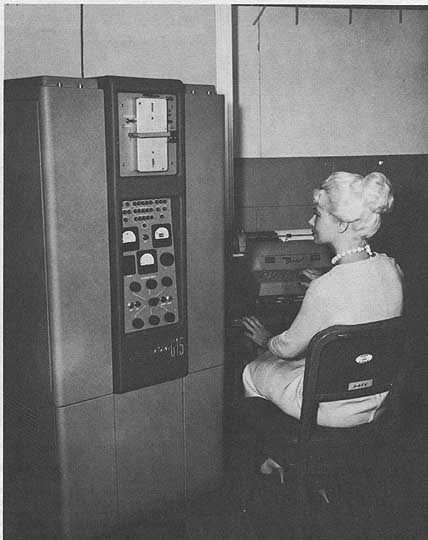
> > PDP-1's G-15's if *EITHER* of these went from intact system to
> > the skip, it WOULD be a crime.
> After close examination of the pictures, I am
> certain that the PDP-1 shown in the pictures is
> in fact the one at the Computer History Museum.
Didn't anyone read the whole thread? Or look at "Mike Rowe"'s email
address (backwards)? Or the actual sender in the headers? :-)
--
Pete Peter Turnbull
Network Manager
University of York
Just got back from Radio Shack. I bought a fast blowing 250v 2 amp fuse
and installed on in the laserdisc player. Unfortunetly, it blows just
as fast as the .75amp fuse. So.... that means I have a dead short
somewhere, right? How do I go about checking that?
Chad Fernandez
Michigan, USA
--- "David V. Corbin" <dvcorbin at optonline.net> wrote:
> There are a few "rescues"/"scraps" that I **REALLY**
> hope are
> hoaxes.otherwise I will be in jail for murder.
> PDP-1's G-15's if *EITHER* of
> these went from intact system to the skip, it WOULD
> be a crime. Even
> semi-significant parts would be a shame.. Done know
> if I will sleep tonight
> wonderng...
David,
After close examination of the pictures, I am
certain that the PDP-1 shown in the pictures is
in fact the one at the Computer History Museum.
You can even see the purple cubicle walls (left
over from SGI's former tenancy of the building)
that are used as a backdrop for the Visible
Storage exhibit currently on display. Also,
the picture of the inside does not look like
a production machine -- it is almost certainly
a photo of the prototype PDP-1 also owned by CHM.
Others have noted that the photo of the G-15 appears
to be a fake composite.
I admit that before realizing this, I sent serious
inquiries to both parties advising them that they
were sitting on treasures worth big $$$$ and would
be well advised to preserve them.
--Bill
Chrisian Fandt wrote:
> Aggh!! Where is it??!! Anybody!!??? I'LL HELP PAY their citation from the
> police for having "junk" in their driveway!! Let's just try to rescue
> anything that remains (if there's much left)!
>
> Just look at this URL to see what we're basically losing:
> http://members.iinet.net.au/~dgreen/
>
> Jeeez, that's all the more reason for someone to have disposal
> instructions, including basic descriptions, for the "stuff" their family
> may be stuck with after their death.
>
> Keep us posted on this please.
>
> --Chris F.
>
> NNNN
>
>
> Christian Fandt, Electronic/Electrical Historian
> Jamestown, NY USA cfandt at netsync.net
> Member of Antique Wireless Association
> URL: http://www.antiquewireless.org/
>
> *
I want to second this and third this message. I'm in another hobby,
science fiction fanzines, where we just lost one of the most significant
collections of the last 50 years. And all because the collector didn't
write it's disposition exactly in his will. He left most of his estate
to his church. The fanzines were left to a University collection. He
mentioned this is letters and conversations - but not in the will.
But probate ruled that the church gets everything since it wasn't in the
will. The church wass fighting to keep the stuff because they smell big
money.
So the collection now is lost to the group that would appreciate it
most. I know of two major collections of science fiction lost the same
way. One of them was original art worth hundreds of thousands of dollars.
Is your collection going to the dump? Will your kin know what to do
with it? Will the books and tapes be tossed? If you value the effort
you put into it, protect your collection.
Write it up - talk to your heirs.
Billy
There are a few "rescues"/"scraps" that I **REALLY** hope are
hoaxes.otherwise I will be in jail for murder. PDP-1's G-15's if *EITHER* of
these went from intact system to the skip, it WOULD be a crime. Even
semi-significant parts would be a shame.. Done know if I will sleep tonight
wonderng...
>From: "Randy McLaughlin" <cctalk at randy482.com>
>
>From: "Jules Richardson" <julesrichardsonuk at yahoo.co.uk>
>Sent: Friday, April 01, 2005 3:38 PM
>> On Fri, 2005-04-01 at 12:52 -0700, Ben Franchuk wrote:
>>> Randy McLaughlin wrote:
>>>
>>> >
>>> > I started using self-expanding archives because of complaints that
>>> > people couldn't unzip straight Zip files. Not everyone uses the same
>>> > Zip format. I use Winzip v8.1, many people use a variety of programs.
>>> >
>>> > I have yet to find one archival format that everyone can use,
>>> > self-extracting archives at least supports 99%.
>>>
>>> Umm I may want files for my LINUX box... I favor raw files for TEXT
>>> since anybody ( using ascii ) can read them.
>>
>> And tar for multi-file archives... more portable than zip I'd say, plus
>> errors won't trash the archive (or at least not so much!).
>>
>> Of course if compression *has* to be used... hmm... I suppose zip *is*
>> the best bet there, as at least it's more widely supported than some of
>> the other compression methods.
>>
>> Self-extracting archives sound like a *very* bad idea when you have no
>> idea what the target machine will be! :)
>
>As stated in a different post the *.exe file can be renamed to *.zip and any
>zip program will handle it normally, that is if the algorithms are
>compatible. I had too many complaints from people that didn't have a
>compatible program so a self extracting archive is the best way I've found
>so far.
>
>If anyone can come up with a method that is truly better I'll jump on it.
>The problem is simple if it's not a self extracting file then everyone has
>to use a compatible extractor :-(
>
>For DOS/Windoze there are many different incompatible zip programs.
>
>
>Randy
>www.s100-manuals.com
>
>
Hi
The older ZIP program works fine and is compatable with
most any newer versions that I know of.
Dwight
Marvin wrote:
> In searching for radio gear, I ran across this URL
> and thought it might of some interest here. I don't
> recognize it, but it looks like it might be some older
> computer stuff.
> http://www.geocities.com/heftyharry/OLD_COMPUTER_SALE.html
Looking at the picture on the website, it looks as though this guy has a
Bendix G-15. Wow.
Compare it to the following picture:
http://ed-thelen.org/comp-hist/BRL61-bendix-g15d.jpg
Same thing. (Same picture, too? Hmmm...)
On Apr 1 2005, 20:33, Philip Pemberton wrote:
> It's not supposed to be flexible - it's for the electrodes. Two
pieces of #6
> (5mm dia) copper wire, with one end ground down to a 1/32 rounded
point.
OK, that makes good sense. Try Folkestone Engineering Supplies, a
company I've used for small amounts of "stuff". They have no minimum
order and they just happen to have some 1/4" copper (your #4 is just a
little smaller than 1/4"):
http://www.metal2models.btinternet.co.uk/Copper.htm
Have you got a lathe? If not, I'm not far away if you need the ends
machined.
> I can see two possibilities - either the 2.5mm wire will work fine,
or it
> will blast itself apart when the capacitor array dumps 50-odd (or was
it 70?
> need to crunch the numbers again) watt-seconds through it.
I'd guess the electrodes won't be very long, and the pressures won't be
very high for this spot welder, but 2.5mm might also bend.
--
Pete Peter Turnbull
Network Manager
University of York
> >> If the rest of NH is like Portsmouth, no thanks. An
> entire "city"
> >>of jerks.
> >
> >
> > NH south of Concord is just an extention of Massachusetts.
> > Massholes that thrive there. AKA - Flatlanders.
>
> You do realize we're still on CCtalk, right? :)
>
> Doc
Yeah, after the ripping I got for my slander about the glorious and
illustrious lives of career wordsmiths I figure my cherry is busted and
I'll say what I'll say. And I'm sure there's a few Mass residents on the
list too. It 'twas in jest. Though South of Concord does smell way too
much like Massachusetts for me.
>If anything, I think Freecycle suffers from a lack of centralized
>interface. Not everyone is smart enough to sign up for a mailing list,
>and a web interface would be easier to search. (Oops, didn't mean to
>start that "list vs. web" thread again. I give up. You're right,
>yes, absolutely, eBay should be a mailing list and not a web site.)
>
>I might want to subscribe to my county's list, but I'd also drive three
>hours for the right giveaway. It also made me think there could be
>opportunity in aggregating and searching these giveaway mailing lists.
My wife monitors the list for my county... and I get the feeling that a
centralized list would work against the point of Freecycle.
I have the strong impression that anyone sucking up the goods to resell
or otherwise do anything other than fill personal use (and this would
border on collectors hording items as well), is not what the freecycle
movement is all about.
So a cental list, that a reseller could monitor and have the resources to
snatch everything of value quickly, would be seriously frowned upon. By
keeping the lists smaller and more local, it helps bolster the general
idea of being a good neighbor.
That said, I do watch for computers of interest myself (I haven't snagged
any yet however). But I also give back, just Tuesday I gave away an
unneeded queen size box spring via Freecycle. And last night I replied to
someone looking for a free PC monitor (but haven't heard back, so I
gather they got a better offer then the 14" I have available).
-chris
<http://www.mythtech.net>
Anybody know where I can find a manual on-line for the item above? I
checked Al's site but it's not there. This is an adapter that fits the
model 29 Programmer and allows the user to program QFP PLDs. It has a
socket for 20 QFPs and two sockets for 28 pin QFPs.
Joe
> Can I use a serial console on it or do I need a 13w3 monitor
Btw - there are 13w3 <-> vga adapters. They sell for around $15.00. You
will need a sync-on-green vga monitor.
> If the rest of NH is like Portsmouth, no thanks. An
> entire "city" of jerks.
NH south of Concord is just an extention of Massachusetts.
Massholes that thrive there. AKA - Flatlanders.
On Fri, 1 Apr 2005, Dwight K. Elvey wrote:
>> From: "Marvin Johnston" <marvin at rain.org>
>> http://www.geocities.com/heftyharry/OLD_COMPUTER_SALE.html
>>
>
> Hi
> It might be an analog computer but it looks more
> like a power monitor for a large computer.
THAT IS A BENDIX G-15 PEOPLE!!!! AAAAAAIIIIEEEEEE NOOOOOO!!!!!!
I'm waiting for a response back....
NOOOOOOO!
OMIGOD - SOMEBODY **DO** SOMETHING!!!!!
John
In searching for radio gear, I ran across this URL and thought it might
of some interest here. I don't recognize it, but it looks like it might
be some older computer stuff.
http://www.geocities.com/heftyharry/OLD_COMPUTER_SALE.html
woodelf <bfranchuk at jetnet.ab.ca> wrote:
> Hmm My still is displaying March ... I think I'll change it tomorow and
> skip the 1st :)
Seems like a good strategy. :-) At least for those like me who hate April
Fool's Day with passion.
> PS ... I favor 13 months and a yearly leap day.
So how would you deal with the fact that a tropical year will *never*
divide evenly into days no matter how you twist and turn it?
In my calendar I've addressed this problem at its root: instead of starting
with the day as the basic unit and trying to pack days into years like other
calendars do (doomed to failure because of the above), I start with the year
as the basic unit (actual astronomically determined tropical years starting
at Ostara, the vernal equinox), divide the year into dates mathematically
(without regard to actual solar days), and then *map* days to dates as a
separate function.
MS
On Apr 1 2005, 19:33, Philip Pemberton wrote:
> Shame it's so hard to find #4 copper wire (then again I'm
> probably not looking in the right place). The thickest I've found is
2.5mm
> solid core copper.
It may depend on what you're asking for. What do you mean by "#4
copper wire"? 4SWG, which is just under 1/4" diameter? 4AWG, which is
somewhat slimmer? That might be "wire" to the company that runs the
mill that makes it[1], but it would be "copper rod" to most of the rest
of us. Try a model engineering supplier.
Or do you mean insulated cable? That would have a cross-sectional area
of between 21mm^2 and 28mm^2, depending on whose wire gauge you used,
and would have a current capacity of something like 150 amps,
continuous, in an enclosed space (like a conduit). Almost double that
in free air, more for intermittent use. Try a welding supplier, and
ask for the cable used for earth clamps, or buy a cheap pair of jump
leads. Or do what I did, and twist 3 or 4 thinner cables together. I
have a cable that will run about 350A-400A, good for a fairly decent
spot welder.
[1] I once got some 3/8" square silver steel from the local wire works.
They called *that* wire, too.
--
Pete Peter Turnbull
Network Manager
University of York
Apr 1, 2005
>
> From a friend of mine to the LEM Swap list:
>
>From: Kyle Hansen <pixie at speakeasy.net>
>Date: Fri Apr 1, 2005 1:36:58 AM US/Pacific
>To: "LEM Swap List" <lem-swap at mail.maclaunch.com>
>Subject: [swap] FS. Original Apple One
>
>LEM-Swap is for buying & selling Mac stuff. It is not a discussion list.
>
>See the FAQ <http://lowendmac.com/lists/swap.html> for guidelines on
>postings, feedback, and dispute resolution.
>--------------------
>Here are the specs. The case is made out of wood and I can't find a
>mouse
>for it. I originally paid $666 for it so I am hoping to get my money
>back.
>
>CPU: MOS Technology 6502
>CPU Speed: 1 MHz
>FPU: none
>Bus Speed: 1 MHz
>Data Path: 8 bit
>Onboard RAM: 8 kB
>Maximum RAM: 32 kB
>VRAM: 1 kB
>Maximum Resolution: 60.05 Hz, 40x24 char
>Power: 58 Watts
>
>It doesn't offer much in the way of upgrade capabilities. I think that
>you
>can install OS 10.3 on it using a utility from Ryan Rempel but you have
>to
>find a CD drive first.
>
>Best offer takes it. Shipping from 94501.
>
>Kyle Hansen
>
>The first lemming to lead his peers off the cliff is a bold and
>decisive leader.
>
>
>From: "Jules Richardson" <julesrichardsonuk at yahoo.co.uk>
>
>On Fri, 2005-04-01 at 00:32 -0800, Tom Jennings wrote:
>> Well I identified the failure, fixed it, and the disk pack is
>> formatting right now. Whew!
>>
>> Another crapacitor -- looks like a tantalum, but it's only .01uF,
>> a dipped-looking bright blue axial part, about the size of a 1/8W
>> resistor. I think these were discussed recently; not necessarily
>> tants, but some short-lived process.
>
>That's one thing that bugs me about old kit for which there aren't
>schematics around - tantalum caps often completely explode. If the value
>was critical for some reason, then that creates a problem!
>
>I've started taking lots of photos of any rare boards I have these days,
>just in case. Once a cap explodes or a resistor burns out it might be
>impossible to tell what the right part should be (well, without serious
>circuit analysis and/or guesswork)
>
Hi
One thing to consider is that critical valued passive parts rarely
are in a position that will cause them to burn when shorted.
Still, most IC's are across the rails. I've seen IC's with
a crater right where the part number was.
Dwight
----- Original Message -----
From: Marvin Johnston <marvin at rain.org>
Date: Friday, April 1, 2005 12:45 pm
Subject: Old Computer Rescue?
>
> In searching for radio gear, I ran across this URL and thought it
> mightof some interest here. I don't recognize it, but it looks
> like it might
> be some older computer stuff.
>
> http://www.geocities.com/heftyharry/OLD_COMPUTER_SALE.html
>
>From the Site:
>>The typwriter was bolted to a desk, which didn't work, so that went to the >>dump already, also all the boxes of books and boxes of paper strip are in the >>driveway, OK to come get those or I will haul them away.
AAARGH..........[Is this cause for justified homicide?]
Cameron Kaiser <spectre at floodgap.com> wrote:
> This may be a subtle point, but it's the day, not the date, I'm referring to.
But there is absolutely nothing special about the day. The "April Fool's Day"
semantics result only from the Gregorian calendar mapping this day to the
April 1 date, and are applicable only to those using the Gregorian calendar.
BTW I have always hated "April Fool's Day" with passion. But now I can
breathe a sigh of relief since the new calendar I use has NO April 1.
MS
Cameron Kaiser <spectre at floodgap.com> wrote:
> You realize today *is* April 1st, right?
Only for those who live on the Gregorian calendar. I live my life on the
Republic of Terra calendar instead:
http://ivan.Harhan.ORG/RT/calendar/spec.txt
Today is SE 44 Nis 12 (Space Era year 44 month Nisannu day 12).
MS
(The RT calendar won't be supported in 4.3BSD-Quasijarus, though, only in
4.5BSD-Quasijarus along with extension of time_t to 64 bits.)
Cameron Kaiser <spectre at floodgap.com> wrote:
> Like I said, today *is* April 1st. ^^
For you it is, for me it isn't. Your calendar says April 1, 2005, mine
says Nisannu 12 of SE 44.
MS
>
> Sellam - you think there's only a dozen PDP-8 in the world?
>
No I am not Sellam (and we are all grateful for that)....but I figured I would chime in...
If he is talking about operational, complete, "straight-8" machines, he is probably on the right order of magnitude. Remember almost all of the ones you see are /S/ E /L /I /A /M models....
> I don't have the password for an RSX11 install I have on a used RD53.
> Anybody know the sequence? Is there something like on VMS where
> you give a bootpart to be able to interrupt startup and use an
> altauth ?
> regards,
> heinz
IIRC [I worked alot more on 11-M than on M-Plus... and it was over 15 years ago...].....
While the startup script is running you should be ablse to press Ctrl-C to abort it. If the sys manager did not put in good error handlers, it will leave you at an MCR prompt....A cleaner alternative is to enter Ctrl-Z when prompted for the date and time during startup....RMMV
David
----- Original Message -----
From: "Mike" <kenziem at sympatico.ca>
To: <cctalk at classiccmp.org>
Sent: Friday, April 01, 2005 1:54 AM
Subject: Apple IIe that really does deserve a WOW!
> My local computer recycler is offering these on E-Bay.
>
>
http://cgi.ebay.ca/ws/eBayISAPI.dll?ViewItem&category=80286&item=5181480695…
>
>
>
>
>
Exactly what makes that system worth $999 for a starting bid?
Funny
--- Jim Arnott <jrasite at eoni.com> wrote:
> From a friend of mine to the LEM Swap list:
>
> From: Kyle Hansen <pixie at speakeasy.net>
> Date: Fri Apr 1, 2005 1:36:58 AM US/Pacific
> To: "LEM Swap List" <lem-swap at mail.maclaunch.com>
> Subject: [swap] FS. Original Apple One
>
> LEM-Swap is for buying & selling Mac stuff. It is
> not a discussion list.
>
> See the FAQ <http://lowendmac.com/lists/swap.html>
> for guidelines on
> postings, feedback, and dispute resolution.
> --------------------
> Here are the specs. The case is made out of wood
> and I can't find a
> mouse
> for it. I originally paid $666 for it so I am
> hoping to get my money
> back.
>
> CPU: MOS Technology 6502
> CPU Speed: 1 MHz
> FPU: none
> Bus Speed: 1 MHz
> Data Path: 8 bit
> Onboard RAM: 8 kB
> Maximum RAM: 32 kB
> VRAM: 1 kB
> Maximum Resolution: 60.05 Hz, 40x24 char
> Power: 58 Watts
>
> It doesn't offer much in the way of upgrade
> capabilities. I think that
> you
> can install OS 10.3 on it using a utility from Ryan
> Rempel but you have
> to
> find a CD drive first.
>
> Best offer takes it. Shipping from 94501.
>
> Kyle Hansen
>
> The first lemming to lead his peers off the cliff is
> a bold and
> decisive leader.
>
>
__________________________________________________
Do You Yahoo!?
Tired of spam? Yahoo! Mail has the best spam protection around
http://mail.yahoo.com
> I guess you'll just have to drive your ass up here (nh.us) from tx.us.
> There's still snow on the ground - hurry and I'll teach you how to ski
> while you're here.
>
>
Ummm... 11/23...peripherials...skiing....leaving Long Island now!
David
(at least wishing I could...(local) skiing is OVER)
> > I have a few sets (and their RL02's). I just removed 2 from a 4-disk
> > PDP-11/23 configuration. Open to trade ideas.
>
> I'll take the RL02s off your hands if you ship the 11/23 with them.
I didn't see no smiley.
I guess you'll just have to drive your ass up here (nh.us) from tx.us.
There's still snow on the ground - hurry and I'll teach you how to ski
while you're here.
> I wanted to create more space on the floor, but I just can't
> seem to find a set of RL02 slides to mount the RL02 (standing
> on the floor) into a rack.
> Does anybody have a spare set for sale or trade?
> With regard to shipping costs I would prefer a location in
> Europe, but else "world" is ok!
I have a few sets (and their RL02's). I just removed 2 from a 4-disk
PDP-11/23 configuration. Open to trade ideas.
LOL. Brilliant.
Saw a nice article today that calls cellphone owners to help
astronomers to receive signals from the Huygens space probe
(now on the moon Titan of Saturn).
Here is the (free) translation:
AMSTERDAM - Astronomers are asking the help of Dutch and Belgium
cellphone owners to receive the extremely weak radio signals of
the European space probe Huygens. Huygens is since 14th of January
on the Saturn moon Titan. Allthough it was thought that Huygens
after its descend on parachutes would only survive a few minutes
there are clues that the probe is still active.
Astronomers all over the world want to pick up Huygens' radiosignal
as soon as possible, because any day could be the last that the probe
still has sufficient energy. In order to receive the weak radiosignal
astronomers call in the help of the people.
Using cellphones, measurements can be done because cellphones are
sensitive to radio signals.
Cellphones communicate via repeaters with telecom satellites. Since
these satellites reflect the signal back to the earth surface,
groundstations for satellite communication, but also radio astronomers
observatories, who have often bigger dish antennas, can receive the
weak signals.
By cooperating all cellphones, Holland and Belgium can form a gigantic
radiotelescope.
If people go on to the streets and aim their cellphone between 12.30
and 13.00 hours in east direction, those tens of thousends cellphones
work together as one big radio mirror. The weak Huygens signal reflects
via space back to the east of our (Holland) country where it can be
picked up by out VLA synthesis radio telescope. The amplified signal
will enable this radio telescope to receive the Huygens signal loud
and clear. It is hoped that astronomers can find out what happened to
the probe in the last few months by this amplification.
<end trandslation>
Here is the URL to the article (in Dutch of course)
http://www.nu.nl/news/504049/81/Zwak_signaal_Huygens_opvangen_met_mobieltjes
.html
keep your eyes open!
- Henk.
> From: "Gooijen H" <GOOI at oce.nl>
> Subject: RE: searching for a set of RL02 slides
>
>
> > Damn, I've been fooled by Edward! <grumble-grumble>
> > Today is April 1st, and that is the day that everybody tries
> > to fool everybody in Holland. I fell for it completely!
>
> Not just in Holland.
> The most hilarious in DK in recent times, was when DDSF in
> Roskilde, the
> major bottler of spirits, announced that they had had a
> production error,
> resulting in a mix of 50% whiskey and 50% cognac, so people
> could come and
> collect it free of charge, as it couldnt be sold. They should
> come early, as
> it was a "while stock lasts" offer. The local traffic stopped
> alltogether,
> while a huge queue was formed by people with bottles and even buckets.
> The DDSF people must have wet their pants, I guess
>
> Nico
From a friend of mine to the LEM Swap list:
From: Kyle Hansen <pixie at speakeasy.net>
Date: Fri Apr 1, 2005 1:36:58 AM US/Pacific
To: "LEM Swap List" <lem-swap at mail.maclaunch.com>
Subject: [swap] FS. Original Apple One
LEM-Swap is for buying & selling Mac stuff. It is not a discussion list.
See the FAQ <http://lowendmac.com/lists/swap.html> for guidelines on
postings, feedback, and dispute resolution.
--------------------
Here are the specs. The case is made out of wood and I can't find a
mouse
for it. I originally paid $666 for it so I am hoping to get my money
back.
CPU: MOS Technology 6502
CPU Speed: 1 MHz
FPU: none
Bus Speed: 1 MHz
Data Path: 8 bit
Onboard RAM: 8 kB
Maximum RAM: 32 kB
VRAM: 1 kB
Maximum Resolution: 60.05 Hz, 40x24 char
Power: 58 Watts
It doesn't offer much in the way of upgrade capabilities. I think that
you
can install OS 10.3 on it using a utility from Ryan Rempel but you have
to
find a CD drive first.
Best offer takes it. Shipping from 94501.
Kyle Hansen
The first lemming to lead his peers off the cliff is a bold and
decisive leader.
> While clearing out the soon-to-be dining room where all my stuff has
> been stored for the last couple of years I found a Sparc5 that I'd
> completely forgotten about. It's been completely robbed of
> bits that I can see - memory, floppy drive, CD, HDD - so what's the
> minimum I can get away with before at least powering it up to see if
it
> works? The only spare memory I've got is PC100 (may even be PC66)
> 168-pin DIMMS.
The memory is almost unique. I have some of it in small-stick size (32M
sticks I think - the smaller of the two that work).
The disks are SCA interface normal SCSI with a special disk carrier - I
have both.
You can stick a serial terminal on port A and if there is no keyboard
attached it will default to serialA as the system console.
>>> I'm in the US but I bought a whole box of 50 brackets for $20. I
could send you one.
Take this guy up on his offer- I don't have that many as spare.
>Assuming it does work does anyone have a floppy and CD spare for this
thing?
Normal SCSI CDROM with 512 byte block option (plextors are beautiful for
this).
The SS5, esp. with the 170mhz processor, is a lovely example of early
Sun SPARC processor technology. The last of the 32 bitters and an
example of good clean design. All my Suns are 64 bit, with an Ultra 60
as my high-end workstation, but I keep a few SS5's around just because
they are so neat.
Damn, I've been fooled by Edward! <grumble-grumble>
Today is April 1st, and that is the day that everybody tries
to fool everybody in Holland. I fell for it completely!
Edward is also still looking for some RL slide sets, but he
wrote that he had 10 sets ... I should have known that he
was trying to fool me. I feel like a complete idiot.
So, the question is valid again: who has a spare RL slide set?
- Henk, PA8PDP.
> I guess I have found a set!
> I should have asked Edward first, before turning to the List.
> I *knew* that Edward was also looking for a few sets, but I
> did not know that his search was more succesfull than mine.
> Since I have a few parts for Edward, I guess it will not be
> long before the RL02 hangs in a rack :~)
>
> - Henk, PA8PDP.
>
>
> > Hi all,
> >
> > I wanted to create more space on the floor, but I
> > just can't seem to find a set of RL02 slides to
> > mount the RL02 (standing on the floor) into a rack.
> > Does anybody have a spare set for sale or trade?
> > With regard to shipping costs I would prefer a
> > location in Europe, but else "world" is ok!
> >
> > - Henk, PA8PDP.
I guess I have found a set!
I should have asked Edward first, before turning to the List.
I *knew* that Edward was also looking for a few sets, but I
did not know that his search was more succesfull than mine.
Since I have a few parts for Edward, I guess it will not be
long before the RL02 hangs in a rack :~)
- Henk, PA8PDP.
> I wanted to create more space on the floor, but I
> just can't seem to find a set of RL02 slides to
> mount the RL02 (standing on the floor) into a rack.
> Does anybody have a spare set for sale or trade?
> With regard to shipping costs I would prefer a
> location in Europe, but else "world" is ok!
>
> - Henk, PA8PDP.
Hiya,
I am looking for manuals for the Philips Electrologica P 350 series
systems. Its not for myself but it does has some urgency so if anyone has
anything please let me know asap!
Yours,
Stefan.
Hi all,
I wanted to create more space on the floor, but I
just can't seem to find a set of RL02 slides to
mount the RL02 (standing on the floor) into a rack.
Does anybody have a spare set for sale or trade?
With regard to shipping costs I would prefer a
location in Europe, but else "world" is ok!
- Henk, PA8PDP.
On Apr 1 2005, 1:04, Philip Pemberton wrote:
> I need a minimum of 10x 10-32 UNF threaded bolts (aka "machine
screws"),
> 3/8in length (or 1/2in) and locking washers. I have absolutely no
idea what
> type of washer, but I'd guess it would be the variety with internal
teeth.
>
> Basically I just need enough 10-32 bolts to hook five of these
capacitors up.
> The problem being that 10-32 is a standard size in the USA, but
apparently
> not in the UK.
Any decent fasteners supplier should have them. But if that doesn't
work, ISO M5 is almost exactly the same and might be close enough to
fit.
--
Pete Peter Turnbull
Network Manager
University of York
On Mar 31 2005, 18:30, Tom Peters wrote:
> This is classic frozen yellow garden hose- typical yellow jacket. So
not
> teflon, probably. I suppose if I inspect it closely I might find the
old
> classifications: CMP for plenum, CMR for riser, CM for neither,
right?
Could be, but since we don't rate things the same way over here, Idon't
actually know. Sorry!
--
Pete Peter Turnbull
Network Manager
University of York
Copy right is 1996, so it is almost on topic. Does anyone have an install
disk for this? A very good friend of mine needs to move his data to a new
computer this weekend and he can't find his install disk.
What amazes me is that he's been running this since 1996 without losing data
once.
Thanks for any help,
(let the scolding begin)
Kelly
On Apr 1 2005, 0:11, Jochen Kunz wrote:
> On Thu, 31 Mar 2005 14:38:07 -0600
> AFAIK thick Ethernet cable is more or less RG213. Typical values are
8
> dB / 100 m attenuation at 150 MHz and 15 dB / 100 m at 450 MHz and a
> velocity factor of 0.66.
Too slow. The velocity factor for thick Ethernet is supposed to be
around 0.78. You can use RG213 or even RG8 but the maximum size of
your network would be slightly shorter, to allow for slightly longer
round-trip delays.
> Ahh, and keep in mind that these cables usually are not UV resistent,
so
> sun light will destroy the outer jacket! Cover the cable if used
> outside to avoid direct sun light.
I believe you can (could) get plenum-rated cable that has a Teflon
outer instead of PVC. Teflon is resistant to UV.
--
Pete Peter Turnbull
Network Manager
University of York
> Subject: 10base5 (Thick) Terminator ?
>
> This is probably gonna be a really easy question for you
> guys; is this http://www.mansier.net/10base5terminator.jpg a
> 10base5 (thick ethernet) terminator ?
This is an "N" type connector. I thought 10base5 used PL259's (single
unshielded pin in the center, screw shell).
On Mar 31 2005, 14:38, Tom Peters wrote:
> It was (is-- I still have a spool of it!) 50 ohm coax with N
connectors,
> and paint marks at every meter boundary. You had to terminate each
run of
> thicknet end each end (that's two ends, for those who are counting).
>
> You had to tap it with a vampire tap ONLY ON THE 1 METER MARKS using
a tap
> drill tool that would core into the shield and expose the center
conductor.
Actually, every 2.5m, not every meter.
> I'm still looking for specs on thicknet cable-- I know the
characteristic
> impedance is 50 ohms, but if I knew the velocity factor and losses at
VHF
> (144 - 148 mhz) and UHF (430 - 450 MHz) I could use the stuff for my
> amateur radio hobby. As it is, it's gathering dust.
It varies very slightly from maker to maker and even batch to batch, so
if it's that critical you'll need to measure it. Indirectly, the 802.3
standard says 0.78; my tables show Belden 9880 VF is 0.78-0.82, attn
1.3dB/ft @ 100MHz, 2.8dB/ft @ 400Mz, 4.5dB/ft @ 1GHz. Sometimes people
use RG-8, though, which has VF 0.66, and higher losses.
Surely 144-148 millihertz is VLF, not VHF?
--
Pete Peter Turnbull
Network Manager
University of York
On Mar 31 2005, 12:01, David H. Barr wrote:
> On Thu, 31 Mar 2005 19:47:04 +0200, Stefan <birs23 at zeelandnet.nl>
wrote:
> > This is probably gonna be a really easy question for you guys; is
this
> > http://www.mansier.net/10base5terminator.jpg a 10base5 (thick
ethernet)
> > terminator ?
>
> Err, wasn't thicknet (DIX) the one with DB-15 / AUI transcievers,
> vampire clamps, and so forth?
To be picky, DIX != thick Ethernet, or more exactly DIX != 10base5.
10base5 uses thick coax but it works slightly differently to DIX.
Yes, they use AUI cables and transceivers with a DA15 connector with
that horrible slidelock, and they use vampire clamps on some of the
taps (last time I fitted one was for a demo two weeks ago), but the
"Ethernet" cable is the thick coax, with N connectors.
> PS: That connector looks odd to me. My coax net has BNC T's on it
and
> a reflector on the end. Maybe we're not talking about the same
> things?
You mean a terminator. And the BNCs are thinnet, aka cheapernet,
10base2. Same speed as 10base5, but shorter (185m per segment instead
of 500m), and with fewer allowed active connections per segment, and
different rules about spacing the taps, which are BNC T-pieces.
If Stefan's N connector has a 50-ohm resistor in it, it's a 10base5
terminator.
--
Pete Peter Turnbull
Network Manager
University of York
Hi folks.
I recently acquired an AS/400 P03 "Advanced Portable." This is my first
real piece of IBM Midrange hardware, and I have not a clue how to
interface with it. I know the OS is a PITA on its own to deal with, but
I figure I'll solve one problem at a time.
So, I was just wondering, does anybody have any manuals for this sucker
(preferably in PDF form!) or know where I can grab them from? There is
not a sign of the English manuals for this machine on IBM's website at
all. Also, I was wondering if anybody knew how I would go about
interfacing with this machine. The DE9 ports on the back of it are
definitely not serial ports, and the only other port on it is a SCSI
port. Am I missing some cards for this machine? It would almost appear
as though the original owner pulled some interface cards for it, but I
could be mistaken.
Any help would be appreciated!
Phil.
So, I picked up a bunch (5) of Century Data T-50s, (also labelled as
"Diva" disk systems), which seem to be multi-platter 54.7MB removable
14" disk-pack drives. Of course, I didn't get any of the disk packs to
go with them.
My questions are:
1) Does anyone have any available disk packs, or know if they're
interchangable with something else that is availble?
2) Does anyone want (some of) them? I don't want to give them up for
nothing, but I'm not looking to get too much out of them, and I'd
rather give them to someone who finds them useful than let them sit
around, especially since I don't have any disk packs (yet).
The drives are 150-200lbs each, and are rated at 4A at 208-240V (60Hz
IIRC). There's a detailed manual on bitsavers about them:
http://computer-refuge.org/bitsavers/centuryData/76205-902_tridentSpec_Nov8…
I also have the T2000 disk excerciser and T2001 head alignment boxes for
the drives. I have no idea if any of this works; it was probably in
storage for 10+ years, and the drives date back to about 1980.
Pat
--
Purdue University Research Computing --- http://www.rcac.purdue.edu/
The Computer Refuge --- http://computer-refuge.org
For those of you that answered over 50 on the age question, you probably
grew up reading Popular Electronics magazine. (For the U.S. folks anyway.)
In the five year period between 1967 and 1971, Southwest Technical Products
Corp. (SWTPC) published over 50 articles in Popular Electronics written by
Daniel Meyer, Don Lancaster, Louis Garner and others. The idea was to write
a construction article then sell the circuit board and kit of parts. Daniel
E. Meyer started DEMCO in 1964 and incorporated as SWTPC in 1967. The
company lasted until 1986 and had over 100 employees the 1970s. Don
Lancaster was not an employee, he just got royalties.
Around 1975 SWTPC came out with computer and terminal kits. Don Lancaster
was turning out Cookbooks by then (RTL, TTL, CMOS, etc) and started doing
musical projects for PAIA. They parted ways.
I have been collecting old issues of Popular Electronics and Radio
Electronics and scanning a selection of SWTPC projects. This is a history of
kits like FM wireless microphones, reverb adapters, musical instruments,
audio amps, strobe lights, digital clocks, and digital test equipment. Most
of the members of this list have built several of these things over the
years. For example, there are some Nixie tube projects in Feb 1970, Dec 1970
and Feb 1971.
I have almost finished with Popular Electronics and have posted them to my
web site. I will add to the Radio Electronics page next. (Thanks to Jay
West for providing the space.) I am scanning the magazines at 300 dpi and
storing them as tiff files. I downsize them to 150 dpi JPG files for the
web. I have over 1.5 GB of magazine tiff files. I will make them available
on a DVD ROM for those who want them. My whole web site will fit on a
CD-ROM. I will provide details on how to get these in a few weeks. (I am not
looking to make any money on this.)
http://www.swtpc.com/mholley/magazines.htm
I also have a 1971 SWTPC catalog with a list of which Popular Electronics
issue each product came from.
http://www.swtpc.com/mholley/Catalog7/Catalog.htm
Michael Holley
www.swtpc.com/mholley
Can anybody tell me what an Extender Board is ?
It has part number 5012447D (with behind it also the text W9042).
It also comes with two 70-11411-1D cables but I dont know if they belong
with this.
Thanks!
Stefan.
-------------------------------------------------------
http://www.mansier.net
Has anyone heard of this unit? I've done a Google search with no hits.
In putting together my collection of documentation, I ran across this
manual. Thanks!
Is that true of an entire drive or just the directory?
><snip>You can't actually write more files than the
>file structure supports if APPEND is all the extra help you've got.
>
How about some fancy DOS batch file programming and use of LHA (a
small compression program) to unpack and re-pack files only when
needed on the fly?
bill
My Dad is on a cleaning-out binge, and he is ready to landfill several boxes
of C-64 and Vic-20 stuff. If anybody could make better use of it, please
email me and I'll get you in touch with him. This is for
you-pick-it-up-only, no shipping available. A small donation to him would
be appreciated, but he really just wants to get rid of the stuff.
He is between Dallas and Monmouth, Oregon. Salem is about 22 miles East
>from there.
Here is his description:
---------------
Commodore stuff. Lots of it. Boxes of it. 64 and vic 20.
stuff like: RUN commodore mags in late 80's; programmers reference guide;
maybe
a dozen games, Q-bert e.g.; COMREX CR 220 dot matrix printer (in box) Some
commodores are in origional boxes. power supplies, game controllers.
---------------
email me at: danmNO at soverSPAM.net or d_l_mcd at hotmail.com
There's also a Friden electro-mechanical calculator and a bunch of other
stuff. It's all going to the landfill soon if nobody goes to get it.
Happy Spring Cleaning,
Dan McDonald
Bellows Falls, Vermont
USA
Hi,
On UK eBay atm there's a cassette drive for a GE Terminet. We used
Terminets in our place, but I don't recall ever seeing a cassette
drive, anyone know anything about them? If it's stays cheap I might
put in a bid just for the interest, and mebbe I'll find a Terminet
one day...
http://cgi.ebay.co.uk/ws/eBayISAPI.dll?ViewItem&category=1479&item=57641615…
--
Cheers,
Stan Barr stanb at dial.pipex.com
The future was never like this!
On Mar 30 2005, 14:36, Jules Richardson wrote:
> Back on topic, does the correct pronunciation of kludge contain the
'd',
> or is it silent? 98% of people here in the UK seem to pronounce the
d,
> but I've heard a few who don't. Mind you, 'bodge' is an equivalent
and
> more commonly heard over here than kludge.
"Bodge" doesn't mean the same thing at all. You're probably thinking
of "botch", which means (v) to screw something up, or (n) something
which is screwed up. "Kludge" means to make something work, but in an
inelegant or clumsy fashion. "Bodge", however, means to adjust or
adapt something carefully to fit, perhaps in a way not originally
intended; "bodgers" were originally people who did the final fitting of
parts to machines and the like.
--
Pete Peter Turnbull
Network Manager
University of York
> Date: Wed, 30 Mar 2005 16:23:12 +1200
> From: "Mike van Bokhoven" <mike at ambientdesign.com>
> Subject: Re: origins of "kludge"
> To: "General Discussion: On-Topic and Off-Topic Posts"
> <cctalk at classiccmp.org>
> Message-ID: <00af01c534e0$2ff3e980$3d00a8c0 at falco>
> Content-Type: text/plain; charset="iso-8859-1"
>
> > On Tue, 29 Mar 2005, Jim Isbell, W5JAI wrote:
> > > The French word for "bell" is "cloche" which is pronounced not
> > > un-similarly to kludge. Thus, this word was bastardized by the
> > > Americans and an unwieldy arrangement came to be known as
> a cloche or
> > > later as a Kludge.
> > Interesting. I'd always assumed it was a corruption of some form
> > of the German word 'kluge' (clever).
>
> Me too. And I've seen a few etymologies/timelines that agree
> with that, the
> 'cloche' thing sounds a little far-fetched. But you never know...
>
> Here's a good summary of fairly official sources on this one:
>
> http://dictionary.reference.com/search?q=kludge
>
>
> M.
That's probably correct. In the 1990s I retained Cal. Berkeley math wiz
Elwyn Berlekamp as an expert on Reed-Solomon coding and he told me that
"kludge" was a rough contraction of "collossal" and "huge".
This is a beautiful specimen.
On a pinetop worktable with FOUR RX01/02 floppies!!
Starting at $200..someone please save this!!
http://tinyurl.com/6p9mp
/wai-sun
Hello, PDP8-enthusiasts!
I recently got a very complete looking set of paper tapes for the PDP8/L.
All tapes are read in and ready for download on http://pdp8.hachti.de .
Feel free to copy and/or mirror the files. I would be glad to see my
tape images on bitsavers etc.
Good night,
Philipp :-)
Michael,
I think you are providing a great service. And your web site is an
excellent example for all of us trying to save a little history of
computers. Thank you.
Count me in as one willing to buy any CD or DVD you produce.
Do you have the issue that reviewed the PAIA 8700? I don't remember if
it was RE or PE. But I do remember buying the computer from the
reviewer. Then visiting the designer and finding he had also designed a
EPROM burner and monitor to go with it.
Don't know if it was ever released. The pace was so fast in those days
that single boards machines were outpaced by the many systems.
Billy
> I know this could be the start of YET ANOTHER thread "Oh I think
> it's older than that..." but to avoid that, let's raise the
> standard from opinion/hearsay to printed word.
>
> From _ENCYCLOPEDIA OF COMPUTER SCIENCE_(Van Nostrand), 1976:
>
> KLUDGE
>
> The word "kludge" is a term coined by Jackson Granholm in an
> article "How to design a kludge" in _DATAMATION_ (February 1962).
Yep, it's way older than that. According to the Jargon File (which has
also appeared in print in various editions, and which I'd trust a lot
more than some random Van Nostrand "encyclopedia"), the above would be a
reasonable statement if you replace "coined" by "popularized":
kluge
...
The variant 'kludge' was apparently popularized by the Datamation
article mentioned under kludge; it was titled How to Design a Kludge
(February 1962, pp. 30, 31).
...
For all the details, see
http://www.catb.org/~esr/jargon/html/K/kluge.htmlhttp://www.catb.org/~esr/jargon/html/K/kludge.html
--
Tim Mann tim at tim-mann.orghttp://tim-mann.org/
Just thought I'd let the listees know that while visiting my local parts and equipment store today (which carries a large amount of discontinued and surplus items of all types), I noticed there was a whole aisle of electronic vacuum tubes there. Guess it's been there for quite a while, I just hadn't noticed it before. I looked at several of the tubes and saw that the addresses listed on the boxes contained no ZIP codes, so I figure that a good part if not all of these tubes are vintage items from back in the '50s or '60s. I have no idea what prices they have on these items as most of the stuff is unmarked, but I know from buying other items there, their prices are usually pretty reasonable. If anyone has any needs of vintage vacuum tubes, contact me off list and I be glad to check on them for you. I saw RCA, GE, and Sylvania there to mention a few and I believe most were for TVs and Radios, but who knows what else I may find there. I'm not an electronics person so I don't know what distinguishes one tube type from another. Let me know if I can be of help to anyone out there.
Bill
bmachacek at pcisys.net
On Mar 30 2005, 16:27, Chad Fernandez wrote:
> From watching JunkYard Wars, or Scrap Heap Challenge as it is called
in
> the UK, I thought Bodge was about the same as kludge, too.
Meanings tend to evolve with common usage. Just as "kludge" is
becoming less derogatory in some circles, so "bodge" becomes more so,
especially as with "precision engineering", the art of the bodger (in
the sense of someone employed as such) disappears. "Botch" still means
something that fails to work, "bodge" works, "kludge" works, but is
ugly.
--
Pete Peter Turnbull
Network Manager
University of York
Hi,
I just found two small lamps in a HP packaging and was wondering if someone
knew for which system these are ?
Part number is 2140-0203 and the text on it says LAMP, INCAND. 5V
Written with a marker on the packag is STICKER LAMP and LOAD POINT
Anyone any idea's ? It came with a bunch of HP1000 items.
Stefan.
-------------------------------------------------------
http://www.mansier.net
I'm looking for DOS (or dare I say unix) based software to control my facit
N4000 punch. Yes, I can do it all via the front panel, but I'd like to find
a copy of wncedit or something - as I understand it that software will start
the punch, read in the binary and store it in a file, then burp the file
back out to the device at a later time to recreate the tape.
If anyone has such software I'd appreciate contact off-list. Otherwise, I'm
gonna start writing something.
Jay West
you can buy "brand new" copies of CP/M for the 820 from California Digital. The last time I checked they had gotten rid of most everything except CP/M and a few other things.
http://www.cadigital.com/software.htm
what their website doesn't mention is that it was for the Xerox 820 and it is 5 1/4" format. I don't know about compatibility between individual Xerox machines though.
best regards, Steve Thatcher
-----Original Message-----
From: Andy Erlanger <andy at erlangerresearch.com>
Sent: Mar 27, 2005 2:24 PM
To: cctech at classiccmp.org
Subject: Xerox 820-II
(Previously posted in html, my apologies).
I'm going to be bidding on a system with 5.25" drives, so I guess that's
what I'd need, even though I think the 8" drives are cooler.
Thanks, Andy
Hi
The external boxes that have tape drives would have to have
a FDC in them. These tape drives were designed to be paralleled
with the wires to a floppy. I'd suspect that the older ones
may have the right kind of controller but may have a clock speed
issue.
Dwight
>From: "Jules Richardson" <julesrichardsonuk at yahoo.co.uk>
>
>On Wed, 2005-03-30 at 12:42 -0500, Barry Watzman wrote:
>> This might be the answer to being able to access 5.25" drives on a "modern"
>> PC.
>
>Semi-related, but I took one of their backpack CDROM interfaces apart a
>few years ago - it was all totally custom ICs inside, plus I know
>Microsolutions wouldn't publish any details on the control protocol. I
>expect you'll find the same thing with the floppy drive version.
>
>> It would be really cool if 22Disk would work with a drive connected to
>> this thing.
>
>I *expect* it's a pretty standard FDC chip and a bit of buffer / control
>parallel-port interface circuitry implemented on a custom chip - I doubt
>they'd go to the trouble of buffering raw tracks etc. and using the
>associated memory to do that. Which means you're probably limited to the
>same MFM formats that a normal PC FDC is capable of, and nothing more.
>
>Linux *might* support the backpack floppy drive; I can't remember...
>
>cheers
>
>Jules
>
>
Hi,
i have a HP 9133 floppy/hard drive unit where the floppy disk drive doesn't operate anymore
(it returns read errors only) ...
... my first idea was to use a replacement drive from a 9122C/D unit, but those, that i own,
have another pinout; the 9122 have only one 34 ? pin connector whereas the 9133 floppy
has two connectors, one standard power supply and another one having 26 pins. Are those
somehow interchangeable ?
Thanks Bernd
Ok, so we've been discussing various ideas for a universal floppy disk
controller.
I bought (E-Bay) a used Microsolutions "Backpack" external parallel port
floppy disk drive, it's a 3.5" 1.44MB drive.
Internally, it is a standard drive (with a 34-pin standard interface) and a
floppy to parallel port interface card.
The question is -- and it's really a software question -- If I connect a
5.25" drive to the interface (using the standard 34-pin interface) will the
device (or, perhaps more to the point, will it's drivers) work?
I believe that they actually made a 5.25" model (with a 1.2 meg drive), but
I have not been able to find one. The Format program that comes in the
software packet has documentation suggesting that it can format a 1.2 meg
and even a 360k drive, and I'm guessing that the interface card is the same
for the 5.25" and 3.5" models.
This might be the answer to being able to access 5.25" drives on a "modern"
PC. It would be really cool if 22Disk would work with a drive connected to
this thing. I plan to do some testing in the next week or so. It still
doesn't solve the eight-inch problem, however. [I know, there's a chance
that the controller could be made to work with 8" drives using a funky cable
-- but first things first, 5.25" drives.]
Yes, it is possible to connect a DRV11 to an IDE disk drive.
However, you must compromise. I connected a IDE disk drive to some simple
parallel ports of the I/O Board. But it is PIO mode only, no DMA, so not
really fast but it works. The lowest level software is fairly easy.
Check www.pdp-11.nl and click on the link "Home-brew PDP-8". You can
download the 6809 source code which even resembles (a little) PDP-11
mnemonics.
I thought to get it working with 8 bits, but it is a lot easier if you
have a 16-bit data path. That means 16 inport bits and 16 outport bits.
Further you need a few (6?) extra output lines for control.
So perhaps one DRV11 is just not sufficient, but I would say: yes, you
can connect an IDE drive to one (or two) DRV11's.
BTW, if an IDE hard disk works, I found out that a Compact Flash Card
with IDE adapter works just fine too. Solid state disk on your PDP-11!
- Henk, PA8PDP.
-----Original Message-----
From: cctalk-bounces at classiccmp.org
To: General Discussion: On-Topic and Off-Topic Posts
Sent: 30-3-2005 20:18
Subject: using a DRV11 to run an IDE drive?
I've seen an old PC trick that uses the printer port and custom cable
to bit-bash interface an IDE hard drive or cdrom using a dos .sys
driver.
Anyone think it's possible to do the same with a DRV-11 for the pdp11?
Features: built in BAR/WCR/CSR circuits, 16 bits in, 16 out. 6 function
bits, Attention/Ready/Cycle Request/Bust handshake bits etc
Perhaps a small pld or fpga could use the spare handshake or function
bits to latch the 3 address bits for the IDE and generate the chip
select/read-write etc while the 16 bit input and output busses could be
joined via tri-state buffers...
I'ts not a replacement for a scsi controller, but it beats hunting down
the hard to find bus interface chips and provides a proven already
working basic interface.
I've got a dozen of the QBUS (and a few UNIBUS) DRx11 boards if someone
is interested in fooling with the idea. As a side note - I recall UW's
CCNG CE dept fashioned an early MP cluster called using DRV11s to
connect LSI11-2s in the 80's.
regards
-h
I believe you mean:
SYS 32800,123,45,6
The text is (note the "herdware" is intentional):
Brought to you by...
Software:
Fred Bowen
Terry Ryan
Von Ertwine
Herdware:
Bil Herd
Dave Haynie
Frank Palaia
Link arms, don't make them.
I took a quick picture and posted it ...
http://vintagecomputer.net/commodore/128/easter_egg.jpg
-Bill
> > Does anybody have a Commodore 128 or a VICE emulator to try this ?
> >
> > 1. Boot machine
> > 2. Type: SYS 32400,123,45,6
> > 3. A list of system programmers is displayed
On Mar 30 2005, 5:26, Ethan Dicks wrote:
> I've been wracking my brains and googling for most of an hour... ISTR
> there _used_ to be a program that shipped with UNIX (at least
> BSD-flavors, if nothing else) that could take a string as a command
> line arg, and print either a punch card image or papertape renderings
> to stdout.
>
> Does anyone remember the _name_ of this program?
ppt(6) for paper tape form, bcd(6) for punch cards.
In Seventh Edition, BSD, SunOS 4, and some Linux distros. I think I
have the Seventh Edition source here somewhere if you want it :-)
--
Pete Peter Turnbull
Network Manager
University of York
On Mar 29 2005, 16:32, Eric Josephson wrote:
> On Wed, 30 Mar 2005, Pete Turnbull wrote:
>
> > I've never run ZRQC (or indeed most XXDPv2 diagnostics) the way
you're
> > doing it. Are you sure that works?
>
> I used the same method to format an rd54 a few weeks ago.
> It worked fine for me.
>
> Thanks to Jonathan Engdahl for providing the details at:
> http://users.safeaccess.com/engdahl/xxdp.htm
Yes, I remembered Jonathan's page just about the moment I hit "send"
:-)
--
Pete Peter Turnbull
Network Manager
University of York
We've got a Sun 4/330 which has bit 6 stuck high in every character
output on the console. I don't suppose anyone has schematics for these
boards or know how the serial hardware works, do they?
The machine looks to be booting OK, so it appears address & data buses
are fine - but at the point where characters must be loaded into a
parallel register and converted to serial for output it's falling
over...
I suspect the machine's hard-wired to use only serial port A as console,
but either way I couldn't get hold of the right cable to see if the
other three serial ports are OK (the latter three being 9-pin male,
whilst port A is 25 pin male)
I can't think of any line settings, faulty voltage rails etc. that'd
cause bit 6 to be stuck high, so I'm assuming it's a hardware fault...
cheers
Jules
> From _ENCYCLOPEDIA OF COMPUTER SCIENCE_(Van Nostrand), 1976:
>
> KLUDGE
>
> The word "kludge" is a term coined by Jackson Granholm in an
> article "How to design a kludge" in _DATAMATION_ (February 1962).
> The definition is given as "an ill-sorted collection of poorly
> matched parts, forming a distressing whole". The design of every
> computer contains some anomalies that prove to be annoying to the
> users and wghich the designer wishes he had done differently. If
> there are enough of these, the machine is called a "kludge".
>
> By extention, the term has come to be applied to programs,
> documentation, and even computer centers, so that the definition
> is not "an ill-conceiverd and hence unreliable system that has
> accumulated through patchwork, expediancy, and poor planning".
As others have mentioned, the origin much older. There was a long
thread on this someplace, maybe in Datamation, about the origin. It was
certainly in use before WWII by maintainers of the punched card devices.
It showed up in writing in a few articles during the '50's.
> The first kludge article triggered five others ("How to maintain a
> kludge", etc) in subsequent issues of _DATAMATION_. Four of the
> articles may be found in the book _FAITH, HOPE AND PARITY_ edited
> by Josh Moshman, Thompson Book Company, 1966.
>
> -- F. Gruenberger
I shall certainly try to find the book. I loved those articles.
Read all of them when they came out. I still have two of them that
I tore out of Datamation.
Scans of them would be perfect for the readers of this list.
I especially remember "How To Maintain A Kludge" subtitled "Craftily!"
Paraphrasing, they had a hall of fame maintenance engineer who talked a
customer into using a Kludge Komputer for 6 months even though it had a
broken power on switch.
Billy
RTP makes very reliable IO equipment for use in plants and laboratories.
The Universal controller can be connected to a wide variety of computers
using a module that plugs into the bus of the computer. One can also
use an ethernet module or a module with a serial line (DIOC) I did a
number of projects where I used DIOCs to couple it with PDP-11
computers, a Foxboro SMS computer and a GE Mark V. The great advantage
being that when you change the type of computer you use, the plant
wiring can be left unchanged. The great reliability of the RTP stuff
ment that even when the computer is worn out, you can leave the RTP in
place. Factory experience was that maintenance people completely forgot
the RTP gear because it practically never stopped working and
bewilderment set in when it once in a while failed.
Very convenient is also that after 10 or more years it was perfectly
possible to get spare parts. RTP is not for planned obsolescence
I would not be surprised at all if spare parts still could be obtained
for your stuff.
Philipp Hachtmann wrote:
> Hello,
>
> I am looking for information about IO controllers made by "Computer
> Products Inc., Fort Lauderdale".
>
> The controllers are normally named "RTP XXXX/XX" where X are numbers.
> The company who produced these controllers (now RTP corp.
> www.rtpcorp.com) is still around and uses its "RTP BUS". But they don't
> give me any information about the bus.
>
> Who has this kind of hardware in one of his old minicomputers (exept Tom
> Jennings who will send me over his controller)?
> Who has ANY documentation for these controllers?
> Who knows someone who could have... etc.
>
> Pictures of my controllers can be found here:
>
> http://h316.hachti.de/img/rtp1.jpg - My two devices
> http://h316.hachti.de/img/rtp2.jpg - A label
> http://h316.hachti.de/img/rtp3.jpg - first device's cards
> http://h316.hachti.de/img/rtp4.jpg - second device's cards
>
> Thank you very much,
>
> Philipp :-)
>
>
On Mar 29 2005, 15:47, Heinz Wolter wrote:
> M8190, 2 megs ram, rqdx3 controller..
> booted Jonathon E.'s modified vtserver to run boot.dd and
> the ZRQCH0.BIN dumped in E11 from xxdp25.rl02 pathed for boot.dd..
> then tried to format a proper (sadly prev. PC formatted) RD54
> on an M9058 distrib. card (one drive, DS set to DS3, and terminated)
> (I've also got all 4WP/drive ready switches/leds attached but none
show
> activity on bootup.. so it looks like ZRQCH0 never even talks
> to the RD54)
>
> ZRQC SYS FTL ERR 00006 ON UNIT 00 TST 001 SUB 000 PC: 105742
> Fatal Controller Error During Initialization.
>
> ZRQC SYS FTL ERR 00006 ON UNIT 00 TST 001 SUB 002 PC: 105742
> Fatal Controller Error During Initialization.
>
> ZRQC EOP 1
> 2 TOTAL ERRS
>
> Anyone know what these error messages below mean? Am I using
> the wrong image for an RQDX3 - maybe ZRQCH0.BIN wants an RQDX2?
No, ZRQC is specifically for an RQDX3, and H0 is the proper version for
an RD54. It wouldn't work with an RQDX2 (you need ZRQBCx for that).
Have you got the correct ROMs in the RQDX3? Correct jumper settings
(standard address set on W1-W11, W12-W17 not fitted, W23 should have
jumpers between 1-2 and 3-4 for most firmware versions)? Which
connectors do you have the drive connected to (should be J1 and J5)?
Do you have the terminator resistor pack on the drive itself?
"Fatal Controller Error" sounds like the controller isn't doing what
the diagnostic expects. Does the RQDX3 pass the self-test? It has a
small LED on it; that should go out about 3 seconds after power-up if
it passes the selftest. If it doesn't, disconnect the drive and try
the power-up selftest again.
I've never run ZRQC (or indeed most XXDPv2 diagnostics) the way you're
doing it. Are you sure that works?
--
Pete Peter Turnbull
Network Manager
University of York
On Mar 29 2005, 15:47, Heinz Wolter wrote:
> M8190, 2 megs ram, rqdx3 controller..
> booted Jonathon E.'s modified vtserver to run boot.dd and
> the ZRQCH0.BIN dumped in E11 from xxdp25.rl02 pathed for boot.dd..
> then tried to format a proper (sadly prev. PC formatted) RD54
> on an M9058 distrib. card (one drive, DS set to DS3, and terminated)
One more thought... some of the manuals say to set the drive to DS3.
With an M9058 it shouldn't matter; the drive selects are all tied
together on each of J1, J2, J3, J4, each of which is fed by a separate
drive select from J12 (the 50-way connection to the RQDX3). For
example, J1-26 is fed from J12-30, which is DrvSel.3. Except that
there's a removable link for each connector, between DS0 (pin 26) and
DS1/2/3 (pins 28/30/32 - DS1/2/3 are hardwired together); make sure
that link hasn't been removed.
--
Pete Peter Turnbull
Network Manager
University of York
Have you tried using the append command? You can put ~512 files
in the root and then the rest in directories, but the OS will treat
all files within the append "path" as being from the same place.
By using the append command, you can tell the OS to look in the
other directories without having to declare the directories in your
code. It sounds like each file name is unique so it should work
(?)
append a:;a:\1;a:\2
-Bill
>
>MS-DOS 3.3 has a limit of 512 entries in the root directory. I have a
>need to put more than this.
>
>Was there ever a way to put more than 512 files in the root directory?
>Some sort of patch or utility?
>
>Did previous or subsequent versions of MS-DOS allow more entries in the
>root?
>
>Another question:
>
>When using the SUBST command in MS-DOS, you cannot aparently substitute
>the C: drive. I seem to recall that MS-DOS 6.0 allowed this, although
I
>might be confusing that with the ability of LANtastic to redirect
the C:
>drive to a network drive.
>
>At any rate, what I'm trying to do is overcome the limit of 512 file
>entries in an MS-DOS 3.3 root directory.
>
>Does anyone know how to accomplish this?
>
-- E N D --
On Mar 29 2005, 14:29, David Holland wrote:
> I've had pretty good luck hexediting w/ khexedit (part of KDE). It
> does have a insert/delete mode.
>
> Albeit that involves Linux/KDE, and is fairly fat.
> On Mon, 2005-03-28 at 18:04 -0800, Eric Smith wrote:
> > Jay wrote:
> > > Was just looking for something more high level, and perhaps
something that
> > > would read the data into a file, and let you edit it with
something akin
> > > to a hex editor, then punch back out, etc.
> >
> > I use Emacs Hexl-mode for that.
I use "hexedit", one of the curses-based ones. Lightweight,
extendable. On my SGI Indy/Irix 5.3, the binary is 25328 bytes.
http://merd.sourceforge.net/pixel/hexedit.htmlhttp://merd.net/pixel/hexedit-1.2.10.src.tgz
--
Pete Peter Turnbull
Network Manager
University of York