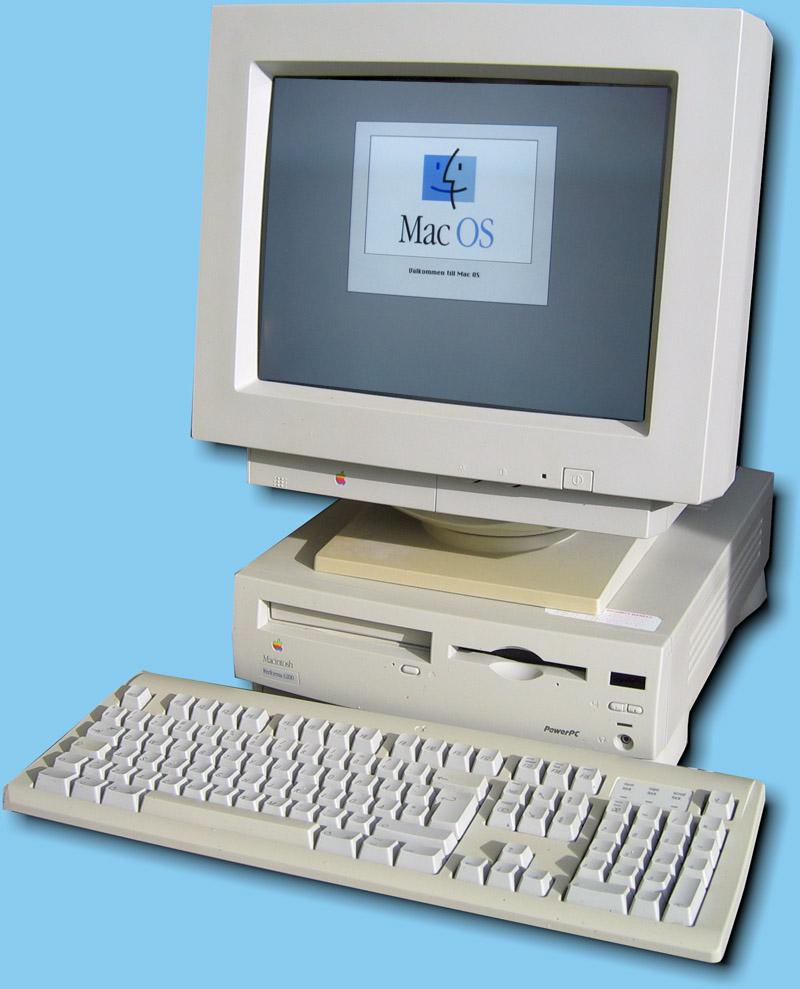
Yesterday, here in New Jersey, a Burroughs B-205 tube computer was
destroyed when the barn containing it burned down. It belonged to
85-year-old Claude Kagan who is a legend out here. Among other things,
he formed the student computer club called the "RESISTORS" in the 1960s,
and he wrote the SAM-76 programming language.
The good news is that Claude was not harmed, and his main house is okay.
But it's a good reminder, if anybody needs one, to save vintage
computers while we can -- and to ensure the integrity of our storage areas.
On Fri, December 4, 2009 5:52 pm, Pontus wrote:
>> Then, assuming the cable really is correct (have you tried swapping Tx
>> and Rx?), is plugged in to the correct
> This was the somewhat obvious error I missed when checking the cable. I
> discovered it by trying another cable which isn't keyed. So I
> accidentally put it in upside down, which incidentally flips Tx and Rx.
> Thanks for putting up with me :)
>
> So now I get this:
>
> 28
> START?
>
> Which confuses me, I have a 32kB (or is it kW ?) worth of memory
> installed (M8044-DD) configured to start at address 0. Shouldn't it say
> 32 instead of 28? How does the memory detection work anyway?
4K for the I/O page..
-Dave
--
Dave McGuire
Port Charlotte, FL
Despite their crappy products, IOmega did leave behind one good legacy. Cheap 5/12v DC regulated wall warts. Perfect for the VFD clocks that I'm working on. 5v for the logic and 12v for the display. And thanks to the throwaway nature of their products these can be found pretty cheap at local flea markets.
Regards, Jim
Hey all --
Picked up an HP Integral PC. Probably paid too much for it but
something about a luggable HP machine with a plasma display running
HP-UX from ROM seemed irresistible. But I digress.
Has anyone archived the manuals for this thing? I've been unable to
find anything in my searches on the internet. Found some software
archives (and after lubricating the floppy mechanism I've been able to
make use of it...) but not much documentation. Docs for the HP BASIC
for this machine would be nice, too.
I've only played with it for a little while, but it seems like a really
neat machine. (Though it seems like this thing is just begging for some
sort of mass-storage other than the internal floppy and RAM. Anyone
have an HPIB hard disk for sale? :)
Thanks,
Josh
Hi,
Since some time the only mirror of my site is gone, so all scanned
material and some additional info are only present (as a set) via my
local site. This site resides on cheap consumer grade quality hardware,
so is not very reliable. So if anyone want to mirror it, I would be
grateful.
The site contains information on a limited set of computers, like DAI,
Epson, some obscure DEC, etc.
The url is http://electrickery.xs4all.nl/comp/. A list of the scanned
documentation is at http://electrickery.xs4all.nl/comp/virtlibrary.html.
Please contact me before starting copying; - the site is at the wrong
side of an ADSL line, and contains mirrors of other sites (in
http://electrickery.xs4all.nl/comp/mirrors). Also it
_contains_copyrighted_material_ (but of vintage or cctech interest).
Fred Jan
Date: Sat, 28 Nov 2009 16:49:20 -0500
From: Murray McCullough <c.murray.mccullough at gmail.com>
Subject: Different take on 10 Yr. 'RULE'
A different interpretation on the 10 Yr. 'Rule'. Many experts, CPU mag
being one, say that we shouldn't store info on CDs, DVDs, etc. as they
may be unreadable in less than 10 yrs. Wouldn't it be sad if we lost
valuable information on the classic computing era? I guess
old-fashioned paper is the best way after all! Let's hope these
technologies last longer than my Zip-drive and disks that can't be
read because the drive died and I can't get it fixed or at the very
least at a decent price. So Sad!
Murray--
--------------Reply:
Only sad if you want it to be...
No problem finding a working ZIP drive for free or next to nothing
these days; all kinds of them on eBay at .99 with no bids, or just
ask on the various forums and I'm sure someone'll be happy to get
rid of one.
Never had any problems with my drives or disks, FWIW.
m
I don't know if the 10 year rule applies here, but I have a old 3com
switch (3c3500) that I'd like to use. Problem is that the previous
administrator was competent and changed all the passwords. So, how
should I reset this unit? Mind you, there is a socketed flash SIMM
... Any ideas? There's also a bad SRAM chip, but that's another
kettle of fish.
>
> Date: Wed, 2 Dec 2009 13:23:18 -0600
> From: Brian Lanning <brianlanning at gmail.com>
> Batteries I can handle. But leaky surface mount caps scare me to death.
> I can solder, but not on the new surface-mount stuff. My eyes aren't what
> they used to be. Maybe I should practice some and invest in a reflow
> setup. But I don't have enough time either.
The surface mount electrolytics aren't bad at all. You should be able to
manage with reading glasses.
To remove the old ones, just get two soldering pencils. Heat controlled
is nice, but you can use a pair of Radio Shack 15watt grounded pencils
(>$10 ea. last time I checked). Apply one pencil to each side of the
capacitor until it lifts easily off of the board. Do not pry.
Remove the old solder with a bit of desoldering braid. Clean the pads
with your favorite solvent(s). Lightly tin one pad. Position the new
capacitor on the pads and hold in place by pressing down with a flat blade
screwdriver or similar (pencil eraser at end of pencil might work well).
Heat the tinned side until the capacitor sinks flat on the pad. Remove
heat, then remove screwdriver. Solder the other terminal normally.
In the old Macintosh world we've been replacing the SM electrolytics with
SM tantalums in hopes that they will last longer.
Anyway, this may not be best practice, but it gets the job done for about
$20 in equipment (two soldering pencils) and less than $10 in supplies
(solder, flux, braid).
Jeff Walther
This discussion about old LEDs makes me wonder...Is anyone aware
of a mailing list for discussion of vintage electronic components?
It's not terribly off-topic here of course, but many people here may
not care.
And on that note...does anyone know if any manufacturer made
74LS244 (actually any logic family, doesn't have to be LS) in a gold-
capped ceramic through-hole DIP package? And if so, would anyone
happen to have any?
-Dave
--
Dave McGuire
Port Charlotte, FL
Hi,
As some of you may be aware, I managed to hose the OS on my 16500B
while trying to upgrade to the latest software. I've now got the
analyser booting again, and it seems to be working more or less OK.
Unfortunately (for me) it seems my backup (done with Filezilla, i.e.
FTP) is totally duff -- apparently I had FZ set to "transfer files with
no extension as ASCII", which has naturally hosed just about all the
System, Driver and Extension files. Which means I've lost the E2450
Symbol Utility software. Bit of a pain when you want to use the analyser
to debug microprocessor code.
Seeing as there are a few folk here with 16500B analysers, I was
wondering if I could ask a small favour... I need a copy of the Symbol
Utility install floppy, HP part number E2450-17504, aka "Symbol Utility
for HP16500B/C/CS". It should be either a normal 1.44MB DOS format
floppy, or a HP LIF floppy (more likely DOS than LIF).
If there's anyone on here with a copy of this disk (possibly stashed
away in the manuals folder for their 16500B analyser), could I possibly
ask for an image of it? Almost anything is fine; I'd prefer something
reasonably standard though -- WinImage .IMA, ImageDisk, or even a raw
"dd if=/dev/fd0 of=imagefile" (rawrite) dump.
For what it's worth, I had V3.02 installed, but I suspect I might need
something a little more recent now the analyser is running the V3.14
operating system.
Thanks,
--
Phil.
classiccmp at philpem.me.uk
http://www.philpem.me.uk/
Hi,
As a few of you may be aware, I managed to hose the OS on my 16500B
while trying to upgrade to the latest software. I've now got the
analyser booting again, and it's picking up the I/O cards correctly.
Unfortunately (for me) it seems my backup (done with Filezilla, i.e.
FTP) is totally duff -- apparently I had FZ set to "transfer files with
no extension as ASCII", which has hosed all the System, Driver and
Extension files. Which means I've lost the E2450 Symbol Utility software.
Seeing as there are a few folk here with 16500B analysers, I was
wondering if I could ask a small favour... I need a copy of the Symbol
Utility install floppy, HP part number E2450-17504, aka "Symbol Utility
for HP16500B/C/CS". It should be either a normal 1.44MB DOS format
floppy, or a HP LIF floppy (more likely DOS than LIF).
If there's anyone on here with a copy of this disk (possibly stashed
away in the manuals folder for their 16500B analyser), could I possibly
ask for an image of it? Almost anything is fine; I'd prefer something
reasonably standard though -- WinImage .IMA, ImageDisk, or even a raw
"dd if=/dev/fd0 of=imagefile" (rawrite) dump.
For what it's worth, I had V3.02 installed, but any version is fine by me.
Thanks,
--
Phil.
philpem at philpem.me.uk
http://www.philpem.me.uk/
Hi guys,
I've just got my hands on a HP 16500B logic analyser mainframe,
complete with a few acquisition cards (16530A 2-channel 400Msps
oscilloscope and 16550A 100MHz State/500MHz Timing logic analyser). Now
I'd rather like a keyboard and mouse for it...
I'm aware that the HP-HIL keyboard and mouse used on the 16500B were
HP-proprietary, and that they were also used on a couple of HP
workstations. My question is, does anyone here have a HP-HIL keyboard,
mouse, or (preferably) a mouse and keyboard pair for sale?
(I'd also settle for a PS/2-to-HP-HIL adapter, if such a beast exists)
I've had a quick look on Greed-bay, and it seems the only listings
for HP-HIL kit are from test-and-measurement dealers whose prices are a
bit... well... "out there".
I could also do with the manuals for the 16530A oscilloscope card; at
the least I need the Front Panel Operations Reference, but the Service
Manual would be good too. I can't say I'm too fussed about the
Programmer's Manual (it's on Agilent's website as a PDF), but it would
be nice to have a complete set. I'll take PDF, (good quality) photocopy,
or dead-tree, whatever's easiest.
Thanks,
--
Phil.
classiccmp at philpem.me.uk
http://www.philpem.me.uk/
If you live in Vancouver you MUST check this out:
http://freegeekvancouver.org/en/computer_museum_auction
Almost 120 machines are for sale, including:
* Boxed IBM 5150 Personal Computer - The original PC from 1982, from which
all modern PCs are still derived. Comes in box with accessories and manuals.
* NeXT cube and NeXT Stations - The computers on which the World Wide Web
was created.
* Boxed Amiga 1000 - The first of a revolutionary line of computers. Comes
in box with accessories and hardware upgrades.
* Atari 1040STE - One of Atari's best and well know in the world of music.
* Apple Macintosh 128k - The original Mac from 1984.
* In addition to systems, there are other goodies like Model M keyboards for
sale
I have seen the stuff with my own eyes and this is not something to miss.
There are some real gems going up for grabs.
Sadly, no PDP stuff. :(
John
John wrote:
> Sadly, no PDP stuff. :(
The SERF sales at UBC were really a goldmine of good minicomputer stuff in my past.
And they had a lot of lab equipment too.
I'm 3000 miles away now, and see that SERF still exists, but their online presence shows none of their inventory :-(.
Tim.
Hi,
in order to rebuild my LSI-11 System (salvaged from some kind of machine
control system in the scrapyard) I'm looking for a small QBUS backplane
(including the card cage). Something like 2x4 or 2x8 would be perfect
(H9281).
Anyone willing to part with one of these?
I'd love to get this thing going again, but the original enclosure was
just too big and heavy -- so I need a smaller replacement in order to
make it compatible with both my girlfriend and my tiny flat ;-)
- Sebastian
PS: I'm in Germany but I will of course pay for shipping over the great
lake if necessary!
On 12/1/09, Alexandre Souza - Listas <pu1bzz.listas at gmail.com> wrote:
>> I've got a ZipPlus and the parallel cable somewhere; it more or less
>> works, but needs a new power supply. Can't be bothered spending money on
>> something I'm not going to use...
>
> This is a common 5VCC supply, you can supply it with your PC's power
> supply.
I do the opposite - there are many, many Zip power supplies in the
thrift stores here, marked at about $1-$2 each. They are +5VDC @ 1A
with a standard 2.1mm coax plug, and the newer ones are wee switchers
that accept 240-100VAC - I use them to power projects and kits and
such, and use them in the US, plus NZ and Europe when I travel.
Somewhere in a box, I have a Zip backpack battery - it was meant to
plug into the wall to charge, then clip to the Zip drive to power it
with your laptop. I used mine to make my SBC6120 into a portable
12-bit computer.
To me, the power supplies are much more useful than the drives.
-ethan
This book has been claimed - thank you.
********************************************
Available for the cost of mailing - AFIPS Conference Proceedings, 1979
National Computer Conference. I'll send it media mail but it's a big book -
weighs about 6 pounds.
Jack
Calling all hoarders!
I have been trying to get my old Fido BBS (circa 1983) running again on my
DEC Rainbow.
The original Tom Jennings code got trashed in a system crash may years ago.
There's bits of it on his BBS but I would need to be a much better C
programmer to have a hope of fixing it.
There are copies on the old Decus site but the un-squeezer's (NUSQ &
NUSQ110) just report errors.
I know about FOSSIL but its FIDO_DEC.exe I'm really after.
Does anybody have or know where FIDO_DEC.exe might be found.
Rod Smallwood
Available for the cost of mailing - AFIPS Conference Proceedings, 1979
National Computer Conference. I'll send it media mail but it's a big book -
weighs about 6 pounds.
Jack
On 29 Nov 2009, at 18:00, cctalk-request at classiccmp.org wrote:
>
> Message: 2
> Date: Sat, 28 Nov 2009 22:46:05 -0800
> From: "Chuck Guzis" <cclist at sydex.com>
> Subject: RE: Nand gate computer.
> To: "General Discussion: On-Topic and Off-Topic Posts"
> <cctalk at classiccmp.org>
> Message-ID: <4B11A82D.20057.304D556 at cclist.sydex.com>
> Content-Type: text/plain; charset=US-ASCII
>
> On 28 Nov 2009 at 22:09, dwight elvey wrote:
>
>> I still like the 38s the best. Open collector
>> parts can do so much more than just a logic function.
>
> The '12 is an OC 3-input NAND. I like 3-input gates better because
> they lower the part count in circuits like J-K flip flops. If you
> admit diodes to the mix, there's no reason that 38s or even 06s
> wouldn't work just as well.
>
> RTL and DTL were great when it came to wired-ORing.
Wire-OR is fine until you need to find out which signal is driving the input low, or should I say to logic '1' (my machine uses -6.3v = logic 1, 0v = logic 0). You need to isolate all the outputs to check them, not TOO hard on a wire wrapped machine but must be a swine if you've soldered everything together. Of course there still the other problem, if you need two or more wire-ORs from the same output, you need to buffer the outputs separately or generate the signal two or more times.
Does anyone still mirror the old Simtel archives anymore? I'm in need of
msdos/arcers/extar10.zip among other things.
--
David Griffith
dgriffi at cs.csubak.edu
A: Because it fouls the order in which people normally read text.
Q: Why is top-posting such a bad thing?
A: Top-posting.
Q: What is the most annoying thing in e-mail?
From: http://code.google.com/p/bkbtl/
*BKBTL* -- *BK Back to Life!* -- is
BK0010/BK0011<http://en.wikipedia.org/wiki/Elektronika_BK> emulator
for Windows 2000/XP/Vista. BK is soviet home computer based on PDP-11
compatible processor K1801VM1. The project started on Nov. 14, 2009 and
based on UKNCBTL <http://code.google.com/p/ukncbtl/> code.
The emulator works under Windows 2000/2003/2008/XP/Vista. Written for Win32
and requires Unicode support.
Current status: Beta, under development.
Emulated:
- CPU (still closer to 1801VM2)
- Motherboard (partially)
- Screen -- black and white mode, color mode, short mode (except the
color mode palettes)
- Keyboard (but mapped not all BK keys)
- Reading from tape (WAV file)
--
Stephane
http://updatedoften.blogspot.com/
Folks, I'm trying to free up some floor space in my shop and am clearing out a number of interesting mostly 1970s Unibus PDP-11 items. They are on ebay under user wacarder. Among these are a TU56 with a TC11 controller, an 11/35, an 11/34a, an RK05f, an RK05, ASR-33 teletypes, and more. If you are in the market for any Unibus PDP-11 items, let me know. I have MANY MANY items and I need to free up space.
Thanks,
Ashley, Leesville, SC
Hello everyone,
After a long time, I've booted my Apple II again. However, it seems that
some keys on the keyboard are not always working. I can get some to work
by pressing quickly & hard a couple of times. Before I'm going to pry
open the keyboard, is it "normal" that these keys don't seem to make
contact?
Also, I forgot the name of the recently discovered old case cleaner
material, does anyone know this?
Thanks in advance!
> On the other hand, it isn't impossible to find used red packs.
> CLEAN packs may be more difficult, though.
One thing that I fear is that the knowledge to *properly* clean a pack
is going away. There is (was?) a place near Boston that would do it,
and I am sure Farris can as well, but I know of no others.
It would be nice to document how packs are cleaned, so we can do this
in the future.
Speaking of Farris - is someone keeping an eye on them? Some day they
are going to call it quits, and they have quite the pile to be saved.
--
Will
Well, now that it looks like the Dallas mystery cabinet is ID'd as
possibly for a PDP-7, this started me thinking.
Kicking around here is what I think it one of the extruded aluminum
handles for a Straight-8 - one of the long ones that goes up the front
door. It is (I think) the right shape, right length, and has decals MA
thru MF inside.
Does anyone need this for a restoration? Give me a sob story and
shipping money and you can have it.
--
Will
Hi,
does anyone have information (docs) on the DEC CR10 card reader?
It has a Soroban "Desk Top Card Reader", type "ERD" inside.
I could rescue that machine. But it's not that small. So I would like to know if anybody thinks I
could use this with another computer than a PDP10 (without using too much modern interfacing).
If anybody else is interested in the machine, let me know. It's located in northern Germany.
Best wishes,
Philipp
--
http://www.hachti.de
On 11/28/09, Zane H. Healy <healyzh at aracnet.com> wrote:
> At 4:46 PM +0100 11/28/09, Pontus wrote:
>>Not mine, not affiliated, but I think a serious collector should pick
>>this up!
>>
>>http://dallas.craigslist.org/ftw/ele/1484014610.html
>
> I agree, racks like that are surely rare enough to warrant a rescue!
> If I were local, I'd go for it!
And for something 40+ years old, my definition of local is somewhat
expanded... unfortunately, Texas is still a bit far from Ohio. If
that were in Indiana or even Missouri, I'd definitely try to pick it
up.
Looking at the rack, since a Straight-8 has huge backplanes that fill
the top of the rack, there are no upper doors - I'm wondering if
that's an -8/S cabinet.
-ethan
I'm selling a NeXT Cube I got in a palette of stuff. I've already got a
turbo color slab so I really don't need a cube :) I'm located in
Bloomington, IN and I'm not going to ship this!
NeXT Cube N1000A
P/N: 2115
S/N: ABA0003988
* 68040 @ 25MHz
* 64M RAM
* Floppy
* Broken 5.25 FH HD. Spins up then down. I'll supply a 2G HH Drive
* Non-ADB Keyboard
* Non-ADB Mouse -- damaged. It looks like someone let it sit in glue or
a solvent. The ball still rolls, but I can't open it to check to see if
the rollers work.
* Monochrome monitor. Readable, but like all monitors of that vintage
its a bit faded.
I'm asking $150
Brian
I'm looking for a IBM PC/ XT power supply for European voltages, 220 -240 V
at 50Hz.
I have three part numbers but can't find specs for them:
5150438
5150439
6323357
Going through boxes during my move in back in process. This is the first
partial list of surplus boards available. $10 shipping for any amount
within the US, overseas: please contact me. If interested in these or items
something not on this list, please contact me off list.
Feel free to respond with any comments or ?'s.
M3107 DHQ11 $30
M7090 COMM $35
M7504 DEQNA $35
M7513 RD/RX EXP $30
M7546 TK50 $25
M7559 TQK70 $50
M7651 DRV11WA $75
N7940 DLV11 $20
M7944 MSV11B $25
M7946 RXV11 $45
M7949 LAV11 $30
M8044 MSV11/D $25..5/$100.00
The above boards are untested,but have a 30 day swap warranty
54-13009-03 VT100 basic video board $50
54-14185-01 VT101 (I think) video board $50
These were tested several years ago, and I might test them again, but will
also have a 30 day warranty.
Many Thanks, Paul
For any of you who were temped to order through one of the Chinese
outfits advertising rare and obsolete ICs on the web, here's a story
of a guy who had the nerve to sell them to the Pentagon:
http://www.edn.com/article/CA6709025.html
Cheers,
Chuck
Hi,
On the offchance that someone here may be able to help me......
I'm looking for any low-level technical information about the RM Nimbus
80186 based machine.
Specifically I'm looking for details of bios calls, and hardware
addresses, bus pinouts etc.
If anyone has a copy of "The Nimbus Advanced Programmers Refference
Guide" that they would be willing to part with, that would be most helpfull.
Cheers.
Phill.
--
Phill Harvey-Smith, Programmer, Hardware hacker, and general eccentric !
"You can twist perceptions, but reality won't budge" -- Rush.
I'm working on supporting GPIB tablet support for PERQemu (right now it
only supports the 3-button Kriz tablet). Anyone have documentation for
the protocol used by the GPIB variant of the Summagraphics Bit Pad One?
I've found documentation covering the Bit Pad Two
(http://www.calcomp.com/files/Bit%20Pad%202%20Tech%20Ref.pdf) , which
appears to be RS-232 only. I'm sure the protocols are similar, anyone
know for sure?
Thanks,
Josh
On 11/25/09, allison <ajp166 at verizon.net> wrote:
>>
>> I should probably make a post there about my new-to-me VT78. It
>> checks out so far, but I don't have a copy of OS/78 to do anything
>> "fun" on it yet. I was hoping someone here would respond to my query
>> about what's out there for the MR78
>>
> The MR78 was only used for the booter.
Right. It's just a bunch of ROMs and clock chips pretending to be a
PR8E-like papertape reader.
> I believe there were at least two booters, RX01, RX02.
I've found reference for those as well as a mention of a diagnostic
ROM set. I would like to be able to put together a box with 4x or 8x
the normal ROM, use modern ROMs and burn all known booters rather than
hack on my one-and-only MR78. Fortunately, it hangs off of a DB25, so
it should be trivial to redesign and build in the same space.
> OS/78 you need to find it on the net, then copy to RX01
> formatted 8" floppy.
I've seen OS/278 from the DECUS collection. I must not be looking
into the right places for OS/78. Writing the RX01 floppy is no big
deal - with what I have sitting around the house, the shortest path is
probably to throw an RXV11 or RXV12 into a Qbus box and use vtserver
to move the disk image. The second shortest path would be to get
around to assembling a 34-to-50-pin cable and using an old PC to write
the image. Fortunately, I have multiple 8" drives and several boxes
of still-in-the-shrinkwrap 8" disks, most (but not all) already
formatted in IBM 3740 format.
-ethan
>After years of looking, thanks to a tip from this list,
>
Did it wander further? My postings were to pdp8lovers and alt.sys.pdp8
>Are there any ROM dumps of the MR-78 anywhere?
>
Not that I know of. I have a MR78-BD on mine. The print set doesn't list
what that version does. I probably can dump it if its different from yours.
>I've seen OS/278 from the DECUS collection. I must not be looking
>into the right places for OS/78.
>
OS78 images of the disks that came with my VT78 are here
http://www.pdp8online.com/images/images/os8.shtml
The R command not working is probably the set OS8/VT78 stuff they
added.
Also WPS78 here
http://www.pdp8online.com/ftp/images/wps/
And COS for the VT78
http://www.pdp8online.com/ftp/images/cos/
The closest source I know of is OS78 V4 which was for the DECmate I
http://www.ibiblio.org/pub/academic/computer-science/history/pdp-8/os8/
Enjoy your new toy.
Machine is in Croydon, Surrey, England, FWIW.
- LP
-----------------------------------------------------------------
From: queenofcroydon <queenofcroydon at yahoo.co.uk>
Date: Fri, Nov 27, 2009 at 1:19 PM
Subject: [Croydon-Freecycle] Offer: OLD Apple Mac, CR0
To: Croydon-Freecycle at yahoogroups.com
Hi All,
I have a Macintosh Performa 600 Series with CD-ROM
Complete with Monitor, Keyboard, Mouse and external zip drive.
I found a picture on "PC-Museum"
http://pc-museum.com/gallery/rcm-035.jpg
I know that this machine is from the technical perspective kind of if medieval.
But maybe there is a MAC-fan out there somewhere, who likes this one.
It is fully functional, comes with most of the manuals.
Please let me know if you would like to have it - will just go as a bundle!
Maike
------------------------------------
--
Liam Proven ? Profile: http://www.linkedin.com/in/liamproven
Email: lproven at cix.co.uk ? GMail/GoogleTalk/Orkut: lproven at gmail.com
Tel: +44 20-8685-0498 ? Cell: +44 7939-087884 ? Fax: + 44 870-9151419
AOL/AIM/iChat/Yahoo/Skype: liamproven ? LiveJournal/Twitter: lproven
MSN: lproven at hotmail.com ? ICQ: 73187508
Several months ago, someone was looking for an image of the 23-018E2
character generator ROM for a VT100. A generous reader has given me an
image, which I've uploaded to my website at
http://www.dunnington.u-net.com/public/DECROMs/
Better late than never, I hope!
--
Pete Peter Turnbull
Network Manager
University of York
On Tue, Nov 24, 2009 at 8:15 AM, Zane H. Healy <healyzh at aracnet.com> wrote:
> IBM had one or two *INTERESTING* PC desktop designs I've seen that would be
> nearing 10 years old. A few others have as well, but I'm honestly not sure
> anything that was built to run MS Windows will really ever be on-topic, that
> would include modern Macs.
>
So it sounds to me like the rule is, "anything that doesn't run windows,
either because of insufficient power or design."
lol
Although some of the 486 or greater single board computer/passive backplane
thingies could easily run windows. So maybe we need an exemption for
anything that has a design that isn't a classic PC.
And if we exclude modern macs, does that exclusion include the Cube and Mac
Mini? I want both of those machines eventually. What about that goofy mac
that looks like a half-dome with an LCD monitor sticking out? That's
certainly interesting. Was that one intel or did it slip out before the
conversion?
And which version of windows was it that ran on the dec alpha?
brian
> Message: 26
> Date: Wed, 25 Nov 2009 21:18:13 +0000 (GMT)
> From: ard at p850ug1.demon.co.uk (Tony Duell)
> Subject: Re: Cleaning packs
> To: cctalk at classiccmp.org
> Message-ID: <m1NDPFl-000J3yC at p850ug1>
> Content-Type: text/plain
>
> >
> >
> > On Nov 24, 2009, at 1:08 PM, geoffrey oltmans wrote:
> >
> > > Dumb question (perhaps), but do the relative positions of the disk
> > > platters in the pack matter on these systems? I suppose it might for
> > > interleaving purposes for data already recorded.
> >
> > I would suspect yes but never having cleaned multi-platter packs, I'd
> > only do that on packs that I don't care about the data (ie I'm going
> > to format the pack as soon as it's "clean"). If I care about the data
> > that *might* be on them I probably wouldn't disassemble (ie de-stack)
> > the pack.
>
> I would be very careful about dismantling the pack for another reason.
> Often there is no automatic centring of the platters. If you seprate
> them, you will have to centre them up. On the (crashed) 5-platter pack I
> dismantled about 25 years ago (for interest), there were holes throuch
> the top and bottom hparts of the hub through which you put long rods to
> keep the platters and spacers _approximately_ cententerd. But then, I
> think, you have to put the hu on the drive spindle (or a similar spindle
> in a test rig) nd use a dial gauge to position the platters so there's
> no run-out when you rotate the stack by hand. Given that moving one
> platter is likely to slightly move all the others, this is a long and
> tedious job.
>
> -tony
I would not clean any pack that had a lubricated disk surface. The good
news is I am pretty sure that lubrication was introduced with the IBM 3340
(Winchester) so the 2315, 2316, 3336, 3336-11, SMD and their DEC equivalents
(RP0x, etc) were not lubricated. I don't know anything about the later
uniquely DEC packs but I expect they used high load heads and were not
lubricated.
As I recall we cleaned non-lubricated disk packs with a tongue depressor, a
non shedding wipe (Kim Wipe) and isopropyl alcohol (medical grade). You
want to make sure there is no residue!
If you don't care about the data you can disassemble and reassemble disk
packs that do not use a track following servo systems, that is 2316 and
2x2316 types. You do not have to center them up!
If you are real careful you can disassemble and reassemble a servo type disk
pack so long as you are very, very careful not to move (or replace) the disk
containing the servo pattern! This applies to the 3330 and SMD type of disk
packs. A while ago, I was surprised to find out that several "recovery"
houses were doing this routinely and claiming to recover data on the
original disks still in the pack!. If you do move the servo disk, as
witnessed by repeatable runout in the servo system, I am told that some
skilled folks can actually center them up by careful instrumentation,
measurement and gentle tapping of the servo disk in a not fully tightened
assembly.
Tom
Is it worthwhile to rescue a Tek 7xxx scope system with a 7d01 logic analyzer plugin ?
It looks nice, but after reading the manual the usefullness seems limited....
jos
I am trying to find something to put my latest E-bay purchase in. Note I
am not saying that I am trying to find somewhere to put it, I have that
problem whne I uy a complete computer system. This is just one PCB about
5" * 4"
Let me start with some backgrounf information. Everybody rememebrs the
Epson dot-matrix printes of the 1980s, things like the MX80, FX80 and so
on. They had a standard Centronics interface on a 36 pin Blue Ribbon
connector.
What is less well knwon is that these printers have an 2*13 socket on the
main PCB. 25 pins are used ,the other is a locating hey. This conenctor
carries most of the Centronics signals, power lines, and a few others. It
was designed for optional inteface PCBs, there is a blanking plate in
the top case to allow access to a connector on such a PCB.
For example, Epson made a couple of different serial interface PCBs. One
was a bit-banger -- if a particular pin (P/S-) on the connector is pulled
lwo, then data line D8 becomes a bit-banged serial input and the other 7
data lines are used to set the serial interface parameters. The other was
a serail-parallel converter using a microcontroller with buffer memory.
It jhad a parallel inteface to the printer.
Now HP sold a couple of printers called the HP82905 and HP82906. These
were based on Epson models -- in fact they _were_ Epson printers with
different firmware to handle the HP command set. They were fitted with an
Epson HPIB interface card as standard. But there was also a fairly rare
HPIL interace card, made by HP. And that is what I have just bought.
It's a PCB 82905-60001. It contains 2 chips, a 1LB3 (HPIL interface) and
MK3870 (mask-programmed microcontorller) with the obvious support
components. Since it just uses the stnadarsd parallel interface to the
rwst of the printer, it should work in any Epson printer with that
connector, no matter what firmeare is present (at least for printing text).
After getting in on E-bay, but before it arrived, I remembered I had the
Epson HPIB card somewhere. I could even rememebr were. I dug it out, and
found it was missing a jackpost from the HPIB connector. 2 hours later, I
had one fitted. No, it didn't take me that amount of time to find one, I
just graed some brass ron and turned one. FWIW, the screw thread on the
connecto that it screws into is 4-40 UNC, an odd choice (USA HPIB
jackposts have a 6-32 thread on that end, and the Japanese normally use
metric threads, so I would have expected either 6-32 UNC or M3 here).
This board contains 16 TTL chips so should be triival to repair if it
needs it.
Anyway, the problem is that I am short of Epson printers. I have one. I
thought it would be triivial to find such devices, but alas not.
So questions
1) Does anyobody know which Epson models have this internal connector and
which therefore could be used with the interfaces
2) Anyone know for sure what models the HP82905 and 82906 are based on?
3) Anyone in the London (England) area got any such printes that they
want to sell cheaply? I suspect shipping them would be rather expensive,
hense the 'London area' criterion. Obviously the HP models would be fine
too, as would IBM5152 grapghics printers (the TechRef shows the connector
I am talking about).
Thanks in advance
-tony
1. I have a need for a DE9 female connector without the metal
housing, something like
(http://www.robotshop.ca/Images/small/en/parallax-basic-stamp-1-serial-adapt…).
I need quite a few of them, so I'd rather not buy DE-9s and rip
off the shielded housing manually. Anyone have ideas?
2. Anyone on list have any experience with MAX 7032A Altera CPLDs?
I'm working on a VIC-20 MIDI interface for a friend in Toronto,
and I'd love to use a small CPLD to make it more cost effective to
produce the MIDI cart. I've found TQFP 7032A units for
$.31/piece, but I've never done CPLD. I want to learn, and
thought if I at least knew someone could help me though the first
few bits (and help with the programming cable, etc., it'd be much
easier.
3. I'm making the journey to Toronto for the World of Commodore 2009
show Dec 5. I'd love to meet list members in the area, and
there'll be some vintage CBM stuff present, if you're into that
sort of machine.
4. Anyone have a source for 28AWG 2 conductor twisted wire?
5. If so, do they make it in 3 conductor?
Those who care about the CBM machines on-list have no doubt heard all of
this, and I don't want to be accused of spamming, but I thought I'd
point out I ran a batch of MOS 6540 adapter PCBs, and I have created a
small FLASH replacement for the 2364 and 23128/23256 DIP ROMs. Some of
those might be of use on other 80's era machines.
Jim
--
Jim Brain, Brain Innovations (X)
brain at jbrain.com
Dabbling in WWW, Embedded Systems, Old CBM computers, and Good Times!
Home: http://www.jbrain.com
I have a 500 series card (don't remember which, I'd have to pull it out and look) with a manual. No cable or software. It was a pull from a batch of 7200's we won at auction years ago.
?
If anyone would like it, make me an offer off-list.
?
Also, I have a couple of 7200's that are available for free, if someone lives in the Philadelphia area and wants to pick one/both up. I also have a 7200 logic board that is a pull from one of the units I upgraded with a 7300 board, if someone wants a spare. I might even have more than one.
?
I also have a Mac 512k Shell with tube and logic board, but nothing else if someone wants that to make a Macquarium out of, or to complete into a working unit.
?
I'm moving in two months, and I'd like to get rid of some excess stuff. But, not to a landfill.
?
Al
>
> Date: Tue, 24 Nov 2009 20:44:57 +0000 (GMT)
> From: ard at p850ug1.demon.co.uk (Tony Duell)
> I would really hate it if this list became a mostly old PC (or Mac) list.
> IMHO there are better places to discuss such machines (no, I don't know
> hwere said places are).
The two best places for discussion of old Macs are probably the Low End
Mac (lowendmac.com) lists (includes "Vintage Macs" (68K) and
"1st-PowerMacs" (NuBus PPC)) which are now hosted on Google, and the 68K
Macintosh Liberation Army Forum at 68kmla.net. Applefritter.com is also
nice but does not get as much traffic as 68kmla.net.
This list is probably as good as anywhere these days for Apple Network
Server information, because Cameron K. is here, unless he knows of an
active forum for them. The last one I knew about is long gone.
Not so many years ago the best place for Mac stuff was the comp.sys.mac.*
hierarchy. Sigh. And you could buy and sell stuff in comp.sys.mac.wanted
without paying Ebay fees...
Jeff Walther
Date: Tue, 24 Nov 2009 16:02:57 -0600
From: "Michael B. Brutman" <mbbrutman-cctalk at brutman.com>
Subject: Re: Ten Year Rule
Pontus Pihlgren wrote:
>> Well, without the newbs the community will slowly die away. I like to
>> see young people getting interested in what I'm interested in. Let them
>> talk about their "vintage" Pentium and hope they discover the cool stuff
>> in the "Minis and Mainframes" section.
<snip>
>> I'm in both and I also visit http://forums.nekochan.net/ for my daily
>> dose of SGI.
>>
>> Kind regards,
>> Pontus.
>Hi Pontus,
>We need the newbs, and we need to be gentle to them. But newbs can get
>annoying when they just babble endlessly and refuse to do basic
>research. The good news is that we can try to moderate or filter a lot
>of that out.
<snip>
>Regards,
>Mike
---------------------
...and moderators can be annoying when they're patronizing and condescending
and think that people who think P1s are antiques are a "problem" on a forum like
Erik's which is mostly about exactly that, folks helping each other restoring and
modifying their old Intel boxes (but also more esoteric stuff, in case I'm giving the
wrong impression).
Meanwhile, here we can spend a week discussing and reading about arcane
camera stuff, but woe to anyone who might mention Windows 3.1...
And now of course we have to have the tedious "what is vintage" discussion yet
once again... has this been a problem? Have we been overwhelmed with Vista
questions?
Did someone use the word 'anal'...?
m
I have a HM (Hotel Microsystems) Server with an eight slot backplane and
can choose from a
selection of '386' and '486' computer-on-a-board cards that I have. I
also have one 'IBM Blue
Lighting' card. Six of the other slots are filled with Sundance ISA
transputer cards (5 are 20MHz, 8Mb,
1 is 20MHz, 4Mb - I'm still half-looking (not in any real hurry) for 32
1Mbit memory chips to fully populate
the final card).
In their day, they were the system of choice at Cardiff University for a
few years, and they came as
a very small desktop with a three (or was it four?) slot backplane, or as
the server.
The server I have was the 'demonstration' model sent for evaluation. The
side panels are
perspex. It looks really nice with all those full length transputer cards
in there, blinking away.
Doug.
------------------------------
Message: 20
Date: Mon, 23 Nov 2009 22:50:31 +0000
From: Pete Turnbull <pete at dunnington.plus.com>
Subject: DEC VT100 character generator
To: ClassicCmp <cctalk at classiccmp.org>
Message-ID: <4B0B11B7.4020304 at dunnington.plus.com>
Content-Type: text/plain; charset=ISO-8859-1; format=flowed
Several months ago, someone was looking for an image of the 23-018E2
character generator ROM for a VT100. A generous reader has given me an
image, which I've uploaded to my website at
http://www.dunnington.u-net.com/public/DECROMs/
Better late than never, I hope!
--
Pete Peter Turnbull
Network Manager
University of York
------------------------------
Pete,
That matches the rom I typed from the vt100 tech manual datasheet for
MESS. Are you sure someone dumped it from a real chip and didn't just
submit the rom I typed up (which is now floating around the 'net)? The
rom is marked as a 'bad dump' in MESS, because I was almost sure the
typed one is very slightly wrong due to the fact that the sum16 of the
one I typed does not end with "00", which seems to have been standard
DEC practice for roms at the time. Hence I was hoping someone with a
working or scrap vt1xx series board would dump the real thing.
The trouble with most people dumping the original chip seems to be that:
A. it is soldered to the vt1xx board
B. it has uninverted CE (I think...) and a few other pinout oddities
(see schematic on bitsavers)
P.S. the second optional character rom (only selectable if you have an
AVO board installed, or a VT102/VT131 which has AVO builtin), labeled
23-094e2 is also not dumped. This one, fortunately, is socketed on
systems which have it, and I believe has a normal pinout. I think it
contains european characters and formatting/word processing characters.
It might also contain some or all of the technical font used on the
later vt3xx+ systems as shown here: http://vt100.net/charsets/technical.html
P.P.S. the main cpu roms from a vt1xx with the word processing romset
installed are also not dumped. I have no idea what the numbering on
these is though. Two of the CE pins alternate in binary form for the
chips to allow them to be 'self decoding' and inserted in the four
sockets in any order! cute, but makes dumping them a bit harder.
--
Jonathan Gevaryahu
jgevaryahu(@t)hotmail(d0t)com
jzg22(@t)drexel(d0t)edu
>My expeirience is that if you have a drive with a correctly-aligned
>positioner/head assemly, you can remove it as an assembly, and put it
>back in _the same drive_ and it will still be alighed. But if you move
>positioenrs between drives you have to do a realignment.
In my case unfortunately that would not be the case as the best I can find
are two other units in unknown condition from a completely different set of
drives.
>The alignment procedure is not hard if oyu have the alignment pack. You
>also need a 'scope (but just aout any 'scope will do) and a way of moving
>the heads to a particular cylinder and selecting head 0 or head 1. I had
>no prolems using a PDP11 + the appropriate controller for this, just
>togging values int oteh controller registers from the PDP11's font panel.
>If you use a PDP9/e, I think you have to write a trivial program for this.
I can easily get hold of a scope but a calibration pack is a different
story.
>THe disk packs are different between the PDP8 and PDP11 systems. They're
>hard-sectored (by notches in a metal ring on the disk hub), PDP11 packs
>are 12-sectory, PDP8 packs are 16 sector. The former are _much_ easier to
>find.
I think if I could find the rest of the system I might also find the packs
as well. Since this was a local and very little known recycling job only a
few businesses in town and university staff drop stuff off. I really wish I
knew dropped this off but alas, no records are kept on who drops off what.
My best bet is either the hospital or it came from someplace in the
university. Where exactly I have no idea.
On 11/24/09, Fred Cisin <cisin at xenosoft.com> wrote:
> On Tue, 24 Nov 2009, Kirn Gill wrote:
>> I was thinking recently, and I know that the general threshold for
>> discussion on this list is ten years, but is that enough?
Guideline, not threshold. There are countless exceptions on both sides.
>> As it stands, given the rule of a minimum of ten years, most early
>> Pentium III PeeCees are listworthy for discussion.
Guideline, not threshold.
>> In just two more years time, the world's most popular computer operating
>> system (as of the time of this email's writing) would be perfectly valid
>> to discuss, even as "on-topic". 2001 to 2011 is ten years, isn't it?
>
> NEVER!
> There are better places for THAT discussion.
Indeed.
The results of one of the many recurrent discussions of "The 10 Year
Rule" is that it really comes down to "interesting machines are in,
mainstream machines are out". The list of what falls in and what is
still out, changes from year to year, but a rule of thumb is that
there are plenty of places to go to ask for help fixing your Windows
PC, and this is not the place for it.
At one time, when MS-DOS was still in common use all over the planet,
this was not the place to talk about those sorts of machines. I would
suggest that now, DOS knowledge has become esoteric (the slide
starting with the release of Windows 95, one could argue), and that
discussion of boxes running MS-DOS could be on-topic. I would still
suggest that Windows 98 and newer are quite off-topic and will be for
a large number of years into the future (meaning
greater-than-the-quantity-10). Windows 95 is kinda on the fence to me
since there's a disconnect with Win98-and-later. Practically
speaking, if you are fiddling with Windows 95 at this point, it's
because you want to experience how things were 14 years ago. Windows
98, though, I would argue, is new enough that it's still a "modern"
experience.
If you wanted to discuss the Pentium FDIV bug and which chips were
affected, I'd think that was on-topic. If you wanted to discuss what
Windows drivers are needed for that very same machine, I'd say that's
off-topic. Same hardware, different sides of the line. "Ten Years"
isn't (and hasn't been for a while) the be-all-end-all criterion.
-ethan
Hi folks,
there are some Siemens items in Kiel. Free for pickup. Will go to scrap if nobody wants them.
The first two pictures:
http://pdp8.hachti.de/gallery/endangered_stuff
There's also a big printer (one TON!!) in another room. That unit's future will be the scrapyard as
well if nobody is interested in it.
Best wishes,
Philipp
--
http://www.hachti.de
>Maybe someone with a spare drive that could be dismantled and someone
>who could create the specific hardware to write analogically the pack,
>could create a machine for creating alignment packs?! :o)
>
> It was done before with 5 1/4 disk drives... :oD
Hmm, I was under the impression that the alignment packs had everything
hard-coded as to ensure the alignment went okay.
John.
Hi Everyone. I have no idea what these things are called. They show up on
ebay all the time and look like entire 486 machines on a full-length 16-bit
isa card. I'm assuming these are designed to be plugged into a passive back
plane.
I've always wanted to tinker with a computer of this design, but I haven't
had any exposure to them. Is there anything I should look for or avoid
before trying to buy one of these boards? Thanks.
brian
Hi all,
First post here. Long story short, I recently rescued a friend of mine's
Commodore equipment after he'd suffered a fire in his apartment. None of
it caught on fire but some copped a direct hit from a fire hose and was
sitting there for 4 days while I went through the bureaucracy of gaining
access to the place (he's in hospital at the moment but will recover, for
the record).
While this gear isn't particularly uncommon (although the Amiga stuff
might be quite expensive to replace), I'd like to rescue it for him even
if it's just for morale purposes.
Anyway, rusty RF shields have leaked rusty water all over the PCBs and I
really don't know how to deal with it. So far, I've used dry cotton
buds/q-tips to clean off anything visible, but I'd like to know what
people recommend for cleaning the boards properly.
I was thinking isopropyl alcohol - I've previously used it for leaked
caps, but I'm all out right now. Is methylated spirits a bad
substitution?
Speaking of leaked caps, it looks like the water has caused a lot of caps
to leak as well - I've never seen leaking caps in the act, it's always
been dry "after the event" type damage. If there's anything worth noting
about this, that'd be great to know too.
Thanks for any advice!
Cheers,
Dave.
>If the head/voice coil assemblies have been removed you'll have to go
>through the entire alignment procedure which requires a special
>alignment pack. You'll also want to make sure that all of the dreaded
>"DEC foam" has been removed and replaced or you're heads and packs
>won't last long. You'll also want to look at the filters and make
>sure they're in good shape and replace them (if you can find them).
>However, bad filters will also kill the heads and packs.
>
>If the head/voice coil assemblies have been removed how do you know
>that the drives are working?
I noticed that foam almost immediately, I cleaned up the majority but I'll
probably go over the thing with a scraper and the air compressor. I got the
same nasty foam in my SGI Crimson.
Well at the very least the drive powers up with no nasty smells or noises or
the fault lamp and I can get the spindle motor to spin up
>They're one of the standard DEC lamps. I don't recall off the top of
>my head what the equivalent lamp # is but they (or a reasonable
>facsimile) are readily available.
Awesome, that might be a bit better as well.
>For an omnibus PDP-8 you need an RK-8E controller that goes in the
>omnibus chassis. The "hard" part is finding the cable that goes from
>the RK-8E and the drive. For a PDP-11 (unibus) you need an RK-11D
>controller. It is actually a 4 board set in it's own backplane that
>goes in the CPU chassis. There is also an RK-11C for unibus but that
>controller is of the "old style" that has 40 or so flip chips in a
>rack width backplane and is mounted outside of the CPU chassis in a
>rack (requires a separate power supply) that connects to the CPU with
>unibus cables.
Hmm, that might be a bit of a problem as I never see spare flip chips or
anything unless they are on ebay for funky prices.
>If you're not looking for a "blinken" lights machine, you're best bet
>would probably be an 11/34 system. I have several that are "spares"
>but right now I'm swamped and haven't been able to spend any time on
>classic computer stuff.
>
>TTFN - Guy
Well right now I'll go for pretty much anything. I guess a 34 or similar is
a good starter system and on some distant day I'll switch to say an 8/e.
John
Hi guys,
Before I start writing a data decoder of my own (for the disc
analyser), I'd rather like to at least make sure the hardware is
spitting out sane data. Does anyone know of a tool along the lines of
cw2dmk that can accept timing-data input from a file instead of using
(e.g.) a Catweasel?
I was going to do the hardware tests with cw2dmk, but I don't fancy
my chances at figuring out how the ~2500 lines of code fits together,
and how to patch in read-from-file support...
(Apologies if cw2dmk actually /can/ do this; the manpage explains how
to change the output file name, Catweasel port and such, but not how to
make cw2dmk read transition timing data from a file)
Thanks,
--
Phil.
classiccmp at philpem.me.uk
http://www.philpem.me.uk/
Hi at all,
it past much time during i collected all useful info on this my old board
putting all on my website http://elazzerini.interfree.it
<http://elazzerini.interfree.it/>
I hope to can make my board alive soon. A friend given to me all its 32 x
4116 DRAM chips after to have checked all of them.
I buyed on ebay the SWP Double side double density adapter
http://elazzerini.interfree.it/Foto560.jpg and i here to ask: is there
anyone who could indicate where or how to gain the firmware for the bigboard
1 to can make this adapter working or just to gain its 27 original manual?
Thanks for any kind of useful suggestion and please sorry for my not perfect
English.
Enrico Lazzerini - Pisa - Italy
I managed to locate two nicely working RK05J drives (though the voice
coil/head assemblies were removed but I'm trying to get two more from
another guy but damn, those things apparently weigh 80 pounds alone! Think
of the shipping costs! D:) and now I'm really intent on finding either a
PDP-8 or PDP-11 Omnibus system I can run them with. I have been trying my
local Craigslist (as well as others but the listings kept on getting
flagged) but it's a ghost town and I got leads at a place called FreeGeek in
Vancouver but they have never seen a PDP come in through their doors, ever.
I'm running out of places to search and ideas on how to bring my searching
for a PDP to the attention of people who have systems they no longer need or
are willing to part with theirs. I saw alt.sys.pdp8 and alt.sys.pdp11 but
they are both rather empty so I don't know if a yell for help would be heard
there. Any help or offers would be appreciated very much.
Also, most of the bulbs on the front panels of the drives have burnt out.
Are these just regular 12v bulbs? I saw someone replaced the lights in their
drives with LEDs and that would be a bit nicer as LEDs would never have to
be replaced again.
Also, I received only the drives. I saw several flip chips in the thing and
a single empty slot. I'm assuming that the flip chips are the controller and
the empty slot contained a board which gave you a ribbon cable connection to
the omnibus backplane in the PDP or are the chips in the drives "fridge
logic" and I'm missing the controllers?
Thanks.
Hi guys,
I'm just putting the finishing touches on my disc reader hardware. At
this point the disc stepping works (under the control of the FPGA -- you
set the step rate and tell it how many steps to move and in which
direction), and I can access the acquisition RAM on the PC (both read
and write).
So the next step before adding the acquisition module is to make the
thing detect start and stop events. Frankly if you're reading formats
that are index-synchronised (read: IBM PC), then it makes more sense to
read index-to-index than it does to read from $HEAD_POSITION to some
other random place on the disc.
Most folks who have been following this project will know that it has
three ways of starting or stopping an acquisition:
- Index Synchronised. Waits for one or more index pulses.
- MFM Synchronised. Waits for a given MFM sync word to pass under
the head.
- HSTMD. Hard Sector Track Mark Detector. Looks for an index pulse
halfway between two other index pulses, then triggers on the index pulse
after that. For example...
I I I I I I ...
| |
X +--trigger here
(X = the track index mark, + = the trigger point)
Each of these trigger modes can be used in conjunction with a
"delayed capture" mode -- basically, it waits for N events before
triggering. That is to say, you can program it to trigger on index
pulses, with a count of (say) 3, and it'll wait for 3 index pulses
before triggering.
This could be useful for any number of things -- reading
hard-sectored discs, waiting for a few rotations before trying to read
the disc, and probably a few other things I haven't thought of yet.
I'll probably have the HSTMD detector wait for a track-mark, then
count index pulses, which would allow single sectors on hard-sectored
discs to be read with very little effort. This seems more useful to me
than just counting track-marks.
The thing is, I have a limited number of bits available in the
registers (and an equally, if not more limited number of registers). So
what I want to know is... how high does the event counter need to go?
Specifically, how many sectors can you actually get on a
hard-sectored disc? I know 10- and 16-sector discs were (are?)
available, but were any larger sizes (e.g. 20 or 30 sectors) ever made?
Thanks,
--
Phil.
classiccmp at philpem.me.uk
http://www.philpem.me.uk/
Today I became the proud owner of:
- Northstar Horizon w/ 2x 5.25" built-in drives + mucho software
Haven't had a chance to pop the cover and inventory the boards.
- Sony SMC-70 w/ 3 boxes of binders and software
A nice little CP/M system with built-in 3.5" diskette drives
- Morrow 8" external hard drive
This looks to be an MFM interface, or at least it has a 34-pin + 20-pin
header on the rear panel. Anyone familiar with it?
And the strangest one of all:
- OSM "Zeus"
I'm told this was a multi-user business computer from the early 80s, but
the person who gave it to me had no documentation or other information on
it.
Oh, and about 40 boxes of 8" SS/SD NOS diskettes still sealed in plastic
and about 10-20 boxes of 8" SS/SD hard-sectored diskettes, most still
sealed. I'm not sure I really need all the diskettes and may offer them
for the price of shipping - stay tuned.
Also, 4-5 large shelf bins full of 8" application master diskettes and the
entire CPM-UG collection.
This will all take a while to go through.
Steve
--
I need to clear some room and would like to give away this system to
anyone who wants to drive to Burlington, VT and pick it up:
- VT-180 main unit in reasonably clean condition (has DEC logo dust cover
and has been covered while in storage.
- Keyboard also with DEC logo cover in pristine physical condition
- (2) Dual 5.25" external floppy drives
- Large box full of system masters, application software and all docs.
- All cables for connection of drives to system unit.
Caveat: I was given this unit about 8 years ago as what was claimed to be
a working system and have never powered it up. Nor am I planning to now.
If not claimed by the end of the year, it's going (with a heavy heart) to
the local electronics recycler.
Steve
--
Quick status update before I go to bed...
The analyser is now reading discs. All the buffer data seems valid, and
the nifty "so simple I can't believe I didn't think of it first"
counter-rollover algorithm proposed by Peter Coghlan seems to work
really nicely too.
I've dumped track zero from a DOS 1.4MB floppy and (after a quick bit of
histogram analysis) it looks like valid MFM data. I'm seeing a big spike
at ~2us, a second, smaller, spike at ~3us, and a third, even smaller
spike at ~4us. The last spike is only just noticeable on a linear graph
scale -- probably due to the large number of 2us "hits" (39,000 in a
90,000 sample acquisition). On a log scale it's a lot more visible.
I haven't tried decoding the data yet, but that's next on the list.
Writing isn't implemented yet (I need to do a partial-rewrite and
redesign of the disc writer state machine) but I'm quite happy with how
this has turned out thus far.
I'd post screenshots, but console apps don't tend to make very
interesting screenshots...
(I'd also cross-post this to VCforum, but I'm too tired to remember my
password)
Cheers,
--
Phil.
classiccmp at philpem.me.uk
http://www.philpem.me.uk/
Quick status update before I go to bed...
The analyser is now reading discs. All the buffer data seems valid, and
the nifty "so simple I can't believe I didn't think of it first"
counter-rollover algorithm proposed by Peter Coghlan seems to work
really nicely too.
I've dumped track zero from a DOS 1.4MB floppy and (after a quick bit of
histogram analysis) it looks like valid MFM data. I'm seeing a big spike
at ~2us, a second, smaller, spike at ~3us, and a third, even smaller
spike at ~4us. The last spike is only just noticeable on a linear graph
scale -- probably due to the large number of 2us "hits" (39,000 in a
90,000 sample acquisition). On a log scale it's a lot more visible.
I haven't tried decoding the data yet, but that's next on the list.
Writing isn't implemented yet (I need to do a partial-rewrite and
redesign of the disc writer state machine) but I'm quite happy with how
this has turned out thus far.
I'd post screenshots, but console apps don't tend to make very
interesting screenshots...
(I'd also cross-post this to VCforum, but I'm too tired to remember my
password)
Cheers,
--
Phil.
philpem at philpem.me.uk
http://www.philpem.me.uk/
On 11/20/09, Brian Lanning <brianlanning at gmail.com> wrote:
> On Fri, Nov 20, 2009 at 10:16 AM, Al Kossow <aek at bitsavers.org> wrote:
>
>> Chuck Peddle told me a couple of months ago that the 6502 was never
>> intended to be a general-purpose microprocessor, it was designed to
>> be a replacement for hard-wired logic.
Well it certainly exceeded those expectations!
>> They had a die size target to hit to get to the price point they wanted
>> and pulled out things they thought were unnecessary for its use in that
>> market.
Interesting way to build it - start with a processor... discard things
until it fits in a few mm^2... profit!
>> In particular, the length of the registers. I had always wondered why they
>> built a microprocessor with an 8 bit stack pointer, when the previous 6800
>> design had 16.
The first two processors I worked with were the 1802 and the 6502. I
do remember the wee stack size was occasionally a problem. It would
have been nice to have been able to at least put it somewhere other
than $0100, but they probably didn't have enough room for spare
transistors to even do that.
As a little-brother to the 6800, it still does a pretty good job. I
remember wishing for 16-bit registers, but in effect, zero-page is a
wad of slow 16-bit registers.
> lol Who needs multiply and divide operations anyway?
When I used to write commercial games, we used to go to great lengths
to calculate screen addresses, etc., with tables and hard-coded
multiple routines (times3, times9, done with shifts and adds) since
brute-force multiple wasn't an option.
> Great info, I never knew that.
Interesting to hear the history on it.
-ethan
Hi folks,
I don't know if it's a fact of certain interest...
I found a DEC M841 Omnibus printer interface with a Fairchild "F 7429DC"
additionally stamped "DEC8881". As I think the DEC8881 is considered one
of the harder to find chips, this could be interesting. I know that many
of the DECxxx ICs are pin compatible to standard 74 TTL or Signetics 82
TTL devices so this could be found out by reading the TI data book as
well. But I've heard of signal quality, speed and other selection issues
making those a DECxxx IC. Perhaps that's a legend? Or at least partially?
Best wishes,
Philipp :-)
p.S.: Here's a picture: http://pdp8.hachti.de?gallery/misc
Hi to all across the pond.
Are there any places/stores of interest to our hobby in
Indianapolis, or is it a bit of a black hole?
I am on a business trip there next week from the UK anything worth
seeing??
Roger
A old issue of Datamation (Nov 1977, I think - its out in the van
right now) had a very short blurb about some upcoming S/360s I have
never heard about - models 58 and 7. The 7 intrigues me, being
described as a machine smaller than the model 20, which would make it
fit somewhere in the minicomputer realm.
I doubt these machines ever saw the light of day - likely never even
left the back of the napkin at the diner in Poughkeepsie.
--
Will
I just bought a 286 bridge board for the amiga. Much fun awaits...
Does anyone know of a stash of 286 to 386 processor upgrades anywhere? I
seem to remember a few companies marketing these.
Also, iirc, there's a daughter card on the bridge board that covers the 286
socket. Any idea what I can use to widen the gap between the daughter
(sandwich) card and the bridge board so that the processor upgrade would
fit? Some short ribbon cables might be all it takes.
I have an ide caching controller, scsi controller, sound blaster board, and
network board ready to plug in. Still need a vga board. I have a 5.25"
floppy floating around somewhere, but i'd like to find one of those 5.25"
and 3.5" floppy combo drives. Imagine the possibilities :-) What I'd
really like to find is one of those isa bus extenders that plug into a
passive back plane in another case. With the external scsi tower, that
would go a long way toward turning my 2000 into amigazilla. :-)
brian
> Message: 3
> Date: Thu, 19 Nov 2009 23:19:34 -0500
> From: Bryan Pope <bryan.pope at comcast.net>
> Subject: Re: Cromemco Z-2 and IMSAI 8080 at Purdue
>>
>>
>>> Can we just call Erik's web board the VC Forum?
>>>
>>>
>> <smartass>
>>
>> But then you'll annoy venture capitalists -grin-
>>
>> </smartass>
>>
> Tag dutifully taken! :p
>
> I was hoping the crowd here would automatically know that "VC" mean
> "Vintage Computer" and not venture capitalists or umm..., anything
> else. Outside of here, VC would of course be fair game.
Irrespective of their interests, I think if you mention VC to anyone in the British Commonwealth you'll find they automatically think the abbreviation means Victoria Cross, the highest award for military gallantry. So high that most are awarded posthumously,. Someone with VC after their name gets a lot of respect here.
Roger Holmes.
If anyone here has bought/is going to buy any of the ICT computer tapes from eBay (current item number 380177625923), then I probably have the only machine in the world that can read them. As I already have about 300 of these, I'm not willing to shell out 20 pounds each for them, and they may be blank anyway. However I might be missing out on data that is on them, so if either you would like to know what's on them or don't mind giving me the chance to read them then I would be vary happy to do so.
You might be thinking they are standard 7 track of 9 track tapes. They aren't. They fit the Ampex TM4 drives fitted to the ICT 1300/1301/1302 (and also to the Leo 3 I think) and are ten track devices with (for the computer industry), non standard hubs. The hubs are the audio/video standard hubs, and I suspect some buyers think they are 1/4 inch audio tapes as the vendor does not spell out that they are 1/2 inch (though I questioned this and they are 1/2 inch). I suppose they will make interesting ornaments for the wall. As they've no labels they're probably blank, but who knows, they might contain the holy grail of a copy of the 1302 Executive.
Roger Holmes
Owner of 'Flossie' the worlds last working ICT 1301, delivered to the University of London 1962 for administration, like grading exam results and printing certificates.
Hi, All,
After years of looking, thanks to a tip from this list, I finally have
a VT-78 to play with. I got a complete WPS-78 system except for the
cart - CPU, RX78 floppy enclosure, and DEC-badged Diablo Hytype? II
daisywheel printer and all the cables. So far, everything checks out.
The CPU came with an MR-78 ROM pack on it. For those that might not
know, it's an optional bolt-on firmware box that attaches to a DB25
plug and simulates a high-speed papertape reader. From reviewing the
MR-78 printset (at the end of some of the electronic copies of the
VT-78 printset), it appears that DEC sold it with several sets of
firmware - there's at least a WPS78 load and a diagnostic firmware
load, and possibly one or two more.
Are there any ROM dumps of the MR-78 anywhere? In all my years of
collecting PDP-8 parts and software and docs, I've never seen any, but
I might as well ask. The circuit is utterly trivial to reproduce,
and, of course, the size of modern ROMs would make it a no-brainer to
make an uber-MR-78 with all known versions of the firmware on it, or
with user-definable content as well (the code is stored as 8-bit bytes
simulating a papertape stream (either BIN or RIM (have to check the
"panel ROM code" to see which one) with some functionality removed (no
RUBOUT, no pauses, and such)). Obviously I can dump the one I have,
but it would be interesting to review the contents of the others.
Thanks for any pointers on the MR-78 and its contents.
-ethan
Hi,
I?ve found this thread when googled the web. I?ve got a TEK 4225 also, but
there isn?t any docs anywhere. The graphics functions work fine over serial
line with my MicroVAX. But no more information about the AUI interface and
its setup exists in web. Have you got something else in the meantime?
cheers
Andreas
Hi, All,
I was helping someone in town with some motor issues on their
circa-1980 Bridgeport CNC mill for which they fortunately have many
original docs. I was tremendously surprised to find that there's an
LSI-11 in the heart of the CNC cabinet. The docs have schematics,
register maps, etc., and even instructions for how to use the
Bridgeport punched-tape-loadable diagnostics. Fortunately, this unit
has the optional punched-tape reader. Unfortunately, it has no tapes.
I've done some cursory looking around and little is leaping out at me
(except frequent mentions of folks who have upgraded away from the
original CNC package). I'm wondering if anyone on the list knows
where to pick up images of the diagnostic software for this thing.
Thanks for any tips or hints.
-ethan
A tidbit about Fred Cohen and the First Ever Computer Virus on the
Beeb:
http://news.bbc.co.uk/2/hi/technology/8366703.stm
Except that I'm thinking that "first ever" is an exaggeration.
Perhaps "first ever published for review". Even the name wasn't new
in 1983.
Around 1973, ten years earlier, I recall a CDC Sunnyvale ops emplyee
got into some mischief on the Development Center 6400 running SCOPE
3.4 by writing a rather simple program that made use of two PP calls--
RSJ, to reschedule a job and RPV the "reprieve" service, used to
recover from a job-terminating error, including a normal EOJ.
The net result was that the job filled up the input queue with copies
of itself and any attempt by the operator to kill it would simply
spawn more copies. I seem to remember that the message displayed by
the job was "You have caught a virus" or something similar.
The only way out of the mess was to initiate a non-recovery deadstart
of the system and then sort through jobs submitted for running before
resubmitting them to find the culprit.
I don't recall the name of the employee or what division he worked
for; only that the COMSOURCE people wanted his head on a pike. This
was about the time of one of many layoffs, so the guy may have been a
short-timer anyway and just wanted to fire a parting shot.
Does anyone else have a similar (earlier) story?
--Chuck
The Processor Technology SOL-20 with a semi-working Helios Disk System whose
listing I am start this evening (Thurs, 11/19, at about 10pm EST) on E-Bay
uses 8" 32-sector hard sector diskettes (and comes with two boxes of them).
Wang systems also used these same diskettes, but, oddly, what we call the
"back" of the diskettes was the "front" on Wang systems; they inserted them
into the drive backwards by normal standards. The drive in the Helios is a
Persci drive, just jumpered differently than for soft-sector use.
There is (or was) also a very rare and unusual 32-sector 8" hard sector
diskette where the sector holes were at the outer edge of the diskette
circumference. Not sure who used this, but I know it existed.
I believe that there was also a 16-sector 8" diskette, but I'm not sure.
The number of sectors is related to sector size (Duh !!). In fact, the
Helios, which had hardware variable sector sizes, defaults to using only
every other sector hole and double-size sectors (in other words, I believe
that it effectively has 16 sectors of 256 bytes per track, even though the
diskette has 32 sector holes). By having fewer larger sectors, you
effectively convert the otherwise lost inter-sector gaps into data space and
increase the capacity of the media (this is true for soft sector as well).
In the 5.25" size, I know that there was both 10-sector and 16-sector media.
Heathkit/Zenith and NorthStar both used the 10-sector media.
Subject: Re: Hard-sector discs -- how many sectors?
On Thu, 19 Nov 2009, Philip Pemberton wrote:
>> Specifically, how many sectors can you actually get on a
>> hard-sectored disc? I know 10- and 16-sector discs were (are?)
>> available, but were any larger sizes (e.g. 20 or 30 sectors) ever made?
> Wang sometimes used 32 SPT hard-sectored
> I would NOT dare to claim that any list is exhaustive.
------------------------------
Item # 190348608036
The seller claims this is a vintage computer from 1968.
It's all been de-racked and is shown spread out on a table,
local pickup only in Hudson, MA. There is a console that
appears to have been part of medical instrumentation of
some kind. I don't recognize the manufacturer's label
that is shown, but there is a set of drawings, and the
card cage appears to contain a core stack or two.
Someone local might want to check it out.
Item # 120492284400
These look like raw ceramic substrates similar to those used
for IBM's SLT logic, but they appear to be set up with pads
for larger die. Perhaps MST logic? Anway, the seller claims
they are IBM material from the 1970's. There's a whole tray
of them, as would be used in manufacturing. Could be interesting
for the IBM mainframe collectors.
I would like to build a RGB-VGA converter but I don't know how to design one. If you have a circuit diagram, I would like to obtain it.
I have an old RS6000 320H computer which has RGB 3 BNC with sync on green. It also says "separate". It also says that 1280 * 1048(something like that). The original monitor (IBM 6091-19)has H freq =63.35kHz (something like that), V = 60 Hz.
Could you help me with the circuit?
Thanks
Chungduck Ko
It has been over 10 years since I used VMS, but I seem to remember
that there was a feature available called Symbolic Name List which
is a superset to (and MUCH superior to) the PATH name in DOS.
I no longer have access to the Grey Wall, so I attempted to look in
bitsavers. No luck at all.
Can anyone provide a link to a PDF of the VMS manual which
contains to documentation for SNL in VMS. Also, is this feature
to same in both the VAX and Alpha at this point? If there is a
difference? Which seems to be better? Is there a separate PDF
for the documentation in each case?
Jerome Fine
I have a 3 M data cartridge drive and i can't use it so looking for someone needing one...? Probably from 1980 or so and I have some pictures I can send if interested...
I'm working on a Tomy Tutor tape decoder because, well, no one else is. To
that end, this weekend I managed to crack the encoding and now have a
primitive tape decoder that reads an AIFF audio file and spits out bits for
a higher-level decoder to process. To date I can now see the bit pattern for
the GRAPHIC paintbox, and can even do rudimentary decoding of BASIC programs.
So far so good.
However, playing back that exact uncompressed 44.1kHz 16-bit mono AIFF into
the Tutor doesn't work (before you ask, the Tutor's tape inputs are mono).
The Tutor doesn't see the sync mark, and never loads the "tape." I recorded
this a few times, making sure that all the output got on the audio file,
and no dice. I also played with line levels and varied the output volume
level through all the fine steps the Mac would let me step, and the Tutor
just sits there.
Have people discovered any gotchas in general about using PC audio files
to load and save from tape, besides the obvious ones like don't compress,
etc.? Any suggestions about how to make the Mac's output more acceptable
to the Tutor?
--
------------------------------------ personal: http://www.cameronkaiser.com/ --
Cameron Kaiser * Floodgap Systems * www.floodgap.com * ckaiser at floodgap.com
-- Adore, v.: To venerate expectantly. -- Ambrose Bierce ----------------------
Hi! Does anyone know what hardware Motorola originally used to demonstrate
the 6809? I am referring to the hardware Motorola references in the 6809
programming manual. It is the hardware that Motorola wrote their ASSIST09
debug monitor to run on. The reason I am asking is to understand how they
are connecting the output of timer #1 of the MC6840 PTM to the CPU /NMI
line. Specifically, is it directly connected or inverted? Is other logic
involved or further qualifications? Does anyone have schematics available
of the original Motorola 6809 hardware?
The ASSIST09 source code implies a direct connection but that is counter
intuitive to me since the /NMI line is active low and the PTM timer #1 is
active high. The ASSIST09 monitor uses the PTM connected to the /NMI line
for hardware assisted tracing. According to the datasheet for the 6809 and
6840, the /NMI is activated on the negative transition which would be on the
falling edge of the pulse from the PTM timer output if directly connected.
If inverted, it would be on the leading edge of the pulse.
The reason I need this information is I am building an IO mezzanine board
(ACIA, PTM, dual VIAs) for the N8VEM 6809 host processor. The good news is
that I've seen the hardware assisted tracing work using the inverted output
of the timer. However, the IO mezzanine is connected to the 6809 host
processor by ribbon cables which are notorious for causing signal delays and
other problems. As a result, the tracing is unreliable and I would like to
fault isolate. The rest of ASSIST09 seems to be working reliably on my
prototype hardware.
Originally, I presumed Motorola designed the ASSIST09 monitor for the
EXORset system since it was their first 6809 based computer and released
about the same time as the 6809's introduction.
If anyone has familiarity with the original Motorola hardware for the
ASSIST09 debug monitor I would appreciate your help. Thanks in advance and
have a nice day!
Andrew Lynch
I refer to these two functions in the ASSIST09 source code:
**************************************************
* [SWI FUNCTION 8]
* MONITOR ENTRY
* FIREUP THE ASSIST09 MONITOR.
* THE STACK WITH ITS VALUES FOR THE DIRECT PAGE
* REGISTER AND CONDITION CODE FLAGS ARE USED AS IS.
* 1) INITIALIZE CONSOLE I/O
* 2) OPTIONALLY PRINT SIGNON
* 3) INITIALIZE PTM FOR SINGLE STEPPING
* 4) ENTER COMMAND PROCESSOR
* INPUT: A=0 INIT CONSOLE AND PRINT STARTUP MESSAGE
* A#0 OMIT CONSOLE INIT AND STARTUP MESSAGE
*************************************************
SPC 1
SIGNON FCC /ASSIST09/ SIGNON EYE-CATCHER
FCB EOT
SPC 1
ZMONTR STS <RSTACK SAVE FOR BAD STACK RECOVERY
TST 1,S ? INIT CONSOLE AND SEND MSG
BNE ZMONT2 BRANCH IF NOT
JSR [VECTAB+.CION,PCR] READY CONSOLE INPUT
JSR [VECTAB+.COON,PCR] READY CONSOLE OUTPUT
LEAX SIGNON,PCR READY SIGNON EYE-CATCHER
SWI PERFORM
FCB PDATA PRINT STRING
ZMONT2 LDX <VECTAB+.PTM LOAD PTM ADDRESS
BEQ CMD BRANCH IF NOT TO USE A PTM
CLR PTMTM1-PTM,X SET LATCH TO CLEAR RESET
CLR PTMTM1+1-PTM,X AND SET GATE HIGH
LDD #$01A6 SETUP TIMER 1 MODE
STA PTMC2-PTM,X SETUP FOR CONTROL REGISTER1
STB PTMC13-PTM,X SET OUTPUT ENABLED/
* SINGLE SHOT/ DUAL 8 BIT/INTERNAL MODE/OPERATE
CLR PTMC2-PTM,X SET CR2 BACK TO RESET FORM
* FALL INTO COMMAND PROCESSOR
SPC 3
*******************TRACE - TRACE INSTRUCTIONS
******************* . - SINGLE STEP TRACE
CTRACE BSR CDNUM OBTAIN TRACE COUNT
STD <TRACEC STORE COUNT
CDOT LEAS 2,S RID COMMAND RETURN FROM STACK
CTRCE3 LDU [10,S] LOAD OPCODE TO EXECUTE
STU <LASTOP STORE FOR TRACE INTERRUPT
LDU <VECTAB+.PTM LOAD PTM ADDRESS
LDD #$0701 7,1 CYCLES DOWN+CYCLES UP
STD PTMTM1-PTM,U START NMI TIMEOUT
RTI RETURN FOR ONE INSTRUCTION
SPC 3
Can you guys please change the subject of your posts to "Rare minerals" or something.
?
When I see a header that purports to talk about "Non-fake Apple 1 on ebay", I'm kinda hoping the message body actually contains text that the subject refers to...
?
Thanks!
Hi all!
I'm somewhat swamped in old computer gear and thought I should see if
anyone wants to take care of my Norsk Data ND-110/CX. It is a rather
large machine, as can be seen on toresbe's site:
http://folk.uio.no/toresbe/nd/history_files/nd-100.jpg
It comes with a matching terminal with keyboard, just as on the picture.
I have gotten it boot, but it probably needs a bit of love.
So, free for pickup in Uppsala Sweden. If you want it shipped I will
need some "motivation".
If nobody wants it, it will go into longtime storage, this is not a
rescue call.
Cheers,
Pontus.
Hello Eric:
I have been looking for RGB (BNC) to VGA converter. I also found Magenta Research is selling one at $695. I have an old IBM RS6000 computer which used a fixed frequency monitor with BNC RGB input. I would like to connect a modern PC monitor.
Would you think your circuit works for my case? If so, could you send me the circuit?
Thank you
Chungduck Ko
http://classiccmp.org/pipermail/cctalk/2009-November/278609.html
Motorola EXORset
Henk Gooijen henk.gooijen at hotmail.com
<mailto:cctalk%40classiccmp.org?Subject=Re%3A%20Motorola%20EXORset&In-Reply-
To=%3CBAY128-DS3AEB02DB68B6D8DA8B2BB86A50%40phx.gbl%3E>
Mon Nov 16 10:04:35 CST 2009
* Previous message: Motorola
<http://classiccmp.org/pipermail/cctalk/2009-November/278599.html> EXORset
* Next message: IC
<http://classiccmp.org/pipermail/cctalk/2009-November/278600.html> DEC8881
* Messages sorted by: [
<http://classiccmp.org/pipermail/cctalk/2009-November/date.html#278609>
date ] [
<http://classiccmp.org/pipermail/cctalk/2009-November/thread.html#278609>
thread ] [
<http://classiccmp.org/pipermail/cctalk/2009-November/subject.html#278609>
subject ] [
<http://classiccmp.org/pipermail/cctalk/2009-November/author.html#278609>
author ]
_____
From: "Andrew Lynch" <lynchaj at yahoo.com
<http://www.classiccmp.org/mailman/listinfo/cctalk> >
Sent: Sunday, November 15, 2009 10:40 PM
To: <cctalk at classiccmp.org
<http://www.classiccmp.org/mailman/listinfo/cctalk> >
Subject: Motorola EXORset
> Hi! Does anyone have the schematics for the Motorola EXORset? If so,
> would
> you please either make a scan or look something up for me?
>
> I would like to know how the MC6840 PTM interfaces with the MC6809 CPU.
>
> Thanks and have a nice day!
>
> Andrew Lynch
It is fairly straight forward, as with all 68xx chips.
The databus goes to ... the databus.
The E clock input connects to the E (sometimes called phi2) of the 6809.
The RSx pins go to address lines, depending on your decoding scheme.
The normal method is RS0 to A0, RS1 to A1 and RS2 to A2.
R/W* goes directly to the R/W* pin of the CPU.
CS0* and CS1 go to address decode logic. The chip is selected when
CS0* = "0" and CS1 = "1".
If you want to use interrupts you must tie the IRQ output of the PTM to
the IRQ input of the CPU. As several peripheral devices can be connected
to the IRQ pin of the CPU, they are all open collector. So somewhere the
IRQ line must have a pull-up resistor.
- Henk.
----- REPLY FOLLOWS -----
Hi Henk! Thanks for the help! What I am trying to do is build an IO
mezzanine board for the N8VEM 6809 host processor board.
I currently have a 6809 host processor board with a 6809 CPU, RAM, ROM, and
a 6821 PIA to 8255 PPI "bus bridge" to the ECB. The device appears on the
ECB as a peripheral to the Z80 "bus controller".
What I am building is an IO mezzanine board for the 6809 host processor
which will plug in on top of the 6809 host processor and provide some IO
devices. Currently, it supports the 6551 ACIA (working), 6840 PTM
(working), and a pair of 6522 VIAs (not installed yet). The ACIA is working
since I can communicate with the 6809 host processor and IO mezzanine board
using my crude monitor (minibug). I've written a small program to make the
output of timer #3 make a square wave so I am pretty sure the PTM is working
as well.
My major goal of the IO mezzanine board project is to be able to run the
Motorola ASSIST09 debug monitor to include the hardware single step mode.
The PTM is interfaced to the CPU in the usual way however, the output of
timer #1 is also connected to the /NMI line of the CPU. I am since the CPU
/NMI is active low and the output of PTM timer #1 is active high (I think),
I am running the signal through an inverter.
That's why I am asking about the Motorola EXORset because I believe the
ASSIST09 was released to support that hardware and I would like to check my
design with it. If you or anyone else has any information on the hardware
ASSIST09 was originally written to run on please let me know.
Thanks in advance and have a nice day!
Andrew Lynch
PS, I just got the ACIA code (sort of) working in the ASSIST09 monitor.
There is still some sort of bug as the input handling is rather screwy but I
can get some things to work.