I was going to do some VAX VMS tinkering today and my hobbyist
licenses have expired.
I thought this is where I got the licenses last time around but now
the domain name appears to have expired:
http://www.openvmshobbyist.com
Anyone know anything about that? Is there somewhere else to get licenses now?
I have a few Micropolis 1355 drives I am looking into converting into 1325
drives. Has anyone know how, tried to, or ever done this?
Is the HDA the same? Can the logic board be modified, or does it have to be
replaced? Any info would be greatly appreciated.
Thanks, Paul
> > But it is online here.
> > http://www.r-type.org/static/mull-cir.htm
>
> Is it?
>
> Firstly, I could find several links to download bits of the book, but no
> link to download the whole thing and I don't think all sections are
> available to download separately. I couldn't find the series-heater-chain
> AC/DC mains amplidier or the tape amplifier for example.
>
> Secondly, this is not the book we are talkign about. This is the second
> one that the OP already has. For the <nth> time, there is an earlier
> book, with only 2 main amplifiers (5-10 and 5-20), their preamps and an
> FM tuner/. No tape amplifier, no 3-3, etc. And the FM tuner was removed
> from the later book which is why the OP wants to find the older one I
> believe.
Indeed. Sadly the link points to pages containing bits of the book I already
have.
It's the older one I am interested in, for the FM tuner.
Jonas
On 02/10/11 21:38, Brent Hilpert<hilpert at cs.ubc.ca> wrote:
> On 2011 Feb 9, at 2:17 AM, Christian Corti wrote:
>> > On Tue, 8 Feb 2011, Brent Hilpert wrote:
>>>>> >>>> For that matter, how big are the pixels?
>>>> >>> There aren't any pixels.
>>> >>
>>> >> I know what you mean here, so not to argue your point about the
>>> >> analog process in the system under discussion, but I would like to
>>> >> add an historical footnote: even analog raster-scan systems were
>>> >> characterised in terms of "picture elements" going back to the very
>>> >> early days of TV.
>> >
>> > That's exactly the point: those Tektronix terminals/computers are not
>> > raster-scan systems, you draw a line from here to there. The only
>> > "limitation" is the addressing range for the start and end point
>> > (either 10 or 12 bits). Speaking of the printer, AFAIK it's the
>> > printer that determines the scanning speed and the resolution of the
>> > rasterization process.
> (And ultimately that 10 or 12 bits does place a maximum on the V*H
> resolution of the drawn image.)
I hope you understand that a line drawn from one point to another point
does not form discrete points. It will be a straight line, not a series
of discrete pixels along that straight line.
You will not the the "traditional" moiree pattern if you were to draw
lines in a spread from a certain point, as you would on a pixel based
display.
The 12 bit resolution sets a limit to where you can place the beam, but
on a line between points, it can be at coordinates that cannot be
expressed in 12 bit coordinates.
Johnny
________________________________
On 12/24/10 5:40 PM, Gene Buckle wrote:
>>> I wouldn't mind a CP/M standalone if it was cheap. Most of the CP/M
>>> machines of the era are either recycled or need some repairs by now.
>>
>> N8VEM is a really nice machine..
>>
> Unfortunately, nobody is kitting them.
They're dead easy to assemble. The only "problem" components are the
unreasonably large EPROM and SRAM chips, and even they aren't too tough
to find.
-Dave
--
Dave McGuire
Port Charlotte, FL
-----REPLY-----
Hi! Due to numerous builder requests, we fixed the RAM/ROM size issue with
SBC V2. SBC V2 accepts 28 and 32 pin ROMs (EPROM, PROM, EEPROM, or Flash)
which is pretty much anything from a 27256 to a 29C040 or 27C080. You could
probably go smaller if you want although I haven't tested it myself. Also
the RAM accepts 512KB or 128KB SRAMs. All set with config jumpers. There
are several other improvements which fixed several bugs from SBC V1.
Maybe what is needed for the C64 CP/M cart is a expansion port to ECB
interface board. Then plug in an N8VEM SBC, SBC-188, or whatever and use
the ECB peripheral boards along with your C64. We have a 6809/6802/6502 to
ECB bridge board that might be a basis. Make the C64 appear as an IO port
on the ECB and as a memory mapped IO on the C64. Plug in SBC V2 for your
CP/M-80 cartridge or SBC-188 V1 for the CP/M-86. Just an idea.
Back in the day, I used to have a C64 with a CP/M cartridge. It was great
-- Nevada FORTRAN rocks!
Thanks and have a nice day!
Andrew Lynch
Jay called me a couple of hours ago looking for some help with ZFS.
The classiccmp file system is acting up, which of course effects
bitsavers and the other hosted sites.
I didn't know the mailing list was still working, or I would have
posted sooner.
From comp.os.cpm
The search is on for sources, time to start turning over rocks...
--
From: Per Frejvall <turbodos at frejvall.se>
Newsgroups: comp.os.cpm
Subject: TurboDOS is now free!
Date: Thu, 10 Feb 2011 14:14:52 +0100
Bearer of good news, it is good to be!
Message from Mike Busch, co-founder of Software 2000 and creator of
TurboDOS:
"Per, Software 2000, Inc. Is no longer enforcing its copyright on
TurboDOS. Have fun with it, and thanks for asking. Mike"
Unfortunately, they don't have any copies of the sources. We'll have to
disassemble if we want to hack it.
I will, in a short while, prepare a complete download package and send
it to Gaby and Peter Schorn.
/per
A while back I mentioned that I have a MicroVAX 3400 with one of the H7868
PSUs not wanting to work (green light fails to come on). I have just tried
the "faulty" PSU in a MicroVAX 3500 and it works just fine. I took a PSU
>from the 3500 and put it in the 3400 and it does not work in the 3400
either, only in the 3500. So clearly there is something else that is causing
the problem and I am looking for suggestions, especially as the machine is
in an awkward location and hard to dismantle speculatively. As a reminder
this machine was working fine and I had not done anything at all to it prior
to its failure, I had not moved it, changed any components or anything.
Regards
Rob
More progress,
I was kindly donated a IWM chip for the Lisa 2/10 by the original seller of
these Lisas I have. He extacted it from a Mac 128 board he had lying
around.
I'm happy to report the machine now boots up. I'm not sure how much further
I'm going to be able to take it though. The widget AND the floppy drive both
have issues. I feel I might be able to fix the floppy. The widget seems a
pretty complicated piece of machinery, info is sparse and I think might be
beyond my limited skills.
Here is a description of the problem with the widget. The certainly spins
and I can hear a definte clack when the break comes off. I can hear drive
seeking noises and the light flashes. I then get an "Error 82". From what
I can read this is a fairly generic error which just means the internal
drive is not working properly. I've tried to install the Lisa Office Suite
and Macworks XL 3.0 from floppy. In the former case I'm told there is no
suitable hard disk to install on, and the latter throws up an error 96.
I've reseated all socketed chips to no avail. It could be a case of just
requiring a low-level format, but I can't find anything on the web that
suggests anyone actually knows how to do this.
The 400k floppy drive has a weird problem. The stepper moves a little on a
disk access call but the motor to rotate the disk doesn't go? The disk
ejects ok. Things have been cleaned and lubed and I am using DD disks this
time. I suspect it might be a sensor problem because once I was examining
the drive when the machine was accessing it and tilted the embedded disk up
slightly at the front. Suddenly it whirred into life and loaded the disk and
the next disk I put in. Then it stopped working again after that. It could
be a sensor maybe? Interestingly my other (spare) 400k shows exactly the
same problem? However, the drive from my recently fixed Lisa 2 is fine and
it was that drive I used to attempt to re-install software on the widget.
I'm going to persist with trying to fix the floppy drives. Given that at
least one of the drives did work for a short amount of time is hopeful. If
nothing comes to light on the widget, I'll either just abandon trying to fix
it and be happy with just a working Lisa 2, and/or perhaps simply look at
getting one of these:
http://cgi.ebay.com/Profile-Widget-Emulator-Board-Apple-Lisa-Apple-III-/140…
.It's quite expensive though and I do like to have things original.
I'll have to mull on it.
Terry
----- Original Message -----
From: "Terry Stewart" <terry at webweavers.co.nz>
To: "General Discussion: On-Topic and Off-Topic Posts"
<cctalk at classiccmp.org>
Sent: Thursday, January 27, 2011 9:10 PM
Subject: Apple Lisa 2/10 - Progress
> Ok, for those that have been following this project of mine there has been
> progress.
>
> I had a friend visit today who owns a Lisa 2/10. He bought some of his
> Lisa ICs with him for swap-out diagnostic purposes.
>
> The cause of the Lisa 2/10 failing its diagnostic test was indeed one of
> the two ICs under suspicion on the I/O board . It was the IWM Apple
> 344-0041 (Integrated WOZ machine controller). The other suspect., the
> ROM, appears OK (even though it seems a highly unusual version..I should
> learn to use my new (unused) ROM burner and take a copy of the ROM for
> posterity).
>
> However, the widget drive itself throws up an error. First things first
> though. I'll source a replacement IWM chip first, then worry about the
> widget drive. It might just need some exercise.
>
> My friend also had an IDEFile ProFile drive emulator which we hooked up to
> my working Lisa 2. Whoo hoo, it was great to see the Lisa Office Suite
> boot into action. It looked very cool and in 1983 it would have looked
> even cooler!
>
> Tez
I thought this was an interesting discovery if you're willing to sacrifice the media to recover
some data.
I've been trying to read some nasty old 360k 5" floppies circa early 80's, the kind that squeek and
strip the oxide off in nice little rings. These were probably made from the same nasty stuff they made
early 80's magtapes out of.
Thinking this might be a dirt/lubrication issue, I tried applying whiteboard cleaner to the disk
while still in its sleeve using a lint-free cloth across the slot on both sides, rotate, repeat
around the whole disk, and after a few head cleanings was able to recover the data (and the squeeking
stops).
Weber Costello Markerboard Cleaner (from the label, after water)
octylphenoxy polyethoxyethanol
trisodium phosphate
ethylene glycol
monobutyl ether
it's probably the glycol acting as a lubricant
The weekend before last, I picked up a Gould 5010 electrostatic printer/plotter along with some PDP8 gear.
The technology is interesting. It writes an electrostatic charge directly on the paper, and develops with a liquid toner "fountain" as the paper exits the machine. Mechanically, it's quite simple, with just a single stepper motor to advance the paper and a pump to recirculate the toner. According to some patents I found on the web which appear to match the configuration of the write head, the pins are activated by a clever coincident-current addressing scheme that avoids the need to dedicate a driver to each pin.
The product line was eventually bought by Calcomp, which continued to manufacture electrostatic plotters into the 90's. A successor company still provides paper and toner for some models, but the 5010 is not mentioned on the website, and I have no idea whether supplies made for the newer models will work in the 5010.
The printer looks reasonably good on the outside. Internally, there are a few rusted places that could use cleaning and repainting, but it doesn't look like it's structurally or functionally compromised in that respect. The vinyl tubing for the toner circulation, on the other hand, has turned brittle and most of it is missing, and it looks like there has been some toner leakage/spillage at some time in the past. Most distressingly, the electrostatic write head is gunked up and/or corroded, and I suspect it is no good. The printer is a free-standing unit, but not particularly heavy. Two guys lifted it into the back of a minivan without difficulty.
Before I strip this thing for parts (it has a couple of nice power supplies, among others), is there any interest in it? Does anyone else have such a printer and need parts?
--Bill
Here's one for the PC gurus (I know there are a few of you here!)
I've got the 386 motherboard on the bench. It's got four 1MB 32pin SIMMs
installed (it can take eight), no graphics card and my POST code display
card (which arrived in the post this morning). I've set the jumpers per
the manual:
http://stason.org/TULARC/pc/motherboards/I/INFORMTECH-INTERNATIONAL-INC-486…
The CPU on this thing is an AMD Am386DX-40. The math-coprocessor (Intel
80387DX-33) has been pulled for now. BIOS is an AMI (American
Megatrends) BIOS, label on the chip says Copyright 1992. This is the
BIOS which has the atrocious magenta-and-cyan setup screen.
The POST card is reporting stable power, RESET inactive, and a valid I/O
clock. After powering up, I get the following sequence of POST codes
cur prev
-- -- holds for a second (or so)
02 01 holds for ~15 seconds
06 05 holds for a second
0d 0c holds for a few minutes
00 0d holds forever
The POST card has two displays: CUR and PREV, for Current and Previous
code. CUR is the code most recently written to the debug port, PREV is
the one before that.
Now, according to http://www.postcodemaster.com/AMI91.shtml , 0D is
"CMOS Shutdown Register Test to be Done Next", and 00 is "Going to Give
Control to INT 19H Boot Loader".
Does anyone have any clue what these error codes actually mean? Complete
guess here, but it looks like the BIOS is having trouble talking to the
CMOS RAM chip. Going by the Dallas datasheet, the most likely candidate
is that it's writing 01X (i.e. 0,1,something) to the enable bits in CR1,
then reading it back to make sure the control register was set up
correctly. The readback failed (repeatedly), so it got stuck in a loop.
Obviously without a disassembly of the BIOS, it's pretty hard to say for
definite that this is the problem... but does what I'm saying sound at
least reasonably plausible?
I'm thinking my next step should be to plug a couple of Harwin pin
headers into the turned-pin socket and probe it with the logic analyser...
Does anyone have any other ideas?
--
Phil.
classiccmp at philpem.me.uk
http://www.philpem.me.uk/
I was wondering if someone out there knows how to acquire smallish
quantities of gutta-percha for antique-ish fiddling around with. I'm
looking for sheets, blocks, or bars of the stuff; not the tiny needles
sold by dental suppliers.
--
David Griffith
dgriffi at cs.csubak.edu
A: Because it fouls the order in which people normally read text.
Q: Why is top-posting such a bad thing?
A: Top-posting.
Q: What is the most annoying thing in e-mail?
Hi guys,
I've just finished adding a rudimentary keyboard handler to my 3B1
emulator (http://www.philpem.me.uk/code/3b1emu). Problem is... it
doesn't quite work.
I can get into the test software, and if I hit a key it'll drop into the
main menu. Problem is, when I get to the main menu, it doesn't seem to
recognise the commands I'm entering. That is, I can enter a menu item
number (e.g. 6 <CR> for Goto Subsystem Menu), it echoes to screen
correctly, but then the screen clears and I'm thrown unceremoniously
back to the main menu, instead of getting passed along to the subsystem
menu... This happens with all the possible menu selections, and the
"expert mode" command ("s4test").
Is anyone aware of any quirks with the test software which might cause
this type of behaviour?
Does anyone happen to have a 3B1 and an RS232 protocol analyser (or a
logic analyser with RS232 decoding)? It'd be really handy to have some
dumps of the data sent and received by the 6850 ACIA (the keyboard comms
controller chip) when the keyboard is initialised, and when various keys
are pressed...
(If I had a 3B1 of my own, it'd be on the table downstairs with a
keyboard sniffer cable and my HP logic analyser mainframe plugged in...)
Thanks,
--
Phil.
classiccmp at philpem.me.uk
http://www.philpem.me.uk/
Hi Jeff,
I have found several on bitsavers.org and maybe one other place. There may
be some overlap with what you found but I would be willing to email them to
you if you're interested. They're whoppers, about 1M a piece. I guess
that is nothing today, but this is my first post and I don't want to start
sending attachments to the list. It usually takes right about a week for me
to become persona non-grata and I don't want to give anybody an excuse to
change the timetable. I don't like change. So the best thing is for you to
get them now before I get thrown out of here.
I have about 6 different coding forms that I can find at the moment. I could
swear I had an RPG coding form but I cannot find it and anyway I've been
trying to cut down. I have 3 assembler forms including one in German or
Swiss (both Greek to me) and one for System/3. The others are for COBOL and
FORTRAN and a weird print layout form for a 150 character width page. I
don't know who came up with that abomination since where I come from
everybody knows anything past 132 columns isn't worth reading.
I am constantly trying to find a way to deal with the huge quantity of
archival stuff I have and haven't succeeded until now. There may be more
hidden somewhere.
I would like to say "Hello" to the list members and thank the list owner
for providing the list and the website owner for providing the web site. My
background is large IBM systems but I am interested in just about anything
that lights up, hums, smokes, or goes bang when you get the wires twisted
the wrong way. I am interested in programming languages, usually the older
the better although IBM (mainframe) assembler will always be my favorite.
At the moment I'm on a retro computing spree trying to learn how to code in
DOS assembler. I am having a hard time finding books for that online.
Hi,
Okay, well I was told that my original images zipped up on the PC
side lost the resource forks and other nuances of the Mac Disks with
which they were written to originally...
So, I went back to the Powermac, it creaked and moaned a bit due to
some battery issues and corrupted HD, after a reinstall of OS 8.1 (7.5.3
just didn't want to cooperate today, though I did finally did take all
of the 19 damned disk images and make an Install CD image of it all
finally) I got the Mac back up and running... I know, I know... Mac's
after OS 7.6 can't read 400K diskettes... WRONG! They can, but with
a little help from a wonderful utility I found on macgarden.org called
Diskdup + 2.9.2 (the earlier 1.3.2 does NOT work)...
Read all of the disks in perfectly, even allows you to save them in
its diskdup format or in Apple diskcopy format... So I saved them in
both, plus I made SEA images as well just for good measure. Its late,
I'm tired, and I need to catch up with some CPLD design work I'm doing,
so this wonderful side project was a great diversion for a couple of
days, but back to work... I will revisit my Corvus website in a week or
so, make the needed clean up and link changes, plus add in some great
photo's of a killer Concept setup sent to my by a former Corvus
engineer... so I'll be working on the Corvus site more in a week or
so... in the meantime:
http://www.corvusmuseum.com/software/mac/corvus_mac_disks.sitx
Curt
What started out as a novelty search for an old IBM COBOL coding sheet
has turned into a serious-ish quest: I am now looking for any original
IBM (and other) coding forms so that I might build a collection on our
documents site.
As for IBM, Google has helped me uncover the part/form # GX28-1464 for
the COBOL form, GX09-0011 for FORTRAN and GX21-9279 for Assembler.
More useful would be part # GX21-9818, which is listed as "Coding
Forms Masters" and may contain these and other forms.
If anyone has these and can a) scan them with high quality or b)
lend/send them to me for scanning, I'd much appreciate it.
Of course, if my Google-fu has failed and they're already out there,
pointers to the downloads will do, too.
--
jht
Hi guys,
I'm toying with the idea of importing a couple of Hitachi HFD532EIU
5.25in 2.4MB floppy drives from the USA. Thing is, the postage on these
is rather steep -- they won't quite fit into a USPS Small flat-rate box,
and the next size up is the $47.50 Medium International flat-rate box
(or $65 via Priority Mail in the seller's own box... yeah, right).
So here's the question.
Given that each drive costs $15, plus $47.50 shipping for all three,
would anyone be interested in taking one or two of these drives off my
hands for the cost of the drive, plus a contribution towards the
original postage fee (the $48)?
(I'm also open to offers along the lines of "I have a spare you can have
for less money!" -- I only need one drive, and maybe a spare)
Thanks,
--
Phil.
classiccmp at philpem.me.uk
http://www.philpem.me.uk/
On Feb 7, 2011, at 3:46 AM, cctalk-request at classiccmp.org wrote:
>> This is a group to become a lot like MARCH (http://www.marchclub.org/)
>
> We prefer http://www.midatlanticretro.org.
OK, sorry, I'll start referencing that URL.
>> for the greater Atlanta / southeast US region. A few of us had our first meeting in a restaurant yesterday, so I think that is a good start.
>
> David, you're probably sick of hearing me repeat this, but I strongly
> suggest that you follow MARCH's lead and put something about Atlanta or
> at least "Southeast" in your new group name. That would help * local *
> people find you, rather than people thinking, "Looks like an interesting
> group .... oh wait they're only in some place far away from me."
No, I actually agree, and we discussed this in our first meeting on Saturday. One of the names to consider is SEARCH (pretty cool) -
S = south
E = east
A = area
R = retro
C = computing
H = hobbyists
That's a lot like MARCH, so you guys don't mind?
Best,
David Greelish, Computer Historian
Classic Computing
The Home of Computer History Nostalgia
http://www.classiccomputing.com
Classic Computing Blog
Classic Computing Show video podcast
"Stan Veit's History of the Personal Computer" audiobook podcast
Retro Computing Roundtable podcast
Historical Computer Society
Classic Computing Expo 1.0 - planning for sometime late 2011!
Hi guys,
I'm working on the configuration file format for the DiscFerret. As I
might have mentioned earlier, this is based on the Lua programming
language -- in fact it *is* Lua. To load the config, the DiscFerret
tools fire up a Lua virtual machine, compile the config file into
bytecode, then run it and pick the config values out of the VM's global
state.
What this gives you is an absolute ton of flexibility: you can do things
like use a FOR loop to generate repeated Drive or Format specs.
Something like this:
for kv in { "pc35a", "pc35b" } do
drivetypes[kv] = {}
drivetypes[kv]['friendlyname'] = kv
drivetypes[kv]['crossed_cable'] = true
end
In the DiscFerret implementation, you have two config files:
- DriveSpec: these tell the software how to talk to a given drive.
Basically, what to do with the I/O lines.
- DiscSpec: these tell the software what the parameters of a given
disc are. Minimum/maximum track numbers, double stepping required (or
not), hard/soft sectored, and so on.
( There are also DecodeSpec files, which MagDAS uses to decode
transition data into disc images -- and which I'll document when I've
actually designed them! )
Here's an example DriveSpec file:
--------------------8<-----------8<----------------------------
--[[
#######################
# DiscFerret Disc Drive Specification File
#
# PC 3.5in Drives A and B, twisted cable or CBL-01A cable kit
#######################
]]
-- DriveSpec version flags
drivespec_version = 1.0
-- Drive types recognised by this drivespec
drivespec = {
pc35a = {
-- Passed to Drivespec functions
drivetype = "pc35a"
-- Shown to user
friendlyname = "PC 3.5\", twisted cable (CBL-01A), drive A"
-- Default step rate in milliseconds
steprate = 3.0
-- Spin-up time in milliseconds
spinup = 1000
}
pc35b = {
drivetype = "pc35b"
friendlyname = "PC 3.5\", twisted cable (CBL-01A), drive B"
steprate = 3.0
spinup = 1000
}
}
--[[
Given the drive type, track, head and sector, return a list of output
pins which need to be set.
Called once per sector on hard-sectored media, once per track on
soft-sectored media
--]]
function getDriveOutputs(drivetype, track, head, sector)
pins = 0
-- 3.5in FDD settings are really easy to set up. First start with drive
selects.
if drivetype == "pc35a" then
-- Shugart DS0 = motor enable A, DS2 = drive select A
pins = pins or PIN_DS0 or PIN_DS2
else if drivetype == "pc35b" then
-- Shugart DS1 = drive select B, MOTEN = motor enable B
pins = pins or PIN_DS1 or PIN_MOTEN
else
error("Unrecognised drive type '" .. drivetype .. "'.")
end
-- Handle side selection
if head == 0 then
-- do nothing, Head 0 is PIN_SIDESEL (p32) inactive/floating high
else if head == 1 then
pins = pins or PIN_SIDESEL
else
error("Head number " .. head .. " out of range.")
end
-- That's pretty much it, unless we need to provide TG46 on the DENSITY
pin.
return pins
end
--[[
Given the current drive status flags, identify whether the drive is
ready for use.
]]
function isDriveReady(drivetype, status)
-- 3.5in drives don't generally have a working READY output, and we
don't give a damn about DISK CHANGE.
-- If this were a Winchester drive, we'd be checking READY and SEEK
COMPLETE.
return true
end
--------------------8<-----------8<----------------------------
So in about 70 lines of code (a fair few of which are comments), we've
added full control support for two 3.5in PC floppy drives connected via
a crossed cable. With a few more LOCs we could add support for 8-inch
and 5.25-inch drives which require a 'TG46' signal on pin 2, or an 'IN
USE' signal to mount the heads or switch on the LED.
FormatSpecs are even simpler:
--------------------8<-----------8<----------------------------
--[[
#############################
# DiscFerret Format Specification File
#
# 40/80 track generic, soft sectored
#############################
]]
formatspec_version = 1.0
formatspec = {
gen40ds = {
-- format name
friendlyname = "40 track, double-sided, soft-sectored, generic"
-- minimum track number
mintrack = 0
-- maximum track number
maxtrack = 39
-- track stepping -- 1=singlestep, 2=doublestep
trackstep = 1
-- minimum head number
minhead = 0
-- maximum head number
maxhead = 1
-- sectoring; 0=soft-sectored, or number of sectors if hard-sectored
sectors = 0
}
gen40ds = {
-- format name
friendlyname = "40 track double-stepped, double-sided, soft-sectored,
generic"
-- minimum track number
mintrack = 0
-- maximum track number
maxtrack = 39
-- track stepping -- 1=singlestep, 2=doublestep
trackstep = 2
-- minimum head number
minhead = 0
-- maximum head number
maxhead = 1
-- sectoring; 0=soft-sectored, or number of sectors if hard-sectored
sectors = 0
}
gen80ds = {
-- format name
name = "80 track, double-sided, soft-sectored, generic"
-- minimum track number
mintrack = 0
-- maximum track number
maxtrack = 79
-- track stepping -- 1=singlestep, 2=doublestep
trackstep = 1
-- minimum head number
minhead = 0
-- maximum head number
maxhead = 1
-- sectoring; 0=soft-sectored
sectors = 0
}
}
--------------------8<-----------8<----------------------------
In about 60 lines of code, again mostly comments, we've added support
for three types of disc. Not bad. You could even go as far as generating
all of these in code when the script loads.
So on to the point of my message: does anyone have any comments to make
on this type of config file format?
Is there anything you'd like to see added, or done differently?
Thanks,
--
Phil.
classiccmp at philpem.me.uk
http://www.philpem.me.uk/
Pontus writes:
> On Sun, Feb 06, 2011 at 09:43:42PM -0800, Roger Ivie wrote:
>> Nice little boxes.
>Does CHM have one?
Wouldn't it be better for CHM to concentrate on the truly innovative
boxes that re-invented computation as we know it or defined the
industry for extended periods, rather than the oddball historical
footnotes?
I mean as a DEC fan I understand the sweetness of a VS8000 as the
odd man out (a personal workstation with BI!), but it hardly seems
important in painting the broad strokes of the industry.
Heck, BI in itself is nothing more than an oddball historical footnote
looking backwards, I mean, there was very little third-party stuff
Made for BI (present company excepted). You wouldn't know it by the front page of the
Digital Review at the time! Oh Charlie Matco loved the leaks.
Tim.
>
> Try here for the on line version.
> http://www.tubebooks.org/
>
> > Jonas
> >
> Ben.
> PS. A GM-70 ( $90 ) might substitute for V1505.
>
Thanks! You just saved my weekend ;-)
Jonas
>A previous employer had two "MicroVAX 8000s"; we got them without the
>graphics hardware.
>
>One was supplied to us by DEC, for whom we did some VAXBI work. We also
>had a couple of 3rd party interfaces we designed.
>
>The other we bought from E&S when they were getting out of the business.
>
>Nice little boxes.
>--
>roger ivie
>rivie at ridgenet.net
I have one without the graphics that was used for VAXELN develpment.
I am looking for a KDB50 cable assembly that plugs onto the backplane
so I can install a RA71 disk.
I could also use a T1031 KFBTA RD disk controller and cables.
--
Michael Thompson
>
>Hmmm... All I will say is that I maintained my father's Citroen car for
>13 years. I therefore have a great love of (some) French engineering.
>
>IIRC the Pascaline was French....
>
>-tony
And just in case anybody misunderstands, I hold French engineering in
great esteem. They are brilliant in many ways, but do tend to be rather
careless about personal safety. I really love France. Including their
railways. And Cavaill?-Coll organs.
Jonas
>
>Hmmm... All I will say is that I maintained my father's Citroen car for
>13 years. I therefore have a great love of (some) French engineering.
>
>IIRC the Pascaline was French....
>
>-tony
>
Ah, but there is French engineering and French domestic wiring (and
French bricoleurs...)
I agree that Citroens are wonderful, I had the opportunity of test
driving a DS19 (or Pallas 21 or something probably) when I was 19 or
thereabouts, on a French gravel road full of potholes. Absolutely
fantastic suspension...
French domestic wiring, on the other hand... :-O
I remember getting a shock from a light switch, in my French godmother's
house in a village in Charente-Maritime (same place I drove the
Citroen). There was a fuseholder in the switch and the cover was broken
and I happened to touch the bare metal.
And I also had a look at the wiring in her Paris apartment. The previous
tenant had "improved" it, using lots of "sparadrap"
(sticking-plaster) to connect the extra wires... A wonder the place
hadn't burst into flames. French domestic wiring is more like doll's
house wiring. Flimsy 2-pin plugs where you connect the wires by jamming
the bared ends under the pins, which screw into the plastic body of the
plug. And so on. A Swedish inspector would probably have a heart attack
merely from looking at it.
Jonas
>I must get round to buildign a secodn Williamson. A friend of mine had
>one and wanted to get a stereo pair but he never found a second one. He
>gave it to me in exachnage for repairs to his guitar amp. He also gave be
>some boxes of 'junk' which incuded a pair of new KT66s, other valves,
>valvholders, etc _and the Williamson mains and output transformers. In
>other words he'd got the hard to find bits to make his pair... His loss....
>
>-tony
>
I am seriously jealous... No not really, I'm glad for you. How terrific!
What are you waiting for? ;-)
Jonas
>
> I will have to find mine... From what I remember, it's a yellow cover and
> titled 'High Quality Sound Reprodcution'. It includes (I think it this
> order) the 5-20 (EF86, ECC83, 2*EL34, GZ32), preamp for the 5-20
> (3*EF86), FM tuner (I can't remember the full line-up, I am pretty sure
> the IF amplifiers are EF41s, the detector an EB91 with an EM80 tuning
> indicator), the pre-amps for the 5-10 (EF86) and the 5-10 itself (EF86,
> ECC83, 2*EL84, EZ81),
>
If you could find it and give me details of it, I can start looking. That
would be much appreciated.
> There were of coruse other FM tuners for the home constructor at one
> time, Some easier to align than others...
>
> I also have the GEC book on audio amplifiers. The _low power_ one is the
> Williamson (15W, 2*KT66 in the output stage). I think the highest power
> amplifier schematic in that book gives 1.1kW RMS into the speakers...
>
*Drool*
Another book I shall have to try and find...
Someday I must get round to building a valve amplifier.
Jonas
All,
This is starting to get further off topic as this is more a few years
into the future. I was reading the IEEE Spectrum for Feb and they have
a couple of pages about a move to 380V DC distribution for data
centres with a view to make it suitable for domestic use.
Simon
--
------------------------------------------------------------------------
"Well, an engineer is not concerned with the truth; that is left to
philosophers and theologians: the prime concern of an engineer is
the utility of the final product."
Lectures on the Electrical Properties of Materials, L.Solymar, D.Walsh
I updated the bitsavers RSS feed with the following improvements:
- filenames with special characters (#, %, &) are now properly encoded
in their URLs
- HTTP HEAD used to obtain last MIME content type, file size and
last modification date for the RSS items. This means that the
published date on the RSS item matches the last modification date on
bitsavers and not the time the cron job generated the RSS feed.
- files mentioned in Whatsnew.txt that don't exist on the server are
not published in the RSS feed
Due to the change in the pubDate for each item, you may need to
unsubscribe and then resubscribe to the RSS feed for your RSS reader
to make sense of it.
<http://www.xmission.com/~legalize/vintage/bitsavers-pdf.xml>
<http://www.xmission.com/~legalize/vintage/bitsavers-bits.xml>
--
"The Direct3D Graphics Pipeline" -- DirectX 9 draft available for download
<http://legalizeadulthood.wordpress.com/the-direct3d-graphics-pipeline/>
Legalize Adulthood! <http://legalizeadulthood.wordpress.com>
Hi all,
This is going to seem like a weird question......
Does anyone know why on almost all of the Acorn machines with disk
interfaces (including at least one non-Acord designed one), they gate
the drive select signals with the motor on signal. e.g. drive select is
inactive unless the moror is also on ?
This seems to be a peculiarity of Acorn as none of the other machines I
am familliar with do this (Dragon, CoCo etc), even when they use the
WDxa7xx type controlers. Though I guess cirtainly with the Atom / BBC
A/B it may be a requirement of the 8271, it seems odd that it was
carried over to the machines that only ever had 177x controlers.
Cheers.
Phill.
--
Phill Harvey-Smith, Programmer, Hardware hacker, and general eccentric !
"You can twist perceptions, but reality won't budge" -- Rush.
In the US, two separate 110 legs are delivered to the house. When we
need 220, the magic of constructive interference is applied, and we
get 220. The 220 is delivered to the appliance as two separate 110
wires, a neutral wire, and sometimes a separate ground wire for
safety.
Because of this arrangement, sometimes appliances (I believe, maybe
I'm wrong) will pull 110 from one of the legs to power electronics in
the appliance.
But I think european 220 doesn't work this way. Is one 220 leg
delivered to the house? And the electronics work off that 220 leg?
Or are two 110 lines delivered and every outlet gets the sum of those
two 110 lines?
If it's not two separate legs, I'm thinking that it will be impossible
to wire an american 220 appliance to work with european 220. Is this
right?
brian
>
> Depends on the 'take over' :-) It certianly says 'Made in Sweden' on th
> front and on the rating plate,
>
Asko took over Cylinda from ASEA or ABB, don't remember if it was before or
after the ASEA-Brown Boveri merger.
Maybe they drop the Cylinda part overseas for marketing reasons or
something.
> > I have always thought that the UK system was much more sensible. Not
> only
> > are all plugs and sockets earthed, fused and switched, but they are also
>
> I am not sure what sockets are still permitted over here, but the
> standard one is the 13A plug to BS1363, which is indeed earthed,
> polaraised, and cotnains a cartridge fuse.
>
I wouldn't know, but I certainly remember that my Uncle's house in Sleaford
had the old 3-pin round pin polarised and earthed sockets in the late 60s or
early 70s, all of them switched IIRC, and IIRC there were no two-pin sockets
at all. And the electrical installation must have been quite a few years old
then.
> Do socket outlets have to be switched? I would never fit one that isn't,
> but I thoguth unswitched ones were still available.
No switched sockets at all here, unfortunately, possibly with the exception
of sockets for electric irons in communal laundries in blocks of flats etc.
And coffee makers in workplaces etc are always connected through a timer,
since there have been fires caused by coffee makers boiling dry and the
protection device having failed closed-circuit. It is probably illegal to
run a coffee maker without a timer in a workplace.
>
> > polarised so it is impossible to switch live and neutral (provided the
> > electrician who installed them knew what he was doing). The Swedish
> plugs
>
> Sensible people check to make sure ;-). There are plenty of so-called
> 'electricians' who get this wrong.
>
I can well believe so. Many years ago I witnessed a very experienced
electrician getting the hair dryer treatment from his boss because he had
used a green/yellow piece of wire for a phase connection in an industrial
installation.
Here unfortunately there is no way of knowing which wire is live on the
appliance, since the plug can be connected either way round.
> I
> beleive that some countries (Germnany?) oftn have a pair of 16A socket
> outlets protected by a single 32A breaker. And you could plug a small
> appliance in to osme of those sockets with no other protecive devices in
> the circuit, even if the flexible cable to the devive is rated at 3A,
> say. No thanks!
> [...]
Sockets and lighting circuits here are usually protected by a 10A fuse in
the switchboard. Modern switchboards have miniature breakers for each
circuit, the kind with both a magnetic and a thermal trip. Older
installations only have a fuse. If you connect a shaver or something to the
socket and the shaver shorts out, I suppose it is possible that the
insulation on the shaver cable might melt before the fuse blew (shavers
usually have a 0.5 mm2 cable).
>
> But more seriosuly, I feel I might well die from electrocution. After all
> I work on mains-powered stuff most days and something could go wrong.
> But
> this doens;t mean I am not going to be sensible about it and use RCDs etc
> if I think they could help.
>
Actually it might not be a bad way to go provided the voltage and current
were high enough.
> > I don't intend to bring it about by electrocution in the bathroom. And
of
> > course the RCD goes on the end of the lead outside the bathroom. I would
> > want one even in a dedicated darkroom.
>
> I have a dedicated darkroom (it's a little hard treating a DeVere 504
> enlarger as a temporary device :-)), but I still have (and want) an RCD
> on the incoming mains to it.
>
Sadly I only have a 35mm enlarger, I am hoping to modify it to take 6x6
negatives. But I also have quite a few old 6x9 negatives which would be nice
to print. Happily for me, enlargers are cheap second-hand nowadays :-) (as
is old audio gear, Revox A77s or B77s can be had for very reasonable prices
for example. I have a very nice Marantz amplifier which I got cheap, and a
Technics FM tuner which probably weighs nearly as much as the BC-312
shortwave receiver I used to have).
Jonas
> > I am not that surprised given that at some time (in the past 20 years?)
ES
> > lampholders appear to have become legal in the UK (I'm sure they never
> used
>
> Weren't they? I am pretty sure I've seen reference to them in quite old
> (1950s) electrical engineering books over here. Maybe not used on
> domestic installations, thohhg
>
> > to be) and they have a large _easily_touched_ metal part that could
> randomly
> > be connected to live or neutral (I suspect that if Tony found himself
having
Not easily touched with the bulb in place, I hope? Over here (Sweden) all
bulbs are ES and all holders have an insulating exterior. If you remove the
bulb and poke your finger inside with the holder live, you may well get a
shock, since mains sockets aren't polarised here. Most people don't usually
do that however, not even the cognitively challenged.
The bulbs don't wobble about in an ES holder, IIRC they do in a bayonet
holder. The French use bayonet holders and that IMO says a lot about that
type of holder.
Jonas
>
>> SPX graphics adapter which was plugged into a very nice VR297 monitor (Sony
>> Trinitron). I plugged out the monitor cable from the back of the Vaxstation
>> for some reason. When I plugged it back in I felt a zap. On investigating,
>> the earth pin in the IEC plug going into the monitor didn't seem to be
>> making proper contact for some reason. The monitor didn't mind a bit but one
>
>I've neve seen that happen. Normally it's due to a wire having fallen off
>in one of the connectors. Of course tend to prefer the rewirable IEC
>sockets so I can check the wiring and make sure the contacts aren't bent
>open/
>
After unplugging and reinserting the plug (line socket?) once, I couldn't get
it to fail to make contact again. The connector was moulded but it was possible
to squeeze the contacts by inserting a small flat screwdriver between the
contact and the body. I decided it was better to discard the lead and use
another.
(I fitted a rewirable IEC connector on the vacuum cleaners lead after the cable
failed near the original moulded connector. The new connectors body is too
flexible and the rubber strain rellef sleeve regularly works free from it...)
>
>> I traced the connections on the graphics card and found the RGB outputs came
>> directly out of a large, probably expensive, difficult to replace and rare
>> looking BT459 RAMDAC :-(
>
>I asuem that's a Brooktree part from the number. They are not mormally
>custom chiups, you even find them (although probably not the right one)
>on old VGA cards.
>
Yes, it's a Brooktree part. I don't come across that many old VGA cards and
any that I have come across don't use it. If anybody has an old card with
a BT459 that they are willing to give/sell me, I would have a go at changing
it. A quick tally shows it to have 132 pins but it looks like they are 0.1in
spaced so I should have a realistic chance of dealing with it.
Maybe I should put this in another posting as the people with large stashes
of BT459s and think this is an off-topic discussion about mains voltages
might not realise we have drifted back on topic again :-)
>
>There is a locking assembly avaialble, but few manufacturers seem to use
>it. And it doesn;t work with moulded scokets (see above ;-)).
>
I've seen a simple wire retaining mechanism (on Cisco 1U high kit I think)
which seems to do the job and works with almost any leads, moulded or not.
However, I'd prefer something that just felt a bit more secure without
needing this extra mechanism.
>
>What mains connector do you prefer?
>
Given that almost all the kit I use has IEC connectors, I don't really have
any I prefer, just ones I don't like that much :-)
I once bought variable bench power supply at a ham rally for a very small
price. The obvious snag was that it didn't have a mains lead and the mains
input connector was an oblong thing a little flatter than an IEC chassis
mounted connector. I removed the original connector, made the hole a little
larger and fitted a new IEC connector. There's no shortage of IEC leads and
I don't want to end up needing a selection of different power leads for
different items. Sometimes it's easier to put up with something I'm not
than keen on. Even if they don't feel that secure, I can't argue with the
sheer numbers in use and the small number of reported problems with them.
Regards,
Peter Coghlan.
On Sun, Feb 6, 2011 at 10:17 PM, Richard <legalize at xmission.com> wrote:
> About 10 VS8000s sold sounds about right.
I saw a couple at DECUS Symposia in the late 1980s - they were fun to
play with, even if they didn't have good price/performance numbers.
-ethan
>
>I don;'t dispute that for an instant. What I do disagree with is that all
>pre-1970 power tools in all countries wire not earthed nad wired to
>non-polarised plugs. This is an international list after all.
>
>-tony
>
They most certainly weren't. There were power tools here that had a
metal casing, were earthed and wired to a non-polarised plug. That was
well before 1970. And in Sweden.
Jonas
After a poor turnout at my place of work, I canceled trying to hold meetings there. Instead, I created a discussion group for the Historical Computer Society. There are a few of us there now, and we are building a grassroots organization that way. This is a group to become a lot like MARCH (http://www.marchclub.org/) for the greater Atlanta / southeast US region. A few of us had our first meeting in a restaurant yesterday, so I think that is a good start.
More information is here - http://www.classiccomputing.com/CC/Meetings.html
Anyone in this area, please consider becoming a part.
Best,
David Greelish, Computer Historian
Classic Computing
The Home of Computer History Nostalgia
http://www.classiccomputing.com
Classic Computing Blog
Classic Computing Show video podcast
"Stan Veit's History of the Personal Computer" audiobook podcast
Retro Computing Roundtable podcast
Historical Computer Society
Classic Computing Expo 1.0 - planning for sometime late 2011!
There is currently a pretty big PDP-11/44 collection on Ebay (just
search for PDP-11/44). It is located in Milwaukee.
Will anyone here be bidding on the pile? If so, and you win, I would
be interested in one or both of the RK07 drives, but nothing else.
Reply off list...we could come to terms...
--
Will
LinkedIn
------------
I'd like to add you to my professional network on LinkedIn.
- John Boffemmyer IV
John Boffemmyer IV
Technical Systems "Ironman" Solution - put me in the environment and I'll make it work
Greater Philadelphia Area
Confirm that you know John Boffemmyer IV
https://www.linkedin.com/e/-silvj6-gjqabyyk-50/isd/2266969373/aJNbndpt/
--
(c) 2011, LinkedIn Corporation
Hi again, Christian
>
>PS: Using the shorter URL
>http://lh4.ggpht.com/_lkddKjPsPFU/TUswHtRykbI/AAAAAAAAB6k/1ne8IFziAUU
>gives you the full sized picture.
>
On further investigation, I find that if I open the full URL first, and
then shorten it down to the above, I then get the full sized picture with
no problems.
However, if I go straight to the short URL above, it fails with the
"Not found" error I mentioned in my previous mail. Google must be doing
something really strange.
Regards,
Peter.
OK, I've been studying the circuit diagrams and service manuals for
the Tektronix 4014 printer interface:
<http://bitsavers.org/pdf/tektronix/401x/070-2303-00_4014_4015_Service_Mar79…>
<http://bitsavers.org/pdf/tektronix/463x/070-1831-02_4631_Service_Nov79.pdf>
I'm starting a project to create a modern printer interface for the
terminal. This involves creating the optional target signal amplifier
board for the 4010/4014 and creating a microcontroller based board
that will drive the terminal like a 4631 printer and scan out the
image from the storage tube for digitizing as a digital image. The
amplifier board is what distinguishes a 4010/4014 from a 4010/4014-1
and provides the signals for the printer.
The original 4631 printer is a completely analog device that scans out
the storage tube and transfers the electrical signal to a dry silver
paper for printing. This design will treat the analog signal supplied
to the printer as a signal for digitizing into a raster image. I plan
on housing mine inside a 4632 video hardcopy shell with a modern printer
inside driven by the controller. Who knows, this project might make
those 4631/4632 printers useful again, considering that noone is going
to be getting a new supply of dry silver paper anytime soon.
I'm looking for other people that have hardware design experience to
join me on this project. All resulting EDA files will be made
available under a suitable open source style license.
Please reply to me off-list if you are interested in collaborating
with me on this project.
--
"The Direct3D Graphics Pipeline" -- DirectX 9 draft available for download
<http://legalizeadulthood.wordpress.com/the-direct3d-graphics-pipeline/>
Legalize Adulthood! <http://legalizeadulthood.wordpress.com>
I've an RL02 drive that I need to dispose of. It mostly works, but
has occasional read errors--possibly dirty heads or adjustments are
needed. It is missing the two cable connectors on the back (I needed
those), and the rack rails (never had those).
The drive is free to anyone for pick-up in Minneapolis.
And while on the RL02 subject, I'm looking for two cabinet kits for
RL02 controllers. e.g. CK-RLV12 type bulkhead connectors. Does
anyone have these for sale or trade?
Cheers,
-scott
Any interest in this before it gets scrapped. Missing the
drives and Drive holders. rest looks Good.
Full Model number T-16 7168
Name CLX cyclone-R
vintage 1991 or so
- Jerry
>
> It's in the second version of the book that I have. The book also
> includes the 5-10, 5-20, 3-3, several preamplifers and tape
> recording/playback amplifiers. It doesn't include an FM tuner design. The
> older book ('High Quality Sound Reproduction') includes the 5-10, 5-20,
> their preamps and an FM tuner. The latter was removed from the later book
> because apparently few home constructors could align it properly.
>
> -tony
>
That's the one I have. Published 1959. Seven-watt DC/AC Amplifier, pages
59-66, UF86, 2xUCL82, UY85.
I had no idea there was another version with an FM tuner in. I wonder how I
could get hold of one?
Jonas
Jason T wrote:
> While I am by no means Mr. CP/M, I have never seen a CP/M machine with
> a 3.5" floppy before.
>
> Who can name any others?
BNW System 1. Okay, there was only one of those so it's not surprising
you haven't seen one. It was dual processor, Z80 and 68000; it ran CP/M 3
on the Z80 and both CP/M and UCSD p-system on the 68K. It used the high
RPM Sony 3.5" drives (600RPM?); those used the same data rate as a standard
8" floppy, so the controller could run both 8" and 3.5" without having to
switch any clocking.
allan
--
Allan N. Hessenflow allanh at kallisti.com
Does anyone have a TRS 80 Model 1 with Expansion Interface and
external hard drive? According to a 3rd party hard drive
manufacturer (VRDATA Hard Disk III) there is a small device called
the trs 80 model I "i/o bus interface adapter" that goes between the
EI and the hard drive.
Any clues about this?
Bill
I seem to have a plotter-based theme going here today...
Snagged an HP 7240A (this is the RS-232 version of the 7245A) plotter
today, it's in working condition. A really cool design -- a combination
plotter/printer using a thermal print head. My understanding is that the
special tractor-feed thermal paper for this thing is basically
impossible to find. Anyone out there found a reasonable substitute?
Mine came with maybe 1/4 of a roll left in it, and I guess after that's
gone I'll probably never get to use it again :).
Thanks,
Josh
>
>That might explain the 'optional' conactor and multi-phase wiring on our
>wanhing machine wiring diagram. Did I metion it's a Swedish machine...
>
If it's a Cylinda, it might actually be made in Sweden. If it's an
Electrolux, it could be made just about anywhere. Electrolux own 50
brands or thereabouts, and I believe they make appliances in several
countries in Eastern Europe as well as in Italy (Zanussi is Electrolux
since ages, as well as the AEG appliances division).
On the subject of power sockets in bathrooms, in Sweden sockets may be
fitted in bathrooms provided they are either earthed and protected by a
Ground Fault Interrupter (there is probably a requirement that the GFI
be located outside the bathroom), or have an isolating step-down
transfomer internally, 220/110 and about 20 VA or so. Houses built after
1994 may not have non-earthed sockets anywhere.
My bathroom has a small laundry section which I am intending to use as a
darkroom. My flat is from 1963 so there is no socket in there, I have
bought a portable GFI and intend to run an earthed extension lead from
the kitchen via the GFI into the bathroom whenever I want to use it as a
darkroom. Probably illegal but it should protect me (I hope...).
Jonas
> No, it;s an Asko, from the time before they were taken over.
>
That would be Finnish then IIRC. Cylinda is Asko Cylinda since a number of
years. We used to pass the Cylinda factory every time we went to see my
ex-parents-in-law. It's in a little village called Jung, in the South-west
of Sweden. Cylinda used to be known for being particularly high quality
since the washer drums were made of stainless steel where everyone else used
mild steel.
Asko Cylinda was bought by Gorenje of Slovenia last year.
> > On the subject of power sockets in bathrooms, in Sweden sockets may be
> > fitted in bathrooms provided they are either earthed and protected by a
> > Ground Fault Interrupter (there is probably a requirement that the GFI
> > be located outside the bathroom), or have an isolating step-down
> > transfomer internally, 220/110 and about 20 VA or so. Houses built after
>
> The latter sounds like hte 'shaver sockets' we get in the UK. As I
> mentioned, I bought a few in a pound shop and extractd the transformers
> form them -- 110-0-110V at 20VA will power some small valve projects and
> I've yet to find any other new HT transformers for a pound each :-)
>
They are meant for shavers and usually marked as such.
The advantage of having earthed sockets nowadays is of course that you can
run hair dryers in the bathroom (or even use the bathroom as a darkroom,
which is presumably not what those who wrote the rules had in mind).
> > 1994 may not have non-earthed sockets anywhere.
>
> I have no idea what the regualtions ontaht are over here. Virtually every
> new installation (since about 1948) uses the 'ring main' with 3 pin
> (earthed) sockets and plugs with intenral cartridge fuses.
>
> I think the only non-earthed sockets you would find now are isolated
> shaver sockets.
>
I have always thought that the UK system was much more sensible. Not only
are all plugs and sockets earthed, fused and switched, but they are also
polarised so it is impossible to switch live and neutral (provided the
electrician who installed them knew what he was doing). The Swedish plugs
sockets are the same as the German ones, which are symmetrical and neither
switched nor fused.
> >
> > My bathroom has a small laundry section which I am intending to use as a
> > darkroom. My flat is from 1963 so there is no socket in there, I have
> > bought a portable GFI and intend to run an earthed extension lead from
> > the kitchen via the GFI into the bathroom whenever I want to use it as a
> > darkroom. Probably illegal but it should protect me (I hope...).
>
> I would have to check the rgualtions, but in a darkroom you are working
> in poor light with electricla stuff and water. No way would I want to do
> without n RCD.
>
Precisely why i bought the RCD/GFI. I know for a fact I am going to die but
I don't intend to bring it about by electrocution in the bathroom. And of
course the RCD goes on the end of the lead outside the bathroom. I would
want one even in a dedicated darkroom.
Jonas
>
>> On electronic (i.e. personal computer) gear, I wonder if the role of
>> the ever-present ground wire isn't more for RF noise than actual
>> safety protection.
>
>Possibly. Althoguh a lot of computer equipment is metal-cased and
>certainly wouldn't meet the requirements for double insulation. One
>consern would be the mains filter. With no ground wire the casing would
>flaot at half mains voltage due to a capacitive voltage divider formed
>from the capacitors from the power-carrying wires to the case. Yes, the
>source impedance would be quite high, but enough to give you a tingle.
>Worse than that, if you connect the machine ta an earthed device and if
>the logic ground wire is defective you are most likely to end up zapping
>driver and receiver ICs. This was, I am told, a problem with some Acorn
>Econet installations...
>
It's happened to me :-( I have a Vaxstation 3100 which was equipped with an
SPX graphics adapter which was plugged into a very nice VR297 monitor (Sony
Trinitron). I plugged out the monitor cable from the back of the Vaxstation
for some reason. When I plugged it back in I felt a zap. On investigating,
the earth pin in the IEC plug going into the monitor didn't seem to be
making proper contact for some reason. The monitor didn't mind a bit but one
of the primary colour outputs from the SPX adapter went away (red I think).
I traced the connections on the graphics card and found the RGB outputs came
directly out of a large, probably expensive, difficult to replace and rare
looking BT459 RAMDAC :-(
That was the only serious problem I ever had with them but I never liked IEC
plugs and sockets much. Even when they are correctly mated, they often seem
loose. I suppose on the plus side, they are more likely to pull free than
cause damage when I trip over a mains lead...
Regards,
Peter Coghlan.
Hi guys,
I've received a replacement flyback transformer for the VT330. I'd like
some advice about what other components it would be worth replacing at
the same time. The transformer suffered from arcing but there doesn't
appear to be any physical damage to any other components.
I've got a replacement output transistor on the list, could anyone
advise as to what else would be worth replacing - I'd like to get the
terminal back to working condition with the best chance of a few years
more use? My gut feeling is to also look at diodes and high voltage
capacitors on the output side of the transformer, as well as the two
large electrolytics on the input side of the power supply. I'm presuming
that resistors don't normally need replacing. I have to weigh up the
benefit of replacing components with the possibility that I don't get an
exact replacement and balls something up.
There are several high voltage (1000V+) capacitors are polypropylene. Do
these typically stay stable over time?
I have a circuit diagram and could put together an exact schematic if
that is useful in helping.
Thanks for the advice, Mark.
Hi,
Okay, found a treasure trove of files buried deep on Apple's website:
http://download.info.apple.com/Apple_Support_Area/Apple_Software_Updates/En…
Found Diskcopy 4.2 from 1991... I installed it, it took 3 passes to
read in the Corvus User Disk, but finally I got a good copy and then put
in a fresh diskette, make the copy and it promptly mounting on the Mac
desktop and I was able to open it and all of the files were right there,
so that worked like a charm.
So to review:
Powermac 5260/100
Mac OS 7.5.3
Diskcopy 4.2
This all worked well in finally reading the older 84-85 Mac MFS diskettes...
So I just updated the Macintosh Archive section with the added Mac User
Client for Corvus Omninet networks (this will not work with Appletalk or
Ethernet, you need a special Corvus Interface Adapter that plugs into
the Localtalk Port and then to Corvus Omninet cabling...)
http://www.corvusmuseum.com/software/mac/
Curt
This is an 8-pen 8.5"x11" autofeed plotter with Serial and HP-IB
interfaces. It's in good shape, and seems to be almost working, but
something's gone awry with the autofeed mechanism -- it's not picking up
paper from the tray. Some of the pens still have wet ink in them :).
A friend of mine was tossing this out and I couldn't let that happen,
but since I already *have* a working 7550A I probably don't need
another. Anyone interested?
This is in Seattle, drop me a line...
- Josh
> So I'm *almost* sure that you can run one without the OCP. Mind you, it
> might have been an RA71 or RA72 rather than an RA70.
>
> Right now I cannot put my finger on a suitable manual ...
>
> There are, I'm sure, some jumpers or switches that set the unit number.
There is a DIP switch on the back next to the Fault and Ready LEDs
that is labeled Unit Number Select. Next to the DIP switch is a
pushbutton labeled Unit Number Accept. I have all of the DIP switches
off, I suspect for Unit Number 0. I tried pushing the Unit Number
Select push button both after the drive was powered up and while it
was being powered up. It does not spinup.
> Antonio
> arcarlini at iee.org
--
Michael Thompson
You folks are the best people I know for scaring up obsolete hardware. <smile>
My employer needs a power supply for an Acer Altos G510 server.
He has contacted all his sources and come up empty. He says, "I really need one."
Specifically, we need:
STANDARD POWER SUPPLY 450W DELTA/ DPS-450DBM). Acer Part Numbers PY.45005.002
Any leads would be really appreciated. Google gets exactly four hits. <sigh>
Please reply p-mail.
Thanks,
Jim Arnott
Support Services
Eastern Oregon Net, Inc.
La Grande, OR
>> For the vector purists (e.g. me) making SVG or Postscript or PDF or some
>> True vector format, would be a desirable goal. But with endpoint resolution
>> Only 1024x768 probably overkill. I still hate seeing what I know are
>> True vector lines, get rasterized.
> Actually, IIRC, the 4631 is raster, not a vector device, It scans an
> electro beam across the storage target in the (vecotr display) CRT and
> reads out what's stored. And IIRC it does it a scan line at a time and
> prints the image using a strange, flat, 1-axis CRT onto photosensitive
> paper with the other axis being achieved by the paper movement.
I was using a 4631 as late as 1990 to do "real work". (OK, it was academic, but real.)
Somebody in office supplies knew somebody in procurement who could get me as much of
The silver paper as I wanted.
Anyway, even though the 4631 was a raster device in scanning, it still managed
To avoid the jaggies that most pixellated devices suffer from. I note that the
Decent PDF and SVG viewers manage to smooth over much of the jagginess.
Tim.
>> Anyone have a manual for this drive or know how to get it work without
>> connecting an OCP?
>
> How complex is the OCP? Is it possible to fake it?
>
> -tony
It is actually fairly simple. It has a bunch of LEDs and START/STOP
and WRITE PROTECT switches. It also has a connection to the processor
for the RUN LED and the HALT switch. I tried just the OCP without
connecting the cable to the processor and the drive will not spin up.
There must be just a little logic on the board. I suspect that just
adding a START jumper to the OCP connector on the drive will get it to
spin up. I just need to figure out which pins.
> Browsing the link you attached reminds me of one problem I came across
> some time ago...
> The drive seems to complain about the missing speed signal.
> How is the speed signal generated?
> Is there still an opto coupler under the drive assembly detecting the
> sector impulses from a crown like mechanic coupled with the spindle?
>
> It is perhaps worth to check the LED / photo transistor for dust.
> When done verify that a proper signal is generated and transmitted to
> the disk controller assembly.
>
> Hope it will help, please keep us updated about your progress.
>
> Bernhard Wulf
I will pull the HDA and look at the encoder next weekend.
>> I pulled two RA70 disks from a pair of VAX-3500s that I have. By some
>> miracle both drives spin up and go ready when the Operator Control
>> Panel is connected. I was thinking that one of these drives would work
>> nicely with the UDA50 disk controller in the 11/44 until I can get the
>> RA81s sorted out.
>>
>> These drives are supposed to work with the Operator Control Panel.
>> There is a button on the back of the drive that says Unit Number
>> Accept. I pushed the button both before and after power up, but the
>> RA70 does not spin up.
>>
>> Anyone have a manual for this drive or know how to get it work without
>> connecting an OCP?
>
> I have used RA7x drives with a KDA50 (M7164 / M7165) without an OCP
> attached to the drives. ?It has been a while now. ?I don't remember
> there being anything tricky about getting it to work. ?I was probably
> using either an RA72 or RA73. ?I'll have to look and see if I have an
> RA70 to try.
>
> I don't remember if I ever found any RA7x drive manuals other than
> this one on the net, which doesn't have all that much useful
> information:
> RA7x/SA7x Pocket Reference Guide, Order Number EK-RSA7X-PG-002
>
> -Glen
I have Googled for the User's Manual, but have not found anything yet.
Thanks for all of the suggestions!
UPS delivered the RL02 controller today. We have LOTS of RL01 and RL02
drives to try. We have XXDP on an RL01 that might make diagnosing the
RA81s a little easier.
--
Michael Thompson
>
>Yes, exactly. The domestic mains is nomianlly 230V now. We get a single
>phase wire and a neurtal, the latter being close to ground. Everything is
>designed to run off that 230V supply. There is no 'centre tap'. So our
>cookers, say, have 230V elements and a timer that runs off 230V mains.
>
>Actually, the European mains is 3 phase. The final transformer secondary
>is start (wye?) connected with the star point being th eneautral. Houses
>get a single phase supply consisting of that neurral wire and one of the
>phase wires -- to balance the load, neighbouring hosues in a road get
>different phases [1]. Of coruse industral places get the full 2 phase
>mains to run larger motors, etc. It's very difficult to convince the
>electricity companies to run 3 phase mains into a normal house, though,
>which is a problem for people who ant to run large disk drives ;-)
>
>[1] In the cases of blocks of flats, student halls of residence, etc,
>it's not unheard-of for each floor to be wired to wired to a different
>phase. This has led to studend running extension leads to the rooms above
>and below theres so as to get a 3 phase supply...
>
That's sad. In Sweden houses (almost?) always have 3-phase mains
(230/400V), and flats get single phase. A very large proportion of
Swedish houses have electric heating, run off 3-phase. A house will have
at least 16A, sometimes 25A meter fuses; Sweden is quite cold in winter.
Running 3 phase into a normal house is standard. The water heater will be
3 phase, usually the kitchen stove as well, and washing machines and
tumble dryers can be connected either single phase or 2, sometimes 3
phase. The lighting and power points will be distributed evenly between
the three phases (obviously).
Although my flat does seem to have 3 phase. I shall have to check, I only
moved in 3 months ago...
Jonas
>> Weren't there also some European countries (or parts thereof) that
>> used various DC voltages for lighting and small appliances? (Belgium
>> or Italy?).
>
>We had DC mains in England into the 1950s in some areas. A lot of radios
Gothenburg, Sweden had 127 VDC in some parts of the town in the late
60s/early 70s, even though almost all of Sweden had 220/380 3-phase
since ages.
>and TVs weew 'AC/DC',not just to save the cost of the mains transformer.
>I rememebr working on TVs (long after the 1950s, of coruse) with
>different voltage selector settings for AC and DC mains (possibly due to
>fact that the smoothing capacitor would charge to the peak and not the
>RMS votlage of AC mains). One of the Mullard books of audio amplfiier
>cirucits (including things like the 5-10 and 5-20) includes a circuit
>for an amplifier (4 valves, something like UF86, 2 * UCL82, UY85) for
>AC/DC mains. Of coruse it was hot-chassis which is a right pain...
>
Hmm, I shall have to have a look at my Mullard book. I seem to remember
that one.
Jonas
Can anyone recommend a good step-down voltage converter? I'd like to
be able to plug 110 power tools into 220 european style outlets. Some
of the power tools are 1.5hp induction motors, while others have the
typical universal motors. I'll need a high-wattage unit. At least
2000watts I think, whatever is the maximum for a 20amp 110 outlet.
Amazon has one for something like $85. But I'd happily pay twice that
or more for one built like a tank with high quality components. Can
anyone suggest one?
brian
Nick writes:
> Anyone have any interest in purchasing this minicomputer (believe it is
> a Texas Instrument from 1972 used in manufacturing). It is missing the
> core memory box however. I have a friend who is thinking of selling it,
> I had no interest as it was missing the core memory, but maybe someone
> here will want it?
> http://lh4.ggpht.com/_lkddKjPsPFU/TUswHtRykbI/AAAAAAAAB6k/1ne8IFziAUU/s640/…
Wow... where does this machine fall relative to say the TI-960A or 960B?
I'm guessing that each of those little cards is one or maybe two bits of ALU/register slice.
The TI-960's I've seen (maybe they were "A"'s and "B"'s and not the earlier pre-A) were working at a slightly higher level of integration with moderately bigger PCB's.
Tim.
Anyone have any interest in purchasing this minicomputer (believe it is
a Texas Instrument from 1972 used in manufacturing). It is missing the
core memory box however. I have a friend who is thinking of selling it,
I had no interest as it was missing the core memory, but maybe someone
here will want it?
http://lh4.ggpht.com/_lkddKjPsPFU/TUswHtRykbI/AAAAAAAAB6k/1ne8IFziAUU/s640/…
Some months ago there was a thread about setting up virtual machines on an Intel PC, where people recommended different software. I cannot locate that thread in the list archives, so I am asking once more for recommendations on virtualization software that people have found to be good. What I want to do is run multiple virtual Windows XP or Windows 7 (64-bit preferred) machines on a single Intel-based PC.
TIA, Bob Feldman
Joe,
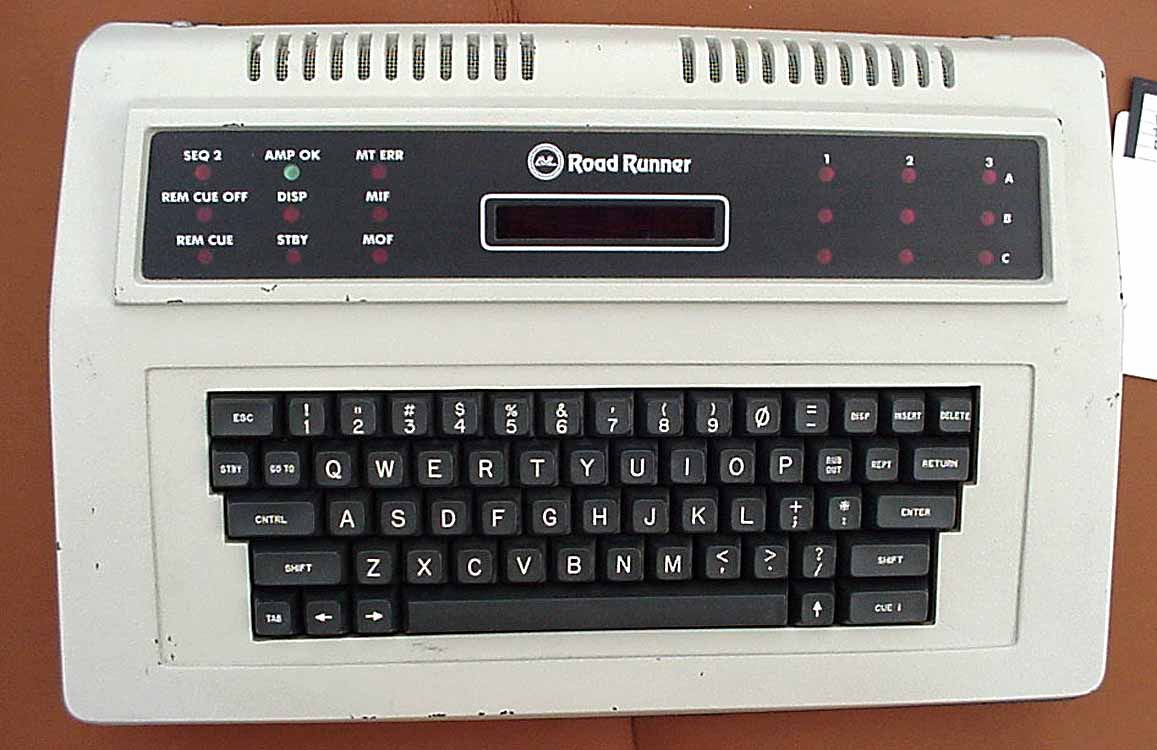
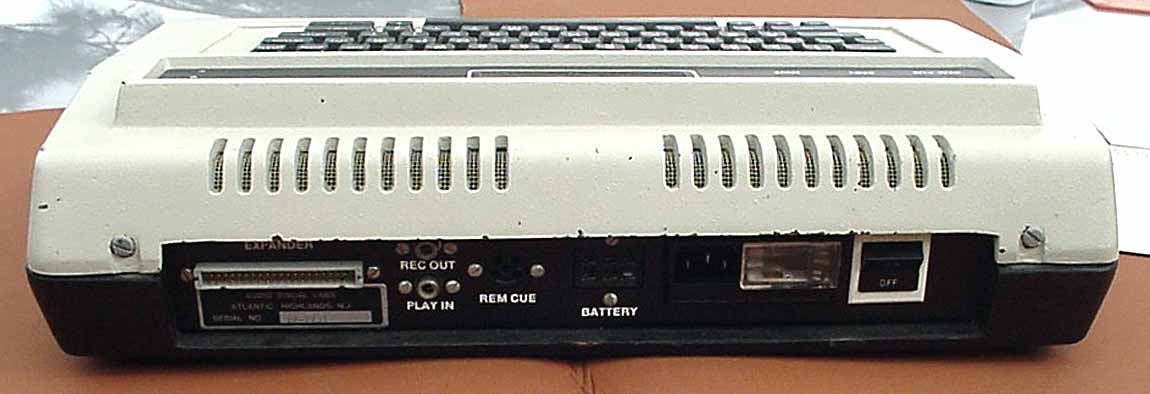
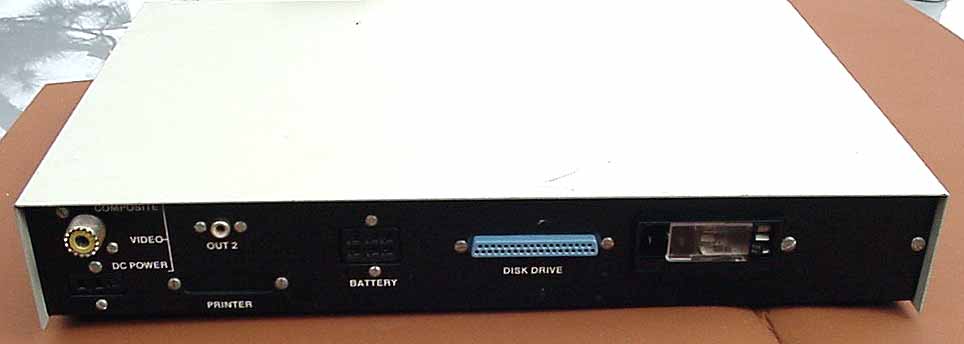
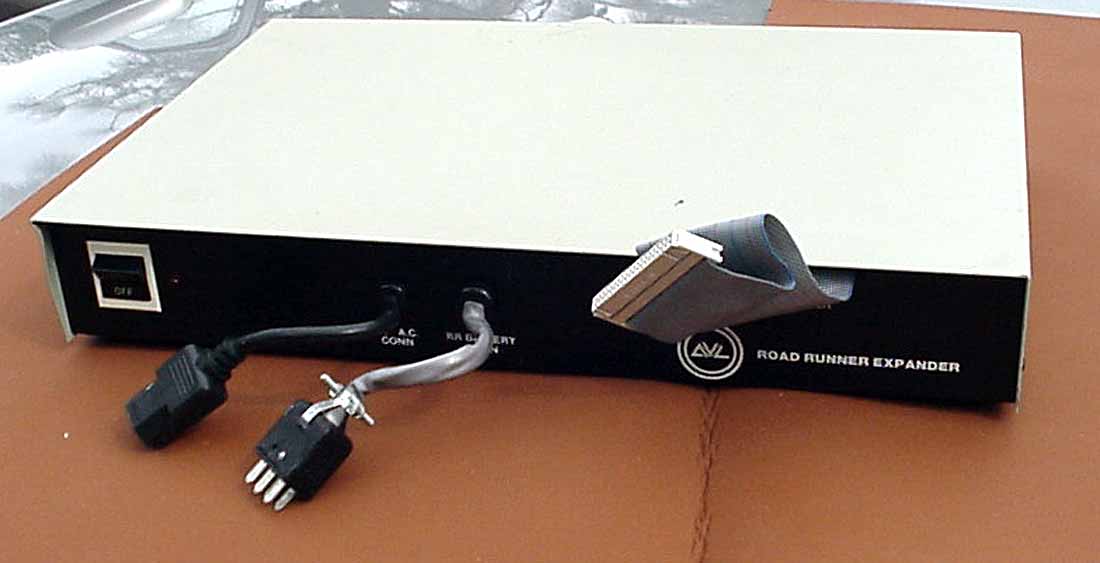
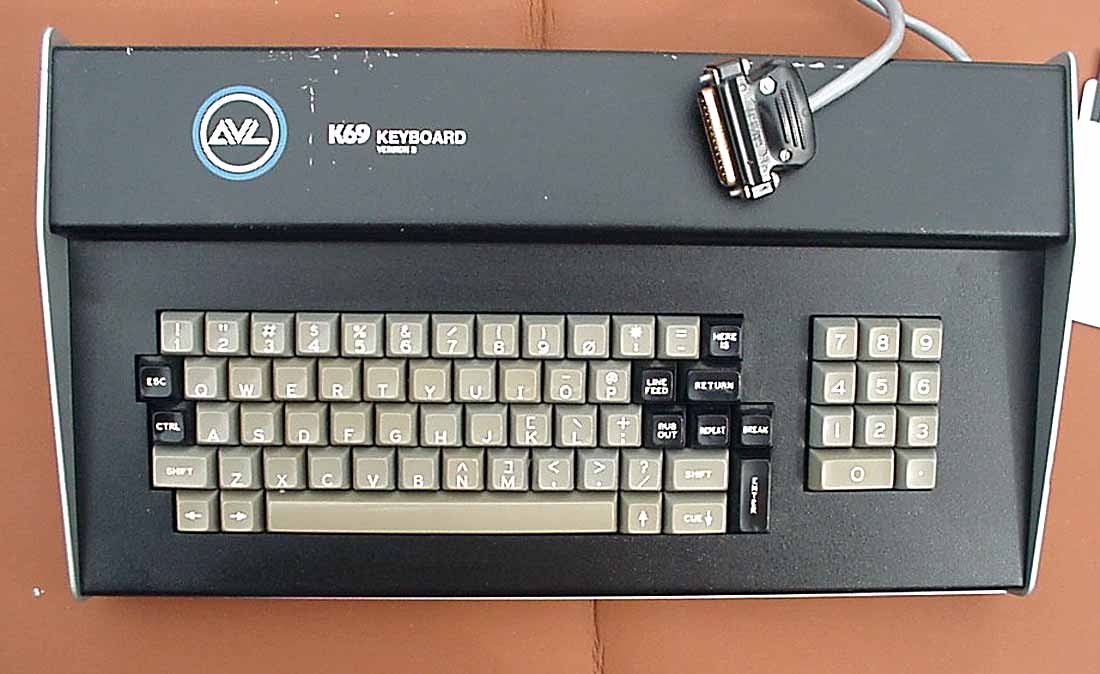
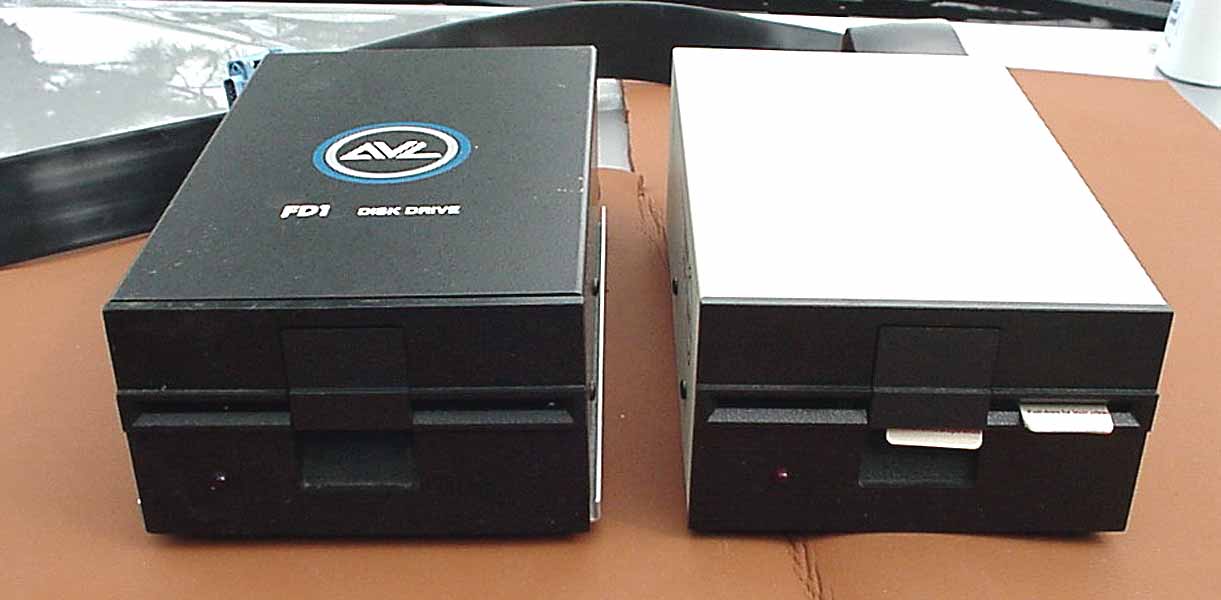
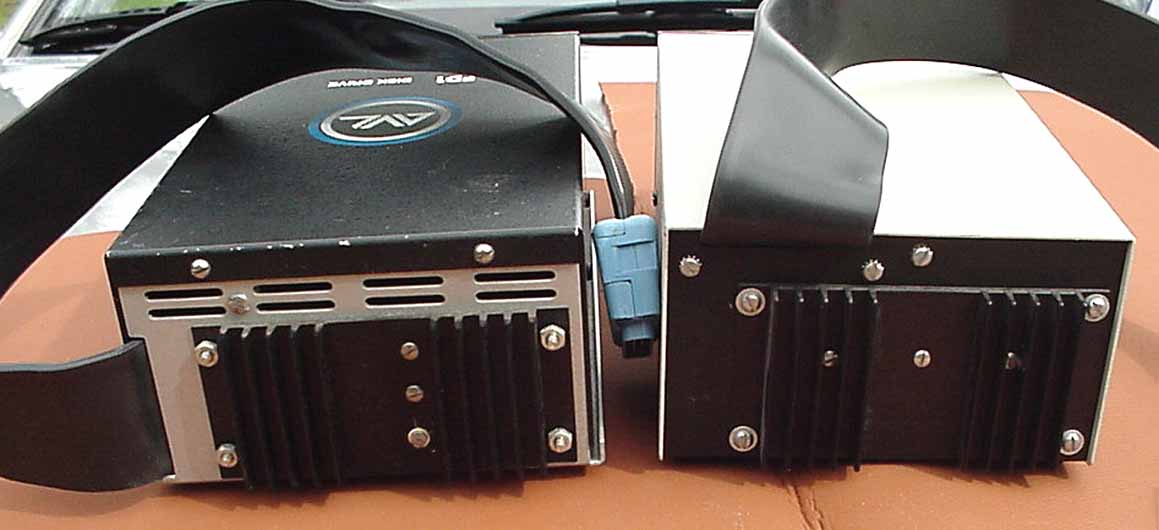
Do you still want to know about the Road Runner? I came across your slightly old post today.
Steve
AVL road Runner computer
Joe rigdonj at cfl.rr.com
Tue Nov 4 15:22:13 CST 2003
a.. Previous message: Kaypro 2X starts up with silly display
b.. Next message: Anybody know what this HP test board is for?
c.. Messages sorted by: [ date ] [ thread ] [ subject ] [ author ]
--------------------------------------------------------------------------------
Last week I found an interesting looking computer in a scrap place. It
was called a Road Runner and was made by AVL. I wasn't familar with it so I
posted a question here on the CC list about it and no one knew exactly what
it was but a number of people contacted me about it and wanted to see some
pictures of it. Yesterday I went back and and bought it. I brought home and
today I cleaned it up and took some photos. First, the system was made by
Audio Visual Labs of Atlantic Highlands, NJ. Second, I ended up with TWO
monitors, TWO floppy drives and a detachable keyboard even though the unit
has a built in keyboard. After I bought the thing but before I left, I was
looking around and found a bigger computer marked AVL Eagle (I THINK Eagle
was the name on it). I opened it up and it looked like an S-100 chassis. It
had 9 slots with 8 boards in it. Two boards had 8080 CPUs, three boards had
Intersil 6204s (communications boards? and three boards had 2114 memory ICs
on them. All the boards including the backplane were made by AVL. I'd
already paid for my stuff and I didn't think this one was all that
interesting so I left it behind. But my point is that I think I ened up
with the keyboard, monitor and floppy drive from the second AVL system as
well as those for the AVL Road Runner.
Anyway here's the links to the pictures. The Road Runner computer
<http://www.classiccmp.org/hp/avl3/avl-rr.jpg> and the back of it;
<http://www.classiccmp.org/hp/avl3/avlrr-b.jpg>. Note the connector on the
left that connects to the expansion box.
Picture of the expansion box, front and rear;
<http://www.classiccmp.org/hp/avl3/avlexp-b.jpg> and
<http://www.classiccmp.org/hp/avl3/avl-exp.jpg>. Note the the floppy drive
attachs to the expansion box and it appears that only one floppy drive can
be used on the compter.
Small VM-5 (5 inch?) monitor, front and back;
<http://www.classiccmp.org/hp/avl2/vm5.jpg> and
<http://www.classiccmp.org/hp/avl2/vm5-b.jpg>.
Large VM-9 (9 inch?) monitor, front and back;
<http://www.classiccmp.org/hp/avl3/avl-vm9.jpg> and
<http://www.classiccmp.org/hp/avl3/mon-b.jpg>.
The external keyboard; <http://www.classiccmp.org/hp/avl3/avl-kb.jpg>.
The two floppy drives; <http://www.classiccmp.org/hp/avl2/fd1.jpg> and
<http://www.classiccmp.org/hp/avl2/fd1-b.jpg>. I don't know which drive
goes with which system but I don't thinkit matters since the drives appear
to be very similar despite the cables coming out at different points in the
box and the drives being painted different colors. Both drives are marked
FD-1.
It's not made by AVL but this patch panel was in the box with the AVL
stuff.<http://www.classiccmp.org/hp/avl1/patch.jpg>. From the markings on
it, I'd say that it was used with the Road Runner.
OK that's it. Can anyone tell me any more about it?
Joe
--------------------------------------------------------------------------------
a.. Previous message: Kaypro 2X starts up with silly display
b.. Next message: Anybody know what this HP test board is for?
c.. Messages sorted by: [ date ] [ thread ] [ subject ] [ author ]
--------------------------------------------------------------------------------
More information about the cctech mailing list
I Have Three ADM3A's that sat in my Barn for Years. The Field mice made
there home in two of them. One of those has a bad motherboard that might
not be salvagable [Mouse Crap all over it] though I might soak it in warm
water come Spring then blow dry and treat with 90% Isoprpyl alcohol but
there is bound to be some Corrosion. One is still in the Barn but I plan
on bringing it in when it gets WARM and see if I can SWAP the Top W/the
CRT onto the one Unit that has a partially working M/B. It lights up my
Breakout Box but Shows no Cursor but the tube Dies down to a Spot in the
Middle when Turned off. I tried the one from the Bad M/B and it just
Buzzed. If anyone is interested in the CRT's let me Know. If I can't get
one working I can get something for the Aluminum Casings. But Maybe
someone can use the CRT's. They look OK to me but I'm not familiar with
SCREEN ROT. Shipping the whole Unit would be just to expensive. Maybe the
One M/B is still useable????
Bob in Wisconsin
Does anyone here use electronic test gear for repairing these old
machines? I am trying to hunt down information (manuals, schematics, ROM
images) on a device made by Micro Circuits called Boardwalker - models
101 or 103. The group of techs I keep up with have tracked down a few
sets of ROM images (up to V2.50, Library V1.60), but no one has found a
manual - so far.
The device is handy in that it can test TTL and Eproms (up to 24 pin
devices) in circuit by comparison to the built in library and it appears
that you can add to the library too...
Thanks!
John :-#)#
PS - if anyone is interested in electronic service tools I've included
the link to the tech tools mail list & FTP site below
--
How to subscribe or unsubscribe from TTL:
http://seven.pairlist.net/mailman/listinfo/techtoolslist
FTP site is: ftp://ftp.flippers.com/TTL/TestEquipment
Archive: http://www.vectorlist.org/
Hi all --
Obviously no one here "collects" the ENIAC, but it's certainly old
enough to be on-topic. :)
Having said that, here is a new site devoted to ENIAC --
www.the-eniac.com -- the six orange links up top are packed solid with
useful information.
Disclosure: it's NOT my site, but I was involved in its creation.
Chuck Guzis wrote:
> Another artifact of earlier days in US industrial applications is
> 55/110/220/440V 25 Hz distribution. The power transformers are huge
> and the "hum" is more of a "rattle".
Here in New Orleans, I am pretty sure that we still have 25 Hz drainage
pumps in service, generated by a dedicated natural gas plant. Some of
them may have been destroyed in Katrina, but searching around, I found
some post-2005 news articles referencing the system. Apparently it
relies on 60 Hz power for natural gas pumps, so it's still dependent on
the local utility. The pumps seem to date back to 1920 or so.
I don't know if the NYC subway system still uses any 25 Hz power or not.
According to the book "New York's Forgotten Substations" they still had
a few 25 Hz to DC synchronous rotary converters in operation as late as
1999! It would be unsurprising if they kept some of the 25 Hz system
in place, feeding solid state rectifiers, but I don't know if they did.
The power plant in Mechanicville, NY apparently still uses motor
generator sets to convert its 40 Hz power to 60 Hz power they can sell.
The plant is mentioned in a couple of IEEE articles, just search
Mechanicville 40 Hz. Personally I think this is more amazing than our
25 Hz pumps.
John Finigan
A random thought popped into my head this evening, and having nothing
better to do (well, ok, I have quite a few things better to do to be
honest) I decided to go with the impulse.
The idea? I have a number of nubus Mac coprocessors and accelerators,
amongst them:
- An Orange386 PC coprocessor (16Mhz 80386, 4MB ram, CGA graphics)
- A Radius Rocket Stage II (Basically a Quadra on a 12" nubus card,
complete with 40Mhz CPU and 32mb of RAM)
- A Symbolics MacIvory III (The coolest coprocessor ever -- a lisp
machine on a card!)
Could I run these all at the same time in my trusty Macintosh IIfx?
The answer: Yes. (warning, 1600x1200 image):
http://yahozna.dyndns.org/scratch/random/5OS.png
That's a 40Mhz 68030 IIfx running System 7.6.1, the Radius Rocket
running System 7.1, the Orange386 running DOS 5.0, the MacIvory running
Genera 8.3, and just for good measure the IIfx is also running Tenon's
MachTEN (BSD 4.3 running as a Mac OS process).
I didn't leave it running like that for very long, as it's probably more
than a bit stressful on the poor IIfx's power supply. But I just had to
try it, thought you guys might get a kick out of it...
- Josh
> Date: Tue, 1 Feb 2011 12:22:11 +0100 (CET)
> From: Christian Corti <cc at informatik.uni-stuttgart.de>
> Subject: Re: OT: american vs european 220
> To: "General Discussion: On-Topic and Off-Topic Posts"
> <cctalk at classiccmp.org>
> Message-ID: <alpine.DEB.2.00.1102011217160.10259 at linuxserv.home>
> Content-Type: TEXT/PLAIN; charset=US-ASCII; format=flowed
>
> On Mon, 31 Jan 2011, Tony Duell wrote:
>> Taht wouldn't work in Europe (since the 2 sides of the 230V mains are not
>> balanced about ground), and anyway AFAIK making the protecive ground wire
>> carry any current under normal conditions is totally forbidden.
>
> In new installations, maybe. But many older houses have just that, they
> use the neutral wire as protective ground (called "klassische Nullung" or
> TN-C system as opposed to a TN-C-S system, see
> http://en.wikipedia.org/wiki/Earthing_system)
>
> Christian
----------------------------------------------------------------------------------
And in some places they still have the single wire distribution systems
where the 'real' earth/ground is the return:
http://en.wikipedia.org/wiki/Single-wire_earth_return
---------------Original Message:
Date: Mon, 24 Jan 2011 11:39:41 -0800
From: "Chuck Guzis" <cclist at sydex.com>
Subject: Re: CDC/MPI Wren II HH (94205-51) drive manual
To: "General Discussion: On-Topic and Off-Topic Posts"
<cctalk at classiccmp.org>
Message-ID: <4D3D64FD.13298.6DC0FC at cclist.sydex.com>
Content-Type: text/plain; charset=US-ASCII
On 24 Jan 2011 at 10:09, Chuck Guzis wrote:
> I have a Wren II manual, but not sure about the interface. I'll check
> later today.
I'll be darned--I found it. 77738035, Rev. H, April 1986.
"This OEM Manual 77738035 provides the basic information and
instructions for installing and operating Control Data WREN II Disk
Drives; Models 94151, 94155 and 94156. It also provides information
to aid in servicing those parts of the drive external to the sealed
enclosure."
Do you want me to scan and forward the whole thing to you? It's not
terribly long, only about 40 pages. Or was there something specific
that you were interested in?
--Chuck
-------------------Reply:
I've got the Product Specification Manual (77715909-C, May/85, 61pp) for
that CDC506 (ST506) 94155 series (and an opened drive as a piece of "art"
beside my desk), but those are FH drives so I don't know how relevant it'd
be.
Had another ADM3a come in, again with severe screen rot.
Unlike the first time i now have successfully separated the faceplate from the CRT.
Question is of course how to get it back on again.
Anybody successfully done this ?
I know screenrot has come up often here, but I do not believe someone presented a working solution yet.
Jos Dreesen
Seems they are willing to implement software support for hard-sectored
5.25" disk formats if someone can provide them with some known-good
examples to work with. Preferably in the UK:
http://forum.kryoflux.com/viewtopic.php?f=3&t=117
--
jht
Hi guys,
As the subject says: are there any EDC/ECC code experts hanging around
on the list?
I'm working on implementing the 4-byte (32-bit) ECC code Western Digital
used on the WD2010 Winchester HDD Controller IC. This appears to be an
implementation of the ECC scheme explained in section 7.6 of National
Semiconductor's "Disk Interface Design Guide and User's Manual" (appnote
AN-413).
It looks like the ECC scheme is based on running a CRC forwards over the
data to produce a 32-bit CRC, which is used to validate the data in the
same way the 16-bit CRC validates the IDAM. Error correction apparently
operates by running the CRC in reverse using an "inverse polynomial". I
can't see how this could work -- isn't a CRC by its very nature a
one-way operation?
The application note calls this a "Glover 140A0443" code, but doesn't
bother to reference any papers, books or similar on the subject. There's
an example on how to program NSC's controller chips to use the code, but
nothing on the mathematical background behind it. For instance: how does
it work, and why is the maximum correctable error burst 5 bits long?
Does anyone recognise this polynomial?
x^32 + x^28 + x^26 + x^19 + x^17 + x^10 + x^6 + x^2 + 1
aka. x^32 + x^28 + x^26 + x^19 + x^17 + x^10 + x^6 + x^2 + x^0
or: 0x140A0443
It's not a standard CRC32 polynomial (according to Das Wiki), and I
don't *think* it's a Fire code... though I've been looking for the
original paper on those (P. Fire, "A class of multiple-error-correcting
binary codes for non-independent errors". Sylvania Reports RSL-E-2,
Sylvania Reconnaissance Systems, Mountain View, California, 1959) and
haven't had any success -- a few hits on Citeseer, but it appears all
copies of the paper have vanished into thin air.
What I'd really like to find out is more about how this algorithm
works... a model implementation (e.g. in C, Python or similar) would be
extremely useful, but at this point even a basic worked example ("here's
a chunk of data, now watch what happens if we flip some bits, and here's
how we fix it") would be extremely useful...
Thanks,
--
Phil.
classiccmp at philpem.me.uk
http://www.philpem.me.uk/
"High-Speed Computing Devices" is a report on the state of computing
machines in the US that was published in 1950. I have first edition copy but
it is also available on the Internet Archive.
http://www.archive.org/details/HighSpeedComputingDevices
My favorite part is "Table 10-1, Large-Scale Digital Computing-Machine
Projects in the United States." It lists all nine operational machines with
eleven more under construction. (Pages 214 and 215, the DJVU file is offset
14 pages so this starts on page 228.) The description of the ENIAC starts on
page 194.
The book describes the computing circuitry in detail. You can build your
own accumulator with a handful of vacuum tubes.
Michael Holley
Anyone have a dead model M or some keycaps around.
I rescued this one from a recycle pile and it works fine.... a few key
caps were off it
and I found them, but missed the fact the num lock cap was missing, and
now the
pile has been hauled off.... so no looking for it now.
Let me know if you have a Num Lock key cap.
-- Curt
Hi guys...
I've just this second got my DiscFerret talking to an ST506 hard drive.
Specifically, a Control Data / Magnetic Peripherals 94205-51 "Wren
IIHH", apparently also known as the Seagate ST253. 989 cylinders, 5
heads, 17 sectors. It also seems to bear an uncanny shape-and-weight
resemblance to a breezeblock...
But anyway, I digress. First, the pretty pictures:
Linear histogram:
http://www.discferret.com/temp/st506/dat.lin_histogram.png
Logarithmic histogram:
http://www.discferret.com/temp/st506/dat.log_histogram.png
Scatter graph:
http://www.discferret.com/temp/st506/dat.scatter.png
The log-histogram shows a very distinctive MFM timing pattern (three
peaks at 1T, 1.5T and 2T), and the scatter-graph shows that the timing
data is split into 17 distinctive segments: the sectors.
So what's the catch?
1) The DiscFerret PSU doesn't have enough grunt to run a Winchester
drive (or at least a 5.25 half-height like the Wren) and a 3.5in floppy
drive at the same time. This is an academic point, because you need an
adapter board to hook the 'Ferret up to the ST506 drive, and you can't
have both a floppy drive and the adapter plugged in at the same time.
2) I haven't got the software decoder working. Yet. I need to play
with the sync-word scanner -- the WD2010 controller chip does strange
things to the IDENT flag byte. Adding a few don't-care bits to the mask
and implementing a 16bit CRC should sort this out. The data looks good,
but I can't prove it until I make MagScan read it.
I've made a few modifications to the Microcode too:
- The acquisition and RAM Write clocks have been increased to 100MHz.
This provides a bit more timing resolution, and makes it a little easier
to convert from a timing count to an absolute time (especially if you're
reading a timing histogram and don't have a calculator).
- The data separator has been partly re-implemented. I've ditched the
shift-register counter in the DPLL and replaced it with a parameterised
binary counter. Now the sync-word detector can run from almost any
reasonable input clock rate. I've got it running at 40MHz at the moment
(it used to run at 32MHz).
- A FIFO has been added between the data sources (acquisition module
and parallel port) and the memory write controller. I did this because
there was a risk that a timing value could be lost if a transition
occurred within 5 or 6 clocks of a RAM write (the previous transition,
or a counter overflow).
Still to do:
- Make the current acquisition abort if the FIFO overflows
- Decouple the acquisition and memory-write clocks. The RAM has a
10ns access time (i.e. 100MHz), and I'd like to see if the acquisition
engine can be made to go faster. This should work as long as it doesn't
get hit with more than 256 fast transitions in a burst...
The DPLL change came about because the FPGA I'm using only allows the
on-chip PLLs to be driven from a global clock input, and only one PLL
can use the GCK. So for each PLL you want to use, you have to provide a
separate GCK... This is a fairly easy board tweak (you bridge two pins
on the FPGA with wire or solder), but it'll break backwards
compatibility... :(
So a good day was had by all, it seems :)
The new Microcode is in the usual place (the Mercurial repository). I'll
push a compiled version into the Firmware repository in the next couple
of minutes.
Thanks,
--
Phil.
classiccmp at philpem.me.uk
http://www.philpem.me.uk/
On Sat, Jan 29, 2011 at 12:45 PM, Michael Thompson
<michael.99.thompson at gmail.com> wrote:
> I pulled two RA70 disks from a pair of VAX-3500s that I have. By some
> miracle both drives spin up and go ready when the Operator Control
> Panel is connected. I was thinking that one of these drives would work
> nicely with the UDA50 disk controller in the 11/44 until I can get the
> RA81s sorted out.
>
> These drives are supposed to work with the Operator Control Panel.
> There is a button on the back of the drive that says Unit Number
> Accept. I pushed the button both before and after power up, but the
> RA70 does not spin up.
>
> Anyone have a manual for this drive or know how to get it work without
> connecting an OCP?
I have used RA7x drives with a KDA50 (M7164 / M7165) without an OCP
attached to the drives. It has been a while now. I don't remember
there being anything tricky about getting it to work. I was probably
using either an RA72 or RA73. I'll have to look and see if I have an
RA70 to try.
I don't remember if I ever found any RA7x drive manuals other than
this one on the net, which doesn't have all that much useful
information:
RA7x/SA7x Pocket Reference Guide, Order Number EK-RSA7X-PG-002
-Glen
So far we have tried 5 RA81 and 1 RA80 disk at the RICM. They all have
the same symptom, when you push the RUN button. The drive starts to
spin up for just a few seconds, then stops and lights the FAULT light.
We ran diags on one of the drives. The details are here:
https://sites.google.com/site/ricmwarehouse/Home/equipment/dec-pdp-1144/pdp…
We made sure that the heads were unlocked and the drive belt was engauged.
Debug suggestions would be appreciated.
--
Michael Thompson
I pulled two RA70 disks from a pair of VAX-3500s that I have. By some
miracle both drives spin up and go ready when the Operator Control
Panel is connected. I was thinking that one of these drives would work
nicely with the UDA50 disk controller in the 11/44 until I can get the
RA81s sorted out.
These drives are supposed to work with the Operator Control Panel.
There is a button on the back of the drive that says Unit Number
Accept. I pushed the button both before and after power up, but the
RA70 does not spin up.
Anyone have a manual for this drive or know how to get it work without
connecting an OCP?
--
Michael Thompson
I am reassembling a PDP-11/44 from parts for the Rhode Island Computer
Museum. I would like to try an RL01 or RL02 drive on the system, but
we don't have another RL02 controller.
Do any of you have a M7762 RL11 disk controller board that you could
donate or sell inexpensively for this project?
The RA81s won't spin up, so I suspect that I need to replace the
starting capacitors.
Do any of you know where to get replacement starting capacitors for
the RA80 or RA81 drives?
Details on the project are here:
https://sites.google.com/site/ricmwarehouse/Home/equipment/dec-pdp-1144
--
Michael Thompson
I assume that a few of the list members still follow specific Usenet sites.
A few days ago, I became aware of an additional free server for many
TEXT ONLY sites. I don't want to flood them with subscriptions,
so if you are a list member send me a post privately. At present, I
subscribe to 2 such servers. At least one, probably both, accept
posts via the Netscape browser under W98 SE which is what I use.
I can't vouch for anything else, but likely IE is also acceptable.
Jerome Fine
FS: one "BSR 1207" external modem. New in the (very old) box. I
assume it's 1200 baud. Runs on 120 vac. Can send pic to interested
parties. $4.99 plus shipping (probably around $3-4, it's light)
>from US zip 65775. There's one on that auction place right now
220714815493 for the same price, but he wants $16 shipping!
thanks
Charles
Brent asks:
> Are there any known examples of real-world products or equipment that
> used the 14500 ?
> (Leaving aside evaluation boards & such.)
I've seen it used in railway interlocking control panels and HVAC
applications from the early 80's... places where PDP-14's had previously
been used and it's pretty obvious the design was done from ladder logic
principles.
Interestingly, a certain generation of GRS interlocking control panels
used PC boards and backplanes exactly matching the format of quad-height DEC modules.
I never traced out the backplane wiring but at first glance it was nothing
like Q-bus or Omnibus.
> I had the impression of it as a bit of a stillborn product, like the
> Fairchild CMOS Macrologic series (34700/4700 ICs), of limited
> cost-effectiveness or benefit by the time it was introduced.
There were many bitslice families out there that never saw wide use
or maybe only existed in databooks. After the 2901 everyone tried
to jump in. The MC14500B at least was obviously not a 2901 clone :-)
Tim.
I just bought a Data I/O 29B with an Unipak 2B from Epay. Everything seems
okay BUT the pinout cartridge ( the little module that plugs in the end of
the 2B ) is missing. I suspect that all it has is some kind of simple
interlock like two pins tied together to tell the Data I/O the cartridge is
there ( probably so you can't run the unit with that HAZARDOUS 20 volts on
the open connector. Anybody know how to get around this or fake it ? The
unit won't do squat without it.... Have not been able to find a schematic
of the 2B or the pinout cartridge. Thanks.
Best regards, Steven
Imaging an Alien Being totally non-Physical but infinite in Nature capable
of Computing.
Aren't our Brains Computers of a sort.??? They take in
Inputs from all the Parts of our bodies. Process that information and act
on it. Producing Output to our Optical Part of our "BRAIN" in
response to sensory Input from our Optical Sensors
;"EYES",? If we see Food we eat it if we are
"HUNGRY". The same can be said for all of Nature. It reacts to
Sensory Input and outputs a Response. Birds can sense the Magnetic Field
of the Earth and Guide themselves accordingly They also can sense the
Position of the Stars and Navigate from them. The Monarch Butterfly must
have a Built in Programmable ROM as when One generation flies South to
Mexico in the Fall the same Individual does not make the Return trip but
instead Produces Offspring along the way but those Offspring find there
way back to there "HOME" Port unfailingly as does the Fingerling
Salmon who traveled down the Columbia River. In Essence every thing that
"MAN" has Discovered or Invented already existed in the Natural
World in some Form or the Other
"Food For Thought" Now
theres a handy "Thought"
And in closing "All Computers
Need a Programmer" even a light switch. Pair up 3 and you have a
"3-Way Circuit" which when activated turns on the Appropriate
light. I even had a Four Way installed in my Basement. I Just added an
"X" Crossover in the Circuit at the bottom of the Stairs. Works
great. Turn it ON at the Top of the Stairs and you can either Turn it OFF
at the Bottom or Turn it OFF over by the Sink in the Laundry Room then
turn it back ON from the Bottom of the stairs for the return trip. If one
used Motion Sensing Switches then One would not have to even Streach out
his Hand to flip the switch. Start with 256 Switches and a Diode Matrix
and you have the Makings for a Home Brew Computer. Just add circuits to
each Output of the Matrix and you can control up to 255 Devices. CRUDE but
effective. Replace the Devices with Logic Circuits and before you know it
your Computing.
Now that's Computing.
Brent mentions Atwood saying:
> The question about the moon landing is why haven?t we been back.
> And it was done in an age where computers were as big as a couple of rooms.
> If you even look at the Space Odyssey 2001 HAL the computer, and I think
> that movie came out in the late 60s, HAL the computer is huge.
> We didn?t yet have microchips. So I just wonder, how did they do that?
> Why they haven?t done it again if it was so easy?
My day job is a computer that has a $10 Billion (1980's dollars) peripheral.
In other words the computer isn't the end goal :-).
To think that the computer is the peripheral, sometimes trips up even the
senior execs. Really the computer only exists to help the peripheral :-).
Getting back to Atwood's babbling, I don't remember JFK promising to
land a computer on the moon by the end of the decade. And BTW, we have
sent computers to the moon, and landed them on Mars, many times since then,
all in the goal of space science, not in the goal of sending computers there :-)
Tim.