On Thu, 10 May 2012 10:40:08 -0400, Ethan Dicks <ethan.dicks at gmail.com>
wrote:
> On Wed, May 9, 2012 at 5:02 PM, Jonas Otter<jonas at otter.se> wrote:
>> > On ?Wed, 9 May 2012 09:04:07 -0700, "Michael Holley"<swtpc6800 at comcast.net>
>> > wrote:
>>> >>
>>> >> I was told the load from hard disk was page fault the swapped the desired
>>> >> data back into memory.
>>> >>
>>> >> -----Original Message-----
>>> >> From:cctalk-bounces at classiccmp.org [mailto:cctalk-bounces at classiccmp.org]
>>> >> On Behalf Of Tom Uban
>>> >> Sent: Wednesday, May 09, 2012 5:33 AM
>>> >>
>>> >> One note on the PDP-11/03 booting the VAX-11/780, the PDP-11/03 first
>>> >> loads the microcode into the VAX-11/780, thereby defining the machine's
>>> >> higher level of operating code, then a bootstrap to load from a particular
>>> >> hard disk or tape is run. On most PDP-11s, the microcode is stored in
>>> >> ROMs or is hard wired.
>>> >>
>> > VMS always loads a program by page faulting it into memory. That mechanism
>> > would AFAIK not work for booting, because the whole paging software, disk
>> > drivers etc would have to be loaded and initialized first. I don't remember
>> > offhand what it says in the VMS internals book about booting, but I could
>> > look it up.
> I, too, would have to look up details, but from what I remember about the 11/730
> (which has an 8085 as a front-end processor, not a PDP-11, but AFAIK, the
> general principles still apply), the FEP loads VMB.EXE from the console medium
> (RX01 for the 11/780, TU58 for the 11/730) into VAX main memory then kicks the
> processor into run mode.
>
> The 11/750 is a different beast - it has native boot ROMs and no FEP (there's
> an A-D selector switch, and there are several common arrangements of boot
> ROMs, including for third-party disk controllers)
>
> -ethan
According to the VMS Internals book, SYSBOOT (secondary bootstrap,
loaded after VMB) sets up the system page table. SYSBOOT loads EXE$INIT
and transfers control to it. EXE$INIT then does all the work of setting
up page tables, loading the paging subsystem and turning on memory
management.
So it appears that no paging in of anything can occur until at least
EXE$INIT has done its work.
/Jonas
On 2012-05-10 02.53, Seth Morabito<lists at loomcom.com> wrote:
> Hi folks,
>
> First I'd just like to say it's good to be back. I think I first joined
> Classiccmp in 1998-ish, and I've been on-again off-again as time and
> life has permitted participation in the hobby. Following a very long
> time spent off the list, it's really good to finally be back. I've
> missed this place a lot.
[...]
Hi Seth. Long time no see indeed. Nice to hear you're getting some
usable computers again. ;-)
Johnny
On Wed, 9 May 2012 09:04:07 -0700, "Michael Holley"
<swtpc6800 at comcast.net> wrote:
> I was told the load from hard disk was page fault the swapped the desired
> data back into memory.
>
> Michael Holley
>
> -----Original Message-----
> From: cctalk-bounces at classiccmp.org [mailto:cctalk-bounces at classiccmp.org]
> On Behalf Of Tom Uban
> Sent: Wednesday, May 09, 2012 5:33 AM
> To: General Discussion: On-Topic and Off-Topic Posts
> Subject: Re: More photos from VCF East 8
>
> One note on the PDP-11/03 booting the VAX-11/780, the PDP-11/03 first loads
> the microcode into the VAX-11/780, thereby defining the machine's higher
> level of operating code, then a bootstrap to load from a particular hard
> disk or tape is run. On most PDP-11s, the microcode is stored in ROMs or is
> hard wired.
>
VMS always loads a program by page faulting it into memory. That
mechanism would AFAIK not work for booting, because the whole paging
software, disk drivers etc would have to be loaded and initialized
first. I don't remember offhand what it says in the VMS internals book
about booting, but I could look it up.
/Jonas
First I'm popping my head above the parapet for the first time in a while; ancient computer ventures *have* been proceeding at the Corestore, but less so in the past due to pressures of other activities. Hopefully I'll be much more active again starting now or soon!
I had a great time exhibiting the 'live restoration' of one of my pdp-15s at VCFeast; put some names to faces and had a good time all round. We got from a machine in bits which hadn't been powered on in 15 years, to an operational 11/05 front-end, and a -15 CPU which passed smoke-test and had a working console. We failed to make the most optimistic scenario of toggling in short programs due to a dodgy memory box power supply. Not bad for a few hours work. Next time I'll reserve more space, I won't arrive late, and I'll put up barriers and a 'do not feed the hacker' sign!
Couple of questions occurred to me as a result of this exercise. If something is just a bit mucky from years of service/storage, I'll give it a good clean but otherwise keep it as original as possible, with a patina of age. But if something is really ratty, especially with evidence of corrosion, I like to refurbish it completely to as near as-new shiny condition as possible, in every part and detail. With that in mind:
1. I have a good number of ratty old H960s with flaking paint & rust, mostly just in the bases. My projected 'refurbish' technique would involve drilling out the rivets holding the verticals to the bases and tops, shot-blasting/wire-brushing/otherwise-abrading all the old paint and rust back to smooth bare metal, and repainting them to give shiny like-new H960s. Does anyone know the exact size and spec of the rivets that hold an H960 together? Does anyone have any relatively shiny near-new H960s spare/for sale? (I know someone who might, I'm talking to him already!)
2. From time to time I've seen discussion of cleaning techniques for circuit boards here, specifically DEC modules, mostly the M-series flip-chip stuff. Was there ever any final conclusion as to the best way to cosmetically clean them? I've seen accounts of washing them in (?soapy?) water, rinsing, and leaving them in sun to dry. Is that really safe? Thoughts on other cleaning techniques?
3. When cosmetically refurbishing/repainting power supplies - H7420 etc. - does anyone have any good and valid suggestions for reproducing the DEC lettering and legends printed on the power supply? Photograph it and make some kind of transfer or sticker perhaps? How would one go about that?
Thanks folks
Mikehttp://www.corestore.org
I have three printheads for the HP 2932a dot matrix printer. They're free
for shipping.
--
David Griffith
dgriffi at cs.csubak.edu
A: Because it fouls the order in which people normally read text.
Q: Why is top-posting such a bad thing?
A: Top-posting.
Q: What is the most annoying thing in e-mail?
> I have some cards here I want to build a PDP11 from, at the current
> that's something around an KDF11-A CPU (22bit).
> Currently I have problems with some Dilog Controller, this is an DQ614
> that emulates 4 RL02 Drivers out of two 20MB MFM disks (Microcience HH725).
> I can install and successfully boot RT11SB.SYS and RT11FB.SYS but not
> RT11XM oder RT11XB. XXDP2.5 is working fine.
> Nowhere in the Dilog Documentation is something mentioned about 18 or 16
> bit addressing limitations of that controller, the pinout clearly has 22
> bits.
> (http://www.bitsavers.org/pdf/dilog/)
> I have an RQDX3 with 2 TEAC FD55-GFR-184 Floppies on this system too, I
> can boot RT11XM oder RT11XB (same files!) from there fine...
> If I try that from DL0 or DL1 I'll always get a trap to the ODT (0002),
> regardless if I use the Dilogs own Bootloader or that from an 11/53 or an
> 11/73 CPU.
Which version RT11XM?
If you boot RT11XM from the RQDX3, can you read/write (as a data disk) from DQ614 DL: ?
Tim.
I forgot to mention a Radio shack/ tandy model 4 and color 2, TI 99/4A
in box, piles of old hard and floppy drives, motorola 68K multibus?
520/1040 3 atari ST parts machines...
Thanks,
Jim.
Does anyone have a spare 16-bit SCSI PC C ard (PCMCIA) adapter and dongle they would be willing to part with? I have an Adaptec 1460D card, but it has an 8-bit SCSI data path, and I need a card with a 16-bit data path to use with an old Nikon slide scanner that I have. Please reply directly to me at feldman.r at comcast.net .
Thanks, Bob
I have some back-burner projects that will one day need me to start burning
EPROMs and EEPROMs. I can't justify the cost of the big professional things
costing hundreds of pounds. At the moment I know I will need to program a
27C1024 EPROM (40 pin DIP) and a 28C256 EEPROM (28 pin DIP), but it would be
nice to have something that can handle a reasonable variety of devices.
I believe the Willem programmer may be suitable, it is certainly affordable,
would that fit the bill? It seems to come from Thailand, although there seem
to be all sorts of sources on ebay, so I am not sure what the genuine source
really is.
I am also not averse to buying secondhand, ebay or otherwise, if I can get
something that is going to be more generally useful than the Willem.
Any advice welcome.
Thanks
Rob
Tim wrote:
> In the late 60's and 70's, radio shack sold some little
one-bit-flip-flop boards
> with lamps. Each flip flop was a little square of circuit board.
>
> There may have been other logic functions available one-to-a-board.
I'm
> pretty sure they were discrete transistors for the most part (even the
round
> package SSI Motorola RTL typically had two gates or flip flops per
package.)
>
> You could buy multiples and configure them as a counter, and I'm
pretty sure
> they could be wired as a shift register too.
>
> May have been "Archerkit" brand name. Or "Pbox" brand name although
> what I remember were not Pbox's but circuit boards.
>
> I tried using websearches to find pictures or docs, but the Googles,
they do
> nothing!
>
I built something like this when I was probably something like 12 or 13
years old. I was purchased at Radio Shack as a kit. It was a four bit
binary counter, with incandescent lights as on the Q outputs, (though
discrete transistor drivers), and a photoresistive cell or pushbutton
switch as the trigger. With the photoresistor as the trigger, when you
waved your hand in front of the photocell, it would increment the
counter, which was pretty cool.
I distinctly remember the RTL IC's made by Motorola in the black plastic
"blob" packages. I have vague recollection of the project being a
mother board that had four small circuit boards that had the flip flop
chip, transistor driver, and lamp (perhaps these were the boards that
Tim mentioned). The mother board had a photocell, a toggle switch, and
a momentary action switch with de-bouncing circuitry. You could trigger
the counter with the photocell, or the momentary action switch. I
think the thing ran off a 9V battery if I remember correctly. The
photocell didn't have very fast response time, but I do remember putting
it in front of a fan in a dark room with a flashlight shining through
the fan blades, and made the counter go pretty fast.
I think that I eventually damaged the chips by trying to make the thing
count BCD rather than binary by adding some gating. That was the end
of it.
It was fun building and tinkering with, and educational. It was my
first exposure to integrated circuits.
Hi,
I have some cards here I want to build a PDP11 from, at the current
that's something around an KDF11-A CPU (22bit).
Currently I have problems with some Dilog Controller, this is an DQ614
that emulates 4 RL02 Drivers out of two 20MB MFM disks (Microcience HH725).
I can install and successfully boot RT11SB.SYS and RT11FB.SYS but not
RT11XM oder RT11XB. XXDP2.5 is working fine.
Nowhere in the Dilog Documentation is something mentioned about 18 or 16
bit addressing limitations of that controller, the pinout clearly has 22
bits.
(http://www.bitsavers.org/pdf/dilog/)
I have an RQDX3 with 2 TEAC FD55-GFR-184 Floppies on this system too, I
can boot RT11XM oder RT11XB (same files!) from there fine...
If I try that from DL0 or DL1 I'll always get a trap to the ODT (0002),
regardless if I use the Dilogs own Bootloader or that from an 11/53 or an
11/73 CPU.
Does someone here know of that problem?
Regards,
Holm
--
Technik Service u. Handel Tiffe, www.tsht.de, Holm Tiffe,
Freiberger Stra?e 42, 09600 Obersch?na, USt-Id: DE253710583
www.tsht.de, info at tsht.de, Fax +49 3731 74200, Mobil: 0172 8790 741
> Message: 9
> Date: Wed, 9 May 2012 01:08:08 -0400
> From: Ethan Dicks <ethan.dicks at gmail.com>
> To: "General Discussion: On-Topic and Off-Topic Posts"
> <cctalk at classiccmp.org>
> Subject: Re: More photos from VCF East 8
> Message-ID:
> <CAALmimkv-r06X-W2GAB9VS1_NLpiDB-kACijtzOB3JS7tC6NYQ at mail.gmail.com>
> Content-Type: text/plain; charset=ISO-8859-1
>
> On Tue, May 8, 2012 at 11:27 PM, B Degnan <billdeg at degnanco.com> wrote:
> > More photos from VCF East 8
> > http://vintagecomputer.net/browse_thread.cfm?id=466
>
> You wrote:
>
> "Mike Ross' exhibit consisted of a PDP 11/05 used to interface with
> a PDP 15, in two racks. He demonstrated restoration techniques for
> attendees. I am not sure exactly what you call this console, there is
> no "PDP 15" on the panel, but I assume it's some kind of I/O device
> that complements the (not pictured) PDP 11/05 used to presumably
> bootstrap this thing."
>
> That _is_ the PDP-15 front panel - if you look, there are 18 data bits.
> The PDP-15 CPU was the large spread of M-series cards on the
> backplane above this front panel. Its memory was in a black box below
> (and not there for much of the weekend). The PDP-11/05 is self-contained
> and does the same job as the PDP-11/03 in a VAX-11/780 or the PDP-11
> in various models of PDP-10. In each case, the PDP-11 boots from its
> own ROMs to start up enough code to feed the larger processor. In the
> case of the VAX-11/780, the PDP-11/03 has one RX01 floppy drive. I
> don't know what this PDP-11 uses, but there must be some local mass
> storage that's part of the scheme.
Yes and no. On a pdp-15, the 11/05 is more a front-end than a console/bootstrap processor; it doesn't need to load microcode or any such thing. Any pdp-15 can start up from paper tape (there's usually a reader/punch immediately above the -15 console, was not installed at VCF) - heck, there's even a dedicated 'Read-in' switch on the console which initiates that boot. On the -15 I exhibited, the mass storage *did* rely on the -11; an RK11 talked to two RK05s (also not taken to VCF to make system easier to handle), and a Unichannel 15-to-Unibus interface gives the -15 direct access to the RK subsystem in 18-bit mode.
On my other pdp-15, mass storage is all native; it has an RP15 (disk) and TC59 (tape) controller. That system had an 11/40 front-end, but it was only used for communications devices. It's a much bigger restoration project as I only got hold of it after it had been deinstalled; quite a few cables cut, and every single -11 compatible component (the 11/40, power supplies etc) had been robbed by the site engineer for spares.
> Many I/O devices of the day did have blinkenlights indicators (usually installed
> at the top of the rack), but not this many control switches.
The RP15, TC59, and FP15 all have a good crop of blinkenlights. What I really want to get hold of is a TC15 DECtape control!
> Message: 26
> Date: Wed, 9 May 2012 06:10:39 -0700 (PDT)
> From: Gene Buckle <geneb at deltasoft.com>
> To: "General Discussion: On-Topic and Off-Topic Posts"
> <cctalk at classiccmp.org>
> Subject: Re: VCF East pictures
> Message-ID:
> <alpine.LFD.2.00.1205090608490.11705 at grumble.deltasoft.com>
> Content-Type: TEXT/PLAIN; charset=US-ASCII; format=flowed
>
> On Tue, 8 May 2012, Mike Loewen wrote:
>
> >
> > http://sturgeon.css.psu.edu/~mloewen/Oldtech/VCF-East2012/
>
> That PDP-15 console is just a thing of beauty. *sighs*
Would it be bad form to admit at this point that I have two of them? :-D
Mike
> Those new fangled IC's just aren't reliable. I only needed to repair
> 14 processor board plus one power supply board in my straight 8.
> Do you have any idea why so many? I didn't have to repair that many
> in my 8/I though didn't record the actual count.
The system sat in an uncontrolled environment for many years. There
was lots of corrosion on the boards. Some of the leads on the ICs were
so rusted that you could pry them off the board. We replaced LOTS of
7474 and 7400 ICs, and quite a few 7410, 7420, and 7440 ICs. There
were all kinds of interesting failure modes.
> The only OS I know that will run in 4k is disk monitor system (it does
> run on dectape only systems despite the name).
I saw that, read the manual, and couldn't believe that a disk
operating system would run with just a DECtape.
> The paper tape images needed to build it are here.
> http://www.pdp8online.com/ftp/software/paper_tapes/
Got them now.
> See in the readme DEC_D8* files. Start with SBAF then use the load
> and save command for the other programs as desired. ?I tested with an
> emulator that the DF32 PIP works with DECtape.
We will give it a try if we successfully format a tape.
> I recently built it for my DF32 so if you need more help I can provide. I
> can build a DECtape using an emulator and my PDP-8 but I can't test it
> since I don't have a TD controller.
The TC01 controller doesn't have any ICs, so it just worked.
Thanks for the help.
--
Michael Thompson
>> VCF-East is this weekend, and it's shaping up to be QUITE an event!
>> Who's going?
>
> I'm going *and* exhibiting ! It will be the best VCF ever ! There will be
> all those great lecturers, workshops, exhibits, etc ! And I get to learn how
> to troubleshoot and repair my C64 ! Super great weekend ahead !
Grumble, grumble, snarl . . . get off of my lawn!
; )
Best,
David Greelish, Computer Historian
President, Atlanta Historical Computing Society
- Author, "The Complete Historically Brewed"
- "Classic Computing Show" podcast
- "Stan Veit's History of the Personal Computer" audiobook podcast
- "Retro Computing Roundtable" podcast
- "Not Another Apple Podcast"
ClassicComputing.com | atlhcs.org
On 6 May 2012 at 14:22, Fred Cisin wrote:
> WHY is the keyboard (and mouse) connector on the BACK?
> WHY was the power switch at the back? ?(I loved the PS/2 bellcrank
> linkage to put a power switch at the front with a long rod to the
> back!)
For my first PC/XT clone computer, I built my own case. I put the?floppies and power switch on the front and all of the ports on the side (the expansion cards ran from side-to side rather than front-to-back). Much easier to get to the cords that way and there were no wir es sticking out the front.
Bob
Some of you will find this amusing, anyway. This is a verbatim quote
>from our *current* graduate CS handbook:
The department?s computing facilities include Sun and Silicon Graphics
workstations, SGI Crimson and SPARC servers, and high performance
graphics workstations (SGI Indigo2, Onyx Reality Engine2). The Office
of Information Technology has over 400 workstations for general student
use and several high-end machines including a Silicon Graphics Challenge
XL 20 processor system. UMBC?s Imaging Research Center also provides
high-end graphics support including production quality input/output
devices and production software (Wavefront, Softimage, and Alias).
While these are cool machines, I did see some of them at VCF East this
past weekend. I'm pretty sure the school doesn't have them anymore. I
guess weeding out old info isn't a top priority. :-)
- Dave
Does anyone have one of these animals? I am trying to reproduce an old
video game that was based on it and figured it might be easier with the
Eval. board.
Thanks,
John Robertson
Vancouver, BC, Canada
I have copies of the SCO manauls available. About 40 pounds worth of OS
and development system stuff. This is all pre-OpenServer stuff. It is
SCO UNIX 3.2v4.0
They are located in Wantage NJ. Come and get them or pay me to ship
them.
If anyone is iterested let me know, or they go the the recyclers.
Kelly
The RICM has the processor of their PDP-8/I functional after replacing
or repairing 38 Flipchip modules and the core stack. We have lots of
Dectapes that originally held data from a PDP-11, but nothing that is
bootable on the 8/I. We tried the TC01 bootstrap with one of the
PDP-11 tapes. It moves the tape to the first block and then gets a TIM
(Timing Error), so the TC01 and the TU55 is at least partially alive.
Can anyone supply a Dectape that would be bootable on this 4k machine,
or tell us the procedure for making a bootable Dectape?
http://www.ricomputermuseum.org/Home/equipment/pdp-8-i
--
Michael Thompson
I figured I should ask now while everybody is in a helpful mood :-)
Does anybody have scans of any or all of the following?
IBM
01. MVS/ESA Component Diagnosis and Logic: EXCP Processor (LY28-1477)
02. LY28-1487
03. LY28-1488
04. LC28-1166-5
05. SA22-7085-0 System/370 Extended Architecture Principles of Operation
06. SA22-7085-1 System/370 Extended Architecture Principles of Operation
07. SA22-7200 System/370 Enterprise Systems Architecture Principles of Operation
ANSI
American National Standards Institute ANSI X3. 74-1987 (PL/I Subset G)
Sun
UltraSPARC-IIIi Programmer's Reference Manual
which is referenced here:
http://hg.genunix.org/onnv-gate.hg/file/48f2dbca79a2/usr/src/lib/libcpc/spa…
and here:
http://download.oracle.com/docs/cd/E19683-01/816-1681/6m83631lh/index.html
although without any pointers or links. I have the U/S IIIi User's Manual
but this does not seem to be the one the above doc is referencing.
No reward except my gratitude and promise to search my archives for my pals
in need! However Al is making it pretty tough to have anything unique! Many
thanks to Al for running bitsavers and everybody for contributing.
I hope archive.org sticks around long enough for us to scrounge whatever is
left on Sun but it's getting thin. I haven't been able to get to the open
firmware site on playground.sun.com and the official site is running a
business on openfirmware and isn't exactly giving out doc. So much for open.
Thank you.
On Sat, 5 May 2012 21:24:19 +0100 (BST), ard at p850ug1.demon.co.uk (Tony Duell) wrote:
>>> And why is this a Good Thing? My point is that it's to be exptected that
>>> a modern PC will have a keyboard and mouse connected to it. Why does it
>>> make any difference to the used if those can be connected to 2 of the USB
>>> ports or to 2 specific connectors for them?
>>
>> You've already asked that.
>
> Yes, and I still haven't received an answer.
>
>>
>> NOW imagine that a whole bunch of unforeseen devices - printers,
>> cameras, touch sensitive tablets, disks, modems, e-book readers, 'pen'
>> drives, portable audio players, ... - arrives. Are they meant to use
>> PS/2? Are they supposed to have individual connectors? USB is no more a
>> silly idea than RS-232 is.
>
> That is NOT WHAT I AM ASKING ABOUT. I sam specifically considering only
> keyboards and mice. I happen to think that USB is a useful interface in
> some situations, for example for external memory devices. That doens't
> mean I have to think it's the best interface for all applications no
> matter what marketroids may claim.
Consider the computer in front of me. There is a keyboard, a mouse, a trackball, and a Wacom Inkling all plugged in and active using USB. How do you do that with only two ports?
I use the trackball and occasionally the tablet. Another user uses the mouse and the tablet. All without unplugging and plugging the various devices...
->CRC
I was wondering if there's anyone in Seattle who wants to meet up and talk
about random stuff. I'm up here from Bakersfield for an interview.
--
David Griffith
dgriffi at cs.csubak.edu
A: Because it fouls the order in which people normally read text.
Q: Why is top-posting such a bad thing?
A: Top-posting.
Q: What is the most annoying thing in e-mail?
The DEC Pro 350 I got came without a monitor, cable or keyboard. When I
power it up the diagnostic LEDs on the back all come on. The docs I have
suggest this means a system board error. However, I am not sure if this is
because there is no monitor or keyboard attached. Might this behaviour be
expected if I don't have anything connected to the video connector? I tried
connecting a terminal to the serial port just in case something happened
there, but I don't see anything. Does the Pro 350 use the serial port as any
kind of console port by any chance? I suspect not.
I am trying to identify what cable I need. I think it is a BCC02, but if it
is a colour machine it would be a BCC17, but I don't know how to tell if
this is a colour machine or not. There also seems to be a BCC03 cable used
on Rainbows, anyone know if that would work?
Regards
Rob
Hi Mike,
I know that's old stuff, but I like. Do you know where I can find GlobalView for X, because links on corestore are so dead. If you still have it I would be thankful if you can send it to me. Thank on future answers and actions. Best regards
Tony Duell wrote:
> Well, I'd rather pay more for some good enegineering, like
> differential
> inputs and outputs (which will reduce common-mode noise signals for
> good
> engieerign reasons that I can understand) that pay for good-lated
> fuses,
> carpet groudnign clips, special mains cables, etc that have no
> science or
> engineering behind them.
>
Note that merely having differential inputs and outputs doesn't solve
all problems, you have to know what to do with them as well:
http://www.douglas-self.com/ampins/balanced/balanced.htm
(Douglas Self is or was the head designer at Soundcraft and is a well
known writer on audio, he has written a lot in Wireless
World/Electronics World)
/Jonas
On May 2, 2012 at 11:18 AM Pete Rittwage <peter at rittwage.com> wrote:
>> Any interest in an module that replicates the /E functionality?
>>
>> (or, maybe there is already such a thing)
>>
>> Jim
>>
>>
>> --
>> Jim Brain
>> brain at jbrain.com
>> www.jbrain.com
>>
>
> Not quite yet. Mike Willegal has done pin mappings to use an AVR as a
> drop-in replacement, but hasn't written any software yet.
Would Vince Briel's Super Encoder do this function? http://www.brielcomputers.com/wordpress/?p=343
Chris
Hi,
I've got an BA23 Box with an M8190-AB lately (from Henk, special thanks to
you!).
The M8190-AB should be an KDJ11-BB 11/73 CPU. I have an MSV11-JE (M8637-E)
PMI Memory Card too and I'm wondering if I can use them thogether..
As far as I've read it should be possible if I put the memory below the
CPU, using it as plain Q-BUS memory this way. Can anyone confirm this?
What will happen if I put the Memory board at top in the PMI Order?
What are the differences from the KDJ11-BB to the KDJ11-BF? Are there
pictures to look at somwhere on the net? All I have found for KDJ11-BF with
google is exactly looking like my 11/73 CPU Board....
Kind Regards,
Holm
--
Technik Service u. Handel Tiffe, www.tsht.de, Holm Tiffe,
Freiberger Stra?e 42, 09600 Obersch?na, USt-Id: DE253710583
www.tsht.de, info at tsht.de, Fax +49 3731 74200, Mobil: 0172 8790 741
> Eric Smith wrote:
>> ? ?Bill Sudbrink wrote:
>> > Data sheet claims pin compatibility with 2732.
>>>
>> It claims that it is "pin compatible with existing ROMs and
>> EPROMs (8K, 16K, 32K and 64K)", but that does not include the
>> 2732, and their reference to 32K and 64K was only in regard to
>> ROMs.
>
>> The TMS2532 is most definitely *not* pin compatible with 2732
http://www.atarimagazines.com/compute/issue11/69_1_ROM_EXPANSION_FOR_THE_CO…
The 2532 _is_ pin-compatible for reading in a PET socket that's
expecting a 2332 masked-programmed ROM. I've had several 2532s in my
PET 2001N-32 (US version of the 3032) since the late 1970s, no
adapter.
These days, it's easier to build an adapter than find real 2532s.
-ethan
----- Original Message:
Date: Mon, 30 Apr 2012 12:46:30 -0400
From: Keith Monahan <keithvz at verizon.net>
To: cctalk at classiccmp.org
Subject: Re: EPROM and EEPROM Programmers
> I want something that connects to my computer like all my other devices.
> Something that does not require anything special.
> A USB eeprom burner that I can use on any of my current desktop/laptop
> computers is what I want.
----
Well, by golly, then that's what you should get; lots of them out there!
I generally find that when I have a round hole it's easier to find a round
peg instead of complaining about the corners on the square ones ;-)
I actually find an RS-232 serial interface the most flexible in terms of
machines I can connect it to, including through a USB <> serial adapter if
necessary.
I take it that "*all* your other devices" must be less than 15 years old
then, so what brings you to the Classic Computer List?
;-)
Ironic that folks on the "Classic" computer list don't even have a machine
with a serial or parallel port; I built programmers for both my PET and my
AIM65, not much more than a connector and a socket since like many classics
there were lots of available I/O pins, but from this discussion about
programmers it seems that actually _using_ a classic computer for something
useful isn't very common...
m
> Date: Tue, 01 May 2012 19:30:22 -0500
> From: Jim Brain <brain at jbrain.com>
> To: General Discussion: On-Topic and Off-Topic Posts
> <cctalk at classiccmp.org>
> Subject: Re: Wanted: Apple Keyboard Encoder MM5740AA/E
> Message-ID: <4FA0801E.3060107 at jbrain.com>
> Content-Type: text/plain; charset=ISO-8859-1; format=flowed
>
> On 5/1/2012 12:43 PM, Pete Rittwage wrote:
>> Hi guys,
>>
>> I apologize if this isn't the place for this...
>>
>> These come up on eBay every so often, but they are untested or I miss
>> them. Does anyone have any spares of this old chip? I've got an old
>> Apple II that I'd like to use the regular keyboard instead of a PS/2
>> adapter.
>>
>> I purchased some of the "C" variant (MM5740AA/C) some time back, but
>> they
>> have a different key mapping than the Apple computers. If someone needs
>> those I can post for free or trade. I have no idea what keyboard they
>> were used in.
>>
>> -
>> Pete Rittwage
>> Augusta, GA, USA
>>
> Any interest in an module that replicates the /E functionality?
>
> (or, maybe there is already such a thing)
>
> Jim
>
>
> --
> Jim Brain
> brain at jbrain.com
> www.jbrain.com
>
Not quite yet. Mike Willegal has done pin mappings to use an AVR as a
drop-in replacement, but hasn't written any software yet.
-
Pete Rittwage
C64 Preservation Project
http://c64preservation.com
Not sure when they did this, but they changed a bunch of categories
in the computers section.
So if you had saved searches, check them to make sure they are still
finding the correct things.
For instance, I had a search for dials boxes and button boxes. A new
item was listed (sgi dials box) that this search used to find, but
doesn't find anymore because the category it was searching no longer
exists.
--
"The Direct3D Graphics Pipeline" free book <http://tinyurl.com/d3d-pipeline>
The Computer Graphics Museum <http://computergraphicsmuseum.org>
The Terminals Wiki <http://terminals.classiccmp.org>
Legalize Adulthood! (my blog) <http://legalizeadulthood.wordpress.com>
The 2 HP 2100's from GovLiquidation arrived a few weeks ago in
incredible shape (after waiting some 8 weeks for DLA to decide I'm OK
to acquire a weapon system component.....) Anyway, for anyone
interested. there's another one listed - this time in Oklahoma. The
title shows it as an "HP 21005 microprogramming systems computer" but
it's clearly the HP 2100s mini in the photos!
Event ID is 10728
Item No is 1510
Unit appears in good shape and already has a heavy duty shipping carton.
Date: Tue, 1 May 2012 13:43:30 -0400 (EDT)
From: "Pete Rittwage" <peter at rittwage.com>
To: cctalk at classiccmp.org
Subject: Wanted: Apple Keyboard Encoder MM5740AA/E
Message-ID: <52999.10.2.0.194.1335894210.squirrel at rittwage.com>
Content-Type: text/plain;charset=iso-8859-1
Hi guys,
I apologize if this isn't the place for this...
These come up on eBay every so often, but they are untested or I miss
them. Does anyone have any spares of this old chip? I've got an old
Apple II that I'd like to use the regular keyboard instead of a PS/2
adapter.
I purchased some of the "C" variant (MM5740AA/C) some time back, but they
have a different key mapping than the Apple computers. If someone needs
those I can post for free or trade. I have no idea what keyboard they
were used in.
I have an MM5740AAC/N which I used to keep an industrial control
working. It hasn't been turned on in 13 years, but ought to still
be good. The key codes are in the data sheets, which ought to
still be searchable online. I made an adaptor board that plugs into
the MM5740 socket and recodes for the funny char sequence that
that particular machine used. It uses a 2732 as the code translator.
Jon
Hi guys,
I apologize if this isn't the place for this...
These come up on eBay every so often, but they are untested or I miss
them. Does anyone have any spares of this old chip? I've got an old
Apple II that I'd like to use the regular keyboard instead of a PS/2
adapter.
I purchased some of the "C" variant (MM5740AA/C) some time back, but they
have a different key mapping than the Apple computers. If someone needs
those I can post for free or trade. I have no idea what keyboard they
were used in.
-
Pete Rittwage
Augusta, GA, USA
On Mon, 30 Apr 2012 18:19:44 -0700, Eric Smith <eric at brouhaha.com> wrote:
> CRC wrote:
>> and also failed until he looked at the schematics for his unit and
>> found yet another pin out for what appeared to be a 2716 equivalent.
>> The PROMs in question are NEC2316 about which information is unobtainium.
>
> I think you're referring to the NEC ?PD2316E, which isn't a PROM. It's a
> masked ROM. NEC's masked ROM business came from their acquisition of
> Electronic Arrays, and the NEC ?PD2316E was originally the EA8316E, so
> you can find data in either an EA databook, or an early NEC databook,
> such as the 1982 NEC Catalog.
Nope - It's a windowed, ceramic chip with the markings clearly NEC2316...
->CRC
No software for a 6809??? What about FLEX and UniFLEX from TSC for an OS and Stylograph for a word processor not to mention Dynacalc for a spreadsheed and numerous BASIC's, editors, assemblers, disassemblers, diagnostic tools, etc.
I still have a 6809 system which runs FLEX with both Stylograph and Dynacalc and many other things running with two 8 inch and two 5 1/4 inch floppies just fine...
73, Chris Hausler
>> Home computing never took off until the software industry exploded.
>> There are tons of computer models like the ADAM and my Timex 2068 that
>> never went anywhere because there was little software available for the
>> masses. Plenty of people had computers before the 80's, they just tended
>> to write their own software as needed.
>
>I tend to think the lack of floppy disk with a real OS , killed the 8
>bitters
>out there. I was just looking at some old mags from the 80's,PC DOS and
>CP/M was it for general purpose OS's. I wanted to get a 6809 machine
>back then, but I could not find software to with the hardware.
>Ben.
I came across some interesting reading the other day in a library book
that I'm sorry I can't remember its name. It essentially said: Can one
subscribe to the theory that vintage computers, such as the Coleco
ADAM, went extinct because they used cassette drives where one spent
more time finding information and recording such which greatly slowed
down processing thereby defeating the purpose of electronic computing?
I?m not sure if this applied to floppy drive systems but computing
never really took off until hard drives came along in the 16-bit
world, i.e., the mid-80s! Classic computing aficionados, particularly
on this site, may have a different take on things.
Murray--
pricy, at $7,000, but for such a machine that is cheap.
HAGELIN C-362 CIPHER MACHINE
http://cgi.ebay.com/ws/eBayISAPI.dll?ViewItem&item=160783096486
May be a bit off the classic computing theme, however the deciphering
equipment is classic cmp.
thanks
Jim
On Mon, 30 Apr 2012 16:18:24 -0400, "Bill Sudbrink" <wh.sudbrink at verizon.net> wrote:
>
> Eric Smith wrote:
>> Bill Sudbrink wrote:
>>> Data sheet claims pin compatibility with 2732.
>>
>> No, the TMS2532 doesn't make any such claim.
>
> Interesting. Thanks for the correction.
>
>> It claims that it is "pin compatible with existing ROMs and
>> EPROMs (8K, 16K, 32K and 64K)", but that does not include the
>> 2732, and their reference to 32K and 64K was only in regard to
>> ROMs.
>
> So, the 2532 predates the 2732? Interesting that they revised
> the data sheet until 1982 without clearing that up.
>
>> The TMS2532 is most definitely *not* pin compatible with 2732
>
> I see that now. I must remember that data sheets are at least
> partially products of the marketing departments. Sigh...
>
> Bill S.
To totally confuse the situation, the TMS2716 in not compatible with the Intel 2716 whereas the TMS2516 is, The TMS2732 is industry standard whereas the TMS2532 is not. This goes back to the time when the industry was sorting out what was going to be standard - one should be extremely careful when choosing, changing, or programming PROMs of this vintage.
I just went through a learning process with a piece of failed HP test gear where a PROM failed. The unit had 2716 equivalents. I borrowed a friend's unit and attempted to read his PROMs and failed. An individual on the HP equipment list attempted to do the same and also failed until he looked at the schematics for his unit and found yet another pin out for what appeared to be a 2716 equivalent. The PROMs in question are NEC2316 about which information is unobtainium.
-> CRC
A while ago somebody mentioned thinking about building a
discrete transistor computer. I ran across the link again of
the one I saw (only online)
http://www.6502.org/users/dieter/mt15/mt15.htm
With all SMT, he packs the boards very closely, performance
is of course not so great with discrete junction transistors running
in saturation.
Jon
On Apr 30, 2012, at 3:34 PM, Bill Sudbrink wrote:
> Dave Wade wrote:
>> I have some "TMS2532" chips. Any suggestions on how to program them (I
>> have a project in mind that will need these or a similar device)
>
> Data sheet claims pin compatibility with 2732. I would start there.
Er. Electrically compatible, *maybe*, but the pinout is different
enough that they're definitely not interchangeable. Defender uses a
bunch of 2532s, which is unfortunate because they're a lot harder to
find than 2732s. If you're looking to get rid of 'em, I'll gladly
take them off your hands for a reasonable price.
For new projects, find some 2732s; they're a lot easier to find (and
thus cheaper) and enjoy wider programmer support.
- Dave
On Sat, 28 Apr 2012, Murray McCullough wrote:
> I came across some interesting reading the other day in a library book> that I'm sorry I can't remember its name. It essentially said: Can one> subscribe to the theory that vintage computers, such as the Coleco> ADAM, went extinct because they used cassette drives where one spent> more time finding information and recording such which greatly slowed> down processing thereby defeating the purpose of electronic computing?
Now I'm wodering, could the conveniently non-attributed "came across
some interesting reading" question may not have been disingenuous, and
somewhat rhetorical?
I have never considered the Coleco Adam to have ANY historical
significance, and tend to assume that any mention of it is an attempt
at comprehensive completeness, or personal fondness.
Yet, it turns out that C. Murray McCullough is the author of a history
about microcomputers. On the cover of it, he gives Adam a position of
greater importance than the others that he mentions:
ADAM (in ORANGE, the others are in white)
APPLE II TRS-80
MODEL I
ZENITH HEATHKIT
In the index (I could not get Amazon's "Look Inside" to show me any of
the text past the Preamble, which doesn't get to the time of
microcomputers),He has 25 entries for "Adam", enormously
disproportionate (12 for "Commodore" PLUS 6 for "COMMODORE", 2 for
TRS-80, . . . )
Dare I guess what Murray's first computer was? (Baby duck syndrome?)
Nevertheless, the writing style looks intersting, and I may seek out a
copy.
"JPL (Job Control Language)"??!?
************************************************************************************
With unlimited stars in the universe so there seems to be an
unlimited opinion on when things started & where & by whom in the
microcomputer universe. (There is no consensus on what a microcomputer
is!) Corporations, individuals protect valuable information and
certain knowledge that is never made public. We can only hope that
inaccurate information from these sources doesn?t occur.
I came across the book in the Toronto Reference Library and I seldom
get there because of the distance from my farm. I did not copy the
name of the book or authour down and this is a serious error on my
part. There was no disingenuosity on my part and in no way was it my
intention to denigrate the book or authour. A reasoned argument around
mustered facts, as was present in this book as far as this reader was
concerned, cannot easily be dismissed nor ignored.
I did write a book on the history of microcomputers ? A Historical
Research Guide to the Microcomputer. ( Many thanks for mentioning it.
) It was on the early years of micro-computing up to the arrival of
the IBM PC. I?ve been a member of the (Coleco)ADAM computer convention
organization since 1989 and this was why I highlighted the computer in
my book. I do indeed have a personal fondness for a computer Coleco
abandoned and was taken up by die-hard followers. [ BTW my first
computer was the Heathkit which I spent many an hour assembling,
debugging and trying like the devil to get working! And what an
expensive computer to buy in Canada. ]
As Grumpy Ol? Fred wrote -> Because we have an interest in the
computers that existed before y'all cared and/or we REALIZE that we
came in late, and we're INTERESTED in what had already been happening.
OR we're just a bunch of old farts who wish that we could go back half
a century. <- To be involved in the early years of micro-computing I
consider myself privileged but possibly cognition and memory are
getting fuzzy. It?s not a reason to justify what I?ve written, errors
committed, but may explain it as an excuse!
Murray--
On 30/04/2012 20:34, Bill Sudbrink wrote:
> Dave Wade wrote:
>> I have some "TMS2532" chips. Any suggestions on how to program them (I
>> have a project in mind that will need these or a similar device)
> Data sheet claims pin compatibility with 2732. I would start there.
>
> My Willem, when powered correctly and strapped for 2732 seems to do
> a 21 volt VPP. The TMS2532 data sheet says it wants 25. I don't know
> if you can get away with that or not. You may want to spring for some
> 27c32 chips. They have a 12.5 volt VPP and I've done lots of them on
> my Willem.
>
> Bill S.
>
Thanks Bill,
The clone Willem's look cheap enough to buy one to experiment with, even
in the UK. I think I might just order one and give these a whirl.
Dave
Bill Sudbrink wrote:
> So, the 2532 predates the 2732?
I have no idea whether the TMS2532 was announced before or after the
Intel 2732, but it's obvious that TI was far along the development path
before Intel announced the 2732.
Dave Wade wrote:
> I have some "TMS2532" chips.
Bill Sudbrink wrote:
> Data sheet claims pin compatibility with 2732.
No, the TMS2532 doesn't make any such claim. It claims that it is "pin
compatible with existing ROMs and EPROMs (8K, 16K, 32K and 64K), but
that does not include the 2732, and their reference to 32K and 64K was
only in regard to ROMs. The TMS2532 is most definitely *not* pin
compatible with 2732, and attempting to program a 2532 as a 2732 will
likely damage it. They aren't read-compatible either, but damage is far
less likely to occur when attempting to read a 2532 as a 2732 (or vice
versa).
pin TMS2532 2732
--- ------- --------
18 A11 CE*
20 PD/PGM* OE*/Vpp
21 Vpp A11
As with the earlier TMS2716, which was not compatible with the Intel
2716 or anyone else's, TI tried to second-guess what the standard pinout
for the 2732 would be, and failed. At least they anticipated this
possibility and referred to their part as the 2532; if it had matched,
they could later have dual-marked it 2532 and 2732.
On 30/04/2012 13:16, Bill Sudbrink wrote:
> Jim Brain wrote:
>> I know others have defended the Willem units, and I'll add my note as a
>> satisfied customer.
> I'll add another.
>
>> Be aware most Willems will require a parallel port. Most newer units
>> will also sport a USB port, but it's for power only.
> If you decide to use the "USB power" be sure whatever USB port on your
> computer can handle it. I had mine plugged into one of the "back"
> ports on my computer and it worked fine. Later, I put the same
> motherboard in a different case that allowed me to hook up some "front"
> USB port connectors to the pin headers on the motherboard. Apparently,
> these ports did not supply enough current and the Willem behaved badly.
> I was just considering pitching it when it occurred to me to plug it
> into the back port as before. Sure enough, that fixed it.
>
>> Either way, buy a unit with a socket for an external power supply. The
>> on board charge pump can't do enough with USB supplied power to handle
>> all of the EPROM programming variants.
> Yes, after the above experience, I went ahead and rigged up a "wall
> wart" supply.
>
> Bill S.
>
I have some "TMS2532" chips. Any suggestions on how to program them (I
have a project in mind that will need these or a similar device)
On 29 Apr 2012 at 18:46, Richard Smith wrote:
> This thread reminds me of a computer we built at school from discrete
> transistors. Each transistor was a NOR gate with three resistors on
> the base and a collector resistor. All soldered onto squares of tag
> board. We put a bunch of them together to build a shift register with
> small laps as output. That would be about 1969 or 1970. Does anyone
> remember any more? It must have been a published design somewhere.
In the late 60's and 70's, radio shack sold some little one-bit-flip-flop boards with lamps. Each flip flop was a little square of circuit board.
There may have been other logic functions available one-to-a-board. I'm pretty sure they were discrete transistors for the most part (even the round package SSI Motorola RTL typically had two gates or flip flops per package.)
You could buy multiples and configure them as a counter, and I'm pretty sure they could be wired as a shift register too.
May have been "Archerkit" brand name. Or "Pbox" brand name although what I remember were not Pbox's but circuit boards.
I tried using websearches to find pictures or docs, but the Googles, they do nothing!
Tim.
At 07:16 AM 4/30/2012, Bill Sudbrink wrote:
> If you decide to use the "USB power" be sure whatever USB port on your
> computer can handle it. I had mine plugged into one of the "back"
> ports on my computer and it worked fine.
Has anyone made a device that provides a simple indication of the power
supplied by a USB port? Or is there a standard for indicating how much
a device needs to get from the port? This is obviously a source of
consumer frustration.
- Joh
> From:?Jon Elson <elson at pico-systems.com>
> Date:?Sat, 28 Apr 2012 18:20:30 -0500
> Subject:?discrete transistor computer
> A while ago somebody mentioned thinking about building a
> discrete transistor computer. ?I ran across the link again of
> the one I saw (only online)
> http://www.6502.org/users/dieter/mt15/mt15.htm
>
> With all SMT, he packs the boards very closely, performance
> is of course not so great with discrete junction transistors running
> in saturation.
>
> Jon
The Rhode Island Computer Museum has four discrete transistor computers.
A PDP-9 and three PDP-8/S systems.
The RCS/RI crew in Providence has a PB-250.
--
Michael Thompson
> Why not the SD card? Cheaper, smaller and easy to interface! :)
My gut feeling is that compact flash will live a little longer in terms of being able to get interface hardware a decade into the future. But I could be wrong and SD might have more legs (certainly fewer contacts). And as you point out the serial interface to a SD card is very straightforward so I think you have a good point!
Tim.
I have had this machine for a while now and decided today to at least start
cleaning it up. It is very dirty inside. The trouble is I can't see how to
get at the motherboard, which I can needs cleaning; it seems to be under a
riveted plate and I can't see any way to get it at it, or even just to
remove the cover for the option cards. Is there a trick to this that I am
missing? I have looked around for manuals, but there don't seem to be any
online. I am also unsure how to remove the option cards, do I just turn the
plastic knob clockwise? It is stiff and I don't want to apply too much force
and break something.
I also just noticed that it is missing the power switch, don't suppose
anyone has one going spare? It looks like probably any DEC rocker switch
would be OK. You can see the type I mean by looking at this
http://www.recycledgoods.com/zoom.aspx?productID=19036.
Incidentally, I opened up the PSU to clean that out. It looks pretty bad:
there are quite a few patch wires there, extra components clearly added
after it was built, components that look poorly placed, two resistors
soldered together in series by their leads, an inductor soldered with large
blobs of solder that look worse than anything even I could do. I am left
wondering if this typical of these PSUs or if I have just got something that
has been hacked about.
Thanks
Rob
According to http://so-much-stuff.com/pdp8/repair/subst.php a D672 crosses
to a 1N3656 diode, which you can (theoretically) get from amazon.com (or
your local flavor thereof)
I would resist the urge to plug something that looks similiar in to see
what happens. You run the risk of damaging something else.
Clint
On Sun, 29 Apr 2012, RobJ wrote:
> The saga of my broken PDP11/24 PSU (H7140) continues. I have now found a
> shorted diode and need to find a suitable replacement. On the printset it is
> described as "D 672 TR=14NS PIV=60V SI".
>
> What would be a suitable replacement?
>
> There is a local Maplin that would be open today that has this one:
> http://www.maplin.co.uk/switching-diode-46386, would that be suitable?
>
> Regards
>
> Rob
>
(Sending again because I sent it from the "wrong" account, apologies if this
gets duplicated)
The saga of my broken PDP11/24 PSU (H7140) continues. I have now found a
shorted diode and need to find a suitable replacement. On the printset it is
described as "D 672 TR=14NS PIV=60V SI".
What would be a suitable replacement?
There is a local Maplin that would be open today that has this one:
http://www.maplin.co.uk/switching-diode-46386, would that be suitable?
Regards
Rob
On Thu, 26 Apr 2012 06:15:06 -0500, cctech-request at classiccmp.org
wrote:
> Send cctech mailing list submissions to
> cctech at classiccmp.org
>
> To subscribe or unsubscribe via the World Wide Web, visit
> http://www.classiccmp.org/mailman/listinfo/cctech
> or, via email, send a message with subject or body 'help' to
> cctech-request at classiccmp.org
>
> You can reach the person managing the list at
> cctech-owner at classiccmp.org
>
> When replying, please edit your Subject line so it is more specific
> than "Re: Contents of cctech digest..."
>
>> I'll say. The kind that can buy into a phrase like "Cryogenic
>> processing renders the Reference-II absolutely grainless."
>>
>> I read that as "brainless" at first, and I still think that's
>> what they meant.
>
> There were some classics sold (?) over here.
>
> Like 'carpet earthing clips', of which yuu must always use an odd
> number
> so that more charge runs away than comes back.
>
> Or electret foils. I have no problem with the existance of electret
> foil,
> or indeed of its use in audio (microphones). Butsticking an odd
> number of
> trianges cut from it on your record turntable, pointing in the
> direction
> of rotation would, IMHO, make no improvement tot the sound.
>
> Or cuttint the corner off your amplifier front panel (appearmetn and
> odd
> number of corners sounds better).
>
> And we all rememebr the green pen :-)
>
> -tony
On April 1, 1962, Swedish Television had an item on the news where a
well-known technical expert explained that the broadcasting company had
just installed new equipment which would allow viewers to see the
programmes in colour, if they cut up a ladies' nylon stocking and fixed
it over the screen. I believe quite a few people actually tried it.
It became one of the best known April Fools jokes in Sweden, at least
with those who were around at the time.
/Jonas
A friend from Tucson, Arizona, is selling all his books since he will be
moving soon. Since his collection includes some computer classics, I
thought there might be some interest here.
http://tucson.craigslist.org/gms/2980831256.html
-- Jecel
I have an HP9836CU (series 9000/200) without monitor cable.
The computer seem to boot up, the monitor, when powered, has no
activity.
The cable (15 pin Dsub male to male) is pin to pin ? all pin used ?
I'm going to build the cable, but I'm not sure about pinout
There is a service manual with circuit diagrams ?
I've found only the manual on the HP Australian museum, but is a board
level manual.
Thanks in advance
Alberto
------------------------------------------------------
Alberto Rubinelli Mail : alberto at a2sistemi.it
A2 SISTEMI Web : www.a2sistemi.it
Via Costantino Perazzi 22 Tel 0321 640149
28100 NOVARA (NO) - ITALY Fax 0321 391769
Skype : albertorubinelli Mobile +39 335 6026632
MUSEO DEL COMPUTER / COMPUTER MUSEUM
http://www.oldcomputers.it Mail:info at oldcomputers.it
Tel 0321 1856032 Fax 0321 2046034
------------------------------------------------------
Le telefonate con numero nascosto sono filtrate
Calls with no caller identifier are filtered
------------------------------------------------------
This is vintage for certain values of vintage, but I suppose
this is as good a forum to ask as any. I suspect it's a
little too new/esoteric for most people here, since it's
really only about 5 years old, but it's right before the
series went downhill, which is certainly a common enough
topic of discussion around here. :-)
I have two NIB (sealed) copies of Filemaker Pro 6, one for
Windows and one for Mac. I additionally have one opened
upgrade copy of Pro 7, but to my recollection it hasn't
actually been used (because we didn't realize it was an
upgrade before we opened the box). All should be 100%
legal and ethical to use.
Anyone want? Free to a good home. Pro 6 was a nice version
of Filemaker, 7 maybe slightly less so.
- Dave
Hi everybody,
does anybody have documents related to the Super-Eagle drives made by Fujitsu (Model M2361A)?
Documents for the predecesor (namely Eagle, M2351A) have been around for quite some time on bitsavers.org, but strangely, though the Super-Eagles are not that rare, no online-versions of its decuments are around. The Super-Eagle is different in certain aspects compared to the Eagle, so using the Eagle-documents is not a solution.
One of my drives to be used with a PDP 11/24 via an Emulex-Controller turns off itself 2 seconds after turing it on and I'l like to find the reason for that some day.
Documents are usually of great help here :)
Kind regards,
Pierre
?
-------------------------------------------------------------------------------
Pierre's collection of classic computers : http://classic-computing.dyndns.org/
i'm going to be venturing down the road of making some is anyone
interested in any prolly be july befor i have anything in stone got
access to a vacuum molder and such but got to make molds first for it.
when i talk trays i mean as close to a reproduction of the original
DEC trays as i can get
http://img299.imageshack.us/img299/5597/data.jpg
> My expeirence is that more compelx ICs are noticably less reliable than
> simple ones.
That's much too simple analysis even if it were correct. Failure rates in
ICs are primarily down to processing, packaging and handling (and to a
lesser extent die area), not complexity.
>
> I would think the 555 had a much better lifetime than any
> microcontrolelr
> therefore.
You would be wrong however. Today's ICs have a much better lifetime.
Statistically today's commercial grade ICs have a significantly better
lifetime than military grade ICs of the 555 era.
>
> The origianl 555 (as opposed to the 7555, etc) is large-ish junciton
> bipolar and thus less likely to suffer static damage than a MOS
> microcotnroller. It also has a much wider supply votaeg range and is
> less
> likely to be damaged by supply problems.
That's not a definition of reliability - it's one of robustness. Within
their specifications the 555 would be less reliable (IMHO of course).
>
> And of coruse if a microcontroller fails, unless you have the program
> to
> put into it, you're stuck. If a 555 fails, well, there's a tube of 50
> in
> my spares box. And I cna go to any number of suppliers anf buy one.
>
Agreed, but off-topic ;o)
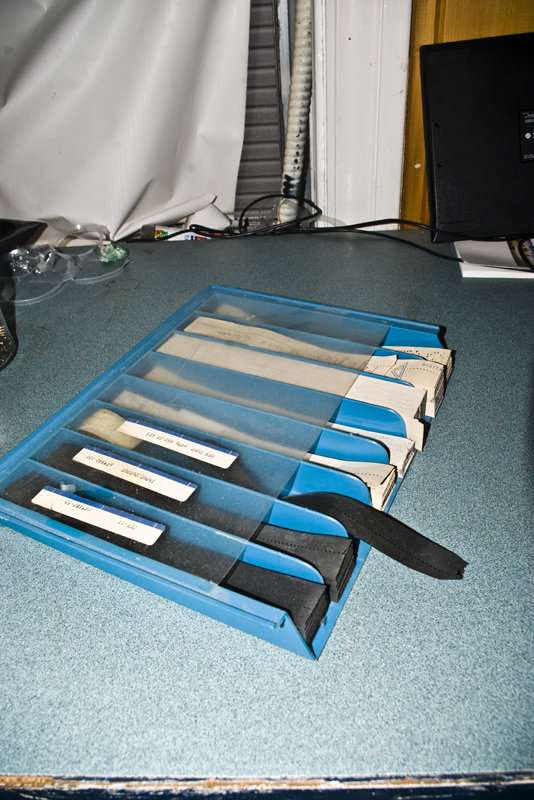
> -tony
>
Bob
Tony Duell and <unknown> wrote:
>
>> > How coome 2 of use here (at least) seem to have contradictory =
>> findings?
>>
>> Because it's anecdotal. BTW here's the definition:
>> (of an account) not necessarily true or reliable, because based on
>> personal accounts rather than facts or research
>
> By the same token, your evidence is anecdotal to me. You have not
> provided (for perfectly valdi reasons) any hard data, and certainly
> not
> any hard data that I can verify. OK, I haven't either.
>
> But I ahve to say that while you may not beleive what I see, I
> certainly
> do. I know what components I rpelace...
>
>> Fine. There's lots of things that I've started to say on this list
>> to =
>> deal with an
>> argument and couldn't because it would violate various NDA's that I
>> have =
>> to
>> live under (I kinda like my job). Arguments on this (and other
>> fora) =
>> while
>> fun aren't worth sacrificing my livelihood.
>>
>> I'm sorry if you can't/won't understand how large companies work and
>> the
>> restrictions that are put on employees and the products (though some
>> =
>> have
>
> I mosster certainly understnad that (having signed a fair few NDAs in
> my
> time too, and yes, I do honour them). And that's the 'valid reasons'
> I
> mentioend.
>
> But to be fair, if I can't verify the data, why on earth should _I_
> beleive it? You could be telling me anything.
>
> -tony
Now this is getting silly. There is no point in trying to say that what
Tony is seeing is wrong: unless he is psychotic he is actually observing
something that really has happened to him. And all that "I have this
fancy job in industry and I have signed lots of NDAs, so I am important,
while Tony is just a geek living with his parents" is a) rude and
patronising and b) hiding behind these NDAs you claim to have signed. So
go out and find publically available research reports or whatever on the
Internet to prove your point, instead of trying to impress us with smoke
and mirrors.
However I think <unknown> is probably right in one respect about modern
computers being more reliable: considering the complexity of a modern
$500 PC, it is probably much more reliable than anything made in the
'70s *at a corresponding price for the period*, i e today's cheap junk
is more reliable thatn cheap junk from the '70s and '80s. OTOH Tony is
also right that old computers were/are at least as reliable: they were
better made than today's cheap junk.
/Jonas
>
>
> Date: Tue, 24 Apr 2012 21:29:22 -0500
> From: Jim Brain <brain at jbrain.com>
>
> Message-ID: <4F976182.50500 at jbrain.com>
>
> Anyone know an inexpensive source for prototype DIY circuit boards?
> From time to time, I like to use them to prove out ideas, and I'm
> running low on stock.
>
I have been using E-Teknet in Arizona for some time. They are not the
cheapest,
but they are very good. The match your board characteristics with the best
shop in China to make it. I've never had a bad board from them, and I
have done
everything from two-layer boards smaller than a postage stamp to 6-layer
boards the size of a full sheet of paper. If you order 4 or less they
don't charge
you for the testing.
Jon
Hellooooooooooooooo world.
Vintage Computer Festival East 8.0 is less than two weeks from now: it
happens on May 5-6, 2012, at the InfoAge Science Center (2201 Marconi
Rd., Wall, New Jersey, USA.)
This year's VCF East will be the biggest ever. As of last weekend, we're
up to six lectures, eight technical workshops (the newest being an
all-weekend, kid-friendly "learn to solder" class), and two dozen
hands-on exhibits. You'll also find our book sale, consignment sale,
lunch, museum tours, prizes, and more.
This year's lectures are highlighted by keynotes at 12:30 each day.
Saturday's keynote is Dr. Thomas Kurtz, who co-invented the BASIC
programming language. Sunday's keynote is Daniel Kottke, who was Steve
Jobs' college buddy, India travel companion, Apple 1 board debugger, and
Apple II, III, and Macintosh engineer. We are thrilled that Kurtz and
Kottke accepted our invitations!
Admission to VCF East 8.0 is very inexpensive. Adult tickets are just
$10 per day and $15 for the whole weekend. Anyone 17 and younger are
admitted free. Tickets are sold at the door. Directions, lodging, and
related details are also on the VCF web site at
http://www.vintage.org/2012/east/ and be sure to 'like' us at
http://www.facebook.com/vcfeast8.
All questions, such as admission, how to exhibit, how to become a VCF
sponsor or vendor, etc., as well as any other questions from the public
and from media, should be addressed to event producer Evan Koblentz --
evan at snarc.net, or call him at (646) 546-9999.
Proceeds from the VCF East 8.0 benefit the InfoAge center, which is a
grassroots, all-volunteer educational facility, and the MARCH user group
(Mid-Atlantic Retro Computing Hobbyists).
Thanks, and we hope to see you at the VCF East!
On Sun, Apr 22, 2012 at 4:36 PM, Zane H. Healy <healyzh at aracnet.com> wrote:
> At 3:32 PM -0400 4/22/12, Dave McGuire wrote:
>
>> On 04/22/2012 03:22 PM, Fred Cisin wrote:
>>
>>> Compact-Flash seems to have almost disappeared.
>>>
>>
>> Huh? Not at all. It is the mainstay of pro-level digital camera
>> work. It has just disappeared from consumer-shit-grade stuff because it
>>
>> is "huge". Heh. (still aching from moving an RK07 last night, and
>> that's on the "light" side of my stuff!)
>>
>> -Dave
>>
>
> To the best of my knowledge the only Pro-level digital camera that doesn't
> use Compact-Flash is the Leica M9 (trust me, there is no room in there).
> What sucks is that Costco no longer carries it in the stores (at least not
> my local ones).
>
> The new Nikon D4 has two slots, one for the older Compact-Flash cards, and
> one for the new XQD cards. http://en.wikipedia.org/wiki/**XQD_card<http://en.wikipedia.org/wiki/XQD_card>
>
I use a SD to CF adapter in my canon digital rebel without an issue, as I
can no longer find CF (I also haven't tried a camera store but they are
probably a ripoff...)
js at cimmeri.com wrote on Mon Apr 23 21:47:23 CDT 2012:
> Does anyone have any Venix manuals they're no longer needing that they'd
> like to sell?
>
> I'm running Venix 1.0 on a DEC Pro 350.? The manuals for this version
> would be dated 1984 - 1986.
I haven't the Venix 1.0 or Pro version manuals.
What I do have are the Venix/11 2.0 manual set as well as the base (root)
distribution on 9-track tape.?? Unfortunately, the second distribution
tape with the /usr filesystem has gone missing.
Does anyone else on the planet have the Venix/11 2.0 tapes?
Please let me know if you do.
Cheers,
-scott
Does anyone have any Venix manuals they're no longer needing that they'd
like to sell?
I'm running Venix 1.0 on a DEC Pro 350. The manuals for this version
would be dated 1984 - 1986.
Please PM me.
Thanks,
John Singleton
> A metal-film resistor, used
> below its ratings, will outlive any microcotnroller.
>
> -tony
>
Well maybe (though no guarantee there), but the 555 would likely have the
same sort of lifetime as a microcontroller - arguably poorer.
Bob
Hi,
I'm offering a reward of $500 to anyone who is able to find any of
several IBM documents. I'm not including the list in this message
because the table I have prepared might not be displayed correctly
with anything except a fixed-width font and I have no idea what each
of you are using. Anyway, the details can be found here:
http://forum.osdev.org/viewtopic.php?f=2&t=25164&p=207984#p207984
Cheers,
Bogdan
> Those Total Control Net servers were awesome.
It is a good think you included "Total Control" in your post, because USR
had an unrelated product called NetServer that was the complete opposite of
"awesome". They, along with friends FaxServer and CommServer, were absolute
disasters, with field failures hanging around 50 percent.
--
Will
replying to Grumpy Ol' Fred (Fred Cisin)
> I wonder what happened to the class action suit and the regulatory actions?
Google found
http://www.iomega.com/rinaldi/
Rinaldi Class Action Settlement
Wikipedia clarifies that the settlement was a rebate
towards the future purchase of an Iomega product.
What a ripoff! They made a faulty product and instead of
paying a penalty with real money, they issued "funny money" coupons
useful only for BUYING more of their crap!
The Sharper Image pulled a similar ripoff during their bankruptcy.
All gift cards were invalidated, but were then honored
ONLY if you paid an equal amount towards a purchase.
What a steal: turning perhaps $100 million of debt
>from pre-purchased gift cards into a matching-grant program
to get another $100 million for their overpriced stuff :-/
Long ago, a fellow was so pissed off with his Vydek
word processor that he sponsored a floppy-flinging contest
for his stock of 8" floppies.
We ought to have a similar contest for Iomega products!
I really need to get space back in my house and shed.
Got 4 Apple IIGS Monitors tested and working at $20 each
TRS80 Magazines, Owners Manuals, Documentation, enough to fill the back
of the car for free.
Box of 50 Pin SCSI Hard Drives 40-80MB Drives $20
Apple //e Platinum tested and working $20
Lots more from PC Stuff to external 3.5 drives all of it.
Monday morning it will be recycled.
Im located in Flushing MI
>> > Why not the SD card? Cheaper, smaller and easy to interface! :)
>>
>> My gut feeling is that compact flash will live a little longer in
>> terms of being able to get interface hardware a decade into the future.
>> But I could be wrong and SD might have more legs (certainly fewer
>> contacts). And as you point out the serial interface to a SD card is
>> very straightforward so I think you have a good point!
> As far as I know, both CF and SD cards are docuemtned. The only custom
> interfce hardware is the connectors ;-). Although it might be slow, there's
> nothign to stop you talkign to an SD card by bit-banging the signals on
> the I/O pins of any microcotroller, computer, or whatever.
> So I see no reason why you won't be able to read/write SD cards in 10
> years time.
My analogy is that Compact Flash are like U--matic videotapes and that SD is like VHS tapes.
SD gets most of the consumer uses, but the consumer product lifespan is very short.
The CF applications today are mostly industrial uses with lifespans measured in a decade or more.
That's why my gut feeling is to favor CF for long legs.
Tim.
On Sat, 21 Apr 2012 16:31:50 -0700 (PDT), Fred Cisin
<cisin at xenosoft.com> wrote:
> One of my colleagues was "caught" soldering a repair in a college computer
> lab (that was closed at the time)! That was one of four offenses for
> which they tried to fire him. The others included telling an "instructor"
> that he was NOT available to come help her and to learn how to do her own
> "reset" when the computer was "locked", refusing to change the grade
> to passing for a student whose program crashed instead of a clean exit to
> the OS, and removing discarded computers from the dumpster.
>
> While he was banned from campus, they removed and destroyed everything in
> his office, which included a SOL, some Northstars, 6? bookcases of PC
> Tech Journal, Dr Dobbs, IBM Technical References for all models, etc.
> (Yes, he DID have the 8514 and EGA trch refs)
> His office was densely packed, with mostly classic microcomputers.
I thought the Nazis had been defeated 67 years ago? Did they just escape
to your college? Or are your administrators ex-Stasi people?
That is just plain evil and vindictive. They should be taken out and
shot in front of all the students.
/Jonas
>
>> I've got a SCSI scanner plugged in to a MicroVAX 4000. Using the open source
>> "sane" portable scanning package, suitably tweaked for VMS, I can scan quite
>
>That 'suitably tweaked for VMS' worries me a little. I am not a
>programmer, I am not sure I could do things like that.
>
I'm not a programmer either but I never let that stop me.
I added about 270 lines to sanei_scsi.c (including blank lines, (few) comments,
debugging, error checking and assorted fluff) to implement a VMS version of the
routine sanei_scsi_cmd2(), some of which I copied from the existing routine and
to add routines vms_open_device() and vms_close_device(). The added code
doesn't do anything more complicated than call system routines such as
sys$assign(), sys$qiow() and sys$dassgn() and was practically lifted from
"Generic SCSI Class Driver Programming Example" in the VMS I/O Users Reference
Manual: Part I. I also added another 76 lines to do a quick hack translate of
calls to syslog() into calls to sys$sndopr() as VMS doesn't have syslog().
Finally, I created a suitable config.h containing mainly #defines and gruesome
hacks. The rest pretty much compiled as-is. (I didn't compile all of sane -
just the bits I needed to for my scanner). It won't win any awards, but it
seems to work.
Besides, you don't have to do it - I've already done it!
(If you want software for a PERQ, maybe someone else can help)
>
>In any case there are really only 2 clases of VAXen I would want to try
>running. One is the 11/780 and its brothers (11/782, 11/785), the other
>is the 11/730 (and I guess 11/725). The former is too large for me to
>accomodate at the moment, so it would have to be the latter. And I
>suspect Unibus SCSI cards are not easy to find anyway...
>
You could always build one :-)
>
>In any case, thos diesn;t get round the problem (for me) of fidnign a
>scanner I could repair.
>
I think we've addressed all the other difficulties. We can't be expected to
cover everything :-)
Regards,
Peter Coghlan.
--- On Thursday, April 19, 2012 8:46 PM, Tony Duell <ard at p850ug1.demon.co.uk> wrote:
>
>
>
> I assume that NICAM stereo
> sound is also dead ;-(. Pity, I
> enjoyed
> building and aligning the Maplin > decoder kit many years ago.
i haven't heard the phrase NICAM stereo since the 90's.
It's all Dolby Surround sound now - though i personally don't care for it.
Regards,
Andrew B
aliensrcooluk at yahoo.co.uk
Dear cctech folks;
I have 2: ISA card controllers for PCMCIA cards
that I want to get running again.
I need the software &
just the essentials of the manual (switch & jumper settings).
1)
DATABOOK ThinCard DRIVE
model TMD-100-03 rev C
2) 16 bit ISA card:
MMCD-D2 Rev 2.0 ?? 1994 SCM Microsystem GMBH
Photos are here:
http://ferretronix.com/march/thincard/
thanks in advance
Jeff Jonas
jeffj at panix.com
>
>> >In any case there are really only 2 clases of VAXen I would want to try
>> >running. One is the 11/780 and its brothers (11/782, 11/785), the other
>> >is the 11/730 (and I guess 11/725). The former is too large for me to
>> >accomodate at the moment, so it would have to be the latter. And I
>> >suspect Unibus SCSI cards are not easy to find anyway...
>> >
>>
>> You could always build one :-)
>
>Err, yes.... Building a n 11/780 wouldn't solve the space problem (it
>would be about the same size). I guess I could try to re-implelent the
>11/730 with statci RAM i nthe control store, but it's not somehting I
>have time for at the momnent.
>
I was suggesting that you might build a Unibus SCSI card if it proved too
difficult or expensive to get one by other means.
Regards,
Peter Coghlan.
Wow, what a funny subject line to ask for help with a generation leap in storage. !!! I did use Zip's in the 90's as an interchange medium and they weren't the worst thing in the world for that... but at most they had to hold their data for a week or two in the shipping lanes and that's not asking much.
> Funny,
> as the OP I asked for the ZIP drive spec in order to be able to use them as a replacement for the old, slow & unreliable 10 MB cartridge drive for my ETH Lilith.
> Those zips are, despite their faults, the closests thing to it, still available in plentiful supply. CF cards just doesn't seem right.
Most reliable 10MB removable drive ever was the RL02. But generation wise that's probably a step backwards in time not forward.
CDC made a number of SMD-descended mini-cartridge drives with capacities in that range but they all sucked rocks.
Jumping forward a couple generations in the mid-90's there were very good MO drives. The 5.25" drives (650 MB/1.3GB/2.6GB were industry standard sizes and some bigger as well too) were most often seen with SCSI interfaces and in fact Sony still makes and sells new media because there are several niche markets that rely on this format for interchange and archiving. 3.25" MO drives (128 MB but most often 230 MB) existed as well, with either SCSI and ATA interfaces, but these were never as reliable as their bigger brother (still several orders of magnitude more reliable than ZIPs). If this were the 90's I'd have no problem recommending 5.25" MO as an update. But this isn't the 90's anymore.
Today in 2012? I have a hard time seeing how to use anything except CF as an interface standard that will exist going ahead for at least a decade maybe two in wide usage. The other format to choose is a USB keychain drive. If like me you think the CF format is just too physically tiny, epoxy a CF device to an old Lilith D120 style cart and have it slide into a reader that you've milled into the original D120 or D140 slot :-)
Tim.
From: allison <ajp166 at verizon.net> To: General Discussion: On-Topic
Posts Only <cctech at classiccmp.org> Subject: Re: VAX on Reddit
Message-ID: <4F933A05.3030205 at verizon.net> Content-Type: text/plain;
CHARSET=US-ASCII; format=flowed On 04/21/2012 08:59 AM, Liam Proven wrote:
> > Shocking headline: "23 year old computer still in daily use at a
> > silver mine. MicroVAX 3100 running openVMS on 12mb memory."
> >
A number of years ago I went out to a plastic molding company to look
at a Microvax installation that had been hit by lightning and advise how
to rewire the place to avoid similar damage in the future. They took me
into their compute room and I was stunned at the contraption they had
running there. I stood there gasping and asking "What the HECK is THAT?"
Turns out they had this thing that was an off-brand clone of an
IBM 1800 running all their presses. I gathered it was a TTL
re-implementation of the 1800, but a very old machine at least.
(The microvax ran their accounting system.)
Jon
Jon
On Apr 21, 2012, at 10:09 PM, cctalk-request at classiccmp.org wrote:
> This 1983 InfoWorld has a few articles about Obsolete Computers. It covers
> the Altair and other S-100 machines. There is a story about someone making
> an upgrade ROM board for the Processor Technology SOL-20. The Computer
> Museum was still in Boston. It asks "Will today's Lisas and Radio Shack
> Model 100s be as priceless to the computer industry as are the Crown Jewels
> are to England?"
>
> InfoWorld June 6, 1983. Pages 27 - 37
>
> http://books.google.com/books?id=zy8EAAAAMBAJ
Very cool, and an interesting article, especially from a 1983 perspective. Did you notice also that the article was co-written by John C. Dvorak?
Best,
David Greelish, Computer Historian
President, Atlanta Historical Computing Society
- Author, "The Complete Historically Brewed"
- "Classic Computing Show" podcast
- "Stan Veit's History of the Personal Computer" audiobook podcast
- "Retro Computing Roundtable" podcast
- "Not Another Apple Podcast"
ClassicComputing.com | atlhcs.org
I just had a multics front panel come in from Nick Allen, and have to
say there is something that makes the house smell nice from the old
equipment.
Sort of like Cosmoline, only not old machinery or guns.
Jim
This 1983 InfoWorld has a few articles about Obsolete Computers. It covers
the Altair and other S-100 machines. There is a story about someone making
an upgrade ROM board for the Processor Technology SOL-20. The Computer
Museum was still in Boston. It asks "Will today's Lisas and Radio Shack
Model 100s be as priceless to the computer industry as are the Crown Jewels
are to England?"
InfoWorld June 6, 1983. Pages 27 - 37
http://books.google.com/books?id=zy8EAAAAMBAJ
<http://books.google.com/books?id=zy8EAAAAMBAJ&pg=PA27> &pg=PA27
Michael Holley
I need to replace a transistor in my H7140 PSU for my PDP11/24. The
transistor is marked GPSA55J3 and the printset identifies it as "XA 55 PNP
500MW SI 60 50 P", it is in a TO-92 package. I have tried to find specs for
an A55 and can only find partial matches, so I am not sure what today's
equivalent would be. Can anyone help me work out what the equivalent today
would be?
Thanks
Rob
> There is no Application jou can just build out of a 555
Actually I recall a 70's hobbyist homebrew optical paper tape reader (in BYTE?) where the Schmitt Trigger for each photodiode was nothing but a 555, NOT BEING USED AS A TIMER, just as a Schmitt Trigger. Unlike using real "schmitt trigger" parts the 555 had a built in resistor network that set trip points to 1/3 and 2/3 Vcc with no external parts.
I was really thrown for a loop when I saw the schematic. Nine 555's, no R's or C's. I was sure it was a typo or an April Fool's joke, but no, it was for real.
Similarly folks cleverly use PIC's (not sure Arduino can do the same but probably) choosing Schmitt trigger inputs and/or internal pull-ups. I'm sure someone could make a 1/3 and 2/3 Schmitt trigger using PIC's and some clever cross-wiring of analog and digital ports.
Tim.
Hi,
maybe someone from europe has interes in this and is willing to
drive to Frankfurt to collect it. A fairly complete lokking
NOVA1200 system.
http://www.ebay.de/itm/160781530347
He wrote, that on request he is also able to provide another
NOVA 1200 processor and two additional disk drives series 30.
I wonder where the price will go...
Greetings.
I know most of you dont believe that I have anything, But the truth is
I do, I work in ewaste and im trying to move the excess apple stuff so
I can make more room for the incoming apple II stuff.
$10 dollar LC 575 machines, Some 550s, 1 or 2 580s and a 520- These
are Local Pickup in Person
8 G3 All in one Macs- AKA Molar Macs $20 dollars each- These are
Local Pickup in Person
Performa/Power Mac 5400/5500s $25 each.. All have AV System with still
boxed TV Tuner and remote- Local Pickup in person- too heavy and too
akward to ship
Apple //e's $20 dollars each
Monitor //s $20 dollars each
Apple IIGS Monitors $25 each
80mb 50 pin SCSI Drives $15 each shipped
Apple Extended Keyboard IIs $15 each
For those of you who dont believe me, heres some pics to prove it
http://www.flickr.com/photos/67970316 at N08/sets/72157629866466539/
All for pickup near flint michigan.
I find the dislike of the Arduino by some people in this forum a bit
silly, yet funny in a history-repeating way. The Arduino, in my
opinion, occupies roughly the same space that the Vic-20 (or ZX-81)
did back in its day. It's a great intro to the field.
Sure, the cool kids are building their own computers using S-100
cards, the rich kids are buying far more capable Apples and Tandys;
the pros use minis. And while most Vic-20 users never get beyond
playing copied versions of Lunar Lander, some of them get sufficiently
interested to go on to better things and delve deeper, hitting the
limitations and working around them. Remember - neither the VIC-20 or
ZX-81 came with any info on how to program them in anything other than
the (very limited) BASIC.
More importantly, the Arduino disrupted the microcontroller dev board
market in such a way that to get any mindshare these days you need to
have a sub-$100 board to get hobbyists interested, AND have a
(reasonable, and open or at least free) click-and-compile IDE with it.
Joe.
PS. I apologize for mixing technologies of different time frames in
the example above. That whole period was a bit of a blur to me.
Pedants, be pedantic, please :-)
--
Joachim Thiemann :: http://jthiem.bitbucket.org
Try contacting Steve Gibson (http://www.grc.com/intro.htm). He wrote some Zip/Jazz drive diagnostic software that addressed the "click of death" problem.
Maybe he can help you?
Al
>
>I haev no moral objections to SCSI at all (it's fully docuemtned, it's
>not over-complicated, there are standard ICs to talk to it, or you cna do
>it all in simple logic chips, etc). The problem is that very few of my
>machines have SCSI interfaces.
>
>Also, for a machien to be useful with a scanner, I would have thought it
>should have a high resolution graphics display. Of the machines I use,
>the PERQ probabl;y has the heighest pixel count (1280*1024),. but that;'s
>only 1 bit per pixel. The I2S units have a better colour resolution, but
>only 512*512 pixels. They conenct to a PDP11 (or will do when I get round
>to restorign them).
>
>Of course the problem is that there are not likely to be any drivers for
>a scanner on any of these machines. I realsie the scanenr commands are
>documented (at least for some scanners), but writign the drivers is not
>something I want to undertake....
>
I've got a SCSI scanner plugged in to a MicroVAX 4000. Using the open source
"sane" portable scanning package, suitably tweaked for VMS, I can scan quite
happily. It's not fast - I've never gotten around to looking into speeding it
up. My MV4000 doesn't happen to have graphics capability but the TIFF files
>from the scanner can be displayed using a clustered VAXstation 3100 which does
have graphics or displayed on a remote X-Windows server or transferred to
another machine for viewing.
Regards,
Peter Coghlan.
Hi guys,
Yesterday eavening I've checked my new TSZ07 9 Track Tape on my VS4000/90
the first time, it worked flawlessly. Later I've switched it of with the
power button on the fron paneel.
This morning the Drived stinked. A smell like an burned transformer.
I've pulled the powerchord and leaved to go to work.
Now I have dismounted the PSU and looked inside: Shit!
There are 2 board in there, the one with the big Heatsink in the middle has
on one edge an uncooled TO220 Transistor (or something looking like one)
and a wirewound resistor near by. The entire area around them is burned
black. Noch chance to read Parts values or so. The PCB is bad also, burned
to carbon. Interestingly this PSU (and the entire Drive) is still
working... no fuse blown or something. :-|
Guys I need urgently an schematic of that PSU to replace this part of the
PCB. It isn't the first time that I'm repairing switchmode PSUs even w/o
any schematic, but this one really looks bad.
The drive is a TSZ07 DEC Drive, I think it is the same as the Cipher M995S,
or the otherway around it is a relabeled cipher drive.
Regards,
Holm
--
Technik Service u. Handel Tiffe, www.tsht.de, Holm Tiffe,
Freiberger Stra?e 42, 09600 Obersch?na, USt-Id: DE253710583
www.tsht.de, info at tsht.de, Fax +49 3731 74200, Mobil: 0172 8790 741