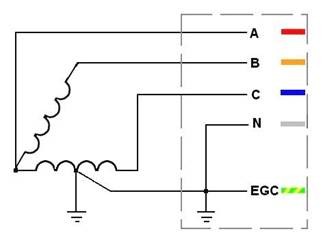
I am going to be moving on to testing some H745 regulators. If I understand
the schematic correctly the +15V input is the reference voltage used to
regulate the -15V output, is that correct? If so, then presumably it doesn't
need a whole lot of current, is that right?
Thanks
Rob
In response to my wife's "Buy yourself a Christmas present" direction, I've
ordered a Retro Chip Tested Pro board. When you purchase the board, you get
a BOM and links to stored shopping baskets for some European vendors. Has
anyone built this in the US and stored their basket with a US vendor? Rev
1.2k by the way, but any basket would be helpful as the BOM differences
between the versions are listed.
Thanks,
Bill S.
--
This email has been checked for viruses by Avast antivirus software.
https://www.avast.com/antivirus
Hi all,
I see that SIMH incorporates the 32-bit Xerox Sigma architectures.? The Sigma 8/9/5x0 architectures are commented out but compile fine? Does anyone know if those later architectures have known issues?
Has anyone succeeded in running CP-V on those emulations?? It would be amazing to run CP-V and tha various languages on a Sigma 9 emulations, not to mention the 350-point and 550-point adventures.? However, I haven't found any type of software on line.? Does anyone know of a stash somewhere?
I remember that the Living Computer Museum, when it was open, briefly had a Sigma 9 up and running with CP-V, but was restricting public accounts due to some issue with the account generation mechanism.? I wonder if someone associated with the Museum might potentially have access to some CP-V tapes or images, even if the museum is closed.
Thanks in advance,
Dave
http://mirror.informatimago.com/
This site has or had viruses at some point, the tigger files.html files are
still present. be cautious, and let the person who runs it know if they're
known.
BIll
Looking for some tools (guide_reader, others) that were apparently only on
unix.hensa.ac.uk's FTP. This hostname still exists, but directs to University
of Kent's mirror service, and there is no trace of the old archive. Anybody
happen to have saved any pieces of it?
--
------------------------------------ personal: http://www.cameronkaiser.com/ --
Cameron Kaiser * Floodgap Systems * www.floodgap.com * ckaiser at floodgap.com
-- In memory of Peter Graves --------------------------------------------------
I have an old IBM Model C typewriter. I can't bear to throw it away,
even though it doesn't work well. The carriage doesn't advance, and the
A key doesn't work. Do you know how to tune it up?
If you want it, it's yours for the price of shipping. I'll probably
take it to UPS and ask them to pack it.
It will fit in a 24" x 18" x 12" box. Gross shipped weight about 40
lbs.
Local pickup free. La Crescenta, CA
The recent discussion on BSC protocol prompted me to dig out my Microvax 3100
with DSH32 synchronous serial interface. It had been idle in storage for
several years and it wouldn't power up, only giving a brief flash on the
diagnostic LEDs and a quick twitch of the fans. There was a slight smell, like
the stale air that comes out of a deflating tyre.
I took out the H7821 power supply and found that five identical brown 1800uF 25V
electrolytic capacitors on the output side had leaked.
The SCSI disk enclosure where the machine's system disk lives required several
power cycles to get it to run at all and it died as soon as the disk tried to
spin up. It turned out to also contain a H7821 power supply which had a
similar issue with the same five brown capacitors, although not as extensive
as in the main unit.
I found a second disk enclosure which had seen little use and grabbed the power
supply out of that to put in the MicroVAX. It worked well enough to test with
but there was a ring of goo around the bottom of one of the brown capacitors
which was worst affected in the other units. Time to order a batch of
replacement capacitors and figure out what else has been damaged. While it is
not the worst I have seen, access to these power supplies for repairs is quite
difficult and it is really difficult to debug them safely while they are
running with the cover off :-(
If anyone has anything with H7821 power supplies in them, I suggest checking
on these capacitors. If anything with these power supplies is in storage, I
suggest ensuring it is stored the normal way up as this should limit the
ability of the goo to escape and spread around the power supply.
And there I was thought I was being safe enough by removing the nicad battery
packs some years ago...
Regards,
Peter Coghlan.
The original "Portable C Compiler" by S. C. Johnson (also known as "pcc")
had functional support for the Data General Nova. Could somebody please
point me to this original implementation?
There is a modern C99 version of this compiler maintained by Anders
Magnusson at: http://pcc.ludd.ltu.se/
Unfortunately in this version the Nova architecture is no longer supported
and won't build correctly although associated files are still in the source
hierarchy.
I am looking for the original implementation - not any recent work.
Thanks
Tom
> On Wed, Jan 12, 2022 at 12:16 PM Mike Katz wrote:
> I am looking to make a RX01 (and hopefully RX02) disk formatter
Something that can format floppies for the RX01 can effectively format RX02 floppies, too.
An RX02 drive can convert RX01-formatted floppies to RX02-formatted floppies.
Given how arcane the RX02 format is (sector _headers_ are written in single
density; sector _data_ is written in double) I'd be pretty surprised if
anything except an RX02 can do it.
Noel
Just ran across this:
http://wwcm.synology.me/pdf/MP00189%20FP11-A%20Field%20Maintenance%20Print%…
which isn't available online in this form. (This appears to be a different scan
>from the one on the Maine Coon site, split up into several TIFF's, as it has
the cover which that one doesn't show.)
As always, history shows that the best way not to lose things is to have
multiple independent copies! So download often!
Noel
I've received a couple of suggestions, thanks, but none seem right.
BTW, I'm sorry (Liam) that I didn't make it clearer that it was absolutely
a software bug, which excludes Spectre, Rowhammer, Meltdown.
Aside: the Meltdown and/or Spectre patch to macOS hurt performance ... the
elapsed time to compile 500 programs increased by about 12%. (At the time
of the patch, I tested (properly) before and after the patch ... then
forgot to publish, and since misplaced my notes.)
Although I mentioned 'code', I should have been more specific: C (or,
possibly, C++), but definitely no other language.
I don't recall it being a buffer overflow.
I *think* it was some kind of authentication failure (e.g., incorrectly
reporting "ok"), but I'm not sure.
I do know I wrote a several page article about it, and how certain coding
practices led to it, but I can't *find* the article now :(
(not published)
My guess of 4-6 years ago is possibly narrower than it should be, but I'm
not sure.
My hope is that by being reminded of the vulnerability name, I can search
my computer, and backups, for text files containing that name :)
(Or the name of function associated with the problem.)
thanks,
Stan
Hi,
I'm trying to remember the name (and some information about) a past
security bug, for an article.
Somewhere between 4 and 6 years ago (I think), there was a fairly major
security bug reported (probably in Linux, or in SSH code, but
something widely used).
IIRC, the bug was a single line that called a function (possibly along the
lines of CredentialsCheck), and may have involved a bit-wise or (or and)
instead of a logical one.
It may have been that either the routine wasn't getting called when it
should, or that the programmer misinterpreted what the return value meant.
Ring any bells?
thanks!
Stan
> an adapter cable to go from a 9-pin male (shell; female pins) to a
> 15-pin female (shell; male pins)
Sigh, shouldn't try to type when I'm this tired. Female 9-pin (to plug into
the BA11-D) to male 15-pin (for the DD11-C/D to plug into).
Noel
> From: Chris Zach
> I'm guessing that the DD11-F is significantly different from the DD11-B?
I assume theat "DD11-F" is a typo; there is, AFAIK, no DD11-F, and a Web
search revealeddidn't turn anything up. (There are DD11-CF and -CK
backplanes, as well as -DF and -DK, but the -CF and -CK differ only in power
harness length.)
> the 11/24 used +12 on the +15 lines. No idea what was wrong with DEC
The:
https://gunkies.org/wiki/MS11-M_MOS_memory
I'm guessing it used the parts that the IC vendors could provide.
> Don't know what would happen if you plugged a RL11 or other hex height
> card into one of those slots, probably blow everything up.
Not sure. Per:
https://gunkies.org/wiki/Modified_UNIBUS_Device#Pinouthttps://gunkies.org/wiki/Extended_UNIBUS#Pinout
These are _some_ of the MUD/EUB pin clashes:
Pin EUB MUD
AN1 - A21 - Parity P1
AP1 - A20 - Parity P0
BE1 - A19 - Internal SSYN
BE2 - A18 - Parity Detect
I don't think those would harm anything. Not sure about power pins - and have
no incentive to research it, as I have no need/interest in trying it.
> I know I ran it with two of these Plessy cards and a RX01 controller but
> now that I look at it that would be impossible as both were hex cards
Maybe Plessey designed them to go in a DD11-B? I know I've seen other
third-party cards that would go in oddball slots.
> and both could never fit in a 4 slot backplane with enough space for a
> quad spc
Why not? The two hexes in slots 2&3, the quad in 1 or 4.
> a DA11-F Unibus window
Wow; never heard of those. I'll have to do a CHWiki page for them. Luckily,
the maint manual is online. There's also a DA11-B.
> what would happen if I enabled the KT24 Unibus memory map.....
All that does is allow DMA devices on the -11/24's UNIBUS access to the
entire main memory:
https://gunkies.org/wiki/PDP-11/24#System_bus_structure
So if you hooked up an -11/10 to an -11/24 with a DA11-F, then with the UNIBUS
Map on, the -11/10's CPU and/or DMA devices would have access to the entire
EUB memory via the 24's UNIBUS Map, is all.
> This is so much fun!
That _is_ why we collect old computers! ;-)
Noel
> From: Chris Zach
> the DD11-B is a MUD backplane
No, it's SPC; other sources, e.g.
http://www.chdickman.com/pdp11/Notes/DD11.shtml
agree.
So if you have a DD11-B, you must have a BA11-D, with the 9-pin power
plugs.
The best thing to do is get a DD11-C or -D, and build an adapter cable to go
>from a 9-pin male (shell; female pins) to a 15-pin female (shell; male pins),
so you don't have to mess with the harness. Part numbers here:
https://gunkies.org/wiki/DEC_power_distribution_connectors
Then you can plug in any memory you've got the right voltages for; the MS11-E
takes + and -15V (in addition to +5V, of course).
Noel
I'm working on my pdp11/10 getting it back together. One problem I think
I have is that the secondary memory (a Plessy 700101-100) may be
shorting the -15 line for some reason. Working on it, but does anyone
have a manual or anything like that for this kind of memory board?
Alternately, what kind of Unibus 16k memory board exists to get a 11/10
>from 16kw to 32kw of memory? Apparently I can't use a MM11-B as it
requires +20 and -5, both of which are not provided by the power supply
or sourced on a DD11-B backplane module. The 11/10 has +15, -15, and +5.
On a related note, where did +20 come from for Unibus and which systems
even supported it? Was it an 11/45,11/70 thing?
Thoughts?
C
(Yes, I could build a regulator to take the 30 volts between +15 and -15
and create an independent 20 volts. Maybe. Likewise I could generate -5
>from the -15 and a 7815 regulator. Maybe.)
> From: Chris Zach
> the secondary memory (a Plessy 700101-100) may be shorting the -15 line
> for some reason. Working on it, but does anyone have a manual or
> anything like that for this kind of memory board?
I've got a Plessey core memory manual somewhere, but I can't find it, so I
don't know if it's the one you are looking for. I got it from Paul Birkel; it
was a duplicate, and he scanned his and sent the scan off, but I don't think
it made it online.
> Alternately, what kind of Unibus 16k memory board exists to get a 11/10
> from 16kw to 32kw of memory?
It all depends on what kind of -11/10 you have.
If yours is in a 5-1/4" box, you can't plug a DEC memory card into the SPC
slots that some of the CPU-holding backplane versions have because DEC
memories (other than the ones like the MM11-L and -U, which are multi-board
core systems that require custom backplanes) all require MUD slots, not SPC.
All of the CPU backplanes on that machine are for a _specific_ kind of core
memory (MM11-L or MM11-U), see here:
https://gunkies.org/wiki/PDP-11/05
There are I think some third-party memories which can be used (Dataram,
maybe?) but I don't have time to go into them.
If you have a 10-1/2" box, you can mount a MUD backplane - but you might
still have an issue because the older BA11-D boxes use the old 9-pin power
connectors, and the MUD backplanes (DD11-C, -D, etc) all use the newer 15-pin
ones.
(Again, there are some oddball ones, and again, I don't have time to go into
them.)
If you're lucky enough to have one of the ones that will take a MUD backplane,
an MS11-E/F/H/J:
https://gunkies.org/wiki/MS11_32KB_MOS_memory
would be an option.
> On a related note, where did +20 come from for Unibus and which systems
> even supported it? Was it an 11/45,11/70 thing?
The later /05's, /40's and /45's were the first ones to provide +20V, for the
then-new MM11-U. On machines which took H744 'brick's, the _later_ harnesses
could take a H754 +20V, -5V regulator 'brick'. Alternatively, _some_ BA11-L's
(used for the /04 and /34) had the right version of H777:
https://gunkies.org/wiki/H777_Power_Supply
to provide +20V.
Noel
To make testing of the H744 a bit easier I would like to try to make up some
connectors for the mate-n-lok connector to make it easier to connect power
and load. I know the H744 uses a mate-n-lok connector, but there seem to be
a lot of different types and I don't seem to be able to find a type that
would work. Does anyone know what the correct one is?
Thanks
Rob
> From: Rob Jarratt
> Does anyone know what the correct one is?
This:
http://gunkies.org/wiki/DEC_standard_modular_regulators
has all the details.
(If anyone knows of any PDP-11 hardware or UNIX information which is not on
the CHWiki - I'm not interested in DEC PDP-11 software, but if someone would
like to take that on, that would be great - please let me know.)
Noel
Selectron Vacuum Tube: https://www.ebay.com/itm/174977901251
Really nice photo-shoot! I wonder what the back-story to this particular
tube might be.
I don't think that $16.18 shipping would be, um, adequate protection by any
measure.
Cheap, but not so sure about "cost-effective" .
-----
Bill Whitson, the original ClassicCmp ListOp, has a surprisingly little amount of information available about him online. Does anyone know what happened to him after the late 90s? (If anyone has any contact information, that would be nice!)
Ryan Ottignon
It would be a lot easier to replace the large circular regulator if you're
taking the shotgun approach, and much more likely that the regulator is a
source of faults. and it's cheaper. For the h744, 45, 54. BUT measuring
things is the best way if you can do it. Pull the values from the
backplane, there are test points that you can measure from.
Bill
On Thu, Jan 6, 2022 at 2:30 PM Wayne S via cctech <cctech at classiccmp.org>
wrote:
> So you want to replace capacitors just because they ?whine? ?
> I?ll say that because you are learning, that is not good troubleshooting
> practice.
> Make a checklist of troubleshooting power supplies.
> There are a lot of good youtube videos and other internet information on
> how power supplies work, how to check them and repair them. There is danger
> when working with power supplies.
> When working on electrical equipment do you know about the ?working with
> one hand in your pocket rule?? Doing this stuff, videos and reading, is not
> overly time consuming and may save your life!
>
>
>
> Sent from my iPhone
>
> > On Jan 6, 2022, at 07:50, Jon Elson via cctalk <cctalk at classiccmp.org>
> wrote:
> >
> > ?On 1/6/22 2:52 AM, Rob Jarratt via cctalk wrote:
> >> I think I may need to replace the two output capacitors in some of my
> H744
> >> regulators. These are screw terminal 6,000uF 10V parts. I have looked on
> >> Mouser, Farnell and Digikey and there don't seem to be any available,
> and
> >> any that are listed are really rather costly.
> >>
> >>
> >> Does anyone know where I might find some, preferably from a reputable
> >> supplier. Note that I am in the UK.
> >>
> >>
> >
> > Mouser is a good place to find big caps (or at least used to be). You
> might have to get "snap in" caps and solder wires to them, that style seems
> to be more available.
> >
> > Jon
> >
>
On 1/6/22 10:17, William Donzelli wrote:
> If you include prototypes, then you need to include ALL the prototypes
> - even things made in single quantities that never worked.
>
> That is a HUGE amount of stuff that makes EBAM look gigantic.
To be fair, EBAM received a not-insignificant amount of press coverage.
What doomed it was the falling cost and increasing density of
semiconductor memory. Good idea, wrong time.
It was pitched in a few forward-looking responses to government RFPs.
But then, so was a lot of other stuff.
--Chuck
This:
https://www.ebay.com/itm/275084268137
The starting price is expensive, but probably not utterly unreasonable,
given that:
- the 780 was the first VAX, and thus historically important
- 780's are incredibly rare; this is the first one I recall seeing for sale
in the classic computer era (versus several -11/70's, /40s, etc)
- this one appears to be reasonably complete; no idea if all the key CPU
boards are included, but it's things like the backplane, etc (all of which
seem to be there) which would be completely impossible to find now - if any
boards _are_ missing, there's at least the _hope_ that they can be located
(780 boards seem to come by every so often on eBait), since people seem to
keep boards, not realizing that without the other bits they are useless
Anyway I fully expect it to go (because of those, especially i and ii) for a
_lot_ more than the opening price.
I've sent the seller info on the complete 780 board set, and a suggestion
that it's in their own best interest (maximize bidding) to check to see if
it's complete.
Noel
> From: Scott Quinn
> I have seen some roads where the utility has 2 of the phases plus
> neutral going down them, not true 2-phase power, but 2 phases 120/240
> degrees apart with the third phase just not present.
My street has that. The subdivision as a whole has all 3 phases (down the
main road through it), but individual streets off of it have only 1 or 2.
(The whole subdivision is on poles, so it's easy to see.) On the ones with 2,
some houses are connected to one, some to the other.
> I guess they figure twice the loads for only one more wire.
No, because most homes are only connected to one phase. I think the main
reason to do it is that it allows the total load (of the entire subdivision)
to be somewhat balanced across all 3 phases.
> Can't remember what it was called but I do remember seeing in some book
> somewhere about a "phantom 3rd leg" or something
My house has something like that; the previous owner wanted '3-phase service'
for machine tools (I think - could have been a compressor, or something) in
his basement workshop, so they sold him a pseudo-3-phase service. I forget
the exact details of how it works, but the 3rd phase is at 170V to neutral,
or something like that. (So I can't power any 110V outlets off the third
phase.)
I think the way it works is that the two 'main' phases are 220V to each
other, 110V to neutral (I think from the usual center-tapped transformer off
one of the three main feed phases, i.e. 180 degrees to each other). The third
'pase' is generated by a second, smaller transformer connected to the other
feed phase in some arcane way I forget the details of. So it's 120 degrees
away from the other two.
Noel
On Sun, 2022-01-02 at 12:00 -0600, Grant wrote:
> Where are you getting two /different/ phases?? --? Remember, the
> different legs on residential 120/240 wiring are really the same
> single
> phase.
>
> How do you get *two* /different/ phases without access to a *third*
> phase?? There are only a few places in the U.S.A. (and I'm not aware
> of
> anywhere else in the world) that actually have 2? power (where the ?
> are
> 90? out of phase with each other).
I have seen some roads where the utility has 2 of the phases plus
neutral going down them, not true 2-phase power, but 2 phases 120/240
degrees apart with the third phase just not present. Every time I've
seen that it seems like fools economy, but I guess they figure twice
the loads for only one more wire.
Can't remember what it was called but I do remember seeing in some book
somewhere about a "phantom 3rd leg" or something where they used 2
wires with 120/240 degree phase separation into the transformer and
then the third phase "corner" was just floating and current would
"return" across the other two. As it was brought up in the context of
"make sure some yahoo didn't try this on your install and if they did
be very careful" and was delta-only I imagine it was not that common.
> From: Jon Elson
> It should be 208V
Oh, right you are. It's been a long time, and I had a distinct memory that it
was less than that, but I looked, and I think that's it. The term for my
flavour of 3-phase is apparently "open wye/open delta"; each leg is 240V to
the others, but only two are 110V to neutral - the "hi leg" (normally
colour-coded orange; normal 3-phase uses black/red/blue) is 208V.
The page Jonathan Chapman sent had a good diagram of how it is wired:
https://www.engineeringradio.us/blog/wp-content/uploads/2012/02/3-phase-ope…
When they were doing some work on the pole decades back, I asked the foreman
how it worked, and he drew a diagram to show me; I had forgotten it, but
seeing that, that is it. The A and C are produced off one feed phase, but the
B comes from the second feed phase.
Noel
>
>
> Date: Mon, 3 Jan 2022 11:39:01 -0500
> From: Chris Zach <cz at alembic.crystel.com>
>
> The thing that always made me wonder is where are all the 8600's. The
> 8600 was apparently the best selling large Vax, outselling the 780 and
> 750, so what happened to all of them? They weren't any bigger than a 780...
>
> C
>
There is an 8650 at the RICM.
https://www.ricomputermuseum.org/collections-gallery/equipment/dec-vax-8650
--
Michael Thompson
I just added a patch to https://github.com/pkoning2/decstuff, in patches/shut.cmd, which cures a problem in RSTS V10.1 that seems to come and go with no clear pattern. The failure is a crash, sometimes a halt, during system shutdown. The cause was a write to the wrong location when removing the DCL runtime system, because of a register not being set before that action.
The patch can be installed with ONLPAT; it takes effect immediately (because it patches a non-resident overlay).
paul
Hello,
Has anybody a? STC 2925 9-trk Tape Drive.
I need a BIN- or HEX-File from an EPROM on the CP--Card.
It's the PROM #1 with the number 403936303.
Best regards
Lothar
I've recently picked up a new Applesauce floppy disk controller and have been playing with attaching various different drive types and imaging different Apple II, Atari, TI and other floppy disks with it. So far I've mostly imaged unprotected disks and run them in various emulators just fine. I've since added a sync sensor to one of my older Disk II drives and started to make some flux images of protected disks. These too seem to run fine in the emulators I've tried. The documentation on the device is limited at the moment, particularly the software, and while it is slowly being updated I was wondering if anyone else here had any experience with the setup. Any hints, suggestions, best practices, "do this to get the best copy", etc, to pass along would be appreciated. For example I read you can try to recover borderline disks by having it do multiple passes of the bad sectors. I see how this is done on the Fast Image option and has helped a couple of times but don't see any way to do
something similar via the Flux Image option. Does it not work/matter with those? Also I see sometimes it reports a file as bad if I do one image type but if I do the other it comes back as okay. So I tend to play with both when I can. There is a lot of options and functions in the Flux Image option that I just really don't know how it works or what to do with it so far that any info would be great. I know it can image non-Apple II disks as well and I've done a few. It works great on Apple II protected disks but wonder how to deal with protected disks from other systems? Or is that more an issue of other emulators and such not having something like the .woz format being used with the Apple II? I bought this for my Apple II collection and it was a nice surprise to learn it could work with other systems too, just looking for more info about them as well. So far I really love the device and it has been worth the long wait for new units to come back into production again. Especially as it
is a new design that allows for attaching PC floppy drives now as well. I've noticed the doc on the site being updated, just hope that they can find time to update more, particularly in regards to the client software. Best, David Williams www.trailingedge.com (http://www.trailingedge.com)
Another thing Prolok did was produce a small 3 disk set of sample disks
with the Prolok protection. Somewhere around here I still have a set of
those disks.
As I recall, a program was included on each disk to copy the program to
be copy protected to the special disk.
Earlier, I wrote:
> 30-pound struts are not strong enough. They improved things a bit,
> but it still takes a lot of effort to raise the box. I have ordered a
> pair of 50-pound struts and will post an update when they arrive (next
> week).
The pair of 50-pound struts arrived today, and in my opinion they are
just barely adequate. If I was trying for perfection, I would use the
60-pound ones, but they currently have a 6 to 7 week lead time. I can
easily live with these.
In summary, what I have learned about replacement gas struts for the
DEC PDP-11/44 in a 40" high cabinet:
1. The specifications are: 15.24" extended, 9.77" compressed, stroke
length 5.47", threaded ball studs, extension force 50 or 60 (preferred)
pounds.
2. A good replacement is the McMaster-Carr 4138T55 gas strut in either
the 50 or 60 pound force version. The price as of January 2022 is
$20.29 each. <https://www.mcmaster.com/catalog/127/1377>
3. The threaded ball ends on the 4138T55 are 5/16"-18 threads, while the
original DEC ones are 5/16"-24. They are easy to swap without
unscrewing them from the cabinet, and this is the method that DEC
recommends and describes on pages 5-5 to 5-7 of the PDP-11/44 System
User's Guide, EK-11044-UG. You simply unsnap a retaining clip (no tool
needed), pop the strut off the ball end (a screwdriver might help),
and reverse the process with the new strut. A piece of 4"x4" lumber
does a good job of holding the box up while doing this (stick it
under the rear of the cabinet when it is in the raised position).
EK-11044-UG is available at:
<www.bitsavers.org/pdf/dec/pdp11/1144/1144_UsersGuide.pdf>.
(In my earlier posting I gave the wrong DEC P/N for the manual.)
4. The 4138T55 struts that McMaster-Carr sells are manufactured by Suspa
Parts <https://www.suspaparts.com/>. The 30-pounds struts are their
part number C16-24186, and the 50-pound struts are C16-24188. I
suspect that the P/N for the 60-pound struts would be C16-24189, but
cannot confirm that. Their price is $32.00 each, so it is less
expensive to buy them from McMaster.
5. Suspa's design guide recommends mounting the struts with the rod end
down, the opposite of how DEC mounted them. I have verified that they
can easily be mounted with the rod down as long as you connect the
upper (body) end first. That is the way I have them now in my system.
I hope that this helps someone who might need to replace the gas struts
on their PDP-11/44 system or something similar. It has been an
interesting learning experience.
Alan Frisbie
> From: Grant Taylor
> From that last picture, it looks like one of the plugs is five pronged,
> and looks very similar to the 120/208V 30A 3? plug in one of the
> pictures about the current 780 auction.
Not too surprising; the /780 and /785 are basically the same machine. (In
fact, one could convert a /780 to a /785 by pulling out the /780 CPU cards
and replacing them with a set of /785 cards; basically the same cards, with
the 74S chips replaced with 74AS.)
Noel
I am looking for the service guide for the RF30 DSSI disk. It is not on Manx
and not on BitSavers. Does anyone know of a copy? The part number is
apparently EK-RF30D-SV.
Thanks
Rob
> From: Chris Zach
>> Anyone know what an M857 is? I guess it might be a DF11 async answer
>> mode?
> No, it's a single width full height M series board from the early
> 1970's.
Argh, digit swappping on my part.
The _M587_ is in the DN87 FMPS:
http://www.bitsavers.org/pdf/dec/pdp10/periph/MP00068_DN87_Universal_Comm_S…
(pg. 98); it's a dual-width card, an "Async answer modem" (the DF11-BB).
The BC01-R cable is in there (pg. 89), but I don't see the M857. (Web
searches don't turn it up either.)
Noel
Quick question: I'm going through my old cables looking for the paddle
interface for the Current loop for my pdp8/L. I thought I saved one from
my old pdp8/I, maybe not.
Regardless, I found a M857 board with a RS232 cable on it and BC01R-25
on it. Was that for a pdp11/05 by chance?
Oddly enough I also found the interface adapter that goes into my VT52
to support 20ma current loop devices. I currently use the VT52 as an
RS232 console for my pdp11, but still, Wow.
> From: Jonathan Chapman
> Last one that went auction-style on eBay went for $1,178.00
When was that?
Do you have any details of the machine's config?
That's a pretty good deal for a 780 (IMO).
Noel
> From: Chris Zach
> a M857 board with a RS232 cable on it and BC01R-25 on it.
Anyone know what an M857 is? I guess it might be a DF11 async answer mode? I
found this:
https://www.computerhistory.org/collections/catalog/102731577
but I think the number there is wrong; I'm not sure exactly which KL10 board
is an 'MBOX Control 3' - it might be the M9537.
> From:Ethan Dicks
> Sounds like it was a generic cable that probably worked with several
> devices.
Yeah, the BC01-R was used with an M957/M970 header card (not sure what the
difference between them is) in the DF11:
https://gunkies.org/wiki/DF11_Communications_Line_Adapter
Not sure where else.
Noel
At 07:50 PM 1/01/2022 +0000, you wrote:
>>
>True. But if you're trying to get > $5000 for something, it doesn't seem unreasonable to suggest that investing a bit in getting an extension cord run to the location of the machine would be a good idea. The absence of that effort makes me wonder if the owner knows what the outcome of such a test would be and doesn't want to have to report it.
>>
>
>But what would that accomplish? I think testing something like this requires a lot more effort than plugging it in and hitting the circuit breaker. To test this to see if some ODT comes up probably requires quite a lot of effort (locate a terminal/pc, wire it up, figure out where to plug it into the 780, etc. If this guy is a bulk dealer I would be surprised if he has the knowledge to do anything more than a power test which, again, would not be very useful and could even be detrimental.
Exactly. The machine has a 3-phase 208/240V plug, they don't have such an outlet. Their efforts stop right there.
But you're all focussed on that, and missing another important detail. The machine has a liquid cooling system.
Some of the hoses look like they are Tygon, in the age-decayed brittle stage. Touch them and they crumble away.
Running the machine without cooling would utterly wreck it. Even if they solved the mains power problem,
they would be very unwise to actually power it up.
The 'installation and configuration' manual for this machine would be huge. They don't have it.
Plus, it's a mainframe. Not even any blinkenlights. Without setting it up as a complete system
with everything interconnected properly, how would you even know it was running correctly?
Plus you can safely assume at least some of the system unit interconnect cables are missing.
Potentially weeks, even months of restoration work for a buyer, before even daring to apply power.
Then if there's anything wrong in the electronics, good luck diagnosing and getting spare parts.
Considering the uncertainties plus high transport, restoration, operating and manhour costs, who'd
buy it? A museum perhaps? Or someone wanting a 'static display object' never intending to run it.
Guy
Chris Zach <cz at alembic.crystel.com> wrote:
> Jesus. How much does the 11/44 chassis weigh?
>
> On 12/30/2021 3:39 PM, Alan Frisbie via cctalk wrote:
>
>> 2. 30-pound struts are not strong enough.? They improved things a bit,
>> but it still takes a lot of effort to raise the box.? I have ordered a
>> pair of 50-pound struts and will post an update when they arrive (next
>> week).
The box itself weighs about 75 pounds, plus the weight of the cards.
Remember, however, that the struts are not doing a simple lift of
the box. The box is acting as a lever. The box is 24" long, and the
struts are only about 5" from the pivot. Also, the struts are not
doing a straight lift from directly below their attachment to the box,
but at a point about 11" forward from where they are attached to the
box. All of this greatly magnifies the force required to tilt the box
up. Anyone care to do the math on this?
Alan Frisbie
Hello All,
Following a discussion on resurrecting a PDP 11/45 I have started looking at
the regulator bricks in the PSU. I have started with a H744. I reformed the
three big capacitors, although they seemed to be fine as they charged up
>from my DC bench PSU and then had zero leakage so I didn't reform them for
very long. I then moved on to powering the whole unit from my DC bench PSU
and it seemed to run fine. I am using a panel mount 1R resistor, so drawing
5A of the rated 25A. It drew just under 2A from the PSU which was set at
20V. I didn't run it for very long as I wasn't sure how hot to allow the
load to get.
Is there any sense in measuring ripple when powering this from DC? There
does seem to be some ripple:
https://rjarratt.files.wordpress.com/2021/12/h744-ripple.png hard to say if
that is OK?
Also, the indicator light does not work (as expected). I have seen the
suggestion to replace it with a CM7381. It looks like these can be sourced
<https://www.mouser.co.uk/ProductDetail/?qs=N8%2Bk0S5zvCZ7dMEMH2XU9Q%3D%3D>
with relative ease, but I wondered if there might be a better LED-based
longer term solution? I was also advised that OL-6003BP is good for the 15V
regulators, but these seem to be hard to find, any suggestions there?
Thanks
Rob
Mark J. Blair <nf6x at nf6x.net> wrote:
> When I need gas struts and cannot identify a source for exact original
> replacements, I usually look at McMaster-Carr first:
> https://www.mcmaster.com/gas-struts/
Thanks for the McMaster-Carr suggestion, I should have thought of that.
I removed the gas struts from my PDP-11/44 and found the following
markings:
Gas Spring Corp.
Colmar, PA
1216166-0-0
22/81/3 (the "1" might be an "I")
I measured them, and found a compressed length of about 9.8" and an
extended length of 15.25". The threaded studs are 5/16"-24.
I can't find the company, and Google turns up nothing with either
of the number strings. Nor do the numbers seem to indicate what
the specifications might be. Perhaps someone with better Google
skills than I have might find something.
It is, however, an almost perfect match for McMaster-Carr P/N 4138T55.
The big unknown is the extension force. After cleaning and oiling them,
one of the bad ones measures about 12 pounds, and the other is about 23
pounds. The 4138T55 is available in 15, 20, 30, 40, 50, 60, 90, and
120 pounds.
I made a wild random guess and ordered two of the 30 pound struts,
which should be delivered Wednesday (12/29/2021). The 40 pound
ones have a seven week lead time, and a pair of 50 pound ones seem
way too high. When they arrive, I'll let you know how well they work.
Worst case, I will have wasted $20.29 each, plus shipping, and have
to wait seven weeks for the 40 pound units, or go whole hog and try
the 50 pound ones.
Thanks for the help and suggestions.
Alan Frisbie
Hi
I've been using this adress for many years: "pontus at update.uu.se". But
the club is now at risk of loosing the domain name. I'm therefore moving
over to "pontus at dfupdate.se"
Sorry if this is of topic but I have made many acquaintances on this
list that might not find out otherwise.
Regards,
Pontus.
Hi
I've been using this adress for many years: "pontus at update.uu.se". But
the club is now at risk of loosing the domain name. I'm therefore moving
over to "pontus at dfupdate.se"
Sorry if this is of topic but I have made many acquaintances on this
list that might not find out otherwise.
Regards,
Pontus.
Hi ccTalk!
My name is Ryan and I may have been in contact with a few of you already (Rich, most notably) about this topic. I am on a pretty wide search of any versions of 86-DOS, or any information regarding it.
As of now, I have 7 copies of 86-DOS. They cover a disappointing range of versions ? from 1.00 to 1.14. There are a lot of duplicates. Versions prior to 1.00 were sold ? for example, I know of 2 collectors with versions in the 0.3x range, but both are unable to image it due to technical limitations.
I?ve already contacted quite a few people. Most interestingly are 5 former Seattle Computer Products employees, as well as 2 family members of SCP owner Rod Brock. Tim Paterson, the creator of 86-DOS, didn?t have a copy, nor its source code. Pat Opalka, who contributed a bug fix, is in possession of a few copies, though none are prior to 1.00 (he may or may not be able to image them ? if he does, I?ll send another message here). 3 other employees didn?t have any documents from the time, nor any copies of the software. The 2 family members of Rod Brock don?t have any copies, but have relevant documents and recordings that they are in the process of sending over.
So, if you have any copies of 86-DOS, even if you don?t want to share or its version is 1.00 or above, please send an e-mail back. I can send over imaging instructions. It was sold with the following computers:
- Seattle Computer Products 8086 System
- Seattle Computer Products Gazelle
- Lomas Data Products LDP88
- Lomas Data Products LDP1
- Lomas Data Products LDP2
There are 8? copies for Tarbell and Cromemco floppy disk controllers, as well as 5.25? copies for NorthStar disk controllers.
I will also take other relevant things such as people to contact, manuals, recollections of versions you may have had, etc.
Thank you all for your time!
- Ryan Ottignon