Tony Duell wrote:
> My guess is that clones used the same method. They tried to boot from the
> hard disk and floppy disk and then call INT 18h. Since there is no ROM
> basic, INT 18h points to a little bit of code that displays the No ROM
> BASIC message (as far as I can see this message is not in the IBM ROMs)
> and then halts the CPU.
This was the point to my original question: why would clone makers go to
the trouble of displaying the message and then halting the system, instead
of just *halting the system*? (Unless they were using stolen code.) Just
doesn't quite make sense . . .
Glen
0/0
The Sigma 5 at CMU (which had at one time been used for NMR studies) will
shortly be moved to the CMHC. There was a story in today's Pittsburgh
Post-Gazette about it, which you can see here:
http://www.post-gazette.com/healthscience/20011001sigma1001p5.asp
--Pat.
I am in need of a 5 1/4" floppy boot disk for an AST Premium 386/25 running DOS 6.22. Any help or advice would be appreciated.
- Kent Loudon, Somerville NJ
Since you didn't mention it, I assume you don't have an external
SCSI CD-ROM. DO you have an internal CD-ROM you could temporarily stick in
the VS3100? I have NetBSD/VAX 1.5 on CD, and drop a copy in the mail to you
possibly...
--- David A Woyciesjes
--- C & IS Support Specialist
--- Yale University Press
--- mailto:david.woyciesjes@yale.edu
--- (203) 432-0953
--- ICQ # - 905818
! -----Original Message-----
! From: Paul Thompson [mailto:thompson@mail.athenet.net]
! Sent: Sunday, September 30, 2001 10:36 PM
! To: Classiccmp
! Subject: Re: Unsing other Tapedrive instead of TK50
!
!
!
! You can probably make a boot image on a SCSI hard drive for
! the Vaxstation
! from your intel box. I did this to make a system disk for a
! DECstation
! for which I had no tape drive. Just disklabel the disk and
! get the right
! files from the netbsd site and lay them on the drive with dd and you
! should be all set. You can install the rest of the distribution using
! FTP if you have a network.
!
! On Mon, 1 Oct 2001, lothar felten wrote:
!
! > hello,
! > i?ve got a VaxStation M38 with harddisk, but is has no drives. the
! > NetBSD-Install-HowTo says how to make boot-tapes (TK50). i
! > could make a boot
! > tape with my (ix86) NetBSD computer, but i have no
! > SCSI-TK50 tapedrive.
On September 30, Fred Cisin (XenoSoft) wrote:
> OB_trivia: 1) what did GWBASIC stand for?
Years ago, I heard somewhere that it stood for "Gee Whiz" BASIC,
though I've no idea why or even if this is accurate.
-Dave
--
Dave McGuire
Laurel, MD
! The 21064 should work in a PC64 and the 21164 should work in either an
! EB164 or PC164. I've got extra PC64, EB164, and PC164
! motherboards but
! you're overseas so finding one nearer to you would probably
! be cheaper.
! --
! Eric Dittman
Eric ---
Here's a copy of a message I sent out a little while ago, didn't get
any real info responses... If my procs would work in the PC64, could I get
my hands on one (or two)? Would the PC64 fit in the AS200 case? If you have
any other info too, that would be appreciated. THanks in advance...
... I have here a pair of EV4 21064 200MHz CPUs, p/n 21-35023-21.
One was from an AlphaStation 200 4/100, (dead power supply, m/b
seems to be dead), apparently an upgrade...
I was wondering if there is a dual-processor motherboard I could use
these on (and where to find one), or what other machines I could use them
in...
In my DEC3000 System Programmer's Reference, it says the DEC
3000/500X uses the 200MHz 21064. I assume this is the same (as I have
above). If so, I could bump my 3000/400 from 133 MHz to 200MHz, right?
Would any jumpers need to be changed?
But a dual 200MHz motherboard would be a little more fun...
--- David A Woyciesjes
--- C & IS Support Specialist
--- Yale University Press
--- mailto:david.woyciesjes@yale.edu
--- (203) 432-0953
--- ICQ # - 905818
I snagged a very clean Osborne at the Junk Fest today but no disks. I
thought I could use 22disk on my Wintel box but then found out the Oz is
single density and this Wintel box won't write single-density. Okay, so I
can use MFDISK10 on my Kaypro 10 to generate a bootable Oz, disk right?
Well, MFDISK10 is missing in action. Hmm. So I found and downloaded
MFDISK10 from the 'net, put it on a Kaypro disk, ran the program, and got
as far as "use the arrow keys to move around," but the arrow keys do not
move the cursor, so I am unable to select a disk type from the menu. Hmm.
Broken arrow keys? So, I fired up WordStar and the arrow keys work fine in
WS.
So, I need help in either:
1 -- finding out why the arrow keys don't work in MFDISK10
or
2 -- getting some other program to run on my Kaypro which will create Oz
disks
or
3 -- obtaining some Osborne disks (last choice)
TIA,
Glen
0/0
On October 1, Iggy Drougge wrote:
> OTOH, the main strength of the DECstation is that it's a graphical
> workstation. Running it through a terminal would mean losing the graphics,
> and running it then wouldn't make much sense (it might at home, but we've got
> enough machines without any proper uses at the UG anyway =).
Uhh, what?
No way.
*A* strength of a DECstation is that it's a graphical workstation.
But it's certainly quite useful as a headless machine as well. I'm
not running any anymore, but as recently as a year ago I had a few
headless DECstations doing a great deal of real work.
-Dave
--
Dave McGuire
Laurel, MD
hello,
i?ve got a VaxStation M38 with harddisk, but is has no drives. the
NetBSD-Install-HowTo says how to make boot-tapes (TK50). i could make a boot
tape with my (ix86) NetBSD computer, but i have no SCSI-TK50 tapedrive.
could i use an old qic tapedrive (also scsi, up to 150Mb)?
i also have an PDP-11/73, this one has two harddisks (RD54 maybe?), 4 megs
of ram, a TK50 drive (the connector looks like scsi, but in the drive only
few pins are connected, so i suppose this is not scsi) and 2 huge RL02.
there is no system on it. on a wbsite i found BSD 2.11 should run on this
pdp-11, but is it free? where can i get it? and again, how to get the image
on TK50 Tape without any SCSI-TK50 drive?
where could i get a scsi-TK50 drive?
many questions...
maybe someone can help
lothar
On Sep 30, 22:42, ajp166 wrote:
> From: Pete Turnbull <pete(a)dunnington.u-net.com>
> >Ah, then you'll know what the difference(s) was/were. While looking up
> >8080A and 8080 (except all my 1976 and 1979 Intel Data Books say is that
> >they're functionally and electrically compatible) I discovered that NEC
> >made two versions, both called 8080A, but one with some enhancements. I
> Ah no, not a V20 thing. The first version of the NEC 8080A was not fully
> compatable at the hardware level. It was the interrupt/hold thing.
Makes sense. Timing on the Intel part was a bit tricky, I seem to recall.
Or maybe it just seemed that way to a beginner, at the time :-)
But I just came across (while loooking for something completely different)
a reference to a BCD subtract on the NEC part (or one of them). What was
that about?
--
Pete Peter Turnbull
Network Manager
University of York
On Sep 30, 15:43, Richard Erlacher wrote:
> BTW, the 8080 was a 2.5 MHz part, wasn't it? I've got a couple Intel
app-notes
> where they generate a baud-rate clock from 24.576 MHz and generate the
CPU clock
> from that, at 2.4576 MHz for the CPU. That's on an i8080-2.
Sure you're not thinking of a Z80? The standard speed for the original Z80
parts was 2.5MHz (4MHz for Z80A and 6MHz for Z80H).
--
Pete Peter Turnbull
Network Manager
University of York
Hi All;
For those poor mis informed folk -- the Epson QX-10 was not a laptop.
Many of the common features that are in use in keyboards today first
appeared on the OX-10 (Help key, Undo key and others).
Jerry Parnell (held stock in IBM ---- ick!!!!!!) was a major influence in
the demise of the QX series. He spent 3 days with Chris Ratowski to
review to the Valdocs III Integrated Software package. He saw a beta
version with some bugs in it. In the course of those three days he kept
saying what a great piece of software Valdocs was. Chris explained
several times that it was a beta version and not quite ready for release.
Jerry was at that time a reviewer for the three major computer mags
(Personal Computing, Byte Mag. and Popular Computing). Epson was just
approaching the big time with 100,000 QX-10s sold in the USA and Chris
was countering on Jerry's reviews as a big market boast. Will Jerry
released these reviews in all three mags at the same time and the market
for Epson QX-10 dropped over night. He never said the version he saw
was beta and proceeded to rip the QX-10 apart with very much erroneous
information; it was obvious that he hated anything that wasn't IBM (esp
if it was better which the Epson was). It was ten times the computer.
I know much more about if any are interested.
I have a QX-10 complete that I bought in 1986 or 1987 (don't remember).
It still works somewhat. I the Valdocs software, CPM 80 and much other
software. The reset button was by passed as it failed and the keyboard
cord has been spliced together. It also has a 300 baud modem and the
beta version of an optical mouse which works with Val Draw only. I was a
beta tester for the Epson QX-10. I know first hand most of its history
and what came with it. I had a complete collection of all mags written
for it. Don't know what I did with them.
I am interested in selling it if some one wants it. It also needs a new
clock battery (nicad). I am not sure the floppies are still
readable?????????????
doug
kreation(a)juno.com
From: Pete Turnbull <pete(a)dunnington.u-net.com>
>> I used to sell upD8080AF for NEC and I had to know my competition.
>
>Ah, then you'll know what the difference(s) was/were. While looking up
>8080A and 8080 (except all my 1976 and 1979 Intel Data Books say is that
>they're functionally and electrically compatible) I discovered that NEC
>made two versions, both called 8080A, but one with some enhancements. I
>assume that this was rather like the idea they used in the V20. The
note
>said that 8080A's from authorised second-sources were competely code
>compatible but the enhanced NEC version was not, and wouldn't always run
>certain Intel code. What was the difference, and what made it not run
>certain programs?
Ah no, not a V20 thing. The first version of the NEC 8080A was not fully
compatable at the hardware level. It was the interrupt/hold thing. It
origninated
with the fact that NEC did not use intel masks but reverse engineered
from
working intel parts. The D8080AF was fully compatable with intel 8080A,
and I mean fully. FYI: only one part was 8080AF the other was 8080A.
The program error was mostly invisible but impacted those programs that
used both interrupts and DMA. The specifics are centered about the hold
state and the DAD
instruction, Intel treated it like a write and NEC 8080A treated it as
read.
generally speaking the halt/hold/interrupt interactions and timing made
designing
complex systems much more difficult than would first appear. It was a
reason for
the rapid adoption of 8085 and z80 even though they were more expensive
early on.
Allison
This weekend was good for finding vintage HP items, but I'm
looking for additional documentation and parts:
1. HP 9836C
Picked up the CPU and monitor, but there were no manuals or media.
The machine boots and displays:
9836C 2250A02013
Copyright 1982,
Hewlett-Packard Company
All Rights Reserved
BOOTROM 3.0
Keyboard
Color Graphics
2 Flexible Discs
HP-IB
HP 98628- at 20
917344 Bytes
SEARCHING FOR A SYSTEM (ENTER to Pause)
RESET To Power-Up
At which point it hangs, presumably waiting for an operating system.
Any leads on documentation, operating systems, and additional options
for this computer would be most welcome.
2. HP 98241-67901 I/O Extender
Appears to be for the 9825 series and has a test point for each of the
interface
lines.
3. HP ROM Drawers
These were found loose in a parts bin and they appear to be ROM drawers
for the HP 9825 series of desktop computers. I have three drawers, one with
six slots (all of 'em empty) and two drawers with four slots. Each of the
four-slot
drawers has a single ROM labeled 98338A Assembly Execution 1 (the other
slots are empty). Pictures can be found on my "Items Needing Help" web page
at www.decodesystems.com/help-wanted/index.html .
Again, any leads on documentation or additional ROMs for these drawers would be
appreciated.
Thanks!
Cheers,
Dan
www.decodesystems.com
Okay, so I've been sitting here trolling the newsgroup ever since my last
post. I've read almost every post that drops into my mail-box - a lot of
questions I can't answer.
Anyway, I'd asked about an IBM PowerStation 530, and got a lot of responces,
and eventually got a cable (Thanks Peter, your check's going in the mail on
Monday) to make the 3 micro-BNC in DB housing output into a 3 BNC RGB
hookup. I went to the local place to look at crap, and found only one
monitor that has the three BNC hookups - it's an HDS ViewStation, with no
other real info on it... Will this work with the system? Anyone heard of
this thing before. Also, it's $50 - is that really a reasonable price or
should I try to talk him down?
If it helps, the diagrams next to the RGB hookups on the back of the monitor
showed a vertical arrow in next to the R and a horizontal one next to the B,
and nothing next to the green. This would lead me to believe that it syncs
vertical on Red and horizontal on Blue, which obviously won't work, but I
just want to make sure.
Thanks again for any and all help. If this monitor won't work, I'm gonna go
look again and see what sort of 5 BNC models I can find... I was told some
will work (Thanks Bennett).
Blair
On Sep 30, 14:41, Derek Peschel wrote:
> On Sun, Sep 30, 2001 at 01:38:13PM +0000, Pete Turnbull wrote:
> > confusing, try comparing the carry flags implemented in a Z80 and a
6502
> > (they do different things for subtractions!).
>
> And (on the 6502) if you want to get a given result using addition vs.
> subraction, the carry flag must be set differently. i.e., if you have
>
> LDA #$FF LDA #$FF
> ADC #$01 vs. SBC #$FF
>
> and you want A to end up with $00, then you must put before the LDA:
>
> CLC vs. SEC
>
> I might never have known this except that I wanted to check my post
> before posting it.
Yes, I found that confusing when I got my first 6502 machine (I had a Z80
before that).
> > The other problem you have is with the overflow. It's not a problem
with
> > signed vs unsigned numbers as some people have implied, it's with the
order
>
> Well, as one of those people I may as well ask you how much of my post is
> corect and how much is junk.
I don't think much was junk :-) You just didn't quite solve the puzzle.
You suggested the flags might change if you change the system (from signed
to unsigned, I think you meant), and they don't. In general, a processor
doesn't know whether you're thinking of signed or unsigned numbers when you
write the code. However, the meanings may change. Normally you don't pay
much attention to the carry for signed arithmetic, it's the overflow that
tells you useful things like whether the sign bit is correct or the answer
is meaningful. You still use the carry for multi-byte arithmetic, of
course, but it's automagically correct and you don't have to think about it
(other than a preliminary SEC or CCF or whatever). On the other hand, you
don't normally have any interest at all in the overflow for unsigned
arithmetic, though it's still there; it just doesn't mean anything useful.
You also suggested the flags might change between addition and subtraction,
and in some processors, yes they do. Some processors complement the carry
flag after a subtraction (ones that don't want a SEC before a subtraction,
for example :-))
The example you chose was perhaps what confused you (1--2= 3 1+-2=-1);
the problem being that -2 is its own 2's-complement in a 2-bit signed
system (0 is the other one that causes trouble, this time with the carry).
You'd get the same problem with -8 in a 4-bit system, or -128 in an 8-bit
system.
--
Pete Peter Turnbull
Network Manager
University of York
On Sep 30, 13:54, Cameron Kaiser wrote:
> > Maybe part of the confusion arises because many processors (including
the
> > 8080) complement the carry flag at the end of a subtraction, so that it
can
> > be used directly as a "borrow" flag in multibyte subtractions. Others
> > (like the 6502) don't do that.
>
> I'm not sure what you mean by this, but on my C128,
>
> 1300 ad 01 04 lda $0401
> 1303 38 sec
That's my point: you have to SEC first. You would clear it on most other
processors. Also, after a subtraction, the 6502 sets the carry to 0 if a
borrow was necessary, or to 1 if not; a 6800, 8080, or Z80 does the
opposite.
--
Pete Peter Turnbull
Network Manager
University of York
On Sep 30, 19:12, ajp166 wrote:
> no, it was 2mhz.
>
> using 8224 the usual crystal was 18.435 (2.0483333*9).
> there was a -1. -2 and -3 version of the part but the fastest was 3mhz.
>
> I used to sell upD8080AF for NEC and I had to know my competition.
Ah, then you'll know what the difference(s) was/were. While looking up
8080A and 8080 (except all my 1976 and 1979 Intel Data Books say is that
they're functionally and electrically compatible) I discovered that NEC
made two versions, both called 8080A, but one with some enhancements. I
assume that this was rather like the idea they used in the V20. The note
said that 8080A's from authorised second-sources were competely code
compatible but the enhanced NEC version was not, and wouldn't always run
certain Intel code. What was the difference, and what made it not run
certain programs?
--
Pete Peter Turnbull
Network Manager
University of York
no, it was 2mhz.
using 8224 the usual crystal was 18.435 (2.0483333*9).
there was a -1. -2 and -3 version of the part but the fastest was 3mhz.
I used to sell upD8080AF for NEC and I had to know my competition.
Allison
-----Original Message-----
From: Richard Erlacher <edick(a)idcomm.com>
To: classiccmp(a)classiccmp.org <classiccmp(a)classiccmp.org>
Date: Sunday, September 30, 2001 6:23 PM
Subject: Re: 8080 vs. 8080A
>BTW, the 8080 was a 2.5 MHz part, wasn't it? I've got a couple Intel
app-notes
>where they generate a baud-rate clock from 24.576 MHz and generate the
CPU clock
>from that, at 2.4576 MHz for the CPU. That's on an i8080-2.
>
>Dick
>
>----- Original Message -----
>From: "ajp166" <ajp166(a)bellatlantic.net>
>To: <classiccmp(a)classiccmp.org>
>Sent: Sunday, September 30, 2001 2:31 PM
>Subject: Re: 8080 vs. 8080A
>
>
>> Wrong!
>>
>> The I8080A is AS fast as the i8080. the i8080A-1 is faster but not
twice
>> as the fastest 8080[A] was only 3mhz and hte standard part was 2mhz.
>>
>> Allison
>>
>> -----Original Message-----
>> From: John Galt <gmphillips(a)earthlink.net>
>> To: classiccmp(a)classiccmp.org <classiccmp(a)classiccmp.org>
>> Date: Sunday, September 30, 2001 3:57 PM
>> Subject: Re: 8080 vs. 8080A
>>
>>
>> >"The i8080A is essentially twice as fast as the
>> > standard i8080 and COULD be used more easily with low-power logic
since
>> its
>> >demands aren't as stringent".
>> >
>> >Ok, that's a good start.
>> >
>> >But, I don't think "low power" TTL (transistor transistor logic) had
>> >anything to do with the complexity of the code being executed on the
>> chip.
>> >True? I had assumed
>> >that the references to the 8080 only being compatible
>> >with "low-power TTL" and the 8080A being compatible
>> >with "standard TTL" had something to do with the support chips (Ram,
>> clock,
>> >etc) that could be used with the 8080 vs. the 8080A.
>> >
>> >Since I'm new to this mail list, let me explain why I would
>> >show up here and ask such a question to begin with.
>> >
>> >I'm a chip collector. I am trying to document the differences
between
>> the
>> >different early Intel microprocessors. Not worried about massive
>> detail,
>> >just the major differences (PMOS, vs. NMOS, vs.
>> >HMOS, clock speed, transistor count, etc).
>> >
>> >The only microprocessor that I don't have a good handle
>> >on is the 8080 and the difference between the 8080 and 8080A.
>> >
>> >I also know that the 8080 was introduced sometime
>> >around April 1974. I have not been able to find an
>> >introduction date for the 8080A. Was it introduced at
>> >the same time? Does anyone know?
>> >
>> >I also need an Intel C8080 or C8080-8 for my
>> >collection. If you have one, I want it. I have been looking
>> >for one for months and have not been able to find one.
>> >If you have either of these chips in good condition
>> >(no desoldered parts wanted), I'm offering 400.00
>> >for the C8080-8 and 500.00 for a C8080.
>> >
>> >If you need a replacement for the C8080 or C8080-8 you sell me, I'll
>> GIVE
>> >you a D8080A free as part of the
>> >deal.
>> >
>> >----- Original Message -----
>> >From: "Richard Erlacher" <edick(a)idcomm.com>
>> >To: <classiccmp(a)classiccmp.org>
>> >Sent: Sunday, September 30, 2001 1:21 PM
>> >Subject: Re: 8080 vs. 8080A
>> >
>> >
>> >> This makes no sense at all, though it may be because I'm
>> misinterpreting
>> >the way
>> >> in which you've put it.
>> >>
>> >> I have Intel boards that come in versions with the i8080 and also,
>> >> optionally,with the i8080A, and, aside from the clock frequency and
>> memory
>> >> access times, they're identical. The i8080A is essentially twice
as
>> fast
>> >as the
>> >> standard i8080 and COULD be used more easily with low-power logic
>> since
>> >its
>> >> demands aren't as stringent.
>> >>
>> >> The i8080A will, AFAIK, replace the i8080 in all applications
without
>> ill
>> >> effects.
>> >>
>> >> BTW, please turn off "rich-text" mode in your email editor when you
>> >compose
>> >> messages for this group, as some folks' mail readers can't
interpret
>> the
>> >> rich-text/HTML format.
>> >>
>> >> Dick
>> >> ++++++++++++++++++++++++++++++++++++++
>> >> ----- Original Message -----
>> >> From: John Galt
>> >> To: classiccmp(a)classiccmp.org
>> >> Sent: Sunday, September 30, 2001 10:17 AM
>> >> Subject: 8080 vs. 8080A
>> >>
>> >>
>> >> Can anyone here describe the technical differences between
>> >> an Intel 8080 and Intel 8080A CPU?
>> >>
>> >> The ONLY ref. I have been able to find seems to indicate that there
>> was a
>> >bug in
>> >> the 8080 and as a result it would only work with low power TTL?
>> >>
>> >> The problem was fixed in the 8080A and it would work with standard
>> TTL?
>> >>
>> >> Does this make sense to anyone?
>> >>
>> >> Could anyone put this into laymans terms for me?
>> >>
>> >> Thanks,
>> >>
>> >> George Phillips - gmphillips(a)earthlink.net
>> >>
>> >
>>
>>
>
Can anyone here describe the technical differences between
an Intel 8080 and Intel 8080A CPU?
The ONLY ref. I have been able to find seems to indicate that there was a bug in the 8080 and as a result it would only work with low power TTL?
The problem was fixed in the 8080A and it would work with
standard TTL?
Does this make sense to anyone?
Could anyone put this into laymans terms for me?
Thanks,
George Phillips - gmphillips(a)earthlink.net
That agrees with my 1976 and 1978 intel data books.
Allison
-----Original Message-----
From: Michael Holley <swtpc6800(a)home.com>
To: classiccmp(a)classiccmp.org <classiccmp(a)classiccmp.org>
Date: Sunday, September 30, 2001 7:02 PM
Subject: Re: 8080 vs. 8080A
>Intel did not refer to clock frequency but to Instruction Cycle to
indicate
>the speed of the chip. From Intel Component Data Catalog 1978 page 11-11
>
>8080A 2 us
>8080A-1 1.3 us
>8080A-2 1.5 us
>
>My SDK-80 Users Guide has schematics dated July 1975 and show an 8080A.
>
>-----------------------------------------------
>Michael Holley
>holley(a)hyperlynx.com
>-----------------------------------------------
>
>
Nope, the clock you see was divided by 2.
the board had two clocks one provided the 2mhz 2phase
12V clock for the 8080 the other was for other clocked parts.
Allison
-----Original Message-----
From: Richard Erlacher <edick(a)idcomm.com>
To: classiccmp(a)classiccmp.org <classiccmp(a)classiccmp.org>
Date: Sunday, September 30, 2001 6:15 PM
Subject: Re: 8080 vs. 8080A
>The half-dozen or so I8020/4 boards I have all have i8080A CPU's in
them, and
>each is clocked at 4.(something very small) MHz, IIRC. Are you saying
that
>Intel ran these >1 MHz above spec? I've also seen numerous applications
in
>which they were driven at the color burst frequency from some harmonic
of that.
>
>Dick
>
>----- Original Message -----
>From: "ajp166" <ajp166(a)bellatlantic.net>
>To: <classiccmp(a)classiccmp.org>
>Sent: Sunday, September 30, 2001 2:31 PM
>Subject: Re: 8080 vs. 8080A
>
>
>> Wrong!
>>
>> The I8080A is AS fast as the i8080. the i8080A-1 is faster but not
twice
>> as the fastest 8080[A] was only 3mhz and hte standard part was 2mhz.
>>
>> Allison
>>
>> -----Original Message-----
>> From: John Galt <gmphillips(a)earthlink.net>
>> To: classiccmp(a)classiccmp.org <classiccmp(a)classiccmp.org>
>> Date: Sunday, September 30, 2001 3:57 PM
>> Subject: Re: 8080 vs. 8080A
>>
>>
>> >"The i8080A is essentially twice as fast as the
>> > standard i8080 and COULD be used more easily with low-power logic
since
>> its
>> >demands aren't as stringent".
>> >
>> >Ok, that's a good start.
>> >
>> >But, I don't think "low power" TTL (transistor transistor logic) had
>> >anything to do with the complexity of the code being executed on the
>> chip.
>> >True? I had assumed
>> >that the references to the 8080 only being compatible
>> >with "low-power TTL" and the 8080A being compatible
>> >with "standard TTL" had something to do with the support chips (Ram,
>> clock,
>> >etc) that could be used with the 8080 vs. the 8080A.
>> >
>> >Since I'm new to this mail list, let me explain why I would
>> >show up here and ask such a question to begin with.
>> >
>> >I'm a chip collector. I am trying to document the differences
between
>> the
>> >different early Intel microprocessors. Not worried about massive
>> detail,
>> >just the major differences (PMOS, vs. NMOS, vs.
>> >HMOS, clock speed, transistor count, etc).
>> >
>> >The only microprocessor that I don't have a good handle
>> >on is the 8080 and the difference between the 8080 and 8080A.
>> >
>> >I also know that the 8080 was introduced sometime
>> >around April 1974. I have not been able to find an
>> >introduction date for the 8080A. Was it introduced at
>> >the same time? Does anyone know?
>> >
>> >I also need an Intel C8080 or C8080-8 for my
>> >collection. If you have one, I want it. I have been looking
>> >for one for months and have not been able to find one.
>> >If you have either of these chips in good condition
>> >(no desoldered parts wanted), I'm offering 400.00
>> >for the C8080-8 and 500.00 for a C8080.
>> >
>> >If you need a replacement for the C8080 or C8080-8 you sell me, I'll
>> GIVE
>> >you a D8080A free as part of the
>> >deal.
>> >
>> >----- Original Message -----
>> >From: "Richard Erlacher" <edick(a)idcomm.com>
>> >To: <classiccmp(a)classiccmp.org>
>> >Sent: Sunday, September 30, 2001 1:21 PM
>> >Subject: Re: 8080 vs. 8080A
>> >
>> >
>> >> This makes no sense at all, though it may be because I'm
>> misinterpreting
>> >the way
>> >> in which you've put it.
>> >>
>> >> I have Intel boards that come in versions with the i8080 and also,
>> >> optionally,with the i8080A, and, aside from the clock frequency and
>> memory
>> >> access times, they're identical. The i8080A is essentially twice
as
>> fast
>> >as the
>> >> standard i8080 and COULD be used more easily with low-power logic
>> since
>> >its
>> >> demands aren't as stringent.
>> >>
>> >> The i8080A will, AFAIK, replace the i8080 in all applications
without
>> ill
>> >> effects.
>> >>
>> >> BTW, please turn off "rich-text" mode in your email editor when you
>> >compose
>> >> messages for this group, as some folks' mail readers can't
interpret
>> the
>> >> rich-text/HTML format.
>> >>
>> >> Dick
>> >> ++++++++++++++++++++++++++++++++++++++
>> >> ----- Original Message -----
>> >> From: John Galt
>> >> To: classiccmp(a)classiccmp.org
>> >> Sent: Sunday, September 30, 2001 10:17 AM
>> >> Subject: 8080 vs. 8080A
>> >>
>> >>
>> >> Can anyone here describe the technical differences between
>> >> an Intel 8080 and Intel 8080A CPU?
>> >>
>> >> The ONLY ref. I have been able to find seems to indicate that there
>> was a
>> >bug in
>> >> the 8080 and as a result it would only work with low power TTL?
>> >>
>> >> The problem was fixed in the 8080A and it would work with standard
>> TTL?
>> >>
>> >> Does this make sense to anyone?
>> >>
>> >> Could anyone put this into laymans terms for me?
>> >>
>> >> Thanks,
>> >>
>> >> George Phillips - gmphillips(a)earthlink.net
>> >>
>> >
>>
>>
>
On Sep 29, 23:32, Jeffrey S. Sharp wrote:
> Yes, I'm actually going to ask a question about two's complement
> arithmetic! I feel quite stupid for mailing this, but I just can't
figure
> it out. And believe it or not, it really does have something to do with
> classic computing. All right, here goes...
>
> While I was in class Thursday [...] I created the following table:
[ snip ]
> Note that the C and V flags behave differently in each half. This is
very
> disturbing, since I'm fairly certain that subtraction is implemented in
> many processors as adding a negated subtrahend (ergo, I should see no
> difference in the flags). What have I done wrong in my table?
Firstly, you're assuming (on the left) that "carry" is the same as
"borrow". Wrong! If you are subtracting, working the columns
right-to-left, a borrow from one column to the previous (on the right) is
balanced by adding the borrowed digit back to the subtrahend, so it gets
subtracted from the result, not added. This is the opposite of a carry.
That's why most of the "carry" flags you show in the left side of the
table are incorrect; they're actually "borrow" flags. If you think this is
confusing, try comparing the carry flags implemented in a Z80 and a 6502
(they do different things for subtractions!).
The other problem you have is with the overflow. It's not a problem with
signed vs unsigned numbers as some people have implied, it's with the order
you do things in. I assume you're setting the V (oVerflow) as the XOR of
the carry into the MSB and the carry out of the MSB. Well, this is true,
but for it to work with pathological cases you don't do the full two's
complement process before the addition, but do it at the same time. One of
your cases is
Subtraction Equivalent Addition
AA-BB=CC CZSV AA+BB=CC CZSV
01 10 11 x.xx 01 10 11 ..x.
The difficulty is that binary 10 is its own complement. However, you'll
get the right answer if you say that "A - B" is the same as "A + inv(B) +
1" where "inv(B)" is the ones-complement of B. "inv(10)" is "01". Now add
"01" + "01" + "1" in a single step. You'll find the carry out of the MSB
is a "0", of course, but the carry into the MSB is a "1". Therefore V = 1
xor 0 = 1. Which is what we hope!
However, if you say that "A - B" is the same as "A + cpl(B)" where "cpl(B)"
is the twos-complement of "B", ie you do "inv(B) + 1" ahead of the rest of
the addition -- as you did -- you'll add "01 + 10" in a separate step.
Then you'll find the carry into the MSB is now a "0", and 0 xor 0 = 0,
implying no overflow. Wrong answer!
That's one of the reasons that ALU designers don't usually implemetn a
2-stage complement-and-add for subtraction, but instead do it with a
single-stage invert-add-xor operation (the xor being the addition of the
extra "1" which makes the invert arithmetically equivalent to
2s-complement).
--
Pete Peter Turnbull
Network Manager
University of York
Wrong!
The I8080A is AS fast as the i8080. the i8080A-1 is faster but not twice
as the fastest 8080[A] was only 3mhz and hte standard part was 2mhz.
Allison
-----Original Message-----
From: John Galt <gmphillips(a)earthlink.net>
To: classiccmp(a)classiccmp.org <classiccmp(a)classiccmp.org>
Date: Sunday, September 30, 2001 3:57 PM
Subject: Re: 8080 vs. 8080A
>"The i8080A is essentially twice as fast as the
> standard i8080 and COULD be used more easily with low-power logic since
its
>demands aren't as stringent".
>
>Ok, that's a good start.
>
>But, I don't think "low power" TTL (transistor transistor logic) had
>anything to do with the complexity of the code being executed on the
chip.
>True? I had assumed
>that the references to the 8080 only being compatible
>with "low-power TTL" and the 8080A being compatible
>with "standard TTL" had something to do with the support chips (Ram,
clock,
>etc) that could be used with the 8080 vs. the 8080A.
>
>Since I'm new to this mail list, let me explain why I would
>show up here and ask such a question to begin with.
>
>I'm a chip collector. I am trying to document the differences between
the
>different early Intel microprocessors. Not worried about massive
detail,
>just the major differences (PMOS, vs. NMOS, vs.
>HMOS, clock speed, transistor count, etc).
>
>The only microprocessor that I don't have a good handle
>on is the 8080 and the difference between the 8080 and 8080A.
>
>I also know that the 8080 was introduced sometime
>around April 1974. I have not been able to find an
>introduction date for the 8080A. Was it introduced at
>the same time? Does anyone know?
>
>I also need an Intel C8080 or C8080-8 for my
>collection. If you have one, I want it. I have been looking
>for one for months and have not been able to find one.
>If you have either of these chips in good condition
>(no desoldered parts wanted), I'm offering 400.00
>for the C8080-8 and 500.00 for a C8080.
>
>If you need a replacement for the C8080 or C8080-8 you sell me, I'll
GIVE
>you a D8080A free as part of the
>deal.
>
>----- Original Message -----
>From: "Richard Erlacher" <edick(a)idcomm.com>
>To: <classiccmp(a)classiccmp.org>
>Sent: Sunday, September 30, 2001 1:21 PM
>Subject: Re: 8080 vs. 8080A
>
>
>> This makes no sense at all, though it may be because I'm
misinterpreting
>the way
>> in which you've put it.
>>
>> I have Intel boards that come in versions with the i8080 and also,
>> optionally,with the i8080A, and, aside from the clock frequency and
memory
>> access times, they're identical. The i8080A is essentially twice as
fast
>as the
>> standard i8080 and COULD be used more easily with low-power logic
since
>its
>> demands aren't as stringent.
>>
>> The i8080A will, AFAIK, replace the i8080 in all applications without
ill
>> effects.
>>
>> BTW, please turn off "rich-text" mode in your email editor when you
>compose
>> messages for this group, as some folks' mail readers can't interpret
the
>> rich-text/HTML format.
>>
>> Dick
>> ++++++++++++++++++++++++++++++++++++++
>> ----- Original Message -----
>> From: John Galt
>> To: classiccmp(a)classiccmp.org
>> Sent: Sunday, September 30, 2001 10:17 AM
>> Subject: 8080 vs. 8080A
>>
>>
>> Can anyone here describe the technical differences between
>> an Intel 8080 and Intel 8080A CPU?
>>
>> The ONLY ref. I have been able to find seems to indicate that there
was a
>bug in
>> the 8080 and as a result it would only work with low power TTL?
>>
>> The problem was fixed in the 8080A and it would work with standard
TTL?
>>
>> Does this make sense to anyone?
>>
>> Could anyone put this into laymans terms for me?
>>
>> Thanks,
>>
>> George Phillips - gmphillips(a)earthlink.net
>>
>
On Sep 30, 12:06, Jeffrey S. Sharp wrote:
> On Sun, 30 Sep 2001, Pete Turnbull wrote:
>
> > you're assuming (on the left) that "carry" is the same as "borrow".
>
> This works itself out exactly like that below.
>
> > However, you'll get the right answer if you say that "A - B" is the
> > same as "A + inv(B) + 1" where "inv(B)" is the ones-complement of B.
>
> Bingo! That fixed it:
>
> * I get correct overflow flag values.
>
> * The correct borrow flag value is the opposite of the carry out of the
> addition.
Did you notice that in a few cases, your carry wasn't the opposite of the
borrow, in the original table? But it sorted itself out so that it was
consistent once you used "A + inv(B) + 1" on the right hand side.
> Now what's disturbing is that the same wrong ideas that I was taught were
> taught to an entire roomful of college students a few years ago, by a
> professor in the School of Electrical and Computer Engineering.
Maybe part of the confusion arises because many processors (including the
8080) complement the carry flag at the end of a subtraction, so that it can
be used directly as a "borrow" flag in multibyte subtractions. Others
(like the 6502) don't do that.
The confusion over the overflow usually arises because people are told that
adding the two's complement of a number is equivalent to subtraction.
That's not so much "wrong" as "incomplete". As you've seen, it's
arithmetically but not logically equivalent. If you combine the
carry-into-MSB from the compliment op with the carry-into-MSB from the
subsequent addition, they would be logically equivalent as well, but you'd
also need to do this for the carry flag otherwise subtracting 0 tends to
give the wrong result :-)
Since you're thinking about 2's complements, and I've mentioned you could
combine the carry-in from the complement operation with the carry-in in the
addition, you might like to think about different ways of performing the
2's complement. The way usually explained is "invert the bits and add a
1". There's another common way: find the *rightmost* '1' in the number.
Invert every bit to its left. Done. Now where's the carry in that? Oh,
and you need to use a particular search order to find the "rightmost 1".
> Thanks for the help.
You're welcome. It took me a few minutes to realise what was wrong, so it
was an interesting exercise :-)
--
Pete Peter Turnbull
Network Manager
University of York
I hope this information helps.
>So what (please be sepecific, and include details, e.g. how COMPLETE the stuff
>is, i.e. manuals, drivers, etc.) APPLE][ stuff do you have?
I have working II+, IIe and a IIgs computer with 1.5 meg upgrade board. I have
alot of original diskettes and manuals for most of the common Apple stuff.
I have
one or two of the original red books, joysticks, floppy drives, etc. I
also have
a John Bell Engineering voice synth card with diskettes and a BAL-500 eprom
programmer.
I'm not an
>APPLE-freak, but in order to do a couple of 1-time tasks, I need a couple of
>things. I'm also interested in S-100 cards, particularly if they're
>documented
>and complete with software, but I don't need backplanes or boxes, nor do I
>need
I do have a few S100 cards. Mostly they're undocumented static and dynamic
memory boards (which are easy to figure out). However, I do have a MM103
modem and documentation but no software and the S100 hayes micromodem with
the direct connect coupler interface. I also have a SMB multifunction card
in bad
shape and one or two Diskjockey IIds if I recall, with documentation but no
software.
I have a bunch of 8" diskettes with Xerox 820-II stuff on them including
boot disks.
>8" FD drives, as I have plenty.
>
>If you have the apple interface for that Xebec HDD, I'd be interested in that,
>as well, maybe, depending on how complete it is.
>
The Xebec does include the interface and driver diskettes but no documentation.
However, I was able to easily figure it out. Mostly if you just plug it
into slot#5
and do a pr#5 after booting, it'll boot.
>let me know, plz
>
>regards,
>
>Dick
>
>----- Original Message -----
>From: "Anthony Clifton - Retrocomputing.com" <vaxcat(a)retrocomputing.com>
>To: <classiccmp(a)classiccmp.org>
>Sent: Sunday, September 30, 2001 10:47 AM
>Subject: Possibility of Classic Computing Garage Sale/Auction
>
>
>>
>> So, here's the deal. From time to time, I get the itch to collect classic
>> computing
>> stuff. I collect a bunch of stuff, pile it up in my house and then the
>> itch is scratched
>> and I forget about it for a while.
>>
>> What compels me to do this I don't pretend to understand. But the simple
>> fact is that
>> most of you are doing such a good job collecting, restoring and preserving
>> this stuff
>> that there's just no need for me to do it. In other words, because I'm
>> pursuing my
>> own interests which take alot of space, the time has come to choose either
>> to be a
>> classic computer collector or not to be. (IE it's time to sh*t or get off
>> the pot.)
>>
>> Therefore, I'm considering sending ALL my classic computing stuff to live
>> with the
>> rest of you where it will be preserved and loved. This will free up ALOT
>> of space
>> in my house to pursue interests such as art and photography.
>>
>> And I'll get to see alot of smiling faces taking home treasures.
>>
>> Mind you, I'd like to get some money back out of this stuff but not
>> necessarily as
>> much as I'd get on Ebay.
>>
>> So I'm considering holding a garage sale/auction at my home the last weekend
>of
>> October in Des Moines, Iowa. More valuable items would be auctioned
>>over the
>> course of an hour or so while less valuable (more common) items would simply
>> be priced, haggled and sold.
>>
>> Stuff that would be sold or auctioned includes: Apple II stuff, Kaypro II,
>> Epson QX10, Green
>> screen monitors, Microvax II, Vaxstation 3100, Sun 3/60, 3/110s, Sun mono
>> monitors, mice, keyboards, books. I have a Cisco IGS router (now 10 years
>> old),
>> a livingston 10 port terminal server, a TIE S100 chassis, a Vector S100
>> business
>> computer with 8" hard disk in separate enclosure, around a dozen s100 cards,
>> macintosh plus and other macintosh equipment, an 8" drive in it's own
>> enclosure,
>> a Shugart SA800 bare drive, software, books and all kinds of miscellaneous
>> bits of
>> hardware and software. I also have a 9 track streaming tape drive that
>> goes with
>> the Microvax II.
>>
>> I also have an old tektronix scope with aluminum rolling cart, a 19" dual
>width
>> bud rack (4' tall appox), a crusty Northstar chassis and some other
>> miscellaneous
>> ham radio and electronics equipment.
>>
>> Also, of note, I have a 19" color terminal (the Intelligent Systems Corp
>> unit I mentioned
>> a few months ago), a vt102 and 2 or 3 vt220s with keyboards. I also have a
>> Xebec 10 meg
>> hard disk for Apple II machines and other weird and bizarre stuff.
>>
>> As I say, although I want to get a few bucks out of the stuff, I also want
>> everything
>> to go. So I'm willing to haggle. This would send it all away in one big
>> shot for me,
>> which would be absolutely wonderful. It'd also make me feel alot better
>> than putting
>> stuff in a dumpster or sending it to Goodwill.
>>
>> So, essentially, what I'm looking for is this: If I were to hold this the
>> last Saturday
>> of October, how many people would be able to come or send another collector
>> on their
>> behalf? It would be in Des Moines, Iowa.
>>
>> Please send me an email if you would be able to attend and, if enough
>> people express
>> interest, I'll make specific plans and post them this week.
>>
>> Thanks and I hope everyone will see this as a positive thing and not be too
>> hard on me
>> for wanting to pursue my other interests.
>>
>> Anthony Clifton
>> Des Moines, Iowa
>>
>>
>>
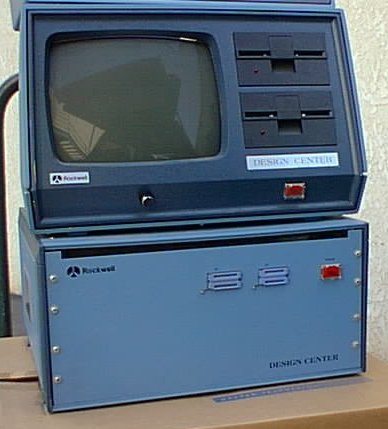
> On September 29, Doug Salot wrote:
> > This weekend only in Orange County, CA:
> > AIM65
> > Dynabyte S-100
> > Rockwell Design Center
> > http://www.blinkenlights.com/classiccmp/aim65/design3.jpg
> > maybe some other stuff
> >
> > Preference goes to somebody who offers to haul it all away by noon Sunday.
> > Contact me by email for more info.
>
> Oh, how I'd love to get my grubby paws on that Dynabyte. :-|
I'd love to get the AIM65, but I'm not in Orange Counter. :-(
--
Eric Dittman
dittman(a)dittman.net
Check out the DEC Ethusiasts Club at http://www.dittman.net/
OK, I managed to dig out a VT100 out of storage. Of course the first path
I burrowed all the way back led to a VT103, so I had to dig an even more
difficult path.
Anyway, I've got it hooked up to the Intel 810e board I'm using for my
Desktop PDP-10 project. I've got Linux set so I can log in and do stuff.
The terminal seems happiest working at 9600. Under TOPS-10 V7.03 I can do
a DIR in a small directory and everything is fine, but if I run it in a big
directory such as SYS:, then I get slightly garbled data. Same thing if I
run a SYSTAT, it's garbled, especially the last part.
I'm not up on Serial stuff and I've seen simular results hooking up one of
my VT420's to Sun Sparc. Is the problem my cabling, or what? At the
moment I'm using what looks to be a LapLink cable (or the equivalent). For
the finished project I plan to build a custom cable.
Zane
--
| Zane H. Healy | UNIX Systems Administrator |
| healyzh(a)aracnet.com (primary) | OpenVMS Enthusiast |
| | Classic Computer Collector |
+----------------------------------+----------------------------+
| Empire of the Petal Throne and Traveller Role Playing, |
| PDP-10 Emulation and Zane's Computer Museum. |
| http://www.aracnet.com/~healyzh/ |
Simple, DEC terminals like to use Xon/Xoff flow control protocal
and will run ok without it if the baud rate is low enough.
You have two choices either hardware flowcontrol, or enable
and use xon/xoff. I'd suggest the latter as it's the common way
for DEC systems.
Allison
-----Original Message-----
From: Zane H. Healy <healyzh(a)aracnet.com>
To: classiccmp(a)classiccmp.org <classiccmp(a)classiccmp.org>
Date: Sunday, September 30, 2001 2:22 PM
Subject: Attaching a VT100 to a PC....
>OK, I managed to dig out a VT100 out of storage. Of course the first
path
>I burrowed all the way back led to a VT103, so I had to dig an even more
>difficult path.
>
>Anyway, I've got it hooked up to the Intel 810e board I'm using for my
>Desktop PDP-10 project. I've got Linux set so I can log in and do
stuff.
>The terminal seems happiest working at 9600. Under TOPS-10 V7.03 I can
do
>a DIR in a small directory and everything is fine, but if I run it in a
big
>directory such as SYS:, then I get slightly garbled data. Same thing if
I
>run a SYSTAT, it's garbled, especially the last part.
>
>I'm not up on Serial stuff and I've seen simular results hooking up one
of
>my VT420's to Sun Sparc. Is the problem my cabling, or what? At the
>moment I'm using what looks to be a LapLink cable (or the equivalent).
For
>the finished project I plan to build a custom cable.
>
> Zane
>--
>| Zane H. Healy | UNIX Systems Administrator |
>| healyzh(a)aracnet.com (primary) | OpenVMS Enthusiast |
>| | Classic Computer Collector |
>+----------------------------------+----------------------------+
>| Empire of the Petal Throne and Traveller Role Playing, |
>| PDP-10 Emulation and Zane's Computer Museum. |
>| http://www.aracnet.com/~healyzh/ |
On Sep 30, 10:46, Zane H. Healy wrote:
> Anyway, I've got it hooked up to the Intel 810e board I'm using for my
> Desktop PDP-10 project. I've got Linux set so I can log in and do stuff.
> The terminal seems happiest working at 9600. Under TOPS-10 V7.03 I can
do
> a DIR in a small directory and everything is fine, but if I run it in a
big
> directory such as SYS:, then I get slightly garbled data. Same thing if
I
> run a SYSTAT, it's garbled, especially the last part.
Sounds like handshaking, or rather, lack of it. I'd guess the terminal can
keep up for a while, but there comes a point where it has to scroll or
something, it sets the handshake to tell the other end to wait a moment,
but the other end doesn't, and a character or a few get dropped or garbled
while the terminal does its housekeeping. Have you got the same kind of
handshaking set up at both ends (ie both software XON/XOFF, or both CTS/RTS
or both DTR/DSR)? Usually VTs want to use XON/XOFF.
--
Pete Peter Turnbull
Network Manager
University of York
Since this is about 8080/8080A the answer is fairly complex and simple
at the same time.
The 8080A had improved drive (not that much better) and improved interupt
to hold
timing. There were a few other minor differences of no real consequence.
The 8080
was a bear with regard to DMA (hold/) and the 8080A was slightly better.
Neither
were that much fun to work with. For non-DMA designs the difference is
insignificant.
Both worked fine wtih Standard TTL _IF_ you followed fanout rules and
buffered things correctly.
Allison
-----Original Message-----
From: Russ Blakeman <rhblakeman(a)kih.net>
To: classiccmp(a)classiccmp.org <classiccmp(a)classiccmp.org>
Date: Sunday, September 30, 2001 2:04 PM
Subject: RE: 8080 vs. 8080A
>Hadn't heard anything of an 8088/86 series bug but I know there's a 32
bit
>applications lockup problem in some 386DX-16's and the well known
floating
>point math problem in the original Pentium series.
> -----Original Message-----
> From: owner-classiccmp(a)classiccmp.org
>[mailto:owner-classiccmp@classiccmp.org]On Behalf Of John Galt
> Sent: Sunday, September 30, 2001 11:18 AM
> To: classiccmp(a)classiccmp.org
> Subject: 8080 vs. 8080A
>
>
> Can anyone here describe the technical differences between
> an Intel 8080 and Intel 8080A CPU?
>
> The ONLY ref. I have been able to find seems to indicate that there
was a
>bug in the 8080 and as a result it would only work with low power TTL?
>
> The problem was fixed in the 8080A and it would work with
> standard TTL?
>
> Does this make sense to anyone?
>
> Could anyone put this into laymans terms for me?
>
> Thanks,
>
> George Phillips - gmphillips(a)earthlink.net
>
After a few years of searching, I finally have a Wang 2200 computer (2200-T
style CPU, to be exact). Parts of it have been arriving from Dallas for
the past four months. The last piece arrived yesterday, the 2226
keyboard/monitor. Yeah!
Unfortunately, the monitor just doesn't sync at all. Not having worked a
whole lot with video, I was hoping someone could steer me in the right
direction. I'll explain what I know so far.
First, this monitor, cable, and CPU were all part of a set -- I'm not
mixing and matching. Supposedly the video was fine when it left Dallas a
week or two ago.
The video goes from the CPU to the monitor over a single coax and has
composite sync. Video is baseband monochrome.
There are a couple hidden pots that can be twiddled, and I have, but the
best I can do is get it to a slow roll/tear. It is an impossible task as
just thermal drift causes the screen to wander. Neither vsync nor hsync
appears to work at all. At first I thought I just would have to tweak the
H & V pots into the lock range of the PLL that controls the sync but there
appears to be no locking zone.
I got a standard monitor that I use with my Sol and hooked it up. The
screen rolled wildly. By adjusting the H & V controls on that monitor, I
could get it to sync both axes, but the video was not readable -- it was
locking to some multiple/submultiple so the image was stable but not
coherent. Thus it seems to rule out the unlikely case that the original
monitor is OK and the video card is putting out signal but no sync.
So then I broke out my crappy scope that I picked up a hamfest, but which
is good enough for this job. I measured some timings. Interestingly, the
scope has TV V sync and TV H sync trigger modes; both worked properly to
lock the signal. Thus the timing is close enough to normal video for the
scope to think it was OK.
Timings below are as good as I can measure with this scope; 5% error
wouldn't be unlikely. I've put in square brackets the figure for normal US
television timing (from a web page that I just looked up)
vertical period: ~16.8 ms/frame [ 1/60 = 16.67 ]
v blanking: 4 scan lines
v front porch: 17 scan lines
v back porch: couldn't trigger it in a way to count them
v active: there are 24 rows of text, each on 11 scan lines, or 264 scans, =
15.3 ms
horizontal period: 58 us [63.5]
h sync: 2 us [4.7]
h front porch: 7 us [4.7]
h video: 47 us [52.6]
h back porch: 3.5 us [1.5]
dc level: 0.7v
sync: 0v
video white; 1.4 v
[ignore the voltages somewhat -- I was measuring them using a
high-impedance scope probe and a properly terminated coax would probably
lower those figures]
So here are my specific questions; if you have any thoughts and have read
this far, don't limit your responses to these questions, though.
1) Doesn't is seem odd that neither H nor V sync lock? What would cause
both to go out at the same time during shipment?
2) Doesn't it seem odd that the timing is pretty close to nominal but
my 2nd monitor can lock but not get a proper picture?
3) Any thoughts about what I should try next?
I have no schematics or technical docs for any of this.
Thanks for any ideas, even crackpot ones.
-----
Jim Battle == frustum(a)pacbell.net
On September 30, Absurdly Obtuse wrote:
> it wouldn't surprise me if there were some people who just copied IBM
> BIOS, but slipped through the cracks of the IBM copyright enforcement
> patrol.
Indeed, I did exactly this with my first XT clone, built from a kit
with a bare PCB...
-Dave
--
Dave McGuire
Laurel, MD
On September 30, Jeffrey S. Sharp wrote:
> Now what's disturbing is that the same wrong ideas that I was taught were
> taught to an entire roomful of college students a few years ago, by a
> professor in the School of Electrical and Computer Engineering.
Those who can, do...
-Dave
--
Dave McGuire
Laurel, MD
I happened upon an older message/discussion about the PolyMorphic systems.
I have a lot of that stuff - including many of the user's groups
newsletters/original software/manuals, etc. I built mine in 1975 or 1976.
It still works but I never used the original toaster case. You indicated
that you could use some of the source code. Seems to me that I have some of
that in machine/assy language.
If you'd like to chat - e-mail me.
Don haywood
Hi,
I have a Dawn VME 3 to 2 Adapter version 5 (Model: SUN9U400/6U-4) that I
no longer want. As a bonus you get the Imaging Technology Inc. card in it
too. There are no model numbers on this card but I am guessing it is some
sort of frame grabber.
--
Kevan
Collector of old computers: http://www.heydon.org/kevan/collection/
I found an IBM 5150 at a thrift store the other day. I don't usually pay
much attention to PeeCee's, but the price of this one was about right--
$3.50 complete with dual floppies and monochrome monitor.
I don't have any boot disks for PC's this old. When I initially turned it
on, it would start up BASIC, which apparently is in ROM on these machines.
Lately, it hangs on a rapidly flashing left cursor, sometimes moving to a
rapidly flashing cursor at the top middle of the monitor.
Questions:
Anybody know what causes this? Power supply? Video card? Loose chip?
What's the deal with the BASIC in ROM on these machines? Any other early
PeeCee's have this feature?
Thanks!
Don McClure
Bel Air, MD
Yes, I'm actually going to ask a question about two's complement
arithmetic! I feel quite stupid for mailing this, but I just can't figure
it out. And believe it or not, it really does have something to do with
classic computing. All right, here goes...
While I was in class Thursday, I got bored and decided to pass the time by
verifying that A-B=A+(-B) in two's complement binary arithmetic, using an
imaginary machine with a word size of 2 bits. I created the following
table:
Subtraction Equivalent Addition
AA-BB=CC CZSV AA+BB=CC CZSV
01 01 00 .x.. 01 11 00 xx..
01 00 01 .... 01 00 01 ....
01 11 10 x.xx 01 01 10 ..xx
01 10 11 x.xx 01 10 11 ..x.
00 01 11 x.x. 00 11 11 ..x.
00 00 00 .x.. 00 00 00 .x..
00 11 01 x... 00 01 01 ....
00 10 10 x.xx 00 10 10 ..x.
11 01 10 ..x. 11 11 10 x.x.
11 00 11 ..x. 11 00 11 ..x.
11 11 00 .x.. 11 01 00 xx..
11 10 01 .... 11 10 01 x..x
10 01 01 ...x 10 11 01 x..x
10 00 10 ..x. 10 00 10 ..x.
10 11 11 x.x. 10 01 11 ..x.
10 10 00 .x.. 10 10 00 xx.x
The left half iterates through all possible subtractions, which were each
performed by hand by binary subtraction. The results and the states of
the machine's flags (Carry/borrow, Zero, Sign, oVerflow), are shown.
The right half contains the same subtractions, this time done by adding by
hand the minuend and the two's complement of the subtrahend.
Note that the C and V flags behave differently in each half. This is very
disturbing, since I'm fairly certain that subtraction is implemented in
many processors as adding a negated subtrahend (ergo, I should see no
difference in the flags). What have I done wrong in my table?
--
Jeffrey S. Sharp
jss(a)subatomix.com
"Iggy Drougge" wrote:
> I'm sory, but the URL goes to a "restricted area".
You just need to copy and paste the rest of the link:
os&.dnm=Niniendo.jpg&.src=ph
> Nintendo produced a disk drive for the Famicom/NES
These are the only disk drives I have that are battery
powered - 6 "C" cells each.
--Doug
=========================================
Doug Coward
@ home in Poulsbo, WA
Analog Computer Online Museum and History Center
http://www.best.com/~dcoward/analog
=========================================
On September 29, Doug Salot wrote:
> This weekend only in Orange County, CA:
> AIM65
> Dynabyte S-100
> Rockwell Design Center
> http://www.blinkenlights.com/classiccmp/aim65/design3.jpg
> maybe some other stuff
>
> Preference goes to somebody who offers to haul it all away by noon Sunday.
> Contact me by email for more info.
Oh, how I'd love to get my grubby paws on that Dynabyte. :-|
-Dave
--
Dave McGuire
Laurel, MD
On September 29, Mike Ford wrote:
> Peripheral Technology PT68K-2 from Computer Digest 1987 articles.
> This is a single board computer that fits in a XT case, but has a 10 mhz
> 68000 processor, 32 memory chips (HY53C256LS-80), floppy drive connector on
> ribbon cable, header marked winchester, etc. In the orignal box with
> manuals (board, humbug monitor, and dos), and floppies for SK DOS (Star K
> software with the HUMBUG rom on board), plus about a dozen misc 5.25"
> floppies and a comm program on 3.5" floppy. Looks like all the construction
> articles (cut) from Computer Digest 1987 by Peter Stark (ie Star K
> software), 1 issue of 68 Micro Journal, and a couple other 68k newsletters.
> Apparently this is designed towork in a XT case with XT monitor and
> keyboard. Without sounding too ebayish, this is a one of a kind very
> complete example of early computing.
Oh wow...THAT is COOL. :-)
-Dave
--
Dave McGuire
Laurel, MD
At 09:21 AM 9/29/01 -0500, Paul Thompson wrote:
>Recent versions of AIX will run, with 64MB and a compatible (or
>non-existent) framebuffer.
uh oh. The machine has 16MB; if I completely replace the SIMMs
with the ones I have (assuming they fit this beast) then it will
have 32MB.
>> 2) What exactly is this "ethernet riser card"? Do I have
>> a network-less system?
>There's probably an ethernet chip on the main board which just needs the
>AUI/BNC logic on the riser card added to work. You should be able to get
>a Microchannel enet card for cheap watching on ebay if you can't find the
>riser.
Hans pointed out that not just any MCA card will do; it has to be
specifically for RS6k.
>The IBM sales manual might help, plug in the part numbers for your
>machines:
>http://www2.ibmlink.ibm.com/cgi-bin/master?xh=jN7O$Vn32jOgss0USenGnN9332&re
quest=usa.salesmanual&parms=&xhi=usa%2emain&xfr=N
Thanks!
carlos.
--------------------------------------------------------------
Carlos E. Murillo-Sanchez carlos_murillo(a)nospammers.ieee.org
Here's something I go some time ago (years ago, probably 1988) that I have
absolutely NO use for an the recent talk about calcs has me wondering if
anyone might want to add this to their collection, or has an actual use for
it. It's a Radio Shack EC-4075 "Programmer's Hex and Time Calculator",
catalog number 65-990. It's in good clean shape but no docs, box or
anything else. It's fully finctional too - has batteries (2xAA) in it and
showing the date and time right now. It's just excess and it's bound to get
damaged around here or set in a drawer where the batteries will undoubtedly
leak and ruin it. Size is 3" wide, 5" long and 1" at the thickest point.
Make me an offer. It will ship without the batteries though to save weight
and prevent damage. Weight is probably a pound packed and would be shipped
in bubble wrap in a sturdy box. Not sure if it would be cost effective to
ship overseas but the US and Canada are alright for sure.
Be reasonable on offers, $1 is not reasonable. My wife bought this for me
back then and while I forget what it cost then I know it wasn't a $5 item.
Contact me direct if interested at rhblakeman(a)kih.net
Hi,
I am still looking for the Digital Alpha 233 MHz 21066A CPU. I am
interested
in buying it or swapping it for the following Alpha hardware:
2x Digital Alpha 166 MHz 21066 CPU
1x Digital Alpha 233 MHz 21064BB CPU
1x Digital Alpha 266 MHz 21164AA CPU
1x Digital PBXGA video card
1x Digital PBXGB video card
Best Regards,
Jacek Artymiak
--
Zagraj z finalistkami
Miss Polonia [ http://miss.onet.pl/start.html ]
Due to the events of last week, and inclement weather, the CFCJF has been
rescheduled for Sun. Sept. 30th, 9 AM. If you have any questions or need
directions please contact me off-list.
See ya there!
Glen
0/0