In a message dated 08/19/1999 12:48:10 AM Eastern Daylight Time,
cmcmanis(a)mcmanis.com writes:
> Our wholesaler sells cases with (crap) 250 watt power
> >supplies for US$20, 250 watt (crap) power supplies by themselves for $19,
> and
> >(crap) replacement fans for $15.
>
> I believe the technical term for this would be crapitalism.
Thanks for the wonderful term. I'm hereby stealing it, er, adding it to my
vocabulary.
> >Can anyone provide a clue as to why this is so? Basic economics suggests
> >that it costs a *lot* more to produce a case w/psu than a psu alone --
> >likewise for the psu vs. the fan . . .
>
> People who try to sell good fans have to charge $35 - $40 for them. You and
> I might say, "Gee, that's a damn nice fan, here's your $35." but 90% of the
> people walk in and say "Hey man! Why are you tryin to rip me off with this
> fan price, I can buy a whole case including a fan for that price!" To which
> your only response, "Go buy it then and get out of my shop!" Guess what.
> You won't sell enough to stay in business. Its called crapitalism.
We sell cheap stuff for the chintzers and high quality items for our more
discriminating customers. When someone assumes that we are a rip-off outfit
because we sell some expensive (translate: high-quality) items I have no
problem telling them to go to Circuit City. But it's still frustrating
trying to convince some knucklehead that the higher quality component will
probably last longer than *they* will . . .
> The weird thing is that sometimes good stuff comes through the pipe. Fry's
> had an $18/case deal that turned out to have a really nice PSU and case
> inside. Didn't last though :-(.
Yeah, we get lucky once in a while, too . . .
Glen Goodwin
0/0
If that sticks in your craw, go back and read my original statement. It's a
fact that the fan alone costs $15 more than the case with the PSU with the
fan in it. What's more, it appears nobody carries the fans as a stock item.
Dick
-----Original Message-----
From: Glenatacme(a)aol.com <Glenatacme(a)aol.com>
To: Discussion re-collecting of classic computers
<classiccmp(a)u.washington.edu>
Date: Wednesday, August 18, 1999 10:31 PM
Subject: Re: imsai 2
>In a message dated 08/18/1999 10:20:05 PM Eastern Daylight Time,
>edick(a)idcomm.com writes:
>
>> The unfortunate fact, Tony, is that here in the U.S, because people are
>> accustomed to paying <$25 for a case with power supply (250 Watts is the
>> rating) including shipping, it's hard to get vendors to stock
replacement
>> fans of any sort, let alone good and quiet ones.
>
>Man, that's a fact. Our wholesaler sells cases with (crap) 250 watt power
>supplies for US$20, 250 watt (crap) power supplies by themselves for $19,
and
>(crap) replacement fans for $15.
>
>Can anyone provide a clue as to why this is so? Basic economics suggests
>that it costs a *lot* more to produce a case w/psu than a psu alone --
>likewise for the psu vs. the fan . . .
>
>Glen Goodwin
>0/0
On Tue, 3 Aug 1999, Jay West wrote:
>One major problem with my 2100A has been solved (sort of). I had a card that
>wouldn't work properly in a particular slot, finally got the bright idea to
>move it to a different slot (I'm using polled mode, not interrupt, so this
>is possible). The card works great. Problem solved? No.....
>
>In the troubleshooting process I noticed a few slots that no cards would
>quite work right in. I checked the back of the backplane (it is a hand-wired
>backplane), no loose wires, etc. After very close inspection of the
>backplane slots, I determined the problem is the contacts are
>dirty/corroded/whatever. I tried the best I could to clean the contacts
>inside the slot, but this is virtually impossible. I also cleaned the card
>edge with an eraser just to be sure. Bingo - card now works fine but only in
>the cleaned slot (or one that worked previously).
>
>So, given that it's a delicate hand-wired backplane, does anyone have any
>magic tricks for how to clean the gold contacts inside of the backplane edge
>card connectors? I'm afraid to experiment and looking for wisdom... :)
>
>Thanks!
>
>Jay West
Using an eraser is a no-no.
See http://www.spiritone.com/~nabil/pdp8/tools.html (Tools for old computers)
for a discussion of DeoxIT and PPE (polyphenyl ether). I have some more
material on PPE from the manufacturer that will be added soon.
If it's just dirty, something like Blue Shower/Tuner-wash followed by a
PPE spray might do the trick. Look at the connectors in an unused
socket, if you can see what look likes corrosion (green corrosion, purhaps)
in little spots (sometime slightly raised), the connectors are hopelessly
destroyed, it'll never be reliable again. That sort of electrolytic
corrosion damage is very common (it's caused by microscopic defects in the
plating (or people using erasers) and the metals migrating around), and short
of replacing them, un-repairable.
--
Aaron Nabil
Okay, I got the thing up to a lighted room, cleaned it up, and I'm going
about checking it over. So far, I've determined the following:
The computer itself is a 16-bit discrete-logic machine, with scattered ICs.
It spans about 7 or 8 boards for the CPU itself, and about 16 or 17 for
64K or so of RAM. Dunno what it runs, as I can't power it on yet, but
it boots from a magnetic tape cartridge. (I think it's a QIC-02 cartirige,
aren't those the ones about 1/2" thick, 5-6" wide, and about 3" long?)
Anyway, I haven't found a TTY connection yet, but I did find a Bell
answer-only modem inside the rack (In fact, it had broken free of it's mounting
and was bouncing around inside the rack) so it does have one somewhere.
The main problem at the moment is the AC input box appears to be dead.
No output when power is applied. I'm getting a second person to watch me
open it tonight, that way if I do something stupid and nail myself, there's
a second person to run for help. Replacing the AC box with a power
strip won't help either, it appears to generate all the miscellaneous
AC voltages required. If I get ambitious, I may be able to replace it,
but I don't wanna unless I have to.
More as I find it out...
-------
Well . . . there's a new take! an appropriate observation, too. I like the
boards which require you to move a jumper to the "flash-enable" position
before you can roach up the BIOS on your SCSI card.
Of the half-dozen or so times I've upgraded firmware in situ, I've only
left it that way once, having to return to the previous version because the
board in question didn't like the "upgrade" very well.
Dick
-----Original Message-----
From: jeff.kaneko(a)juno.com <jeff.kaneko(a)juno.com>
To: Discussion re-collecting of classic computers
<classiccmp(a)u.washington.edu>
Date: Wednesday, August 18, 1999 8:11 PM
Subject: Re: Article on old software programs (for IBM, Apple, Borland, etc)
>
>
>On Wed, 18 Aug 1999 19:48:53 -0600 "Richard Erlacher" <edick(a)idcomm.com>
>writes:
>>You can't always unplug it. Nowadays, the PROMs are soldered in and
>>you
>>reprogram them in situ.
>>
>>How does that effect your definitions?
>
>
>Stupidware, n: Data entities that can be deleted by software, which,
>when so deleted require de-soldering of one or more parts in order
>for them to be restored. <'Modern PeeCee's are generally now equipped
>with *stupidware*, as a cost saving measure.'>
>
>
>Slushware, n: The silly practice of de-compressing firmware, and
>placing it in RAM, usually in a very vulnerable area of the address
>space. <"When changed the address of the BIOS on my SCSI card, the
>the boot message said that I had 'corrupt *slushware*'.>
>
>
>
>>
>>Dick
>>-----Original Message-----
>>From: Dwight Elvey <elvey(a)hal.com>
>>To: Discussion re-collecting of classic computers
>><classiccmp(a)u.washington.edu>
>>Date: Wednesday, August 18, 1999 1:16 PM
>>Subject: RE: Article on old software programs (for IBM, Apple,
>>Borland, etc)
>>
>>
>>>"Charles P. Hobbs" <transit(a)primenet.com> wrote:
>>>>
>>>> > If you said that that computer had "hardware software" I would
>>have
>>>> > to kill you ;-)
>>>>
>>>> Firmware?
>>>>
>>>>
>>>
>>>Definitely firmware. You can grab it and remove it. It is
>>>plugged in.
>>>Dwight
>>>
>>
>
>___________________________________________________________________
>Get the Internet just the way you want it.
>Free software, free e-mail, and free Internet access for a month!
>Try Juno Web: http://dl.www.juno.com/dynoget/tagj.
CXA16 16 line Mux
Dan
-----Original Message-----
From: Chuck McManis <cmcmanis(a)mcmanis.com>
To: Discussion re-collecting of classic computers <classiccmp(a)u.washington.edu>
Date: Wednesday, August 18, 1999 8:34 PM
Subject: id this board? M3118-YA
The PMAX system has a board in it called a M3118-YA with two centronics
like (but smaller) connectors. Anyone know what it is?
--Chuck
On Wed, 18 Aug 1999 19:48:53 -0600 "Richard Erlacher" <edick(a)idcomm.com>
writes:
>You can't always unplug it. Nowadays, the PROMs are soldered in and
>you
>reprogram them in situ.
>
>How does that effect your definitions?
Stupidware, n: Data entities that can be deleted by software, which,
when so deleted require de-soldering of one or more parts in order
for them to be restored. <'Modern PeeCee's are generally now equipped
with *stupidware*, as a cost saving measure.'>
Slushware, n: The silly practice of de-compressing firmware, and
placing it in RAM, usually in a very vulnerable area of the address
space. <"When changed the address of the BIOS on my SCSI card, the
the boot message said that I had 'corrupt *slushware*'.>
>
>Dick
>-----Original Message-----
>From: Dwight Elvey <elvey(a)hal.com>
>To: Discussion re-collecting of classic computers
><classiccmp(a)u.washington.edu>
>Date: Wednesday, August 18, 1999 1:16 PM
>Subject: RE: Article on old software programs (for IBM, Apple,
>Borland, etc)
>
>
>>"Charles P. Hobbs" <transit(a)primenet.com> wrote:
>>>
>>> > If you said that that computer had "hardware software" I would
>have
>>> > to kill you ;-)
>>>
>>> Firmware?
>>>
>>>
>>
>>Definitely firmware. You can grab it and remove it. It is
>>plugged in.
>>Dwight
>>
>
___________________________________________________________________
Get the Internet just the way you want it.
Free software, free e-mail, and free Internet access for a month!
Try Juno Web: http://dl.www.juno.com/dynoget/tagj.
Guys:
I found the following DC-600's at a local junk dealer:
DYNIX SVAE 3.1.0 Balance
DYNIX Maint. Delta 3.0.19/3.14
DYNIX Encryption 3.1.0 Balance
DYNIX OS Delta 3.0.14 to 3.1.10
DYNIX BASE OS 3.1.0
If these are of possible value to anyone, please
respond via private E-Mail.
Jeff
___________________________________________________________________
Get the Internet just the way you want it.
Free software, free e-mail, and free Internet access for a month!
Try Juno Web: http://dl.www.juno.com/dynoget/tagj.
I just picked up two DecSystem 5500's (and about 500 TK70 tapes :-) in
BA213 cabinets. I _thought_ they were Vax 3500s but no, they have KN220
CPUs. Apparently Ultrix is loaded on them (haven't powered them up yet).
So what are they? (SPIM machines? (aka PMAX'es)) They have had some parts
"borrowed" but between the two of them I think I've got one complete system.
--Chuck
>>> "Paul Passmore" <fpp(a)concentric.net> 08/18 4:52 PM >>>
>Ok, heard back from my friend Bob the Epson man. he says"Epson never said
>that they made the first laptop computer. Epson said they made the first
>NOTEBOOK computer. This may seem to be a Marketing word game, but I feel
>that given that the computer was the first
>portable computer about the size of a notebook, their statement is true and
>is one of the few things they told us that was true. "
Must be true because you can easily fit, for example, an HP-85 in your lap (although it's a bit hard to see the screen).
Ok, heard back from my friend Bob the Epson man. he says"Epson never said
that they made the first laptop computer. Epson said they made the first
NOTEBOOK computer. This may seem to be a Marketing word game, but I feel
that given that the computer was the first
portable computer about the size of a notebook, their statement is true and
is one of the few things they told us that was true. "
<transformer/rectifiers. So if you're going to have on-board linear
<regulators anyway, there's little to be gained in efficiency by using an
<SMPSU rather than a simple transformer/rectifier/cap supply. And the
<latter is a lot simpler.
Actually that's not true. having done it using DEC H74x power bricks
on one system to regulate the +9.4V(@18A load) to 14V(unloaded) to +8.
The reduction in onboard regulator heating was enough to make me
investigate a simpler way. I ended up using SCRs and much cruder regulator
(still switchmode) to narrow the wild swing to 8.5 to 9.3V over a 1-18A
load swing.
<I agree that if you were going to make a 8080/Z80 machine _now_ you'd not
<copy the Altair or the Imsai. And you'd not use the S100 bus, most
<likely. But that's not what they're trying to do here.
Actually My comments were narrowly aimed. the IMSAI was a far better
example of S100 and worth copying. Only ONE change I'd do... NO MAINS
POWER ON THE FP! Back when I'd seen one altair and a IMSAI fried by
someone comming in contact with that. It had no business there.
<Oh come on. If you can't design a linear PSU, you probably can't design
<the rest of the computer... And you test on dummy load (for considerable
<periods).
Linear is much easier than switchmode. Especially HV switch mode!
<In any case, in an S100 system, the regulators are on the cards. If you
<get the raw supplies slightly too high you're not going to damage
<anything. And of course you test them before inserting any cards.
True, but a common problem in S100 is excess heat, removing it and hte
regulators if over dissapating shutting down (undesired due to when they
might!). Simple switch mode and CVTs were a good solution as the
regulation reqirements of 10-15% were acceptable for bus raw power. The
solution used by some and I hold the TI peripheral bus (also used local on
card regulation) was to use higher voltages, smaller caps to beat the
effects of ripple. Again another bix that really needs the PS tamed down.
Allison
>>> Tony Duell <ard(a)p850ug1.demon.co.uk> 08/18 10:57 AM >>>
>> Yes. I have four original IBM 5100 data tapes (1 diagnostic and 3 BASIC
>> Aided Instruction) all of which have broken belts. Age has taken its
>> toll. I do have numerous other tapes, although only a few blank IBM's.
>> The problem doesn't appear to affect the Scotch tapes, which is what I
>> have most of.
>In my (limited) experience you can't interchange parts (belts, idlers,
>etc) between different makes of cartridge. So I guess you're going to
>have to take some of the good IBM ones apart to repair the defective ones.
>You could try using parts of the 3M tapes, but I doubt if they will work.
The winding pattern is the same, but the belts are a different color. On the IBMs
they are an off-white. On the Scotch they are brown. I also have several 3Ms where
they are closer to black. With so many broken IBM belts I am reluctant to swap out
what are likely to ultimately be more broken belts.
!
!
!
A few weeks back someone on the list posted that they knew where some
equipment was that was scheduled to be pitched.
In addition to other gear, one of the items was an HP1000 system. I had
expressed interest in the system, but have not heard anything for a while; I
also can't find the email address of who it was.
If you're on the list, please email me privately to discuss.
Regards!
Jay West
>>> Christian Fandt <cfandt(a)netsync.net> 08/18 5:37 AM >>>
>>Yes. I have four original IBM 5100 data tapes (1 diagnostic and 3 BASIC
>>Aided Instruction) all of which have broken belts. Age has taken its toll.
>Oooh, ouch! Bet those tapes are hard to find (!). Definitely worth trying
>to fix at least the diag tape.
I have an extra diag. tape, but I haven't run it in a while. The first thing I'll do is copy it.
>Hmmm, wonder if it would be practical to take a very good condition 3M
>cart, dismantle it to bits and take the media from the defective IBM cart
>and install it into the 3M cart. Of course, the spools will be different so
>the media would have to be unwound from the old and wound onto the new. It
>would take a _long_ period of time and a whole heap o' patience to do this
>but it's a thought that came to mind. (I'm figuring the mechanical diffs
>between the two sets of small parts would not allow simply installing a 3M
>belt into the IBM cart.)
I think I'd have to take the belt off to do this in any case, so it probably makes more sense just to replace the belt.
Thanks, Wayne.
!
!
!
Just to add grist for the mill, I'd point out that people now are, perhaps
erroneously, calling recorded program material for your stereo and your TV
'software' as well. Now, I would call a CD or a CDROM firmware, since you
can't really change it, but who's splitting hairs . . .
Years ago, people predicted that it would become increasingly difficult to
distinguish hardware from software, though I doubt that. After all, if you
can see it or touch it, it's hardware, right?
Now we have software for building hardware. Not just the HDL's of various
sorts, but one can actually realize a series of 'C' statements via VHDL or
Verilog, among others, I'm sure, in a hardware (?) implementation.
If we call the content of ROM and PROM devices firmware, it's reasonable to
call the content of PAL and CPLD devices firmware as well, isn't it?
What about the content of those volatile FPGA devices? They're not like
PROMs, in that they forget what they learned last time power was on. They
can be changed pretty readily. Some are even capable of running (yecchh!)
self-modifying code <shudder> internally.
What do we call all this "stuff" now?
Dick
-----Original Message-----
From: John Ruschmeyer <jruschme(a)hiway1.exit109.com>
To: Discussion re-collecting of classic computers
<classiccmp(a)u.washington.edu>
Date: Wednesday, August 18, 1999 12:34 PM
Subject: Re: Article on old software programs (for IBM, Apple, Borland, etc)
>> > Bill, would you not call this an example of a hardware program?
>>
>> "Software" implies "program". "Software" by itself is sufficient.
>> "Computer program" to differentiate from say "television program"
>> I can accept because "program" by itself is ambiguous. I can accept
>> "hardware program" as well, although I would say "programmed in
hardware".
>> If you said that that computer had "hardware software" I would have
>> to kill you ;-)
>
>I'm not sure you can really say that "computer program" is any less
>ambiguous than "television program", at least when taken with no
>context.
>
>For example, Bill asks his friend, "Have you seen the new computer
program?"
>
>Is he referring to:
>
> a. Front Page 2000 (a software application)
> b. "The Computer Chronicles" (a television program about
> computers)
> c. A new political initiative aimed at puttimg more computers
> in schools.
>
>Gotta love English...
>
><<<John>>>
This SHOULD be on-topic, it DOES have a computer in it...
Remember that Bell box I mentioned awhile ago? It turns out it's a Bell
Dimension 400 PBX, and it's now mine. I got the console and boot tapes,
and a mess of documentation. Some of it was inside the box, which wasn't
too heavy (I was able to move it around (Up 5 floors! Cargo elevators are
a good thing!) by myself, it's on casters.) The only bad things so far is
the general state of disrepair of the unit - Some of the cards inside
were dismounted, the modem inside had broken free and was boucing around,
Also, the ceiling above it was crumbling, and so there's a bunch of white
powder all over the top. From looking inside the front door though, it doesn't
appear to have gotten inside. Oh, and the power plug is that odd round
thing on PDP-11 power supplies, so I'll have to open it up and replace that.
That shouldn't be TOO hard, unless I do something silly again, I really don't
like playing around where line current is involved...
So anyway, the usual 30 questions bit:
1. So, what can I do with this besides take up space?
Can I plug this into the phone network? I plan on toting it to work
and putting it to use there, where a PBX is desperately needed...
Otherwise, I guess I could run it non-connected, but it'd be a waste.
2. Is this hard to program? I haven't had time to read thru all the
manuals yet. I got 7 different manuals:
A. Dimension 400 PBX task lists and index
B. How to operate the Dimension attendant console (etc.)
C. A small flip-type card listing all the feature codes...
D. Dimension 400 PBX detailed level procedures. (500-659)
E. Dimension 400 PBX detailed level procedures. (660-793)
F. Customer order document. (I dunno what this is...)
G. Schematic Drawings. (Don't worry, it's only block diagrams
and general stuff, nothing really specific that I can see.)
3. Can I plug normal phones into this, or does it need special phones?
I guess that's it. I'll learn a little more about it tomorrow when I fire
it up...
-------
I have been over the numerous PDF files on the Teac web site. The *-101
drive is not listed. It has a row of jumpers near the power connector with
some recognizable names (D0, D1, FG, H-HI...) and at least one with a mysterous
name (OP). The problem that I am having is that I have this flat-panel PC
with an external DB-25 for an external floppy. I have traced out individual
pins from an internal 34-pin header to the DB-25, but have come up with several
that don't connect...
34-pin: 2, 4, 6, 12, 16
AFAIK, pin 16 on a standard floppy is the MOTOR ON signal. The behavior is
this: the drive seeks on boot, the disk auto-rotates on insertion and when
it gets to the part of the initialization where the floppy is read, the LED
lights up, the heads twitch, but the disk does not rotate.
On 5.25" drives (i.e., FD-55GFR and pals), there are straps to control when
to light the LED and when to fire up the motor. I cannot figure out if there
is a way to tell this floppy to spin based on other signals than MOTOR ON.
There are several "S*" jumper pads on the drive PCB. I did have to change
one jumper before using this drive in a standard enclosure (it came from a
four-disk floppy duplicator) in order to select it. It works find in a PeeCee
now. I'd love to know what the half-a-dozen pads are for.
Caveat: I don't mind swapping this drive out with another one, but I only
have a source of +5V, not +12V from this connector (no, the FD-235 does not
use +12V for the motor).
-ethan
===
Infinet has been sold. The domain is going away. Please
send all replies to
erd(a)iname.com
_________________________________________________________
Do You Yahoo!?
Get your free @yahoo.com address at http://mail.yahoo.com
>>> Christian Fandt <cfandt(a)netsync.net> 08/17 5:42 PM >>>
>Do I assume correctly you have an only copy of a very important OS tape or
>something just as critical you're unfortunately trying to repair?
Yes. I have four original IBM 5100 data tapes (1 diagnostic and 3 BASIC Aided Instruction) all of which have broken belts. Age has taken its toll. I do have numerous other tapes, although only a few blank IBM's. The problem doesn't appear to affect the Scotch tapes, which is what I have most of.
Thanks.
>What puzzles me is why the IMSAI folks decided to use a switching power
>supply when the box and everything else already supported the needs of the
>S-100 with the previously available and now quite inexpensive unregulated
>supplies of yesteryear.
Probably an issue of economy, using PC-clone power supplies at about
$25 each vs using a custom-wound transformer at $200 or so a pop.
> One of the main benefits of the S-100 was that it
>had on-board regulation, so that if you didn't need a given supply, you
>didn't have to bring it on board and regulate it, dissipating power as you
>went. If the new box is capable of running the original boards, it must
>provide the raw 8 and +/- 16-volt supplies. Where's the benefit in having a
>switching regulator sitting in the back of the box? I suppose it creates a
>market for a power distribution module to put +5 and +/- 12 on each board
>which needs it rather than using the on-board regulators, but that opens
>another can of worms. What's the "right" way to distribute it without
>tampering with a historically correct board?
According to what I read from the web page, there's a PC-clone switching
power supply followed by a "boost" switching circuit to get back to
+8 and +/- 16. That's not completely unreasonable, but it sounds a
little bit fishy to me in the sketchiness of the details.
Several S-100 manufacturers who were still at it in the mid-80's had
regulated +5V on the S-100 backplane. Those who wanted to use their
older S-100 cards in such a machine just jumpered across the 7805's and
viola!
--
Tim Shoppa Email: shoppa(a)trailing-edge.com
Trailing Edge Technology WWW: http://www.trailing-edge.com/
7328 Bradley Blvd Voice: 301-767-5917
Bethesda, MD, USA 20817 Fax: 301-767-5927
Assuming you've used a real wire, it certainly will keep the two points at
the same potential. I thought you meant bypassing the already installed
regulator by attaching a feed directly from the power supply, which
indicates what I was thinking rather than what I should have been. What I
was trying to envision is what kind of external booster they intend to put
on a PC PSU.
I can't imagine any worse sort of arrangement, though. By this I mean that
the one functional component which seems to fail most is the power supply.
WHile I've only had about half a dozen motherboards die over the years, I've
got a 55-gal drumful of dead power supplies, on most of which the fan is
what failed. In many cases, the fan fails and then the supply gets hot and
dies. The common PC PSU is overdesigned by a fair amount. I doubt that a
single 250-watt PSU is adequate for a typical S-100 setup. I know, that's
50 Amps on the +5! I've never seen one supply, even a 450-watt server
supply that could approach its rated loading. They're out there, I'm sure,
but I've never encountered one.
Back to IMSAI's problem . . . I can't see financial justification for
booster supplies from a PC PSU when you can buy a 450-watt open-frame
switcher and set the outputs to the required voltage and be done with it. A
day's work behind making the decision will eat up all the savings associated
with using a PC PSU.
Dick
-----Original Message-----
From: CLASSICCMP(a)trailing-edge.com <CLASSICCMP(a)trailing-edge.com>
To: Discussion re-collecting of classic computers
<classiccmp(a)u.washington.edu>
Date: Tuesday, August 17, 1999 6:46 PM
Subject: Re: imsai 2
>>I'm not sure that "jumpering across" the 7805 will be healthy for the
7805.
>>Of course, if the input doesn't drop below the output during shutdown this
>>may not be a concern.
>
>Maybe I was unclear on what I meant by "jumpering across": you put a
>wire between pin 1 and pin 3 of the regulator. With such a jumper,
>it's impossible for the input to drop below output at the regulator.
>
>Of course, you've got to remember to remove the jumper before putting
>the resulting card back into a system with unregulated power busses!
>
>Like I said, regulated S-100 power busses were done by several
manufacturers
>in the early and mid-80's with great success. It's a non-issue.
>
>--
> Tim Shoppa Email: shoppa(a)trailing-edge.com
> Trailing Edge Technology WWW: http://www.trailing-edge.com/
> 7328 Bradley Blvd Voice: 301-767-5917
> Bethesda, MD, USA 20817 Fax: 301-767-5927
<Anyway, why does it have to be one transformer? Why not a 12-0-12 for the
<16V lines and a 6V one for the 8V line (those should produce DC voltages
<within the range of any normal S100 board regulator). Such transformers
<are trivial to obtain.
Then you'd end up with the piece of crap altair supply...
<There is a myth doing the rounds that PSUs -- even simple linear PSUs --
<are impossible to design. No idea where it came from...
Because any error means all your silicon is junk. Also if you make a
small error the core you using could get quite hot. Or maybe the ripple
>from switching exceeds the reasonable level by say a volt or two. Then
there are the high current ground loops that cause instability at
something approaching max load or minimum load. The worst is when you
forget the chopper side has 300V on it, S*!^^ d@**. The number of
errors that can be made are far higher. Then again having designed a
few, once you've done it you learn... mostly everything they taught you
was far from enough. that and fixing all those that were really not so
well designed.
Allison
On Aug 17, 15:04, Don Maslin wrote:
> Subject: Re: Hacker tea (was Re: Late Nights and Caffeine)
> On Tue, 17 Aug 1999, Pete Turnbull wrote:
> > Actually, Tetley, and Taylors of Harrogate.
>
> Lovely little town - don't know about the tea. We spent a night there
> some years back and had a truly excellent dinner at the Brasserie along
> with some top notch jazz from a local group. Memorable evening.
Yes, it's a nice place. I live in York, about 25 miles away -- and Taylors
have a branch here too. They also own Betty's, which is a famous cafe.
Actually, Taylor's are better know here for coffee than tea...
If you're ever in that part of the world again, drop me line and say hello.
--
Pete Peter Turnbull
Dept. of Computer Science
University of York
On Tue, 17 Aug 1999 16:11:10 -0600 "Richard Erlacher" <edick(a)idcomm.com>
writes:
<Stuff SNIPped>
> What puzzles me is why the IMSAI folks decided to use a switching
> power supply when the box and everything else already supported the
needs
> of the S-100 with the previously available and now quite inexpensive
> unregulated supplies of yesteryear.
Well, for a given wattage, switchers are smaller, lighter, and more
economical to produce. I imagine if they resorted to the old iron-core
transformers of yore, they would have had a difficult time finding
a supplier for them.
When they did, the part would probly cost as much as the rest of the
materials put together. Makes perfect sense to me.
Jeff
___________________________________________________________________
Get the Internet just the way you want it.
Free software, free e-mail, and free Internet access for a month!
Try Juno Web: http://dl.www.juno.com/dynoget/tagj.
Thanks to someone on the list, I saw the url for the people making a "new"
imsai.
I couldn't help but wonder: Will the fact that you can buy a new one for
$995.00 finally curb the pricing on places like ebay for the vintage ones do
you think?
Jay West
<Say... trade for neat PDP-8 stuffies or similar? B^}
<
<-jim
Smoking wacky weed? I have two NS*, one Altair, a CCS, Compupro and one
of my own nightmares (split bus so there are three s100 busses that only
share power). Then there were a dozen or so Intergrand and TEI cases
I practically gave away.
Allison
Forwarded from the 'net. Replies to original poster please.
This is very cool... If I was closer, I'd grab it!
---------- Forwarded message ----------
Date: Tue, 17 Aug 1999 11:38:25 -0400
From: Rich Kulawiec <rsk(a)gsp.org>
Subject: Lear-Siegler ADM3A with Retrographics (Tek emulator) plus spare parts
I have an original relic of the computing of the late 70's and early 80's
here: it's an ADM3A (the ASCII terminal that looks like a Volkswagen
Beetle) that has had a Retrographics board dropped into it so that it
can emulate Tektronix graphics. (I've never used that functionality,
but I can provide you with the notes that were given to me on how
to make it work.) It's in the light blue/dark blue two-tone that LS
liked to make these in...it's almost indestructable...and it's
relatively heavy. I also have a box of spare parts which includes
1 or 2 extra ADM3A boards (gotta love all that TTL logic!) plus whatever
else I gutted from the extra ADM3A's that were sitting around.
It also works: I used it to boot a Sparcstation last week.
Make me an offer (and please be sure that it's enough to cover shipping
costs, or you can pick it up near Philadelphia or Baltimore) and the
entire pile o'stuff can lend an authentic air to your retro-computing
environment. My email address is below.
---Rsk
Rich Kulawiec
rsk(a)gsp.org
The thing to remember about the "good old days" of early microcomputers,
etc, is that most of the work was done by people who had the courage to do
it in spite of their complete lack of educational credentials and the
accompanying conventional prejudice. But for these courageous folks,
nothing might have been done for another decade, as the trend at the time
was to BE CONSERVATIVE.
These bold newcomers were opportunists, building S-100 because they got a
good deal on 100-pin edge connectors, for example, not because it was
necessarily the best choice from a technical standpoint. That's what
brought these machines to within the reach of the hobbyist/experimentor who
reinvented electronics engineering of the time.
The fact that the power supplies were "crap" was because they were built
with stuff the vendors believed, but only barely, would "work" though it was
bought primarily because it was "affordable." "Work" was loosely defined,
and what was an inconvenience to the folks who bought the first Altair boxes
was a costly lesson to the folks who designed the things in an essential
vacuum.
Most of the guys I knew back then to be doing the design came from Math, the
Sciences, even Industrial Arts backgrounds, and they were working from a
perception of need, not from, with their own funds or funds begged or
borrowed from people who knew no more than they about what might happen.
Dick
-----Original Message-----
From: allisonp(a)world.std.com <allisonp(a)world.std.com>
To: Discussion re-collecting of classic computers
<classiccmp(a)u.washington.edu>
Date: Wednesday, August 18, 1999 7:02 AM
Subject: Re: S100 box (was Re: imsai 2)
>> Then you'd end up with the piece of crap altair supply...
>>
>> --------------------------------------------------------------------
>>
>> <VENT WARNING - proceed at your own risk>
>>
>> Ahem... (with regard to the last line immediately above) Get Stuffed!
>
>Thanky very much and, here's your sign!
>
>Let me introduce myself...
>
>in december of 1974 I got my copy of Popular Electronics as usual and lo
>and behold there was Altair. Having some expereince with 8008 prior to
>that and PDP-8 as well I wanted one and had saved some money. Off goes
>order by then airmail! Arrived 4 weeks later (told thats a record too)
>is 200th built Altair with a 4k memory and PIO. Built with in days and
>I was for many weeks maybe months the first one I know of on LI to have a
>machine.
>
>NOW, there is NO question the PS was crap. The first transformers (two of
>them for both voltages) were horribly undersized for the load, the
>filter caps not to mention the diodes were also pretty over loaded. By
>time spring came I'd finally gotten my 88ACR and another 4k of ram and
>watche the PS fry. The transofrmer for +-16 was too light and I found a
>suitable replacement. The somewhat larger +8 core was stripped and
>rewound to provide 7.5V and the caps were tossed for some nice 55,000mFD
>units.
>
>LIke I said the design was CRAP!. MITS would later that summer send a new
>pair of transformers that were better but still woefully undersized.
>
>The were first, not best!
>
>> If a capable group of people (please note the non-specific reference
here)
>> were available and were such hot $#!* in 1975, why didn't they produce
>> something better???
>
>They did. IMSAI was far better as was the Altair 8800B. Everyone that
>follow surely learned from the errors from better poser supplies to
>improved cooling and bus noise reduction.
>
>> Twenty-Five years after the fact it is far too easy to pronounce
judgements
>
>I said that at the time and quite bluntly, however it was cheap and most
>of the problems could be overcome if you didn't mind applying some havey
>modifications.
>
>> on the past, judged against the current 'state of the art'. But was
>> anything learned from it?
>
>On my part yes, I'm still here. They arent.
>
>> In comparison to todays cars, the Model T was CRAP but I don't see it
>> constantly being held up to ridicule. It, like the Altair and many other
>> early developments were done with the materials and skills that were
>> available AT THE TIME to the PEOPLE who got off their duffs and DID IT!
>
>Actually in many ways that is not true and you know why.
>
>> And all indications are that much was learned from it, as evidenced by
the
>> rapid followups by improved units like the IMSAI, the SOL, and even the
>> ALTAIR 'B' series.
>
>The Bseries was how many years later? By then everyone was eating MITS
>lunch.
>
>> In every revolution, someone has to be the first... and guess what?
RARELY
>> are they the shining example of the art that it seems like some expect
that
>> the Altair and its ilk should have been. More often, they are the
>> unskilled visionaries, the hacks, the garage bands, the hobbyists, or
even
>> just someone out to make a quick buck and bail.
>
>Yep, and all of the above applies.
>
>> Maybe this is why it has been so hard to get people really interested in
>> the HISTORY behind computers. It has just happened all too fast, and
there
>> has not been enough time for the whole art (science if you prefer) to
gain
>> any respect.
>
>As a practicing engineer then and now while the idea of cheap facinated
>me, I was surprized that things know to the industry were not apparently
>know to those guys. It's why by early '78 that box was for the most part
>permanenty retired. It is still in my collection and while first from my
>engineering perspective it serves as shining example of HOW NOT TO DO
>IT. It stays in the collection as MY first one and how persistance
>allowed me to do things that were difficult then with the hardware
>available (to me).
>
>> Or we get the people that came from the jobs that some of up would died
for
>> back then. Working with 'real computers', built by well trained (I like
to
>> believe) people in 'real companies', with a 'real goal' ahead of them...
>> Reality check folks, that was a whole other world from the reality that
>> some of us grew up in!
>
>Oh, guess my resume doesn't qualify.
>
>> So, (not that anything I will ever say is likely to stop anyone) call it
>> what you will, but to some few of us who were still in awe of computers
>> back in 1975, and the Altair or some similar device was the first
computer
>> that we could ever call our own, it was magic!
>
>It was majik. No question but as someone that was there there was more
>magic in our dreams. Those dreams I may add were all to often spent
>chasing a design of the machine error when the real desire was to crank
>code! Or watching our really neat VDM1 demo fry as bus nise crashed the
>machine.
>
>Like the Model T those of us that have driven one, worked on the engine
>understand why it deserves to be preserved, driven and documented as it
>it's effect on the world. It does not negate that it's a crude machine.
>The later will never change but history knows that too. It's partly the
>reason for the AAA and a lot of other inovations!
>
>With that in mind the computer equivelent of AAA was the Homebrew
>Computer Club, LICA<Long Island Computer Association>, BCC <boston
>computer Society> and so on. They were there to help those that couldn't
>cope with the design errors, limitations or outright shoddy design on
>their way to accomplishing a dream which wa often very different from
>coping with a machine that didn't work as could be expected.
>
>Not a rant, just a loud, wake up! The good old days were more than simple.
>VCF is dedicated to showing the full story, all of it including the dirty
>sides like the World Power SCAM.
>
>Allison
>
>
The moving truck arrives Monday, and I still have far too much stuff. If
anyone in the Chicago area is interested, I have the following equipment
available free to a good home (of course, interesting token small trades
or cash won't be turned down...)
DEC RL02 disk drive w/packs
DEC 6-bit A/D converter (likely to be incomplete - made with
single-height flip chip modules. Was used with an 8/e.)
Assorted DEC power supplies (single and multi-voltage outputs)
Apple II+ with Disk II drives
Apple IIgs
Apple Disk II drives
Apple Macintosh IIci
Apple Macintosh Plus (qty. 3)
Apple Macintosh SE
Apple monitors - II, IIc, RGB, Mac
Assorted monochrome and color monitors
Assorted PC clone cases, parts, and power supplies
AST 486 desktop (stripped)
Compaq 386 desktops (qty. 5)
Compaq Portable II (one data line on ISA bus stuck low?)
Data General/Hitachi 20" monitor (fixed freq for AViiON, RGB+sync on
green, slight xdm login screen burn. Same model used with some SGI
systems)
Magnavox Odyssey2 (qty. 3)
Okidata LaserLine 6 printer (w/extra toner)
Sony 16" Trinitron monitor (fixed freq, RGB+h&v sync inputs)
Keyboard for Commodore 128D
VTech Laser 128 (poor cond.)
8" and 5.25" floppy disks
Various non-computer electronics (JBL speaker components, assorted a/v
equipment, old test equipment)
There are also many other items that I may be willing to part with if
someone is interested, including the following:
DEC PDP-11/24
Luggables - Compaq, Panasonic, Sanyo, etc.
Other Apple II-series and Macintosh systems and peripherals
I will not have time to pack and ship any of this equipment before the
move, so pickup in Chicago (Lakeview/Lincoln Park area in the city) would
be greatly preferred. I may be able to make some of the smaller items
magically reappear in the SF Bay Area in a few weeks (for the cost of
freight) if there is no local interest, but I can't do that with the
larger items.
Help!
--
Scott Ware ware(a)interaccess.com
>
> >On another note: I picked up a couple of real nice "Media Cabinets" for
$25
> >each. They're 7 feet tall, 18 inches deep, and 3 feet wide. They have
> >lockable roll-down doors (tambour), they're made of steel, and weigh a
TON!
> >Great storage at a great price.
>
> Yep! Those are likely some examples of the early 'Wright Line' cabinets.
> You can get all kinds of inside accessories for them to store just about
> any kind of media or books you can imagine.
>
Yep... That's exactly what they are. Fortunately, they came from a clean
environment and are in extremely good condition. After getting them home, I
realized how useful they would be so, I'm gonna go back and see if there
are any more.
> Wright Line is still very much in business, and they're happy to sell
> accessories. Check them on the web at www.wrightline.com.
>
Thanks
Steve Robertson <steverob(a)hotoffice.com>
On 17 Aug 99 at 10:01, Steve Robertson wrote:
> Saw this at the local thrift and was wondering if it is worth grabbing.
>
> It's a ZENITH Luggable computer. Looks kinda like a COMPAQ suitcase
> computer. Although it could be a tad smaller. The unsual thing about it is
> that the drives (5-1/4 and HD) are hidden in the top of the case. There is
> a release mechanism that allows them to pop-up for access.
>
> It's priced at $30 but, I could probably get it for about $20. Is it worth
> collecting?
>
I have one in my collection, but with 2 fds no HD. Cool design. Mine's a
ZFA-161. It's a Dos machine with a monitor program in ROM ,but a CP/M card was
available. It has a passive backplane and one of the most uncluttered interiors
I've seen. If it has an HD I'd go for it, Hell, I'd give you $20 just for the
HD and controller.
ciao larry
PS Just had a look a Uncle Rogers images. Apparently the model 150 was also
luggable. If you can really say the first Compaqs or Kaypros were "luggable"
with a sraight face.
lwalker(a)interlog.com
Let us know of your upcoming computer events for our Events Page.
t3c(a)xoommail.com
Vintage Computer Collectors List and info http://members.xoom.com/T3C
Found on the Usenet...
Send response to bbaker(a)hal-pc.org
---------- Forwarded message ----------
From: Bruce R. Baker <brb(a)delphi.com>
Newsgroups: comp.os.os9
Subject: coco stuff for sale
Date: Tue, 10 Aug 99 16:42:09 -0500
Organization: Delphi (info(a)delphi.com email, 800-695-4005 voice)
Lines: 60
Message-ID: <J1beTyB.brb(a)delphi.com>
NNTP-Posting-Host: 199.93.4.2
Xref: psyber.com comp.os.os9:3431
Look, all this for $60.00
> TRS-80 Color Computer Sell List
> August 9, 1999
>
> Color Computer 3 Extended Basic Manual by Microsoft and Microware
> Color Basic and Extended Basic Quick Reference Guide,for Coco 2
> Part 1: Introduction to BASIC, Student Manual Cat: 26-2151
> Micropilot Manual and Reference Guild for TRS-80 (no disks) Cat: 26-2718
> Getting Started with Color Basic (for Coco 2) - 2 copies
> Going Ahead with Extended Color Basic (TRS-80 Color Computer)
> Space Assault by Radio Shack ROM only Cat: 26-3060
> Polaris by Radio Shack, ROM and manual Cat: 26-3065
> Roman Checkers by Radio Shack, ROM and manual Cat: 26-3071
> Slay the Nereis by Radio Shack, ROM with manual Cat: 26-3086
> Doubleback by Radio Shack, ROM only Cat: 26-3091
> Androne by Radio Shack, ROM only Cat: 26-3096
> Dragonfire by Radio Shack ROM only (128k Coco) Cat: 26-3098
> Flightsim I by Tandy, 2 copies of disk and manual (32k Coco) Cat: 26-3108
> Electronic Book (for TRS-80), Shapemaker, Number Factory, and Maze Master
> Cat: 26-3141
> Cave Walker, disk only, 2 copies Cat: 26-3246
> Deskmate by Tandy disk, manual, and box (64k Coco) Cat: 26-3259
> Biosphere, disk only Cat: 26-3280
> Pegasus and the Phantom Riders, disk only (64k Coco) Cat: 26-3281
> Pitstop II by Epyx includes disk and manual (64k Coco) Cat: 26-3282
> Pitstop II, disk only (64k Coco) Cat: 26-3282
> Robot Odyssey I by The Learning Company, disk, manual and box (for 64k Coco)
> Cat: 26-3284
> Robot Odyssey I by The Learning Company, disk only Cat: 26-3284
> Pitfall II, disk only (64k Coco) Cat: 26-3287
> Shamus, disk only, 2 copies Cat: 26-3289
> Desert Rider, disk only (32k Coco) Cat: 26-3292
> The Dallas Quest by Datasoft includes disk and manual Cat: 26-3294
> The Dallas Quest, disk only, Cat: 26-3294
> Interbank Incident by Tandy, 3 disks. manual, and box (for OS-9 Coco)
> Cat: 26-3296
> Graphic Pak Manual Cat: 26-3157
> Pyramid 2000 (manuals only), 2 copies Cat: 26-3310
> Number Stumper Manual by The Learning Company (manual only)
> Word Spinner Manual by The Learning Company (manual only)
> Learn about Sounds in Reading (box and manual only)
> Hangword/Scramble B5 Software, for 32k Coco computer
> Sword of Roshon for Model III, cassette and manual (16k Coco) Cat: 26-1918
> Compac Manual, cassette tape and cable (16k Coco) Cat: 26-3330
>
> Beginners Guide for Personal Computers by Forrest Mims, III 2nd Edition
> @ 1983 Cat: 62-2003
> Understanding Digital Computers by Forrest Mims, III Cat: 62-2027
> Basic Conversion Handbook by Brain, Oviate, Paquin, and Stone Cat: 62-2088
> Color Computer Programs by Rugg and Feldman Cat: 62-2313
>
I will sell the whole lot for $60.00. plus shipping!!
Anyone want any off these things? $5.00 per item but you get quantity
discounts. Make me an offer!
>
> Bruce Baker, Houston, Texas
send response to bbaker(a)hal-pc.org if you can.
---
Sellam Alternate e-mail: dastar(a)siconic.com
------------------------------------------------------------------------------
Don't rub the lamp if you don't want the genie to come out.
Coming this October 2-3: Vintage Computer Festival 3.0!
See http://www.vintage.org/vcf for details!
[Last web site update: 08/17/99]
Parallax Inc. and Dr. Dobb's Journal proudly present...
The Vintage Computer Festival 3.0
October 2nd & 3rd
Santa Clara Convention Center
Santa Clara, California
www.vintage.org
For the third year in a row, the Vintage Computer Festival is back to
thrill and amaze you with the history of one of the greatest inventions
in all of mankind, the computer!
The Vintage Computer Festival is for YOU! We don't care which computer
you think is the best. We don't care what machine you grew up with, or
first fell in love with, or still use today. The VCF is a celebration
of computers and their history! Come share the joy of computing!!!
This year:
* More great speakers!
* More great exhibits!
* More great vendors with Cool Stuff to sell!
* More fun games and contests, including the Nerd Trivia Challenge!
* Tour The Computer Museum History Center!
* And of course, FREE STUFF!!
In short, plenty of stuff to indulge all your SENSES:
HEAR the speakers! SEE vintage computers! TOUCH them too!
SMELL their electronics! But please don't TASTE them!
"The mission of the Vintage Computer Festival is to promote
the preservation of 'obsolete' computers by allowing attendees to
experience the technologies, stories and people that embody the
remarkable tale of the computer revolution."
If you haven't yet experienced the VCF, DON'T MISS THIS ONE!!!
Register Early and $AVE!
Register by September 15 and pay only $20 per person. That includes
access to the entire event all weekend, including the speakers, the
exhibit and the flea market. Kids 17 and under are admitted free,
and as always, parking is free too!
To pre-register, send a check or money order to:
Vintage Computer Festival
4275 Rosewood Drive PMB#29-161
Pleasanton, California 94588
For ultimate convenience, please visit the VCF website for more
information as well as a handy registration form ready to print.
http://www.vintage.org/vcf/register.htm
The Speakers
Horst Zuse
Horst, the eldest son of early digital computer pioneer Konrad Zuse,
will be giving a lecture on his late father's machines and will
focus on the computer businesses that Konrad later founded to market
his ideas.
Jon Titus
Who can forget one of the earliest of kit microcomputers, the Mark-8?
Jon designed the Mark-8 around Intel's 8008 microprocessor and wrote
the construction article that appeared in the July 1974 issue of
Radio Electronics--a milestone in microcomputer history.
Todd Fischer
Todd bought the assets of IMSAI after their bankruptcy and continued
to manufacture and sell IMSAI products under the Fischer-Frietas
Corporation. Todd consulted with MGM for the movie _War Games_ and,
as a treat, will be bringing along for show and tell the actual IMSAI
8080 computer that co-starred in the film.
Michael Wise
Mike contends that his Sphere Computer circa 1975 is in fact the
first integrated "Personal Computer". Some people think he has a
valid claim to that title. Come hear his story and decide for
yourself.
Stan Veit
Stan is an early chronicler of the microcomputer revolution, and also
a participant. Stan started one of America's first computer stores in
New York, and in the process forged relationships with some of today's
revered pioneers, including Steve Jobs and Steve Wozniak, whom he
shared a booth with at the first West Coast Computer Faire where the
Apple ][ was debuted to the world.
Ed Kramer
Ed has been creating computer graphics since the days when it was done
using mainly analog video devices. Today he's a Sequence Supervisor
for Industrial Light & Magic doing computer generated graphics and
special effects for such films as "Deep Impact", "The Mummy" and
"Star Wars: The Phantom Menace".
Jim Willing
Our admired and beloved VCF Celebrity, Jim will wax philosophic on
various themes of stupendous relevance. This year, Jim will help
the aspiring vintage computer collector restore their machines to
operating condition with "Debugging for Dummies", and will also
give you tips to help you revive ancient copies of your favorite
computer games in "Dead Media Society".
Liza Loop
Liza heads up the LO*OP Center, a non-profit organization dedicated to
improving education through innovative thinking. Liza introduced
the first Apple into public schools in 1976 (in fact the first Apple 1,
given to her by Steve Wozniak) and the world has never been the same
since. Liza will be bringing along the Apple 1 and other historic
machines for show and tell.
Eugene Kim
Eugene recently left Dr. Dobb's Journal as Senior Technical Editor to
start his own consulting firm. He'll be giving a lecture on the
history of free software, a very relevant topic considering the
free-software movement is in full force in today's computing arena as
evidenced by the escalating adoption of GNU/Linux.
Curt Vendel
Curt is the founder of the Atari Historical Society (check out his
great website at http://www.atari-history.com) and has amassed an
amazing collection of Atari artifacts and company history, including
some one-of-a-kind Atari prototypes. Curt will be bringing along
some of these prototypes for show and tell.
Roger Sinasohn
Roger is an avid collector of early portable computers and will be
giving a talk on the history of the Kyocera 85, a.k.a. the Tandy
Model 100, a.k.a. the Olivetti M10, a.k.a. the NEC PC-8201A.
Doug Salot
Doug's research has uncovered what he believes to be the first
"personal computer". Forget the Apple ][, the Altair or even the
Alto. Doug's pick as first PC goes all the way back to the 1950's.
Designed by Edmund Berkeley, an unsung hero of computer history,
Doug intends to win Berkeley the prominance and praise that he feels
is much deserved by this virtually unknown computer visionary.
Plus!
Workshops by Parallax on their amazing little BASIC Stamp. Get
a preview of this cool little device by visiting their website
at http://www.parallaxinc.com.
For complete speaker information and schedules, point your favorite
web page viewing software at http://www.vintage.org/vcf/speakers.htm.
The Vintage Computer Faire and Exhibition
This year, the Vintage Computer Festival exhibit will feature the
exhibits of individual collectors, all vying to win first, second
or third place in eleven categories, plus the coveted "Best of Show"
award. The winner of the "Best of Show" ribbon will also win
fabulous prizes.
This year, we want YOU to exhibit the pride of your collection.
What better way to demonstrate your enthusiasm for your hobby than
to be an exhibitor at the Vintage Computer Festival.
Exhibitor information can be found on the Vintage Computer Festival
website (http://www.vintage.org/vcf/exhibit.htm).
The Vintage Computer Flea Market
Every year the best deals on vintage computer items can be found
at the Vintage Computer Flea Market. Here are only a few of the
amazing items sold at last year's flea market:
* Apple 1 (no, we're NOT kidding!)
* SWTPc 6800
* A rare computer by "the digital group"
* Morrow Decision 1 (S-100)
* California Computer Systems (S-100)
* Apple Lisa 2
* And much, much more!!
If you've got old computer stuff that you'd like to sell, there's
no better place than the Vintage Computer Flea Market at the
Vintage Computer Festival. Please visit our website for rates
and regulations (http://www.vintage.org/vcf/vendor.htm).
The Nerd Trivia Challenge!
Hey trivia fans! Think you got what it takes to survive the Nerd
Trivia Challenge? If you qualify, you'll be pitted against two
other players in a battle to determine who is the undisputed master
of computer history trivia. Answer the most questions correctly
and you could walk away with $50 in cash plus some other nifty prizes.
Lightweights need not apply, this contest is geared towards the
serious computer history enthusiast. For contest rules please visit
http://www.vintage.org/vcf/ntc.htm.
Tour The Computer Museum History Center!
The Computer Museum History Center boasts the largest collection
of historic computer artifacts in the world. Their collection
includes rare, one-of-a-kind computers and artifacts that date
back to the early part of the century and beyond.
A tour of the History Center's "Visible Storage" warehouse will
be organized on Sunday, October 3. Tickets are limited and so
advanced registration is recommended.
FYI: The History Center is on the move, and is thrilled to announce
plans to build a permanent museum to be dedicated by 2007. You
can help the History Center achieve its goal by becoming a member.
Information about becoming a member of the History Center can be
found at http://www.computer-history.org.
Meet Fellow Computer Collectors!
The VCF is the premier gathering for collectors of vintage computers.
What better way to enjoy your hobby than by meeting other like-minded
individuals to share stories and information about your computer
collection. Register in advance by September 15 and save $$$! Visit
http://www.vintage.org/vcf/register.htm for details.
Visit our Sponsors!
Without our sponsors, the Vintage Computer Festival could not be
a reality. It is our wonderful sponsors that enabled us to bring
you the Vintage Computer Festival year after year. Demonstrate
your appreciation by visiting them on the web:
Parallax, Inc.
http://www.parallaxinc.com
Parallax manufactures the BASIC Stamp, a versatile
microcontroller with a built-in BASIC language that is
suitable for most any electronics and computer hobbyist
project.
Dr. Dobb's Journal
http://www.ddj.com
Dr. Dobb's Journal is the oldest continually running
microcomputer journal, in existence since 1975. It
features monthly articles and columns geared towards
the computer programming professional.
EOF
Sellam Alternate e-mail: dastar(a)siconic.com
------------------------------------------------------------------------------
Don't rub the lamp if you don't want the genie to come out.
Coming this October 2-3: Vintage Computer Festival 3.0!
See http://www.vintage.org/vcf for details!
[Last web site update: 05/25/99]
How about this? According to a close friend, Epson referred to him as Mr. HX
no less, says it was the first. he even wrote some software to make the
computer "wake up" every few days using the internal clock and print out "I
miss Bob" while he was on vacation. So I'd have to agree its was the first.
But is the TRS 80 handheld the first palmtop?
The VCF 3.0 speakers have been announced!
For the speaker list and speaker bio's check out
http://www.vintage.org/vcf/speakers.htm
(Not all speaker bio's are in yet but should be updated within the next
few days).
There's still about a month to pre-register and save $$$...
http://www.vintage.org/vcf/register.htm
Sellam Alternate e-mail: dastar(a)siconic.com
------------------------------------------------------------------------------
Don't rub the lamp if you don't want the genie to come out.
Coming this October 2-3: Vintage Computer Festival 3.0!
See http://www.vintage.org/vcf for details!
[Last web site update: 05/25/99]
Ok, perhaps stretching a point...
an E.S.R. "Dr. Nim". It plays (can you guess?)... Nim! and some
variations.
Pix in the usual places... B^}
-jim
---
jimw(a)computergarage.org
The Computer Garage - http://www.computergarage.org
Computer Garage Fax - (503) 646-0174
>>> Coming soon to www.computergarage.org - the CBBS/NW on-line archives
>>> Coming to VCF III (2-3 October 1999) - CBBS/NW live!
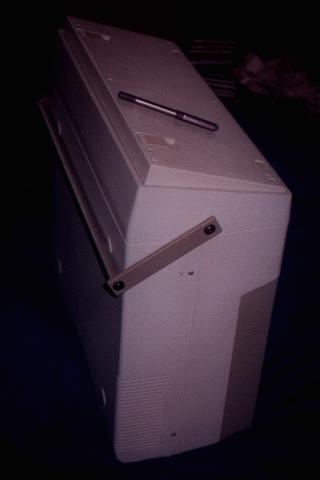
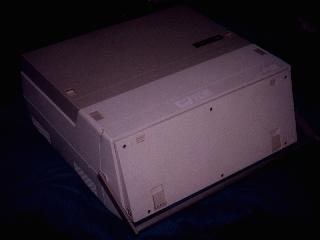
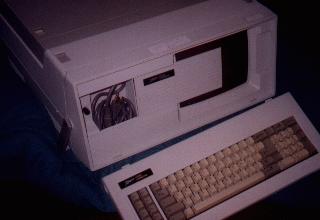
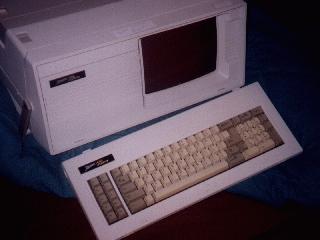
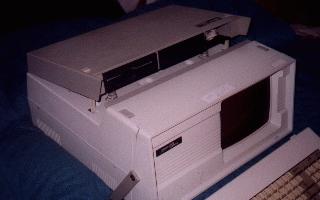
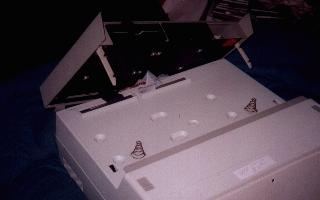
Saw this at the local thrift and was wondering if it is worth grabbing.
It's a ZENITH Luggable computer. Looks kinda like a COMPAQ suitcase
computer. Although it could be a tad smaller. The unsual thing about it is
that the drives (5-1/4 and HD) are hidden in the top of the case. There is
a release mechanism that allows them to pop-up for access.
It's priced at $30 but, I could probably get it for about $20. Is it worth
collecting?
On another note: I picked up a couple of real nice "Media Cabinets" for $25
each. They're 7 feet tall, 18 inches deep, and 3 feet wide. They have
lockable roll-down doors (tambour), they're made of steel, and weigh a TON!
Great storage at a great price.
See Ya,
Steve Robertson <steverob(a)hotoffice.com>
No idealization here . . . just an approximation. let's see . . . #12 wire
. . . 0.3" long . . . 7805 maxxes at about 1.2 amps with a good heatsink . .
.
Dick
-----Original Message-----
From: sms(a)antinode.org <sms(a)antinode.org>
To: Discussion re-collecting of classic computers
<classiccmp(a)u.washington.edu>
Date: Tuesday, August 17, 1999 9:15 PM
Subject: Re: imsai 2
> From: "Richard Erlacher" <edick(a)idcomm.com>
>
>> Assuming you've used a real wire, it certainly will keep the two points
>> at the same potential.
>
> I love to see an idealist. Is your wire carrying zero current, or is
>it a superconductor?
>
>------------------------------------------------------------------------
>
> Steven M. Schweda (+1) 612-785-2000 ext. 16 (voice)
> Provis Corporation (+1) 612-785-2100 (facsimile)
> 5251 Program Avenue #100 sms(a)provis.com (e-mail)
> Mounds View, MN 55112-4975 sms(a)antinode.org (e-mail 2)
two unrelated questions:
first : where can I find software/support for my NeXT computer on the
web...... searching the web for quite a while has not produced any good
sites.....
Also, I'm looking for an old but WORKING Microvax or VAXStation on which to
run (read : play with) VMS -- anyone have any good ideas on where to look -
i've been watching ebay but most systems that come up for auction look like
"fixer upers" or are expensive. I just need the basics.......
thanx
mark
-------
ICQ 40439199
http://www2.msstate.edu/~mja2
From: "Richard Erlacher" <edick(a)idcomm.com>
> Assuming you've used a real wire, it certainly will keep the two points
> at the same potential.
I love to see an idealist. Is your wire carrying zero current, or is
it a superconductor?
------------------------------------------------------------------------
Steven M. Schweda (+1) 612-785-2000 ext. 16 (voice)
Provis Corporation (+1) 612-785-2100 (facsimile)
5251 Program Avenue #100 sms(a)provis.com (e-mail)
Mounds View, MN 55112-4975 sms(a)antinode.org (e-mail 2)
well . . . back when dinosaurs roamed the earth, and IMSAI was a major
computer maker, the 25.2VCT was about as common as its companion, the 6.3V
filament heater (starting to sound familiar?) and there were a few supplies
which got away with that. If you filtered well and used only one diode at a
time, you still had enough headroom to allow for 2.2 forward volts in the
regulator.
I've got switchers in the basement which have adjustable voltages for three
(5-10Vdc, +/-12-18Vdc). The previous statement that switchers like a
constant load is quite correct, though and what is meant there is that the
switchers don't like capacitive loading, nor do they like loads which are
intermittently on.
S-100 boxes sometimes housed floppy and hard drives, though, and if it was
only the 5-1/4" types, and floppies only, the +12 saw its worst nightmare.
It saw nearly fully on, vs nearly fully off, since one floppy took more +12
than all the RS232 ports.
I don't know where they're going to end up, but I believe that the power
supply thing will have toox have quite a bit more attention than it's gotten
so far.
My advice to anyone wishing to sell hardware in the quantities they're
likely to sell, would be to build a kit, no assembled units, find a catalog
standard switcher to sell them, and use the fact that it's all just spare
parts to bypass the FCC reg's. Sell the box top, sell the box bottom, the
front, the rear, but no fully assembled boxes. Sell the front panel as a
replacement part, too. That way there's no enclosure to require approval.
What's more, it will make the phone support burden lighter.
If they want a fully assembled and tested unit, tell them to buy a PC.
Dick
-----Original Message-----
From: Allison J Parent <allisonp(a)world.std.com>
To: Discussion re-collecting of classic computers
<classiccmp(a)u.washington.edu>
Date: Tuesday, August 17, 1999 8:00 PM
Subject: Re: imsai 2
><Anyway, why does it have to be one transformer? Why not a 12-0-12 for the
><16V lines and a 6V one for the 8V line (those should produce DC voltages
><within the range of any normal S100 board regulator). Such transformers
><are trivial to obtain.
>
>Then you'd end up with the piece of crap altair supply...
>
><There is a myth doing the rounds that PSUs -- even simple linear PSUs --
><are impossible to design. No idea where it came from...
>
>Because any error means all your silicon is junk. Also if you make a
>small error the core you using could get quite hot. Or maybe the ripple
>from switching exceeds the reasonable level by say a volt or two. Then
>there are the high current ground loops that cause instability at
>something approaching max load or minimum load. The worst is when you
>forget the chopper side has 300V on it, S*!^^ d@**. The number of
>errors that can be made are far higher. Then again having designed a
>few, once you've done it you learn... mostly everything they taught you
>was far from enough. that and fixing all those that were really not so
>well designed.
>
>Allison
>
Flame me if you want... But it seemed significant enough to mention.
Should be interesting to see where this one goes price wise. Minimum bid
is $5,000US.
-jim
---
jimw(a)computergarage.org
The Computer Garage - http://www.computergarage.org
Computer Garage Fax - (503) 646-0174
>>> Coming soon to www.computergarage.org - the CBBS/NW on-line archives
>>> Coming to VCF III (2-3 October 1999) - CBBS/NW live!
At 10:31 AM 7/21/99 -0400, you wrote:
>> The TRS-80 Model 100 had a much more useable 40x8 character display. The
>> Model 100 also had a built-in editor, address book, schedule, and
>
>The real question is who made it for tandy and what other name did it sell
>as?
It was available as:
NEC PC-8201 *
NEC PC-8201A *
Olivetti M10 *
Kyocera KC-85 *
Tandy M100 *
Tandy M102 *
and later, upgraded as:
NEC PC-8300
Tandy M200 *
The NEC PC-8201 was the Japanese version of the 8201A. Followups that were
*not* related include:
NEC PC-8401A *
Olivetti M15 *
Tandy M600 *
I'm not sure about the NEC PC-8500 though.
* Examples I have -- I'm looking for an 8300 and would like a non-modified
m102.
--------------------------------------------------------------------- O-
Uncle Roger "There is pleasure pure in being mad
roger(a)sinasohn.com that none but madmen know."
Roger Louis Sinasohn & Associates
San Francisco, California http://www.sinasohn.com/
At 05:49 AM 7/21/99 -0400, you wrote:
>While the Epson HX-20 can lay claim to being the first laptop, it had some
Epson HX-20 was the first laptop-sized computer. Toshiba claims they
coined (and trademarked) the term "laptop", beginning with their T-1100.
I'm going to have to chase down that Byte reference; I seem to remember
"lap-computer". The m100, being a fair bit more usable and available,
became a hit with journalists, and got quite a bit more fame.
>Now, does anyone know which the first notebook was? Was it the Grid
>Compass, or the DG/One? Or something else I've never heard of?
GRiD Compass, in Fall '82, followed by the Sharp PC-5000 and the Gavilan
(both in '83; I'm still trying to find out which came first.)
--------------------------------------------------------------------- O-
Uncle Roger "There is pleasure pure in being mad
roger(a)sinasohn.com that none but madmen know."
Roger Louis Sinasohn & Associates
San Francisco, California http://www.sinasohn.com/
>>> Tony Duell <ard(a)p850ug1.demon.co.uk> 08/17 6:01 PM >>>
>
> Upon the date 05:01 PM 8/17/99 -0700, Wayne Smith said something like:
> >What's the best way to replace a broken belt in a DC300 tape cartridge? Is
> >there a source for new belts?
>
> Not likely unless there was a real unusual need and someone already
> supplies them. Normally, the mfr (3M, Dysan, or whoever else made them)
> figures the user will typically throw out a defective cart and use a new
> one. Hence, the assumption there's likely no aftermarket supplier,
> especially now since DC300's have been out of popularity for several years.
In my experience, spares for tape cartridges are impossible to obtain,
other than by dismantling a new cartridge. This is worth doing if you
have a defective catridge with some important data on it.
> Best way to deal with this is to find an unusable tape with a good belt and
> very carefully remove it and very carefully replace it on your defective
> one. Probably should find one of the same manufacturer just to be safe.
> It's stretched rather taught and will be a real circus to replace. Got
> three or four arms hanging off you? :) Tony, have any thoughts on this?
Argh! (that's me remembering what happens when you try to do this).
The belt runs from the 'drive puck' (the roller that's driven by the
capstan in the drive), between the 2 tape spools (it rubs on the outer
layer of tape on both spools, thus maintaining the tape tension, and
causing the tape to move at constant speed), and then round one or two
idlers. The better cartridges have a fixed idler (on a post fixed to the
baseplate) in the bottom corners. Some lesser cartridges have a
'floating' idler between the 2 spools at the bottom. That sort is a right
pain to rebuild, and some of them were glued together (particularly on
the smaller tapes), and these will drive you mad!
OK, assuming 2 fixed idlers and screwed-together housing. It's best if
you have 2 new tapes - one to take to bits for spares, the other to show
you where all the bits go.
Start by undoing the screws on the bottom of the cartridge, and pull off
the cover. Remove the door and its spring. Take off the empty-ish spool
(unwind the few turns of tape if necessary), the idlers, drive puck and
belt. Take off the full spool, making sure you don't spill tape
everywhere.
Clean up the rollers and housing.
Now to reassemble. Put the full spool on the 'supply' side. Put the drive
puck, idlers and belt in position. The belt will be fairly taught even
now, and should stay in place
Drop the empty spool over the other spindle. It won't drop down as the
belt gets in the way. Using a cocktail stick/plastic spike/etc, hook the
belt round the spool.
Evertything will fly off (:-(). Try again, and after about 5 goes you'll
get it in place.
Run the tape round the guides and put the end in the gap between the belt
and the empty spool. Hold everything in place and carefully turn the
drive puck. Keep on guiding the tape until 2 or 3 turns are wound on.
Counter-rotate the 2 spools to tension the tape. You will have to force
them against the friction of the belt.
Refit the door and spring. Often you can fit the spring into a hole on
the bottom of the door, tension it, and hook the end into a slot on the
door. Then drop the assembly onto its post, and finally release the spring.
Put the cover one, and fit the screws.
Wind on the tape a few more turns, and try it in the drive. Start by
'retensioning' the tape.
-tony
>>>Thanks for that great description, Tony. I don't know whether you've inspired or depressed me. ;-)
Wayne
!
!
!
!
!
!
!
!
!
!
<Well . . . freight cost alone might be justification for using switchers.
<Nevertheless, I don't see a use for the regulated supplies in connection
<with a bus which by definition uses on-board regulation. If the supply
<actually provides the specified voltages, that's a different situation. Th
<typical S-100 box, IIRC, used lots of amperes, even for just one memory
The average S100 crate was +8 20A minimum and many were 25-30A on that bus
never minding +12 at some 6A and -12 at same. The boards DO heat a bit
and fans were typically 110V 100-140CFM models!
Allison
<What puzzles me is why the IMSAI folks decided to use a switching power
<supply when the box and everything else already supported the needs of the
<S-100 with the previously available and now quite inexpensive unregulated
<supplies of yesteryear. One of the main benefits of the S-100 was that it
It would hae to be regulates at Vreg(oncard)+3V to work. or every cards
would ahve to have the regulators ripped off. Add to that +5V bus sag
>from end to end... not a good thing. This is why most every other "decent"
bus (STD, Multibus, Eurocard, Qbus, unibus...) were either physically short
or used multiple supplies powering short segments.
On a more serious vein, cost, availability and oh UL/CSA/TUV/<your favorite
safety/electrical/communications standards agency here>.
I should look at this hack to see how much damage there is... likely the
idiots have a PC inside wiggling the lights and thats all.
Allison
<Several S-100 manufacturers who were still at it in the mid-80's had
<regulated +5V on the S-100 backplane. Those who wanted to use their
<older S-100 cards in such a machine just jumpered across the 7805's and
<viola!
More commonplace was the use of constant Voltage transformers or simple
preregulation so the +8 really was +8 and not +12 when lightly loaded.
Allison
Eric wrote:
>Tim wrote:
>> According to what I read from the web page, there's a PC-clone switching
>> power supply followed by a "boost" switching circuit to get back to
>> +8 and +/- 16. That's not completely unreasonable, but it sounds a
>> little bit fishy to me in the sketchiness of the details.
>It sounds a *lot* fishy.
Well, I wasn't going to say so, but indeed it does sound something
like vaporware.
> For the required current, it would be more
>expensive to try to use a standard PC supply with custom step-up converters
>on the outputs than to simply:
>
>1) Hack a stanard switcher
>
>2) Build a custom switcher
>
>3) Have one of the switcher manufacturers build a slightly customized model
But a standard PC-clone switching supply is so common that they're
almost free, so it may be the place to start. Again, I think we may
be talking about vaporware, so perhaps a technical discussion about the
way something should/shouldn't be done is silly when it'll never be done
anyway.
>I've been thinking about replacing the power supply in my IMSAI because
>the transformer has shorted turns and is delaminating. I've been looking
>at stuff from Vicor. Not cheap, but high quality and reliable.
Certainly, there are many expensive high quality and reliable solutions
to getting 8V at tens of amps and +/- 16V at a few amps. But I can't
think of any really cheap solutions that are high quality and
reliable.
--
Tim Shoppa Email: shoppa(a)trailing-edge.com
Trailing Edge Technology WWW: http://www.trailing-edge.com/
7328 Bradley Blvd Voice: 301-767-5917
Bethesda, MD, USA 20817 Fax: 301-767-5927
>I'm not sure that "jumpering across" the 7805 will be healthy for the 7805.
>Of course, if the input doesn't drop below the output during shutdown this
>may not be a concern.
Maybe I was unclear on what I meant by "jumpering across": you put a
wire between pin 1 and pin 3 of the regulator. With such a jumper,
it's impossible for the input to drop below output at the regulator.
Of course, you've got to remember to remove the jumper before putting
the resulting card back into a system with unregulated power busses!
Like I said, regulated S-100 power busses were done by several manufacturers
in the early and mid-80's with great success. It's a non-issue.
--
Tim Shoppa Email: shoppa(a)trailing-edge.com
Trailing Edge Technology WWW: http://www.trailing-edge.com/
7328 Bradley Blvd Voice: 301-767-5917
Bethesda, MD, USA 20817 Fax: 301-767-5927
It must be you, Pete -- no duplicates in my mailbox . . .
Glen
0/0
In a message dated 8/17/99 3:23:21 PM EST, peter(a)joules.enterprise-plc.com
writes:
<< Are others on th list receiving duplicte posts or is it just me. If it is
general then is ot a problem with the list server or has everyone's mail
client gone up the spout at the same time ;-)
Regards
Pete >>
What you say is true, but the cases you bring up are not the same.
The teensy regulator providing power for a processor is designed with pretty
solid knowledge of the behavior of the load. The + 8 Volt supply in an
S-100 box is a completely different thing, with loads which vary widely from
one application to another, and, for that matter from one day to another.
If you reversed the bias on the little regulator on a processor, the current
stored in the processor would be negligible. If you have a memory circuit
on an S-100 card, you probably have forty small capacitors and half a dozen
larger ones (e.g. 33 uF) which would be sourcing current to the 7805
regulator(s) while the input now sources current to the disk drives or
whatever other low-impedance loads run from that supply.
I'm with you about the use of switchers which save on energy and reduce
waste from dissipation. However, the proposed "booster" hasn't been thought
through yet. They're not very cost-effective, nor do they offer much power
per buck.
The problem with linear supplies is not their intolerance of high voltage
inputs, but rather, my intolerance of their high temperature when operating
at a high input/output ratio, as the regulator dissipates it all as heat.
That's not likely to happen here, however.
Dick
-----Original Message-----
From: jpero(a)cgocable.net <jpero(a)cgocable.net>
To: Discussion re-collecting of classic computers
<classiccmp(a)u.washington.edu>
Date: Tuesday, August 17, 1999 4:50 PM
Subject: Re: imsai 2
>> Date: Tue, 17 Aug 1999 16:35:15 -0600
>> Reply-to: classiccmp(a)u.washington.edu
>> From: "Richard Erlacher" <edick(a)idcomm.com>
>> To: "Discussion re-collecting of classic computers"
<classiccmp(a)u.washington.edu>
>> Subject: Re: imsai 2
>> X-To: <classiccmp(a)u.washington.edu>
>
>> I'm not sure that "jumpering across" the 7805 will be healthy for the
7805.
>> Of course, if the input doesn't drop below the output during shutdown
this
>> may not be a concern. However, if there's a significant off-board load
on
>> the input switching supply, and significant capacitance (bypass, for
>> example) on the board, it's likely to cause problems.
>>
>> Dick
>
>Hi,
>
>Actually that is not harmful thing. In fact, nearly all peecees of
>any brands and generic of any quality short out the 3.45V regulator
>via input and output to get 5V by either a jumper or a low
>resistance/high current capable FET in (automatic detection type like
>GX4, SP3 and such by Asus for 486). I'm sure that is same story for
>the split or single voltage supply modes for Pentium class boards.
>
>One thing about double PSUing from one to another voltages is bit too
>much to me from reliablity and cost viewpoints. Feeding 5V and
>12V direct to bus is assumed that designer upsize the conductors
>enough to keep voltage drops low.
>
>THERE is decent PSUs that can be had in any voltages in multi outputs
>from one box and still be switcher. I'm all for switchers for
>efficieny and less heat output of quality built.
>
>Most linear regulators are happy on input voltages up to 30V BTW.
>
>Wizard
I suspect that there's quite a little work to be done on the IMSAI product
before the first fully functional one will be shipped. I've got standard
switchers which would do the job, i.e. their outputs can be adjusted to
provide the needed current, e.g. 8V at 25 Amps, +/-12 16 @ 5 & 3 amps, or
maybe less. These weigh less than the transformer supplies on the half
dozen or so S-100 frames I've got, and, when size and weight are viewed from
the standpoint of handling, storage, and shipping costs, they may even cost
less. However, unless one anticipates volumes in excess of 1% of annual PC
sales, the cost will not be comparable with PC supplies.
Dick
-----Original Message-----
From: Eric Smith <eric(a)brouhaha.com>
To: Discussion re-collecting of classic computers
<classiccmp(a)u.washington.edu>
Date: Tuesday, August 17, 1999 4:45 PM
Subject: Re: imsai 2
>Tim wrote:
>> According to what I read from the web page, there's a PC-clone switching
>> power supply followed by a "boost" switching circuit to get back to
>> +8 and +/- 16. That's not completely unreasonable, but it sounds a
>> little bit fishy to me in the sketchiness of the details.
>
>It sounds a *lot* fishy. For the required current, it would be more
>expensive to try to use a standard PC supply with custom step-up converters
>on the outputs than to simply:
>
>1) Hack a stanard switcher
>
>2) Build a custom switcher
>
>3) Have one of the switcher manufacturers build a slightly customized
model
>
>I've been thinking about replacing the power supply in my IMSAI because
>the transformer has shorted turns and is delaminating. I've been looking
>at stuff from Vicor. Not cheap, but high quality and reliable.
>
Well . . . freight cost alone might be justification for using switchers.
Nevertheless, I don't see a use for the regulated supplies in connection
with a bus which by definition uses on-board regulation. If the supply
actually provides the specified voltages, that's a different situation. The
typical S-100 box, IIRC, used lots of amperes, even for just one memory
board, and generated lots of heat. The average, even BIG, PC supply is not
beefy enough to support a typical S-100 box as I remember them. 8 of the 8K
SRAM boards with 2102's . . . well, you figure it out! There were other
ways to go, of course, but back in the day of the 22-slot backplane, that's
what justified the backplane's size. Power for the entire remainder of the
system was not that much.
Dick
-----Original Message-----
From: Jeffrey l Kaneko <jeff.kaneko(a)juno.com>
To: Discussion re-collecting of classic computers
<classiccmp(a)u.washington.edu>
Date: Tuesday, August 17, 1999 4:33 PM
Subject: Re: imsai 2
>
>
>On Tue, 17 Aug 1999 16:11:10 -0600 "Richard Erlacher" <edick(a)idcomm.com>
>writes:
>
><Stuff SNIPped>
>
>> What puzzles me is why the IMSAI folks decided to use a switching
>> power supply when the box and everything else already supported the
>needs
>> of the S-100 with the previously available and now quite inexpensive
>> unregulated supplies of yesteryear.
>
>Well, for a given wattage, switchers are smaller, lighter, and more
>economical to produce. I imagine if they resorted to the old iron-core
>transformers of yore, they would have had a difficult time finding
>a supplier for them.
>
>When they did, the part would probly cost as much as the rest of the
>materials put together. Makes perfect sense to me.
>
>
>Jeff
>
>
>___________________________________________________________________
>Get the Internet just the way you want it.
>Free software, free e-mail, and free Internet access for a month!
>Try Juno Web: http://dl.www.juno.com/dynoget/tagj.
Though it's not consistent with my own bent, the "new" IMSAI offers a "safe"
place in which to play with those extremely costly boards some folks have
picked up from the eBay auctions.
What puzzles me is why the IMSAI folks decided to use a switching power
supply when the box and everything else already supported the needs of the
S-100 with the previously available and now quite inexpensive unregulated
supplies of yesteryear. One of the main benefits of the S-100 was that it
had on-board regulation, so that if you didn't need a given supply, you
didn't have to bring it on board and regulate it, dissipating power as you
went. If the new box is capable of running the original boards, it must
provide the raw 8 and +/- 16-volt supplies. Where's the benefit in having a
switching regulator sitting in the back of the box? I suppose it creates a
market for a power distribution module to put +5 and +/- 12 on each board
which needs it rather than using the on-board regulators, but that opens
another can of worms. What's the "right" way to distribute it without
tampering with a historically correct board?
Dick
-----Original Message-----
From: allisonp(a)world.std.com <allisonp(a)world.std.com>
To: Discussion re-collecting of classic computers
<classiccmp(a)u.washington.edu>
Date: Tuesday, August 17, 1999 1:44 PM
Subject: Re: imsai 2
>> >
>> >It wasn't F11 though it could be done. It was a LSI-1 and later the
T11.
>> >Also Alpha micro used the same chipset as LSI-11 do do the AM100.
>>
>> Neat...I sure wouldn't mind getting ahold of one of those. They're
pretty
>> rare, I'd guess, no?
>
>Likely rare as the company was not a big one and PDP-11 on s100 would be
>rather unDEC in the software support. At best rt11 might have been doable
>if all the device drivers were rewritten. I'd bet those that were sold
>(the bulk of them) are in embedded systems.
>
>The alpha micros were pretty popular though not cheap and they may be more
>common.
>
>Allison
>
>
Are others on th list receiving duplicte posts or is it just me. If it is general then is ot a problem with the list server or has everyone's mail client gone up the spout at the same time ;-)
Regards
Pete
On Aug 17, 0:37, Derek Peschel wrote:
> To keep this on topic... The RT-11 (or RSX-11?) installation program
> determines whether your machine is using 50Hz or 60Hz power. If 50Hz, it
> tells you to make a cup of tea (because the installation takes a long
time).
> If 60Hz, it tells you to make a cup of coffee.
It's RSX-11.
OB nitpick: On Aug 17, 0:35, Mike Ford wrote:
> Tetly
> Taylors of Harrowgate (non cheap UK import)
Actually, Tetley, and Taylors of Harrogate.
--
Pete Peter Turnbull
Dept. of Computer Science
University of York
I pulled this card out of a PC, it looks like some kind of LAN card but I've never seen one like it. Can anyone tell me more about it? It's a full length card that plugs into a 16 bit ISA slot. It has two large ICs on it. One is markled "APOLLO004329" "TC17GO42AT". The other says "L1A3015 015935-0001" "BICAT 1". One th eback is a connector about the same size as a DB-15 but it has a large contacts at each end and 5 regular size contacts in the center. The large contacts looks like the same ones that are used in the 13W3 cable for a Sun monitor.
Joe
The question in my mind is whether there are enough sources of the required
parts that the people willing to pay IMSAI's rather generous price will be
able to see a clear path to somewhere. Where that might be is another
question.
I always appreciated the "look" of the IMSAI with its big paddle-switches as
opposed to the little ones on the ALTAIR. However, if I were going to use a
front panel again, I'd use neither type of switch, myself. I built a very
flexible front panel at one time using pushbutton switches with an integral
LED, which, conveniently enough, comfortably sat on a 14-pin wire-wrap
socket. When you wanted to set a switch, you pressed the switch if it
wasn't already set. When you wanted it cleared, in the event it was set,
you'd press it to clear it. it was difficult to get confused about which
LED was associated with which switch. Another switch promotes the data into
a presettable counter bank for each byte of the addresses or data. It's
easy to step sequentially through a block of address space or data values.
If a guy wants a box like the one that was on "War Games" I guess he'll want
this one, though.
Dick
-----Original Message-----
From: allisonp(a)world.std.com <allisonp(a)world.std.com>
To: Discussion re-collecting of classic computers
<classiccmp(a)u.washington.edu>
Date: Tuesday, August 17, 1999 12:08 PM
Subject: Re: imsai 2
>> I'm curious what will happen with the IMSAI in view of the lack of
>> current-generation 8080's. Maybe they'll substitute an FPGA. Otherwise,
of
>> what use will it be?
>
>Assuming you mean that 8080s are not available...Lots of places still
>sell them. I doubt they will need more than a handfull to satisfy any
>likely orders.
>
>Allison
>
>
I'm not sure that "jumpering across" the 7805 will be healthy for the 7805.
Of course, if the input doesn't drop below the output during shutdown this
may not be a concern. However, if there's a significant off-board load on
the input switching supply, and significant capacitance (bypass, for
example) on the board, it's likely to cause problems.
Dick
-----Original Message-----
From: CLASSICCMP(a)trailing-edge.com <CLASSICCMP(a)trailing-edge.com>
To: Discussion re-collecting of classic computers
<classiccmp(a)u.washington.edu>
Date: Tuesday, August 17, 1999 4:20 PM
Subject: Re: imsai 2
>>What puzzles me is why the IMSAI folks decided to use a switching power
>>supply when the box and everything else already supported the needs of the
>>S-100 with the previously available and now quite inexpensive unregulated
>>supplies of yesteryear.
>
>Probably an issue of economy, using PC-clone power supplies at about
>$25 each vs using a custom-wound transformer at $200 or so a pop.
>
>> One of the main benefits of the S-100 was that it
>>had on-board regulation, so that if you didn't need a given supply, you
>>didn't have to bring it on board and regulate it, dissipating power as you
>>went. If the new box is capable of running the original boards, it must
>>provide the raw 8 and +/- 16-volt supplies. Where's the benefit in having
a
>>switching regulator sitting in the back of the box? I suppose it creates
a
>>market for a power distribution module to put +5 and +/- 12 on each board
>>which needs it rather than using the on-board regulators, but that opens
>>another can of worms. What's the "right" way to distribute it without
>>tampering with a historically correct board?
>
>According to what I read from the web page, there's a PC-clone switching
>power supply followed by a "boost" switching circuit to get back to
>+8 and +/- 16. That's not completely unreasonable, but it sounds a
>little bit fishy to me in the sketchiness of the details.
>
>Several S-100 manufacturers who were still at it in the mid-80's had
>regulated +5V on the S-100 backplane. Those who wanted to use their
>older S-100 cards in such a machine just jumpered across the 7805's and
>viola!
>
>--
> Tim Shoppa Email: shoppa(a)trailing-edge.com
> Trailing Edge Technology WWW: http://www.trailing-edge.com/
> 7328 Bradley Blvd Voice: 301-767-5917
> Bethesda, MD, USA 20817 Fax: 301-767-5927
Robert Uiterwyk <uiterwyk(a)eisers.com> 08/16 11:53 AM wrote:
>I am desperately looking to fill the last hole in my "machines that I have
>worked with" museum.
>
>An IBM 5100 - This machine used two 1/4 inch tape drives and had either
>Basic or APL (or both) in ROM. Inbtroduced in 1975 by IBM.
I am seeking assistance in estimating the total production of IBM 5100s. I believe this can be done by collecting a sufficiently large sample of serial numbers and related information. Hopefully, I will be able to divine the numbering convention and thereby come up with a reasonable estimate of total production. This, of course, assumes that the units were serially numbered.
Therefore, I am looking following information for 5100 units:
1. Model (BASIC only, APL only or APL/BASIC)
2. Manufacture date (if known)
3. Serial number
Also, I would like to receive item 2 and 3 information of 5106 tape drive units.
Thanks, all.
!
!
!
I don't know if you all know about this already but its a pretty nice
site.
http://www.pc-history.org/
It's Stan Veit's, who by the way will be speaking at VCF 3.0.
Sellam Alternate e-mail: dastar(a)siconic.com
------------------------------------------------------------------------------
Don't rub the lamp if you don't want the genie to come out.
Coming this October 2-3: Vintage Computer Festival 3.0!
See http://www.vintage.org/vcf for details!
[Last web site update: 05/25/99]
In 1964, Olin-Mathieson acquired Winchester. For years after that, the gun
ads in the papers would advertise their "pre-1964" shotguns, rifles, etc. at
prices well above those of the "new" ones. The Olin-Mathieson folks did
take tooling out of mothballs and produce models which had been
discontinued, but folks seemed to prefer the "old" and original ones.
I'm curious what will happen with the IMSAI in view of the lack of
current-generation 8080's. Maybe they'll substitute an FPGA. Otherwise, of
what use will it be?
Dick
-----Original Message-----
From: William Donzelli <aw288(a)osfn.org>
To: Discussion re-collecting of classic computers
<classiccmp(a)u.washington.edu>
Date: Tuesday, August 17, 1999 9:59 AM
Subject: Re: imsai 2
>> I couldn't help but wonder: Will the fact that you can buy a new one for
>> $995.00 finally curb the pricing on places like ebay for the vintage ones
do
>> you think?
>
>No, not at all. People will pay for the history.
>
>Look at the old Western Electric 300B audio tube (valve). These things
>skyrocketted to several hundred dollars each. A few years ago, Westrex
>decided to tool up and make them again. They produced 300Bs that are
>_identical_ to the old ones. What did the price of the old ones do? Well,
>not much. A little bump, thats it.
>
>William Donzelli
>aw288(a)osfn.org
Rumor has it that Max Eskin may have mentioned these words:
>On Mon, 16 Aug 1999, Merle K. Peirce wrote:
>>I fear if I stopped drinking tea, I would vitiate the economies of Ceylon
>>and India.
>
>Oh, you drink _real_ tea, no Lipton? I'm slowly trying to stop myself from
>using that trash, but it's so darn _convenient_!
Well, if you call drowning a haybale in boiling water 'convenient' -- ;-)
Personally, give me a nice cup of good, strong, Earl Grey... with just a
touch of _dark brown_ sugar... it gets rid of the acid-y taste without
adding nearly so much of a sweet flavor. Just don't let the water get
*cold* with the tea-bag still in - it will get a lot more bitter. Haven't
tested 'em all, but Bigelow is my preferred brand.
And now back to our regularly scheduled listserv. :-)
"Merch"
--
Roger "Merch" Merchberger --- sysadmin, Iceberg Computers
Recycling is good, right??? Ok, so I'll recycle an old .sig.
If at first you don't succeed, nuclear warhead
disarmament should *not* be your first career choice.
>To: avfreelancers(a)topica.com
>From: Keith Kay <cowboyarts(a)aol.com>
>Subject: check it out
>Date: Fri, 13 Aug 1999 16:41:19 -0700
>Reply-To: avfreelancers(a)topica.com
>X-Loop: 10002755
>
>You old pros probably have been here but word of this site just reached
>Grapeland via Hong Kong.
>Cheers, Keith Kay
>
>
>This one came to me via a friend, and I thought it was a joke, but it's
>really amazing. The note below tells it all. Try it!
>
>Barry
>
> From: David Thurston <thurston(a)loxinfo.co.th>
> To: Saul Lockhart <100426.1233(a)compuserve.com>
> Subject: new camera
> Date: Friday, July 30, 1999 8:28 AM
>
>I just found an unbelievable new web site that you must check
> out. Misrocoft is testing a new technology that allows you to take a
>picture
>through your present computer. I know, it shouldn't be possible,but they
> have done it.I went to the web site and did it my self and was absolutely
>amazed at the accuracy of the photo.
>
> http://www.geocities.com/Heartland/Acres/3072/camera1.html
>>>
>>>
>
>--
>This footer has been added by the list owner:
>
>You can unsubscribe from this list at any time by sending a blank message to
>avfreelancers-unsubscribe(a)topica.com
>You must be using the email address with which you subscribed.
>
>________________________________________________________________________
>Start an Email List For Free at Topica. http://www.topica.com/register
>
>
>
Charles E. Fox
Chas E. Fox Video Productions
793 Argyle Rd. Windsor N8Y 3J8 Ont. Canada
email foxvideo(a)wincom.net Homepage http://www.wincom.net/foxvideo
-----Original Message-----
From: JAMES WEBSTER <jwebste3(a)bellsouth.net>
To: Discussion re-collecting of classic computers
<classiccmp(a)u.washington.edu>
Date: Monday, August 16, 1999 6:30 PM
Subject: Re: Article on old software programs (for IBM, Apple, Borland, etc)
>Sellam Ismail wrote:
>>
>> On Mon, 16 Aug 1999, JAMES WEBSTER wrote:
>>
>> > To put it kindly, Victoria Shannon sounds like she is full of it.
>> >
>> > >
http://www.washingtonpost.com/wp-srv/WPlate/1999-08/16/026l-081699-idx.html
>>
>> Full of what, and in what way?
>>
>
>Read about the last 2 paragraphs.
>Jim Webster
>
I read the whole article, and I don't see anything too objectionable there.
No major factual errors, a balanced point of view ... what exactly do you
object to?
Mark.
--- Eric Smith <eric(a)brouhaha.com> wrote:
> > DS8641N
> >
> > There is no vendor ID, just a little mark like 2 lightning bolts in
> paralell
> > (Like a jagged = sign). So, the questions now are...
> >
> > 1. What's this chip, and what does it do?
> > 2. Can I replace it, or am I just screwed?
>
> National Semiconductor Quad Unified Bus Transceiver. Commonly used
> as a Unibus transceiver. Still in production. National lists budgetary
> pricing for quantity 1K at $1.15, which means you'll probably pay less
> than $4 for a single.
>
> http://www.national.com/pf/DS/DS8641.html
>
> I was surprised to find that DigiKey apparently does not stock it.
I have several tubes of them. Make offer.
-ethan
===
Infinet has been sold. The domain is going away. Please
send all replies to
erd(a)iname.com
_________________________________________________________
Do You Yahoo!?
Get your free @yahoo.com address at http://mail.yahoo.com
>Is a RT-11 Media Kit on TK-50, that was built under V5.4 using some command
>which currently escapes me, bootable?
If it was built with MUB.COM, yes, it is bootable.
> I just realized that apparently V5.3
>doesn't support TK50's.
Right, it doesn't.
> BLEEP!!!!
> I'd just try it, but don't want to have to type in the bootstrap if it
> isn't. Rather spend the time trying to figure out the best sequence of
> hoops to jump through if it isn't! BEEEEEEEEEEEEP! Just when I was
> starting to make some serious progress at getting my /73 put back together.
> BLEEP!
I have to admit that I'm a bit unclear on what the problem is that
you're trying to solve, much less what you're trying to do to overcome
the difficulties that you're throwing in your own path :-).
--
Tim Shoppa Email: shoppa(a)trailing-edge.com
Trailing Edge Technology WWW: http://www.trailing-edge.com/
7328 Bradley Blvd Voice: 301-767-5917
Bethesda, MD, USA 20817 Fax: 301-767-5927
>> > If it was built with MUB.COM, yes, it is bootable.
>> Thank Goodness!
>
>Jerome Fine replies:
>
>Is that just the requirement to copy certain files onto the TK50
>tape in a certain order?
No, it also needs the appropriate boot block written to tape
(by, for example, the
$Ini/Que/Vol/File:Bin:MBOOT.BOT Kit:
line in MUB.COM).
--
Tim Shoppa Email: shoppa(a)trailing-edge.com
Trailing Edge Technology WWW: http://www.trailing-edge.com/
7328 Bradley Blvd Voice: 301-767-5917
Bethesda, MD, USA 20817 Fax: 301-767-5927
Hello, all:
Todd Fischer announced the IMSAI 8080 Series Two today.
See http://www.imsai.net
Looks interesting. Expensive for no cards, but interesting.
Rich
-----------------------------------
[ Rich Cini/WUGNET
[ ClubWin!/CW7
[ MCP Windows 95/Windows Networking
[ Collector of "classic" computers
[ http://highgate.comm.sfu.ca/~rcini/classiccmp/
<---------------------------- reply separator
Hi,
My last two attempts to email ccauction(a)nut.net have apparently
failed because "nut.net" can't be found.
Well, to be more exact, the MX record for nut.net doesn't seem to exist.
nslookup nut.net gives:
Non-authoritative answer:
Name: nut.net
Address: 209.114.81.2
But, nslookup -type=MX nut.net gives:
Server: bart
Address: 0.0.0.0
(timeout)
A "whois" shows that nut.net's record was updated yesterday.
Eric Smith wrote:
>William Donzelli <aw288(a)osfn.org> wrote:
>> The lights ("blinkenlights") on some early machines (and even a few not
>> so early machines) were tiny tubes, as well. A bit more simple than a CRT...
>
>Yes, but those weren't particularly "bizarre". They were just common
>incandescent bulbs.
I've seen scientific and computer equipment from the 60's and 70's using
a variety of "tubes" as indicator devices, everything from simple neon
bulbs to decatron counters and storage CRT's.
One might argue that a neon bulb or a decatron isn't properly a "tube"
(they certainly aren't "valves" because they don't have a control grid
like a triode), but they are non-linear devices that are capable of
storing (and displaying) state information and performing simple logic
functions.
Question for the UKer's: is a tube rectifier (no control grid, just
an anode and a cathode) called a "valve"? Is a voltage regulator tube (like
the venerable OA2) called a "valve"?
--
Tim Shoppa Email: shoppa(a)trailing-edge.com
Trailing Edge Technology WWW: http://www.trailing-edge.com/
7328 Bradley Blvd Voice: 301-767-5917
Bethesda, MD, USA 20817 Fax: 301-767-5927
In a message dated 8/16/99 3:34:45 PM Eastern Daylight Time,
bill(a)chipware.com writes:
> "Software Program"
>
> AAARRRGGG!!!
>
> Why don't we get in the automobile car and drive ride to the
> financial institution bank. There we can get some cash currency
> from the ATM machine. I may have to transfer send some money funds
> to my IRA account. After that we can go to the movie theater cinema
> and purchase buy some admission tickets. After we see the movie
> production, we can go to a restaurant bistro and eat consume some
> dinner food. We could get a nice container bottle of wine beverage.
>
> Sorry to rant, but I'm in a bad mood.
hey, at least it was good for a laugh...
D.B. Young Team OS/2
-->this message printed on recycled disk space
visit the computers of yesteryear at:
http://members.aol.com/suprdave/classiccmp/museum.htm
I am desperately looking to fill the last hole in my "machines that I have
worked with" museum.
An IBM 5100 - This machine used two 1/4 inch tape drives and had either
Basic or APL (or both) in ROM. Inbtroduced in 1975 by IBM.
Will trade old early hobbyist PC stuff (SWTP 6800, SOL-20, Osborne OCC-1) or
pay money.
Anyone out there willing to help me relive my youth?
Robert Uiterwyk
uiterwyk (at) eisers (dot) com
>> Question for the UKer's: is a tube rectifier (no control grid, just an
>> anode and a cathode) called a "valve"?
> Have you heard of a check valve?
I've also heard of a won't gate and have a copy here of the data sheet
for a write-only-memory :-).
--
Tim Shoppa Email: shoppa(a)trailing-edge.com
Trailing Edge Technology WWW: http://www.trailing-edge.com/
7328 Bradley Blvd Voice: 301-767-5917
Bethesda, MD, USA 20817 Fax: 301-767-5927
<I think we'd probably call an OA2 a 'valve' as well, although talking
<about 'stabiliser tubes' or 'cold cathode tubes' seems to be common usage
<in UK books as well (as is 'stabiliser valves' and 'cold cathode valves').
<
<We certainly talk about 'counting tubes' when refering to dekatrons,
<trochatrons, etc. Never seen them called 'counting valves'. And CRTs are
<certainly 'tubes' over here.
Lest we for get the 2d21 tyratron and the larger cousins. Cold cathode
triodes mostly replaced with SCRs.
Allison
<The lights ("blinkenlights") on some early machines (and even a few not
<so early machines) were tiny tubes, as well. A bit more simple than a CRT..
there was one variation that use a dual tube (triodes) in a FF config
so that you could store a bit with an indicator. They coated one plate
with phosphor so it was visible and tada, inherent display.
A few years back (1972) I used a few VF 7segment tubes (one 7segment per
tube) all anodes connecteed together made them a low mu triode and I built
a FF using them as a gag. Plate voltage was 36-45V.
Allison
Hi,
I just acquired a NIC for MAC, it's an "Assante MacCom+ II E" etheernet
card. What do I need to connect the mac to the ethernet network. I got the
card without doc or installation program. Any help would be great.
The MAC is a IIvx running 7.1
I'd like to have TCP/IP or any other way to talk to the *indows network.
Thanks
Francois
>>You old pros probably have been here but word of this site just reached
>>Grapeland via Hong Kong.
>
> Though I really do have to wonder how many people would actually fall for
>the idea that their monitor can go both ways...
On the old "Beagle Bag" collection for the Apple ][, there were some
impressively done programs in "Magic Pack". In one of them, you
are directed to hold a playing card up to the screen, type "RUN", and
the computer scanned the card and told you what type it was. In another,
called "Plenty Questions" (like 20 Questions), the computer asks a bunch
of Yes/No questions which you answer and are typed in. And the computer
could guess it right 100% of the time.
All **assuming** that a sufficiently trained person was sitting at the
computer keyboard. For the card scanner, you would type "3CN" (as
the letters "RUN" appeared on the screen) to indicate that, say, a
3 of Clubs was being held up to the screen. For "Plenty Questions",
you get to type one letter of the object in response to each Y/N
question.
Of course, "Magic Pack" depended on a good amount of showmanship on
the part of the computer's owner as he dupes his friends into believing
the mystical powers that his lowly Apple ][ has acquired. And not
doing the tricks so often that the audience figures out what's going
on!
--
Tim Shoppa Email: shoppa(a)trailing-edge.com
Trailing Edge Technology WWW: http://www.trailing-edge.com/
7328 Bradley Blvd Voice: 301-767-5917
Bethesda, MD, USA 20817 Fax: 301-767-5927
<Since the screen is in fact being scanned by the electron beam in the
<monitor, the light that passes through the transparency and to the
<photodetector depends on the darkness of a spot on said transparency
<corresponding to where the electron beam is. As does the output of the
<photodetector. Digitize that, synchronised to the scanning, and you have
<a way to scan images.
Flying spot scanner. Go back about 25-30 years and you could get one for
test patterns for TV service, B&K was one vendor here in the us. The
patterns were 35MM slides if memory serves. The box was a small CRT that
was scanned at fixed bright intensity, a slide holder, lens and a phototube
to translate the light to analog image stream. The same scheme would work
>from a reflected image. Using modern technology if you scanned the field
to be viewed with a laser while viewing that with a photodiode with a lens
focused to the resulting output could then be synched and broadcast or
digitized. FYI this is the basic barcode scanner.
The site is still a gag!
Allison
Hi,
Moving to a smaller house forces me to get rid of my Pet 8096. This computer
could do with a clean but worked fine the last time I tested it.
Contact me if you may be interested in this. It needs to be picked up from
Wiltshire, England.
Regards,
-- Mark
Here's someone with a Tandy 1000 they want to get rid of, located in the
upper west side of Manhattan (New York)(. Please respoond to the original
sender.
Reply-to: Ollco(a)aol.com
---------- Forwarded message ----------
Date: Sun, 15 Aug 1999 12:07:00 EDT
From: Ollco(a)aol.com
To: vcf(a)vintage.org
Subject: Old (relatively) Tandy 1000 w/bits & pieces
We have an old computer that may have value other than holding down the end
of the table. It's a Tandy 1000 w/cma monitor, manuals, etc. Lots of
software Still working w/all of 256 K ram and 2 Epson printers, one a wide
carriage for spread sheets. Any thoughts would be appreciated.
Thanks, Steve & Marci
Sellam Alternate e-mail: dastar(a)verio.com
-------------------------------------------------------------------------------
Puttin' the smack down on the man!
Coming this October 2-3: Vintage Computer Festival 3.0!
See http://www.vintage.org/vcf for details
[Last web site update: 05/25/99]
Okay, situation as follows. I finally cleared some time to play with my
toys again... The idea is, I have an 11/83, an RL02, and plenty of RAM.
It runs 2.9BSD at the moment. I also have a DZ11 clone by Aziv (or something
like that) in there, it works too. I got my hands on a RSTS 8 RL02 SAVRES
tape (Found it in my scratch magtape pile! Can't believe I didn't see this
before!) and wanna play with RSTS instead of 2.9BSD. So, the idea was, I
have a tape drive and UNIBUS TS-type controller that both work, and a BA11-K.
(It was the one on the 11/44, which, sadly, has died of mysterious marginality.
It catches random bus errors and starts only about 1/4 of the time. Don't
worry, I didn't pitch it - I plan on debugging it later.) Anyway, I wanted
to hang the DW11-B between the 2 boxes (The 83 and the BA11), then use the
TS tape and drive to back up BSD to a tape, and then try restoring this
RSTS tape. If the RSTS tape dies then, all I have to do is get a minimal UNIX
back on the RL02 and restore my tape. Too bad UNIX doesn't make self-booting
backup tapes like VMS does... (Speaking of which, did any other OS do this?)
Anyway, the problem is, when the DW11-B is installed in the 83,. the memory
check diagnostic fails at address 0, and the MAP option on the crash screen
only sees the addresses on the CPU card (So the DW11 is clobbering the bus.)
Questions are:
1. Has anyone done this before?
2. Are DW11-Bs incompatible with Q22 backplanes?
3. Is there some obvious screw I'm missing?
I'm using the quad-height end in the Qbus end, and the dual-height end in the
UNIBUS end. I assume if I had them backwards, I'd get smoke... Also, the
fuse in the dual-height end is good, I checked it.
Help would be much appreciated!
-------
< How did the old light-pens or the light-gun with Atari 8-bits work ?
<Weren't they related to this sensitivity of the CRT ?
Light pens were fast photo diode that did coincidence detection with a scan
line that was bright. The logic in the video board(or chip) would map the
"hit" to a scan line address... the rest was programming in the form of what
was at that spot and was it a "button". Very simple device save for there
were timing delays to be compensated for.
Allison
From: CLASSICCMP(a)trailing-edge.com
(Tim Shoppa Email: shoppa(a)trailing-edge.com)
> Question for the UKer's: is a tube rectifier (no control grid, just an
> anode and a cathode) called a "valve"?
Have you heard of a check valve?
> Is a voltage regulator tube (like the venerable OA2) called a "valve"?
No doubt it's _called_ one (where electron tubes are called valves).
I can cite several worse misnomers in popular use.
On the subject of unusual display devices, as I recall, the Univac
422, a training computer (transistors, 512 15-bit words of core memory,
with paper tape and (modified) Remington Rand typewriter for I/O) from
the 1960's, used blue-green vacuum fluorescent indicators on its front
panel, to display register contents. Not digital displays in the modern
sense, they were just blue-green lamps. I assume that they were chosen
for their ability to be controlled by transistors which were unable to
cope with the voltages of neon glow lamps or the current of incandescent
lamps. I never saw them on anything else.
I don't doubt that they had better long-term reliability than the
SCR-driven incandescent lamps in the console display of the IBM 1130
CPU.
------------------------------------------------------------------------
Steven M. Schweda (+1) 651-645-9249 (voice, home)
1630 Marshall Avenue #8 (+1) 612-754-2636 (voice, work)
Saint Paul MN 55104-6225 (+1) 612-754-6302 (facsimile, work)
sms(a)antinode.org sms(a)provis.com (work)
<I doubt very much if most CRTs are at all light-sensitive.
You kidding? Those phosphors are quite sensitive to light at the right
wavelength.
Everyone forgets a plumbicon (and predecessors) used a phosphor coated
target that the image impinged on and then was scanned with a electron
beam with the incident current sensed using an internal collector grid.
Maybe you had to work with the old mono camaras with a tube in it rather
than a CCD.
Allison
>Now that I've got it back running V5.4 I noticed something interesting,
>under V5.3 when you do a 'SHOW DEV' in the section for DU it lists the how
>DU0: through DU7: are configured. This is very nice when you've got
>partitions ranging across a couple disks. However, this feature seems to
>be missing under V5.4, is there any way to get this information, or do I
>simply need to write it down?
Do a "SHOW DEV:DU" and you'll see it - for example, on my 5.7 system:
.show dev:du
Device Status CSR Vector(s)
------ ------ --- ---------
DU Resident 172150 154 150 144 140
DU0: is set PORT = 0, UNIT = 0, PART = 0
DU1: is set PORT = 0, UNIT = 1, PART = 0
DU2: is set PORT = 0, UNIT = 2, PART = 0
DU3: is set PORT = 0, UNIT = 3, PART = 0
DU4: is set PORT = 0, UNIT = 4, PART = 0
DU5: is set PORT = 0, UNIT = 5, PART = 0
DU6: is set PORT = 0, UNIT = 6, PART = 0
DU7: is set PORT = 0, UNIT = 7, PART = 0
D10: is set PORT = 0, UNIT = 8, PART = 0
D11: is set PORT = 0, UNIT = 9, PART = 0
D12: is set PORT = 0, UNIT = 10, PART = 0
D13: is set PORT = 0, UNIT = 11, PART = 0
D14: is set PORT = 0, UNIT = 12, PART = 0
D15: is set PORT = 0, UNIT = 13, PART = 0
D16: is set PORT = 0, UNIT = 14, PART = 0
D17: is set PORT = 0, UNIT = 15, PART = 0
D20: is set PORT = 0, UNIT = 16, PART = 0
D21: is set PORT = 0, UNIT = 17, PART = 0
D22: is set PORT = 0, UNIT = 18, PART = 0
D23: is set PORT = 0, UNIT = 19, PART = 0
D24: is set PORT = 0, UNIT = 20, PART = 0
D25: is set PORT = 0, UNIT = 21, PART = 0
D26: is set PORT = 0, UNIT = 22, PART = 0
D27: is set PORT = 0, UNIT = 23, PART = 0
D30: is set PORT = 0, UNIT = 3, PART = 0
D31: is set PORT = 0, UNIT = 3, PART = 1
D32: is set PORT = 0, UNIT = 3, PART = 2
D33: is set PORT = 0, UNIT = 3, PART = 3
D34: is set PORT = 0, UNIT = 3, PART = 4
D35: is set PORT = 0, UNIT = 3, PART = 5
D36: is set PORT = 0, UNIT = 3, PART = 6
D37: is set PORT = 0, UNIT = 3, PART = 7
D40: is set PORT = 0, UNIT = 4, PART = 0
D41: is set PORT = 0, UNIT = 4, PART = 1
D42: is set PORT = 0, UNIT = 4, PART = 2
D43: is set PORT = 0, UNIT = 4, PART = 3
D44: is set PORT = 0, UNIT = 4, PART = 4
D45: is set PORT = 0, UNIT = 4, PART = 5
D46: is set PORT = 0, UNIT = 4, PART = 6
D47: is set PORT = 0, UNIT = 4, PART = 9
D50: is set PORT = 0, UNIT = 4, PART = 8
D51: is set PORT = 0, UNIT = 4, PART = 9
D52: is set PORT = 0, UNIT = 4, PART = 10
D53: is set PORT = 0, UNIT = 43, PART = 0
D54: is set PORT = 0, UNIT = 44, PART = 0
D55: is set PORT = 0, UNIT = 45, PART = 0
D56: is set PORT = 0, UNIT = 46, PART = 0
D57: is set PORT = 0, UNIT = 47, PART = 0
D60: is set PORT = 0, UNIT = 4, PART = 0
D61: is set PORT = 0, UNIT = 5, PART = 0
D62: is set PORT = 0, UNIT = 6, PART = 0
D63: is set PORT = 0, UNIT = 7, PART = 0
D64: is set PORT = 0, UNIT = 8, PART = 0
D65: is set PORT = 0, UNIT = 9, PART = 0
D66: is set PORT = 0, UNIT = 10, PART = 0
D67: is set PORT = 0, UNIT = 11, PART = 0
D70: is set PORT = 0, UNIT = 4, PART = 1
D71: is set PORT = 0, UNIT = 5, PART = 1
D72: is set PORT = 0, UNIT = 6, PART = 1
D73: is set PORT = 0, UNIT = 7, PART = 1
D74: is set PORT = 0, UNIT = 8, PART = 1
D75: is set PORT = 0, UNIT = 9, PART = 1
D76: is set PORT = 0, UNIT = 10, PART = 1
D77: is set PORT = 0, UNIT = 11, PART = 1
Another thing that helps with keeping tracks of large numbers
of partitions is to assign descriptive Volume ID and owner
fields to the partitions. For example:
.init ld4:/volu
LD4:/Initialize; Are you sure? Y
Volume ID? junk
Owner? me
.dir/vol ld4:
Volume ID: junk
Owner : me
0 Files, 0 Blocks
1986 Free blocks
Presumably, you'll find something more useful than "junk" and "me"
to fill the fields in with :-)
--
Tim Shoppa Email: shoppa(a)trailing-edge.com
Trailing Edge Technology WWW: http://www.trailing-edge.com/
7328 Bradley Blvd Voice: 301-767-5917
Bethesda, MD, USA 20817 Fax: 301-767-5927
There is a later two-volume set which covers both the 350 and
the 380...
Megan Gentry
Former RT-11 Developer
+--------------------------------+-------------------------------------+
| Megan Gentry, EMT/B, PP-ASEL | Internet (work): gentry!zk3.dec.com |
| Unix Support Engineering Group | (home): mbg!world.std.com |
| Compaq Computer Corporation | addresses need '@' in place of '!' |
| 110 Spitbrook Rd. ZK03-2/T43 | URL: http://world.std.com/~mbg/ |
| Nashua, NH 03062 | "pdp-11 programmer - some assembler |
| (603) 884 1055 | required." - mbg |
+--------------------------------+-------------------------------------+
In a message dated 8/15/99 12:42:57 PM Eastern Daylight Time,
fauradon(a)mn.mediaone.net writes:
> Hi,
> I just acquired a NIC for MAC, it's an "Assante MacCom+ II E" etheernet
> card. What do I need to connect the mac to the ethernet network. I got the
> card without doc or installation program. Any help would be great.
> The MAC is a IIvx running 7.1
> I'd like to have TCP/IP or any other way to talk to the *indows network.
> Thanks
> Francois
the only way i know is you have to have a machine running win nt since it can
speak appletalk from the mac.
D.B. Young Team OS/2
-->this message printed on recycled disk space
visit the computers of yesteryear at:
http://members.aol.com/suprdave/classiccmp/museum.htm
OK, having chanted the proper incantations, and performed the various rites
in the correct sequence I now have my RT-11 system as close to being back
together with all the various programs as I'm going to, until I get a
chance to redo the Macro-11 exercises I lost. Actually I've got a little
more than I had as I added a few games :^)
Now that I've got it back running V5.4 I noticed something interesting,
under V5.3 when you do a 'SHOW DEV' in the section for DU it lists the how
DU0: through DU7: are configured. This is very nice when you've got
partitions ranging across a couple disks. However, this feature seems to
be missing under V5.4, is there any way to get this information, or do I
simply need to write it down?
Now that I've got two "Backup" Hard Drives made, and most of the stuff
backed up on a RL02, I've got to get a "Working" Hard Drive built so I can
get back to the project of trying to get TCP/IP configured :^)
Zane
| Zane H. Healy | UNIX Systems Adminstrator |
| healyzh(a)aracnet.com (primary) | Linux Enthusiast |
| healyzh(a)holonet.net (alternate) | Classic Computer Collector |
+----------------------------------+----------------------------+
| Empire of the Petal Throne and Traveller Role Playing, |
| and Zane's Computer Museum. |
| http://www.aracnet.com/~healyzh/ |
I picked up a Professional 300 Series "Technical Manual" (EK-PC350-TM-001)
yesterday that covers just the Pro 350. It is a voluminous tome with lots
of details about the Pro hardware.
Is there a comparable volume for the Pro 380? Does anyone have one or has
anyone ever seen one?
Thanks,
Dave
Some weeks back, Allison Parent wrote about some mods for the AMPRO LITTLE
BOARD-I to improve performance.
These were interesting, but now I'm looking for published mod's for the
Ferguson BIG-BOARD, which was quite popular, but had only Single-Density
floppy support via a WD 1771 and which used a standard (2.5 MHz) Z-80. I'm
interested in finding out whether there are any published modifications,
supported with code, to enhance this board's speed, and to upgrade its FDC
to a 179x type using both FM and MFM.
I've got aboug half a dozen of these boards and want to know that there's a
way to fix them up before I pass them on to interested parties. Does anyone
know of a reliable source of such material?
Dick
<deflection coils to steer the electrons through a character stencil (like
<shadow mask), and a second set of deflection coils to steer the electrons
<to the desired character location on the screen. If memory serves, this
<type of display was used on Whirlwind. Presumably it was more economical
<than using a standard XY oscilliscope with either a hardware vector charact
<generator or software.
It was also used in some terminals and Xerox high speed eletrophotograpic
printers. The later being basically a Xerox copier with a charactron as the
image source.
Allison
There is a pc board in my collection labled "5250 Emulator". Can anyone
tell me anything about this?
Thanks
Charlie Fox
Charles E. Fox
Chas E. Fox Video Productions
793 Argyle Rd. Windsor N8Y 3J8 Ont. Canada
email foxvideo(a)wincom.net Homepage http://www.wincom.net/foxvideo
Hi,
I picked up a Bell & Howell "micromodule 85", which is a single board
microprocessor trainer for the Intel 8085. But...I have no docs for it,
and can't find any on the web.
BTW, it's got the worst keypad I've seen...here's an ASCII picture:
4 5 8 C W R
3 6 9 D P D
2 7 A E L S
1 0 B F X B
-------------- ------
white keys red keys
(may look better with fixed font)
Yes, the "1", "2", "3", "4", "5" indeed climbs up and then turns to the
right. Extremely weird!
It powers up, at least :)
thanks,
Stan Sieler
sieler(a)allegro.com