> Are there any documents for a DEC 872-A Power Controller floating around?
> The 872-A is a 12A, 110V power distribution/control unit that I have in
> the bottom of my "corporate rack".
> Specifically I'm interested in what the signaling is on the two, 3-pin
> Molex jacks labled "DEC Power Control Bus", which presumably is a means
> to remotely control the power to the devices in the rack via this PDU.
Bitsavers is always your first, best bet -
http://www.bitsavers.org/pdf/dec/standards/EL-00123-00_B_DEC_STD_123_Power_…
T
I'm trying to make a pathway into a storage unit prior to emptying it. The
following are a list of items that were in the way and I don't think I'll
need. If you have any questions or interest, please feel free to contact me
off list.
BA11-NC box has 11/23 sticker on it. No black case or white front panel, but
includes the switch panel. Was working, but selling as is. This it the box,
backplane, H786 power supply and switch panel only. I have boards here, and
can configure a set to your specs if requested.
EECO INC 2001-4 paper tape reader, looks like a RS232 interface. No idea of
the history or condiction.
Rokke Data table top box containing ps and 2- Seagate 41650N drives. Can
sell with or without CQD-220/TMS interface and cables.
Was working, good condicition.
Seagate 94196-766, condiction unk.
HP94758E in sealed static bag from vendor, but sitting here for a few years.
several Micropolis 1355 drives,pulled from working systems, but sitting for
a while-possibly stuck now?
Thanks, Paul
Hi folks, does anyone in the Bay Area or California have a big "multi
color" iMac G3 collection (from late 1990s-2001 or so)? A guy is
asking the Digibarn about this but all we have is one Bondi Blue model.
bruce
Hmmm. What is a CXY08-M good for?
Unless you have an s-box enclosure, I'd say it's probably only good for target practice. ;-)
Shamefully, I've never been curious enough to attempt to use one on a PDP-11.
I jumped right from the DLV11-J's to the Emulex CS02 (quad 16-port w/DMA)
and then to the DHQ11's when I moved into a BA123.
> (My own is with older products on older machines, but except
> for DZ11s and DLJ11Js, I think some of the older multi-serial
> interfaces are less easy to find these days).
There are folks out there that can't even give away their DHV11's.
I always get a chuckle out of seeing folks listing DHV11-M's on e-pay for $50.
. . . which reminds me, I should start digging through my inventory,
and dumping the CS02's and DHQ's that I have, since all of my I/O
is now via a lowly DELQA, and a hardware LAT <> TELNET bridge.
T
>
>> Check the power plug or cable. If the equipment has a neutral (not
>> ground!) lead, it needs wye. Otherwise it needs delta.
>No. If you have a symetrical load like a motor you can wire it Y
>without connecting neutral. So the presence of netral is no indication
>of Y or D. Y or D depends on the voltage the equipment needs per "leg"
>and the voltage the grid delivers. Remember voltage phase to phase is
>sqrt(3) times voltage phase to neutral.
>
Without documentation indicating that the equipment presents a balanced load,
it should not be assumed that it will. If the equipment power lead has a
neutral then it is probably not a completely balanced load and the neutral
will probably need to be connected. The consequences of not connecting the
neutral could be excessive voltages getting applied to some parts and reduced
voltages getting applied to other parts of the equipment. This is not good.
If the equipment does always present a balanced load, it may allow the option
of connecting it in wye (star) or delta format and the supply voltage required
would be different in each case.
To clarify the voltage specification, there are two different ways of
specifying the voltage in a three phase system. The "phase voltage" is the
voltage between any one of the three live conductors and the neutral conductor.
The "line voltage" is the voltage between any two of the three live conductors.
The line voltage is sqrt(3) times higher than the phase voltage. The line
voltage provided by the supply should match the line voltage required by the
equipment. The same applies to the phase voltage, although if one matches, the
other will also. Phase voltage doesn't really have a lot of meaning for a
system without a neutral and such a system should be specified by line voltage
only.
Regards,
Peter Coghlan.
Every blank that I place in the Canon AS-100 reports an error.
All of these disks are new-old-stock. I know they work in other units (Commodore 128 for instance).
Even the Tandy 2000 can format a standard 360/400k disk to 720k. I've tried those and high density floppies w/no success. What haven't I done?
Does anyone have a spare front door for a BA213 cabinet taking up space? PLEASE NOTE: this is for my private collection, not the Living Computer Museum. I have a MicroVAX II that's missing the door. It's not one of those things where I want to spend a lot of money, but if you have one just kicking around and would rather have a six-pack of good beer....
I'm in Seattle - shipping from e.g. Europe might be a bit excessive. Thanks - Ian
Light travels faster than sound. That's why some people appear bright until they speak.
Ian S. King, Sr. Vintage Systems Engineer
Living Computer Museum
A project of Vulcan, Inc.
http:/www.livingcomputermuseum.org
Hey folks. Does anyone know offhand if it's possible to model the
hysteretic behavior of a neon lamp in ngspice or gnucap?
Or, better yet, can anyone send me a working model or subcircuit? =)
Thanks,
-Dave
--
Dave McGuire
Port Charlotte, FL
I was interested in playing with NeWS (a Postscript-based windowing
system from Sun, predating X) and acquired this stuff from a member of
this list. I never got around to doing anything with it. There are 3
SparcStations (2 IPCs and an IPX), a NeWSPrinter (laser printer which
relies on the host to do the Postscript rendering), the NeWS 2.1
Programmer's Guide, some CDs that can be used to reinstall the OS if
necessary, and a suitable external CD drive. Any reasonable offer
plus shipping costs will be accepted, since we need to move soon, and
I don't see the point anymore of hanging on to something I never found
the time to explore properly.
Hi, sorry in advance for replying to the group. However, for some reason my e-mails to you regarding the Model 16 and 6000 collection have bounced with a "General Failure". I'm a collector in Seattle. Please get in touch if these items are still available. david at marmotking dot com.
boat load of docs. Working last time I turned it on (burps a little once in a while though). No software except what's on the h/d. I can provide more info and pictures after Friday (Punky need to go to the vet).
Interesting work (in development).
http://heathkit.garlanger.com/emulator/
--
Saludos - Greetings - Freundliche Gr??e - Salutations
Sergio
-----
"No creas todo lo que ves, ni creas que estas viendolo todo"
To everyone, re: VCF East 7.0 hands-on workshops:
Dan Roganti's "Build Your Own Transistor-Logic" workshop is rescheduled to Saturday from 10am-12pm. It was originally Sunday in the same time slot.
Replacing it on Sunday will be "Teletype 101" by Bill Degnan. Bill will teach the basics of evaluating, cleaning, repairing, and connecting the popular Teletype Model '33 series. At the end of the workshop, one randomly selected attendee will win a tested and working '33. The other attendees will have an opportunity to buy an as-is, untested unit for $75 pending availability.
Both workshops cost $40 and are limited to 10 students. (Eight spots remain for Dan's).
Registration is online at http://www.vintage.org/2011/east/workshop.php
----- Original Message -----
> Date: Mon, 14 Mar 2011 14:28:01 -0500
> From: Jules Richardson <jules.richardson99 at gmail.com>
> Subject: Re: Usb typewriter
>
> Fred Cisin wrote:
>> On Fri, 11 Mar 2011, SPC wrote:
>>> I suppose this is well known for all of you, but I didn't hear about it.
>>> http://www.usbtypewriter.com/
>>
>> Nice.
>> But, . . .
>> It uses the typewriter for input only. As long as it's connecting to all
>> of the mechanical key linkage, why not also have the solenoids needed to
>> print using the typewriter?
>
> And anyway, I want an RS-232 version.
>
> ;-)
------ Reply: -----
Then I have a nice Olivetti typewriter with RO RS-232 interface for you!
Also lots of the interface boards if you want to make your own, and even a
book about interfacing Selectrics if you prefer that route... ;-)
Yeah, I saw that USB manual TW conversion a year or so ago when it was just
a Make blog/video; looks like he's turned it into a nice little business at
those prices ;-)
m
> From:?Johnny Billquist <bqt at softjar.se>
> All I can add about operating systems related to the original question is that unless I remember wrong, CTS-300 and CTS-500 were based on RSTS/E (basically RSTS/E and hardware bundled together as a complete solution).
I think that CTS-300 ran on RT-11, and CTS-500 ran on RSTS/E. You
could not compile a Dibol program on CTS-300 without shutting down the
main application. On CTS-500 it was easy to compile and debug online.
--
Michael Thompson
> From:?Joachim Thiemann <joachim.thiemann at gmail.com>
> By curious coincidence, one of my labmates just asked me for some
> original data from my Master's thesis, and luckily I have that data
> backed up on CD-R - from 1999 (Maxell gold-coloured CD-R74, if that
> makes a difference). ?Tar.gz files, and still reads fine 12 years
> later on a modern machine (Mac mini) without special hardware or
> software.
My wife's Master's thesis is on RX01 floppies made with WPS-8.
Someday I will get the files converted to something more modern.
--
Michael Thompson
A lot of you seem to be missing that he has a store credit with a particular
store. He doesn't have the ability to buy a refurbed Leonovo or to build a
system from scratch. He has to choose from within the store's available
inventory.
So, none of the suggestions that don't take into account what the store has in
stock, isn't all that helpful it seems to me.
Al
> Date: Sat, 12 Mar 2011 15:31:07 +0100
> Subject: Help to format diskettes for At&t 3b1 or Altos systems in a
> PC
>
> I need and be happy to receive some help to format diskettes for At&t 3b1
or
> Altos ACS/586/686 systems in a PC. I tried to do it in one 286 PC with
one
> TEAC HD unit with bad results.
>
> I've encountered some documents in the Net about the matter but nothing
> definitive.
>
AT&T 3B1 - Use the Office program that hopefully will be installed in your
system to format a disk. If you log in with the user "install" and blank
password, it should put you in the office program. If it's not present,
then you need to load the system disks onto the system.
Altos - This is a CP/M and or MP/M system depending on your needs; Dave
Dunfield's 22disk should work to make a boot disk.
If you need more help, contact me directly and I will try to assist, I have
both systems.
Bill
On Friday, March 11th, at 13:04, SPC wrote:
> I suppose this is well known for all of you, but I didn't hear about it.
> http://www.usbtypewriter.com/
. . . but. . . where is the "Gold" key? ;-)
T
I suppose this is well known for all of you, but I didn't hear about it.
http://www.usbtypewriter.com/
--
Saludos - Greetings - Freundliche Gr??e - Salutations
Sergio
-----
"No creas todo lo que ves, ni creas que estas viendolo todo"
Someone was asking for a RS-232 typewriter. I had one in 1978. I recently
found the negatives for photos of my SWTPC 6800 computer complete with an
IBM 2741 style Selectric printing terminal. It was used for letter quality
printing but it did have two way communication with my computer. I had to
write I/O drivers that converted ASCII to IBM Correspondence Code. I could
also use it over a 134.5 baud modem connection to a PDP11/70 timeshare
system.
I uploaded a picture to the Wikipedia Commons.
http://commons.wikimedia.org/wiki/File:Michael_Holley_Computer_1978_NWCN.jpg
Here is a write up I did for the Northwest Computer News in July 1978.
http://commons.wikimedia.org/wiki/File:Northwest_Computer_News_July_1978.jpg
Michael Holley
I fired up my Sun Ultra 5 the other day to install a bigger SCSI HD and noticed its NVRAM is dead (FF for ethernet address, serial number changes each reboot).
Anybody know a source of cheap replacement NVRAM chips (can they be reworked like a Dallas RTC chip?), and how do you reprogram them?
> On 3/9/11 10:19 AM, Richard wrote:
>> In article<4D77C151.90005 at bitsavers.org>,
>> Al Kossow<aek at bitsavers.org> writes:
>>
>>> I made a decision a long time ago that the primary mode of storage would
>>> either be media images or uncompressed archive files (tar, or uncompressed
>>> zip, mostly).
>>
>> Just out of curiosity: why uncompressed?
>>
>> Is it so that localized corruption of the archives doesn't preclude
>> extraction of the remaining contents?
> exactly.
OTOH I keep all of my images compressed, precisely because I want to know if any copy has been corrupted.
(And I md5sum them as well out of FUD).
If I find out that any storage media or storage bus is silently corrupting my data without error messages... I would rather know that sooner than later.
Tim.
A very long time ago, I used to support three Versatec plotters.
We'd have to use a clear liquid to clean them up. It wasn't
Isopropyl Alcohol. Does anyone happen to know what it might have
been?
Zane
--
| Zane H. Healy | UNIX Systems Administrator |
| healyzh at aracnet.com | OpenVMS Enthusiast |
| | Photographer |
+----------------------------------+----------------------------+
| My flickr Photostream |
| http://www.flickr.com/photos/33848088 at N03/ |
> Date: Sun, 13 Mar 2011 18:03:00 -0500
> From: Tom <a50mhzham at gmail.com>
> Subject: Re: OT: Can someone help me pick out a desktop machine?
> To: "General Discussion: On-Topic and Off-Topic Posts"
> <cctalk at classiccmp.org>
> Message-ID: <4d7d4ef1.65c2ec0a.6613.4ce3 at mx.google.com>
> Content-Type: text/plain; charset="iso-8859-1"; format=flowed
If price is your issue, as it seems to be:
1) You probably want an AMD chip
2) You should be looking at refurbished systems; I have had a lot of good
luck with refurbished IBM/Lenovo systems purchased at
http://outlet.lenovo.com/. You might also check Costco if u have one
locally; they seem to have good deals on HP systems.
Unless u are into serious video editing, large compilations, or any other
CPU intensive activity, any current CPU should be sufficient for your needs.
May I further suggest that what u really care about is the graphics card
(not built in so you can upgrade if and when necessary), the monitor (large,
LED backlit, fast) and the keyboard (feels good). If you are in this group
u should have enuf talent to upgrade the memory and HDD to whatever u need.
Tom
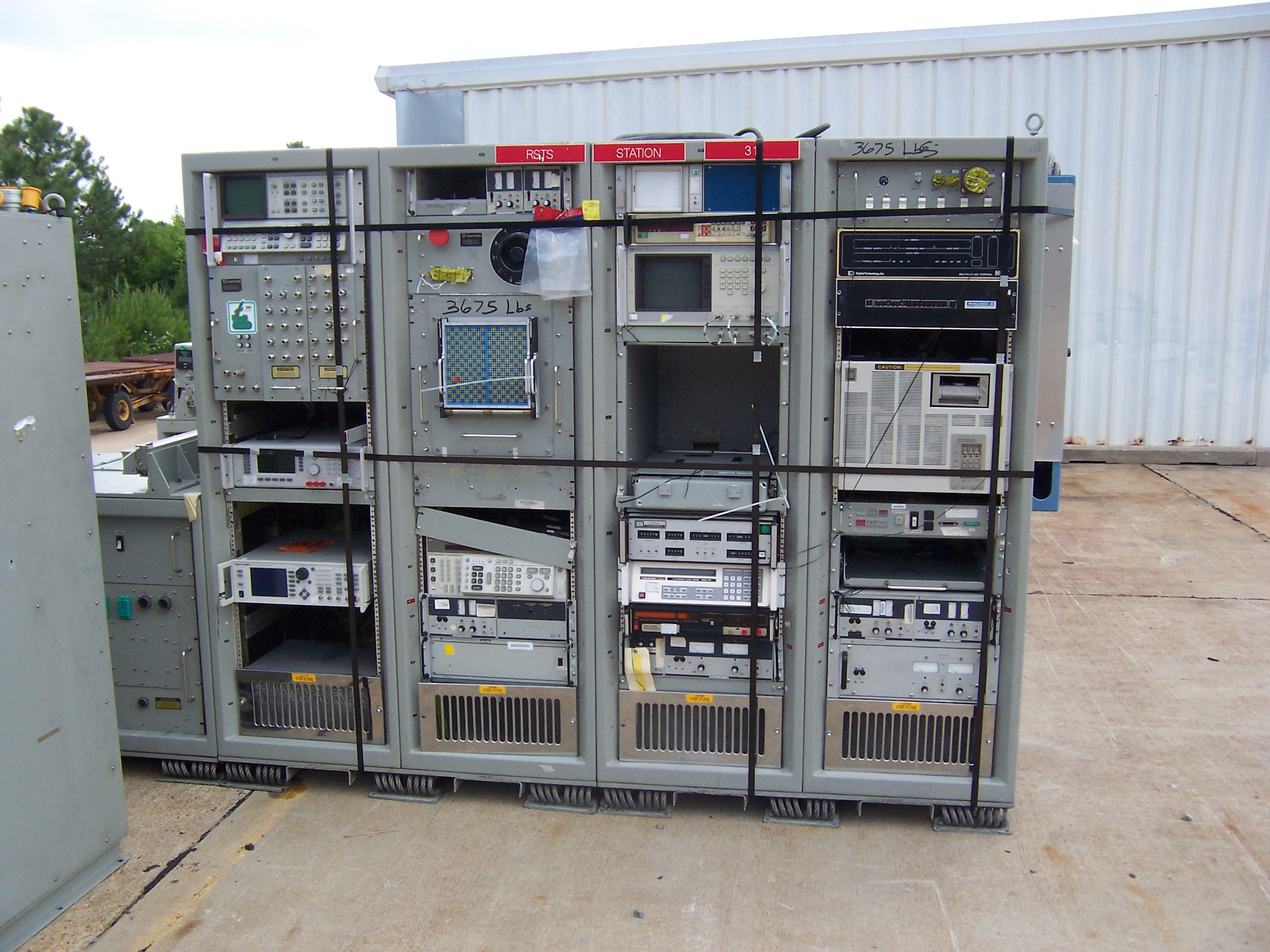
http://www.oceanviewcom.com//misc/St_Js_TE_Outside.JPG
Two modules look like they came from the DEC stable, but what are they?
This rack may or may not be appearing on DRMS lists sometime in the
next 20 years. That is all I know about it.
--
Will
Hi everyone,
You may have noticed in the pdp11 usenet groups that over some time I
have collected a nice bunch of PPD-11 OSes in various versions (this
takes less space, I have to deal with some kind of space restrictions
at the moment). From time to time I tend to put online what I have
found (please see 5ewl.blogspot.com if you want).
There are some well known archives out there in the internet, but some
OSes mentioned in the PDP-11 faq and other sources are kinda hiding
>from me.
Let's start here: As I was reading the Ersatz-11 documentation file I
stumbled upon "Fox 2/30 OS".
Does anyone now something about this OS? Did any copies of this system
or documentation and software survive? The only reference I have
found so far since I read the Ersatz-11 docs is here:
http://archive.computerhistory.org/resources/text/Foxboro/Foxboro.Fox...
(can't look at this file at the moment as I am on a slooooow internet
connection). All I found out is there's a strong focus on process
control in this system as well at it should be some kind of OEM.
Another OS I am currently looking for is CAPS-11. It is mentioned at
some points, but I could find almost no documentation, definately no
sources or tape images.
Much of the other OSes I've got in my little list are missing the
early versions. It would be a pleasure to see these showing up
somewhere and making them available for the interested Enthusiasts. I
saw discussions about licensing and property issues about some other
OSes too (like DSM). They seem to be stucked at some point, hopefully
these OSes don't get lost sometime.
Here's a little sum-up about Systems I didn't came across so far:
CAPS-11, CTS-300 and -500, DSM-11, DURESS, GAMMA-11, HT-11, MERTS,
Micropower Pascal, MONECS, MTS, PC-11, RUST/XM, SPHERE, TRAX
If you have any information about the Operating Systems mentioned in
this message or can help out with disk images, disks, sources etc. I'd
greatly appreciate if you'd drop a line.
Have a good start into the weekend,
Wolfgang
--
Wolfgang Eichberger - OE5EWL
Operating System Collector
Blog: 5ewl.blogspot.com
Homepage: www.eichberger.org
Phill writes:
On 14/03/2011 14:14, Shoppa, Tim wrote:
>> AMD stuff is available
>> but doesn't promise the performance of a Sandy Bridge machine that
>> you probably can't buy :). Again, just don't get sucked into the rat
>> race.
>
> I keep hearing this "Intel make CPUs that wipe the floor AMDs" over and
> over again, and whilst true this doesn't tell the whole story. I have
> personally found, at the times I have felt the need to upgrade that AMD
> processors offer the best trade off of price and performance (for me at
> least).
>
> Yes there are faster Intels but they are also *MUCH* more expensive,
> sometimes by several times :(
Yeah, I tried to couch into my response that I'm comparing the price of
Something you can't buy (Sandy Bridge) with something you can buy (AMD).
Even when roughly equivalent stuff is available there are still substantial
Differences between the two that make a apples-for-apples comparison difficult.
Reminds me of the old story:
A lady walks into a butcher shop and asks: "How much are the pork chops?"
The butcher says: "$1.89 a pound."
"$1.89?" The woman asks in shock. "I can get them down the street for $1.69."
"So who sent for you?" the butcher asks. "Go down the street."
"They don't have any pork chops."
"If I didn't have any pork chops, I'd sell 'em to you for $1.49 a pound."
On 2011-03-12 19:00, people wrote:
[...]
All I can add about operating systems related to the original question
is that unless I remember wrong, CTS-300 and CTS-500 were based on
RSTS/E (basically RSTS/E and hardware bundled together as a complete
solution).
TRAX-11 was a transaction based system. Mostly targeted at the 11/70,
unless I remember wrong. However, I seem to remember that TRAX-11 was
also somehow tied up with RSX-11M-PLUS, and also the 11/74, but my
memory might be confusing me.
MicroPower PASCAL was a standalone system I seem to remember. You built
the software on something else, like RSX, and then you booted the
created system on a bare machine.
CAPS-11 is something really old. About the same timeframe as DOS-11. It
was obsoleted around 1974 or something, I would suspect. Very short
lifetime of some of the earliest systems for the PDP-11.
Johnny
--
Johnny Billquist || "I'm on a bus
|| on a psychedelic trip
email: bqt at softjar.se || Reading murder books
pdp is alive! || tryin' to stay hip" - B. Idol
MUMPS has had (and continues to have) a niche market in financial systems also.
TD Ameritrade uses it, not sure for what exact purpose. I ran into it while
working for that bank with the stagecoach when conversion from a home grown
Prime Computer based system was under consideration. I'm currently employed by
a medical group that uses Intersystems Cache (MUMPS based) on VMS for
production applications.
Regards, Jim
________________________________________________________________
The information contained in this email is legally privileged
and confidential information only for the use of the individual
or Brown & Toland Medical Group.
Any dissemination, distribution, or copying of this document is
strictly prohibited. If you have received this in error, please
immediately notify the sender by replying to this message, and
then delete all copies of it from your system.
Thank you.
IMHO: Don't get sucked up in the hi-end desktop rat race. If you need to buy a desktop machine with Windows, make it a low-end refurbed one (not sure Office Depot has any but other places do, starting at $100.) Use the Office Depot credit to buy other things (e.g. screen, printer, etc.).
If you do want a best-for-$650-hardware Intel machine, the market is somewhere between "pause" and "tumultuous" as the industry deals with the Intel Sandy Bridge issues. 1366 mobos and CPU's are available but will likely put you above your price point. AMD stuff is available but doesn't promise the performance of a Sandy Bridge machine that you probably can't buy :). Again, just don't get sucked into the rat race.
At 05:26 PM 3/13/2011, you wrote:
>On Sun, Mar 13, 2011 at 4:46 PM, Dan Gahlinger <dgahling at hotmail.com> wrote:
> >
> > The only basic recommendation I can make is, make sure it has an AMD cpu.
> >
> > Now, before this gets into another CPU flame war,
> > Intel has for a while decided that the users/owners rights don't matter,
> > it's DRM (digital rights management) all the way for them,
> > with even the ability to disable or remove
> software "they" don't want you to run.
> > oh, you paid for that program? that's too bad.
> >
> > no thanks, when I buy a machine, I buy it, not a license to use it.
> > go ahead, get Intel, let them monitor everything you do.
>
>I didn't know that! Thanks!
>
> > but the usual fanboys will say - the faster
> is better, more cores is better, more FSB is
> better, larger cache is better. blah
>
>I found an HP machine there for around $850 that has a 6 core AMD chip
>and 8 gigs of ram. The motherboard can take 16 gigs also. I think
>that may be the winner.
The box I just built from scratch has a AMD
Phenom II X6 1090T "Black" CPU. I ran their
overclocking utility and got 17% boost without
even really trying hard. It's running at 3.7 mhz
(3.2 mhz nominal cpu) though I suppose I could
push it harder by upping the voltage a little.
> > why a desktop anyhow? why not a decent
> notebook? why not an ipad2 (its under your price requirement) ?
> > the desktop days are numbered (yeah, just
> like the year of the linux desktop is every year)
Not a chance. The public buys notebooks and
laptops and pads because they're cool, but in my
job, repairability is crucial, and it's also a
little harder to steal a desktop. Or lose it.
>I really dislike notebooks. I think they have less power for the
>money. They're also less expandable. I've also had a lot of problems
>from a variety of notebook manufacturers. For gateway, the keys fell
>off. For a few toshibas, the power bricks crapped out, then the power
>connector in the machine broke so you can't charge. My daughter had
>an asus or acer or something with flaky 802.11g. It would drop the
>connection making her reconnect every 5 minutes, then went out
>completely. Replaced it, then the new one did the same. I can't seem
>to get one that just keeps working. I have amiga computers that still
>work, why can't a notebook last more than 3 months?
Preach it brother. I'm right with you.
> > most companies aren't even making desktops
> any more, or are cutting back, or ending soon.
>
846 . One tentacle, one vote.
NEW: a50mhzham at gmail.com ? N9QQB (amateur radio)
"HEY YOU" (loud shouting) ? Second Tops (Set Dancing) ? FIND ME ON FACEBOOK
43? 7' 17.2" N by 88? 6' 28.9" W ? Elevation 815' ? Grid Square EN53wc
LAN/Telecom Analyst ? Open-source Dude ? Musician
? Registered Linux User 385531
I've not been paying attention to computer hardware for a while, and
all of the marketing terms have gotten away from me. It has to come
>from Office Depot. My wife was able to get roughly $650 for free, so
I need to get it from there. I'd prefer to build my own, but money is
short and this deal is too good. It looks like they have HP/Compaq
(yuk), Acer, and Lenovo. I'm going to aim for a machine with quad
cores and 8 gigs of ram. I can spend a little more than the $650, but
not by much. My main problem with picking out a machine is that I
don't understand the differences in processors beyond the number of
cores. In the good old days, they'd list the processor speed and that
was all you needed. Now even that's not a good measure. Can anyone
suggest some must-have or must-avoid specs for these machines?
>short and this deal is too good. It looks like they have HP/Compaq
>(yuk), Acer, and Lenovo. I'm going to aim for a machine with quad
We use lots of HPaq machines at work, what's the matter with them?
>cores and 8 gigs of ram. I can spend a little more than the $650, but
>not by much. My main problem with picking out a machine is that I
>don't understand the differences in processors beyond the number of
>cores. In the good old days, they'd list the processor speed and that
Link below: CPU comparison charts, ranked by
PassMark score. Yes, I know, not everyone thinks
the PassMark benchmark is completely valid; lots
of people swear by them, others swear at them.
But it's better than a poke in the eye with a
sharp stick. Some of these charts were updated today.
http://www.cpubenchmark.net/
There are (presently) four brackets of CPU
charted - high-end, mid to high, low to mid, and
low-end. They have prices listed for many of the
chips that are still current. Since they keep
some chips on there for historical comparison,
and since computing capacity seems to mostly go
up, most of the ones on the low-end chart have
no prices and are no longer available new. The
Intel Atom parts are the exceptions.
Then there are 12 charts over in total.
204 . [Philosophy] "Cutting the space budget
really restores my faith in humanity. It
eliminates dreams, goals, and ideals and lets us
get straight to the business of hate, debauchery,
and self-annihilation." --Johnny Hart
NEW: a50mhzham at gmail.com ? N9QQB (amateur radio)
"HEY YOU" (loud shouting) ? Second Tops (Set Dancing) ? FIND ME ON FACEBOOK
43? 7' 17.2" N by 88? 6' 28.9" W ? Elevation 815' ? Grid Square EN53wc
LAN/Telecom Analyst ? Open-source Dude ? Musician
? Registered Linux User 385531
> The racks are what the US Navy uses on board ship. ?I have my suspicions,
> I've sent the link to someone that might know something. My guess is the
> thing with the TK50 is a VAX.
Yes, and I notices the F/A-18something sticker on one of the pieces.
Probably a test set.
--
Will
Yesterday my girlfriend and I returned from a hastily-scheduled road
trip to Maryland; we went to see a friend who is gravely ill. While we
were in town, we took the opportunity to visit a few other people.
Another friend up there is preparing to move, and he dropped a few
things in my lap since I was there with a mostly-empty car.
The first was a Data General Aviion AV300 workstation. This is one
of the few machines built around the Motorola 88K CPU. It came with its
original keyboard, mouse, monitor, and a full set of DG-UX manuals. I
don't yet know if it's functional, but according to my friend it was
running a few years ago.
The second is something I'm REALLY excited about. We went to his
garage and he pointed me at two dusty card-cages full of boards, and
told me that he picked them up from a college loading dock twenty years
ago, and that he had no idea of what they were, but there were core
memory boards in them. Oh, and there's this lights-and-switches front
panel that goes with them. (!)
Upon getting them home and digging around, it appears to be a nearly
complete Microdata 1600 CPU. I have the two backplanes with card cages
and boards, and the front panel, along with some cables. I lack the
power supply, but I can build one of those...with that, I think I have
enough to resurrect the basic CPU.
Neat stuff!
-Dave
--
Dave McGuire
Port Charlotte, FL
> Friends don't let friends store their archives on a media that requires physical contact
> with a read/write head.
As a data point: All of bitsavers fits on 27 DVD-R's.
I'm told that Blu-Ray recordables store 25GB (single layer) or 50 GB (dual layer) but I'm
not at the leading edge of media adoption. Only in the past year have I grudgingly
admitted that DVD-R might be halfway decent for everyday use, but I still don't trust
anything but Gold CD-R for longer term use.
The mainframe people use cartridge-loaded WORM media which is 60 GB per cart. I think
it's magneto-optical but who knows, maybe it's really closer to Blu-Ray type technology. For
a while (back in the 600 Mbyte/cart era) I was a big fan of the 5.25" magneto optical
carts but CD-R and DVD-R is so easy that I have a hard time going back.
Hey all --
I'm attempting to clear out some space and fund a wildly-out-of-control
car restoration project, so I'm looking at parting with some of my
TRS-80 gear. This stuff is in Seattle.
I have both a Model 16 and a Model 6000. Here's the stats (some of the
details are from memory, if you want 100% confirmation, let me know and
I can clarify).
Model 16:
- Technically a Model 6000 (has the 6000 CPU board installed)
- 768K of RAM
- 5.25" hard drive controller
- 20MB hard disk (in 12MB enclosure) with Xenix 1.3 installed
- Two half-height 8" drives
- In great shape, everything is working great, monitor is crisp & clear.
Model 6000:
- I believe it has at least 512K of RAM
- 5.25" hard drive controller
- Two half-height 8" drives
- Another 20MB hard disk, with Xenix 1.3 (never did find a complete set
of 3.0 disks...)
- In good shape, but missing the back panel covering the expansion slots
- Keyboard is... very rough. Keys need to be refoamed and it's very
beat up.
In addition, I have a pile of manuals and software (somewhere around 100
8" floppies with all sorts of random stuff) and a couple extra external
hard drive enclosures (without drives). I also have an external 8mb 8"
hard drive (but it's a secondary drive, so you'll need another 8" drive
with controller to run it).
Anyone interested? Make me an offer. I'll consider shipping for really
really good offers, but there's a *lot* of heavy stuff here so it's not
going to be cheap -- obviously I'd much prefer local pickup. I'd be
willing to drive a ways to meet someone halfway.
Thanks,
Josh
> > the bottom n bits. Thus the 6809's MUL instruction produces the correct
> > answer to A = -20 * B = -3 as it will store -60 in the B register.
>
> -20*-3=-60 ?
> (((-20) * (-3)) .EQ. (-60)) ?
>
> if (-20 * -3 == -60) printf("always knew there was something
> fundamentally wrong with the universe");
Ooops! If A=-20 and B=-3, then MUL stores 60 in the B register (the full
answer being 0xe93c) ;-)
If A=-20 and B=3, then MUL stores -60 in B (the full answer being 0x2c4)!
MUL does in fact perform 8-bit x 8-bit => 8-bit signed multiplication.
However I don't always type correctly!
-cheers from julz @P
> I wonder what he means by 'cardboard' circuit boards though
I think it was a dig at Sylvania's (indeed the industry-wide) standard PCB technology of the time.
Today we are very used to etched PC boards with a fiberglass epoxy substrate and copper traces that were etched.
But the original consumer-type PCB technology was more often formica or phenolic-type circuit boards with traces that were stamped from sheet foil and then glued to the phenolic. (There was also a mil-spec type of PCB that was a ceramic base with silvered traces essentially painted on - you see stuff like this in Tek scopes of the 50's and 60's.)
Not surprising to see Sylvania mentioned in the same breath because of course Sylvania used the phenolic PCB technology across many of their consumer TV's and radios.
The cheap 50's and 60's phenolic PC boards are indeed like plasticized chipboard/cardboard. I'm 99% sure that phenolic is still being widely used in consumer electronics (although it is a higher grade than that from Sylvania's 60 PCB's and you might not know it's really plasticized chipboard until you break it.).
DEC modules from the 60's were most often a high grade (for the time) phenolic PCB. Glass Epoxy really took off in the 70's. I'm thinking the Foxboro 1 pictures are from the early 70's and represent a later implementation of the Sylvania architecture. Fingers on phenolic PCB's are far less durable than fingers on glass epoxy PCB's.
I never used a Fox 1, my earliest exposure was the Fox 2/30.
Tim.
> Speaking of DVD and archives too large to fit on one media, does anyone
> have a good solution for pointing at a large file system (such as
> bitsavers top level directory) and specifying a size of the target media
> and let it sort out the archiving problem? I would like not to use an
> archiver, but rather have the individual files copied to the target such
> that they are available individually as files, as well as an index
> somewhere specifying which item of the backup the file landed on.
For the past decade my solution has to been write a perl script :-).
Previous splits to CD often worked hard on filling every nook and cranny
of every CD but I don't try so hard anymore. (This was the original use
of the "foundbymb" sort you see remnants of below.) To be super duper
efficient required knowing things like rockridge/joliet extension names and
the extra space they took up etc.
This one splits up bitsavers into slightly-smaller-than-DVD-sized chunks (using
soft links), and makes (to standard output) a index that can be copied to each DVD:
#!/usr/bin/perl
use strict;
use File::Path qw(make_path);
use File::Find;
my $total;
my $prefix = '/home/shoppa/www.bitsavers.org';
find(\&wanted, $prefix);
my @foundbymb;
my @foundbyalpha;
my %files;
sub wanted {
my $name = $File::Find::name;
my $size = -s $name;
next if -d $name;
$files{$name} = { "name" => $name, "size" => $size, "dir"=> $File::Find::dir }
;
$total += $size;
}
my $cdn =1; my $maxbytes = 4400000000; my $thisbytes = 0;
my %madedir;
for (sort keys %files) {
my $size = $files{$_}{"size"};
if ($thisbytes + $size > $maxbytes) {
print "DVD $cdn finished with $thisbytes bytes\n";
$thisbytes = 0;
$cdn++;
}
my $cdm = sprintf("%02d",$cdn);
$thisbytes += $size;
my $indir = $files{$_}{"dir"};
my $outdir = $indir;
$outdir =~ s/$prefix/$cdm/;
if (!exists $madedir{$outdir}) {
make_path($outdir); # or die "didn't make $outdir\n";
$madedir{$outdir}++;
}
my $inf = $_;
my $outf = $inf;
$outf =~ s/$prefix/$cdm/;
link($inf,$outf) or die "didn't ln $inf $outf";
print "$outf\n";
}
print "DVD $cdn finished with $thisbytes bytes\n";
print "Total size is $total\n";
I need and be happy to receive some help to format diskettes for At&t 3b1 or
Altos ACS/586/686 systems in a PC. I tried to do it in one 286 PC with one
TEAC HD unit with bad results.
I've encountered some documents in the Net about the matter but nothing
definitive.
--
Saludos - Greetings - Freundliche Gr??e - Salutations
Sergio
-----
"No creas todo lo que ves, ni creas que estas viendolo todo"
On Tue, 08 Mar 2011 18:14:38 -0600
cctalk-request at classiccmp.org wrote:
> From: Richard <legalize at xmission.com>
> Subject: Re: Who will be the last HD maker down the road?
> To: cctalk <cctalk at classiccmp.org>
> Message-ID: <E1Px1RU-000789-Ic at shell.xmission.com>
>
>
> In article <4D75366B.21696.2604652 at cclist.sydex.com>,
> "Chuck Guzis" <cclist at sydex.com> writes:
>
> > We may be using flash both for external storage and internal storage.
>
> Flash memory is problematic for secure data. Basically, its nearly
> impossible to securely erase a file from flash based disks.
I don't know how that can be true. I can understand deleting doesn't work
but is it true a simple dd if=/dev/zero of=/dev/sdx onto the flash card
doesn't fill it with zeros? And even if it doesn't, how hard is a flash
card to destroy? Hard disks are tough as nails but flash memory can be
snapped in two with your hands or a pair of pliers and burned...
Hi folks,
> > At 23:56 -0600 3/7/11, Jules wrote:
> >Yes, that seems to be the 'famous' one that gets mentioned everywhere.
> > It
> >seems it was of the shift-add variety. Anyone recall if it would work
> > with
> >signed integers? (I'm just trying to work out how the math works for
> > signed multiplies at the moment)
Mark Tapley wrote:
> MUL is unsigned arithmetic only.
Actually this isn't *quite* true. An n x n bit unsigned multiplier producing a 2n bit result also produces the correct signed results for the bottom n bits. Thus the 6809's MUL instruction produces the correct answer to A = -20 * B = -3 as it will store -60 in the B register.
The reason is because with the n x n bit multiplier multiplying a * b, where b is -ve => a* ((2^n) - (-b) ) = a*(2^n) + a*b = a*b since a*(2^n) doesn't contribute to to the lower n bits.
Consider a 2-bit multiplier dealing with the -ve * -ve and -ve * +ve cases:
01 * 10 = 0010, = -2 correct.
01 * 11 = 0011, = -1 correct.
10 * 10 = 0100, = 0 correct.
10 * 11 = 0110, = 2 (or -2) correct.
11 * 11 = 1001, = 1 correct.
-cheers from julz
On the Day #2 of the VCF East 7.0 (Sunday, May 15), there will be
something new and different -- folk singer Mike Agranoff will perform
his 1987 epic poem "The Ballad of Captain Crunch" and other
technical-themed works.
Really!
VCF East site: http://www.vintage.org/2011/east
VCF on Facebook: http://www.facebook.com/vcfeast7 (please 'like' us there)
Hey folks! I'm giggling like a little girl here, so I just wanted to
share. :) Recently I was lucky enough to acquire a Heath H-1 analog
computer from a very cool guy named Norman in Maine. My lady and I
drove up there to pick it up. It's...just plain awesome.
I've just finished putting together a page about it here, with pictures:
http://www.neurotica.com/wiki/Heath_H-1_Analog_Computer
-Dave
--
Dave McGuire
Port Charlotte, FL
Having in mind the recent mention in this list of one rare TRS-80 in eBay...
I'm searching for ONE or a COUPLE of these items in this new year.
* One Tandy 16 with Xenix
* One unibus PDP-11 (35, 40, 45, 70...) to run early Unix family versions
* One HP1000, 2000 or 3000
* One AT&T 3B2. I got one 3b1 and one 3b2/400, but this last in near to go
down and need a replacement.
* Xenix for the Altos 586, better in floppy format. I got one system but ist
Xenix kernel is damaged. The rest is operative.
* MP/M in 8" floppied for one Altos... 5-15 or 8000 ? I'm not sure about the
model nor the terminal that it needs (VT-220 would be fine?)
* One BA80 monitor for one compact (and funny) Nixdorf 8870.
I got too one PDP-8/E needed of some boards to be operative, but it can wait
by now.
All in the most compact but operative versions available (not the monitor,
of course). I have space available for them, but not in excess.
All of them in the EU (European Union) area.
Sergio
Hey folks. Check out eBay #310298743467. Is that a TRS-80 Model I
hiding inside the bottom front of that scan controller? It sure looks
like one to me.
-Dave
--
Dave McGuire
Port Charlotte, FL
Congratulations Dave.
I have only seen one up close - one time.
About 15 years ago I did get ahold of most ot the manuals from the heathkit
manual replacement service, all except the es-600 function generator manual.
I still have not found a reason it is called the HC-1. I just call it the
Heath Electronic Analog Computer Model ES-400, because es-400 is the model for
the cabinet kit.
I have a magazine cover about the Heath Analog Computer at
http://www.cowardstereoview.com/analog/readlist.htm
I've envious, Good Luck with it.
--Doug Coward Poulsbo, WA
The new home of the
Analog Museum and History Center is
http://www.cowardstereoview.com/analog
Anyone here have the speech module for an IBM PC Convertible
they want to get rid of?
I just got one of these laptops & was hoping to score one.
David M. Vohs
Digital Archaeologist & Computer Historian
Computer Collection:
"Triumph": Commodore 64, 1802, 1541, Indus GT, FDD-1, GeoRAM 512, MPS-801.
"Leela": Original Apple Macintosh, Imagewriter II.
"Delorean": TI-99/4A, TI Speech Synthesizer.
"Spectrum": Tandy Color Computer III.
"Monolith": Apple Macintosh Portable.
"Boombox": Sharp PC-7000.
"Butterfly": Tandy 200, PDD-2.
"Shapeshifter": Epson QX-10, Comrex HDD, Titan graphics/MS-DOS board.
"Scout": Otrona Attache.
(prospective) "Pioneer": Apple LISA II.
"TMA-1": Atari Portfolio, Memory Expander +
"Centaur": Commodore Amiga 2000.
"Neon": Zenith Minisport.
One of my computers is a 486SX. The soldered-in battery is apparently
failing; after a period of power-off, the time is badly off at re-start. The
date and BIOS are so far unaffected.
The motherboard has provision for an off-board battery. I am thinking of
using a socketed CR2032 battery which I believe is rated at 3 volts. The
manual for the computer describes the off-board battery as 3.6 volts.
Is it asking for trouble to use a 3v rather than a 3.6v battery? If so,
where are the 3.6v batteries available?
Thanks,
Kurt
> Date: Wed, 09 Mar 2011 12:06:10 -0800
> From: Al Kossow <aek at bitsavers.org>
> Subject: Re: Who will be the last HD maker down the road?
> To: General Discussion: On-Topic and Off-Topic Posts
> <cctalk at classiccmp.org>
> Message-ID: <4D77DDB2.5030004 at bitsavers.org>
> Content-Type: text/plain; charset=ISO-8859-1; format=flowed
>
> On 3/9/11 11:46 AM, vintagecoder at aol.com wrote:
>
> > I don't know how that can be true. I can understand deleting doesn't
> > work but is it true a simple dd if=/dev/zero of=/dev/sdx onto the flash
> > card doesn't fill it with zeros?
>
> From reading the papers, there are many redundant cells, and the
> controller between you and the flash is free to remap and lie about what
> it has really done, including continuing to erase cells that have been
> marked for garbage collection long after writing has stopped.
I understand that and it makes sense "deleting" data or trying to overwrite
a filesystem record doesn't necessarily do what we think. But filling
the drive to its capacity with a utility like dd using zeros or random data
has to work because you can read the data back, so it's really there.
> This invalidates assumptions of repeatability of data recovery assumed for
> forensic evidence.
Interesting and I'm not sure I got what you mean.
> Concern from the data security folks is what is really still there
> on the parts if you go directly to the chips and bypass the controller.
Right, for data that was "deleted", but new data that was written has to end
up on the chip somewhere...and this means it really does replace what
was there before, unless there's extra capacity there...in which case some
number of passes of filling it with random data has to work eventually, by
definition. Otherwise it's a bit bucket and not a storage device ;)
> I'm concerned about the optimizations they mention in the controller
> firmware geared to proprietary file systems (NTFS). What if these are
> accidentally performed on some file system that ISN'T and NTFS file
> structure?
I saw a good piece on this point to the issue that most of the cards are
optimized towards FAT32. It explained it may be harmful performance wise to
other file systems that are based on spinning media and write small blocks,
since the flash works best with much larger fixed blocks depending on
manufacturer. I guess we will see some interesting file system development
as people address these issues both from hardware and software angles.
... or mid-late '70s and early '80s CPUs, to be more specific. Can anyone
furnish me with a better knowledge as to which processors of that kind of time
period had hardware multiplication and division support?
http://en.wikipedia.org/wiki/Binary_multiplier mentions the 6809, but I'm
curious as to which* others had such hardware features (and when they started
moving from simple shift-add routines to more complex approaches which used
more silicon - or did that not happen until much later in the 80s?)
* mainframe, mini, micro; I'm not picky. I'm more interested in building up a
picture of how widespread hardware support was, and the various approaches
that designers used.
cheers
Jules
> OTOH I keep all of my images compressed, precisely because I want to know if any copy has been corrupted.
Specifically I prefer bzip2 (even though a lot of my imaging
activities from the 1990's, before I knew about bzip2, are squirreled
away in zip files and I have not necessarily moved them to bzip2).
If for some reason the only copy of a bz2 file
became partially corrupted I could know which parts were good and which parts were bad:
RECOVERING DATA FROM DAMAGED FILES
bzip2 compresses files in blocks, usually 900kbytes long.
Each block is handled independently. If a media or transmission error
causes a multi-block .bz2 file to become damaged, it may be possible to
recover data from the undamaged blocks in the file.
The compressed representation of each block is delimited by a 48-bit
pattern, which makes it possible to find the block boundaries
with reasonable certainty. Each block also carries its own 32-bit CRC, so
damaged blocks can be distinguished from undamaged ones.
bzip2recover is a simple program whose purpose is to search for blocks
in .bz2 files, and write each block out into its own .bz2
file. You can then use bzip2 -t to test the integrity of the
resulting files, and decompress those which are undamaged.
Can someone please explain what the problem is
with my posts? I mean technically, not in terms
of relative value to the discussion.
I am (I'm pretty sure) legitimately subscribed to
the list. You can ask Al Kossow who I am.
I believe I have been a subscriber since 2002,
although I only have messages dating back to 2004 to prove it.
I was formerly subscribed as tpeters at mixcom.com.
That was email address from the late 1990's until
it was lost when my ISP got out of the business.
In December 2010 I re-subscribed as
a50mhzham at gmail.com and this is the address
cctalk is sending all posts to. Except mine.
I have just logged in and checked my options.
Apparently I'm set correctly (settings are all as
I expect them to be) especially "Receive your own
posts to the list? " which is set to "Yes."
I find I can no longer post. I do not see my own
posts. My last few messages about SA-801 floppy
drives were accused of being spam, with some sort
of trojan or virus attached.
What's going on? Why, if I get the posts from
everyone, do my own not appear? How is it that I
can log into
http://www.classiccmp.org/mailman/options/cctalk
with no problem, and yet be unable to post?
Please help.
-Tom Peters
150 . [Language] Then there's the apocryphal
statement attributed to Alexander Haig: "There
isn't a word in the English language that can't be verbed."
NEW: a50mhzham at gmail.com ? N9QQB (amateur radio)
"HEY YOU" (loud shouting) ? Second Tops (Set Dancing) ? FIND ME ON FACEBOOK
43? 7' 17.2" N by 88? 6' 28.9" W ? Elevation 815' ? Grid Square EN53wc
LAN/Telecom Analyst ? Open-source Dude ? Musician
? Registered Linux User 385531
On Wed, 09 Mar 2011 15:30:30 -0600
cctalk-request at classiccmp.org wrote:
> Message: 22
> Date: Wed, 09 Mar 2011 12:46:24 -0800
> From: Eric Smith <eric at brouhaha.com>
> Subject: Re: Who will be the last HD maker down the road?
> To: General Discussion: On-Topic and Off-Topic Posts
> <cctalk at classiccmp.org>
> Message-ID: <4D77E720.3050100 at brouhaha.com>
> Content-Type: text/plain; charset=ISO-8859-1; format=flowed
>
> Richard wrote:
> > Flash memory is problematic for secure data. Basically, its nearly
> > impossible to securely erase a file from flash based disks.
>
> vintagecoder at aol.com wrote:
> > I don't know how that can be true. I can understand deleting doesn't
> > work but is it true a simple dd if=/dev/zero of=/dev/sdx onto the
> > flash card doesn't fill it with zeros?
>
> That's *exactly* the problem. It doesn't. dd only fills the blocks
> that are currently in use, but the card may have spared out marginal
> blocks that still contain residual user data.
Then I would think a few passes of filling it with random data should work.
> This is true of modern hard drives as well.
I like flash because you can snap them in pieces easily ;) All the theory
comes to an end at my pair of vice grips!
>
> That's why the "secure erase" commands were added to the ATA command
> set, and the drive is supposed to erase even the spared blocks.
I don't trust that to work. But I do trust my vice grips.
On Wed, 09 Mar 2011 23:37:13 -0600
cctalk-request at classiccmp.org wrote:
> Message: 6
> Date: Wed, 9 Mar 2011 13:39:02 -0800
> From: Christian Kennedy <chris at mainecoon.com>
> Subject: Re: Who will be the last HD maker down the road?
> To: "General Discussion: On-Topic Posts Only" <cctech at classiccmp.org>
> Message-ID: <77B95B40-4467-469B-B8EB-203C21DEAE3D at mainecoon.com>
> Content-Type: text/plain; charset=us-ascii
>
>
> On Mar 9, 2011, at 12:46 PM, Eric Smith wrote:
>
> > That's why the "secure erase" commands were added to the ATA command
> > set, and the drive is supposed to erase even the spared blocks.
>
> Sandforce takes this one step further in that their SSD drives have AES
> encryption turned on by default. If you issue a ATA secure delete to the
> drive the key is wiped and regenerated, rendering all of the data in
> flash, both primary and spare, into garbage.
That's a good theory, but you have no way of knowing whether there's key
escrow or not. The safest thing is to use your own encryption, then you
know the key will not wind up on the drive somewhere. That's pretty easy to
do on Windows or Linux these days.
No Idea who invented the hard drive (IBM maybe?) but Hitachi is selling out its division to WD who will now be number one in the market beating out Seagate.
http://www.computerworld.com/s/article/9213599/Western_Digital_to_buy_Hitac…
My stock of HDs has plenty of names that no longer exist (Fujitsu, Maxtor, Connor, Micropolis, Quantum, and maybe a JPS drive). I am sure there are dozens of companies that died before my collecting interest.
I wonder if WD will be the last company standing making spinning disks before SSD takes over all markets.
On Wed, 09 Mar 2011 15:30:30 -0600
cctalk-request at classiccmp.org wrote:
> > On Tue, 08 Mar 2011 18:14:38 -0600
> > cctalk-request at classiccmp.org wrote:
> >
> > > From: Richard <legalize at xmission.com>
> > > Subject: Re: Who will be the last HD maker down the road?
> > > To: cctalk <cctalk at classiccmp.org>
> > > Message-ID: <E1Px1RU-000789-Ic at shell.xmission.com>
> > >
> > >
> > > In article <4D75366B.21696.2604652 at cclist.sydex.com>,
> > > "Chuck Guzis" <cclist at sydex.com> writes:
> > >
> > > > We may be using flash both for external storage and internal
> > > > storage.
> > >
> > > Flash memory is problematic for secure data. Basically, its nearly
> > > impossible to securely erase a file from flash based disks.
> >
> > I don't know how that can be true. I can understand deleting doesn't
> > work but is it true a simple dd if=/dev/zero of=/dev/sdx onto the flash
> > card doesn't fill it with zeros?
>
> You can't use dd to erase an individual file.
You don't have to and that's not the point. The point is you can make a
flash drive unrecoverable using dd.
If you want individual files to be unrecoverable, just encrypt the whole
flash device and never write anything to it in the clear. Easy to implement
and a good general solution.
> In addition, there are all the machinations that Al mentioned. The device
> pretends to be a disk, but it isn't a disk.
Doesn't matter as far as I can tell. It has to store the data you give it
somewhere, or it wouldn't be useful. Therefore you can get it to overwrite
whats already there, just not at the filesystem level.
> Message: 17
> Date: Wed, 9 Mar 2011 15:05:30 -0500
> From: Joachim Thiemann <joachim.thiemann at gmail.com>
> Subject: Re: Who will be the last HD maker down the road?
> To: "General Discussion: On-Topic and Off-Topic Posts"
> <cctalk at classiccmp.org>
> Message-ID:
> <AANLkTinuT62O+YRh=V9h3Ad9zEjGwN_W4z-kvTjSRj+B at mail.gmail.com>
> Content-Type: text/plain; charset=ISO-8859-1
>
>
> Writing a '0' to a location of the flash that used to be '1' MIGHT
> leave the internal analogue state at a higher level than if the bit
> previously was '0'. If you then operate the flash in abnormal
> conditions (messing with the supply voltages) you MAY be able to get
> the memory into a state where the reading thresholds are "just right"
> to get the old state.
That only gets you so much. If I copy a stream from /dev/urandom to the
card having an occasional bit recoverable isn't going to help because of
all the bits that can't be recovered. From what I have read I am alot more
confident flash can be safely erased with software than I am about a
physical drive since magnetism is harder to clean out than flash. Seems to
me the point is not relying on a filesystem delete operation but actually
filling the drive with random data. And as I said destroying flash is alot
easier than smashing a hard drive.
Hello all,
We're conspicuously in need of a Sinclair ZX-80, in good condition, for
our computer museum here in New Jersey. Normally we only accept
donations, but in this case we're willing to negotiate a trade /
purchase, depending on individual needs vs. our surplus inventory.
Please contact me OFF-LIST (thanks) if you have one to part with.
Thank you.
- Evan (evan at snarc.net)
On 3/9/2011 1:00 PM, cctalk-request at classiccmp.org wrote:
> Since the 9450 implemented the MIL-STD-1750A architecture
I occasionally wonder why 1750a wasn't more widely adopted commercially,
given a fairly open specification, relatively easy to implement, mature
tools ecosystem and built in revenue opportunity from the military.
Tangentially, I've got a complete Performance Semi P1750A chipset
including MMU. I need to build something with it, if I could ever find
enough doco to really understand it.
KJ
What was the name of that 2D barcode like print pattern that was used
in the 80s in magazines to provide machine readable source listings?
I remember these appearing in BYTE, at the very least, although I seem
to recall them appearing in other magazines as well.
The idea was that you would use a wand type scanner to read the 2D
strips of data instead of entering the program listings by hand. It
seemed to be mostly used for long BASIC source code listings, although
I think I remember seeing it on some assembly hex dumps as well.
--
"The Direct3D Graphics Pipeline" -- DirectX 9 draft available for download
<http://legalizeadulthood.wordpress.com/the-direct3d-graphics-pipeline/>
Legalize Adulthood! <http://legalizeadulthood.wordpress.com>
Hi,
I've had 2 of these for a while. Took a gander at one of them last night, and lo and behold, there was a disk in 1. Depressing the button did nothing to free the disk, so I too pliers and yanked it out. It was a thing of beauty. Unfortunately though the platter was all mangled up.
Ok. Took the thing apart and the substrate or whatever the h* measured maybe a hair over .001" using a cheap caliper (won't mention country of origin). Took apart a 3 1/2" disk and it's platter measured about .003". Became feverish and measured a video tape and it was oh .00075".
I'm aware that the oxides used differs on different media. But, and I realize there's a discrepancy in the thickness, but are the platters used in a 3 1/2" disk compatible w/the 2" standard. These things are just so friggin cute, I'd like to see them running again. I doubt anyone is manufacturing 2" disks out there.
And incidentally does anyone know what computers used the Fujitsu M2551a 5 1/4" floppy drive? Something tells me it may have been used in the AT & T 6300/Olivetti?/Xerox? units, but I'm not sure.
http://www.nsrl.nist.gov/Project_Overview.htm
for an example of a large (about 18 million unique sums) database of file hashes
It is interesting that they don't claim that they are all valid files, just that they have a hash and a file/path name from a known source
>> [HP PA-RISC in 9000 840 done in TTL]
> That's a useful one to know about! Was it a microcoded design, or was the
> instruction decoding more logic-based? (which might explain the PALs!)
I'm not enough of a PA-RISC conniseur to claim that there's nothing like microcode
In there but... PA-RISC was a very consciously RISC effort.
Shift-and-add instructions are part of the PA-RISC instruction set. Deragatory remarks from
CISCy folks complained that PA-RISC instructions were in fact microcode :-).
Some block diagrams are in the CE handbook at http://bitsavers.org/pdf/hp/9000_800/
According to openpa.net, they did a lot of good stuff with
just 150 chips. I contrast with other minis of the 70's and
early 80's which did much less with many more chips. From openpa.net:
The TS-1 was the first PA-RISC production processor, introduced in 1986. It integrated version 1.0 of PA-RISC on six boards (each 8.4?11.3?) of TTL.
Details:
PA-RISC version 1.0 32-bit
Three-stage pipeline
The CPU consists of six separate boards:
I-unit: the Instruction Unit
Register File Board, contains general and control registers
E-unit: the Execution Unit
TLB, the translation lookaside buffer with 4096 entries for 2?KB pages
Cache controller with split instruction and data caches ? 64?KB for each I and D
FPC, the floating-point coprocessor, handles FP operations parallel to the CPU/ALU (the ADD/MUL/DIV chip was taken over from the HP 9000/550 FOCUS system)
4096-entry TLB off-chip, direct-mapped
Off-chip L1 cache of 128?KB (I/D) direct-mapped/one-way associative
Physical address space of 27-bit (128?MB main memory could be addressed)
8?MHz clock speed
Six (some sources say five) printed circuit boards, implemented in FAST TTL and (25ns and 35ns) SRAMs/PALs, which each about 150 ICs
Tim.
> background: I'm revisiting a homebrew microcoded CPU that I started
> thinking about a few years ago (with the intention of making it
> predominantly from LS-TTL if I can get enough parts together). I hadn't
> considered hardware multiply or divide before (the intention was just to
> have library routines in software), but if it was relatively common on
> systems between the mid-70s and early-80s then maybe I'll include
> something. Simple shift-add multiply with unsigned integers is simple
> enough, but I'm thinking that if I do it at all it'd be nice for it to work
> with signed integers, too, so I've got some head-scratching to do :-)
As to "common", if your CPU starts looking like a 68000 or 8086, then you'll
probably have both signed and unsigned multiply and divide.
(I think the original x86 had some instructions to assist with BCD multiply?)
68000 or 80x86 hardly seem like clever minimal instruction sets today... and
for a long time those implementing CPU designs have tended towards RISC.
e.g. PA-RISC was in production from 1986 through 2008, was a high performance
micro, and had no hardware multiply. If you're looking for a good model for
implementing in 74xx series logic, keep in mind that in 1986, HP was selling their
new workstation, the HP 9000 840, which had its CPU largely implemented in 74F
series logic (I think there were some PAL's etc. but my memory fades).
IMHO unsigned multiply will usually be most appropriate for the bit twiddling
a micro has to do. BUT... if you're gonna do Fortran benchmarks, you
probably want signed multiply. (This is a sore point when it comes to
implementing bit-twiddling multiplies in Fortran. Understandable because
Fortran was designed around ones-complement processors.)
Tim.
What you want, for goals #1 through #3, are simply disk and tape images, as commonly used with all the major simulators/emulators and tools.
#4 and #5 are not part of the disk and tape images themselves, but you layer on top with checksums (Aka md5sum's) and geographically diverse storage networks etc.
It's important not to confuse the image, with the media on which the image may currently be residing. A well-thought out image container format will outlast many generations of media. (And indeed have; RT-11 Logical Disk containers have existed since the 70's, and DECUS TPC-style tape images for nearly that long). This is why #1-#3 have to be decoupled from #4 and #5.
At 23:56 -0600 3/7/11, Jules wrote:
>Yes, that seems to be the 'famous' one that gets mentioned everywhere. It
>seems it was of the shift-add variety. Anyone recall if it would work with
>signed integers? (I'm just trying to work out how the math works for signed
>multiplies at the moment)
I have a scanned .pdf of the 6809 programmer's manual here,
happy to send out if anyone wants it, but it's 12.8 MBytes. (I got it
>from the freescale website, since reorganized; it's online at
http://www.maddes.net/m6809pm/ .)
It says the MUL instruction A x B -> D (unsigned) takes 11
MPU cycles. ADD instructions take a minimum of 2 cycles, as do shift
(roll, etc) instructions. So I think maybe there must have been some
silicon (vs. microcode) involved in the multiply? I don't see how the
shift-add sequence could be done in only 11 cycles.
MUL is unsigned arithmetic only.
--
- Mark 210-379-4635
-----------------------------------------------------------------------
Large Asteroids headed toward planets
inhabited by beings that don't have
technology adequate to stop them:
Think of it as Evolution in Fast-Forward.
I recently picked up a RL02 pack from a recycler. After doing my usual tear-down and clean process, I tested the pack on my 11/34C. It was 100% error free - and was initialized for RT-11. It is the system pack for a "Lorlin Impact Test System", Software Version 1.0M. It contains the IMPACT drivers (IMPACT.SYS) and the IMPACT main program (IMPACT.SAV).
I do not have any Lorlin Impact hardware - so I plan to wipe the pack clean and use it for other purposes.
However, before doing so, I wanted to pass it by this list - in case someone has a PDP-11 based Lorlin Impact system - and doesn't have this software. If you need this pack (or a copy of just the Lorlin Software), please contact me off list.
Regards,
Lyle
--
Lyle Bickley, AF6WS
Bickley Consulting West Inc.
http://bickleywest.com
"Black holes are where God is dividing by zero"
Hello fellow classic computer enthusiasts. I'm quite new to the list,
but an avid fan of all things "retro" computerwise. Though, at present
I don't have anything that could be described as a "classic" system
beyond a KSR-33 teletype made by Leigh up here in Canada sometime
during the 60s or 70s.
Now, on to what the main thing I wanted to discuss...
I'm a student at Brock University in southern Ontario, and I've
noticed that the faculty of computer science has a small collection of
quite vintage machines; from what I remember there's a "classic"
PDP-8, a PDP-8/L and an HP2116 I think. They also have a nice ASR-33
teletype in the collection, as well as various other tidbits.
So, my question is what would the criteria be to be able to make those
systems capable of being run once more? From a cursory visual
inspection, the PDP-8 appears to be complete, FLIP-CHIP wise, the
PDP-8/L is enclosed but dusty, and I think the HP - which is open -
has a pretty nice loadout of cards. So going by modules I would say
all the hardware is there (save power supplies?), so what would be
needed to bring up one of those systems?
And more importantly, would any one be interested in signing (an
online) petition to the BrockU CS Faculty to convince them to try and
restore one of their minis and their terminal back into a functional
state?
And as a final query, I have no idea if this could be considered off
topic or not, but are there any DEC enthusiasts in southern Ontario?
(And any who are willing to part with a PDP-11 or OMNIBUS based
PDP-8?)
Cheers everyone,
Christian Gauger-Cosgrove
----- Original Message -----
> Date: Mon, 7 Mar 2011 21:33:09 -0500
> From: Christian Gauger-Cosgrove <captainkirk359 at gmail.com>
> Subject: New to the List -- Criteria for Being Salvageable? -- Query
>
> ...And as a final query, I have no idea if this could be considered off
> topic or not, but are there any DEC enthusiasts in southern Ontario?
> (And any who are willing to part with a PDP-11 or OMNIBUS based
> PDP-8?)
>
> Cheers everyone,
>
> Christian Gauger-Cosgrove
----- Reply: -----
Several on this list are in the GTA and Ottawa area that I know of, but I
don't know what if anything they want to part with ;-)
----- Original Message -----
> Date: Mon, 07 Mar 2011 19:41:43 -0800
> From: "Chuck Guzis" <cclist at sydex.com>
> Subject: Re: hardware multiply/divide functionality in CPUs
>
> The 701 had multiply and divide instructions as did the 650. But
> then, the IBM 603 could multiply and the 604 could multiply and
> divide.
>
> --Chuck
----- Reply: -----
I suppose within the paradigm of the day you could consider the 603 and 604
"numeric co-processors", the only electronic (tubes of course) components in
an otherwise electro-mechanical "system".
The 603's claim to fame is that it's considered to be "the first
mass-produced commercial electronic calculating device" and the 604 which
came two years later in 1948 was an improved version which, as Chuck points
out, added division capabilities.
Having myself worked with the 604 (640 kilos/4 m3) I had to chuckle at its
being called 'a miniature electronic calculator'; the word 'miniature'
certainly had a different meaning in the context of the day:
http://www.science.uva.nl/faculteit/museum/604.php
Wish I'd kept my IBM manuals, including the 604; the person to whom I sent
them years ago (you know who you are ;-) solemnly promised to make them
available on the 'web, but I haven't found them so far...
BTW, FWIW with a little fancy programming the 40x series of 'tabulating
machines' could also be made to multiply, albeit *very* slowly... ;-)
mike
----- Original Message -----
>
> Date: Mon, 07 Mar 2011 15:27:46 -0800
> From: "Chuck Guzis" <cclist at sydex.com>
> Subject: Re: hardware multiply/divide functionality in CPUs
>
> There were math co-processor boards (AM9511, AM9512, for example) for
> S100 systems. ISTR that there was even a TRW bipolar (16x16? Huge
> chip that ran hot as a pistol) for the S100 bus.
>
> --Chuck
----- Reply: -----
Also Cromemco's Maximizer co-processor and the XXU 68020/68881 (and later
68040) processor boards.
Konrad Zuse's Z3 relay computer, built in 1941, had hard wired 22-bit floating point multiply, divide, and square root instructions. That is likely the first implementation of hardware multiply and divide in a computer. Multiply took up to 3 seconds.
The IBM 1130 had 16x16 multiply and divide in 1967. Shift and add.
It was not a microcoded machine. On average, a multiply took 26 usec,
and 11 of those were the overhead of fetching the instruction and
operands.
----- Original Message -----
>
> Date: Mon, 7 Mar 2011 15:02:57 -0800 (PST)
> From: Fred Cisin <cisin at xenosoft.com>
> Subject: Re: I Never Knew That The VT100 Was A Computer :-)
> It had some damage; I had to retrieve it after the college dumpstered MY
> collection (in spite of specific paperwork from the dean authorizing it!)
> I'd like to drop it on a college administrator's head.
> --
> Grumpy Ol' Fred cisin at xenosoft.com
----- Reply: -----
No wonder you're grumpy...
m
On 03/07/11 23:57, allison<ajp166 at verizon.net> wrote:
> EAE was PDP-8
Actually, Tony is totally correct. There was an EAE for the PDP-11 as
well, and it is a Unibus device, with a few registers in floating space.
You load some of them with the arguments, and then read out the result
at another register a little later.
It was produced before the EIS came about, and probably only sold with
the 11/20 and 11/15. But it should work on any Unibus machine.
> The PDP11 series had multiple implementations including the FPP (2901 based)
> and the FIS for the 11/23cpu (F11). The 11/44 had a FPU that used a carload
> of 2901s.
FIS first came on the 11/40. The same opcode space was then reused for
the FPP on the 11/45 and onwards.
11/23 never had FIS, but the 11/03 did. 11/23 had an optional FPP chip,
however (and CIS).
In fact, the only two machines to have FIS was the 11/40 and 11/03 (and
I know the 11/35 as well, but that is just a derivative of the 11/40).
Why the 11/03 got FIS is beyond me, but maybe they didn't have enough
transistors to implement the FPP, but wanted something, and reused that
design instead, since you at least have some software that supports it.
I'm pretty sure the FIS for 11/03 was an option, though, and not
included in every machine.
The FIS for the 11/40 definitely was.
As far as integer multiply/divide goes, the 11/40 had EIS as well, but
it was optional. Just like FIS.
Johnny
Eric writes:
> Issue #3 is unfortunately the final issue.
> You can now get PDF files of issues 1 through 3 from their web site:
> http://www.300baudmagazine.com/
And I never knew it existed until now :-(.
The enthusiastic attitude and WIDE pop-culture-artifact orientation
reminds me a lot of CHAC newsletters (did they/Kip Crosby do anything
past the mid-90's?)
Tim.
Yes, a whole stack of 5-1/4 inch floppy disks for your Victor computer.
All copies, no originals.
Are they any good? Who knows!
Do you want them? Heck yeah!
Pay shipping and we can make it so.
No sniping allowed.
> Eric writes:
>> Issue #3 is unfortunately the final issue.
>> You can now get PDF files of issues 1 through 3 from their web site:
>> http://www.300baudmagazine.com/
>
> And I never knew it existed until now :-(.
>
> The enthusiastic attitude and WIDE pop-culture-artifact orientation
> reminds me a lot of CHAC newsletters (did they/Kip Crosby do anything
> past the mid-90's?)
>
> Tim.
Ahhhhh, it doesn't remind you of my little publication at all?
http://www.classiccomputing.com/hb.html
Kip's web page stopped updating around 1997 and I haven't spoken with him in detail about what happened. I'm trying to get an interview going with him. He went on to co-author a book about Windows 98 and I don't know after that - http://www.amazon.com/Windows-1998-Bible-Frederic-Davis/dp/0201696908/ref=s…
Best,
David Greelish, Computer Historian
Classic Computing
The Home of Computer History Nostalgia
http://www.classiccomputing.com
Classic Computing Blog
Classic Computing Show video podcast
"Stan Veit's History of the Personal Computer" audiobook podcast
Retro Computing Roundtable podcast
Historical Computer Society