>After years of looking, thanks to a tip from this list,
>
Did it wander further? My postings were to pdp8lovers and alt.sys.pdp8
>Are there any ROM dumps of the MR-78 anywhere?
>
Not that I know of. I have a MR78-BD on mine. The print set doesn't list
what that version does. I probably can dump it if its different from yours.
>I've seen OS/278 from the DECUS collection. I must not be looking
>into the right places for OS/78.
>
OS78 images of the disks that came with my VT78 are here
http://www.pdp8online.com/images/images/os8.shtml
The R command not working is probably the set OS8/VT78 stuff they
added.
Also WPS78 here
http://www.pdp8online.com/ftp/images/wps/
And COS for the VT78
http://www.pdp8online.com/ftp/images/cos/
The closest source I know of is OS78 V4 which was for the DECmate I
http://www.ibiblio.org/pub/academic/computer-science/history/pdp-8/os8/
Enjoy your new toy.
Machine is in Croydon, Surrey, England, FWIW.
- LP
-----------------------------------------------------------------
From: queenofcroydon <queenofcroydon at yahoo.co.uk>
Date: Fri, Nov 27, 2009 at 1:19 PM
Subject: [Croydon-Freecycle] Offer: OLD Apple Mac, CR0
To: Croydon-Freecycle at yahoogroups.com
Hi All,
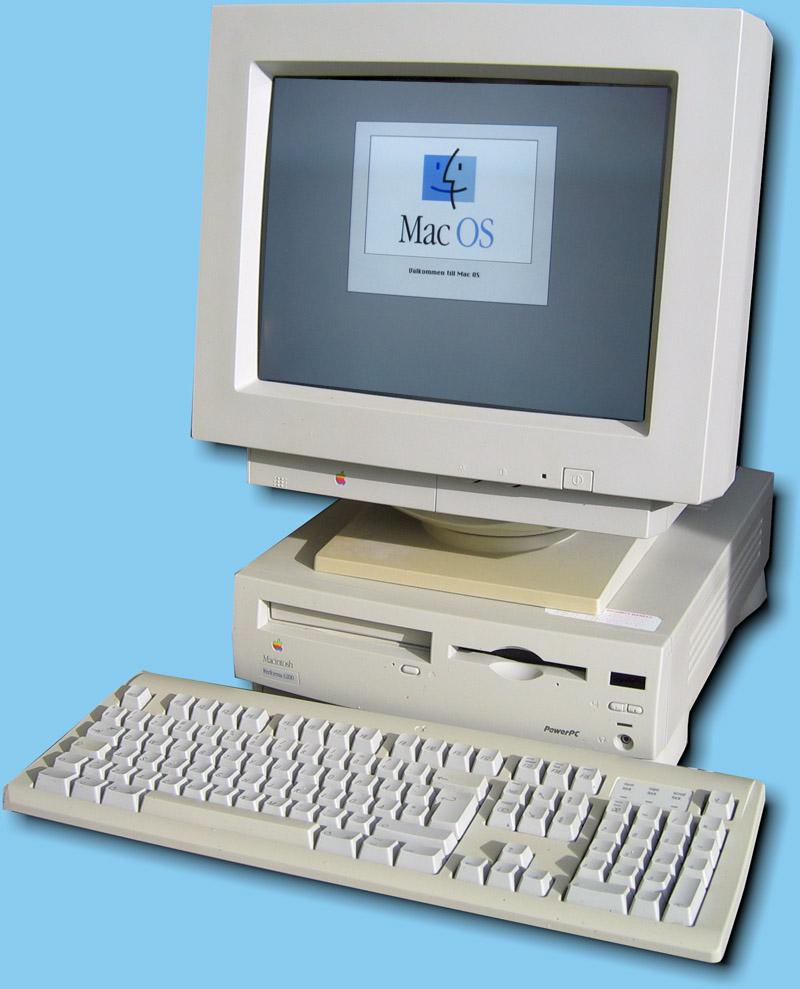
I have a Macintosh Performa 600 Series with CD-ROM
Complete with Monitor, Keyboard, Mouse and external zip drive.
I found a picture on "PC-Museum"
http://pc-museum.com/gallery/rcm-035.jpg
I know that this machine is from the technical perspective kind of if medieval.
But maybe there is a MAC-fan out there somewhere, who likes this one.
It is fully functional, comes with most of the manuals.
Please let me know if you would like to have it - will just go as a bundle!
Maike
------------------------------------
--
Liam Proven ? Profile: http://www.linkedin.com/in/liamproven
Email: lproven at cix.co.uk ? GMail/GoogleTalk/Orkut: lproven at gmail.com
Tel: +44 20-8685-0498 ? Cell: +44 7939-087884 ? Fax: + 44 870-9151419
AOL/AIM/iChat/Yahoo/Skype: liamproven ? LiveJournal/Twitter: lproven
MSN: lproven at hotmail.com ? ICQ: 73187508
Several months ago, someone was looking for an image of the 23-018E2
character generator ROM for a VT100. A generous reader has given me an
image, which I've uploaded to my website at
http://www.dunnington.u-net.com/public/DECROMs/
Better late than never, I hope!
--
Pete Peter Turnbull
Network Manager
University of York
On Tue, Nov 24, 2009 at 8:15 AM, Zane H. Healy <healyzh at aracnet.com> wrote:
> IBM had one or two *INTERESTING* PC desktop designs I've seen that would be
> nearing 10 years old. A few others have as well, but I'm honestly not sure
> anything that was built to run MS Windows will really ever be on-topic, that
> would include modern Macs.
>
So it sounds to me like the rule is, "anything that doesn't run windows,
either because of insufficient power or design."
lol
Although some of the 486 or greater single board computer/passive backplane
thingies could easily run windows. So maybe we need an exemption for
anything that has a design that isn't a classic PC.
And if we exclude modern macs, does that exclusion include the Cube and Mac
Mini? I want both of those machines eventually. What about that goofy mac
that looks like a half-dome with an LCD monitor sticking out? That's
certainly interesting. Was that one intel or did it slip out before the
conversion?
And which version of windows was it that ran on the dec alpha?
brian
> Message: 26
> Date: Wed, 25 Nov 2009 21:18:13 +0000 (GMT)
> From: ard at p850ug1.demon.co.uk (Tony Duell)
> Subject: Re: Cleaning packs
> To: cctalk at classiccmp.org
> Message-ID: <m1NDPFl-000J3yC at p850ug1>
> Content-Type: text/plain
>
> >
> >
> > On Nov 24, 2009, at 1:08 PM, geoffrey oltmans wrote:
> >
> > > Dumb question (perhaps), but do the relative positions of the disk
> > > platters in the pack matter on these systems? I suppose it might for
> > > interleaving purposes for data already recorded.
> >
> > I would suspect yes but never having cleaned multi-platter packs, I'd
> > only do that on packs that I don't care about the data (ie I'm going
> > to format the pack as soon as it's "clean"). If I care about the data
> > that *might* be on them I probably wouldn't disassemble (ie de-stack)
> > the pack.
>
> I would be very careful about dismantling the pack for another reason.
> Often there is no automatic centring of the platters. If you seprate
> them, you will have to centre them up. On the (crashed) 5-platter pack I
> dismantled about 25 years ago (for interest), there were holes throuch
> the top and bottom hparts of the hub through which you put long rods to
> keep the platters and spacers _approximately_ cententerd. But then, I
> think, you have to put the hu on the drive spindle (or a similar spindle
> in a test rig) nd use a dial gauge to position the platters so there's
> no run-out when you rotate the stack by hand. Given that moving one
> platter is likely to slightly move all the others, this is a long and
> tedious job.
>
> -tony
I would not clean any pack that had a lubricated disk surface. The good
news is I am pretty sure that lubrication was introduced with the IBM 3340
(Winchester) so the 2315, 2316, 3336, 3336-11, SMD and their DEC equivalents
(RP0x, etc) were not lubricated. I don't know anything about the later
uniquely DEC packs but I expect they used high load heads and were not
lubricated.
As I recall we cleaned non-lubricated disk packs with a tongue depressor, a
non shedding wipe (Kim Wipe) and isopropyl alcohol (medical grade). You
want to make sure there is no residue!
If you don't care about the data you can disassemble and reassemble disk
packs that do not use a track following servo systems, that is 2316 and
2x2316 types. You do not have to center them up!
If you are real careful you can disassemble and reassemble a servo type disk
pack so long as you are very, very careful not to move (or replace) the disk
containing the servo pattern! This applies to the 3330 and SMD type of disk
packs. A while ago, I was surprised to find out that several "recovery"
houses were doing this routinely and claiming to recover data on the
original disks still in the pack!. If you do move the servo disk, as
witnessed by repeatable runout in the servo system, I am told that some
skilled folks can actually center them up by careful instrumentation,
measurement and gentle tapping of the servo disk in a not fully tightened
assembly.
Tom
Is it worthwhile to rescue a Tek 7xxx scope system with a 7d01 logic analyzer plugin ?
It looks nice, but after reading the manual the usefullness seems limited....
jos
I am trying to find something to put my latest E-bay purchase in. Note I
am not saying that I am trying to find somewhere to put it, I have that
problem whne I uy a complete computer system. This is just one PCB about
5" * 4"
Let me start with some backgrounf information. Everybody rememebrs the
Epson dot-matrix printes of the 1980s, things like the MX80, FX80 and so
on. They had a standard Centronics interface on a 36 pin Blue Ribbon
connector.
What is less well knwon is that these printers have an 2*13 socket on the
main PCB. 25 pins are used ,the other is a locating hey. This conenctor
carries most of the Centronics signals, power lines, and a few others. It
was designed for optional inteface PCBs, there is a blanking plate in
the top case to allow access to a connector on such a PCB.
For example, Epson made a couple of different serial interface PCBs. One
was a bit-banger -- if a particular pin (P/S-) on the connector is pulled
lwo, then data line D8 becomes a bit-banged serial input and the other 7
data lines are used to set the serial interface parameters. The other was
a serail-parallel converter using a microcontroller with buffer memory.
It jhad a parallel inteface to the printer.
Now HP sold a couple of printers called the HP82905 and HP82906. These
were based on Epson models -- in fact they _were_ Epson printers with
different firmware to handle the HP command set. They were fitted with an
Epson HPIB interface card as standard. But there was also a fairly rare
HPIL interace card, made by HP. And that is what I have just bought.
It's a PCB 82905-60001. It contains 2 chips, a 1LB3 (HPIL interface) and
MK3870 (mask-programmed microcontorller) with the obvious support
components. Since it just uses the stnadarsd parallel interface to the
rwst of the printer, it should work in any Epson printer with that
connector, no matter what firmeare is present (at least for printing text).
After getting in on E-bay, but before it arrived, I remembered I had the
Epson HPIB card somewhere. I could even rememebr were. I dug it out, and
found it was missing a jackpost from the HPIB connector. 2 hours later, I
had one fitted. No, it didn't take me that amount of time to find one, I
just graed some brass ron and turned one. FWIW, the screw thread on the
connecto that it screws into is 4-40 UNC, an odd choice (USA HPIB
jackposts have a 6-32 thread on that end, and the Japanese normally use
metric threads, so I would have expected either 6-32 UNC or M3 here).
This board contains 16 TTL chips so should be triival to repair if it
needs it.
Anyway, the problem is that I am short of Epson printers. I have one. I
thought it would be triivial to find such devices, but alas not.
So questions
1) Does anyobody know which Epson models have this internal connector and
which therefore could be used with the interfaces
2) Anyone know for sure what models the HP82905 and 82906 are based on?
3) Anyone in the London (England) area got any such printes that they
want to sell cheaply? I suspect shipping them would be rather expensive,
hense the 'London area' criterion. Obviously the HP models would be fine
too, as would IBM5152 grapghics printers (the TechRef shows the connector
I am talking about).
Thanks in advance
-tony