I am trying to have cplete. H8 h11 and h89 tjus the need for the pardon I requested
Ed Sharpe? archiving for smecc museum.project
On Monday, December 28, 2020 Bill Gunshannon via cctalk <bill.gunshannon at hotmail.com; cctalk at classiccmp.org> wrote:
On 12/28/20 6:37 PM, ben via cctalk wrote:
> On 12/28/2020 4:23 PM, Kevin Lee via cctalk wrote:
>> Remember.
>>
>> Wherever you go......
>>
>> There you are .......
>>
> What about the Invisible Man?
> Ben.
>
>
All joking aside, I sure wish I had a complete H-11.? I have
PDP-11's but the H-11 was unique.
You know, it would be even cooler sitting next to an H-8.
Too bad so few seem to have survived.
bill
I am starting to clean out stuff, and one of the things I don't need are
these new PrismIQ IR keyboards. Apparently they were originally used
with some multimedia stuff in the early 2000s. Because I am just trying
to get rid of this stuff, I am only offering them in cases (boxes) of 10
keyboards. These use IR to connect to the device and have no other
connectors.
The keyboards are membrane type with the main chip inside being a
Winbond W78le812-24. Power is supplied by four AA batteries.
The cases (10 keyboards) are 20 pounds with a size of 18"x18"x10", and I
am in Santa Barbara, CA. Unfortunately, I am unlikely to run out since I
have some 40+ cases of them. I generally ship USPS Priority but can ship
UPS if necessary. And again, they are free for the cost of shipping.
The subject says all =) I'm specially interested in images (or the cards)
of the 11807E opt 100 and the A.02.04 firmware
Thanks!
Alexandre, PU2SEX
---8<---Corte aqui---8<---
http://www.tabajara-labs.blogspot.comhttp://www.tabalabs.com.br
---8<---Corte aqui---8<---
There's a whole bunch of Toshiba "1-chip" QFPs I've run across. Does anyone
know of datasheets, or what components (mask ROM, LCD, RAM, I/O, ...) they
have? These are usually in cheapie toy systems, particularly VTech. Some
allegedly have Z80-compatible cores in them.
T7951 (I found this paired with a 2764 ROM)
T7812
T7813
T7826
They all appear to be part of the same family.
--
------------------------------------ personal: http://www.cameronkaiser.com/ --
Cameron Kaiser * Floodgap Systems * www.floodgap.com * ckaiser at floodgap.com
-- Denial: it's not just a river in Egypt anymore, is it? -- "True Lies" ------
We have a heath h11 that could u se one at smecc museum.project...Chris.? Thanks ed drop ne a lune offlist... thanks....Ed#
On Sunday, December 27, 2020 Gary L. Messick via cctalk <Gary at realtimecomp.com; cctalk at classiccmp.org> wrote:
Chris,
I could use one.? I have an h-11 system that has issues with the h-27 system.
Please contact me off list.
Gary
Gary at realtimecomp.com
-------- Original message --------
From: Chris Zach via cctalk <cctalk at classiccmp.org>
Date: 12/27/20 4:42 PM (GMT-05:00)
To: CCTalk mailing list <cctalk at classiccmp.org>
Subject: Does anyone have an H11 and need a H27 card?
I have one, and if someone needs to to complete their collection I'd
rather it goes there. If you just want to put it on Ebay pls don't
bother as I can do that but if you really need one let me know.
CZ
I have one, and if someone needs to to complete their collection I'd
rather it goes there. If you just want to put it on Ebay pls don't
bother as I can do that but if you really need one let me know.
CZ
Hello Folks,
I?m having fun time to erase used DDS tapes for reuse. I?ve been collecting those over years. Recently, I discovered that with DEC brand tapes, the drive reports the cartridges to be write protected, eventhough the slider is closed which means, they?re supposed to be writable. I suspect there is a software write protect flag on them.
Any thoughs, hints, advices how to unlock these tapes for overwrite?
:wq! PoC
I have a bunch of Sun keyboards that I need to store more efficiently
and don't want to risk damaging by stacking on top of each other. They
are Type 4s, 5s, and 6s (without the wrist rest), maybe 10 in total.
Anyone here know of a box or boxes that would work well for this?
alan
Hi Alan,
I go to my local shopping center.
The fish shop there, has the fish delivered in white foam boxes.
Some are long with lids.
I go dumpster diving and collect them.
They are suitable for keyboards,
depends on the length of the keyboard,
and the length of the fish.
Regards
Ray
> On Mon, 2020-12-21 at 22:17 -0800, Alan Perry via cctalk wrote:
>> I have a bunch of Sun keyboards that I need to store more
>> efficiently
>> and don't want to risk damaging by stacking on top of each other.
>> They
>> are Type 4s, 5s, and 6s (without the wrist rest), maybe 10 in total.
>> Anyone here know of a box or boxes that would work well for this?
>>
>> alan
So I'm working on compiling some programs on my Pro/380. 2.0 OS,
Fortran77 compiler, Empire is the sample game. I got it to compile
properly but when I try to link it the linker/tkb/pab fails with a bunch
of undeclared references.
Some of them are in the F77FCS.OLB library files on my pdp11/83 (M+ 4.6)
like $CLOS, ISF$, $OSF, and $OPEN, but others like $EOLST, IOAB$, IOAI$,
TT$EFN, and others are missing as well.
Did DEC really jerk people around so badly by selling the FCS or RMS
libraries as a separate installed product? I see some reference to
RMSLIB.OLB but it's not on this system.
Weird.
CZ
Hi all,
I?m just starting in on a PDP-11/34 for a friend (happy holidays!) I currently have the H765 power supply torn down for cleaning, inspection, and testing as a first step.
While I have the transformer out on the bench, I?m wondering about the line interference supression caps on the ?CAP MOV? board attached to the transformer. These are CDE 220 VAC .1 MFD, across the line, in parallel with some metal oxide varistors.
Drawing on collective experience here: would I be well advised to go ahead and swap these out for some modern X2 safety caps while I have the supply apart? Or are these in the ?oh those are rock solid; I wouldn?t touch em unless they were faulted? category?
cheers!
?FritzM.
On 12/22/20 18:00, cctech-request at classiccmp.org wrote:
> Send cctech mailing list submissions to
> cctech at classiccmp.org
>
> To subscribe or unsubscribe via the World Wide Web, visit
> http://www.classiccmp.org/mailman/listinfo/cctech
> or, via email, send a message with subject or body 'help' to
> cctech-request at classiccmp.org
>
> You can reach the person managing the list at
> cctech-owner at classiccmp.org
>
> When replying, please edit your Subject line so it is more specific
> than "Re: Contents of cctech digest..."
>
>
> Today's Topics:
>
> 1. RL02 Tracking (Aaron Jackson)
> 2. Re: RL02 Tracking (Aaron Jackson)
> 3. Re: RL02 Tracking (Jon Elson)
> 4. Re: RL02 Tracking (Josh Dersch)
> 5. Re: RL02 Tracking (Aaron Jackson)
> 6. Re: tty and video displays (Jules Richardson)
> 7. Re: Keyboard storage (Guy Sotomayor)
> 8. Wordperfect 6.0 for DOS (Van Snyder)
> 9. Re: RL02 Tracking (Noel Chiappa)
> 10. Keyboard storage (Alan Perry)
> 11. Re: Keyboard storage (Warner Losh)
> 12. RE: Keyboard storage (Ali)
> 13. Re: Keyboard storage (Alan Perry)
> 14. RE: Keyboard storage (Ali)
> 15. Re: Keyboard storage (Alan Perry)
> 16. Re: Keyboard storage (Guy Sotomayor)
> 17. RE: Keyboard storage (ED SHARPE)
> 18. Re: RL02 Tracking (Christian Corti)
> 19. Re: Keyboard storage (Patrik Schindler)
> 20. Re: RL02 Tracking (Aaron Jackson)
> 21. Re: RL02 Tracking (Aaron Jackson)
> 22. Re: Keyboard storage (Alan Perry)
> 23. Re: Keyboard storage (Bill Degnan)
> 24. Re: Ouch, but 2 Perqs out. (Why 42? The lists account.)
> 25. Re: Ouch, but 2 Perqs out. (Why 42? The lists account.)
> 26. Re: Ouch, but 2 Perqs out. (Tony Duell)
> 27. Re: Ouch, but 2 Perqs out. (Tony Duell)
> 28. Re: Ouch, but 2 Perqs out. (Chris Zach)
> 29. RE: Keyboard storage (Fred Cisin)
> 30. RE: Keyboard storage (ED SHARPE)
>
>
> ----------------------------------------------------------------------
>
> Message: 1
> Date: Mon, 21 Dec 2020 19:08:14 +0000
> From: Aaron Jackson<Aaron.Jackson at nottingham.ac.uk>
> To: "cctalk at classiccmp.org"<cctalk at classiccmp.org>
> Subject: RL02 Tracking
> Message-ID:<91bim8vyo2q.fsf at mimas.cs.nott.ac.uk>
> Content-Type: text/plain; charset="iso-8859-1"
>
> Hi everyone
>
> I've posted a few times over the years about RL02 drives and my
> difficulty getting them working (no luck so far!). I've spent the past
> few days working on one of them and have made some progress.
>
> The status currently is that the heads will load, and the ready lamp
> flashes as the heads wobble back and forth very slightly, trying to lock
> onto the outer servo guard band. Probing TP2 of the read/write module, I
> can see the S1 servo burst flash (roughly in time with the ready
> lamp). If I disconnect power to the servo motor, I can manually move the
> head onto the outer guard band (less than a mm away) and monitoring the
> position signal (TP15 on the drive logic module) shows this to be close
> to 0. So, I'm very confused.
>
> I've worked through chapter 3 multiple times...
>
> - voltage checks - all good
> - sector transducer output check - all good
> - sector pulse timing check - all good
> - read signal amplitude check and adjustment - all good
> - positioner radial alignment - required some tweeking but is good now
> - head alignment - looks good to me
> - spindle runout check - a little noisy but within spec
> - position signal gain check - looked ok
> - tachometer ac noise pickup check - this one didnt look so good
>
> Supposedly if the main drive motor is bad it will emit noise and cause
> the tachometer (just a coil of wire on the head carriage) to produce
> spikes. Mine does look quite noisy but I'm not sure what's causing it. I
> would expect that if it was picking up noise, I'd be able to detect this
> with my oscilloscope probe by putting it close to the motor, but I
> can't. Any ideas?
>
> Also, thanks to pjustice on irc who suggested checking the spindle
> grounding button. Mine is very worn out but I've been able to apply some
> pressure to it from the under side which reduces the resistance of the
> spindle to ground, from 400 ohm to 0 ohm. This didn't make the situation
> any better though.
>
> Still, the situation over all is much better now than it was last time I
> looked at the drive (over two years ago now I think). Previously the
> heads would attempt to load and then the fault lamp would come on
> immediately. At least now it's trying to lock onto a track. I have the
> same results with two cartridges (which is all I have!).
>
> If anyone has any ideas I'd love to hear them!
>
> Aaron
Aaron,
One thing I would check is the motor bearings. What happens on electro
mechanical assemblies left in store for years is that ball bearing
grease lube dries out and hardens, resulting in lumpy rotation and
increased friction that can be detected by rotating the spindle by
hand. RLxx series drives were very reliable typically, but the head
movement assy is pretty cheap and cheerful. Converting spindle to
linear movement, minimum parts count, dc brush brush motor, means that
all the bits need to be smooth in operation, with no stiction anywhere
in it's travel.
I would take the motor out and if it can't be stripped to clean the
bearings, use a dab of light clock oil to relube. Also, check the
brushes and clean / polish the commutator. Any other ball bearings
in the path, same process. DC brush motors can be a nightmare for
that sort of precision positioning application...
Chris
> The ready lamp flashes not when the servo burst is >visible, but when the
heads are just before it.
> Why? Well, I probably set the gain too high on the read/write module.
Hello,
I'm sure you read the manual, however I add some explanation to be sure.
The best head position is not where a servo track is at maximum amplitude
(head is exactly centered to a servo track), but where you read two servo
tracks with the same amplitude (so head is exactly between two servo
tracks, in middle position).
Comparative measurement of two servo tracks allow the servo control to
understand the position of the head in respect to data track.
If the best position for data track is not where servo have same amplitude
probably the head is misaligned or the spring support of the head bent /
deformed.
To analyze head circuits you need a good oscilloscope, you should be able
to see burst of servo tracks and data tracks too, with two channels you can
understand if analog to digital threshold / pulses signal conversions do
work as expected.
Time ago I fixed an RL02 having a malfunctioning head amplifier circuit.
The gain was too low. When I increased it rotating variable resistor, the
circuit begun to ring (barely auto-oscillate), so was nearly unstable. Data
and servo signals were corrupted, but this was visible only zooming on
oscilloscope after careful trigger alignment.
I don't remember exactly what I did, but some capacitors needed
replacement, then I tuned head gain while loading a platter to the best
position for operation, maybe slightly lower than manual recommendations.
Then it worked perfectly.
Andrea
Hopefully someone will have some....
The blasted one is on the left? side of the keyboard.
Having a spare for the right side? probably not a bad idea too...
We were missing keyboards? and got this like new one? gifted to us.? It was heartbreaking to see it damaged in shipping.
We have a couple early 5150 umits with? expansion chassis.? Although only one of the? monster interconnect cables between the? pc and expansion chassis.
Looking for posters lapel pins? and other display art to fill in? open areas...
Any other ideas wekcome!
Ed#
On Tuesday, December 22, 2020 Fred Cisin via cctalk <cisin at xenosoft.com; cctalk at classiccmp.org> wrote:
Ed, that was excellent!? We appreciate the extra effort.
Alas, you are 15 years too late for my extra 5150 keyboard parts.? They
didn't make it through the third move (Ben Franklin commented how that was
as disruptive as a fire)
--
Grumpy Ol' Fred? ? ??? ??? cisin at xenosoft.com
On Tue, 22 Dec 2020, ED SHARPE via cctalk wrote:
>
> Let's try this...
>
> Had a ibm orig pc key board shipped in large flat rate Game size box.?
>
> Alas it was dropped on the corner and torn somewhat.
>
> I had to remount keyboard pc inside the case that had moved? and hardest part was getting ground wire back
>
> Worse part was one of the corner edge flip up things that keeps key at an angle bad snapped off.???? Museum needs parts to fix this? as it is nice to display keyboard at an angle
>
> Alas? that particular Clicky keyboard is extremely heavy ... this is the one for first ever ibm pc.?? Corner drop shock is a killer.
>
> ? Beware? pack these early keyboards really well...
>
> OK does anyone have parts for the little mechanism on the end that keeps keyboard tilted at an angle?
>
>
> .Ed Sharpe archivist for SMECC museum project
> On Tuesday, December 22, 2020 Fred Cisin via cctalk <cisin at xenosoft.com; cctalk at classiccmp.org> wrote:
> On Tue, 22 Dec 2020, ED SHARPE via cctalk wrote:
>> Had a ibm orig pc key board shipped in large flat rate. Game size box.? Alas was,dropped on. Ornery and torn some on box... I had to remount keyboard pc inside that had moved lo and neef nd one of the corner edge til tje kry bad snapped off...??? that particular Clicky keyb I ad is extremely heavy for first ever ibm pc.??? Be ware? pack really well......
>> Help anyone got parts for the tilter
>> ...thing? for these keyboards????
>> ...ed sharpe
>
> May we suggest that you switch temporarily to a working keyboard (or
> "keyb" if you prefer) until you can repair the shipping damage.
> What is "lo and neef nd"?
> "til tje kry bad"?
> It must be hard on you to have to proofread and fix all of the errors that
> it creates.
Let's try this...
Had a ibm orig pc key board shipped in large flat rate Game size box.?
Alas it was dropped on the corner and torn somewhat.
I had to remount keyboard pc inside the case that had moved? and hardest part was getting ground wire back
Worse part was one of the corner edge flip up things that keeps key at an angle bad snapped off.???? Museum needs parts to fix this? as it is nice to display keyboard at an angle
Alas? that particular Clicky keyboard is extremely heavy ... this is the one for first ever ibm pc.?? Corner drop shock is a killer.
? Beware? pack these early keyboards really well...
OK does anyone have parts for the little mechanism on the end that keeps keyboard tilted at an angle?
.Ed Sharpe archivist for SMECC museum project
On Tuesday, December 22, 2020 Fred Cisin via cctalk <cisin at xenosoft.com; cctalk at classiccmp.org> wrote:
On Tue, 22 Dec 2020, ED SHARPE via cctalk wrote:
> Had a ibm orig pc key board shipped in large flat rate. Game size box.? Alas was,dropped on. Ornery and torn some on box... I had to remount keyboard pc inside that had moved lo and neef nd one of the corner edge til tje kry bad snapped off...??? that particular Clicky keyb I ad is extremely heavy for first ever ibm pc.??? Be ware? pack really well......
> Help anyone got parts for the tilter
> ...thing? for these keyboards????
> ...ed sharpe
May we suggest that you switch temporarily to a working keyboard (or
"keyb" if you prefer) until you can repair the shipping damage.
What is "lo and neef nd"?
"til tje kry bad"?
It must be hard on you to have to proofread and fix all of the errors that
it creates.
Had a ibm orig pc key board shipped in large flat rate. Game size box.? Alas was,dropped on. Ornery and torn some on box... I had to remount keyboard pc inside that had moved lo and neef nd one of the corner edge til tje kry bad snapped off...??? that particular Clicky keyb I ad is extremely heavy for first ever ibm pc.??? Be ware? pack really well......
Help anyone got parts for the tilter
...thing? for these keyboards????
...ed sharpe
On Monday, December 21, 2020 Ali via cctalk <cctalk at ibm51xx.net; cctalk at classiccmp.org> wrote:
> Is this the USPS large flat rate box size that isn't the rectangular
> one
> that post offices usually have. I just noticed the size mentioned on
> the
> Click-N-Ship site.
>
> alan
Yes. It is not usually stocked at the PO. You have to "order" them from the USPS website. They have the measurements there so you can verify your KBs will fit. However, I have shipped IBM 122 key terminal KBs in them without issues. Only thing that may not fit would be some of the older IBM KBs (like the ones on the Displaywriter).
-Ali
Hi everyone
I've posted a few times over the years about RL02 drives and my
difficulty getting them working (no luck so far!). I've spent the past
few days working on one of them and have made some progress.
The status currently is that the heads will load, and the ready lamp
flashes as the heads wobble back and forth very slightly, trying to lock
onto the outer servo guard band. Probing TP2 of the read/write module, I
can see the S1 servo burst flash (roughly in time with the ready
lamp). If I disconnect power to the servo motor, I can manually move the
head onto the outer guard band (less than a mm away) and monitoring the
position signal (TP15 on the drive logic module) shows this to be close
to 0. So, I'm very confused.
I've worked through chapter 3 multiple times...
- voltage checks - all good
- sector transducer output check - all good
- sector pulse timing check - all good
- read signal amplitude check and adjustment - all good
- positioner radial alignment - required some tweeking but is good now
- head alignment - looks good to me
- spindle runout check - a little noisy but within spec
- position signal gain check - looked ok
- tachometer ac noise pickup check - this one didnt look so good
Supposedly if the main drive motor is bad it will emit noise and cause
the tachometer (just a coil of wire on the head carriage) to produce
spikes. Mine does look quite noisy but I'm not sure what's causing it. I
would expect that if it was picking up noise, I'd be able to detect this
with my oscilloscope probe by putting it close to the motor, but I
can't. Any ideas?
Also, thanks to pjustice on irc who suggested checking the spindle
grounding button. Mine is very worn out but I've been able to apply some
pressure to it from the under side which reduces the resistance of the
spindle to ground, from 400 ohm to 0 ohm. This didn't make the situation
any better though.
Still, the situation over all is much better now than it was last time I
looked at the drive (over two years ago now I think). Previously the
heads would attempt to load and then the fault lamp would come on
immediately. At least now it's trying to lock onto a track. I have the
same results with two cartridges (which is all I have!).
If anyone has any ideas I'd love to hear them!
Aaron
(Sorry, as usual, about the footer appended by my university.)
This message and any attachment are intended solely for the addressee
and may contain confidential information. If you have received this
message in error, please contact the sender and delete the email and
attachment.
Any views or opinions expressed by the author of this email do not
necessarily reflect the views of the University of Nottingham. Email
communications with the University of Nottingham may be monitored
where permitted by law.
> From: Josh Dersch
> RL02 packs that have been degaussed.
Might as well hammer nails through them. "To keep the heads properly aligned
on the tracks, it used a servo system driven by servo data written on the pack
(along with sector headers) at the factory. Packs cannnot be low-level
re-formatted in the field".
Noel
Often for data input one could use over strike characters for input. Not
EQ might be = BS | Did any video display terminals
repeat the same effect?
Ben.
Hi all,
I'm hoping to get an answer here.
The 8625 barcode printer has a prompting mode, switched on by activating
the bottom switch in a bank of switches. The printer is then supposed to
write a prompt, so you can start programming the label formats.
I seem to remember that the printer expects a CTRL+H sequence to be
reset/restarted, but nothing happens.
Can any of you remember the settings for the terminal (I do know about
9600,7,1,even) ? I'm not sure on which terminal the printer expects to
write to. VT100 ? ANSI? ? And how about flow control?
Any help would be appreciated
Regards
Nico
PS The printer is to be used for museum purposes, and as usual, the
museum has no money to spend :-(
And one more thing,
Am wondering about the possibility of setting up an interface between
modern Unix email and the embedded client for cc:Mail on the HP 200LX.
Various versions of cc:Mail are available from archive.org and
vetusware.com, but the missing link seems to be the "client" type
connection from the cc:Mail post office to the internet, i.e. for the
PO machine to connect periodically and collect mail, rather than just
acting as a server.
Have not been able to find much technical information about cc:Mail. I
did see a Lotus development kit for sale somwhere but seems to have
lost the link.
Does anybody here know anything about this? Are there any books or
technical documents on cc:Mail available anywhere?
/Tomas
I ran across a reference to this on FB.? It appears to be from 2008, so
may be well known or obsolete material.
The other interesting info at the end of the article is the contact name
and info about someone who restores or works on tape heads.
Might be interesting to at least contact and ask if he's still around
http://www.wendycarlos.com/bake%20a%20tape/baketape.html
Contact John French, at JRF Magnetic Sciences (973-579-5773) for further
details on magnetic tape head restoration and storage, and other related
services and products.
FB page with the info.
https://www.facebook.com/ReelToReelTapeRecorders/photos/a.532104240183459/3…
The fellow who does a lot of tape recorder (reel to reel) repair has a
FB group worth dropping in on.? This is the link to a photo with a
pretty bad Ampex head.
thanks
Jim
>
> On 12/16/2020 05:40 PM, robinson--- via cctalk wrote:
>> Hi all,
>>
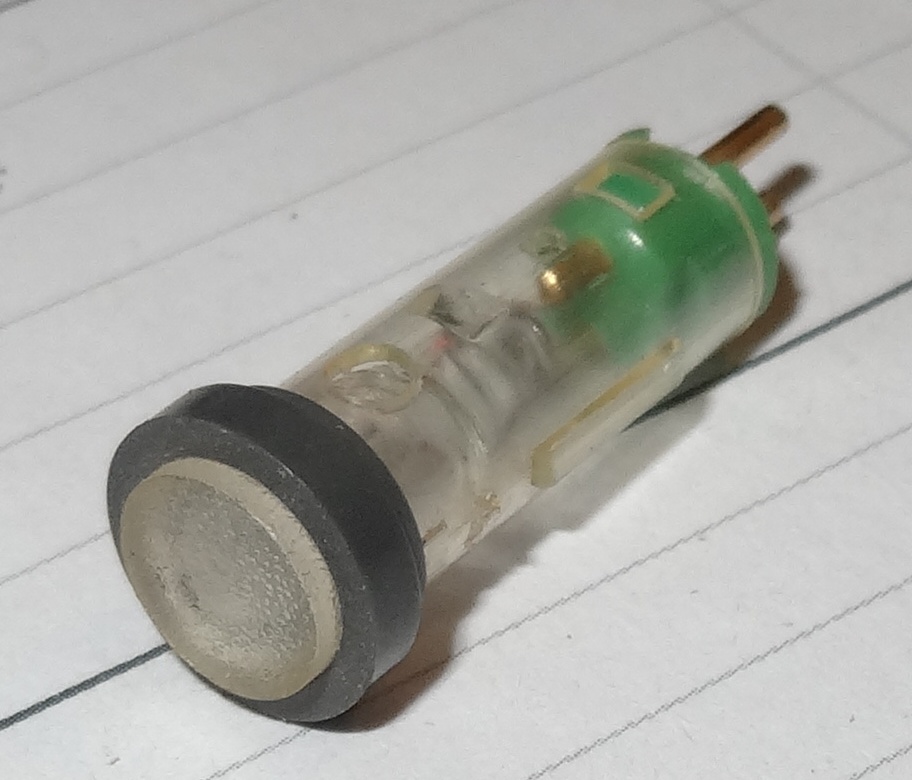
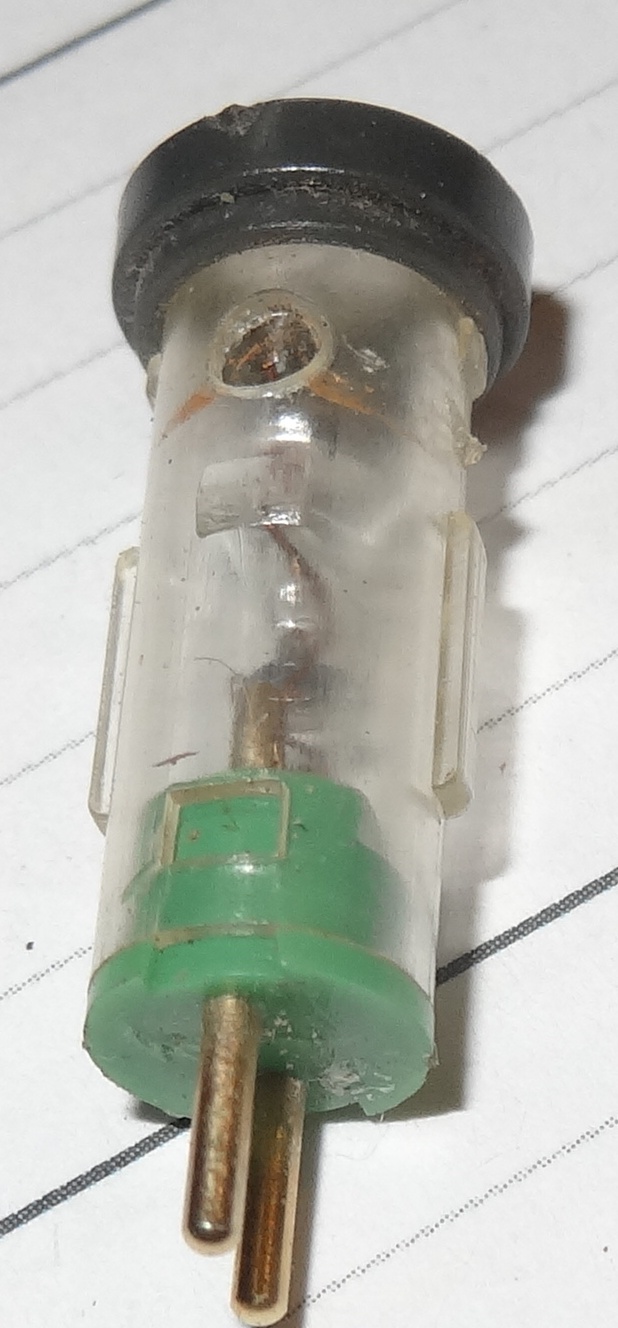
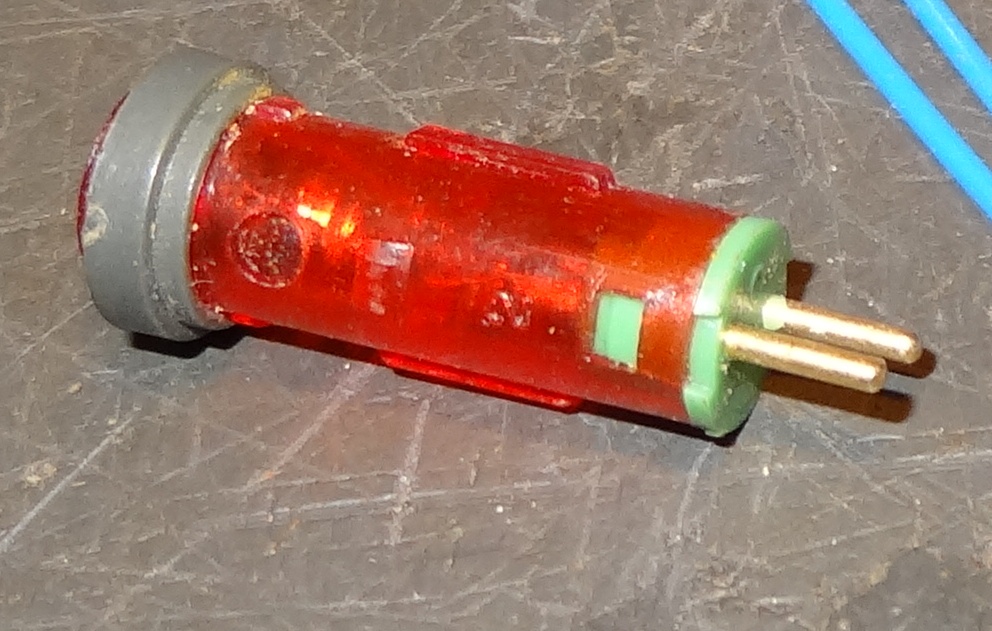
>> I am setting up an IBM 2803 and 2804 INTEFACE test panel.
>> I need some lamps and lamp holders for it,
>> lamp voltage not important,
>> lamp color not important.
>>
>> Does anyone have any for sale
>> or know where I can get some please.
>>
>>
> These are going to be VERY hard to find. Some people have
> saved 360 front panels, but are not likely to part with the
> bulbs. What you might need to do, if function is not
> required, is to get a single lamp from somebody, and 3D
> print some pieces to assemble into a facsimile.
Last time I was at the Living Computer Museum, I talked to the guy restoring their 370 panel, who was using LEDs, because the original bulbs are all but unobtainable and do not lave a long service life. This is likely to be something you end up needing to approximate with modern components.
Adam
I'm listing this stuff just in case someone is desperate for
any of it.
All items are as-is and free. Pickup only here in London, ON.
I'm too old and too tired to run around shipping things.
I'll hold on to this stuff for a couple of weeks; after that it's
the recycling bin.
Softech microsystems UCSD p-System 8" floppy disks:
CPM40D CPMDISK (BOOTER)
UG84AT.C UPGRADE IV.03 Jun 16 1982
N8P4AT 8080 NATIVE CODE GENERATOR Jun 16 1982
LXP4BT UCSD Pascal Compiler Jan 1983
LXP4AT.B UCSD Pascal Compiler Jun 16 1982
UGC4AT.A UPGRADE Jun 16 1982
OII40D ADAP ORIENTER Jan 5 1983
IZP4BT.B Interpreter Jan 26 1983
CZP4BT.B CPM ADAPTABLE Jan 26 1983
SAP4BT.A SYSTEM Jan 26 1983
CPM4BD CPM READABLE Jan 26 1983
N8P4BT 8086 Native Code Genator (sic) Jan 26 1983
Hayes V-series Smartmodem 9600 (in box)
XT parallel port card
Apple mouse A2M4015
2 x Tandem binders
1 x GA binder
General Automation GA-16/220/330 microconsole and system console reference card
Raytheon PTS-100 reference card
Interdata model 70 and 80 programmer's guide reference card (1971)
Databooks:
M6800 Microcomputer Family - a 79 page Motorola pamphlet containing specs etc.
AMD Am29800 Family High Performance Bus Interface 1981
AMD MOS/LSI Data Book 1976
Synertek 1979 Data Catalog
Microprocessor Data Package - International Electronics Unlimited booklet
on IMP MM5750, MM5751 CPU set
Data Sheets:
CR-112 4K MOS RAMs from Texas Instruments - reliability report for TMS 4030, 4050, 4060
IMS2620 High Performance 16Kx4 Dynanic RAM - inmos #110 May 1983
IMS2630 High Performance 8Kx4 Dynanic RAM - inmos #111 November 1983
IMS2600 High Performance 64Kx1 Dynanic RAM - inmos #101 November 1983
GTE 8104/8114 Static RAMs 1024x8 N-MOS April 1980
Texas Instruments MOS/LSI Memory and Microprocessor Products June 1976
Books:
The SNOBOL4 Programming Language - Griswold et al
Manuals:
Courier 270 Information Display System Operator's Manual pub # 30-0002-00-00 Jun 1975
ICC 40+ Data Display System Installation and Operation
GA 16/220 prints - this is a very complete set:
CUP NO. I, CPU NO. II, SYS. CNSL. INTF. W/IPL, 8K RAM, MEMORY SERVICE MODULE, TTY/with PS,
RS-232/TTY, COMPACT MIB, COMPACT PS
Has anyone got a couple of the white plastic rivets which are used to
hold the Jupiter Ace case together?
They consist of a 4-point clawed rivet of about 5mm long, and a pin
which pushes down the centre to open it out.
I need five of them ideally - but even two or three would get the case
buttoned up, if not perfectly.
I've checked the local plastic supplier catalogues and haven't found
anything which quite matches up.
Cheers,
--
Phil.
philpem at philpem.me.uk
https://www.philpem.me.uk/
Hi,
Some years back, I was asking if anyone had information about the speech
synthesizer
developed for the Altair 8080 by Wirt Atmar of AICS (in New Mexico).
No "hits".
Most places on the web claimed the Computalker was first, given the date as
1976 or 1977.
(Earlier speech synthesizes existed, but they were external boxes that one
interfaced to,
or were standalone (often with a large/weird keyboard).)
Today, I stumbled over a fairly bad OCR of Byte magazine from August, 1976
at
https://archive.org/stream/byte-magazine-1976-08/1976_08_BYTE_00-12_Speech_…
It has two articles about speech synthesizers for S-100 bus systems.
The first is by the Computalker people, who say:
At the time this article
goes to press, a synthesizer
module incorporating several
detail refinements and im-
provements over the circuits
of this article is being de-
veloped by the author and
associates.
and
A detailed user's
guide will be supplied with the
Computalker module
Note the future tense!
The second is by Wirt Atmar, whose product *was already shipping*.
Near the end of his Byte article, Wirt lists currently available products:
At the present time, two speech synthesizers
are both commercially available and affordable by
the hobbyist.
One is the Votrax produced by:
Vocal Interface Division
Federal Screw Works
500 Stephenson Dr
Troy Ml 48084
Price, approximately $2,000
Interfacing: Parallel or Serial (RS-232)
The second is the Model 1000 manufactured by:
Ai Cybernetic Systems
PO Box 4691
University Park NM 88003
Price, $425
Wirt had told me (twenty years ago or so) that he thought his was the first
for microcomputers (e.g., a user installed card, not an external box).
Now, I'm sure ... but it was realllly close!
Wirt demonstrated his product at the earlier MITS World Altair Computer
Conven-
tion, where it won first prize.
He advertised it poorly/infrequently, since it was mostly a side business.
And, that shows, since history doesn't remember it.
Stan
> I can't pick up in ON, unfortunately, but if someone who is in the area
> could please pick up this "Microprocessor Data Package" and ship it to
> me, I'd be willing to pay anything reasonable, or maybe slightly
> unreasonable.
You probably know this already, but if you're willing to pay, there are 'pack
and ship' services who will show up at a location, take the stuff to be
shipped, go pack it up, and ship it. I have used PakMail:
http://www.pakmailcanada.com/
several times to retrieve things in this way (they shipped my PDP-11/45 from
Ontario, although the seller did a lot of the packaging in that particular
case), and have generally been happy with them. I don't see a London location,
but maybe one of their other Ontario locations:
http://www.pakmailcanada.com/pakmail-canada-locations
is close enough to be useable?
Noel
Were you the winner of the eBay auction? It went for a very reasonable price. It was very difficult for me to not bid on it - those are great boards for use with early S100 systems :)
Mike
Hi,
I'd like to apologize for referring to the OCR of the Byte article as a
"fairly bad OCR".
I was thinking of the garbled sections that may be the result of trying to
OCR graphics.
The vast majority of the text comes across clearly, and I don't want to
insult whoever volunteered their time to do the OCR'ing ... I know how
tedious it can be!
I've been spoiled by OCR programs that produce their output as pdfs with
searchable text,
and should have remembered the results I get when I look at just their text!
Stan
Paul writes:
> General overstrike requires a bitmap display, or some sort of persistent
display.
Although he carefully specified 'general overstrike', I'll still mention
how the HP 2641A (an APL terminal) did it. When about to enter a newly
received character into memory, the terminal checked if a non-blank was
already in that spot ... if yes, it looked up the pair in an internal ROM
table and replaced the existing character code with a new character code
designed for APL\3000 (a code that, when received, would display as the
appropriate overstrike).
That meant that we couldn't use the terminal at Burroughs, because our APL
had a few overstrikes that weren't in the table.
Stan
I came across this among some junk I had.
Don
.TY NEMON.DOC
LEVEL 5 MACRO-10 MNEMONICS
=============================
COINCIDENT WITH THE RELEASE OF THE LEVEL 5 MONITOR SERIES, THE
MNEMONICS FOR THE HARDWARE INSTRUCTIONS USED IN THE MACRO-10
ASSEMBLER HAVE BEEN UPDATED TO REFLECT CHANGES TO THE MONITOR, AND
NEW OPERATING PROCEDURES. ALTHOUGH THEY HAVE NOT ALL BEEN IMPLEMENTED
AS YET, A PARTIAL LISTING FOLLOWS:
TRCE TRANSLATE REDUNDANT CODE TO ETHIOPIAN
ROTC REQUEST OPERATOR TAKE OFF CLOTHES
TDCE TRY TO DUMP CORE EVERYWHERE
HRR HASH RELOCATION REGISTERS
XCT EXTEND CYCLE TIME
ANDCMB ALLOW NO DIRECT CURRENT IN MEMORY BANKS
AOSE ALERT ONE SYSTEMS ENGINEER
SETNM START EJECTING TRANSISTORS AT NEAREST MACHINE
SETCM STOP EVERYTHING TO CRASH MONITOR
SETAM START EATING TAPE ON ALTERNATE MONDAYS
TLCN THROW LIFEPRESERVER INTO CHANNEL FOR NON-SWIMMER
MULM MONITOR UPDATE FROM LUNAR MODULE
MOVMS MAINTAIN ONLY VARIABLE MAGTAPE SPEED
FSBRI FIVE SONIC BOOMS OVER REMOTE INTERFACE
HRRES HIJACK REMOTE READER TO ENGINEERING SCIENCE
HRREM HALT AND REVERSE ROTATION ON EVERY MAGTAPE
JUMPE JUMBLE USERS' MEMORY ON PARITY ERROR
IDPB IMMEDIATELY DROP PARITY BIT
SETCAI SUDDENLY ELECTRIFY TERMINAL ON CRUDELY ARTICULATED INPUT
JFFO JAIL AND FINGERPRINT FLIPPANT OPERATOR
ORCMB OPERATOR REQUEST TO CHANGE MAIN BATTERIES
SKIP SEARCH FOR KNOT IN INPUT STRING
SKIPL SKIP ON KNOT IN POWER LINE
ORCBI ORDER REDUNDANT CHANNELS TO THE BACK OF THE I/O BUS
SUBI START UNLOADING BAGGAGE FROM THE I/O BUS
PUSH PUNCH USING SEMI-CIRCULAR HOLES
JUMPL JUMP AND UNRAVEL MAIN POWER LINE
SOSL SMEAR OUTPUT ON SLOW LINE PRINTERS
TRON TRY TO REWIND OPERATORS' NECKTIE
SOSN SEND OUTPUT TO SUPERVISORS' NECKTIE
AOBJN ADD ONE BIT TO JOB NUMBER
IMULM INSIST THAT MALICIOUS USERS BE LOCKED IN MEMORY
FMPR FORGET MEMORY PROTECTION AND RELOCATION
FMPRB FAKE MONITOR PROBLEMS AND RESET BRIEFLY
CAIE CHANGE ADDRESSING TO INEFFECTIVE FROM EFFECTIVE
TRN TRANSLATE TO ROMAN NUMERALS
DPB DETACH PROCESSOR BRIEFLY
DIVB DECODE INTEGERS TO VERIFIED BRAILLE
SETCAI SNICKER ON ERRONEOUS TYPEIN FOR CAI
DIVMB DESTROY INDIVIDUAL MEMORY BANK
ORCB OUTPUT A RECORD CODED IN BRAILLE
TRCE TRANSFER ON ROMAN CATHOLIC ENGINEER
TLNE TRANSFER ON LUTHERAN ENGINEER
TROA TRANSFER ON ATHEIST
SOS SERVICE ONLY STUDENTS
SOJG SERVICE ONLY JEWISH GRAD STUDENTS
TDC TAKE DISK TO CHIROPRACTER
TSCA TURN SYSTEM CLOCK AHEAD
FADRB FILTER AIR ON DETECTING ROPE BURNING
FADM FILTER AIR ON DETECTING MOUNTIE
PUSHJ PROCESS USER'S SHORTHAND JOB
TDCA TYPE DOCUMENTATION, CENSORING ANECDOTES
MOVEM MONITOR OUTPUTS A VULGAR ERROR MESSAGE
ADDM ALLEVIATE DELAYS IN DECTAPE MOUNTING
AOSL AWAKEN OPERATOR IF SNORING LOUDLY
CAIE CENSOR ALL INPUT FROM ENGINEERING
DPB DISPLAY PASSWORDS FROM BATCH
FSBM FAST SPLICE OF BROKEN MAGTAPE
BLT BEGIN LOSING TIME
S0JG STACK OPERATOR (JUST GIRLS)
TSON TIME SLICE OF ONE NANOSECOND
JRST JOG 'ROUND SEVEN TRACK TAPE
TSC TRANSFER SWAPPING TO CARDS
I'm listing this stuff just in case someone is desperate for
any of it.
All items are as-is and free. Pickup only here in London, ON.
I'm too old and too tired to run around shipping things.
I'll hold on to this stuff for a couple of weeks; after that it's
the recycling bin.
Hardware:
12 x M594
2 x M971
M970
R002
BC08R-01
H8611
VT-52 coils (flyback, etc)
VT-100 current loop interface card
VAX PASCAL manuals:
AA-D030A-TE VAX/VMS Primer (VMS V01)
SPD 25.11.4 VAX-11 PASCAL 1.1
AA-H484A-TE VAX-11 PASCAL Language Reference Manual
AA-H485A-TE VAX-11 PASCAL User's Guide
AA-J181A-TE VAX-11 PASCAL Installation GUide/Release Notes
AA-J180A-TE VAX-11 PASCAL Primer
3" DEC binder for the PASCAL manuals
single package of prints:
PC11 M7810-C-1 "11/25/74"
Asynchronous Line Interface M7800-0-1 "75"
DL11-0-2 Installation Procedure "4-75"
LP11 Interface M7930-0-1
RK05-0-2 "72"
RK11-D-1 "73"
individual prints:
DUV11-DA-1 Field Maintenance Print Set "12-13-76"
PC11-0 engineering drawings "70"
H720-E
Fiche:
2 x DECUS PDP-11 Catalog 1977
DECUS PDP-11 Catalog 1978
Logic Handbook 1970
Logic Handbook 1973-74
Control handbook 1969
Manuals:
VT100 User Guide EK-VT100-UG-002
VT52 DECscope Maintenance Manual EK-VT52-MM-001 (1976)
RTM Register Transfer Modules (1973)
Media:
EC-N4783-48 ManageWORKS Workgroup Administrator & SDK March 1995 (trial software)
DECdirect CD Catalog Winter 1995
ONYX Electronic Systems and Options Catalog V1.0 (floppies)
Listings:
MAINDEC-11-DEFPB-A-D Feb 21, 1976 PDP11-45/55/70 FP11C part 2
MAINDEC-11-DEFPA-A-D Feb 21, 1976 PDP11-45/55/70 FP11C part 1
MAINDEC-11-DCKBA to DCKBE-C-D March 21, 1975 PDP11/45-11/40 BASIC CP TESTS
Hi,
First, apologies if I asked this years ago (I've searched my archives, no
hits :)
When was the concept of memory "above" the screen invented for terminals?
I.e., previously displayed data that had scrolled up and off the screen ...
but could be retrieved (usually by scrolling down).
(Sometimes called "scrollback", or "offscreen memory".)
(BTW, I'm talking about terminal-local memory, not a scrollback implemented
by the computer to which the terminal is connected.)
The HP 2640A, 1974, had (IIRC) several pages of memory available ... the
user could scroll
backwards and see what had been on the screen before it scrolled off (as
long
as it hadn't been lost by having too much subsequent output).
I suspect the DEV VT100, 1978, had it, but I can't find definitive proof
online (sure, I can find VT102 emulators that have scrollback, but reading
an old VT102 manual doesn't make it clear that it has it.)
thanks,
Stan
As the excavation of Bob's junkpile continues I have finally hit the MFM
layer. Specifically about 10 5.25 hard disks that look to be old style
MFM drives.
Vertex V150
Miniscribe 6085
ST 4038M Seagate Franklin telecom AT-40
Miniscribe 3650 HH
Seagate ST4096
Priam ID45-H
Rodime RO203E
RD54
Real ST506
Pair of ST412's.
Anyone recognize what kinds of systems may have used these? The RD54 is
of course DEC, and I'm guessing the ST506 and 412's were from either a
Rainbow or a Professional/350. But the rest are weird. Maybe Convergent
miniframes? Probably not PC's as Bob had a lot of weird stuff.
Thoughts? I'll see if I can get a mfm reader and suck data into files I
can post for others to read/try/giggle at. But as there isn't much
labelling I have no idea what is on them.
Also did find Wordperfect and speller for what I think is Rainbow on
5.25 floppies. Let me know if you need a copy, or if a copy exists in
archives (also two DEC disks for Learning the Rainbow or something like
that)
Chris
1 Perq 1, one chassis without motherboards of another Perq1, sides,
lids, 1.5 sets of ends, pair of Perq2 endpanels, two keyboards (1 and 2
style) and a portrait monitor.
Pictures of all the stuff at https://www.crystel.com/bob/perq4
Not many pictures of this stuff from all angles, so feel free to copy
and put on real sites.
Anyone need more of these Sun3/4 VME boards? Need to make more space.
CZ
Does anyone know anything much about this early desktop computer and its OS?
Example: https://www.ebay.com/itm/Perkin-Elmer-3600-PETOS-Like-Microsoft-BASIC-Compu…
Although it predated the PC, MS supplied the BASIC and apparently the
CLI resembles early DOS.
I ask because there is someone in the Free Pascal Compiler fora
looking for help getting data off one -- they're still using it for
data monitoring!
https://forum.lazarus.freepascal.org/index.php/topic,52458.0.html
--
Liam Proven ? Profile: https://about.me/liamproven
Email: lproven at cix.co.uk ? gMail/gTalk/gHangouts: lproven at gmail.com
Twitter/Facebook/LinkedIn/Flickr: lproven ? Skype: liamproven
UK: +44 7939-087884 ? ?R (+ WhatsApp/Telegram/Signal): +420 702 829 053
If anyone goes to the Gateway sale, please, please tell Doug that Adam
Thornton is doing fine in Tucson but misses him and the store greatly.
Thanks,
Adam
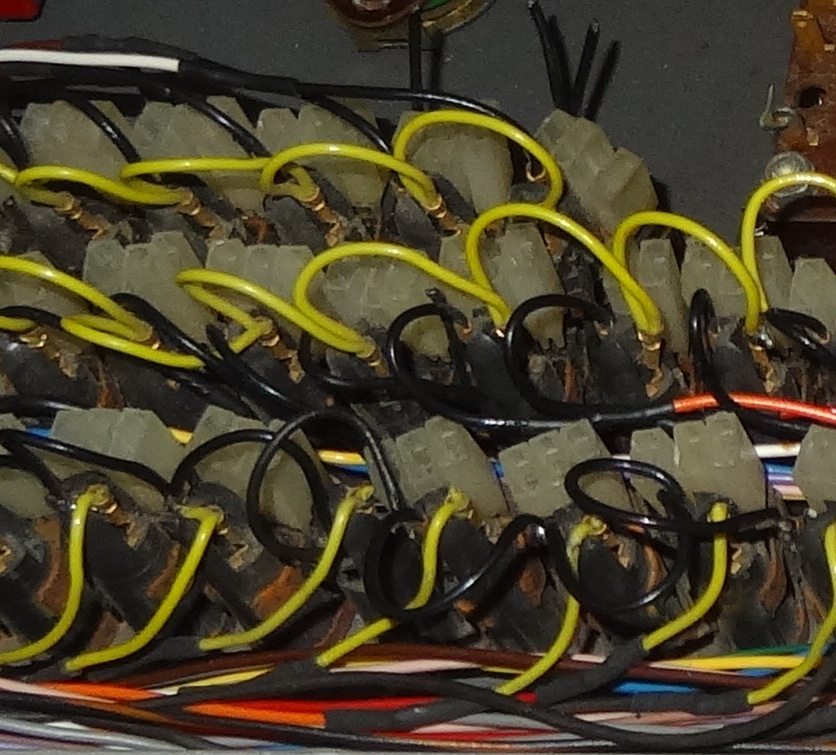
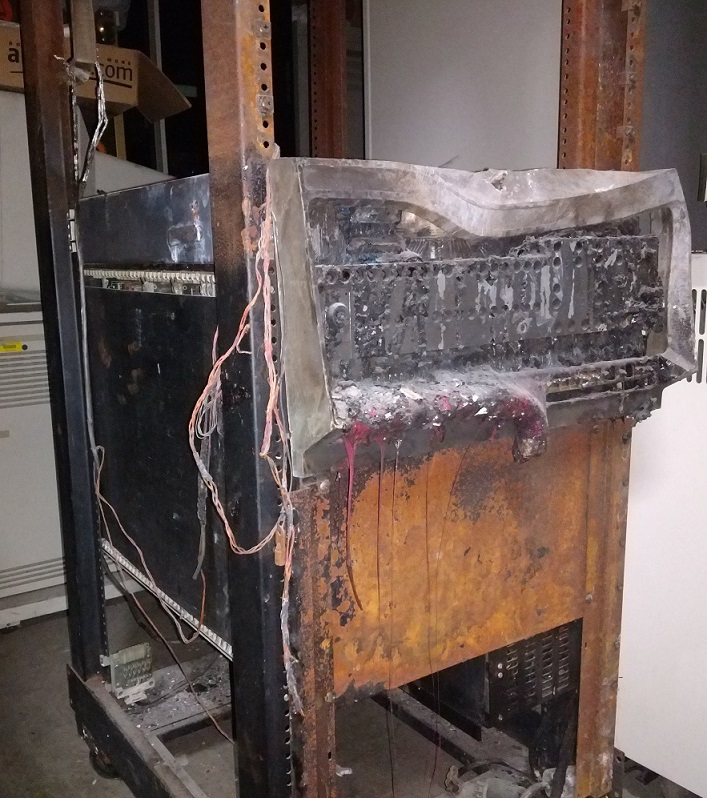
Thought you folks might be interested in a quick update on my folly here.
At the beginning of November I drove down to the bay area to pick up the
two fire-damaged PDP-11 systems -- a PDP-11/70 and a PDP-11/45. (I also
made a few other stops and got a few other items, but that's not what I'm
here to talk about...)
Over the past few weeks I've gone over the two systems and my assessment is
that the 11/70, while completely filthy, is completely restorable. The
fire/heat damaged the front panel enough to discolor the plexi and start
melting a few switches (http://yahozna.dyndns.org/scratch/1170/1170.jpg)
but that's the extent of the damage. My only fear is that the fingers on
the backplanes might possibly have some corrosion here and there, but I've
started going through and cleaning the boards and the backplane slots and
so far I haven't run into anything that looks troubling.
The 11/45 is considerably further gone. It took a serious amount of heat,
enough for the pig iron frame for the front panel to start melting (
http://yahozna.dyndns.org/scratch/1170/1145.jpg). The front panel is
completely destroyed, as is the wiring harness for the power distribution.
But... the metal of the chassis and the power supplies seems to have
protected the boards and the backplane. There are no melted or even
discolored wire-wrap wires on the backplane, and the boards look fine. As
an experiment I took the non-11/45-specific boards out of the backplane (a
Plessey memory board, an RL11 controller, and an M9301 bootstrap terminator
-- this one was right up front where things were the hottest and the
handles had started to melt) and tested them in my PDP-11/40. They all
work fine. So I think that, maybe, with a LOT of effort, the 11/45 could
live again.
I'm tackling the 11/70 first (Al kindly sold me a new front panel for a
very reasonable price so it already looks 100% better) and once I'm done
with that I hope to move on to the 11/45. In the meantime I'm hoping to
keep my eyes peeled for parts for the /45. I found a seller on eBay with
"restored" H7420a power supplies for $68, with free shipping so I grabbed a
pair. I realize this is unlikely, but I was curious if anyone has 1) any
parts of the 11/45 power wiring harness, or 2) (really unlikely) an 11/45
front panel in any condition. Well, any condition better than "melted into
slag," I suppose. I can build my own wiring harness, but if I can save
myself the trouble, that'd be nice.
- Josh
Hi everyone,
The Nostalgic Computing Center <http://www.nostalgiccomputing.org/> has a
virtual PDP-8 running TSS/8
<http://www.nostalgiccomputing.org:8080/aterm.html?m=pdp8&t=PDP-8&r=24&c=80>
in its collection. We use the SIMH PDP-8e emulator to support the machine,
and we recently updated the machine to run the TSS/8 distribution created
by LCM+L, found here on GitHub
<https://github.com/livingcomputermuseum/cpus-pdp8>. The LCM+L distribution
is slightly different from other TSS/8 distributions available on the web
in that it provides some additional goodies such as ALGOL and LISP.
The NCC demonstrates how various classic computers worked by providing
automated scripts that interact with the machines in the collection.
For example, to demonstrate each of the programming languages supported by
a machine, scripts are provided to create, compile, and run a simple
Fibonacci sequence generator. We've done this for the TSS/8 system, but the
scripts aren't working for FORTRAN or ALGOL, and we're wondering if anyone
on this list might know why.
Specifically, in the case of FORTRAN, the compiler exits with an error code
6204. This occurs even when trying to compile trivial "hello world"
programs, and it appears to occur in all other TSS/8 distributions we've
tried as well (i.e., this particular problem is not unique to the LCM+L
distribution). We haven't found error code 6204 specifically documented in
the TSS/8 user/admin manuals, but the manuals do document other error codes
in the 62xx range. Documented error codes in the 62xx range appear to
reflect file I/O errors, so we're wondering if perhaps one of the files
supporting the FORTRAN compiler is corrupt in all of these distributions.
For example, here is a transcription of a simple session demonstrating the
problem:
.R EDIT
INPUT:
OUTPUT:FTEST
A
WRITE(1,10)
10 FORMAT(5HHELLO,/)
END
E
^BS
.R FORT
INPUT:FTEST
OUTPUT:
6204^BS
.
We tried enabling the floating point processor to see if lack of FPP might
cause FORT to abort, but enabling the FPP did not solve the problem. The
SIMH configuration file for the machine currently looks like:
set throttle 800K
set df disabled
set rf disabled
set rk enabled
set dt enabled
att rk0 tss8_rk_lcm.dsk
set cpu 32k
attach ttix 4000
load boot.bin
run 200
Note that BASIC, FOCAL, and LISP all seem to run very nicely on the machine.
The problem we're experiencing with ALGOL appears to be a glaring compiler
bug, but the compiler was distributed widely through DECUS, and it is
difficult to imagine that it would have been released with an obvious bug,
so we are wondering if perhaps we're not interpreting the user manual
<http://svn.so-much-stuff.com/svn/trunk/pdp8/src/decus/8-213/decus-8-213.pdf>
correctly. Here is a transcription of a session that exhibits the problem:
.R EDIT
INPUT:
OUTPUT:ATEST
A
'BEGIN'
'INTEGER' I;
I := 1;
WRITE(1, I); SKIP
'END'
$
E
^BS
.R ALGOL
INPUT:ATEST
OUTPUT:
*TOO MANY UNDEFINED [UEXPRESSION*
^BS
.
The compiler seems to be complaining that the simple assignment statement
on line 3 of the program is somehow incorrect. If we change the statement
to "I := 1 + 0;", the error message goes away, and the program runs, but
it prints "0" instead of the expected "1". Also, if we change the program
to:
'BEGIN'
'INTEGER' I;
'FOR' I := 1 'STEP' 1 'UNTIL' 10 'DO'
'BEGIN'
WRITE(1, I); SKIP
'END'
'END'
$
it compiles successfully and it prints what is expected, the numbers 1
through 10.
Does anyone have experience with the ALGOL/8 compiler? If so, does this
behavior make sense, and can you let us know what we're doing wrong?
Note that the same ALGOL60 program compiles and runs as expected on the CDC
mainframes and the TOPS-20 system at the NCC.
thanks!
Kevin
I found a box of 45 Atari ST diskettes in my basement, from my 1980's
520 ST (or maybe my brother's 1040 ST).
I don't have a floppy drive, so I can't tell whether they're readable.
Some are originals, for example for 1St Word, the word processor, and
Regent Base, a relational database program.
Others are copies.
If you send a PDF of a USPS media rate shipping label, 4"x5"x6", 3lb,
they're yours. Coordinate with me so you don't send a label after
somebody else has already sent one.
Van Snyder