Just thought I'd share with you all one of my pet projects for the past few
years. I have written an HP-35 and HP-45 simulator for the PDP-8, which
uses the original microcode from these calculators. Thus, it is just as
accurate as the original calculators, I would believe.
Not really sure why I decided to do this, but I suppose I enjoy both HP
calculators and PDP-8 programming. I guess it's nice to have a scientific
calculator at one's disposal too while sitting in front of a PDP-8, too. It
also shows that something like this could've existed back in the early
1970s if one were so inclined to do it. Perhaps it's also a bit of homage
to the Expensive Desk Calculator for the TX-0 and PDP-1.
Anyways, you can grab the code from here:
https://github.com/drovak/hpcalcpdp8
The HP-45 support is new as of the past couple of days; I went ahead and
through in a help function to explain the keys. Toggle between 4XXX and
0XXX on the switch register to toggle between HP-45 and HP-35 modes,
respectively. Feel free to give feedback; I've tested it fairly extensively
in SimH with no major issues other than no error indication on the HP-35. I
have a debug mode which prints each register every instruction cycle, but I
haven't used it too much in recent times; I went ahead and IFDEF'ed it as
it also reads from the switch register.
OS/8 support will come soon, as that shouldn't be challenging. You need 8k
to run this, though I also uploaded my original hp35pdp8.pal code which
runs in 4k. It lacks the help function (and obviously the HP-45 simulator),
but otherwise, works pretty much the same.
Big thanks to Eric Smith for his 'nonpareil' work which inspired much of
the simulator.
Kyle
Rich Alderson wrote:
> Actually, Mr. Cook, the standard for the last 35 years or so has been to
> change the subject line, with the old subject in SQUARE BRACKETS with the
> characters "was: " prepended. Any decent newsreader or threading mail
> reader knows how to deal with that, and threading is unbroken. What was
> broken in the messages about which you complain is the substitution of
> parentheses () for brackets [].
I had no idea that there was a standard. Is it in an RFC or something?
I've commonly seen either parenthesis or square brackets used, and
I've normally used parenthesis myself, but if there's a documented
standard, I'll consider switching.
Chuck Guzis wrote:
> I was a bit surprised to
> find that my home thermostat was running BusyBox.
Cameron Kaiser wrote:
> s/surprised/alarmed/
> Remember, it's going to be the Internet of Pwned Things before too long.
Unfortunately most people elide the first two letters of the
initialism, leaving only "IoT".
It is actually the "Insecure Dangerous Internet of Things".
On Tue, Sep 13, 2016 at 3:38 PM, Doug Ingraham <dpi at dustyoldcomputers.com>
wrote:
>
> Thanks for an interesting bit of optimization!
Need some more optimization fun? :) Vince and I were working on some code
to add two signed 12 bit numbers and detect overflow, returning MAX_INT or
MIN_INT in AC in the case of overflow, or the sum in AC otherwise. Here's
what Vince came up with so far:
CHKOVF, 0
TAD OVFA /GET A
TAD OVFB /ADD B
DCA OVFSUM /SAVE IT
TAD OVFA /A XOR B
AND OVFB
CMA IAC
TAD OVFA
TAD OVFB
SPA CLA /IF SIGNS DIFFER...
JMP NOPROB /WE'RE DONE
TAD OVFA /MIGHT BE OVERFLOW, A XOR SUM
AND OVFSUM
CMA IAC
TAD OVFA
TAD OVFSUM
SMA /DID WE OVERFLOW (DIFFERENT SIGNS)?
JMP NOPROB /NO, NO PROBLEM
CLA CLL CMA RAR /YES, AC=3777 (MAX INT)
DCA OVFSUM /SAVE IT
TAD OVFA /GET THE SIGN OF CORRECT RESULT
SPA CLA /SHOULD IT BE NEGATIVE?
ISZ OVFSUM /YES, 3777 -> 4000 (MIN INT)
NOPROB, CLA /GET CORRECTED SUM
TAD OVFSUM
JMP I CHKOVF /OUTTA HERE
OVFA, 0
OVFB, 0
OVFSUM, 0
This tests the signs of both numbers; if they differ, there's no chance of
overflow. If they're the same, it checks the signs of the augend with the
sum; if they differ, an overflow occurred, and MAX_INT or MIN_INT will be
returned depending on the sign of the augend.
We tried clever tricks previously, using SNL/SZL and SMA/SPA after shifting
the sign of the augend into the link and keeping the addend in the AC, but
found these to be longer.
Kyle
On Tue, 13 Sep 2016, Liam Proven wrote:
> Whereas my Mac mini has 3rd party RAM and both an SSD and an HD
> (upgrades from a Toshiba desktop-replacement notebook that the Mac
> replaced) on a 3rd party bracket, and I'm using a Dell 5-button mouse
> and an Apple Extended keyboard from '97 or so, on a 3rd-party ADB-USB
> adaptor. And a pair of mismatched 2nd hand 23" LCDs.
...
> And with the original '80s keyboard, it _feels_ (and sounds) like a
> proper (i.e. '80s) Mac when I'm typing on it. :-)
My Mac Mini has been treated to new modern keyboard purchased at
rediculous expense upon the recommendation of my long time friend
G.L.Nerenberg II. And it says underneath "WASD Model: V2 Type: Cherry MX
Green". It is gloriously noisy!
I have an aluminum Apple keyboard in the box this keyboard came out of,
those Apple chicklet keyboard are just plain horrible.
--
Richard Loken VE6BSV, Systems Programmer - VMS : "...underneath those
Athabasca University : tuques we wear, our
Athabasca, Alberta Canada : heads are naked!"
** rlloken at telus.net ** : - Arthur Black
Hi all,
I?m working on debugging an FP11-B floating point option in a PDP-11/45. I?ve just discovered that in the engineering drawings for this on bitsavers, sheets 1 and 2 of the FRL board prints are missing :-(
Does anybody have a complete set of FP11-B drawings? I can work around the missing sheets if I have to because sheet 1 is just the IC layout sheet and sheet 2 is probably quite similar to sheet 3, but it sure would be convenient to have the whole set?
cheers,
?-FritzM.
Agree. It's quite easy to telnet to a port to see if you get a response.
Do it a lot.
> Are ifconfig, netstat, traceroute, et al really insecure? (Maybe a case
> could be made for traceroute) These types of changes to the core of
> userland are epic dumb IMHO. Telnet is very useful for debugging, and
> certainly dropping telnetd is a good thing - which everyone has done.
On Sep 13, 2016 9:16 AM, "Al Kossow" <aek at bitsavers.org> wrote:
>
> I've been working on archiving documentation and firmware from
microprocessor
> based CRT terminals for a couple of months, since I realized they are
disappearing
> the same way CRT monitors have.
Did you ever get any Motorola EXORterm docs that were mentioned here?
http://www.vcfed.org/forum/showthread.php?44638-Motorola-EXORciser/page4
> I finally managed to pick up a logic analyser for a price I could justify.
> It is a HP1630G and it comes with a number of pods. However the pods do
> not
> seem to have the actual wires/probes. Is there a separate part number for
> these that I should look for. There seem to be quite a few items like
> this:
> http://www.ebay.co.uk/itm/291753390848, are these likely to be suitable
> alternatives?
Sign seen on an HP logic analyzer at a local swap meet:
HP 1630G Logic Analyzer: $10
Complete set of probes: $500
~~
Mark Moulding
I have a pair of 4mm DDS tapes from 1999 that I would like to recover.
I was able to read one with tar on a Debian (jessie) Linux system, but
the second gives an error.
The tape that I could read is a Sony with DDS markings and 4 bars next
to the DDS logo. It was written on an SGI computer. I was able to read
this with a simple tar -xvf /dev/st0 command.
The second tape is a 3M brand with DDS markings and 4 bars next to the
DDS logo. It also has 'Media Recognition System' and DD-90 written on
it. Here is the dialog and error:
root at T5400deb:/home/taylor/4mm_tar_1998# lsscsi
[0:0:4:0] disk codesrc SCSI2SD 4.2 /dev/sdc
[0:0:5:0] disk codesrc SCSI2SD 4.2 /dev/sdd
[0:0:6:0] tape ARCHIVE 4326XX 27871-XXX 0324 /dev/st0
[3:0:0:0] disk ATA WDC WD800JD-75MS 1E04 /dev/sda
[3:0:1:0] cd/dvd PLDS DVD+-RW DH-16A6S YD11 /dev/sr0
[4:0:0:0] disk ATA ST500DM002-1BD14 KC45 /dev/sdb
root at T5400deb:/home/taylor/4mm_tar_1998# mt -f /dev/st0 status
drive type = 114
drive status = 318767616
sense key error = 0
residue count = 0
file number = 0
block number = 0
root at T5400deb:/home/taylor/4mm_tar_1998# tar -xvf /dev/st0
tar: /dev/st0: Cannot read: Input/output error
tar: At beginning of tape, quitting now
tar: Error is not recoverable: exiting now
The tape drive is a Seagate CTD8000R-S with COMPAQ markings. There are 5
jumpers to configure the drive and one is for MRS which the jumper
config page I have says it is enabled (Default), however the pins are
missing for that option. What does that mean?
(None of the config jumpers were installed for the tape that I could
read) Is the 2nd tape just bad and can't be read? Or do I need a
slightly different tape drive?
Doug
Man I remember when the Cube came out.. I saw one on display at an Apple store with 23 inch Cinema display. ?Man I wanted one badly. ?But wayyyy too much money. ?Definitely want one for my collection. ?Probably not too expensive now.
Sent from my Samsung device
-------- Original message --------
From: George Rachor <george.rachor at gmail.com>
Date: 2016-09-11 8:09 PM (GMT-08:00)
To: "General Discussion: On-Topic and Off-Topic Posts" <cctalk at classiccmp.org>
Subject: Re: 68K Macs with MacOS 7.5 still in production use...
My wife and I purchased the G4 cube, monitor, as well as enhanced sound package.? It?s primary? purchase was using it as a music server and some games.? My wife was working with Apple II e?s and very early Mac?s at the time.
Over time I had to replace a failing hard drive.
I retired it last week as I couldn?t put a modern browser on it.? The last few years I used it for only music.
Retire means I?m packing it up to put in a dust proof container and placed in storage.
Not looking to get rid of it but will obviously will someday.
Not really vintage but it has served a long and happy life.
George Rachor
Hillsboro, Oregon
george at rachors.com
> On Sep 11, 2016, at 6:35 PM, Chris Hanson <cmhanson at eschatologist.net> wrote:
>
> What do you mean by ?retired,? and what kind of setup did you have for it?
>
>? -- Chris
>
>> On Sep 11, 2016, at 11:10 AM, George Rachor <george.rachor at gmail.com> wrote:
>>
>> I just retired my G4 cube (still working).? Replaced it with a NOT NEW iMac.
>>
>> George Rachor
>> george at rachors.com <mailto:george at rachors.com>
>>
>>
>>> On Sep 11, 2016, at 7:16 AM, Liam Proven <lproven at gmail.com> wrote:
>>>
>>> http://arstechnica.com/civis/viewtopic.php?p=30456459#p30456459
>>>
>>> Found via:
>>>
>>> http://arstechnica.com/apple/2016/09/an-os-9-odyssey-why-do-some-mac-users-…
>>>
>>> --
>>> Liam Proven ? Profile: http://lproven.livejournal.com/profile
>>> Email: lproven at cix.co.uk ? GMail/G+/Twitter/Flickr/Facebook: lproven
>>> MSN: lproven at hotmail.com ? Skype/AIM/Yahoo/LinkedIn: liamproven
>>> Cell/Mobiles: +44 7939-087884 (UK) ? +420 702 829 053 (?R)
>>
>
Mark, I strongly support the addition of Oscar to your Mac Pro.
--
Richard Loken VE6BSV, Systems Programmer - VMS : "...underneath those
Athabasca University : tuques we wear, our
Athabasca, Alberta Canada : heads are naked!"
** rlloken at telus.net ** : - Arthur Black
> On Sep 12, 2016, at 11:00 AM, cctech-request at classiccmp.org wrote:
>
> Is the 2nd tape just bad and can't be read? Or do I need a
> slightly different tape drive?
It may be bad or perhaps it was written with a larger block size? I don?t recall what tar does if the tape was written with a record size larger than the default. You might try using
dd if=/dev/st0 bs=65532 of=...
on the tape to see if you can read it at all. I don?t recall what the maximum record size on these tapes are, but it seems like it isn?t a full 65KiB. Also, make sure the drive is not configured for fixed block mode.
Hi,
This might only be of interest to people in the Pacific North West.
We are starting a new retro-computer club in Chilliwack, BC. Both Rob C, and myself have a pretty good collection
of 'classic' computers and rather than having them sit in a basement collecting dust, we thought we'd bring them
out on a monthly basis for show and tells and demos...
We are planning on making this a monthly meeting.
I plan on bringing an ATARI 130XE w/1050 and an SD2SIO card, and the ATARI Assembler to
demonstrate some 6502 ML programming, a minimal PDP11/23 in a H9281-BA enclosure
(CPU, memory and DLV11 to power up to ODT) and a GrID tablet computer
Rob C (who set this whole thing up) will be bringing:
>I was thinking I would bring out some of the micro-controllers I have been using, together with my
>ATMega based home brew computer that I have been building. I was also thinking of bringing
>out my retro-chip tune tracker PC that I built and do a music demo.
Meeting details:
CHILLIWACK RETRO-COMPUTING CLUB
7:00PM September 22, 2016 Sardis (FVRL) Library
5819 Tyson Road, Sardis, BC
We also have an email and a FB group set up (web site coming soon):
chilliwackretro (at) gmail (dot) com
www.facebook.com/chilliwackretro
cheers
--
alex
Greetings
I have a set of OpenVMS 7.3 era manuals available (grey wall).
They are located in Windermere, UK. At the moment I am unable to ship
them due to lack of packing materials so it would be either via
collection or by an arrangement.
The manuals are generally in good condition. I can get a list together
if anyone is interested.
I also have a large numbr of HP/Compaq softbound manuals which came as a
set also available.
Please email me direct if interested.
I am the organiser of declegacy.org.uk so if you want to come along on
October 15th-16th and collect them you've got a reason to visit
Windermere.
Please feel free to pass this message on to anyone you think might be
interested.
Regards, Mark.
----- End forwarded message -----
I've got the model for the Phillips p1000 love to get more stuff to go with
it. Got the paper cut out scan someone sent me a while back.
Came across this doing my once every few months search
https://aconit.inria.fr/omeka/items/show/595http://amitrtlu.free.fr/guirimand/G3d.htm
What other obscure European Machean are out there? All seems we see is HP
and Dec mostly talked about yet we forget about allot of others and the
thread about that random lot of military grade Machean the chm called junk
trash didn't want got me thinking
I've seen plenty of examples of adapters to use a vintage joystick with
a modern computer.
I'd like the opposite - to use a USB controller with a vintage computer
(Atari compatible - for example ZX Spectrum, Commodore 64). Does anyone
know of an adapter or a homebrew project?
Thanks, Mark.
Anyone have any suggestions for how to go about finding developer documentation for VME hardware? I haven?t been having much luck with Google searches.
Given that (aside from its use by workstation manufacturers) most VME hardware was intended for composing systems from disparate parts, I assume that most of it at one time had programming documentation available. After all, you can?t just provide binary drivers when you know neither what CPU nor what OS your customers will be running?or even if they?ll be running an OS, versus some tightly-coded assembly.
My current interest is in using something like a D/A board or a specific audio interface[1] to provide audio for a VME-based workstation that lacks it, but I figure being able to find information like this will be generally useful to those of us with VME hardware.
-- Chris
[1] Something like a Vigra MMI-210: <https://www.highbeam.com/doc/1G1-9634773.html <https://www.highbeam.com/doc/1G1-9634773.html>>, about $125 on eBay.
Hi, I'm looking for information on a semi-obscure Flip Chip; an M826 (sort
sort of combination clock/counter). I can't find out anything about it.
Apparently the M8xx Flip Chips were generally custom modules intended for
a specific device, which is probably why I can't find anything on it.
I've looked in the Digital Logic Handbooks for 1969-1977, with no luck. So
I also looked through the Spare Module Handbook to see if I could find
something else that used it, so I could see if the documentation for that
thing covered it (e.g. I found the M167 in the RS64 Maintenance Manual).
However, I struck out there too.
My Google-fu wasn't strong enough to turn up anything online. Anyone have
anything on this beast?
Noel
I will be ordering another batch of boards. If you wish to order more
boards email me djg at pdp8online.com with how many and if bare, with surface
mount chips, or fully assembled. If you currently are on the waiting list
you don't need to reply.
Info is here.
http://www.pdp8online.com/mfm/
The price may be $5 more since it looks like the quantity will be less
than last time. Bare boards should ship by end of month. I haven't found
a place at these quantities to have them assembled for less than listed
price so have been doing them myself. Assembled boards may be a couple
more weeks.
I will collect payment when getting ready to start shipping.
> From: Adrian Stoness
> All seems we see is HP and Dec mostly talked about
Well, don't forget that i) a lot of people (like me) are interested in things
they worked with 'back in the day', and for many people, that is very likely
to be DEC and HP machines, since they were very common, ii) the conversation
is partially driven by what's available now, and again, because they were so
common BITD, there are more of them now, and finally iii) the list has a lot
of US-based members, and they wouldn't have run across (either back then, or
now) machines from the somewhat obscure European manufacturers.
I don't think anyone looks down on the more obscure machines, in fact I
personally (and many others, I suspect) are very happy to see people paying
attention to them, and my respects to the people who are working to save them.
Noel
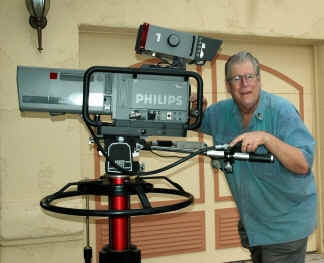
SMECC is looking for any Philips Broadcast year new or old
sorta like
http://www.smecc.org/ldk20/philliconnector1.jpg
which is one of our ldk-20 cameras... they can
say on the side Philips, or later Thomson or BTS
Philips was a great developer and implementer of CCD Technology in
video cameras.
this studio camera has computers in it for the control unit and you
can store setups etc on Flash memory cards
I keep one at the house to learn to program up the MCU controller etc
for the one at the museum.
So anything Philips, or later Thomson or BTS hardware, software, cables,
adv. materials, training books is indeed welcome here and if you have a
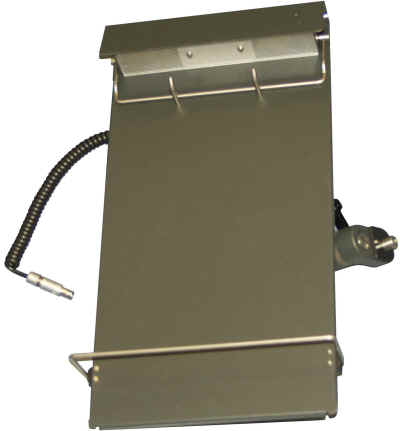
lighted script holder we need one for the unit at the museum.... it looks
like this... http://www.smecc.org/ldk20/philli57.jpg
People ask on our duplicate stuff what would we trade for? here
is a non computer area that works well to get some of our extras.
Have a great weekend
Ed# _www.smecc.org_ (http://www.smecc.org)
In a message dated 9/11/2016 11:40:13 A.M. US Mountain Standard Time,
cclist at sydex.com writes:
On 09/11/2016 08:23 AM, Paul Koning wrote:
> Philips was founded around the end of the 19th century as a maker of
> light bulbs, got into vacuum tubes in the 1920s or so.
Philips was into everything. For simple appliances, most in North
America were completely unaware of the parent company, because personal
care products are marketed under the "Norelco" brand. I believe that
Philips acquired Sylvania, then sold it to Funai.
In 2000, Philips was the largest manufacturer of semiconductors, having
acquired both Signetics and VLSI Technology. later spun off as NXP to a
private investment consortium.
If you own a Sonicare electric toothbrush, that's Philips too.
It's pretty safe to say that almost everyone has a Philips product
somewhere in their life--it may not be branded with the Philips name
however.
--Chuck
I am finally getting around to getting this GT-6144 graphics board working. ?It seems pretty straightforward, however I am confused by the advice given re:use with the CT1024 vs 6800. ?The instructions describe using it with either or, I think. ?I'm wondering what the right way to hook up would be if you are using both together. ?I'm thinking it must be CT1024 in that case, otherwise you'd need two monitors? ?I just want to be able to program the GT-6144 from the 6800 while using the CT1024.
Anyone familiar enough with these to offer advice?
Thanks in advance!!
Brad
The rest of the story.
As Al pointed out, much to our surprise, the museum has rejected an offer
>from Art's estate for the donation of a Fast Fourier Transform computing
system which included both the Unicomp Computer and a hardware FFT
accelerator. This is a very strange decision since the system is one of the
earliest if not the first implementation of a FFT in anti-submarine and
anti-aircraft warfare. FFT mathematics dates to 1965 but processor until
much later had the power to do it real time in software at the resolution
necessary, so Art invented the hardware accelerator and multiple units were
sold to the Navy. The estate is appealing the museum's decision.
The estate would like to keep the FFT system together and so if the museum
continues with a cranial rectal inversion it will look to other alternatives
including those of u who have already
I will respond by email not later than tomorrow to the several list members
who expressed interest in the components and/or the computer. I'm busy
today helping set up the Atari retrospective for the IEEE Silicon Valley
History Committee.
Regards,
Tom
Date: Tue, 6 Sep 2016 18:16:23 -0700
From: Al Kossow <aek at bitsavers.org>
To: cctalk at classiccmp.org
Subject: Re: Components available
On 9/6/16 4:18 PM, Tom Gardner wrote:
> A friend of mine died recently; he was amongst many things an
> electronics tinkerer and has a closet full of small parts in bin
> cabinets (resistors, capacitors, ICs, transistors, hardware, etc.).
There is also a Unicomp 18 bit minicomputer, paper tape reader, and FFT
processor circa 1972 in the garage (6ft rack) with full documentation.
I walked out of the donations meeting with the other curators today who
thought it was a piece of s**t and didn't want to take it, calling it a
'dumpster fire'
Art was a friend of mine.
Hopefully it can go someplace where it can be appreciated.
Talk to Tom about it, unfortunately, time is short.
--
73 AF6WS
Bickley Consulting West Inc.
http://bickleywest.com
"Black holes are where God is dividing by zero"
> From: Ian S. King
> Do you have the grey rectangular bits that plug into the pods? If not,
> you're pretty much screwed
Not necessarily. I bought a couple of Tek 1240's, without pods or probes, but
managed to locate a goodly supply of each on eBait.
The key for me was to find the original Tek part number for the pods and
probes, and then search for that. The same might work for this HP thingy.
Noel
At 01:10 PM 9/10/2016, Glen Slick wrote:
>Those are the leads that go with the HP163x series logic analyzer pods such as the HP 1630G that Rob Jarratt was just asking about here.
Aaah - that is why I did not recognize them - I had seen only the 165x/166x leads.
Dale H. Cook, GR / HP Collector, Roanoke/Lynchburg, VA
http://plymouthcolony.net/starcity/radios/index.html
> >On Thu, Sep 8, 2016 at 11:59 PM, Pontus Pihlgren <pontus at update.uu.se>
>> >wrote:
>>> > >
>>> > >Hmm, yes, I think I might actually. What do you have so far?
>>> > >
>> >
>> >I don't have much yet, unfortunately; still trying to get my thoughts
>> >together on how it should be implemented. Mark Pizzolato recommends using
>> >as much existing display code as possible. I did start an issue for it
>> >here, though:https://github.com/simh/simh/issues/337
>> >
>> >Kyle
> I found Phils code when I looked into this yesterday. There also the VR12
> emulation in the, now dormant, GreenPea[1] project. I was wondering which
> graphics library to use but since both simh and GreenPea uses SDL I guess
> that settle that.
>
> I found and read Dougs[2] VC8E summary. Do you have any other docs? A
> cursory look on bitsavers didn't give any result.
>
> /P
>
> [1]https://github.com/andysan/greenpea/
> [2]http://homepage.cs.uiowa.edu/~jones/pdp8/man/vc8e.html
>
There is at least schematics on bitsavers: http://bitsavers.trailing-edge.com/pdf/dec/pdp8/omnibus/VC8-E_engineering_d…
I encourage you to do this, I have a working VC8E if you what me to try anything.
/Anders
I thought chm had woosed.. out on it already?..
Sent from my Verizon, Samsung Galaxy smartphone
-------- Original message --------
From: Tom Gardner <t.gardner at computer.org>
Date: 9/10/16 11:24 (GMT-07:00)
To: cctalk at classiccmp.org
Subject: RE: Components available - the rest of the story
Hi Jason:
Yes the LCM has asked for it.
If the CHM says no, we need to work out details of the transfer and may take
u up on your offer to help in transport.? Note it is a 6-foot rack with
about 5 file drawers of documents
Regards,
Tom
-----Original Message-----
From: Jason Howe [mailto:jason at smbfc.net]
Sent: Friday, September 09, 2016 10:40 PM
To: cctalk at classiccmp.org
Subject: Re: Components available - the rest of the story
Have they thought about other museums, like the LCM up here in Seattle??
I'd be happy to volunteer to go get it and bring it back North.
--Jason
On 09/09/2016 08:39 AM, Mark J. Blair wrote:
>> On Sep 9, 2016, at 00:59, curiousmarc3 at gmail.com wrote:
>>
>> I might be interested, as I already have two FFT systems that I am
restoring (an HP 5420A and a HP 5451C). I am local. Just drop me an email.
>
> If Marc adopts it, he'll surely make some excellent Youtube videos about
it!
>
>
Okay, I have it all dialed in now!
With that iffy memory board swapped out, the system works beautifully. I
did have some trouble loading Altair BASIC but after looking at a video of
someone running it I discovered an extra line that appeared to be in the
Altair patch file and also a couple of memory addresses that were altered.
Once I did that, the prompts came up and it let me enter a program! The
only problem was for some reason Hyperterminal was cutting off a column or
two - so instead of the OK prompt I had O. I figured that was probably just
Hyperterminal, so I switched the system back to 110 baud, loaded Altair
BASIC, and then switched to the CT-1024. It worked perfectly!
Pretty magical being able to use this software I've only seen demonstrated
in videos on vintage hardware! Can't wait for the day I have a real Altair
and teletype.
I'm going to hunt around for more S19 files. I'd also like to learn more
about how to program this thing (I assume in assembly). And then another
thing on my wish list would be to have both the MP-S and MP-C cards working
together in a way that I could use one to load and save stuff off to my PC
terminal and the other for actual terminal interface.
Thanks again for the help and suggestions!!
Brad
You bet it does! My friend Jim Early explained to me how it was
used on the Bell Solar Batteries ( solar cells) for TELSTAR
Ed Sharpe PDP-8 SN18
In a message dated 9/9/2016 7:55:19 A.M. US Mountain Standard Time,
dpi at dustyoldcomputers.com writes:
On Thu, Sep 8, 2016 at 11:34 AM, Fred Cisin <cisin at xenosoft.com> wrote:
> On Thu, 8 Sep 2016, Murray McCullough wrote:
> And use so much transparent aluminum.
>
Transparent aluminum exists. It is called sapphire. Sapphire is the
crystalline form of aluminum oxide. If you recall, Apple was thinking of
using it for the touch screen face of the iphone.
--
Doug Ingraham
PDP-8 SN 1175
yep!
In a message dated 9/8/2016 10:46:36 A.M. US Mountain Standard Time,
pete at pski.net writes:
> On Sep 8, 2016, at 1:31 PM, Christian Liendo <cliendo at gmail.com> wrote:
>
> The only "computer" related thing I can think of is the scene from
> Star Trek IV: The Voyage Home, where Scotty works on the Macintosh
> trying to show transparent aluminum.
>
> In my own humble opinion it is one of the best scenes ever from a Star
> Trek movie or show.
?Hello, computer!?=
you mean when he picks up the mouse and says.... hello computer into it?
yea I fell outta my seat!
Ed# _www.smecc.org_ (http://www.smecc.org)
In a message dated 9/8/2016 10:31:59 A.M. US Mountain Standard Time,
cliendo at gmail.com writes:
The only "computer" related thing I can think of is the scene from
Star Trek IV: The Voyage Home, where Scotty works on the Macintosh
trying to show transparent aluminum.
In my own humble opinion it is one of the best scenes ever from a Star
Trek movie or show.
What role did Star Trek play in the rise of small computers that are
so ubiquitous today? This science fiction series prognosticated many
things but how many actually happened or am I expecting too much from
a television show of 50 years ago?
Happy computing!
Murray
The following is a partial list of things I plan on bringing to VCF
tomorrow. I plan on being there by noon, and will return home Saturday
night. If you have any interest, flag me down. If I have time I?ll try to
grab some 8 boards. Thanks, Paul
M3106 DZQ11
M3107 DHQ11
M7081 LA120 LOGIC BOARD
M7504 DEQNA
M7546
M7677 11/84
M7846 RX11
M7940 DLV11
M7944 MSV11-B
M7946 RXV11
M7955 MSV11CD
M7957 DZV11 4 LINE
M8012 BDV11
M8013 RLV11
M8014 RLV11
M8015 KPV11-A
M8017 DLV11-E
M8021 MRV11-BA
M8027 LPV11
M8029 RXV21
M8043 DLV11-J
M8044 MSV11-DD
M8053 DMV11
M8959F 64K
M8059K128K
M8067F 64KW
M8067 128KW
M8186 11/23 CPU
M8189 11/23+ CPU
M8190-A KDJ11-BF
M9047 GRANT
G7273 GRANT
PDP8-E no cards
VT52, untested
2 computer automation naked minis-never used
mini 4 9 full cards
can't see model of the other one, but i think it is a 4 or
5 card
2 motorola M-4408 NIB, bought new from Carroll Touch, a local company that
made early touch screens for plato.
Nova 3 no boards, nice clean
Kennedy 9610, very clean
See
http://bitsavers.informatik.uni-stuttgart.de/pdf/unicomp/UNICOMP_Brochure_19
70.pdf
Unicomp became Spectra Data became Gilmore Industries and then ???
Art worked for Unicomp
Tom
-----Original Message-----
From: Mark J. Blair [mailto:nf6x at nf6x.net]
Sent: Thursday, September 08, 2016 2:50 PM
To: General Discussion: On-Topic and Off-Topic Posts
Subject: Re: Components available
I am not at all familiar with Unicomp minicomputers, and I'd love to see
pictures of this one. I'm sorry that I'm not closer to the machine, but it
sounds like heroic rescuers are already lined up to keep it from getting
scrapped.
--
Mark J. Blair, NF6X <nf6x at nf6x.net>
http://www.nf6x.net/
Weirdstuff has been offered an AS400 Model 170 located in a data center.
If anyone is interested in purchasing it, let me know off list - please
include the approximate price you'd be willing to pay for the critter.
I'll pass your info on to Weirdstuff so they can decide whether to make
a bid on it or not.
Note: I am not affiliated with Weirdstuff other than as a paying
client. They don't like to see vintage gear scrapped anymore than I do.
Regards,
Lyle
--
73 AF6WS
Bickley Consulting West Inc.
http://bickleywest.com
"Black holes are where God is dividing by zero"
> > On Sep 5, 2016, at 9:30 AM, Josh Dersch <derschjo at gmail.com> wrote:
> >
> > At the LCM, I used an Apple II to test out the Alto's memory -- the
> > Alto II XM uses 4116 RAM chips. I swapped in a row at a time and wrote
a
> > little BASIC program to test for obvious errors. This was
> > time-consuming, but eliminated the obviously bad chips, which helped
immensely.
>
> Oh, that's so simple and clever! Are these 16k chips? I don't have an
Apple II,
> but I wonder if I could use the same trick and plug them in my HP 85
> for which I just managed to burn the service ROM, which has a memory
> test built in.
Josh,
I checked, and the mysterious HP 1818-1396 or 1818-0341 RAM chips used in
the HP-85 appear to be NEC uPD416-2 or MOSTEK 16k chips. They appear to be
pin for pin, voltage and speed compatible with the MOSTEK 4116-3 used in the
Alto. So it looks like I could check the Alto Xerox II-XM RAM chips on my
HP-85.
8 at a time, that might take a while :-). Thanks for the tip, I'd never have
thought about it!
Marc
> From: Jerry Weiss
> I'll give that a try.
Please let us know how you make out with it! :-)
> I've been making do with the SMS 1000 manual for the basic settings as
> well.
Yeah, that's better than nothing. I just looked over my notes from looking
into the CMV-x000, and alas I don't have any useful data to report (yet).
> I ran a different diagnostic w/o parity testing enabled.
That's kind of odd; the top block of results make it look like it's dropping
the 0400 bit (e.g. "S/B", which I assume means 'should be', = 161612, and
"WAS" = 161212 makes it sound like it dropped the 0400 bit); but the block
below makes it look like it's picking that bit (it shows 0 and 0400 under the
S/B and WAS columns for that location).
Eh, no biggie; clearly the 0400 bit has issues! ;-)
> I see stuck bits and address decoding problems. It looks like some
> memory addresses return the contents of another address.
Not sure I see that happening?
If your CPU is an 11/73 (which can directly 'access' [hate that verbism :-]
all of memory from ODT, unlike the 11/23 which is restricted to the bottom
256KB), try playing around with a failing location, and its alternative,
directly, and see if a store of random data into one can be read back directly
>from the other; e.g. set 03561212 to 0, store 0123456 in 03561612, and then
try reading 03561212, etc. Then go back to 03561612 and see if you get
0123456 back when reading it. Etc, etc.
That should quickly verify if the problem is just some locations which
drop/pick bits, or if there are addressing issues.
> I may just clip the power lead on the chip I think is faulty to confirm
> I have the correct target.
I looked at my CMV-x000 boards, and on all of them, the chips are soldered in,
not socketed (which most of the other ones I looked into had, which made
working out the chip<->bit tables very easy - pull random chips, and see what
happened :-).
But your proposed move should let you identify if you have the right
chip. Once done, you might want to check low memory from ODT to make sure you
don't have the banks inverted (i.e. what looks like the top bank is not in
fact the bottom). It probably wouldn't boot the diagnostics, if so, but it'd
nice to find out directly!
> Hopefully the bit ordering matches the board marking and bottom row is
> the highest address of memory banks.
Please let me know what the layout is, and I'll start the Computer History
wiki page for this board with that info.
Noel
> From: Jerry Weiss
> The first is an MSV11-PL 512KB-Q-Bus 22bit.
> Dead to both CSR and Memory address access in ODT.
> ... before start poking around with my scope ... can recommend a
> particular methodology to finding the fault.
Well, the CSR and RAM address detection circuits are separate (page 5 of 11
in the drawings), so since both are not responding, it has to be something in
common: perhaps something on the input side like a bus receiver (e.g. BSYNC,
pg 8), perhaps something on the output side like a control line driver (e.g.
BRPLY, same page), or some of the common circuitry that drives it (e.g. TRPLY
generation on pg. 5).
The way to tackle this is to write a two instruction loop that reads the CSR
(that will be easier to grok than RAM access); it will need a NXM trap
catcher which just does an RTI, too; and don't forget to set up the SP. Then,
pick some likely point half way along the signal path (e.g. MSEL, on the
right hand edge of pg. 5), and see if that's doing what it should. If no,
start moving back upstream; if it is OK, start going downstream from there.
> The second board is a CMV1000 that probably has a bad Memory Chip.
> I don't have either prints or a manual for this board.
Yes, either/both for this, and the sister CMV4000 (same board with 256K
chips) would be really fantastic to locate. I'm in the process of working out
what all the jumpers/mean do, and will work out which chips correspond to
which bits, and document them, like this page:
http://gunkies.org/wiki/CMV-504
However, we're not there yet for this card, so...
> I was expecting bad and xor to be 16bit values, but they appear to be
> mostly 22bit addresses. But then again this isn't a DEC board.
That shouldn't make a difference. I can't make head or tail of the output
either; can anyone else help? (I don't use DEC diagnostics, I have rolled my
own PDP-11 memory diagnostic.)
> The board itself is labeled with bits 0-7 P0 P1 8-15 across the top
Well, that is a good hint... :-)
> Any suggestions as to which chip might be suspect?
Step A is to find out what the failing location(s) are, and what the bad data
is. So either figure out the DEC memory diagnostic output, or roll your own
(you can have mine if you like, I have Unix assembler source, or I can give
it to you in .LDA binary).
Noel
Hi
A friend of mine died recently; he was amongst many things an electronics tinkerer and has a closet full of small parts in bin cabinets (resistors, capacitors, ICs, transistors, hardware, etc.). The ICs look mostly old. His wife and kids have no interest and would like to find a good home for these parts rather than recycle the lot.
They are in Palo Alto CA
Anyone interested in using them could just pick them up in the next week or so.
Any other ideas? Really hate to see these go to recycle.
Tom
(650) 941-5324 <tel:%28650%29%20941-5324>
Hello gents, seeking some advice. I recently brought home my IBM 3741 Data
Station that has been in controlled storage since the late 90?s and was
working at that time. Given almost 20 years has passed, what would be the
best way to power it back up? I believe I have a variac of sufficient size
around and I'm assuming it's a linear power supply but any advice would be
appreciated on the matter.
Thanks,
Cory
From: Paul Koning
> Some IBM systems ... have a "2315" drive which is an RK05.
Yeah, I think that was the original source of these packs. The Diablo 30/31
drives (used on the RK11-C controller before the RK05 was created) were
designed to use 2315 packs.
> From: Tony Duell
> My intention was to put the hub on a spare spindle .. put the platter
> on, turn it round by hand and use a lever-type dial gauge to get
> minimum run-out.
One of the people I buy PDP-11 parts from reports that he actually did this
(using the exact procedure you describe) BITD. Apparently there's some
multi-platter pack that has the same exact platter as the RK05 (2315) pack,
and he had some damaged RK05 packs, and moved platters from the bad
multi-platter pack to the RK05's.
Noel
> From: Paul Koning
> Semiconductor memory, right?
Yup.
> A possible reason would be that the address drivers for that bit, or
> the address decoders in that chip, are busted. The result would be that
> reads and writes always touch the same address in the chip.
Oooh, good point. That's a better explanation of the symptoms than mine,
since it answers the thing that was confusing me ("why it can be either set
or reset with a write, but freezes in one state for reads").
A fully-populated 64KB MS11-J card has 4 rows of 16Kx1 chips, so if the
machine ever runs again, the first thing to check is to see if that bit at
040000 (or 0100000, if it's a larger than 32KB card) is tied to that bit at
0; if not, it's the addressing circuitry in the chip. (Looks like E75, but it
might be E72).
> The fact that other bits repeat every 20 also suggests issues with
> addressing logic.
That I don't think is a memory chip issue, since it causes the entire word to
repeat, and on that card, each bit of the word is in a separate chip.
> From: Jim Stephens
> Is there a hint as far as the affected hardware in that the ODT is
> working, but the ram is not? The rom that is running ODT is also being
> accessed for read correctly.
Good point. So it's probably not something in the CPU that's repeating every
020 locations.
Also, IIRC, that ODT code doesn't use memory, it runs entirely out of the
registers. There's some good reason for that (probably to avoid messing with
the contents of memory), but maybe also so that it runs without working
memory - ISTR that we discussed this at one point here, but I'm too lazy to
look for the discussion. So that's why ODT runs even if the RAM isn't working.
Anyway, if the 020 problem is in the memory too, it's probably the A04 bus
receiver (E55), although it might be the address latch (E88, a 7475) or the
RAS/CAS mux (E99, 74S153). Step a would be to put a scope probe on the output
of the bus receiver (pin 2) and see if it's hopping up and down - if that,
that chip is OK, and the problem is further down the line.
> I don't know if the rom path to the ODT code is different than the ram,
Yes. The ROM for the ODT is stored in the M9301 card (at least, if it's an
11/04, it's probably an M9301 - could be an M9312, too). The RAM is in
another card, an M7847 (MS11-J).
> it is interesting that the console code is being fetched, along with
> the data from the serial controller to communicate with the console
> terminal
Which indicates that the UNIBUS is probably OK; the console serial is on yet
another card, the M7856 (DL11-W); the CPU, RAM, bootstrap and serial line all
talk to one another over the UNIBUS.
Noel