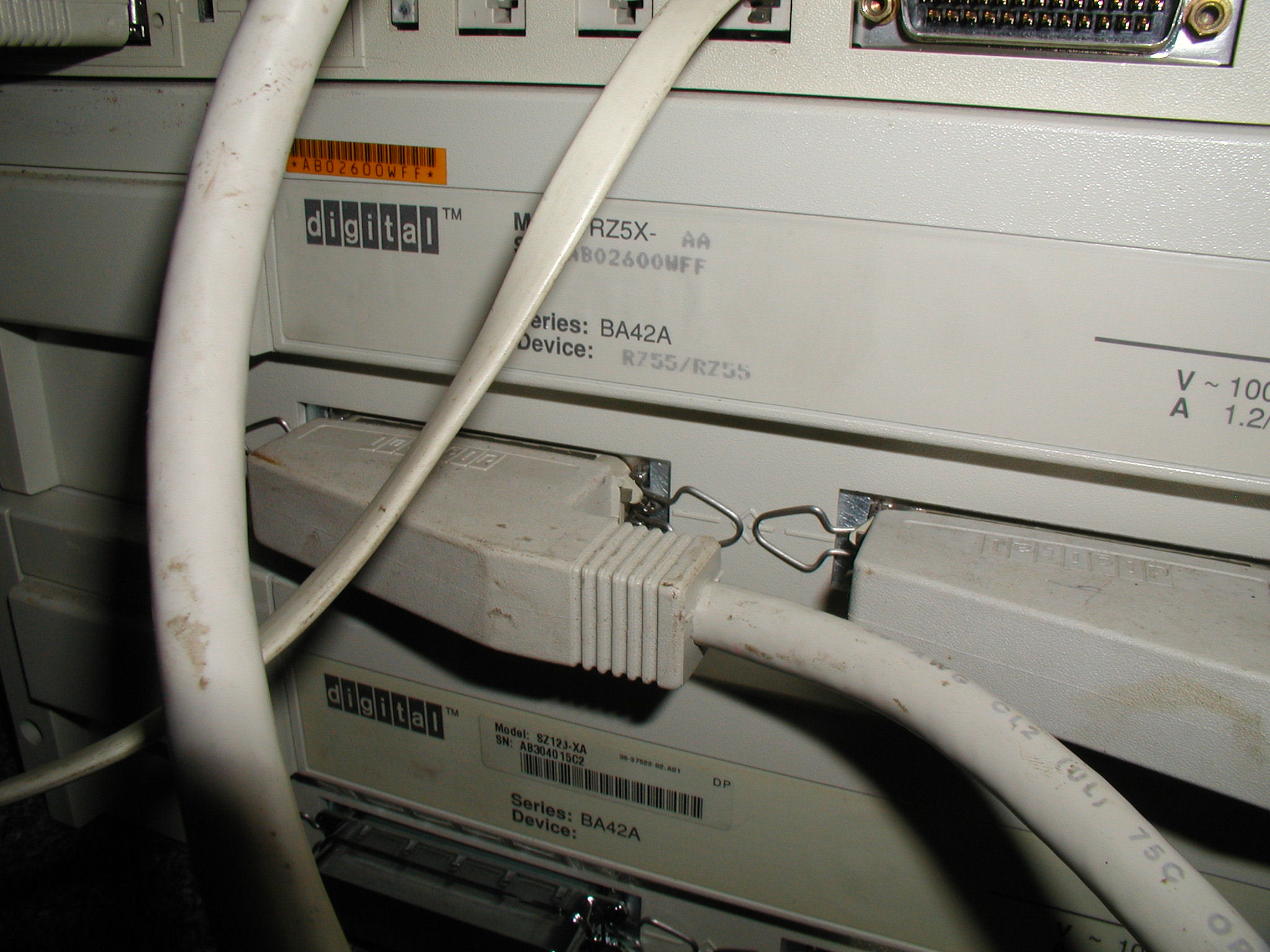
Hi all,
I've posted looking for help with a TeleVideo TPC-1, and I've heard a lot
of crickets - apparently this isn't a commonly held machine. :-) But I've
made progress with it, which I want to share.
When I first got it, the display would light up and ask me to insert a
floppy. Doing so would promptly douse the display. I figured, 'power
supply', and recapped the entire thing - after the venture of figuring out
how to open the case! I found a post in netnews that strongly suggested
TeleVideo had suppressed information about opening the case to protect
their service centers' business.... It's an odd combination of 'push
there, pull there and be bold', but I got it open.
Recapping was a success, and the machine attempts to boot from disk 0 - and
tries, and tries, and.... I figured that drive 0, being the most used,
might have issues, but wasn't looking forward to pulling out the drive cage
and swapping them as a test. But then I noticed that drive 1's circuit
board was visible, and I rejumpered it to be drive 0 - and success, the
machine booted into CP/M!
Sure, I could just leave it as a single-drive machine, or swap the two and
pray - but this is a restoration. I've ordered an exact, tested/guaranteed
working replacement from ePay, and I'm going to have everything working to
spec before I snap this thing back together.
Yes, I'm having fun. :-)
--
Ian S. King, MSIS, MSCS, Ph.D. Candidate
The Information School <http://ischool.uw.edu>
Dissertation: "Why the Conversation Mattered: Constructing a Sociotechnical
Narrative Through a Design Lens
Archivist, Voices From the Rwanda Tribunal <http://tribunalvoices.org>
Value Sensitive Design Research Lab <http://vsdesign.org>
University of Washington
There is an old Vulcan saying: "Only Nixon could go to China."
On Sun, Oct 9, 2016 at 4:58 AM, Peter Corlett <abuse at cabal.org.uk> wrote:
> Find better games :)
>
> The theme of this list means that I should recommend some retro games and
> gaming systems...
I am actively seeking lists of favorite games on all platforms prior
to 1995. Specifically, things that require Windows and a Pentium and
newer are out of bounds. I'm attempting to breathe some excitement
into a retro-gaming meetup I hold a few times a year at our
hackerspace. I'm already bringing the hardware - to date, Commodore
PET, Commodore 64, Apple II, Atari 2600, PDP-8 (emulated for now), and
curses-based UNIX games, and would like to add more platforms. I'm
especially interested in any favorites that run on dumb terminals (I
have numerous ones to bring in, and have a VT220 already in the
collection).
Yes, I know a bunch of games that run on those platforms. I'm looking
for other people's favorites because that is what will stimulate
interest in the meetups. I already bring my own favorites, but
learning what other people remember fondly - tapping into their
nostalgia - will be a big help.
In bounds are any machines from the 70s and 80s that a) are common
enough to lay hands on or b) have a reasonable emulator on modern
platforms. I will probably add DOS games to the list, but that's not
the focus at first - 8-bit microcomputers and minicomputers are at the
top of the list. Emulation via simh is acceptable but I'll try to dig
up the original hardware where possible.
If you've played anything in the past 3 years, I'd especially like to
hear about it since that speaks to enjoyment and replayability. If
you like it, someone here will probably like it too.
Thanks for any and all suggestions!
-ethan
> From: Brad H
> the 11/45 is from around the early 70s right?
First released in '72, if memory serves.
It was in production for a _long_ time, though - no later model really
replaced it (if you wanted a mid-sized machine with a lot of crunch), unlike
many of the other -11's (e.g. /05, /40, etc).
Noel
Would anyone care to donate floppy disk flux-transition images for use
in development of utility software and for regression-testing the
same? It would be much appreciated.
Images from "normal" floppy formats (IBM FM and MFM, e.g., TRS-80, IBM
PC, or almost anything using 177x/179x/279x or 765/8272 family
controllers) and obscure formats (DEC RX02, Victor 9000) would be
welcome. I'd especially like to get IBM 23FD "Minnow" disk images, but
I'm not holding my breath for that.
If you send me any images, a brief description of what they might
contain and/or what system they're from would be helpful. I don't need
to be able to do anything with the content; I just want to verify that
I can extract the content from flux images into sector images.
If you send me any images that you don't want made public, let me know.
Thanks!
Eric
I know it is a long shoot !
The IBM 6715 / Actionwriter was one of the last daizy wheel typewriter made by IBM Germany.
( said to be made to last at least half century, German design ;-) )
It has "kind" of a RS232 port on the back,
I was unable to find any information on this port which was intended to support two "extremely rare" !!! IBM options
one beeing a REAL RS232 port, the other some kind of display of the two last line typed.
I wonder if someone has even connected this typewriter to a computer.
It would be fun to use it like a "modern" TTY
but I think the problem is probably that this typewriter expect a "lot of" (??) proprietary commands to set
type spacing, margins, baud rate etc ....
Any advice ?? Any help ??
I received seven requests for the Sun Workstation manual. I guess I will
draw a name from a hat or something...
--
Richard Loken VE6BSV, Systems Programmer - VMS : "...underneath those
Athabasca University : tuques we wear, our
Athabasca, Alberta Canada : heads are naked!"
** rlloken at telus.net ** : - Arthur Black
I found an interface I've never seen, a Fisher Rosemont Highway
interface. I don't know much in the history of Dec / VMS, but am
guessing this is for Vax system only.
HIGHWAY-INTERFACE-49A8569X052-62-FISHER-ROSEMOUNT-DC6450X1-HA5-40B1745-W-CABKIT-/
http://www.ebay.com/itm/371645465846
I found this flyer sheet about it with the info on the interface. I'm
guessing if you don't have one of the central boxes, you have some
expensive gold scrap in these boards.
http://emersonprocess.com/systems/support/documentation/provox/docvue/Produ…
The fact this reference is where it is suggests there must be embedded
systems using it to justify the price though. Also the other manual
referred to indicates that there is something that runs on NT, as well
as a mention of AIX.
http://emersonprocess.com/systems/support/documentation/provox/docvue/CHIP/…
thanks
Jim
Great! 110 dial up for those of us with our teletype? Heck with free
nationwide long distance cross country connects will not be financially
painful!
sounds fun....
In a message dated 10/13/2016 12:35:48 A.M. US Mountain Standard Tim,
cctalk at snarc.net writes:
Everyone should experience the joy of connecting to an authentic dial-up
bulletin board service. That?s our story here at Vintage Computer
Federation and we?re sticking to it. :)
It?s why we ordered an 8-port analog PBX with a GSM module today:
http://www.excelltel.com/en/enproductslist.asp?id=612
Our plan is to connect this to a PC running the MajorBBS software.
Visitors at our NJ museum and at Vintage Computer Festival East (or
heck, why not bring it with us to VCF West too?) will get to pick from a
selection of vintage computers, hear a dial tone, hear the handshake,
and be productive at 300-2400 bps. People could also telnet in over the
Internet and, in phase two, dial in through the GSM connection.
We?ll share an update this winter when the PBX arrives.
they were pretty famous for running simulators for pilot training
Ed# _www.smacc.org_ (http://www.smacc.org)
In a message dated 10/13/2016 12:19:45 A.M. US Mountain Standard Tim,
derschjo at gmail.com writes:
The Systems 32/77 is a Gould/SEL machine. 32-bit, ECL. I don't know
too much about it, but it's cool looking. Wish I had the space...
I suspect the bidding will be brisk with the peripherals... also be
shure to see the frame with the documstion card reader
In a message dated 10/12/2016 9:38:03 P.M. US Mountain Standard Time,
derschjo at gmail.com writes:
On 10/12/16 9:13 PM, Al Kossow wrote:
> https://grafeauction.proxibid.com/asp/catalog.asp?aid=117590&gl=288#288
>
> someone needs to grab those 11/45's!
>
>
Thanks for the tip! Against my better judgement I put in a bid on the
one without the trim on the faceplate...
- Josh
On Wed, 12 Oct 2016, John H. Reinhardt wrote:
>
> On 10/12/2016 9:30 PM, Richard Loken wrote:
>> And five requests for these manuals.
>>
> Is someone going to scan them? Have they been scanned already? I guess I
> should look :-P
I too would like to know if these manuals have been scanned already. If
good scans are already available I can send them off to somebody without
any guilt but otherwise I should send them who intends to see them
scanned.
--
Richard Loken VE6BSV, Systems Programmer - VMS : "...underneath those
Athabasca University : tuques we wear, our
Athabasca, Alberta Canada : heads are naked!"
** rlloken at telus.net ** : - Arthur Black
And five requests for these manuals.
--
Richard Loken VE6BSV, Systems Programmer - VMS : "...underneath those
Athabasca University : tuques we wear, our
Athabasca, Alberta Canada : heads are naked!"
** rlloken at telus.net ** : - Arthur Black
The offer of DPC manuals led to many happy reminscenses but only one
request for the manuals (with a promise to scan them).
Are there scans of these manuals available on-line?
--
Richard Loken VE6BSV, Systems Programmer - VMS : "...underneath those
Athabasca University : tuques we wear, our
Athabasca, Alberta Canada : heads are naked!"
** rlloken at telus.net ** : - Arthur Black
Update: After removing all the boards, checking jumper settings, etc. and
reinstalling everything again. I am please to announce some progress. The
PDP-11/23 now boots up to the diagnostic monitor.
Thanks very much to people who replied with technical help and particularly
to Glen Slick who helped with board identification and configuration and
help me fix the QBUS slot assignments. The original slot assignments were
wrong and the bus termination was not at the end of the QBUS. The current
slot assignments are:
Row 1: AB - M8186, CD - 256KB memory
Row 2: AB - DSD disk interface, CD - grant continuity
Row 3: AB - M8028 DLV11-F async interface / console port
Row 4: <empty>
Row 5: <empty>
Row 6: <empty>
Row 7: AB - M8016 KPV11 power fail / line clock
Row 8: <empty>
Row 9: ABCD - M8012 BDV11 diag ROM / QBUS termination
I have added a few pictures here:
http://sierracircuitdesign.ddns.net/temp/pdp11/
Next Steps
1) Find the manual for the diagnostic monitor to figure out how to run some
test.
2) Locate some 8" floppies with RT-11 loaded and connect the floppy drive
If you read further, I decided to post because of the number of machines
I've either worked on or owned which were in this.
I think for instance the terminals @ about 1:29 are Datamedia. I had
several of the beasts. "Academic researchers... is the narration"
https://youtu.be/3H-Y-D3-j-M
Laughed at some of the discussions in the last half, but worth
watching. Has about as much of Job's in it as one can stomach. And is
probably before the cult of the Fruit company thing was taking hold.
Scenes showing the Apple2 or ][ as some will want, and the Apple3 are
shown from the factory. Also appears that Apple was operating out of a
hive of buildings, not a central one at the time. Five years into
Apple's operation.
Thanks
jim
Hi All
I have just had a huge DEC Miro Fiche library given to me.
It has the portable (weighs a ton) reader with it.
On trying it out. I found the results were awful.
A good clean of the light path and removal of some disintegrating foam
improved things no end.
That left two issues:
1. The reader was for x 42 but the fiches are x52.
2. The plastic fiche holder consisting of two sheets of stiff
and clear plastic connected together at one end is scratched to hell.
I'd like to work to-wards scanning all of the library into a system.
Anybody know anything about fiche scanners.
Rod
--
PDP-8/e PDP-8/f PDP-8/m PDP-8/i
Front Panels ex Stock - Order Now
While falling over Sun and DEC manuals I also found a complete set of
manuals for a great and massive Data Printer Corporation line printer
in four volumes:
Data Printer Corp Chaintrain Line Printer
Models CT-4964 CT-6644 CT-7484
parts and diagrams
operating
maintenance
principles of operation
Yours for the postage but I doubt anybody wants them.
--
Richard Loken VE6BSV, Systems Programmer - VMS : "...underneath those
Athabasca University : tuques we wear, our
Athabasca, Alberta Canada : heads are naked!"
** rlloken at telus.net ** : - Arthur Black
I have fallen a across a bound set of LA36 and LA120 engineering drawings.
Anybody want them for the cost of mailing them?
Remember the good old days when you not only got a printer but detailed
service information including a big set of engineering drawings? Sigh.
--
Richard Loken VE6BSV, Systems Programmer - VMS : "...underneath those
Athabasca University : tuques we wear, our
Athabasca, Alberta Canada : heads are naked!"
** rlloken at telus.net ** : - Arthur Black
Everyone should experience the joy of connecting to an authentic dial-up
bulletin board service. That?s our story here at Vintage Computer
Federation and we?re sticking to it. :)
It?s why we ordered an 8-port analog PBX with a GSM module today:
http://www.excelltel.com/en/enproductslist.asp?id=612
Our plan is to connect this to a PC running the MajorBBS software.
Visitors at our NJ museum and at Vintage Computer Festival East (or
heck, why not bring it with us to VCF West too?) will get to pick from a
selection of vintage computers, hear a dial tone, hear the handshake,
and be productive at 300-2400 bps. People could also telnet in over the
Internet and, in phase two, dial in through the GSM connection.
We?ll share an update this winter when the PBX arrives.
I picked up 3 of these a while back, I am unsure of what kind of machine
they go to. The plan was to use them to prototype on, but then I found some
even better wire wrap boards and set these aside. I did not want to have to
go through getting all the wire off of them.
They are up for sale or trade if anyone is interested, I am just curious if
anyone knows what they came out of.
gallery :
https://postimg.org/gallery/1tizoqomi/
--devin
That's pretty much my attitude. ?I would never even consider building these without correct, vintage parts. ?And I can already see a number of show stoppers.. including the 8263s. ?I have some of those but they're all 1977 vintage, which is okay for a clone but totally wrong otherwise.?
Sent from my Samsung device
-------- Original message --------
From: william degnan <billdegnan at gmail.com>
Date: 2016-10-12 7:33 AM (GMT-08:00)
To: "General Discussion: On-Topic and Off-Topic Posts" <cctalk at classiccmp.org>
Subject: Re: Mark-8 opinion question
My opinion...build it right using a reasonable set of parts from the era or
just leave the boards alone.? I would be wary of winging it.
b
Nice! ?I see you even got fab house marks! ?Where did you get the PCB stock? ?I hate how modern the stuff I've found looks.
Sent from my Samsung device
-------- Original message --------
From: Nick Allen <mail.nickallen at gmail.com>
Date: 2016-10-12 7:14 AM (GMT-08:00)
To: cctalk at classiccmp.org
Subject: Re: Mark-8 opinion question
I have built as reproduction Mark8, as accurate as possible.? Check the
link out below to see photos.? Would be happy to help you in your
journey to building a complete system, let me know I can help!
https://goo.gl/photos/X6rXFrVMoJvRXGAe7
-Nick
I asked this on vcfed and I don't know how much overlap there is here so I
apologize if this is hitting all the same people over again. As some are
aware I recently won an auction for 9 original Mark-8 boards (it has 4 1k
RAM boards). To say I was elated would be an understatement - I certainly
have some unusual stuff in my collection but this is something truly rare.
And these are rare both in their own right and for what they are - unused.
Pretty much spotless.
I feel kind of in a bind about it now though. As an amateur historian, my
first impulse is to stick em in a frame and hang em. Not even lay a finger
on them. But I've a stubborn practical side. Like that guy that has an
original AC Shelby Cobra and actually drives the thing. He was asked why
he'd actually drive such a rare and valuable vehicle and he said 'What's the
point of a car you don't drive?'. But then he can say that - that Shelby
doesn't have zero miles on it.
Realistically, I'm never likely to own a complete, vintage Mark-8. There
are simply too few of them and I couldn't afford one even if one popped up
(I could afford the computer, just not the divorce afterwards :)). So here
I am with one path to having one that would be, by virtue of the boards, way
more legit than a clone, but still have that 'built in 2016' asterisk beside
its name for serious collectors.
Anyway, I'm just soliciting opinions from those I haven't already heard
from. This is just for the purpose of discussion, because I'm sure this
isn't the first and won't be the last time somebody buying vintage gear runs
into a situation like this. Whatever I end up doing, it will not happen for
years anyway. I'm not at a skill level yet to pull it off, and I'd still
like to build that clone first and see what I achieve before touching
priceless originals.
I won't bother posting a link to the auction, but have a question. Why
would someone want $3,500 for this board over what H219's go for which
are also 8K words?
Just curious. Only obvious difference is a different core stack.
thanks
Jim
-------- Original message --------
From: steven at malikoff.com
Date: 2016-10-11 10:02 PM (GMT-08:00)
To: "General Discussion: On-Topic and Off-Topic Posts" <cctalk at classiccmp.org>
Subject: Re: Mark-8 opinion question
---------------------------- Original Message ----------------------------
Subject: Mark-8 opinion question
From:??? "Brad H" <vintagecomputer at bettercomputing.net>
Date:??? Wed, October 12, 2016 2:38 pm
To:????? "'General Discussion: On-Topic and Off-Topic Posts'" <cctalk at classiccmp.org>
--------------------------------------------------------------------------
> I asked this on vcfed and I don't know how much overlap there is here so I
> apologize if this is hitting all the same people over again.? As some are
> aware I recently won an auction for 9 original Mark-8 boards (it has 4 1k
> RAM boards).? To say I was elated would be an understatement - I certainly
> have some unusual stuff in my collection but this is something truly rare.
>
>
>
> And these are rare both in their own right and for what they are - unused.
> Pretty much spotless.
>
>
>
> I feel kind of in a bind about it now though.? As an amateur historian, my
> first impulse is to stick em in a frame and hang em.? Not even lay a finger
> on them.? But I've a stubborn practical side.? Like that guy that has an
> original AC Shelby Cobra and actually drives the thing.? He was asked why
> he'd actually drive such a rare and valuable vehicle and he said 'What's the
> point of a car you don't drive?'.??? But then he can say that - that Shelby
> doesn't have zero miles on it.
>
>
>
> Realistically, I'm never likely to own a complete, vintage Mark-8.? There
> are simply too few of them and I couldn't afford one even if one popped up
> (I could afford the computer, just not the divorce afterwards :)).? So here
> I am with one path to having one that would be, by virtue of the boards, way
> more legit than a clone, but still have that 'built in 2016' asterisk beside
> its name for serious collectors.
>
>
>
> Anyway, I'm just soliciting opinions from those I haven't already heard
> from.? This is just for the purpose of discussion, because I'm sure this
> isn't the first and won't be the last time somebody buying vintage gear runs
> into a situation like this.? Whatever I end up doing, it will not happen for
> years anyway.? I'm not at a skill level yet to pull it off, and I'd still
> like to build that clone first and see what I achieve before touching
> priceless originals.
>
It sounds like you've already made your mind up. If it were me, I would
not build on the originals. I would engage someone to repop the boards,
their labour cost would be recouped with the sale of a few sets.
What I would do is make sure the repops are easily identifiable as such
so that they are not in future passed off as orignals at the same time as
preserving your investment in the real thing.
I recall seeing photos of a WWI biplane fighter being restored by the Smithsonian,
and on the new pieces of wood they used to replace damaged or missing fillets,
longerons and other parts of the airframe they had clearly stamped 'REPRODUCTION'
so that future conservators would know > what was original and what was not.
> Steve.
Thanks Steve.
No honestly.. I just like to talk about stuff like this. ?My mind is nowhere near made up.
Regarding repopping.. I thought this had already been done by Obtronix or someone? I saw repop boards on ebay that I think the seller was trying to pass off as original. ?I'm wondering now how they made theirs and if in repopping mine I'd just be reinventing the wheel, or if someone could make them look that much more like the original.
While rooting through the shop I found the user's manual for the original
Sun Workstation. The computer is long gone but the manual returned to
haunt me. It is devoid of pictures, logos, and fancy fonts and labelled
revision C December 1982.
Anybody want it for the cost of postage?
--
Richard Loken VE6BSV, Unix System Administrator : "Anyone can be a father
Athabasca University : but you have to earn
Athabasca, Alberta Canada : the title of 'daddy'"
** tech at athabascau.ca ** : - Lynn Johnston
--
This communication is intended for the use of the recipient to whom it is addressed, and may contain confidential, personal, and or privileged information. Please contact us immediately if you are not the intended recipient of this communication, and do not copy, distribute, or take action relying on it. Any communications received in error, or subsequent reply, should be deleted or destroyed.
---
--
Richard Loken VE6BSV, Systems Programmer - VMS : "...underneath those
Athabasca University : tuques we wear, our
Athabasca, Alberta Canada : heads are naked!"
** rlloken at telus.net ** : - Arthur Black
Sellam, are you out there? Your sale site -- http://vintagetech.com/sales/
-- shows:
Object not found!
The requested URL was not found on this server. If you entered the URL
manually please check your spelling and try again.
If you think this is a server error, please contact the webmaster.
Error 404
vintagetech.com
Apache
I tried emailing you in July.
--
Eric Christopherson
----- Original Message -----
> From: "Ethan Dicks" <ethan.dicks at gmail.com>
> Subject: Gaming on old systems (was Re: Twiggys [was: Re: ka... ching!])
[... snip ...]
>and curses-based UNIX games, and would like to add more platforms. I'm
> especially interested in any favorites that run on dumb terminals (I
> have numerous ones to bring in, and have a VT220 already in the
> collection).
> If you've played anything in the past 3 years, I'd especially like to
> hear about it since that speaks to enjoyment and replayability. If
> you like it, someone here will probably like it too.
rogue or anything rogue-like - nethack comes to mind 8-)
I started playing it in the mid 80's. Still play it today. I have it on my iPad, Android phone, Mac Desktop and a whole slew of
Unix boxes (SGI/Sun/IBM/DEC) and even (ughhh!) a PC/Linux laptop... It's usually the first thing that gets
installed/compiled on a new machine/platform.
The only experience that will top the above, is feeding some quarters in a "Fun House" or "Black Knight" pinball machine...
Sigh. For a second there I thought you were going to be getting rid of an
11/45. That would be my dream machine as I used one at Ohio State in the
very early days (mid 70's) of computer graphics. I designed one frame
buffer and part of another to run on that machine.
Marc
On Tue, Oct 11, 2016 at 1:41 PM, <robert.jarratt at ntlworld.com> wrote:
> That is a real shame, but if you aren't enjoying it there us little point
> carrying on. I also have to agree that it is dispiriting at times when you
> are constantly dealing with new failures.
>
> I suspect though that years later you may regret getting rid of your
> collection, you hear this from many people. So I would suggest you don't
> get rid of *everything*, in case you change your mind in the future.
>
> Regards
>
> Rob
>
> Sent from my Windows 10 phone
>
> From: Seth Morabito
I thought this sort of thing was what the various target-mode SCSI
frameworks were designed for? I seem to remember at least one of them
had emulated tape drives backed by files.
KJ
Hi
Firstly I am pleased to be able to say I have five different
PDP-8 front panels all in stock.
Secondly a big thank you to Jack Rubin for mentioning my panels in his
presentation at the Chicago show.
I have the artwork for the PDP-8/L done and I'll get a run done as soon
as I get enough interested parties.
Thanks to Vince I have been able to make a working PDP-8/i lights board.
As we all know the 8/i is made up of a wire wrap back plane and loads of
flip chip modules.
I am only mad not totally insane. So reproducing that lot is not possible.
So its the Raspberry Pi and simH route for me.
First job is to go and have another look at what Oscar did/is doing.
I know he muxed the lamps on his board. He usually open sources everything.
In keeping with my plug compatible philosophy
I'll go as far as paddle cards and DEC style edge connectors on my PiBoard
The switches are the butterfly rocker type. I should be able to pick up
an odd one as a sample.
I know Oscar is looking at this whole question so I'll get an update
>from him.
Rod (Panelman) Smallwood
--
PDP-8/e PDP-8/f PDP-8/m PDP-8/i
Front Panels ex Stock - Order Now
On Oct 10, 2016 7:43 PM, "Jason Howe" <jason at smbfc.net> wrote:
>
>
>
> On Mon, 10 Oct 2016, Ethan Dicks wrote:
>
>>
>> I am actively seeking lists of favorite games on all platforms
<snip>
I recently got a Pocket c.h.i.p and installed MAMe, VICE, etc onto it so
I'd have just about any game I ever wanted on a small handheld device
running Debian arm linux. Small screen but it works.
Yesterday on the NextStation computer I was checking out "Asterloids" nice
graphics but I prefer the original 1979 version.
I spend some time on Donkey Kong, DigDug, the real/orig arcade games are my
preference. ..things that cost a quarter to play. Made gaming more intense
when you didn't have much money as a kid.
I know this is a very long shot, but I'm looking for Figure 6-13
>from the Part I Technical Manual on the ENIAC by Adele Goldstine.
In the table of tables at the front of the manual, this table is one
of three listed as "in an envelope attached to the back cover."
Neither the scan on archive.org, nor the printed manual from
Periscope Film, appear to include these tables. Does anyone
by any chance know where a scan of any of those three tables
(6-13, 7-4, and 8-13) might exist?
Thanks in advance,
BLS
I am pleased to announce that the full lot of speaker videos from this
year's Vintage Computer Festival Midwest have been posted to our
YouTube channel. There is a play list of this year's videos here:
https://www.youtube.com/playlist?list=PLE-Iywr9LQESedwj_46tFIaPoyrUf-mHs
In addition to the fine lineup of speakers, there is a 7.5 minute
"highlight reel" showing many of the varied demos and displays, along
with some nice stop-motion footage of the crowd at various times of
the day. The direct link for that is here:
https://www.youtube.com/watch?v=adQIMM7cVg0
Although he is not on this list, I want to thank our full-time "A/V
nerd," Jim Leonard (AKA Trixter http://trixter.oldskool.org), who
handled all aspects of production, from manning the camera and mixer
during the talks and clipping the lav mic on the speakers to his
expert editing and production of all the footage. The highlight reel
was his idea, too :)
We're really proud of our interesting, diverse set of presentations
this year, as well as having kicked the production quality of our
videos up quite a few notches. We hope you find something of interest
among them.
-j
> On 10/7/2016 5:21 PM, Chuck Guzis wrote:
> That simply defies logic. I *really* don't get this collecting business.
It's Apple-related. Some Apple devotees seem to have an, ah, excessive
attachment to things Apple. (Q.v. $1M Apple I's.) I'm suprised that some of
them didn't commit suttee when Steve died.
Noel
I know this is a very long shot, but I'm looking for Table 6-13
>from the ENIAC Technical Manual Part 1 by Adele Goldstine.
In the table of tables at the front of the manual, it's listed as being
"in an envelope attached to the back cover." Neither the scan
on archive.org nor the printed copy from Periscope Film (which
appears to be produced from the scan on archive.org) appear
to have this table. Does anyone know where a scan of this
table might exist?
Thanks in advance,
BLS
Hi folks,
The restoration of the STC Executel 3910 I mentioned the other day continues
with picture help from another collector who bought one at the same time I
did.
I've got it powering up and the tiny monitor is trying to display something
but the horizontal hold has gone so I'm suspecting dry joints given the
state of the back of the monitor board and the microcassette drive next to
it when I opened it up for the first time. It's been cleaned and the leaky
battery removed since then, fortunately there's no trace damage from the
alkali.
The display board is powered by the chip in the subject line and neither
myself or google has heard of it. It's a 40 pin DIP that doesn't seem to be
pin compatible with any CRTC I'm aware of.
Anyone?
--
Adrian/Witchy
Binary Dinosaurs creator/curator
Www.binarydinosaurs.co.uk - the UK's biggest private home computer
collection?
*Hi Glen
*>> The boards appear to be the following in the photos:>> M8186
KDF11-A 11/23 CPU>> ????? 256KB parity RAM>> ????? DSD disk
interface for the DSD-440?>> ????? bus grant card?>> M8028 DLV11-F
Async interface>> M8012 BDV11 Bus terminator, bootstrap and
diagnostic ROMs>> M8016 KPV11 Power fail, realtime clock,
(termination)
????? 256KB parity RAM >> Yes, the board was made by National
Semiconductor Memory Systems but is has TI RAMs on it
9x4xTMS4164-150ns
????? DSD disk interface for the DSD-440? >> Yes :)
????? bus grant card? >> Yes :)
>> In some of the photos the M8012 BDV11 is installed upside down. Make >>
sure you don't power it on that way.
I noticed that :P
Thanks,
Scott
On Sun, Oct 9, 2016 at 10:00 AM, <cctech-request at classiccmp.org> wrote:
> Send cctech mailing list submissions to
> cctech at classiccmp.org
>
> To subscribe or unsubscribe via the World Wide Web, visit
> http://www.classiccmp.org/mailman/listinfo/cctech
> or, via email, send a message with subject or body 'help' to
> cctech-request at classiccmp.org
>
> You can reach the person managing the list at
> cctech-owner at classiccmp.org
>
> When replying, please edit your Subject line so it is more specific
> than "Re: Contents of cctech digest..."
>
>
> Today's Topics:
>
> 1. PDP-11/23 system for sale in Portland Oregon (Scott Baker)
>
>
> ----------------------------------------------------------------------
>
> Message: 1
> Date: Sat, 8 Oct 2016 11:31:29 -0700
> From: Scott Baker <scott.l.baker at gmail.com>
> To: cctech at classiccmp.org
> Subject: PDP-11/23 system for sale in Portland Oregon
> Message-ID:
> <CABW5Ymky8tCrsTKL4ehEUDt4vtkDxO1hYTDAUS2ANnxxux8Ykg at mail.
> gmail.com>
> Content-Type: text/plain; charset=UTF-8
>
> Hi,
>
> Pictures can be found here: http://sierracircuitdesign.
> ddns.net/temp/pdp11/
>
> The system is located in Portland, Oregon. Local pick-up is preferred.
> Not sure if it still works. I have not tried to turn it on in years.
> I do not have any software of floppies for it.
> I'm not sure what it's worth. If you are interested in it, make me an
> offer.
>
> Regards,
> Scott
>
>
> End of cctech Digest, Vol 28, Issue 4
> *************************************
>
-------- Original message --------
From: "Ian S. King" <isking at uw.edu>
Date: 2016-10-09 5:08 PM (GMT-08:00)
To: "General Discussion: On-Topic and Off-Topic Posts" <cctalk at classiccmp.org>
Subject: Re: Twiggys [was: Re: ka... ching!]
On Sun, Oct 9, 2016 at 3:07 PM, Brad H <vintagecomputer at bettercomputing.net>
wrote:
>
>
> -------- Original message --------
> From: "Ian S. King" <isking at uw.edu>
> Date: 2016-10-09? 2:30 PM? (GMT-08:00)
> To: "General Discussion: On-Topic and Off-Topic Posts" <
> cctalk at classiccmp.org>
> Subject: Re: Twiggys [was: Re: ka... ching!]
>
> On Sun, Oct 9, 2016 at 2:37 AM, Dave G4UGM <dave.g4ugm at gmail.com> wrote:
>
> > > -----Original Message-----
> > > From: cctalk [mailto:cctalk-bounces at classiccmp.org] On Behalf Of Brad
> H
> > > Sent: 09 October 2016 07:41
> > > To: General Discussion: On-Topic and Off-Topic Posts
> > > <cctalk at classiccmp.org>; jwsmail at jwsss.com
> > > Subject: Re: Twiggys [was: Re: ka... ching!]
> > >
> > >
> > >
> > > I'd like to learn more about programming, esp for my 6800.? It'd be fun
> > to test
> > > its limits and see what uses I can find for the graphics board I got. I
> > just don't
> > > understand how they programmed the thing. All the hex stuff throws me
> > > off.? :)
> >
> > Does it have a serial interface and memory. In which case it was probably
> > programmed in Assembler.
> > When I started with 6800 board and 256 bytes of memory, and toggle
> > switches to load it I used to hand assemble the programs to get the
> > hex/binary.
> > I soon got bored of the toggle switches and built a little box with an
> old
> > calculator keyboard and display and some TTL so I could enter data
> quickly.
> >
> >
> > Dave
> >
> > I recently acquired a SWTPC 6800, a machine I remember from when it was
> new.? :-)? There are many programming environments available for it - I'm
> working to get Forth running on mine, then I'll branch out.
>
> It's been said that the 6800 inherited a lot of ideas from the PDP-8, and I
> agree with that to some extent.? The ISA is actually very clean and neat,
> once you wrap your head around it - I used to program 6800 assembler
> professionally, my first paid job as a programmer!? Unlike the PDP-8, I/O
> is memory-mapped.? Depending on what monitor ROM you have (if any), you may
> have different system services available.? One very useful system is the
> one that can read S-records from the serial input, allowing you to easily
> transfer programs onto the machine.
>
> If you want to grok the 6800 in fullness, there are online scans of
> Motorola's programming manual for the device.? Another great resource is
> the swtpc.com site, even if you don't have a SWTPC machine (what do you
> have?).
>
> Have fun with it!? Cheers -- Ian
>
> --
> Ian S. King, MSIS, MSCS, Ph.D. Candidate
> The Information School <http://ischool.uw.edu>
> Dissertation: "Why the Conversation Mattered: Constructing a Sociotechnical
> Narrative Through a Design Lens
>
> Archivist, Voices From the Rwanda Tribunal <http://tribunalvoices.org>
> Value Sensitive Design Research Lab <http://vsdesign.org>
>
> University of Washington
>
> >There is an old Vulcan saying: "Only Nixon >could go to China."
>
> I've an original SWTPC 6800.? Also have an ASCI System X and a Tektronix
> 6800 board bucket.? Right now I'm enjoying working with the SWTPC.? I'm
> trying to deck it out as completely as one could have.
> I don't quite understand assembly.. I assume to program in that, as with
> BASIC you need to load an 'assembler' language first?? I tried this with my
> Digital Group system with 5 different tapes marked 'assembler' but never
> got them to load.? Not sure if I understand the concept.
The assembler is a program that transforms (somewhat) human-readable text
into machine code.? There a few ways to go about structuring this
workflow.? So far I've been using a cross-assembler that runs on a
different system - for example, the original UNIX was cross-assembled on a
GE-635 mainframe for its PDP-7 target.? There are native assemblers as
well.? These often assumed some sort of secondary store, whether punched
tape, magtape or disk, that might hold intermediate stages of assembly and
certainly the final product.? A common workflow was:
- load native assembler program from <media>
- start native assembler program
- tell native assembler program where to find the source (which media)
- native assembler reads in source, transforms it to object (machine code),
sends the results to <media>
- programmer loads object from <media> and runs it
If you're loading an assembler program from tape, you probably need to give
the monitor a 'go' instruction once it's completed (that's how MIKBUG
works, anyway).? The assembler may prompt for the input source or may just
assume that once you say 'go' a tape is loaded and ready to be read.
How do you create the source?? If you're doing it natively, you need an
editor that runs on the platform and can send the resulting text to
<media>.? Or again, you can write your assembly source on another platform
and create (or emulate) appropriate <media>.
I hope that helps.? Cheers -- Ian
--
Ian S. King, MSIS, MSCS, Ph.D. Candidate
The Information School <http://ischool.uw.edu>
Dissertation: "Why the Conversation Mattered: Constructing a Sociotechnical
Narrative Through a Design Lens
Archivist, Voices From the Rwanda Tribunal <http://tribunalvoices.org>
Value Sensitive Design Research Lab <http://vsdesign.org>
University of Washington
>There is an old Vulcan saying: "Only Nixon >could go to China."
So the Cliff Notes version of this is I need to find a copy of SWTPC's assembler? ?(Pretty sure I've seen it referenced somewhere)
Folks,
I am "playing" with a small VAX and want to install software onto it, some
of which are in SIMH ".tap" format files. I was thinking it would be nice to
have a SCSI Tape emulator that worked a bit like the USB floppy emulators
that are about.
So it would plug into the SCSI bus and allow ".TAP" (and other tape formats)
stored on some kind of flash memory, say USB or SD card perhaps, to be read
by real hardware.
Does this sound usefull to any one? Any other thoughts on how this could be
achieved?
Dave Wade
G4UGM & EA7KAE
Here's a scan - and special bonus audio tracks - of a brochure and 7"
record I found on ebay recently:
http://chiclassiccomp.org/docs/index.php?dir=%2Fcomputing/EG%26G
"Data on a Platter" from a company called EG&G (anyone heard of them?)
describes their vinyl (as in analog audio record) data storage scheme
and how it will fit into your business. There's no date anywhere but
the brochure is a great example of 60s typefaces, not to mention
language. The recording includes examples of how the data sounds if
played on a regular phonograph. Who's up for decoding it?
-j
Terry - - Congrats! I never knew about these systems!
Thanks for sharing this history with us!
Ed# _www.smecc.org_ (http://www.smecc.org)
In a message dated 10/9/2016 5:13:58 P.M. US Mountain Standard Time,
isking at uw.edu writes:
On Oct 8, 2016 5:33 AM, "Terry Stewart" <terry at webweavers.co.nz> wrote:
>
> > Hi guys,
> >
> > In case anyone is interested...
> > http://www.classic-computers.org.nz/blog/2016-10-9-poly-acquisition.htm
> >
> > This could have been the BBC of New Zealand schools... (-:
> >
> > Terry (Tez)
> >
>