Interesting question ... brings back good and bad memories :)
Probably $5,800 for an HP 3000 Corporate Business System (a 12-processor HP
3000/997).
it was a million dollar machine when new.
I bought it for $300, paid about $500 for delivery, and $5000 to get the
three-phase power installed for it.
I reinstalled MPE/iX (the disks had been scrubbed), and discovered that MPE
wouldn't boot with more than 10 CPUs active ... due to licensing
constraints. All of the HP documentation I could find said that the 3000
version of the hardware was limited to 10 CPUs (the 9000 version, running
HP-UX, allowed up to 12).
Turns out HP had apparently done an under-the-table sale of a 12-CPU system
to someone, and patched (probably one byte of code change) the original
copy of the OS to disregard the 10 CPU limit. (Under the table sales, and
support, wasn't unusual with HP near the end of the HP 3000's lifetime.)
The machine was in a spare room at our office in Cupertino. When we had to
move, I donated it to Paul Allen's Living Computers Museum, in Seattle.
Stan
Alan! Neat! I like this arm you have!
I also have an articulating monster B & L arm and it is amazing....
but it takes up space on the desk with a monster base.
Ed#
In a message dated 1/14/2017 10:58:57 A.M. US Mountain Standard Time,
alan at alanlee.org writes:
I have high 5 figures invested into a home soldering lab. I use a
digital video scope now, however for 5-6 years before that, I used this
scope nearly every day for mostly 0402/.5 mm pitch soldering and repair:
http://www.amscope.com/3-5x-90x-simul-focal-articulating-zoom-stereo-microsc
ope-with-3mp-digital-camera.html?gclid=CI6Dxb_D4sECFc1Z7AodUx8AiQ
[1]
Along with these eye pieces:
http://www.amscope.com/pair-of-super-widefield-20x-microscope-eyepieces-30mm
.html?gclid=CNr-3bXD4sECFQ0Q7AodzjsAeQ
[2]
The combination with swing arm allows me to move the scope anywhere on
my work bench and gives a use-able work height of up to 18 inches
underneath.
I highly recommend it.
-Alan
P.S. Disregard the camera. I thought it would be useful when I bought
it, but never once used it.
On 2017-01-13 06:02, Alexandre Souza wrote:
> We've talked about the most expensive, the most rare, the less usual...
>
> Now lets talk about what you love most <3
>
> For me is the Apple IIe signed by Woz :D
>
> What is your most prized and loved possession? :)
Links:
------
[1]
http://www.amscope.com/3-5x-90x-simul-focal-articulating-zoom-stereo-microsc
ope-with-3mp-digital-camera.html?gclid=CI6Dxb_D4sECFc1Z7AodUx8AiQ
[2]
http://www.amscope.com/pair-of-super-widefield-20x-microscope-eyepieces-30mm
.html?gclid=CNr-3bXD4sECFQ0Q7AodzjsAeQ
That's a hard one. ?I feel like the answer should be 'my Mark-8 boards!', because they are so rare. ?But they're just boards.. they don't do anything. ?I find the computer I keep coming back to is my Digital Group z80. ?Digital Group just has that personality factor. ?
Be sure your stereo-zoom has a cover thing screwed into the front
of it.
always good to protect the active optics.
We have a rework station with a sliding X Y table on it.... and a scope
mounted on it... but... my hands are not steady as when young..( need to
find technology to assist with that!)
Ed# _www.smecc.org_ (http://www.smecc.org)
In a message dated 1/14/2017 9:20:05 A.M. US Mountain Standard Time,
cclist at sydex.com writes:
On 01/14/2017 12:48 AM, Rob Jarratt wrote:
> Has anyone had experience of using an item like this for soldering
> and PCB inspection work?
I use a B&L stereo zoom microscope for inspection, but have never used
it for soldering. That is, after soldering in, say, a TQFP, I'll use it
to examine for misregistration and solder bridges. But I can't imagine
soldering under it.
For that, where normal vision doesn't suffice, I use a head-mounted
binocular loupe. Seems to work just fine.
--Chuck
Mine is the HP-2000 ... it was a game changer for me in the used
computer business as it gave me a one company direction... from dealing in
parts to keep it alive to having HP-3000 systems being an indy new HP
dealer on PC products in the 80s into the 90s.
On a more personal level, the Classic PDP-8 with the plexi top covers
we have here in the SMECC museum project I have given them. I wanted
one ion 1965 and finally got one in the 80s!
Ed# _www.smecc.org_ (http://www.smecc.org)
In a message dated 1/13/2017 4:03:03 A.M. US Mountain Standard Time,
alexandre.tabajara at gmail.com writes:
We've talked about the most expensive, the most rare, the less usual...
Now lets talk about what you love most <3
For me is the Apple IIe signed by Woz :D
What is your most prized and loved possession? :)
> From: Lars Brinkhoff
> Is there a list? What's on it?
I think he meant the mailing list.
> I guess the PDP-11 operating system TRANTOR ... I recently found a copy
> and sent it to the original authors.
Oh, wow, neat. Where did you find it, if I may ask - I'm curious! Did a copy
go to bitsavers, too (I hope)?
Noel
Greetings all,
I always figured I'd order one of the compilations of Dr. Dobb's Journal
on CD/DVD One Of These Days... Then they went and stopped publication.
While a lot of DDJ content is still online at drdobbs.com, I'd still
like to pick up that DVD.
So like the Subject says, I'm looking to acquire a copy of this last
version of said compilation.
Thanks,
--Steve.
> From: Leif Johansson
> Me and peter recently discovered he saved the rest of the box.
Is that the one I saw in the 'MIT-MC in Sweden' pictures a while back?
> Paul Koning
> A listing of RSTS-11 V0
If that's not already online in machine-readable form, we should get it
scanned and OCR'd.
I have a _very_ soft spot for RSTS-11 - I learned to program on a PDP-11/20
running RSTS-11. (Actually, I learned to program from reading a BASIC-PLUS
language manual, borrowed from Matthew Weinstein, over my first weekend at
boarding school!)
Being able to run on it an actual PDP-11 (using Guy's MEM-11 card) would
be so far beyond super-cool that it would be below absolute zero...
Noel
Hello dear listmembers,
sorry for the off-topic request.
I have a chance to get two beautiful optomechanical Mettler lab scales from a gentleman in Cologne for a very nice price, but the seller states outright that he won't ship them (which probably wouldn't end nicely for the goods anyway!).
So I'm looking for someone able to collect those (approx. 20*40*40cm and <10kg each) in Cologne sometime soonish (payment would be effected independently by bank transfer, there is one externally accessible transport safety screw on each device which would have to be checked/tightened) and deliver (timing for this step is largely uncritical) to either my home near Nuremberg BY, hand them over at VCFe in Munich BY on April 29th to May 1st, or meet me at a field day near Offenburg BW on April 7th to 9th (additional opportunities may appear).
Compensation for fuel and time will be paid, please enclose your asking amount.
Thanks in advance,
yours sincerely
Arno Kletzander // DO 4 NAK
Hello Adrian,
not sure if 8085 is supported, but try to analyze your dump with IDA
Disassembler.
It's really amazing in analyzing the code, and reconstruct automatically,
or with small effort, a readable trace of functions jumps, strings,
symbols, etc
Andrea
-------- Original message --------
From: Rick Bensene <rickb at bensene.com>
Date: 2017-01-12 11:49 AM (GMT-08:00)
To: "General Discussion: On-Topic and Off-Topic Posts" <cctalk at classiccmp.org>
Subject: Re: What's the rarest or most unusual computer-related item do you
own?
A selection of some of my more unusual computer-related stuff:
- A Tektronix 4132 Unix workstation? using a National 32016 CPU and a 4.2bsd port called UTek
- A Digital Equipment PDP 8/e system with 2 RK05 drives, high speed paper tape reader/punch, RX01 Dual 8" floppy drives, 16K of DEC core memory(commonly runs with a 32K NVRAM board), 2 serial ports, EAE, RTC, Memory Extension/Timeshare board, Diode boot board (RK05 boot)
- Wang 300-series calculator field service parts kit (two wooden briefcases)
- Friden 6010 Computyper Diagnostic Console
- Friden Electronics Training Course manuals (1960s)
- Wyle Laboratories WS-02 punched card programmable electronic calculator (1964)
- Busicom 207 punched card programmable electronic calculator
- Altair 8800 with Altair dual 8" disk drives
- IMSAI 8080 kit built in high school as a school project in 1976/1977
- Televideo Personal Terminal
- GE transistorised current loop acoustic coupler modem (110 baud)
- Hewlett Packard 9100A and 9100B programmable electronic calculators
- Tektronix mini-Board Bucket computer and many boards for it (EPROM Blaster, TI TMS9918-Based Video Board w/RTC, SASI Interface, 6809 CPU, 6809 ICE CPU. 32K Static and 64K Dynamic RAM Boards, 300-Baud Modem Board, 5 1/4" Floppy Controller
- SWTPC TV Typewriter
- A large format (4'x5') Summagraphics digitizing tablet with GPIB interface
- A Tektronix 4052 desktop computer (bit-slice implementation of Motorola 6800 CPU) with very rare RAM Disk module installed under keyboard
- Wang Laboratories dual-cassette drive for 700 series calculator
- An old fluorescent-lighted, two sided sign advertising Denon electronic calculators
- Some original Digital Equipment System Modules (Used by DEC for making some of their early computers)
---
Rick Bensene
>The Old Calculator Museum
>http://oldcalculatormuseum.com
Nice! ?Rick is your TV Typewriter the Don Lancaster design or the CT1024?
EAI also made drum memories too I believe...
ANYTHING EAI is cool!
Ed# _www.smecc.org_ (http://www.smecc.org)
In a message dated 1/12/2017 2:26:08 P.M. US Mountain Standard Time,
cctalk at snarc.net writes:
> Given the topic, I have this rather *unique* punch card reader, if you
want
> to call it that. It is marked EAI but that's where the trail turns cold.
EAI is Electronic Associates Inc. based here on the NJ shore. They made
analog computers.
https://www.flickr.com/photos/85127208 at N05/7799377360/in/photostream
Not sure if this URL will share properly but this is one item I'd love to hear if anyone knows about. Definitely one of my most unusual prices however I bought it from a fellow collector and he got it from a friend's pawn shop find so not much on the true origin other than speculation.
I haven't had time to fix it, but even the molecular connectors for the power are a but unusual.
I brought it to our VCF South/Southwest a few times for showing early Portable computers.
From: Lyle Bickley
Sent: Wednesday, January 11, 2017 8:30 PM
> On Wed, 11 Jan 2017 17:34:51 -0800
> Al Kossow <aek at bitsavers.org> wrote:
>> On 1/11/17 4:45 PM, Brad H wrote:
>>> I wasn't even aware of the LCM until this thread
I'm hurt. :-) :-) :-) :-) :-)
>> You mean "Living Computer: Museum + Labs" ?
>> http://www.livingcomputers.org/
>> They just changed their name.
> Thanks - didn't know that...
> Good for them!!! Their website has really improved as well.
Thanks, Lyle! I've passed that comment on to the head of the internal team
that spearheaded the improvements as we worked on the rebranding, because
she knows who everyone involved was and I don't. (The previous sites, both
LCM and PDPplanet, were done by an expert team--they really are good--who
were external and also not answerable to us.)
This was part of expanding from a single floor of our three-story building
onto the 1st (ground) floor, where we have educational labs, exhibits on
modern developments from the vintage machines on the 2nd, a real gift shop
and book store, and a small cantina.
Rich
Rich Alderson
Vintage Computing Sr. Systems Engineer
Living Computers: Museum + Labs
2245 1st Avenue S
Seattle, WA 98134
mailto:RichA at LivingComputers.orghttp://www.LivingComputers.org/
From: Lars Brinkhoff
Sent: Wednesday, January 11, 2017 10:53 PM
> Rich Alderson wrote:
>> Eric's got a KL. If he had a KA, I would have tracked him down and
>> beaten him to a pulp to lay hands on it--and we're friends.
> This is the third time in a few weeks that I've seen people eagerly
> looking for a KA10.
The founder of LCM+L is Paul Allen. A KA-10 based PDP-10 is the Holy
Grail, since it's the kind of system on which he and his friends (not just
Bill Gates, but four others from the same school) all learned serious
programming. (They started, of course, with Dartmouth BASIC on a dialup
>from GE Information Systems.)
> Is someone pulling strings behind the scenes? CIA wants an upgrade for
> their PDP-3?
NSA, whose existence itself was classified Top Secret at the time of the
PDP-3 build.
Sent: Wednesday, January 11, 2017 11:00 PM
> Eric Smith wrote:
>> The only part of a KA that I have is the main console switch and light
>> panel. The leadperson for the film Swordfish wanted to rent it from me,
>> but we weren't able to reach an agreement. I have yet to see the film.
> I think there's only about ten seconds worth of PDP-10 goodness.
Some of the funniest dialog written, though. "Cal Tech", forsooth! :-)
> For a greater boost, check out the "Arpanet" episode of The Americans.
Hmm. I'll have to look for that.
Rich
Rich Alderson
Vintage Computing Sr. Systems Engineer
Living Computers: Museum + Labs
2245 1st Avenue S
Seattle, WA 98134
mailto:RichA at LivingComputers.orghttp://www.LivingComputers.org/
-------- Original message --------
From: Corey Cohen <AppleCorey at optonline.net>
Date: 2017-01-12 3:25 AM (GMT-08:00)
To: "General Discussion: On-Topic Posts" <cctech at classiccmp.org>
Cc: "General Discussion: On-Topic and Off-Topic Posts" <cctalk at classiccmp.org>
Subject: Re: Sol Terminal Color Photo, and PROMs
The keyboard looks like a variant of the keyboard on display at the Victoria and Albert Museum in London right now attached to the Apple-1.?? It was a giant pain to get it working correctly.? I didn't have good schematics so had to create a ton of notes and pseudo schematics using a ohm meter, scope and logic analyzer.? It was very satisfying to get it working :-)
The V&A keyboard is KTC-065-01466.
There is a story on the sol-20 prototype proms, if I recall correctly, in the book "Fire in the valley".???
Cheers,
Corey
corey cohen
u??o? ???o?
> On Jan 12, 2017, at 12:50 AM, Brad H <vintagecomputer at bettercomputing.net> wrote:
>
> Hey guys,
>
>
>
> Does anyone know if any color photos exist of the Sol 'Intelligent Terminal'
> that appeared on the cover of Popular Electronics, July 1976?? I just
> discovered that that Keytronics keyboard I bought on ebay (the one parted
> out from a mystery 8080 terminal of some sort) is the same one they used for
> the PE cover unit.? I found the artwork tonight on sol20.org for the
> original PCB.? If I could find a color photo it'd at least be possible to
> build a replica of that unit someday.
>
>
>
> I was curious too if anyone knew the story behind the four optional PROM ICs
> that could be installed on the board.? The article only says 'Optional,
> write in for details'.? Can't find any more info than that anywhere.? I
> understand Processor Technology sort of dodged around PE's reluctance to
> publish any more computer articles, and I'm wondering if the terminal could
> be turned into a full blown computer with the aid of those PROMs.
>
>
>
> To refresh - this is the keyboard I bought.
> https://drive.google.com/file/d/0B4pq0-BHd2x6eHNhTWVGZkhxRFk/view?usp=sharin
> g
>
>
>
> Definitely seems to be the same one - just different colors and legends on
> the keys themselves.
>
>
>
> Brad
>
Thanks Corey!
>From what I've read around about this terminal.. PE didn't want to do any more articles on computers so Processor Tech sort of stripped down what was to become their Terminal Computer, calling it just a terminal for the article, although apparently the motherboard design changed to what's in the Sol 20. ?I'll look for that book. ?It's interesting that this first terminal isn't better documented. ?Or that PE didn't take one color photo of the first unit.
Was the output on the keyboard you worked on ASCII at least?
We will dig around for come images...ok if you have any links to
good large scans let us know thx.... Ed#
In a message dated 1/12/2017 8:35:35 A.M. US Mountain Standard Time,
sbolton at bfree.on.ca writes:
> Syd! thanks,,.. is the Toaster Flyer a board inside the Amiga? it
> may be
> there...
>
> Did you save any promotional material etc? Thins like that look
> good in
> a display with the gear.
>
> We also need to scrounge a keyboard and a mouse
It was a card inside, yes.....but you didn't typically have a Toaster &
and Flyer in the same machine---you had one of each.
I have lots of material still from the day and there is of course good
examples of it online.
Keyboard & mouse are tougher....we have them at the museum, but not
really any extras. It is one of the most common requests I get from
people - there are adapters to use PC keyboards (and mice) on the Amiga
but of course that's not authentic :)
eBay may be the only route for getting that - at least if you need to
do so quickly.
Also you can try http://www.jppbm.com/ - he carries a lot of hard to
find Commodore stuff.
http://www.pcmuseum.ca
I found what I remember to be a DEC10 memory cable . It looks like a BC10K
in the 1980 cables handbook. It looks to be a 5 footer or so.
Any interest? Please contact me off list.
Thanks, Paul
Syd! thanks,,.. is the Toaster Flyer a board inside the Amiga? it may be
there...
Did you save any promotional material etc? Thins like that look good in
a display with the gear.
We also need to scrounge a keyboard and a mouse
.
thanks Ed# _www.smecc.org_ (http://www.smecc.org)
In a message dated 1/11/2017 7:38:46 P.M. US Mountain Standard Time,
sbolton at bfree.on.ca writes:
No, C64's were too limited (8-bit) to do anything video related.
However, video production was actually possible with the Amiga 1000 as
you could get the Amiga 1300 Genlock, and the Amiga itself always
natively produced composite video ....real true non-linear editing with
the computer itself however was really only done with the Toaster Flyer
unit (the Video Toaster itself just produced video effects/titling and
came bundled with LightWave 3D).
I used to be a Commodore dealer, and the NewTek (Video Toaster)
distributor in Canada, so if you need any info hit me up!
Syd Bolton
Personal Computer Museum
http://www.pcmuseum.ca
On Wed, 11 Jan 2017 16:14:19 -0500, COURYHOUSE at aol.com wrote:
> Were C64's used in editing video like the Amigas - also need Amiga
> keyboard?
>
> Were Commodore 64's used in editing video like the Amigas were to
> any
> extent?
>
> Looking to figure if there is an overlap area in yet another
> area of
> our displays we can do between computing and video production.
>
> We have a Amiga, 2000 desk top type, with a video toaster in it that
> needs a keyboard and factory mouse!
> Can anyone help?
> Thanks Ed# _www.smecc.org_ (http://www.smecc.org)
Were C64's used in editing video like the Amigas - also need Amiga
keyboard?
Were Commodore 64's used in editing video like the Amigas were to any
extent?
Looking to figure if there is an overlap area in yet another area of
our displays we can do between computing and video production.
We have a Amiga, 2000 desk top type, with a video toaster in it that
needs a keyboard and factory mouse!
Can anyone help?
Thanks Ed# _www.smecc.org_ (http://www.smecc.org)
Hi Guys
I have had a quick word with the girls down at the silk
screen shop.
Banner panels 18 1/2 by 3 5/16 silk screened on 1mm Aluminum look to be
doable
I don't know how many different types there were.
Regardless of if you need a replacement and you have not sent me picture
a head on shot would really help
Rod (Panelman) Smallwood
--
PDP-8/e PDP-8/f PDP-8/m PDP-8/i
Front Panels ex Stock - Order Now
Hey guys,
Does anyone know if any color photos exist of the Sol 'Intelligent Terminal'
that appeared on the cover of Popular Electronics, July 1976? I just
discovered that that Keytronics keyboard I bought on ebay (the one parted
out from a mystery 8080 terminal of some sort) is the same one they used for
the PE cover unit. I found the artwork tonight on sol20.org for the
original PCB. If I could find a color photo it'd at least be possible to
build a replica of that unit someday.
I was curious too if anyone knew the story behind the four optional PROM ICs
that could be installed on the board. The article only says 'Optional,
write in for details'. Can't find any more info than that anywhere. I
understand Processor Technology sort of dodged around PE's reluctance to
publish any more computer articles, and I'm wondering if the terminal could
be turned into a full blown computer with the aid of those PROMs.
To refresh - this is the keyboard I bought.
https://drive.google.com/file/d/0B4pq0-BHd2x6eHNhTWVGZkhxRFk/view?usp=sharin
g
Definitely seems to be the same one - just different colors and legends on
the keys themselves.
Brad
Hi folks,
Any 8085 assembler geeks in the house?
Official Intel docs don't seem to be helping with this one, I have 8085 and
D8741A peripheral controller dumps both containing several opcodes that two
disassemblers aren't recognising and any docs I've been looking through for
either 8085 instructions or the UPI instruction set don't seem to feature
them either.
The codes are 0x08, 0x10, 0x18, 0x28, 0x38,0xD9, 0xDD and 0xED.
0x08 nearly always follows a 0x01 LXI B instruction, the others don't seem
to have an obvious pattern.
I've pondered if 0x10 is INC @R0 because the binary for that is 0001 000x
where x is either 0 or 1.
By the same reasoning 0xD9 could be XRL A,R1 (opcode 11011xxx) and 0xDD
could be XRL A,R5 but can't match the others. Also the surrounding code
doesn't mention those registers.
Example 8085 code fragment:
3440 1792 09 DAD B
3441 1793 01 01 08 LXI B,0801H
3442 1796 08 UNRECOGNIZED
3443 1797 12 STAX D
3444 1798 0D DCR C
3445 1799 54 MOV D,H
3446 179A 65 MOV H,L
3447 179B 6C MOV L,H
3448 179C 65 MOV H,L
3449 179D 70 MOV M,B
3450 179E 68 MOV L,B
3451 179F 6F MOV L,A
3452 17A0 6E MOV L,M
3453 17A1 65 MOV H,L
3454 17A2 20 RIM
3455 17A3 44 MOV B,H
3456 17A4 65 MOV H,L
3457 17A5 74 MOV M,H
3458 17A6 61 MOV H,C
3459 17A7 69 MOV L,C
3460 17A8 6C MOV L,H
3461 17A9 73 MOV M,E
3462 17AA 01 04 05 LXI B,0504H
3463 17AD 08 UNRECOGNIZED
3464 17AE 17 RAL
3465 17AF 53 MOV D,E
3466 17B0 65 MOV H,L
3467 17B1 6C MOV L,H
3468 17B2 65 MOV H,L
3469 17B3 63 MOV H,E
3470 17B4 74 MOV M,H
3471 17B5 20 RIM
Cheers!
--
adrian/witchy
Owner of Binary Dinosaurs, the UK's biggest home computer collection?
www.binarydinosaurs.co.uk
> From: Brad H
> 4) Videobrain Family Computer
So this tickled a question I'd been meaning to ask. Circa 1975, there was an
MIT spinoff which designed and built a 'personal computer' (that's
effectively what it was, although it wasn't called that). The company had
gotten their start building digital (IIRC) capacitance meters (back when
capacitance meters were not common).
So they then decided that their next product would be a small computer. I
don't recall the exact name, but it was something like 'Micro-Brain'
(something with 'Brain' in it, IIRC). The computer was not a success
(technically), and IIRC, it sank the company.
Does this ring any bells for anyone?
Noel
> From: William Maddox
> ECD Micromind
That would be the one. Thanks! (A friend of mine worked there, as a tech,
but it was aeons ago, and I just could not remember the name!)
According to this blog:
http://ecdmicromind.blogspot.com/2006_09_01_archive.html
there is actually one still in existence, and it (sorta) works!
Noel
In a message dated 1/11/2017 2:01:05 P.M. US Mountain Standard Time,
RichA at livingcomputers.org writes:
From: Noel Chiappa
Sent: Wednesday, January 11, 2017 5:40 AM
>> From: Eric Smith
>> I have a computer of the type that Gates and Allen used for that early
>> development. :-)
>> I don't have it running, though.
> Really? Which model processor; KA, KI, KL?
Eric's got a KL. If he had a KA, I would have tracked him down and beaten
him to a pulp to lay hands on it--and we're friends.
> PS: Apparently Gates and Allen at one point rented time on a commercial
> service in Boston to do development; anyone know who that was, and what
> machine/OS is was?
Nope. They moved to Albuquerque as soon as the deal with MITS was done.
(Ed Roberts hired Paul as his VP of software development on the spot.)
They rented time from the Albuquerque school district, whose -10 had
unused capacity. (Development of the BASIC interpreter was famously done
using the Harvard KA-10.)
They went from renting time on others' systems to owning their own when
they moved from Albuquerque back to Seattle. Their first was a KS under
TOPS-20.
I have all this not merely from Paul's book, but from another friend who
was Microsoft employee #11 (who appears in the famous picture) and others
like David Bunnell at our grand opening.
Rich
Rich Alderson
Vintage Computing Sr. Systems Engineer
Living Computers: Museum + Labs
2245 1st Avenue S
Seattle, WA 98134
mailto:RichA at LivingComputers.orghttp://www.LivingComputers.org/
I had heard Altair code for the roms and stuff was developed on an
Intel Intellect 8 system?
Is this fact , Fiction or??
Ed# _www.smecc.org_ (http://www.smecc.org)
Yes, I was able to run the echo characters test from the solivant site
as well as a couple other small upload tests, so I'm thinking it's a
delay issue or a configuration problem with the 3P+S and MITS BASIC.
Digging back into this on my IMSAI, I'm now remembering the
peculiarities of loading MITS BASIC when I was doing it on the Altair.
That picture will help. I think I've already spotted something
without even having my actual card in front of me.
Thanks...Win
>Did you verify "echo characters" works? There is a test program in the
>solivant site that explains this. If so, then you very well may need to
>experiment with character delays when you download BASIC. You can watch
>the lights and see when the various loaders load, that might help give you
>a clue where the failure point is.
>The extra pointers I added were things I found useful, but I was using the
>2SIO card.
>b
I sent this out to some friends at the end of December
-------- Forwarded Message --------
Subject: Stinky screwdrivers
Date: Thu, 29 Dec 2016 08:51:02 -0800
From: Al Kossow <aek at bitsavers.org>
To: Eric Schlaepfer <schlae at gmail.com>, Kenneth Sumrall <ken at scrapheap.net>
CC: Hedley Rainnie <luvhed at gmail.com>, Alvaro <apg88zx at gmail.com>
http://www.garagejournal.com/forum/archive/index.php/t-153147.html
I've been buying a lot of Xcelite tools lately, and was wondering why some of the handles stunk.
Sadly, it looks like the good USA made hand tools will all have their plastic handles crumble eventually
though I have two Craftsmen nut drivers I bought in 1975 that are still perfect.
Xcelite isn't made in the US anymore. Bought a #0 Super-tru Tip (no longer says USA) and it is absolute crap.
--
as an addendum, I just bought a new "Made in USA" Xcelite pliers, and the build quality was an embarrassment.
now I understand all the interest in used hand tools on eBay
I am probably going to be flamed for this....
My VAX11/730 has an R80 disk drive as you might expect. I dismantled this many
years ago to move it and never reassembled it. Over the years (in
particular during
a house move), the smaller parts (screws, the brackets and clevis pins for the
gas struts, and ribbon cables) have got lost.
A friend of mine (Philip) was having a clearout and gave me an RA80
(SDI interface,
of course). I don't run SDI drives anywhere (I think I have a UDA50 somewhere),
but a lot of parts are the same as in the R80.
My first thought is to strip this RA80 (that's why I got it!). This
will provide me
with most of the missing parts (all that I would have to make is the
26 way ribbon
to the controller cable -- the 60 way one is still in the R80 chassis). So after
stripping I think I would be left with 4 classes of part :
1) Those I need for the R80 -- brackets, screws cables, etc
2) Those that could be useful spares for the R80 :
HDA
Spindle Motor
Belt
Belt Tensioner
PSU
R/W PCB
Servo PCB
Microprocessor PCB (the ROMs are different, of course, but the the
PCB is the same and could be a source of components. I don't swap boards
anyway)
AC and DC power harnesses
Fans
Motor capacitor
3) Those that are of no use in the R80, but are not too hard to store
Personality board
Control panel
SDI cabling
4) Those that I don't need and which are a pain to store
Cbassis parts.
Is there any reason to keep the bare, stripped, chassis, or should I let it go
as scrap metal?
Does anyone run an RA80 and think any of the bits in list 3 (certainly) or 2
(I may want to keep these, in particular the HDA if it's good) are useful to
them? Of course I don't know if the parts are still good.
Or should I preserve the RA80 as it is, and just use it as patterns for the
missing bits. Try to find a source of the UNC screws, make up the cables,
make up brackets, etc. I would only do that if there is a very good reason.
-tony
> On Jan 11, 2017, at 1:00 PM, cctech-request at classiccmp.org wrote:
>
> Message: 8
> Date: Tue, 10 Jan 2017 22:09:52 +0000
> From: Andy Cloud <r3trohub at gmail.com <mailto:r3trohub at gmail.com>>
> To: "cctalk at classiccmp.org <mailto:cctalk at classiccmp.org>" <cctalk at classiccmp.org <mailto:cctalk at classiccmp.org>>
> Subject: What's the rarest or most unusual computer-related item do
> you own?
> Message-ID:
> <CAGmukzzmPkTx0D98iSPK41=Y4utY1nxiyfhrGwek=v5VdpQz5A at mail.gmail.com <mailto:CAGmukzzmPkTx0D98iSPK41=Y4utY1nxiyfhrGwek=v5VdpQz5A at mail.gmail.com>>
> Content-Type: text/plain; charset=UTF-8
>
> Hi Everyone!
>
> I thought this would be an interesting question to ask around - What's the
> rarest or most unusual computer-related item do you own?
>
> For me, personally, I have a Altair 8800!
>
> Looking forward to hearing your answers
>
>> _Andy
I recently acquired my ?holy grail?: an Altair 680b.
And, with a bit of troubleshooting, I got it up and running, too.
smp
--
Stephen M. Pereira
Bedford, NH 03110
KB1SXE
> I've never heard of that '&o' bizzaro-stuff - where did you find that?
This one:
http://mdfs.net/Software/PDP11/Assembler/AsmPDP.txt
Reading more closely, the encoding has some relation back to BBC BASIC.
I was beginning to wonder if it was some html character-encoding screwup.
> From: Brent Hilpert
> This one:
> ...
> Reading more closely, the encoding has some relation back to BBC BASIC.
Given this (from the documentation):
Assembler directives
--------------------
#include <filename> Includes the specified file.
#ifndef <label> Continue assembling if <label> is undefined.
#ifdef <label> Continue assembling if <label> is defined.
#if <value> Continue assembling if <value> is non-zero.
#else Toggle assembly.
#endif Continue assembling.
which is clearly C-related, I wonder if there is some relationship there (the
'%o' looks rather printf()-ish).
Although I note the documentation says "any valid value recognised by BBC
BASIC" - does BBC basic use the leading '%' notation for constants?
Noel
I just gave away my pride and joy: an AT&T 3B2 1000 in perfect
condition with just about every accessory you could want and fully
configured. It was a dual processor system, and fully maxed out with
RAM and ports. It had an ethernet card and SCSI,
I collected boards and documentation for many years and had a complete
set of original docs, and many, many spares.
I was downsizing and ended up giving it away to another denizen of the
list along with a couple Sparc 20's and a bunch of other stuff. It
completely filled up a rental SUV and traveled from Virginia to a
state way out west. Many hundreds of pounds of stuff.
It's happily running now.
I miss it, but hopefully it's getting more use than I was giving it.
On Tue, Jan 10, 2017 at 5:09 PM, Andy Cloud <r3trohub at gmail.com> wrote:
> Hi Everyone!
>
> I thought this would be an interesting question to ask around - What's the
> rarest or most unusual computer-related item do you own?
>
> For me, personally, I have a Altair 8800!
>
> Looking forward to hearing your answers
>
>>_Andy
> I've never heard of that '&o' bizzaro-stuff - where did you find that?
This one:
http://mdfs.net/Software/PDP11/Assembler/AsmPDP.txt
Reading more closely, the encoding has some relation back to BBC BASIC.
I was beginning to wonder if it was some html character-encoding screwup.
-------- Original message --------
From: Chuck Guzis <cclist at sydex.com>
Date: 2017-01-10 11:24 PM (GMT-08:00)
To: "General Discussion: On-Topic and Off-Topic Posts" <cctalk at classiccmp.org>
Subject: Re: What's the rarest or most unusual computer-related item do you
own?
On 01/10/2017 09:58 PM, Brad H wrote:
> Am envying the Altair guys though.? I want one but they always come
> up at just the wrong time.
I've still got the 8800 I built (with all those crappy white stranded
wires) back in the day.? It's not that great, trust me.
I moved to an IMSAI box and finally to an Integrand box.? Don't have the
IMSAI any longer, but still have the Integrand.
Haven't powered any of them up in 30 years.?? One tends to forget about
>such stuff.
>--Chuck
For me it'd be purely about the history. ? ?Gates and Allen writing the interpreter without an actual Altair to work on. Allen writing the bootstrap on the plane he took to pitch to MITS. ?Gates' first written tirade about piracy. ?
An Altair isn't out of my reach.. just.. other stuff (like the Mark-8 boards) keeps coming up just as I've stored enough money to buy one.
> I've never heard of that '&o' bizzaro-stuff - where did you find that?
This one:
http://mdfs.net/Software/PDP11/Assembler/AsmPDP.txt
Reading more closely, the encoding has some relation back to BBC BASIC.
I was beginning to wonder if it was some html character-encoding screwup.
On 2017-Jan-10, at 5:03 AM, Noel Chiappa wrote:
>> From: Brent Hilpert
>>>>> One assembler doc uses a prefix of "&o"
>>
>> So the answer is, by modern expectations the old standard would be
>> ambiguous or misleading.
>
> Well, the ideas of 'assembler' and 'standard' don't really go together in my
> mind... :-)
>
> But seriously, I don't know how many different PDP-11 assemblers there were,
> but the two _main_ ones (DEC's, and Unix's) both use the same numeric
> convention (although they differed in other ways, probably because of the
> CTSS/Multics erase character convention): a sequence of digits is an octal
> number, unless there's a trailing '.', in which case it's decimal.
>
> (Well, technically, DEC had PAL-11 and MACRO-11, but PAL-11 was basically a
> subset of MACRO-11, and used the same number syntax.)
>
> I've never heard of that '&o' bizzaro-stuff - where did you find that?
>
> Noel
This one:
http://mdfs.net/Software/PDP11/Assembler/AsmPDP.txt
Reading more closely, the encoding has some relation back to BBC BASIC.
I was beginning to wonder if it was some html character-encoding screwup.
On 2017-Jan-10, at 5:03 AM, Noel Chiappa wrote:
>> From: Brent Hilpert
>>>>> One assembler doc uses a prefix of "&o"
>>
>> So the answer is, by modern expectations the old standard would be
>> ambiguous or misleading.
>
> Well, the ideas of 'assembler' and 'standard' don't really go together in my
> mind... :-)
>
> But seriously, I don't know how many different PDP-11 assemblers there were,
> but the two _main_ ones (DEC's, and Unix's) both use the same numeric
> convention (although they differed in other ways, probably because of the
> CTSS/Multics erase character convention): a sequence of digits is an octal
> number, unless there's a trailing '.', in which case it's decimal.
>
> (Well, technically, DEC had PAL-11 and MACRO-11, but PAL-11 was basically a
> subset of MACRO-11, and used the same number syntax.)
>
> I've never heard of that '&o' bizzaro-stuff - where did you find that?
>
> Noel
This one:
http://mdfs.net/Software/PDP11/Assembler/AsmPDP.txt
Reading more closely, the encoding has some relation back to BBC BASIC.
I was beginning to wonder if it was some html character-encoding screwup.
On 2017-Jan-10, at 5:03 AM, Noel Chiappa wrote:
>> From: Brent Hilpert
>>>>> One assembler doc uses a prefix of "&o"
>>
>> So the answer is, by modern expectations the old standard would be
>> ambiguous or misleading.
>
> Well, the ideas of 'assembler' and 'standard' don't really go together in my
> mind... :-)
>
> But seriously, I don't know how many different PDP-11 assemblers there were,
> but the two _main_ ones (DEC's, and Unix's) both use the same numeric
> convention (although they differed in other ways, probably because of the
> CTSS/Multics erase character convention): a sequence of digits is an octal
> number, unless there's a trailing '.', in which case it's decimal.
>
> (Well, technically, DEC had PAL-11 and MACRO-11, but PAL-11 was basically a
> subset of MACRO-11, and used the same number syntax.)
>
> I've never heard of that '&o' bizzaro-stuff - where did you find that?
>
> Noel
This one:
http://mdfs.net/Software/PDP11/Assembler/AsmPDP.txt
Reading more closely, the encoding has some relation back to BBC BASIC.
I was beginning to wonder if it was some html character-encoding screwup.
That is amazing Ian ! - Photo?
Wonder what the ticket was for that back in its new day...
Ed#
In a message dated 1/10/2017 4:27:44 P.M. US Mountain Standard Time,
isking at uw.edu writes:
I'd have to say my VAX 6000-600. It has six processors, and therefore is
alternatively known as the VAX 6660 - the Devil's VAX. :-) I've not been
able to boot it because I don't have three-phase power to my house.
However, I've been informed that the H405 can be rewired to run correctly
off dryer power, which I do have. That's one of the (many) projects on my
post-dissertation list.
With six processors and a half-gigabyte of RAM, I've been told this is
probably the most built-out VAX 6600 remaining. -- Ian
--
Ian S. King, MSIS, MSCS, Ph.D. Candidate
The Information School <http://ischool.uw.edu>
Dissertation: "Why the Conversation Mattered: Constructing a Sociotechnical
Narrative Through a Design Lens
Archivist, Voices From the Rwanda Tribunal <http://tribunalvoices.org>
Value Sensitive Design Research Lab <http://vsdesign.org>
University of Washington
There is an old Vulcan saying: "Only Nixon could go to China."
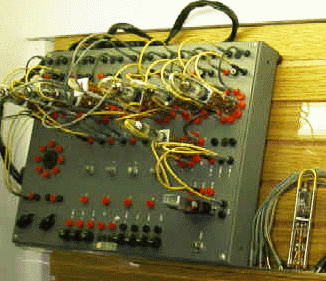
DIGITAL TRAINERS
TUBE TYPE - IBM Digital trainer - uses the earliest of IBM plug in tube
things that were in their commercial systytems
http://www.smecc.org/video/logic_5.gif
IF ANYONE CAN SHED LIGHT ON THIS IT WOULD BE FANTASTIC!
SOLID STATE - DEC COMPUTER LAB with the pdp-8 I toggles... not RARE
but is cool!
RELAY - - MINIVAC 601
COMPUTERS
for tube computer - - our sage stuff also.
for solid state - some of our GE Erma material.
for mechanical analog computer -- some kid of weird thing with gears
shafts , bellows and I think
this weird thing runs off compressed air. details pending
for electronic analog computer - Syston Donner with Tubes in it not that
RARE but we are proud of it!
for calculators - W.W. Salisbury's HP 35 that he used for Spiral
Fusion Calculations
ACTIVE DEVICES
Tubes- - single Plate early Deforest Spherical Audion
Transistors - - experimental and Pre-production prototypes ALL Bell
Transistors
DIGITAL TRAINERS
IBM Digital trainer - uses the earliest of IBM plug in tube things that
were in their commercial systems
http://www.smecc.org/video/logic_5.gif
IF ANYONE CAN SHED LIGHT ON THIS IT WOULD BE FANTASTIC!
Comes in a fitted wood case with lots of plugable modules with tubes and
other parts.
But we love all the stuff! Ed# _www.smecc.org_ (http://www.smecc.org)
In a message dated 1/10/2017 4:42:21 P.M. US Mountain Standard Time,
mloewen at cpumagic.scol.pa.us writes:
On Tue, 10 Jan 2017, Andy Cloud wrote:
> I thought this would be an interesting question to ask around - What's
the
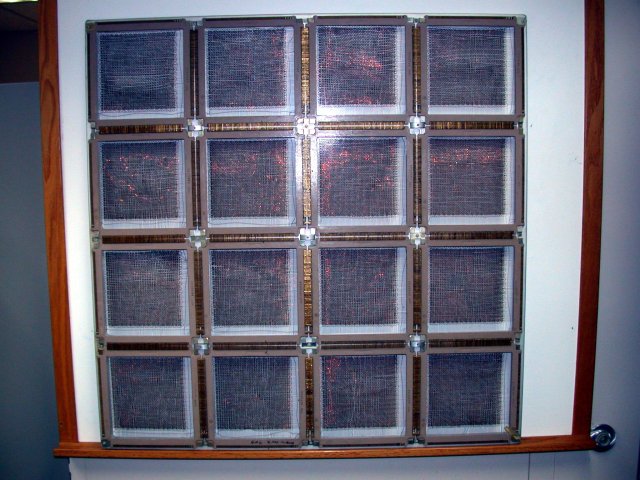
> rarest or most unusual computer-related item do you own?
64Kbit core plane from an AN/FSQ-7 (SAGE) computer:
http://q7.neurotica.com/Oldtech/SAGE/Coreplane-1L.jpg
...along with other Q7 parts:
http://q7.neurotica.com/Oldtech/SAGE/
Mike Loewen mloewen at cpumagic.scol.pa.us
Old Technology http://q7.neurotica.com/Oldtech/
Took a little digging but I found the thread where you were talking
about port 20/21. I was able to configure the 3P+S card and run the
test from the solivant site successfully, but I'm not able to upload
basic. I have a couple more things to try, including setting a small
upload delay as Bill suggests on his page.
http://www.vintagecomputer.net/browse_thread.cfm?id=318
However, I'm thinking that I may still have a configuration issue on
the 3P+S card. But I think I'm getting close.
Win
--
>The manual pretty much has the exact config for that port 20 is all you
>have to remember
>Bill Degnan
>twitter: billdeg
>vintagecomputer.net
>On Jan 6, 2017 7:41 PM, "Win Heagy" <wheagy at gmail.com> wrote:
> I have an IMSAI that I am restoring. The basics appear to be working
> (front panel, CPU and RAM cards). I have a Processor Tech, 3P+S card
> that is next on the list for testing. I have the manual, but the card
> was not configured for RS-232...not sure what it was configured for
> but it doesn't match anything in the manual. I plan to reconfigure it
> for RS-232. I'm trying to locate boot loader code for that board to
> allow serial uploading of files from a PC to the IMSAI? I have boot
> loader code for a 2SIO board on an Altair that I restored awhile back,
> and would like to find something similar for the 3P+S. I want to be
> able to toggle in a boot loader routine and then initiate an upload
> from the PC to IMSAI -- something similar to this
> https://www.youtube.com/watch?v=YwC1T9oLK1U&t=212s
> (at 1:10s in) but with a 3P+S board on an IMSAI.
>
> Also, a picture of your RS-232 configured card and wiring of the edge
> connectors would be helpful to make sure I get things right. Any help
> is appreciated.
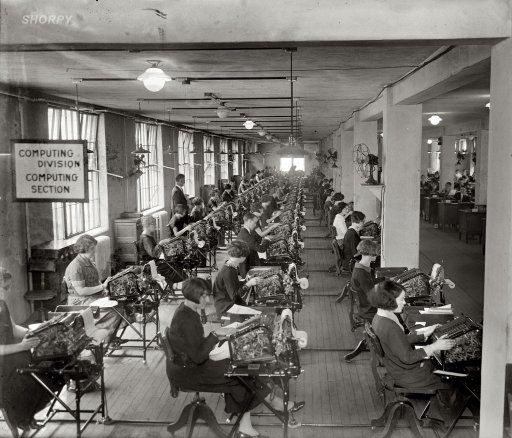
Ben Wrote:
>
> Where are the Female Computers?
> Hal
>To which Dave W. replied:
>Here they were ...
>http://farm4.static.flickr.com/3311/3214242023_ca5f2425a2_o.jpg
And, to this I say - BRILLIANT! These ladies were indeed called
computers back in those days!
-Rick
Compaq C series 2010c - aka series 2930a posters & Point of sale stuff
needed
We were given one - apparently not used in box the tab for the what
I assume is the config battery next to the main battery compartment never
even had its white paper pull tab pulled out to stat the battery up.
So anyway want to get other marketing stuff etc to help embellish a
display at SMECC project.
thanks ed# _www.smecc.org_ (http://www.smecc.org)