Is there a reference somewhere that tells me exactly the spec of various DEC
cables?
For example I think I need a BC13B (connects VCB02 to monitor, keyboard and
mouse), but I have a BC19S which *seems* identical. All I can find are
resellers that list part numbers, one or two name the cables, but don't give
the technical information that gives me any idea if these two are
interchangeable or not.
Thanks
Rob
If anyone owns an Apple-1, the peak of the bubble has arrived. Sell yours
NOW and then buy it back after the bubble bursts.
In the meantime, maybe buy a nice tulip to replace it.
--
Sellam Ismail VintageTech
------------------------------------------------------------------------------
International Man of Intrigue and Danger http://www.vintagetech.com
Whatsoever a man soweth, that shall he also reap...The truth is always simple.
I have looked through bitsavers and some other old vax manual repositories online and I haven't found a manual for the DEC VT1300. I did an installation and service manual for the VR320 monitors I have, but they only cover the display. I have worked out alot of details about the vt1300 system, and have gotten one working 100%, but haven't figured out what terminal emulation the terminal personality of the unit uses. It works 95% with the vax 3900 I have it attached to, but from time to time I see what I assume as vt100 control codes in the output stream. I assumed that that unit used vt100 emulation out of the box, and that the vax console would go this way as well, but perhaps I'm wrong. It could be that the vax is vt52 some other terminal type by default, or that the 1300 does vt102, or vt220...
Kevin
On 15 Jun 2012, at 09:14, jim s <jws at jwsss.com> wrote:
> Is there a place with a description of all that one needs to set up to
> get the vax cluster going? I'm thinking that my vmware system could
> host 4 to 8 linux boxes w/o a problem, but given the time I have to put
> into projects, I'd love to get pointers on where the best starting point
> is rather than a lot of hunting. I've got pretty good familiarity with
> all the bits a pieces, but the devil is usually in the details when you
> start to try to find all the parts. I'd certainly document what it
> takes to get it onto a multi vmware / simh system.
I'm working on it for RaspberryPi, the procedure, minus the part about
preparing the OS SDHC card, is likely to be similar.
> I've been doing some firewall testing with success on the setup, and if
> the traffic is routeable on the vmware virtual switches, I'd like to use
> this a another test of that.
Sounds like an unteresting project, it could really prove viable with
something like a 4-thread i3 or i5 and 4GB of RAM to share out between
the VMs. I'd probably run a SSD or high speed disk for the partitions
to maximise I/O speed.
--
Mark Benson
http://markbenson.org/bloghttp://twitter.com/MDBenson
Uses SIMH on a pair of Raspberry Pi boards. Pretty slick:
http://www.designspark.com/content/raspberry-pi-vax-cluster
g.
--
Proud owner of F-15C 80-0007
http://www.f15sim.com - The only one of its kind.
http://www.diy-cockpits.org/coll - Go Collimated or Go Home.
Some people collect things for a hobby. Geeks collect hobbies.
ScarletDME - The red hot Data Management Environment
A Multi-Value database for the masses, not the classes.
http://www.scarletdme.org - Get it _today_!
Buying desktop hardware and installing a server OS doesn't make a
server-class system any more than sitting in a puddle makes you a duck.
[Cipher in a.s.r]
Re: Microvax connecting from console (MMJ) to DB25(female) DCE port
>> I've even seen one device which powers down its transmitter unless
>> it sees at least one input pin being driven.
> Just to jump in...I don't know about machines,
> but at least one of the later MAX232 family chips can be configured to do this.
> It's a power-saving measure; it shuts down the charge pump.
> Note that this is not the "MAX232", but one of that family,
> which comprises upwards of thirty completely different chips now.
And someone mentioned another driver chip that can tri-state the drivers.
I once worked in an environment that kinda used that feature
to allow many RS232 devices to share one line.
It was a broadcast-mostly hub-network where clients could
send requests, but they were normally transmit-disabled.
It was collision NON-detect: lack of an ack implied a transmit collision.
Mfgrs such as Black Box also made MSU: Modem Sharing Unit.
The dumb ones just "or-ed" together the inputs.
The "smart" ones used a protocol for
multiplexing many serial ports to one.
I guess EIA-422 or 485 would be better suited for that,
but I suspect the network evolved
>from single point to point links to multidrop.
-- jeffj
You (Chuck) and Dave are speaking specifically of so called 100% clones. That I fully expect to be a given. That there exists the mechanism to default to a batch of code in a rom address is news to me though, even in a hundred percenter. But since there is so much compatibility amongst BASICS, as was mentioned recently, and given an empty socket (curious to know which mobos had them, probably few if any) or a board that would extend an existing socket, is it likely an IBM chip would work, even if you had to manually transfer execution.
Does any one have a pinout of the DB37 SCSI connector?
Might be what my old scanner has on it. Especially if all the ground pins
and shields line up.
Thanks!
I?ve completed a list of boards in the P800 haul:
CPU BOX 1 ? labeled P859
? CP7RA : 5111 199 62019 (P857R/A CPU for P858,P859)
? MCU3 : 5111 199 77442 (Paper tape, serial control unit (partially
populated))
? 2 x M128E : 5111 199 67592 (128Kx21 RAM)
? MCU2 : 5111 199 78181 (Line printer, card reader control unit)
? MTCU : 5111 199 72467 (Pertec 9 track magnetic tape control unit)
? 2 x M128ES : 5111 199 58622 (128Kx21 RAM)
? MCU3 : 5111 199 77444 (Paper tape, serial control unit (partially
populated))
? AMA-8A : 5111 199 75318 (Asynchronous line multiplexer)
? SLCU2 : 5111 199 69373 (Synchronous serial line control unit)
CPU BOX 2 ? labeled P859
? 2 x CP7RA : 5111 199 62019 (P857R/A CPU for P858,P859)
? M128E : 5111 199 67592 (128Kx21 RAM)
? MCU2 : 5111 199 78185 (Line printer, card reader control unit)
? MCU2 : 5111 199 78186 (Line printer, card reader control unit)
? MCU3 : 5111 199 77445 (Paper tape, serial control unit (partially
populated))
? BIGD : 5111 199 73289 (Big disk (40/80MB CDC) controller)
? BIGD2A : 5111 199 57852 (Big disk)
The weirdness of Box 2 is ? obviously ? a second CPU in the same box. This
can?t be right.
CPU BOX 3 ? labeled P859
? CP7R : 5111 199 67589 (P857R CPU for P858,P859)
? M128E : 5111 199 67593 (128Kx21 RAM)
? TIMER CARD : 4022 422 20091
? ? : 4522 107 62304
? CU-ADIOS : 8222 255 50942
Box 3 has three cards with part numbers in different series from the normal
5111 199 xxxxx
CPU BOX 4 ? unlabeled, P856 type M4M box
? 2 x CDD : 5111 199 78176
? CDD : 5111 199 78177
? CDD : 5111 199 78178
? 2 x MCU3 : 5111 199 78198 (Paper tape, serial control unit fully
populated))
? MMU : 5111 199 75183 (Memory Management Unit)
? GPC : 5111 199 79382 (Custom card)
Box 4 just looks wrong. I don?t know what the CDD cards are, but there
doesn?t appear to be a CPU or memory in there. However, there are P856 CPU?s
in the spare cards box, and I found references to the P856 being able to use
MOS memory as well as core, so all might not be lost here.
EXPANSION BOX ? E2 type (6 slots)
? BIGD2A : 5111 199 57852 (Big disk)
? MTCU : 5111 199 72467 (Pertec 9 track magnetic tape control unit)
? BIGD : 5111 199 59755 (Big disk (40/80MB CDC) controller)
? MTCU : 5111 199 72462 (Pertec 9 track magnetic tape control unit)
? 2 x MX : 5111 199 79335
CASSETTE BOX ? P833
? K7S2 : 5111 199 79329 (P833-152 Cassette Control Unit)
Combined with the spare M-format cards in the haul, the complete list of
boards is as follows:
? ? : 4522 107 62304
? AMA-8A : 5111 199 75318 (Asynchronous line multiplexer)
? BIGD : 5111 199 59755 (Big disk (40/80MB CDC) controller)
? BIGD : 5111 199 73289 (Big disk (40/80MB CDC) controller)
? 2 x BIGD2A : 5111 199 57852 (Big disk)
? 4 x CDD : 5111 199 7817X
? 2 x CP7R : 5111 199 67589 (P857R CPU for P858,P859)
? 3 x CP7RA : 5111 199 62019 (P857R/A CPU for P858,P859)
? CPB : 5111 199 74979 (P856 CPU)
? CPB : 5111 199 76227 (P856 CPU?)
? CPB / CP7B : 5111 199 63142 (P856 CPU?)
? CU-ADIOS : 8222 255 50942
? 4 x F1MB : 5111 199 6742X (modified for? 5.25" FDD)
? 3 x F1MB : 5111 199 67427 (8" Floppy disk controller)
? F1MBY : 5111 199 58742 (Floppy disk controller)
? FLDB : 5111 199 69667
? GPC : 5111 199 79382 (Custom card)
? 2 x IOP : 5111 199 73185 (I/O Processor)
? K7S2 : 5111 199 79329 (P833-152 Cassette Control Unit)
? 5 x M128E : 5111 199 6759X (128Kx21 RAM)
? 2 x M128ES : 5111 199 58622 (128Kx21 RAM)
? 3 x MCU2 : 5111 199 7818X (Line printer, card reader control unit)
? 5 x MCU3 : 5111 199 7744X (Paper tape, serial control unit (partially
populated))
? 2 x MCU3 : 5111 199 78198 (Paper tape, serial control unit fully
populated))
? MMU : 5111 199 75183 (Memory Management Unit)
? 3 x MTCU : 5111 199 7246X (Pertec 9 track magnetic tape control unit)
? 2 x MX : 5111 199 79335
? SLCU2 : 5111 199 69373 (Synchronous serial line control unit)
? TIMER CARD : 4022 422 20091
Looks like I should be able to get a few systems going with these parts.
There?s also a second box with spare cards, having different formats. Some
of these are double eurocard format, like those used in the P85xE systems.
There?s also a spare power supply for a P859 box, as well as a spare power
supply for a P856 box.
I?m interested in finding out more about the cards I couldn?t identify,
these are:
? ? : 4522 107 62304
? 4 x CDD : 5111 199 7817X
? FLDB : 5111 199 69667
? 2 x MX : 5111 199 79335
? TIMER CARD : 4022 422 20091
I?m hoping CDD means Cartridge Disc Drive, and that these are the
controllers for the X1215 disk drives.
The 2 8? floppy disk drives are CDC BR8A8A type, looks like they are 800KB
double sided, double density drives. They?re very dusty.
Cheers,
Camiel
just noticed my 3 rl02's i have ones a rl02a witch has a metal front panel
instead of plastic what els is different not seeing anything on a quick
google
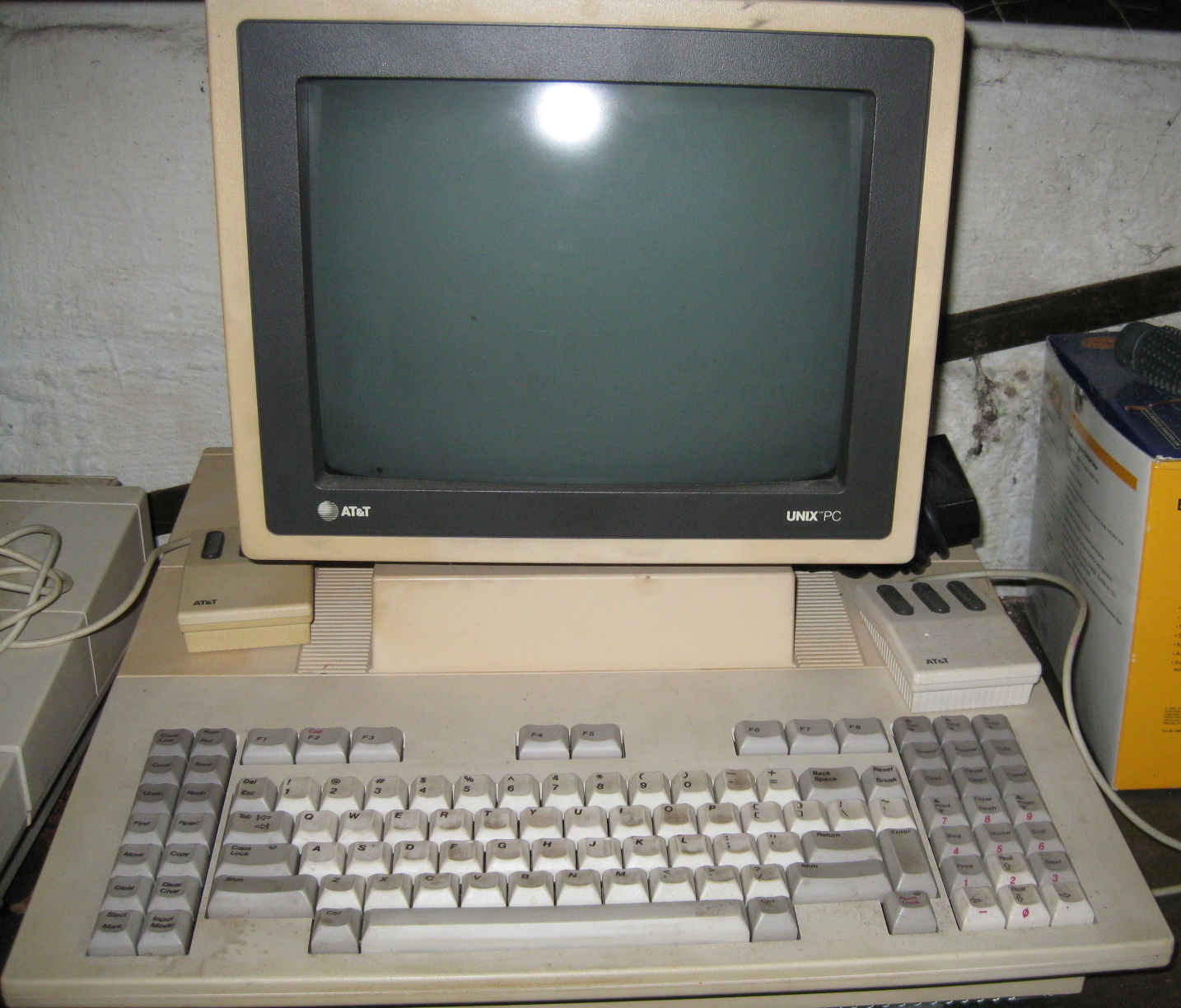
Just acquired a PC 7300 and as I am cursed with always incomplete
keyboards would be interested if anyone has spare keycaps for it
please.
I am missing the letter C keycap and the Reset/Break keycap.
Example picture: http://upload.wikimedia.org/wikipedia/commons/e/e6/Att-3b1.JPG
I can offer VT100-style keycaps as a trade or paypal.
thanks,
nigel.
On 13 Jun 2012, at 14:40, Liam Proven <lproven at gmail.com> wrote:
> On 12 June 2012 14:06, Gene Buckle <geneb at deltasoft.com> wrote:
>> Uses SIMH on a pair of Raspberry Pi boards. Pretty slick:
>>
>> http://www.designspark.com/content/raspberry-pi-vax-cluster
>
> I thought that was pretty elite, as one might say, myself - and
> Tweeted it, where it's now spreading quite well.
I hope you tweet about mine, I will be blogging it as I go and posting
video hopefully so plenty of interest! :) Follow @DECtecInfo :)
Hopefully mine will have more nodes and will be rack-mountable with
ports to the outside world... maybe ;)
--
Mark Benson
http://markbenson.org/bloghttp://twitter.com/MDBenson
On 13 Jun 2012, at 14:26, Rod Smallwood <rodsmallwood at btconnect.com> wrote:
> Sheeesh!
To clarify, I'm not so much bitter that he 'got there first', just
that I couldn't do it yet because I only have 1 board. I'd have
started by now but I have no more boards. I am thinking about using my
Atom PC and VIA PC as nodes until I have more boards bu that's not
ideal, although I can run 2 nodes on the Atom.
I have a LOT of reading and learning to do before I can even start so
I can't exactly complain about him beating me to the post :P
--
Mark Benson
http://markbenson.org/bloghttp://twitter.com/MDBenson
Marklar was, of course, the Intel version of OS X which existed in Apple's
skunkworks after the apparent demise of Star Trek (classic OS on x86). I say
apparent, because this post, allegedly written by the wife of the chief
engineer, implies that Marklar rose from the ashes of Star Trek due to this
guy's efforts.
http://www.quora.com/Apple-Inc-2/How-does-Apple-keep-secrets-so-well/answer…
Not sure how true it is; perhaps Al Kossow knows.
--
------------------------------------ personal: http://www.cameronkaiser.com/ --
Cameron Kaiser * Floodgap Systems * www.floodgap.com * ckaiser at floodgap.com
-- Experience only makes you more interesting and marketable. -- Judy Blackburn
Down in Macon, GA my dad has a DEC that we would like to send to a good
home. He purchased this several years ago from a man in north
Georgia who said it spend the 1990s answering the phone at a utility
company. My dad kept it in his classroom while he was a high school
technology teacher, but now that he's no longer teaching it's gathering
dust on his carport.
There's a VAXstation 3, DECvoice unit, two hard drives, and a tape drive
in an enclosure on wheels. There's also a VT420 terminal. You'd need a
truck, ramp, and at least two strong people to load and unload this.
You can see some pictures of the equipment at
http://www.flickr.com/photos/puerexmachina/sets/72157622981044137/
Please pass this on to anyone you think might be interested!
--
All the best,
Brian Pitts
>> >> Seems excessive... I seem to recall you need log2(n) - 1 bits, which
>> >> would be 3 bits (32-bit ECC needs 4 bits).
>> > Doesn;t that assume the 'extra' bits are known to be correct. Those
>> > can be in error too (even if the'real' data bits are correct),
>>
>> No, it doesn't. See Wikipedia's Hamming code page (asking for SECDED
>> redirects to it) for a brief treatment of the subject, or any of many
>> more detailed treatments of coding theory for more.
>
> I am missing something here... The OP says that adding 3 bits to a 16 bit
> word is enough to be able to correct any single-bit error.
>
> Now, consider those 16 'real' data bits. If any single one is in error,
> that generates a new 16 bit word, and each of these much give the same
> output 16 bit word after error correction. So it would appear to me that
> there have to at least 17 possible input words (the 'correct' one, and
> the 16 wach with one bit fillped form the corrrect one) that give the
> same 16 bit output -- that is what is meant by correcting single bit erorr.
> And yet adding 3 bits only gives you 8 times as many possible data words,
> which doesn't seem enough.
The example I know, is the MK11 memory box.
ECC there is done at the single-error correction, double-error detection level on 32-bit words.
This takes 7 check bits.
I find the most satisfying illustration to be the MK11B print set, there's a very nice 11x17
page in large type, illustrating how all this is done with XOR gates. I find this much more digestible
than the usual mathematical equation stuff found in textbooks. That's a brilliant page.
It shows how to, by eye, to read the XOR gate outputs to identify the error syndrome uniquely,
with just a few words. Many fewer words than I used in this paragraph!!!!
If you didn't want double-error detection it would take 6 check bits per 32 bit word. Maybe
the implication that there is 3 check bits per 16 bit words, assumes single-bit correction
and the actual ECC logic is working on 32 bit words. If the ECC was working on 16 bit words,
it would take 5 check bits.
Tim.
Ill wager they must have been very illegal clones Diane. Do you remember anymore specifics? And with her statement I dare anyone to tell me the real early even vanilla clones arent collectible.
assuming an empty socket (IBM mobos typically have empty sockets), chances are if you dropped IBM roms into a clone mobo, while it may not boot into BASIC in the absence of a floppy or hard drive, would it work if you jumped to so and so?
>
> I was at a storage unit this evening, picking up yet another couple of
> free DEC machines. The guy unloading the machines also had a couple of
> teletypes. One was a pretty standard Model 43 (all plastic case).
> It had a 300 baud interface, not serial port. He said he knows it works
I am wondering jsut what a '300 baud interface' is if not a serial port.
It sounds like it might be a current loop interface. I thought the Model
43 had both that and RS232 as standrd, but it does depened on the PCB at
the very back, behind the PSU.
I _think_ that standard Model 43s can do 110 or 300 baud.
-tony
On 12 June 2012 16:54, Zane H. Healy <healyzh at aracnet.com> wrote:
>
> I rather wish they'd kill of HFS+, weren't there rumors of moving to ZFS a
> few years back?
I don't know what happened but I suspect it might have been something
to do with the Oracle takeover. This has caused problems with Java use
on Linux, for example. Oracle won't permit others to host the JVM in a
repository any more, for instance.
--
Liam Proven ? Profile: http://lproven.livejournal.com/profile
Email: lproven at cix.co.uk ? GMail/G+/Twitter/Flickr/Facebook: lproven
MSN: lproven at hotmail.com ? Skype/AIM/Yahoo/LinkedIn: liamproven
Tel: +44 20-8685-0498 ? Cell: +44 7939-087884
On Tue, Jun 12, 2012 at 11:54 AM, Zane H. Healy <healyzh at aracnet.com> wrote:
> I rather wish they'd kill of HFS+, weren't there rumors of moving to ZFS a
> few years back?
>
>
ZFS in OSX died due to SUNW->ORCL licensing changes, IIRC.
Oh no! Not another baud .vs.BPS.vs.data rate gentleman's argument!
But, What is a 300 Baud interface? Current loop maybe?
jim
Scott M wrote:
> I was at a storage unit this evening, picking up yet another couple of
> free DEC machines. The guy unloading the machines also had a couple of
> teletypes. One was a pretty standard Model 43 (all plastic case).
> It had a 300 baud interface, not serial port. He said he knows it works
> because he ran it to a computer at 300 baud that then converted the
> signal to serial so that it could communicate "normally". He said the
> 300 baud interface makes it more of a pain, but more cool at the same
> time. He is looking to unload it right away. The other teletype was
> all metal, built into a small table, had an Army Corps label, a tape
> read/writer?, a box of blank "new" paper tapes on spools about 5/8 inch
> wide. Also a second auxiliary? teletype unit was built into a very
> small adjacent table. This one had several "new" rolls of paper approx
> 12 inches wide. The secondary teletype had keys too, but I am thinking
> the primary with the paper tape was used for input and the secondary
> was used for output. The guy said it was used with the MARS system.
> There was an interface box too, probably to connect to a ham radio,
> but the radio was not present. The guy said he got it from a retired
> Air Force General who had kept it as a souvenir. He said he has all the
> original manuals that go with it at home. He said it is complete and
> reportedly working. The only thing wrong was some of the plastic covers
> on the individual keyboard keys had deteriorated and were loose.
> However considering the year, 1938, it was in remarkably good shape.
> The dry Colorado air is pretty easy on most equipment, and this was
> yet another example of that.
> He said cannot ship it because it is too heavy, but I know that places
> like "The UPS Store" can pickup, package, and ship items like this.
> There is a UPS Store nearby that might be able to do the job. (I had
> a 100+ lb IBM machine shipped this way a few years ago for about $200).
> Anyway, the guy is Matt. I am not going to post his email address, but
> if you want to contact him, email me and I will forward your email to
> him. I can also give you contact info for the nearby UPS Store. Matt
> took some pictures with his smartphone for me, and once he emails those,
> I will put them on a website.
>
> Scott
>
>
>
>
>
no??? What about on disk?
------------------------------
On Sat, Jun 9, 2012 5:07 PM PDT Curt Vendel wrote:
>Basic was never released on rom cartridge. Yes it was mentioned in marketing materials but was never developed onto rom
>
>
>
>Sent from my iPhone
>
>On Jun 9, 2012, at 5:50 PM, Chris Tofu <rampaginggreenhulk at yahoo.com> wrote:
>
>>
>> turns out none of my units work anymore. Short of pulling the roms... I may have the service docs. I know I have the marketing guide.
>
I was at a storage unit this evening, picking up yet another couple of
free DEC machines. The guy unloading the machines also had a couple of
teletypes. One was a pretty standard Model 43 (all plastic case).
It had a 300 baud interface, not serial port. He said he knows it works
because he ran it to a computer at 300 baud that then converted the
signal to serial so that it could communicate "normally". He said the
300 baud interface makes it more of a pain, but more cool at the same
time. He is looking to unload it right away. The other teletype was
all metal, built into a small table, had an Army Corps label, a tape
read/writer?, a box of blank "new" paper tapes on spools about 5/8 inch
wide. Also a second auxiliary? teletype unit was built into a very
small adjacent table. This one had several "new" rolls of paper approx
12 inches wide. The secondary teletype had keys too, but I am thinking
the primary with the paper tape was used for input and the secondary
was used for output. The guy said it was used with the MARS system.
There was an interface box too, probably to connect to a ham radio,
but the radio was not present. The guy said he got it from a retired
Air Force General who had kept it as a souvenir. He said he has all the
original manuals that go with it at home. He said it is complete and
reportedly working. The only thing wrong was some of the plastic covers
on the individual keyboard keys had deteriorated and were loose.
However considering the year, 1938, it was in remarkably good shape.
The dry Colorado air is pretty easy on most equipment, and this was
yet another example of that.
He said cannot ship it because it is too heavy, but I know that places
like "The UPS Store" can pickup, package, and ship items like this.
There is a UPS Store nearby that might be able to do the job. (I had
a 100+ lb IBM machine shipped this way a few years ago for about $200).
Anyway, the guy is Matt. I am not going to post his email address, but
if you want to contact him, email me and I will forward your email to
him. I can also give you contact info for the nearby UPS Store. Matt
took some pictures with his smartphone for me, and once he emails those,
I will put them on a website.
Scott