Hello.
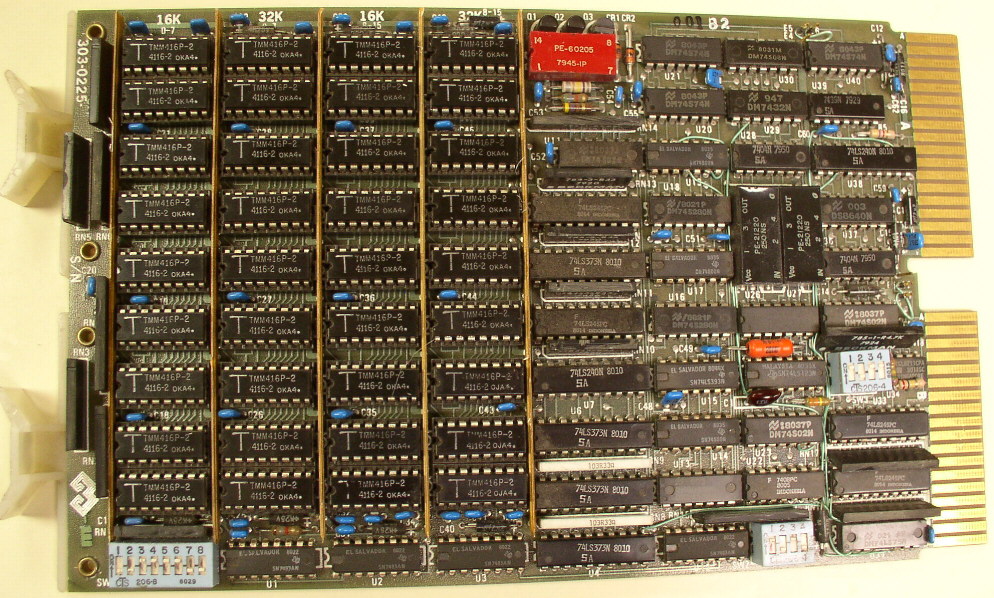
I have two card cages out of a pair of Linotron 202 phototypesetting machines, and have been hunting for documentation for the Naked Mini systems used in them for over a year now. The Computer Automation CPU boards in the systems have been a complete mystery to me until recently. To make a long story short, I happened to stumble across the patent for the machine (https://patents.google.com/patent/US4254468A/en), which has the same bus configuration as my card cages, and also provides some good evidence that "Naked Milli" 3/05 CPU boards were used.
I've found documentation for the LSI 3/05's instruction set and an informative brochure, but nothing technical. Bitsavers has been a great help in my efforts to uncover more information about this processor, but there's still a lot of technical information that has eluded me (such as the autoload ROM, and how its data is arranged). The LSI-series computer handbook mentions a dedicated manual for the LSI 3/05, but I haven't found anything else about it online.
If anyone has any information about the LSI 3/05, or where I might look for the manual, it'd be greatly appreciated.
Thanks.
I have a Maynard MaynStream tape backup unit from the 1980's.
It uses audio-format cassettes with 1/4" tape, but it's a different
tape composition, and the cassette has a notch in it to tell the device
it's not just plain audio tape. The capacity was 80 MB per cassette.
I also have four ISA controller cards, four cables, and several
cassettes. We used it for backup with IBM PC/AT boxes many years ago.
Does anybody want it? It seems a shame to throw it in the e-waste bin.
Van Snyder
van.snyder at sbcglobal.net
I'm getting in a lot of the HP1000 systems and parts in next week. If
anyone needs any 1k A990, A900, & A600 systems, CPU, memory & interface
cards, cables, panels, connectors or anything else associated with those
lines, let me know as I probably have them. Just note that I'm a
re-seller and not a hobbyist and am selling these items as part of an
end-user consignment deal.. two types of complete HP1000 A990 and A600
are below. Let me know if you need anything, want pictures, or have any
questions.
A990 Server 14-slot Micro 1000 Server (Configured with)
1 x 12990x A990 CPU
1 x 12221B 8MB Memory
1 x C2490A 2GB SE SCSI Internal disk drive
1 x xxxxx? DDS DAT Internal Tape Drive
1 x 12016A SCSI Controller board
1 x 12009A HP-IB Interface board
1 x 12005A Serial Interface board
1 x 12006A Parallel interface board
1 x 12040A Asynchronous Multiplexer Interface (MUX) board
1 x 02430x Voltage Jumper Board
1 x 12230A Front-plane memory connector (CPU to memory connector)
$3,500.00
A600 Server 14-slot Micro 1000 Server (Configured with)
1 x 12105x A600 CPU
1 x 12101B Memory Controller
1 x 12103D 1MB Memory
1 x 12103C 512kb Memory
1 x 12022x disk controller board
1 x xxxxx? floppy drive
1 x C2490A 2GB SE SCSI Internal disk drive
1 x 12016A SCSI Controller board
1 x 12009A HP-IB Interface board
1 x 12005A Serial Interface board
1 x 12040A Asynchronous Multiplexer Interface (MUX) board
2 x 12038x Jumper board
1 x 02430x Voltage Jumper Board
$2,500.00
Feel free to email direct at jesse(at)cypress-tech.com
Thanks
Jesse
Cypress Technology Inc
My grandfather wrote a book, "This is the Way to Study"
SQ3R was the system
Study, Question, Read, Write, Review
Look over the chapter, read the captions of the pics, look at the bold text
then make notes of questions for things that pop up
Then Read the chapter through
Write down more questions
read again to find your answers
then do the problems at the end of the chapter
look over everything again, and see if u understand it all
have someone else quiz u, if needed
then review it all, and u should have a good grasp on it
My college friend says Wow, that is a LOT of work!
Is there an expectation now that being educated is NOT a lot of work?
--
Cindy Croxton
Electronics Plus
1613 Water Street
Kerrville, TX 78028
830-370-3239 direct
If anyone has spare time, and is familiar with discrete mathematics, I
have a friend who is a young college kid and desperately needs a tutor.
His prof just says to read the book, and take online quizzes. He is
failing. If you can help, please email me. He is in Delaware.
--
Cindy Croxton
Electronics Plus
1613 Water Street
Kerrville, TX 78028
830-370-3239 direct
>>> I suspect much of the electronics is fine. It would be good for someone
>>> wanting backup cards.
>> You must be joking. Those cards are done. Any chip that is still
>> operational will likely fail upon or shortly after power is applied.
> Most components can stand soldering temperatures. It is clear
> that it was only hot enough to melt plastics. That isn't even hot
> enough to damage boards.
I have physically seen the equipment in question, in the warehouse. A few
of the cards in the cage may still be salvageable - maybe, with some very
powerful juju. But much of the hardware is damaged *far* beyond any hope of
recovery. As Jim says, the
~~
Mark Moulding
Hi, I'm trying to ID this:
http://ana-3.lcs.mit.edu/~jnc/tech/pdp11/jpg/QBUSMystMem.jpg
mystery QBUS memory card. I think it's a 64KB card, so not very important, but
it's bugging me. The company logo (lower left corner) looks familiar, but I'm
not good with off-brand logos; I'm hoping someone will recognize it. (It we
can locate a manual for it, so much the better; I'm not up to playing with it
to work out what the switches do!)
Noel
I received permission to share this link. These are in a personal
collection in Finland. Don't drool too hard :-)
https://imgur.com/gallery/7TKl5YH
--
Cindy Croxton
Electronics Plus
1613 Water Street
Kerrville, TX 78028
830-370-3239 direct
Hi folks,
I am looking for the following software products for a PDP-11, ideally to
be run on RSX-11M.
RJE/HASP
2780/3780 Protocol Emulator
My aim is to be able to submit a remote job from a simulated PDP-11 on simh
to a simulated IBM/370 on Hercules. The products that I mentioned seem the
obvious way to do this, but anything that works would be helpful.
Cheers
Peter Allan
I've not worked on 8" floppy drives, but have on tons of 5.25" single-
sided drives. Older single-sided ones (usually 35-track from the 70's)
had load solenoids for the pressure pads, as with a double-sided unit.
The pad is to provide good contact between the media surface and the
head beneath. I think older media must have ablated more than latter-
day media does, as it is rare to find a single-sided 5.25" drive with a
load solenoid. The pad is always in contact whenever the drive door is
closed. Double-sided drives of course retained the head-load solenoid
for some years, but eventually those were done away with. So, I think
that unless you are using a drive 24/7, a pad in contact with the disk
should not be a serious concern. That the pad IS properly in contact
is important of course, and pads should be inspected to see that there
is enough 'meat' left on them to provide the pressure needed. Aft of
the pad, at the base of the head-sled pressure arm is a notch into
which the end of the spring rides. Close examination of the sled will
probably show some higher and lower notches into which you can move the
end of the spring, to provide more or less pressure as needed, to tune
a particular drive.
In the old days, someone running a drive on a BBS or other heavy
application might wear a pad out. We'd just steal one from a cassette
tape and stick it on the arm. The cassette tape pad was square and the
originals were round, but it never seemed to make any difference.
These days there are no cassettes floating around to cannibalize, so I
buy felt pads for furniture from Amazon, trim them with a razor and
stick them on a drive I'm refurbishing. Atari, Commodore, Tandy...
Many of the 80's 8-bits used this very scheme on their single-sided
drives and this solution is good for all of them.
I had someone insist to me recently that the felt pads I was buying
were acrylic and the originals were Rabbit Hair and that it was crucial
that the replacements be made of rabbit hair. In practice, and that is
40 years of practice, any old pad will do just fine. If it looks like
the right thing it will serve the purpose. Just pick off the old nub
of a pad and stick on your newly cut one and go.
Common faults I've been noticing are that disk drives made in the 70's,
80's, and 90's are failing in common ways. I attribute these failures
mostly to lack of lubrication. After 30 years they get a bit gummy and
the actuators have to work harder to move the head sled, which puts a
greater load on the darlington drivers which power the actuators, which
causes the drivers to fail. Replacing the drivers will often restore
the drive to working order, but they will fail again in short order if
the original probelm is not resolved. I simply clean the rails and
stepper bands, touch a little wd40 to the rails to free the head sled,
cycle the head back and forth a buncha times manually to exercise it
and distribute the lubricant, then follow that will a little white
lithium grease for a longer-lived lube. Not only will the drive run
better and a lot quieter when lubricated, the loads on the actuators
and their associated electronics are greatly reduced, making for a
like-new drive.
The second thing that is happening quite often is electrolytic
capacitors are failing, leaking or not. I had a pair of drives the
other day which made quite a racket when spinning free even without
media installed. Replacing the electrolytics on the spindle motor's
board got rid of the noise and made it possible to properly tune the
RPM's, which had been just all over the map.
best,
Jeff
> Date: Fri, 9 Oct 2020 02:29:46 -0400
> From: Bob Vines <bobvines00 at gmail.com>
> To: cctech <cctech at classiccmp.org>
> Subject: Tips on reviving a TU56 + TD8E?
> I don't have a TU56 & TD8E _yet_, but really hope to get one fairly soon --
> if successful, they will most assuredly require troubleshooting & repairs.
> Where did you find the source for TDFRMT? Also, where did you find the
> MAINDEC document that matches your version of the TD8E MAINDEC? I ask
> because I've had _great_ difficulty finding MAINDEC docs that actually
> match whatever MAINDEC images I've tried to use.
Bob,
The source for TDFRMT, as well as the rest of OS/8 can be found here:
https://tangentsoft.com/pidp8i/file?name=src/os8/ock/CUSPS/TDFRMT.PAhttps://tangentsoft.com/pidp8i/dir?ci=tip&name=src/os8
Several versions of the TD8E MAINDEC can be found here:
http://so-much-stuff.com/pdp8/software/maindec.php
Only one of them has a PDF, and I haven't checked to see if they fully
match up with the binaries, but the starting addresses of the tests I'd
been checking at least seem to match up with the DHTDAB.DG binary found
here: www.pdp8.net/pdp8cgi/os8_html?act=dir;fn=images/os8/diagpack2.rk05
Regards,
-Tom
mosst at sdf.org
SDF Public Access UNIX System - https://sdf.org
>
> Message: 8
> Date: Wed, 7 Oct 2020 05:59:40 +0000 (UTC)
> From: Thomas Moss <mosst at SDF.ORG>
> To: cctalk at classiccmp.org
> Subject: Tips on reviving a TU56 + TD8E?
>
...
> I've recently bought a TU56 for my PDP-8/e, and am looking for some
> advice on getting it to work.
>
...
> ... I found a copy of the source for TDFRMT so I could see what
> exactly was causing the "SETUP?" error.
>
...
Tom,
I don't have a TU56 & TD8E _yet_, but really hope to get one fairly soon --
if successful, they will most assuredly require troubleshooting & repairs.
Where did you find the source for TDFRMT? Also, where did you find the
MAINDEC document that matches your version of the TD8E MAINDEC? I ask
because I've had _great_ difficulty finding MAINDEC docs that actually
match whatever MAINDEC images I've tried to use.
Thanks,
Bob
> From: Ethan Dicks
> a DEC sync serial board since that part is nowhere to be found right
> now.
I dunno, I see them fairly often on eBait (well, often compared to some other
things, e.g. TU56 parts... :-)
QBUS or UNIBUS? And there are lots of different ones, which I confess I don't
fully understand the difference between (e.g. DP11, DQ11, DU11, DUP11, DV11) -
some of it's single-line/multi-line, and DMA/programmed I/O, but from what few
details I looked at - while doing:
http://gunkies.org/wiki/DP11-A_synchronous_serial_line_interfacehttp://gunkies.org/wiki/DUP11_synchronous_serial_line_interface
there are also differences in exactly which protocools are supported,
etc, etc, etc, etc.
Noel
>Date: Wed, 7 Oct 2020 11:29:43 -0700
>From: Glen Slick <glen.slick at gmail.com>
>Subject: Re: Remote job submission from PDP-11
>
>On Wed, Oct 7, 2020 at 11:04 AM Paul Koning <paulkoning at comcast.net> wrote:
> >
> > > On Oct 7, 2020, at 12:06 PM, Glen Slick via cctalk
> <cctalk at classiccmp.org> wrote:
> > >
> > > ...
> > > I was curious about this DEC M8704 DMS11-DA that sold cheap a few days
> > > ago. It has eight SMC COM5025 "Multi-Protocol Universal Synchronous
> > > Receiver/Transmitter USYNR/T" chips:
> > >
> > > https://www.ebay.com/itm/373243388363
> > >
> > > Apparently it can't do anything on its own. It needs to be connected
> > > to a UNIBUS through a companion KMC11 processor board, which might not
> > > be too common if someone wanted to put together a working
> > > configuration.
> >
> > That model number isn't familiar.
> >
> > A KMC-11 is simply a microprocessor that sits on the Unibus and
> does Unibus cycles to another device on behalf of the host. The
> idea is to offload operations so the host can ask for block
> transfers and the KMC does the individual character I/O operations needed.
> >
> > That said, it clearly is not correct that "it can't do anything
> on its own". The KMC-11 reaches into the device via its Unibus
> CSRs. If you can find a description of its operation, or reverse
> engineer it, you can clearly write a device driver for it that
> doesn't rely on a KMC-11.
> >
> > paul
>
>Well it does appear that M8704 DMS11-DA "can't do anything on its own"
>directly through the UNIBUS. From a quick visual inspection it only
>has power and grant continuity traces on the card edge connectors. The
>connection to the controlling KMC-11 is through the 40-pin Berg
>connector. So without a KMC-11 an alternate interface through the
>40-pin Berg connector would be needed.
My first job at DEC was to release the KMC-11 Programmer's Tools
support for RSX-11.
(I didn't write them from scratch, two other engineers did that, but
I did do final debug and QA)
We provided two firmware kit products; the CommIOP-DUP and DZ, which
controlled the DUP-11 and DZ-11 respectively.
The KMC-11 could do NPR bus transfers to/from the devices, and the
CommIOP-DUP firmware could do Bisync or X.25 type framing so that you
got an RSX-11 driver with a packet interface, vs byte at a
time. The CommIO-DZ firmware provided various customizable state
driven things as you might want for a line driven terminal
concentrator. I'm pretty sure the packages came with the "source"
code, so you could customize it if you could understand it.
The DMC-11 did DDMCP support and was basically a KMC with ROM in the
control store. And it did use that external connector to the
proprietary network interface card, DMC-11DA.
In later years, I wrote and released a KMC Tools package for
VMS-11. That came with a VMS DMA LP-11 line printer driver I authored.
I don't remember if the CommIOP tools were supported. Some VMS
engineers didn't like these products. (another story)
(That didn't stop the Lab products guys in Marlboro from using them
for their applications)
There was a later version called the KMC-11B which doubled the memory
and probably ran faster too. It was the same board as the DMP-11
product which was an improved version of the DMC-11.
These were quad Unibus boards. In the Q bus world, there was a 6502
based I/O processor card developed (outside of Networks) (as one-chip
micros became available) as well.
I have a KMC-11 Programmer's Manual here... I think you'll need a
print set to figure out that connector.
Dave.
So far, two people have asked for "Varian Data 620/i Systems Computer
Manual."
So that I don't have to decide who gets it, I've put it on EBay for a7-
day auction with a starting bid of $0.99.
https://www.ebay.com/itm/224184671124 id="-x-evo-selection-start-marker">
Van Snydervan.snyder at sbcglobal.net
In about 1974, for my senior undergraduate project, I wrote microcode
to convince a Varian V70 that it was actually an IBM 1130.
Being substantially more modern hardware, it was much faster than a
real 1130.
If anybody wants microcode and flow diagrams, and listings for the I/O
simulation (which ran in 620/f mode), I'm happy to send them.
Van Snyder
van.snyder at sbcglobal.net
So far, two people have asked for "Programming HP 21MX Computers."
So that I don't have to decide who gets it, I've put it on EBay for a
7-day auction with a starting bid of $0.99.
https://www.ebay.com/itm/224184669206
It has a cheap "perfect" binding, and it's 3-hold punched, so it could
be disassembled and scanned, but I don't want to be the one who does
this.
Van Snyder
van.snyder at sbcglobal.net
https://pt.gofundme.com/f/exhibition-of-agora-computing
They really need donations so they can get going again. Can anyone help?
--
Cindy Croxton
Electronics Plus
1613 Water Street
Kerrville, TX 78028
830-370-3239 direct
Hi all,
Am wondering if anybody knows how to find a copy of the "Handheld
Systems Archives CD-ROM" that was sold through the domain cdpubs.com
20-30 ywars ago.
/Tomas
Hi All,
I've recently bought a TU56 for my PDP-8/e, and am looking for some
advice on getting it to work.
Over the course of a few weeks I fixed odds and ends with the drive
(motor run capacitors, damaged wires, transistors, etc.), and for a few
days the right drive worked very reliably. I could read existing tapes,
write to them, and format fresh tapes.
(A write-up to this point is here: www.vcfed.org/forum/showthread.php?76935)
(A good source for new motor run capacitors: https://www.ebay.com/itm/142631210678)
However, this changed when I wrote a file to an existing tape, only to
find that the directory structure had somehow been corrupted in the
process. Out of curiosity I mounted a scratch tape that I knew I could
format before and tried to format it again, the result was a
BLOCK NUMBER ERROR PHASE 4.
When running the TD8E MAINDEC it's apparent why - when set to display
the block number in the accumulator for the tape I tried to format,
every third bit appears to stick or glitch out. The tape I think I
corrupted however appears to count up and down the blocks correctly.
(Video here: https://streamable.com/bh8f7p)
I tried swapping the G888s around to see if it made any difference, but
nothing changed. I then turned my attention to the cabling and the TD8E.
Somewhere along the line things got worse, and now running TDFRMT just
results in a "SETUP?" error when trying to format a tape.
I've tried running the TD8E MAINDEC (DHTDAB), and managed to get it to
pass the following tests:
-Operator Intervention
-Data Register
-Command Register
-Initialize
-SDLC, SDLD, SDRC, and SDRC and AC Clear
-Single Line Skip Instruction and Logic Test
-Quad Line Skip Instruction and Logic Test
However, once it reaches the Timing Error Skip Instruction and Logic
Test, it fails with the following:
>TIMING ERROR SKIP INSTRUCTION AND LOGIC
>TIMING ERROR STATUS BIT NOT SET IN COMMAND REGISTER
>
>TIMING ERROR DOES NOT CLEAR WRITE FLIP/FLOP
I also found some tests that check the Data and Command Registers by
accepting input from the switches and displaying the result in the MQ.
These work fine, although though doing so I discovered that I had stuck
bits on the MQ on one of my Major Registers boards. I swapped with a
spare for now and will look at that later.
Lastly I found a copy of the source for TDFRMT so I could see what
exactly was causing the "SETUP?" error. I noticed there's several things
that can cause that error (the JMPs to ERCHK), so I replaced the first
JMP ERCHK with a halt and sure enough it did halt there.
/SEE IF THE DRIVE IS OK
003224 6774 RSTSM, SDLC /LOAD CR TO CLEAR TIMEING ERROR
003225 6775 SDLD /LOAD DATA BUFFER TO CLEAR S Q FLAGS
003226 1162 TAD DT0400 /SET WRITE
003227 1027 TAD DTA /GET UNIT
003230 3257 DCA SAV /STORE IT AWAY
003231 1257 TAD SAV
003232 6771 SDSS
003233 5232 JMP .-1
003234 6774 SDLC
003235 1257 TAD SAV
003236 6774 SDLC /LOAD THE TRANSPORT
003237 6776 SDRC /READ THE COMMAND REGISTER AND CHECK IT
003240 7006 RTL
003241 7004 RAL
003242 7500 SMA /CHECK WRITE TO BE SET
003243 5260 JMP ERCHK /WRITE IS NOT SET <<<---Halts here if changed to HLT.
003244 7004 RAL /CHECK WLO
003245 7510 SPA
003246 5260 JMP ERCHK /WLO
003247 7004 RAL /CHECK SELECT AND TIMING ERROR
003250 7710 SPA CLA
003251 5260 JMP ERCHK /SELECT OR TIMING ERROR
003252 4777' JMS NUDTA /CHECK OTHER DRIVE IF ANY
003253 5213 JMP RSTSM-11 /CHECK OTHER DRIVE
003254 5655 JMP I .+1
003255 1400 STMK
003256 0000 CNTERL, 0
003257 0000 SAV, 0
Does anyone have any hints on what I should check from here?
Regards,
-Tom
mosst at sdf.org
SDF Public Access UNIX System - https://sdf.org
Working on cleaning up my RX02 drives: I've taken the 8 inch floppy
units out of the case/chassis and have been cleaning dust and such off
the whole assemblies.
One thing I noticed: There is a pad opposite the head that comes down
when a solenoid is energized to provide pressure against the read head.
Makes sense, it also has a pad that presses against the floppy disc
itself, probably to keep it from jittering. However I noticed on both
heads that the bracket is adjusted all the way down. This means that
even when the solenoid is not energized the head pad is pressing against
the disk and pushing the disk against the head.
Is this normal? I would think this would result in the floppy always
being pressed against the head and quickly wearing out the disk. The
whole point is to let the disk float against the head, only letting the
pad push things into contact when doing a read.
Do I have this right, and is adjusting that that assembly proper when
the pad puck is not touching the disk when up, but is touching it when down?
C
I have some books I no longer need. Is this a good place to offer them?
WordPerfect Wiorkbook for IBM Personal Computers
Microsoft MS-DOS 5.0 User's Guide and Reference
Microsoft MS-DOS 5.0 Getting Started
WordPerfect Version 6.0 DOS Reference (along with a CD)
WordPerfect Add-Ons Catalog
WordPerfect Software Product Catalog
WordPerfect Version 6.0 DOS Getting Started for the New User
WordPerfect Shell Version 4.0 DOS User's Guide
WordPerfect Version 6.0 DOS Learning WordPerfect
WordPerfect for UNIX 7 Installation and Administration Guide
WordPerfect for UNIX 7 User Guide
WordPerfect for UNIX 7 Clipart Guide
Van Snyder
van.snyder at sbcglobal.net
Hey all, the past couple of weeks I've been working on compiling a
list of all known Lisa software, and trying to determine if it was for
the 1 or 2, if it ran on Office System, XENIX, UniPlus, etc. and the
dumped status of each title. If anyone's got any tips or pointers, let
me know and I'll get the list updated.
https://docs.google.com/spreadsheets/d/1STG0Le_8dMHRLf026x6YfXzRQm2hD0igeZV…