>
>Subject: Giant LED Displays - Re: Motion video on an IBM PC/XT - Methodology
> From: Grant Stockly <grant at stockly.com>
> Date: Mon, 14 May 2007 21:53:37 -0800
> To: "General Discussion: On-Topic and Off-Topic Posts" <cctalk at classiccmp.org>
>
>At 07:40 PM 5/13/2007, you wrote:
>>About 3 years ago I announced to the list a little something I'd done with
>>an IBM PC/XT with CGA that was unconventional for the platform
>>(full-motion video using stock hardware). I recently gave a talk at a
>>hacker convention on the complete methodology of how I did it, and the
>>video of that talk is now available here:
>>
>>http://www.archive.org/details/8088CorruptionExplained
>
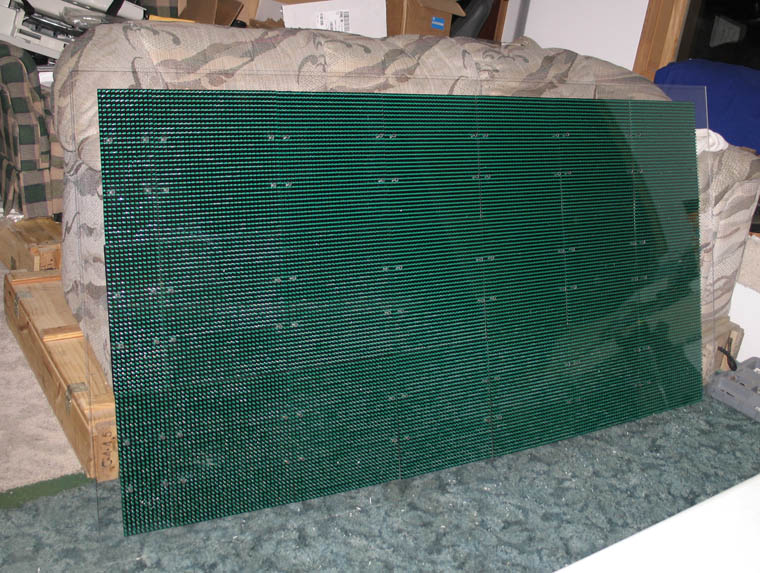
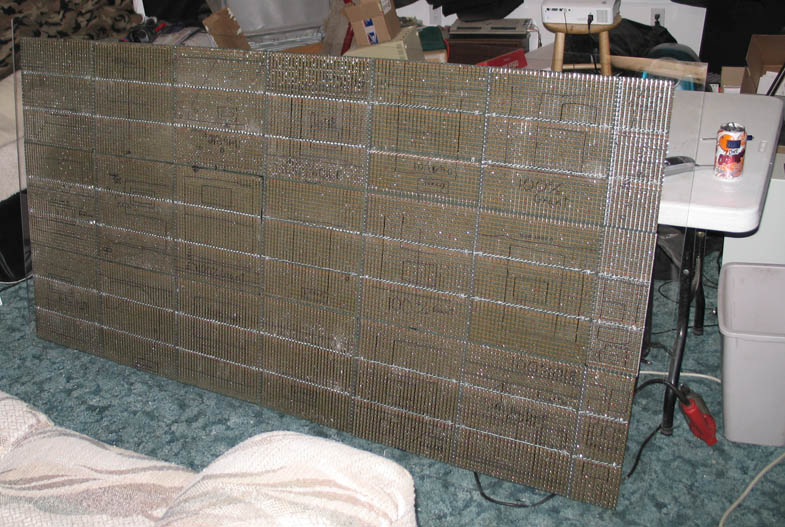
>This whole discussion has reminded me of an unfinished project of mine, a
>192x99, 19,008 pixel LED display. I have not manufactured the driver
>circuits, but they have been designed.
>
>The display is organized/refreshed as 11x1728. 8x11 characters look very
>good to me, so I designed it to handle 24 wide by 9 high characters.
>
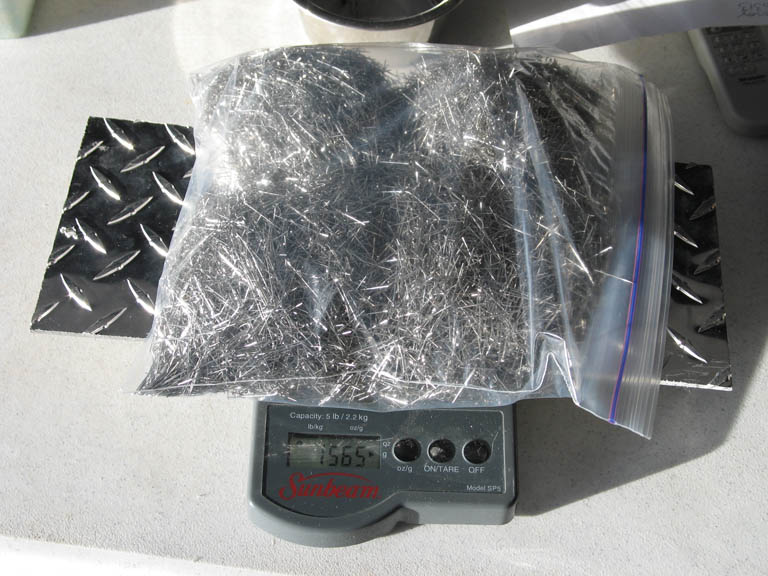
>Here are pictures of it:
>Front: http://www.stockly.com/images2/060129-LED_Display_Front_2718.jpg
>Back: http://www.stockly.com/images2/060129-LED_Display_Back_2716.jpg
>Weight of all the
>legs: http://www.stockly.com/images2/060129-Weight_of_39584_Legs_2696.jpg
>
>As you can see from the pictures it is as big as a couch. : )
>
>I built it in the spirit of blinkin lights for my Altair. 19008 LEDs is
>2376 bytes, 71280 bytes a second at 30 frames. The altair should be able
>to handle this...??? Any ideas?
Thats faster than SD 8" FDC data rate! Thats pushing an 8080 hard.
>I would really love if it could handle a shade or two of grey. : ) I'm
>considering now building a driver out of an FPGA. It would be able to
>handle a fast refresh rate and frame rate in order to get grey scales. I
>was thinking 4 shades would be enough. The FPGA might even be able to act
>as the dual port SRAM for the bitmap display? Any ideas how I should
>proceed? : )
You want the CPU doing as little as possible. If at all possible the
display is refreshed by DMA from local or other memory and the CPU is
there to update/alter the display.
>You can find my thread on this on USENET called "Wall of RAM". I have
>copied it here:
>http://www.stockly.com/forums/showthread.php?t=21
>
>Grant
;) if I were to do something on that grand a scale I'd consider a LED
billboard of VDM-1 (160x512) (roughly 30"x100"). Of course it would
have to use green leds.
Allison
MB8116 is a Fujitsu part, not Fairchild. Per the 1982 databook it crosses
to AM9016, F4116, HM4716A, 2117, M5K4116, MK4116, MCM4116, MM5290,
TMS4116, TMM416.
-- Adam
> From: Allison <ajp166 at bellatlantic.net>
> The links do not works from here. I get an operation timed out
> error.
> Allison
It's my home site on a RoadRunner cable connection, and the cable
modem locks up if there is excess traffic. Doesn't happen often,
but judging by my web logs I was being overloaded by coincidental
spidering from 4 different search engines at once.
It's back online now. Had to wait until I got home to reset the
cable device.
Some time this summer, history.dcs.ed.ac.uk should be relocated to a
properly hosted machine in Edinburgh.
Oh yes - that reminds me - if there are any Edinburgh people here,
we're organising a reunion in late June. Mail me for info.
Graham
>
> Can anyone help me with creating a boot floppy for a Color Macintosh?
> I have a machine whose hard disk died and I'm trying to replace it
> but I don't have a boot floppy containing DiskTools to format the new
> (Apple) hard drive. I *do* have an install CD for System 7.5 but it
> doesn't seem to want to boot on the Color Classic even if I hold "C"
> down when I start up the Mac. I'd be happy to pay for shipping and
> something extra for the effort involved in making the DiskTools boot
> disk.
I think at one time you had to hold down both the C and D keys to
boot from CD on the old Macs.
I don't have a floppy drive any more so cannot help there, even
though I have just about all the Apple developer CDs ever issued,
including floppy images of the various systems.
About 3 years ago I announced to the list a little something I'd done
with an IBM PC/XT with CGA that was unconventional for the platform
(full-motion video using stock hardware). I recently gave a talk at a
hacker convention on the complete methodology of how I did it, and the
video of that talk is now available here:
http://www.archive.org/details/8088CorruptionExplained
Just thought some people here would be curious to see how it was
accomplished. While there are several versions of the video to choose
from, if you have the bandwidth you should grab the MPEG-2 version (big)
because it's DVD quality and best preserves some of the detail necessary
to properly appreciate the piece. (In fact, it looks best burnt to a
DVD and watched on a television proper.)
--
Jim Leonard (trixter at oldskool.org) http://www.oldskool.org/
Help our electronic games project: http://www.mobygames.com/
Or check out some trippy MindCandy at http://www.mindcandydvd.com/
A child borne of the home computer wars: http://trixter.wordpress.com/
Hi
When preserving something you go for the best example you can find.
Even so in this case there was no choice involved. I want to keep as
original as I can a a PDP-11 from the era when I was working with them.
Speed is not an issue and a slower (but working)DEC KDJ11 board would
satisfy my criteria for originality.
All of your points are well made. One is very important the KDJ11-EB has
its memory on the CPU board. Are you saying some models of the KDJ11 do
not have their memory on the CPU board? Is it a case of unpopulated
sockets and add memory or is it no sockets and no memory?
Reading from the factory label the 11/94 was confgured thus
Slot 1 M8981 (Now sadly empty)
Slot 2 M7914
Slot 3 Empty
Slot 4 M8191 KTJ11-B
Slot 5 M7547 TUK50-BB
Slot 6 Empty
Slot 7 Empty
Slot 8 Empty
Slot 9 M9302 & M9713
So excluding the expensive options can anybody say exactly which board I
need. Full module and DEC code to me please. For example only say
M8980-AA KDJ11-BB
I must get a list of the KDJ11 boards. Iv'e seen one somewhere.
Rod
-----Original Message-----
From: cctech-bounces at classiccmp.org
[mailto:cctech-bounces at classiccmp.org] On Behalf Of Jerome H. Fine
Sent: 14 May 2007 03:16
To: On-Topic and Off-Topic Posts
Subject: Re: The Last of The Line
>Patrick Finnegan wrote:
>>On Sunday 13 May 2007 06:28, Rod Smallwood wrote:
>
>
>>Hi All
>>Now for my dilemma. Before checking the cost of a KDJ11-EB you are
>>advised to make sure pacemaker batteries are fully charged and any
>>blood pressue medication has been taken. Take it from me the prices
>>are so high they need to join the astronaut corps!
>>
>..which is probably why your systems were missing the CPU boards when
>yo got them...
>
>>I would like to get at least one of these historic systems running
>>again. Suggestions please!!
>>
>It'd be a lot less expensive to turn it into an 11/84, the CPU for that
>(some models of KDJ11-B) should be much less expensive, then just add
>memory. :)
>
Jerome Fine replies:
Your suggestion might not be possible. I once had the box and boards
for an 11/94. I really can't remember, but there might not have been
any slots for the memory.
In any case, I am extremely curious. What goal(s) will you achieve? Do
you want to run software faster? Is your only goal to have the fastest
PDP-11 that DEC ever produced? Note that a number of other companies
produced much faster PDP-11 CPU boards. Note that I very much
appreciate that from a hardware point of view your goal is extremely
gratifying - probably even more than my software goals. I am just
curious what your goals are.
One of my goals when I run using PDP-11 software is to run as fast as
possible. At present I run at about
15 times a PDP-11/93. Very shortly, I hope to be upgrading my hardware
and be able to run at 100 times a PDP-11/93 along with the availability
of having an extra GigaByte of spare memory for data that may also allow
a co-processor to perform CPU intensive calculations.
About 20 years ago, I was using a PDP-11/23+ on a system with 4 MB of
memory which included a co-processor that used the same memory as the
PDP-11/23+.
Any finally, although my experience is with an 11/93 on the Qbus, I
found that there is very little difference between an 11/93 and an 11/83
as far as CPU speed is concerned. That would also be likely to apply to
the difference between an 11/94 and an 11/84. Basically, I suggest that
the only difference in speed is due to the clock rate of 20 MHz on the
11/93 board and the
18 MHz clock rate (or crystal if you prefer) on the
11/83 board. Otherwise, the PMI memory on the 11/83 is probably about
as fast as the on board memory on the 11/93.
As for the actual CPU, almost all M8190 quad CPU boards or KDJ11-Bx
(maybe all) allow the use of PMI memory which is the primary reason the
11/83 is faster than the 11/73. The other reason is the 18 MHz clock
rate on the 11/83 as opposed to the 15 MHz clock rate on the 11/73. So
if anyone has a M8190 CPU with non-PMI memory and can find some PMI
memory, then as long as there are ABCD slots available for all of the
memory and CPU boards, the system will run much faster with PMI memory.
Sincerely yours,
Jerome Fine
--
If you attempted to send a reply and the original e-mail address has
been discontinued due a high volume of junk e-mail, then the
semi-permanent e-mail address can be obtained by replacing the four
characters preceding the 'at' with the four digits of the current year.
If you don't have a clue what I'm talking about, I
guess you wouldn't have it then, huh?
____________________________________________________________________________________Take the Internet to Go: Yahoo!Go puts the Internet in your pocket: mail, news, photos & more.
http://mobile.yahoo.com/go?refer=1GNXIC
Message: 12
Date: Mon, 14 May 2007 09:32:35 -0500
From: Jules Richardson <julesrichardsonuk at yahoo.co.uk>
Subject: Old electrolytic capacitors (IME-86s calculator)
To: General Discussion: On-Topic and Off-Topic Posts
<cctalk at classiccmp.org>
Message-ID: <46487303.8040805 at yahoo.co.uk>
Content-Type: text/plain; charset=ISO-8859-15; format=flowed
...
> They're in the power supply of an IME-86s calculator and
> are decidedly past their best :-) (At least four of the ten
> in the PSU are showing signs of major leakage)
I'm the power supply guy in a large restoration effort.
http://www.ed-thelen.org/1401Project/1401RestorationPage.htmlhttp://www.ed-thelen.org/1401Project/TricksForCapacitors.html
Fortunately, there were only linear supplies,
(suitable switching devices not yet available for switching
power supplies - another interesting game :-))
The machines (and currents) were large and most electrolytics
were the screw connector types.
After considerable experience, and using an ESR
(Effective Series Resistance) unit to verify
performance of the re-formed electrolytics, I went to
replacing only those capacitors with "major" leakage,
and testing ripple for "excessive" and that everything was
"cool enough" when power supply running rated voltage and current.
> The rest of the machine *looks* healthy enough; once
> I've replaced the electrolytics is there any good reason
> not to slowly run the system up on a variac
> (rather than giving it full AC from the start)?
A vital thing to watch out for in this business is motors.
Most types of motors depend on sufficient source voltage to get
started and generating "back EMF (voltage)" to limit current.
I was using the variac technique on an old key punch
when we began to hear a loud hummmm
- the capacitor start motor was not moving and getting warm :-(((
Interestingly, we have not had to "re-form" any capacitors
on capacitor start motors!! ?? I have no clue why.
One would reasonably expect some effort there.
Enjoy :-))
I didn't know the 'bus took cartridges. How many
different kinds were there? Besides the Peanut, the
only other PC I'm aware of that used them was the
Mindset. Currently I'm missing a huge mega box of docs
and stuph for the 'set, and I'm about ready to burst
out in tears.
____________________________________________________________________________________
We won't tell. Get more on shows you hate to love
(and love to hate): Yahoo! TV's Guilty Pleasures list.
http://tv.yahoo.com/collections/265
Ah Ha ... Thanks and the memory card would be a ????
Rod
-----Original Message-----
From: cctech-bounces at classiccmp.org
[mailto:cctech-bounces at classiccmp.org] On Behalf Of Roger Ivie
Sent: 14 May 2007 21:02
To: General Discussion: On-Topic Posts Only
Subject: RE: The Last of The Line
On Mon, 14 May 2007, Rod Smallwood wrote:
> When preserving something you go for the best example you can find.
> Even so in this case there was no choice involved. I want to keep as
> original as I can a a PDP-11 from the era when I was working with
them.
> Speed is not an issue and a slower (but working)DEC KDJ11 board would
> satisfy my criteria for originality.
I've never met an 11/94, so I'm no expert. My understanding of the
situation was the 11/94 was built when it became possible to put all of
the memory on the CPU board.
The 11/84 used a CPU board without memory. The memory was in the slots
between the CPU board and the UNIBUS adapter, communicating with the CPU
board using a private memory interconnect protocol. I don't recall
whether there was an additional ribbon cable across the top, like the
MicroVAX II.
I'm pretty certain (but, have been wrong before) that the KDJ11-BB would
be the 11/83 or 11/84 CPU; they used the same CPU board, differing in
the backplane and whether the UNIBUS adapter was present.
--
roger ivie
rivie at ridgenet.net
I'm mainly a BBC Micro person, but thanks to the local freecycle list,
i'm now up to two Apple Macintosh II base units - latest is a IIsi.
Unfortunately those are all I've got .. no monitors, no keyboards, no
mice. nothing.. These are ADB mouse/kb, so not something I have
already..
I've never used a Mac before .. so... has anybody, preferably in the
UK, got any spare peripherals going cheep/free so I can at least test
them, see what all the fuss was about :-)
Cheers,
Rob
>From: "Ethan Dicks" <ethan.dicks at gmail.com>
>Yeah... the definition of "old" tends to be quite subjective, as in
>"prior to what was current when _I_ got started with foo."
>
>I tend to think of "old" as 100% TTL designs, i.e. -
>pre-microprocessor, but that's because I got my start with the 6502
>and 1802, then later came upon M-series DEC logic-based machines (like
>the PDP-8/L).
Well, what I'm trying to do is essentially create a mini VCF that meets each month, so at least for now, the rules are pretty loose. I'll see how many show up this Saturday, then in a month and so on. There is a much smaller potential pool of members on a local level, but I have hopes! Go north-east Florida, we can do it.
I'll just mostly stick to the ten year rule for now. I just hope to have a lot of fun and see and "play" with some cool machines I haven't seen that much, or at all. Perhaps a swap meet twice a year would be great too.
Best, David
David Greelish
classiccomputing.com
The Classic Computing Podcast
Home of Computer History Nostalgia
Stan Veit's History of the Personal Computer
Audio Book Podcast
Well now let me see now I left School for College in 1964. My major
subjects were Industrial Electronics and Computing.
We were taken to Harwell Research centre to see 'The' Computer. It was
an ICL 1900 series system. It took up three floors of a substantial
building. Input on the top floor (80col Cards and papertape). Processing
and storage on the middle floor and output on the ground floor. Had to
be that way or the vibration from the line printers would have shaken
the building to pieces.
I remember it was called Atlas and even had an operating system called
George III. So that's just over 40 years ago. In computer terms
certainly vintage if not veteran.
Rod Smallwood
-----Original Message-----
From: cctech-bounces at classiccmp.org
[mailto:cctech-bounces at classiccmp.org] On Behalf Of Ethan Dicks
Sent: 14 May 2007 16:39
To: General Discussion: On-Topic and Off-Topic Posts
Subject: Re: A local computer history group for my area . . .
On 5/14/07, Gordon JC Pearce <gordon at gjcp.net> wrote:
> Funny, I don't think my PDP-11 is *that* old. It seems to date from
> around 1986. I can't call a computer that was built while I was doing
> my 'O' grades "old", I just can't...
Yeah... the definition of "old" tends to be quite subjective, as in
"prior to what was current when _I_ got started with foo."
I tend to think of "old" as 100% TTL designs, i.e. - pre-microprocessor,
but that's because I got my start with the 6502 and 1802, then later
came upon M-series DEC logic-based machines (like the PDP-8/L).
-ethan
>> >Google is particularly bad about fetching documents over and over
>> >again.
>>
>> mmm... any evidence they are using OCR to index pdf's?
>>
>> of all the places I'd *like* them to OCR, it's bitsavers.
>>
>> in fact, mmmmm, I'd like to connect the two dots. bitsavers
>> + google (and, and/all mit, standford, cmu, ... software archives)
>>
>> something to start mentioning at various fund raising
>> cocktail parties :-)
>
> To be clear - the problem is that Google consumes bandwidth by
> repeatedly downloading static documents, verses downloading dynamic
> content whose index status might be new or dirty?
Guys, if you want bitkeeper OCR'd, have you tried just *asking*
Google if they'd do it? They are scanning and OCR'ing huge
amounts of paper all the time, working with various libraries.
As far as I know, they're doing this for free, because they want all
the world's data...
It wouldn't hurt to ask... anyone have any contacts at Google?
Also, the Internet Archive will accept a DVD by mail of your archives
if spidering is too expensive. I gave them a DVD of the Edinburgh
Computer History Project last year. (Not sure if the contents are
visible online anywhere, but at least they're in the archives and
reasonably safe against me trashing my hard drive again...)
G
Hi Phillip,
My company TRIAD sells HP legacy and other IT hardware. I came across your
name going through some old User Group threads. Do you still require legacy
HP or other IT hardware quotes? TRIAD offers expert techs in HP, Cisco, IBM
and Liebert and we'd like to be a vendor for you if appropriate.
Cheers,
Mike
Mike Pisciotta
Hardware Sales
TRIAD Computer Connection
Office: 425-402-1700
Cell: 831-566-9270
Fax: 425-402-1777
mikep at triadcomputer.com
I went ahead and reverse engineered the TTL on the
NETRONICS ELECTRIC MOUTH, so I have a good idea of
the addresses, etc. that it uses. The main component
on the board is the above mentioned VS100, a 40-pin
chip that seems to be (along with 4 ROMs) the heart
of the board. Anybody have any info on this guy?
Thanks,
Bill
No virus found in this outgoing message.
Checked by AVG Free Edition.
Version: 7.5.467 / Virus Database: 269.7.0/803 - Release Date: 5/13/2007
12:17 PM
When contemplating spending some fairly serious coin on that IBM
system earlier this week, a friend asked "which systems/machines out
there would you pay 'real' money for?" Since I'm not a Big Iron
collector, and I'm used to spending no more than $10-20 on any given
piece, that's a fair question for me. Maybe a Symbolics Lisp machine.
Maybe an original Sun machine, or even a 2-series. A Xerox Alto.
Historical stuff like that. Then I remembered when my high school
class took a trip down to the U of I at Champaign-Urbana for
"Engineering Open House" and I was sat in front of this monstrous
wooden terminal with beguiling orange vector graphics. Only many
years later did I learn what it was, and where it fit in the timeline
of computing (thanks in part to Ted Nelson's "Computer Lib/Dream
Machines" books.)
So...who has one? What's become of the remaining infrastructure? I
recently used a Windows Plato client to connect to some descendant of
the system, but I asssume even the back end was running on modern
hardware then, and not old Data General equipment.
-j
--
Retrocomputing and collecting in the Chicago area:
http://chiclassiccomp.org
I'll never know unless I ask - does anyone have a TU56 for sale or
trade?
Ideally in the $10/lb range, or trade for an Altair 8800. I'm in the
Chicago area, will be driving to VCF East and Midwest in the next few
months, happy to drive a couple hundred extra miles to retrieve said
tape drive. Shipping is a bit frightening, but will certainly be
considered.
The drive will be interfaced to my 8/E, most likely with a TD8E
interface, but a good or restorable unit in any configuration will do!
TIA,
Jack
No virus found in this outgoing message.
Checked by AVG Free Edition.
Version: 7.5.467 / Virus Database: 269.7.0/801 - Release Date: 5/12/2007
6:40 PM
Hi All
For reasons that I will not go into here I have most of four
PDP-11/94's. The 94 was the last of the PDP11 line. Thats about as
classic as it gets.
Notice I said 'most'. What's missing is the cpu cards in this case a
KDJ11-EB. The DEC orientated amongst us will know that the CPU is a QBus
J11 chip based board on quad module (M8981). Ah but the 11/94 is a
unibus system you say. Thats right. The board talks to the unibus
through a KT11-B that does the conversion.
Now for my dilemma. Before checking the cost of a KDJ11-EB you are
advised to make sure pacemaker batteries are fully charged and any blood
pressue medication has been taken. Take it from me the prices are so
high they need to join the astronaut corps!
I would like to get at least one of these historic systems running
again. Suggestions please!!
Rod Smallwood
All:
I have a few IBM-labeled YE-Data YE-580 (320k/360k) half-height floppy
drives. I can?t seem to locate a manual for these on-line so I wondered if
they use the standard 150 ohm terminator or something else (the Teac uses
330 ohm for example).
Any info appreciated. Thanks.
Rich
--
Rich Cini
Collector of Classic Computers
Build Master and lead engineer, Altair32 Emulator
http://www.altair32.comhttp://highgate.comm.sfu.ca/~rcini/classiccmp
> they never find stuff on
> bitsavers when you search for text.
Very early on, I disabled all search engines from .pdf files
on bitsavers' in the robots.txt file.
Google is particularly bad about fetching documents over and
over again.