dear friend:
i cant somehow reach that board directly anymore
could you pls broadcast the following message under
decstation cache in boston
i have a dozen or so mostly decstations and vax vlc4000 and vaxstations to give away. the decstations are mostly loaded with ram (96mb?) and many boxen have ultrix loaded. in addition i have cables, tapdrives, cdroms and yes megamonitors, terminals, scsi hubs (?) and connectors galore.
trouble is: all is in one heap, i forgot which goes to what! incl passwords! other trouble: all has to go in one fell swoop, no cherry picking. other trouble: it wont fit in a gmc suburban, u need a van. other trouble: i wont lift the junk. other trouble: its in downtown boston, you can park in front of the house, and no, the hydrant has been moved.
last trouble: its free.
contact me at 617 723 5768 after 6pm, so we can make funeral arrangements....
fred
I started to worry about lead paint problem when
buying an old house. I bought a lead test kit and
tested the paint chips from the windows and fould them
to be positive. Then I tested some computer boards,
and the result was postive too. Have you ever found
white powders near solder on your vintage board? They
are most likely lead dioxide. When you power up your
vintage computers, some lead dust will be blown to the
air and inhaled by your kids... Well, the last
sentence is my pure imagination. Has anybody done any
research on this issue? To be safe, I am going to
throw most of my boards to attic, which are lying on
the floor and accessible to my two year old daughter.
vax, 3900
__________________________________
Do you Yahoo!?
Friends. Fun. Try the all-new Yahoo! Messenger.
http://messenger.yahoo.com/
okay, 16 - 256kx1 chips will not give you 2meg... it is only 0.5meg. If the docs you have say 256kx4 then that is the chip you need and the ones on the ISA board are not the right ones.
the 256Kx4 DYNAMIC ram chips that you would need were usually used in VGA cards for display memory.
best regards, Steve Thatcher
-----Original Message-----
From: Bill Sudbrink <wh.sudbrink(a)verizon.net>
Sent: Jun 9, 2004 8:22 PM
To: "General Discussion: On-Topic and Off-Topic Posts" <cctalk(a)classiccmp.org>
Subject: RE: Cheetah Cub board
> Back to the DRAM nomenclature, the 1 bit vs 1 byte
> explanation helps a lot. I'm still confused about
> the multiplier.
>
> The Amiga docs show 16 256Kx4 DRAMs for a total of
> 2MB, so does that mean that these chips are 256Kx1?
Exactly!
>1. Are all LaserWriters 100% pure PostScript printers, speaking nothing
>but PS? I know the very original one was, but I'm not sure about whatever
>happened later and whatever they make now.
No, some models spoke postscript, some spoke quickdraw. Many spoke
postscript and other languages (like Diablo, ESC-P, PCL). In fact the
original Laserwriter speaks both Postscript and Diablo 630.
Apple has a listing of the printers they made, and what languages they
spoke. <http://www.info.apple.com/support/applespec.legacy/laser.html>
>2. Were there any LaserWriters made with duplex printing capability? If
>so, what's the earliest duplex LaserWriter?
Yes, and I'm not sure what the earliest one was (I'm also not sure which
models supported duplex. Probably the Pro series and the 12/600, 16/600,
8500 series... I know at least the 12/640 rates a duplex page speed, but
I believe others besides it also had a duplex option)
>3. The original LaserWriter had a serial port. But given the assault on
>serial ports coming from all directions, I don't expect the current ones
>to have one, or do they? When was the last LaserWriter made with a serial
>port? Was there ever a LaserWriter new enough to support duplex printing
>but old enough to have a serial port?
Actually, most of them up thru the end have serial. The problem is, the
serial port doubles as the localtalk port, and it may or may not have
been configurable for connection to a PC. As far as TRUE serial
(RS-232/422 in the form of a DB25 or DE9), I think the Pro 810 may have
been the last to carry that AND talk postscript. I don't know for sure if
there is a duplex option for it or not. Later printers may very well also
support PC serial via the Localtalk connector (which IIRC is really a
RS422 with additional smarts to handle the localtalk protocol)
>4. Are LaserWriter serial ports standard EIA-232 DB25 or something Apple
>proprietary? If the latter, what kind of adapter would I need to make?
Ones that had true serial were standard 232 and/or 422 ports in a DB25
package (there may also have been DE9 connectors, I don't remember for
sure). So no adaptor should be needed. For those that handled serial via
the mini din 8 connector's localtalk port, you would just need a mini-din
8 to D connector of your choice. Those should be 422 ports... but I can't
say for sure that all of them were usable as regular serial. Some may
have been localtalk only (and others may have done serial but weren't
configurable, so you had to be able to know what it expected to have)
Hope some of that is helpful.
-chris
<http://www.mythtech.net>
Does anyone know for sure that if the 4 batteries on the Lisa motherboard
are dead, if that will prevent it from powering up? This machine was working
about 3 years back when it went into storage. Thanks for any tips.
Hi Guys,
I have a friend who has recently retired an Apple IIe in favor of
running a simulator. He was able to use ADT and a serial card to
transfer most of his disk images over to the PC for use with the
simulation, however certain copy-protected games could not be
transferred.
Does anyone know if there is software available to transfer Apple II
disk images on a raw-binary basis (ie: not necessarily well formed
sectors), and if so, are there any simulators which can make use of
such images?
I know this would be fairly complex, as the Apple could do half
tracks etc., and timing can be critical to many Apple copy protection
schemes. These factors would also have to be delt with somehow - is
there anything available which can do this?
Regards,
Dave
--
dave04a (at) Dave Dunfield
dunfield (dot) Firmware development services & tools: www.dunfield.com
com Vintage computing equipment collector.
http://www.parse.com/~ddunfield/museum/index.html
I located a handful of these, they are never-used, brand new. I don't have a use for them any more, maybe you do.
They are $92 a piece new from l-com, I'd be willing to let them go for less :-)
Specs are here:
http://www.l-com.com/jump.jsp?lGen=detail&itemID=2789&itemType=PRODUCT&iMai…
Drop me an email if interested.
Thanks.
I met a guy over Memorial day weekend, that says the best place for lobster
is at "Anthony's Pier 4"...
That said, has there been any headway WRT lodging arrangments & whatnot for
VCF East?
Thanks,
Roger "Merch" Merchberger
--
Roger "Merch" Merchberger | "Profile, don't speculate."
sysadmin, Iceberg Computers | Daniel J. Bernstein
zmerch(a)30below.com |
that is a Micron part number for a 100ns 256K ram. It is probably an EXPANDED memory card unless it has two bus connectors then it might be EXTENDED memory (didn't we just have a conversation about PC memory...)
It is more than likely one of the two memory standards and will work in any OLD PC.
best regards, Steve Thatcher
-----Original Message-----
From: Doc Shipley <doc(a)mdrconsult.com>
Sent: Jun 9, 2004 12:07 PM
To: General(a)mdrconsult.com, Discussion@mdrconsult.com@null,
On-Topic and Off-Topic Posts <cctalk(a)classiccmp.org>, null@null
Subject: Cheetah Cub board
I have a full-length ISA board marked "Cheetah Int'l Cheetah Cub
2Mbyte Fast Memory". Copyright 1986
It has 4 banks of 18 socketed memory chips marked:
USA 8726 B
MT 1259-10
I'm guessing those are 10ns 32KB chips?
I'm really curious what this board will work with and its history.
Google seems not to know it exists.
Doc
I have a full-length ISA board marked "Cheetah Int'l Cheetah Cub
2Mbyte Fast Memory". Copyright 1986
It has 4 banks of 18 socketed memory chips marked:
USA 8726 B
MT 1259-10
I'm guessing those are 10ns 32KB chips?
I'm really curious what this board will work with and its history.
Google seems not to know it exists.
Doc
-----BEGIN PGP SIGNED MESSAGE-----
Hash: SHA1
Cromemco RDOS 02.52
no boot
Found the disconnected HD power connector and reattached it. The HD is now
spinning but what is the command to get it to boot from the harddrive?
OR
does anyone have a spare 8" floppy with a cromemco system three boot setup?
- --
Collector of vintage computers
http://www.ncf.ca/~ba600
-----BEGIN PGP SIGNATURE-----
Version: GnuPG v1.2.2 (GNU/Linux)
iD8DBQFAxzQmLPrIaE/xBZARAjlWAJ9MEgqHP6KQZoSijKAZxWINcr332wCgigoY
kADFFprB2IJHSMFAUXzBG+U=
=RsyK
-----END PGP SIGNATURE-----
>Does anyone have a copy of OS/2 (any version, but I'm really looking for all
>of them...) for my Virtual PC collection of antique operating systems?
>
>I'm not sure how folks here feel about the piracy of software that is no
>longer available. I would, of course, be willing to pay for a legal copy,
>as long as the price was reasonable.
You should have asked a week ago... I just gave two full copies of OS/2
Warp (2.0? 3.0?) to someone else on this list. Maybe if he doesn't want
them he will contact you and give/sell you one (I don't know what his
needs for them were... they were in a box of software that I told him to
pick thru and take what he wanted... so he may or may not be willing to
give one up)
-chris
<http://www.mythtech.net>
Hello,
I saw your posting to a newsgroup that you made about 1/2 year ago, and was wondering if you could give me the openvms media. I'm trying to get the media running on the x86 version of simh as an experiment, and need an iso image to install the media from. Is it possible that I can download the media from you?
-- Michael S.
---------------------------------
Do you Yahoo!?
Friends. Fun. Try the all-new Yahoo! Messenger
> And thusly chris spake:
> >
> > So does anyone have any other recommended solutions? I'd
> like this to be
> > as transparent to the users as possible (they currently run
> the software
> > in a DOS session under Win95, so the closest I can come to that
> > functionality, the better).
> >
>
> Chris,
>
> Have you tried DOSbox? --> http://dosbox.sourceforge.net .
>
> Cheers,
>
> Bryan Pope
Here's an othere one: http://www.freedos.org/
- Henk, PA8PDP
>> Its a medical scheduling application called Perfect Care.
>
>presumably not related to the "Perfect Software" office suite
>of 20 years ago
Er, I don't know. http://www.sticomputer.com/
I did just realize their NY Metro office is in Oakland, which is only a
short drive for me (10-15 minutes depending on traffic). And I will
actually be in Oakland Thursday morning anyway. Maybe I'll just stop in
to their office and see if I can have a talk with someone. Although I
know when I called the NY Metro office earlier, they redirected me to an
800 number for support, so there may be no one available in Oakland to
help me.
If I can at least get out of them what fails under XP, I may be able to
find a work around.
-chris
<http://www.mythtech.net>
>WHAT "application"? It really DOES matter.
>"old"? "legacy"?
Its a medical scheduling application called Perfect Care.
>WHO told you? the author of the program?? Uncle Charlie??
The support guys at the company that made the software. Their exact
statement was "we've had major problems getting it to run in DOS under
XP". When asked if per chance this was unique to XP, the answer was no,
it was a problem with the entire NT line's DOS ability. Their recommended
solution? Upgrade to their new Windows based product. That's more or less
what is going to happen, but not for another few months (the upgrade is
going to a different product, but regardless it will be upgraded, so I
need a solution that will run for 4-6 months)
>Have YOU tried it?
No, but I plan to. But the location is 3 hours away from me, so it isn't
something I'm going to drive to give a whirl. It will wait until I am at
the location doing the rest of the upgrades. It may be a simple work
around, or it may be very complex, I won't know more info until I get
there next week.
>Sorry to seem harsh, but "been told it won't run" is
>quite a bit different from "it won't run".
Agreed... but I've been "told" it won't run, and I need to make it run,
so I want to arrive at the site armed with options on how to get it to
run.
>The DOS box in NT (which XP is one of) is just fine
>for running "old legacy DOS application"s (PROGRAMS).
>BUT,...
>NT will NOT permit certain kinds of hardware access,
>such as writing disk sectors, "for security reasons".
>Therefore, XenoCopy can not run in any version of NT
>(NT3,NT4,Win2K,XP).
All this I knew. It may be doing some kind of hardware access, I don't
know.
>If the reason that the "old legacy DOS application" won't
>run is because it needs to do something that has been
>blocked "for security reasons" (such as writing disk sectors),
>then it won't run any better with VPC.
Won't it? VPC makes the software think it is running on its own computer.
So I would think the software could write to "disk sectors" inside VPC.
>From there VPC would take care of altering that into whatever method XP
wishes to be used.
>So, it DOES run in a Windoze DOS box. There are few things that
>will run in a Win95 DOS box that won't run in an XP DOS box,
>other than "security risks"
Correct, they are currently doing it inside Win95. But like mentioned
above, the software developers say it doesn't work inside the NT
structure. So they may do something that is restricted (they may also
just need a very tweaked PIF and don't bother telling anyone that in an
effort to get them to upgrade to a newer version... I really can't say).
>What kind of partition does the system have?
>Does the "old legacy DOS application" need access to the hard disk?
>(ones that REALLY are "old" would not)
Don't know and don't know. I have not yet stepped foot on site, and the
salesman that did originally spec'd out using a Terminal Emulator to
access the legacy system. When I questioned why we had to purchase a new
program to access something they are currently doing in Windows (ie: why
not just run whatever program they are running now to access it), that is
when I was put on the hunt to find the answer. After talking to the site
myself, it now appears the salesman was incorrect and it is in fact
running a DOS application. BUT, I haven't been there myself yet, so maybe
it will turn out to just be some terminal front end. The people on the
site don't really know themselves, all they could do is tell me what they
do to make it run, and from that I get the impression it is a DOS
application (that and talking to the developers, they said it is a DOS
app).
>1) Boot from floppy with DOS 6.2x. If it DOES need the hard disk,
>then make a small FAT16 partition for it to use.
>
>2) install a dual boot of XP and Win98, and make the drive,
>or a partition of it, FAT32.
No can do. The app needs to be run side by side with other XP/2000 based
apps (the new app that is dictating this hardware/OS upgrade requires
either XP or 2k). So I can't do a dual boot as it will prohibit both the
legacy and the new app from running at the same time (I can do a VPC type
solution since that will run in a window inside XP... but VPC's pricing
will probably be an issue for something that I need 5 copies for only a
few months)
-chris
<http://www.mythtech.net>
>From: ard(a)p850ug1.demon.co.uk
>
>> Find out why it's not working? [Tony's standard rant here, but replace
>> 'hardware' with 'software' ;-)]
>
>:-)
>
>Yes, my comments apply to software, hardware, electronics, mechanical
>stuff, just about anything... You will never solve a problem by making
>random changes in the hope it goes away (it might well seem to be cured,
>but it may also come back to 'bite' you later).
Hi
One most often introduces more problems by random fiddling.
>
>Fautlfinding is done by making 'measurments' (in the widest possible
>sense -- in other words gathering evidence), thinking about what you've
>observed, and then working out what to do to put it right.
I'd like to add this here. Fault finding is a cycle:
1. Gather evidence
2. Make hypothesis consistent with the evidence
3. Create test to verify hypothesis
4. Repeat from 1 if that test didn't work
and add this new result as new evidence.
Number 4 may include replacing a part but usually not unless you
are really sure that you've exhausted all the angles. The first
rule of intelligent tinkering is, of course, "save all the pieces".
The second rule is "don't fix it if it ain't broken". The second
rule applies to step 4 as far as doing random replacements.
Swapping boards is not all that bad if you are sure you have the
right board from repeated steps 1 to 4. When working on old computers,
expect to spend time repairing that board as well.
Just my thoughts.
Dwight
>
>Yes, this is a rant of mine. I've been caught too often by idiots who
>don't follow this method...
>
>-tony
>
Sorry to all those who are waiting on emails from me. My mailbox has hit
3000 emails and I just can't make myself go through it all yet, so I'm
pretty much only responding to 'emergency' emails.
I do plan on making it to VCF east, as long as several other people are
planning to be there with certain gear. Was hoping to bring up a bunch of HP
cabinets and 7906 drives and 13037 controllers and a 21mx or two. I know I
promised the 7906 drives would be refurbed, but I"m not sure I'll get to
that in time. The 13037's have been refurbed though. Hopefully I'll be
bringing a big load of stuff back and some DEC rack sidepanels! woohoo!
Anyways, my apologies to all who are patiently waiting for me to respond.
I'll wade through it all sometime fairly soon.
Jay
>What about putting an old 486 running DOS onto the network to run this
>application?
There are currently 5 machines running it, and 5 new machines are going
in to replace them. I don't think there will be room to leave the old
machines in place. But it is one possible solution (and because it should
only be needed for a few months, it is a reasonable solution)
-chris
<http://www.mythtech.net>
I want to re-pay someone for some help they've given me and they've said
they're looking for a Qbus hard disk controller. Sounds like too generic
a description but at any rate, if someone has one they want to sell or
trade then please let me know.
Thanks!
--
Sellam Ismail Vintage Computer Festival
------------------------------------------------------------------------------
International Man of Intrigue and Danger http://www.vintage.org
[ Old computing resources for business || Buy/Sell/Trade Vintage Computers ]
[ and academia at www.VintageTech.com || at http://marketplace.vintage.org ]
>> So does anyone have any other recommended solutions? I'd like this to be
>> as transparent to the users as possible (they currently run the software
>> in a DOS session under Win95, so the closest I can come to that
>> functionality, the better).
> Have you tried DOSbox? --> http://dosbox.sourceforge.net .
I have not, I didn't know about it. But it does look promising.
Thanks!
(anyone else have any other ideas? I'd like to hit the site with a pack
of options so I can increase my odds of having one of them work correctly)
-chris
<http://www.mythtech.net>
My HP 7908 (kindly donated last year by Steven Hirsch)
failed this weekend. Investigation reveals that it has
blown the 10A fuse in the +12V section of the power
supply and when I replaced the fuse it blew again -
but stayed up long enough for me to see that the
on-board diagnostics do at least begin to run and that
the disk itself begins to spin up. Rather than
continue to stuff fuses in it I need to identify the
root cause of the failure.
Recognizing that there could be 1000 reasons why that
12V line is being overtaxed, has anyone encountered a
similar issue ? Clutching at straws at this point, but
any pointers would be helpful. The service manual that
I have does not give any specific guidance on how to
deal with this.
What's irritating about this is that I had only
powered it up to boot an HP64000 to copy some disks.
Failing that, does anyone have a comparable CS/80 unit
they might be willing to part with ? Or parts from
another 7908 ?
Thanks,
Dave
__________________________________
Do you Yahoo!?
Friends. Fun. Try the all-new Yahoo! Messenger.
http://messenger.yahoo.com/
Hi All
For more stuff on the 6502, check:
http://www.ping.be/kim-1__6502/http://www.6502.org/
Later
Dwight
>From: "Dwight K. Elvey" <dwight.elvey(a)amd.com>
>
>Hi Walter and ClassicCmp
> I just checked Tom's web page and he has the 6502
>tape dump there. It is for the KIM so it may need
>a little fiddling for some other computer. The
>code at 0100h is the terminal interface. Also,
>down load the manuals he has there. As I recall
>these explain how to match your console I/O to
>his TB.
> The tape form is similar to Intel hex. The first
>byte is the number of bytes of data. Next is the 16 bit
>address. The bytes follow. At the end of the line
>is a 16 bit checksum. I don't think this matches
>one of the more standard dump types.
> If you absolutely need it in Intel Hex, I can send
>you what I converted from the tape dumps.
>
>See:
>http://www.ittybittycomputers.com/IttyBitty/TinyBasic/index.htm
>
>Later
>Dwight
>
>>From: walterpark <walterpark(a)sbcglobal.net>
>>To: dwight.elvey(a)amd.com
>>Subject: Tiny BASIC
>>Date: Tue, 8 Jun 2004 14:48:14 -0700
>>
>>I'm also interested. If you're emailing this out, please add my address to
>>your cc: list.
>>
>>I have one old hex print-out of TB for the 6502 on yellow TTY paper.
>>It sounds like you already have that in electronic form.
>>
>>Thanks.
>>
>>Walter Park
>>
>>
>>
>
>
>
evan <evan947(a)yahoo.com> wrote:
> Some of those interface details are over my head, in terms of technical
> knowledge. I have it connected to my PC with a standard printer cable.
Well, that won't work for me since I don't use pee seas. (This is ClassisCmp,
remember, people use Classic computers here.) But I've read the manual
and see that it speaks PostScript and that there are serial and Ethernet
options available, while the base unit only has the damn parallel interface.
Does yours have either of the serial or Ethernet options?
Also the manual is conspicously silent about whether or not it supports
duplex printing, so I suspect that it doesn't. Does it? If it doesn't,
I'm unlikely to be interested in it, as in that case I would rather buy
an LN06R (DEClaser 2250) or LN08R (DEClaser 3250) from a DEC dealer,
both of which are PostScript printers with duplex capability and with
EIA-232 serial interfaces in addition to the damn pee sea parallel.
MS
Michelle writes:
---->
Hi, I am looking for a large quantity of vintage laptops. They do not
have to work, just look good. I will use them in my decor package for
TGI Friday's restaurants. We are about to remodel all 500+ of our
domestic TGI Friday's restaurants with an updated decor package, to
include vintage laptops. Can you help me? Please let me know.
Sincerely,
Michelle Edwards
615-255-6767
Mejjandb(a)aolNOSPAM.com - Remove the obvious[/quote]
<-----
Please contact her, not me.
The usual disclaimers apply.
Erik Klein
www.vintage-computer.comwww.vintage-computer.com/vcforum
The Vintage Computer Forum
Hi Walter and ClassicCmp
I just checked Tom's web page and he has the 6502
tape dump there. It is for the KIM so it may need
a little fiddling for some other computer. The
code at 0100h is the terminal interface. Also,
down load the manuals he has there. As I recall
these explain how to match your console I/O to
his TB.
The tape form is similar to Intel hex. The first
byte is the number of bytes of data. Next is the 16 bit
address. The bytes follow. At the end of the line
is a 16 bit checksum. I don't think this matches
one of the more standard dump types.
If you absolutely need it in Intel Hex, I can send
you what I converted from the tape dumps.
See:
http://www.ittybittycomputers.com/IttyBitty/TinyBasic/index.htm
Later
Dwight
>From: walterpark <walterpark(a)sbcglobal.net>
>To: dwight.elvey(a)amd.com
>Subject: Tiny BASIC
>Date: Tue, 8 Jun 2004 14:48:14 -0700
>
>I'm also interested. If you're emailing this out, please add my address to
>your cc: list.
>
>I have one old hex print-out of TB for the 6502 on yellow TTY paper.
>It sounds like you already have that in electronic form.
>
>Thanks.
>
>Walter Park
>
>
>
I have an old legacy DOS application that I need to run on new Win XP
hardware for the next few months. The problem is, I've been told it won't
run under XP's DOS Shell.
I'm curious what others have used as solutions to run non NT kernel
friendly DOS applications in such an environment. I'm thinking about
something like Virtual PC to run a regular DOS 6.2.2 install inside it,
but I have no idea if that will actually work. Plus I need to do this on
up to 5 machines and buying 5 copies of VPC at the new Microsoft pricing
may break the bank (Connectix used to have an OS free version for
something like $50... MS now charges $130 for the base price).
It looks like VMWare is going to be the same problem with pricing.
So does anyone have any other recommended solutions? I'd like this to be
as transparent to the users as possible (they currently run the software
in a DOS session under Win95, so the closest I can come to that
functionality, the better).
-chris
<http://www.mythtech.net>
>Find out why it's not working? [Tony's standard rant here, but replace
>'hardware' with 'software' ;-)]
I tried that. The support department at the developing company was vague,
and I got the impression deliberately so. They want to sell their
upgrade, not help someone run an outdated version for longer. All they
were really willing to share was "XP like the rest of the NT line, isn't
really running DOS. Its a kind of DOS emulator and it isn't fully
compatible". Yeah, I knew that already, thanks for being helpful.
So I really don't know for sure what happens when it tries to run. I will
know better when I am on site and can try it myself, but I have a very
limited amount of time that I can be on site, and a lot of work to
accomplish, so I don't want to go in without some ideas of solutions. I'd
rather be prepared then blind.
-chris
<http://www.mythtech.net>
Does anyone know where I can find the pinout for a 3RP1 CRT? I have
the CRT and I have most of the important numbers (V/in deflection,
final anode voltage, that sort of thing) but I do not have the pinout.
I went a-googling, but all I found was a few places that had the silly
things for sale.
/~\ The ASCII der Mouse
\ / Ribbon Campaign
X Against HTML mouse(a)rodents.montreal.qc.ca
/ \ Email! 7D C8 61 52 5D E7 2D 39 4E F1 31 3E E8 B3 27 4B
Hi,
There is a DOS compatibility layer build into XP. It *might* work. Take a
look at the following website on how to run DOS-based games on XP. Should
help you out....
http://www.dosgames.com/xphints.php
Cheers,
Ram
(c) 2004 OpenLink Financial
Copyright in this message and any attachments remains with us. It is
confidential and may be legally privileged. If this message is not
intended for you it must not be read, copied or used by you or
disclosed to anyone else. Please advise the sender immediately if
you have received this message in error.
Although this message and any attachments are believed to be free of
any virus or other defect that might affect any computer system into
which it is received and opened, it is the responsibility of the
recipient to ensure that it is virus free and no responsibility
is accepted by Open Link Financial, Inc. for any loss or damage in any
way arising from its use.
Hi all,
Anybody know how to access the above running under either DOS or Linux? It has a 5.25" floppy connector on it. I don't have any drivers for it (do I need them?), just a QS.EXE (QuicStream?) archive DOS app which pukes with a divide overflow error during its "Initializing tape drives" phase. Knoppix doesn't even see it during HW detection. Any config pointers?
Thanks.
It's got about a day to go, no bids, starting at $25. I think the 11/03
models are rarer than the later ones so I thought I'd mention it here.
http://cgi.ebay.com/ws/eBayISAPI.dll?ViewItem&category=1247&item=4135473360…
Also has other PDP-11 stuff for sale on Ebay.
Btw, I don't know the seller - they listed "vax" in a series of keywords
in the ad text, which is how I found it. After reading the recent "VMS
vs BSD on VAX" I'm inpired to drag out the vaxstation 4000/90 chassis I
have and see if it works (now that I found a serial console cable to
test it with), so I was browsing around looking for parts. For the
record, if I can get it running, mine will run {Open|Net}BSD.
Jeff
>But for those interested.... just be sure you can find a working
>drive to replace it & a copy of the OS for it (probably System 6 or 7).
>Cheers!
LowEndMac.com has a small set of directions of adapting the cable to
match a standard 50 pin narrow SCSI (the more normal SCSI for Macs of the
time). And System 6.0.8 and System 7.5.5 are both freely downloadable
>from Apple's web site.
-chris
<http://www.mythtech.net>
>Well, I didn't write that, but...
>
>...yes. However, I see nothing wrong with using "flat" to refer to
>something that's, oh, say, 15"x18"x4" as compared to, say, 15"x18"x20".
>
>Unless you mean there are flat-screen CRTs that have also done away
>with the long neck?
Wouldn't that really be a "Flat Monitor" then? The screen may be flat,
but so is the screen to a number of other CRT based monitors. I have one
such TV, and I have two monitors that the screen is flat (although they
are not flat screen technology, rather they are flat as a side effect of
the touch screen that is installed on them).
Flat Screen CRT is just that, a CRT with a flat screen.
-chris
<http://www.mythtech.net>
>From: msokolov(a)ivan.harhan.org
---snip---
>
>Well, that won't work for me since I don't use pee seas. (This is ClassisCmp,
>remember, people use Classic computers here.) But I've read the manual
>and see that it speaks PostScript and that there are serial and Ethernet
>options available, while the base unit only has the damn parallel interface.
>
>Does yours have either of the serial or Ethernet options?
>
>Also the manual is conspicously silent about whether or not it supports
>duplex printing, so I suspect that it doesn't. Does it?
Hi
Interesting, my HP3si does all of these. Now, if I could just get it
to make a clean print.
Dwight
>"Flat-screen" != "LCD" or "TFT".
>
>Well, I guess I just joined the ranks with "Grumpy Ol' Fred"... ;-)
You aren't alone. Seeing as I own a Flat Screen TV that is not of any of
the LCD or Plasma or whatever technologies... but is rather a good tried
and true CRT. I myself don't call LCD monitor's "Flat Screen", I call
them what they are LCD Screens (although I do tend to lump all the LCD
like technologies into one term "LCD" even though it is not technically
correct to do so)
-chris
<http://www.mythtech.net>
Fred N. van Kempen <waltje(a)pdp11.nl> wrote:
> You can always use a terminal server to fix the connection issue.
... except that to connect to a terminal server, the printer needs to
have a serial interface, which is what I was asking for in first place.
MS
evan <evan947(a)yahoo.com> wrote:
> Hi, I'm looking to help finance a GPS by selling my laser printer. It's a
> DEClaser 3500 with FIVE extra cartridges.
Hmm, I'm not familiar with DEClaser 3500 as it's newer than my most recent
DECdirect catalog (1993). Is it PostScript or not? What interface(s)?
Has to be PostScript with EIA-232 or DEC-423 interface for me to consider
buying.
MS
just to keep terminology correct... the 8" inch came as single
or double density - high density entered the marketplace with
the introduction of the IBM AT in 1985 that had 5 1/4" high density
disk drives.
Maybe internationally things were referred to as low and high
density, but not to my recollection in the States or in any drive
datasheets I have seen.
best regards, Steve Thatcher
Hi, I'm looking to help finance a GPS by selling my laser printer. It's a
DEClaser 3500 with FIVE extra cartridges. Location is central New Jersey. The
printer works well.
- Evan Koblentz
Hi Bob
I told you to be patient. I found the stuff over the weekend.
Email me directly so that I can send the stuff to you that
won't overflow your inbox. I have what looks like an original
tape dump, the same code done in Intel HEX and a disassembly
of the code. It has a small chunk of code to the console I/O
for a KIM but I'm sure one can reconfigure it to work under
most any environment.
The disassembly only has the address table at the end done
as DB's. His code did an address interpreter, similar to
how Forth traditionally did things. I'd ment to replace these
with address pointers but I've been to lazy.
If you send this to Tom, make sure that he gets the credit
right this time. It is "Dwight Elvey" ( the second time I've
sent it ).
Dwight
>From: "Bob Applegate" <bob(a)applegate.org>
>
>Tom offered to send me a paper tape if I could read it. I asked on this list
and
>got a lot of offers to help... thanks to everyone who wanted to help!
>
>Today I got email from Tom again. He moved several years ago, and just went
>to look for the tapes. The box labeled TINY BASIC had paper tapes, but not
>for Tiny. He's optimistic that he might still have the original tapes
somewhere
>and he plans on looking for them. The only version he found so far has been
>for the 1802.
>
>In the mean time, if anyone on the list has any version of Tom's TB, he might
>appreciate getting copies, even if it's just the binaries. I'm desperately
seeking
>the 6502 version, so hopefully someone can get a copy to Tom.
>
>He must have sold quite a few copies, considering they were originally $5 each
>($5 for software? Amazing!). Hopefully someone has some old copies laying
>around.
>
>Bob
>
>From: "dave04a(a)dunfield.com" <dave04a(a)dunfield.com>
>
>Hi Bob,
>
>I would be interested in this - I Am located in Ottawa, and am planning to
>be in Toronto later this month or early next month - where exactly are you
>located?
>
>And I have a pair of TM100-2 drives sitting on the shelf!
>
>The Horizon is a nice machine - used to have one years ago, and have not
>been
>able to find another... I have a NorthStar disk controller installed in my
>Altair, which runs NorthStar DOS as well as my own DMF system.
>
>There's a simulator for this machine on my "museum" page:
> http://www.dunfield.com/~ddunfield/museum/index.html
Hi Dave
You mean:
http://www.parse.com/~ddunfield/museum/index.html
Anyway, great stuff Dave.
Dwight
>
>This will let you boot up NorthStar DOS on your PC!
>Also have most of the NorthStar manuals and a lot of other reference info.
>scanned and posted there, which may be of use to you.
>
>Regards,
>Dave Dunfield
>
>[posting from web client - so sig is not attached]
>
>Original Message:
>-----------------
>From: RMaxwell(a)atlantissi.com
>Date: Mon, 7 Jun 2004 09:49:20 -0400
>To: cctech(a)classiccmp.org
>Subject: IBM 5150 and Full-height 5.25" Floppy Drives
>
>
> I've been restoring a NorthStar Horizon that had its 5.25" full-height
>double-sided floppy drives removed long ago. A friend has given me another
>computer with those drives, but when I inspected it, I realized that it's a
>true-blue IBM 5150 PC in very good condition! The 5.25" drives' front
>panels are marked with the "IBM" logo, which makes them less-than-genuine
>for installation into a pre-IBM microcomputer.
>
> There may be parties that would protest stripping one "classic" to restore
>another: I'm hoping if there might be someone interested in both/either:
>
> - acquiring the 5150 as is (256K RAM [4 rows of 64K] on motherboard, plus
>256K more on expansion card, no monitor);
> - supplying (Tandon TM100-2?) full-height DS 5.25" drives for the Horizon.
>
> The big hole in the Horizon's front panel really calls out for full-height
>drives. Any help/ideas/suggestions? I'm located in Southern Ontario,
>Canada and am contemplating attending VCF East.
>
>Bob Maxwell
>rmaxwell(a)atlantissi.com
>
>
>
>--------------------------------------------------------------------
>mail2web - Check your email from the web at
>http://mail2web.com/ .
>
>
>
>
>My Portable has a weird interface connected to the Conner, though. I think
>it's a 40-pin variety.
Humm... ok, then maybe it isn't a simple swap. I don't have a portable,
so I have to go off the PDF tech guide I have. It doesn't indicate
anything special about the drive, so I made what must be a wrong
assumption that it was the standard SCSI drive Apple used in everything
else of that era.
The only picture of the drive in the PDF doesn't show enough detail to
know what the connector is like. And Seagate doesn't seem to admit the
CP-3045 (taken from the pic on ebay) exists.
I did however locate a page on lowendmac.com that shows how to build a 50
pin to 34 pin converter cable to replace the Portable's drive with a more
standard 50 pin SCSI drive. It was listed under the pages for the Mac
Portable.
-chris
<http://www.mythtech.net>
>From: "Joe R." <rigdonj(a)cfl.rr.com>
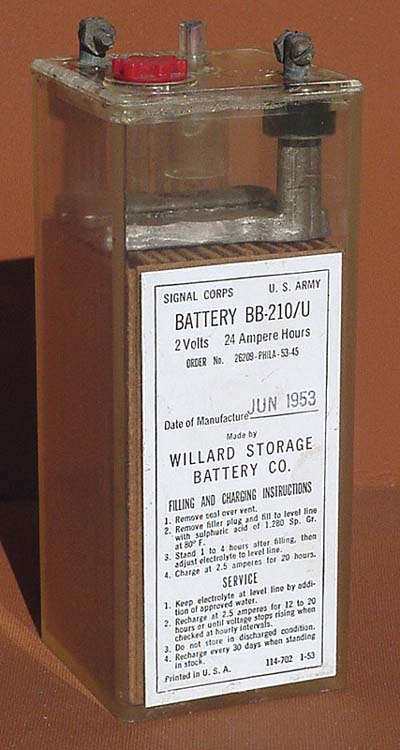
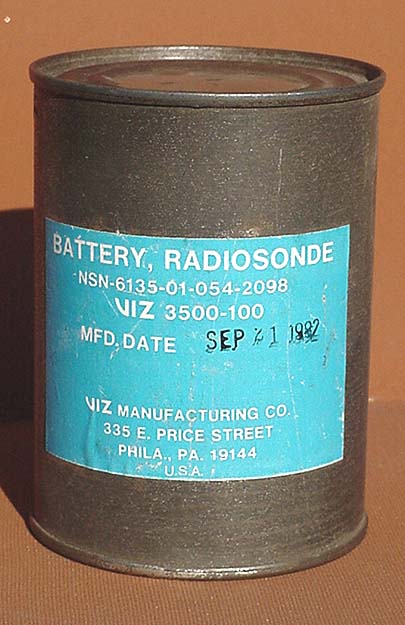
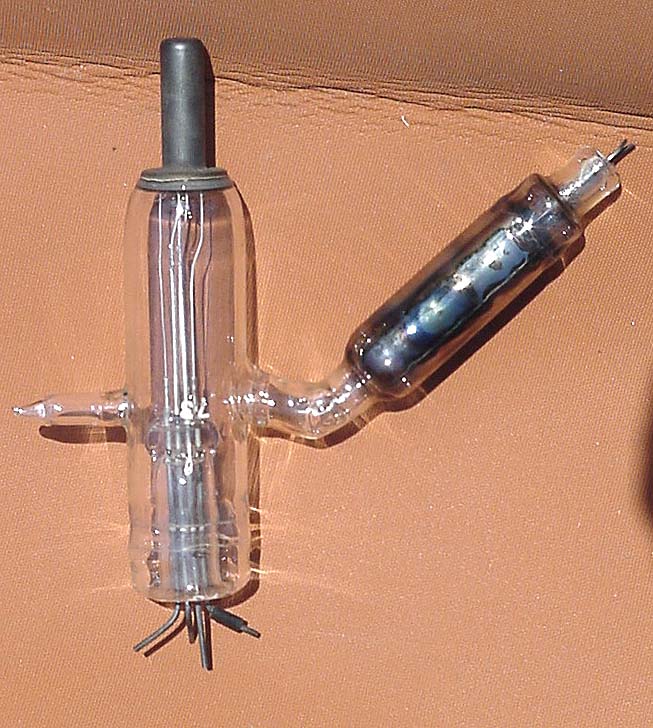
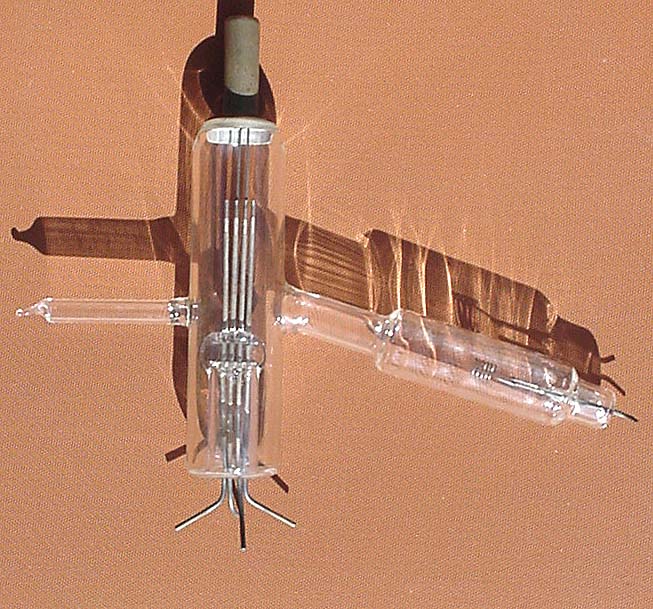
>>
---snip---
>
> You're probably right about them being only slightly valuable but it's
>still interesting to look at. Most people today have nver seen the inside
>of a battery and have no idea what they look like. This battery was built
>by Willard. I took a picture today and posted it at
><http://www.classiccmp.org/hp/battery/willard.jpg>.
Hi
Seems to be a standard Lead Acid cell. I have some Silver Zinc
cells that are dry stored that look similar. These use
an alkali unlike the lead acid cells.
>
> I forgot to mention yesterday that I also picked up a battery for a
>radiosonde. It's still sealed in it's orginal can so I don't know what it
>looks like but the guy that I got it from says that he thinks it's a
>Lithium battery. The date on the can is Sept 12, 1982 and it was made by
>VIZ. I don't know exactly who VIZ is/was but they seemed to have taken over
>production of cheap test equipment from RCA. I've seen their name along
>with RCA's on a lot of educational grade electrical equipment. I've posted
>a picture of this one too. it's at
><http://www.classiccmp.org/hp/battery/radiosonde.jpg>. FWIW I used to have
>a radiosonde but the battery for it was MUCH larger than this.
Most likely for a transistor unit, being from the 80's. I have
two old tube radiosondes that I've collected.
>
> Finally, I took pictures of the two odd tubes that I got. They're at
><http://www.classiccmp.org/hp/battery/tube1.jpg> and
><http://www.classiccmp.org/hp/battery/tube2.jpg>. The filament is in the
>large bulb at the side of the main tube. Only the first tube is marked.
>"73" has been painted near the center of it. The can see it in the photo
>but it's upside down. It was not printed but instead it looks like it was
>painted on with a small brash. Only the first tube has the silver getter
>material in it. Anyone have any idea what these might be for?
I'll bet it is some kind of arc lamp.
Dwight
>
> Joe
>
Hi Bob,
I would be interested in this - I Am located in Ottawa, and am planning to
be in Toronto later this month or early next month - where exactly are you
located?
And I have a pair of TM100-2 drives sitting on the shelf!
The Horizon is a nice machine - used to have one years ago, and have not
been
able to find another... I have a NorthStar disk controller installed in my
Altair, which runs NorthStar DOS as well as my own DMF system.
There's a simulator for this machine on my "museum" page:
http://www.dunfield.com/~ddunfield/museum/index.html
This will let you boot up NorthStar DOS on your PC!
Also have most of the NorthStar manuals and a lot of other reference info.
scanned and posted there, which may be of use to you.
Regards,
Dave Dunfield
[posting from web client - so sig is not attached]
Original Message:
-----------------
From: RMaxwell(a)atlantissi.com
Date: Mon, 7 Jun 2004 09:49:20 -0400
To: cctech(a)classiccmp.org
Subject: IBM 5150 and Full-height 5.25" Floppy Drives
I've been restoring a NorthStar Horizon that had its 5.25" full-height
double-sided floppy drives removed long ago. A friend has given me another
computer with those drives, but when I inspected it, I realized that it's a
true-blue IBM 5150 PC in very good condition! The 5.25" drives' front
panels are marked with the "IBM" logo, which makes them less-than-genuine
for installation into a pre-IBM microcomputer.
There may be parties that would protest stripping one "classic" to restore
another: I'm hoping if there might be someone interested in both/either:
- acquiring the 5150 as is (256K RAM [4 rows of 64K] on motherboard, plus
256K more on expansion card, no monitor);
- supplying (Tandon TM100-2?) full-height DS 5.25" drives for the Horizon.
The big hole in the Horizon's front panel really calls out for full-height
drives. Any help/ideas/suggestions? I'm located in Southern Ontario,
Canada and am contemplating attending VCF East.
Bob Maxwell
rmaxwell(a)atlantissi.com
--------------------------------------------------------------------
mail2web - Check your email from the web at
http://mail2web.com/ .
Anyone by any chance got a manual for a Spectron D-586 datascope?
I've (somehow) managed to kick the thing into 'menu mode' precisely *once*!
TIA
Mike
http://www.corestore.org
>Maybe not -- it's apparently not bootable. Dead disk, it seems.
>From the description, it sounds like it is just another dead Apple SCSI
drive. I have gone thru stacks of these 40 and 80 MB drives from Apple
(all Conner I believe, just like the one pictured). They seem to have
motor failures and stop spinning.
But the Portable uses a standard 3.5" SCSI drive, so it is fairly trivial
to swap the drive. Granted it lessens the "value" if it carries a
different drive, but since I've already been outbid, I'll stick with the
idea that it will exceed my price threshold before it sells. :-)
-chris
<http://www.mythtech.net>
I've been restoring a NorthStar Horizon that had its 5.25" full-height
double-sided floppy drives removed long ago. A friend has given me another
computer with those drives, but when I inspected it, I realized that it's a
true-blue IBM 5150 PC in very good condition! The 5.25" drives' front
panels are marked with the "IBM" logo, which makes them less-than-genuine
for installation into a pre-IBM microcomputer.
There may be parties that would protest stripping one "classic" to restore
another: I'm hoping if there might be someone interested in both/either:
- acquiring the 5150 as is (256K RAM [4 rows of 64K] on motherboard, plus
256K more on expansion card, no monitor);
- supplying (Tandon TM100-2?) full-height DS 5.25" drives for the Horizon.
The big hole in the Horizon's front panel really calls out for full-height
drives. Any help/ideas/suggestions? I'm located in Southern Ontario,
Canada and am contemplating attending VCF East.
Bob Maxwell
rmaxwell(a)atlantissi.com
>----- Original Message -----
>From: "R. D. Davis" <rdd(a)rddavis.org>
>To: "General Discussion: On-Topic and Off-Topic Posts"
><cctalk(a)classiccmp.org>
>Sent: Thursday, June 03, 2004 2:49 PM
>Subject: Re: vintage computers and lead poisoning?
>
>
----- Snip
>
>> Relax, don't panic. Realize that they'll get more lead exposure from
>> soldering or from pencils and don't waste your time worrying about it.
>>
>
>Pencils?
JOE> Pencils used lead in the time of the Romans. Some people haven't caught
JOE> onto the fact that pencils now use graphite and have for the last 200 years
JOE> or more.
JOE> Joe
Boy that puts a different spin having "no Lead in you pencil".
- Jerry
Philip Pemberton <philpem(a)dsl.pipex.com> wrote:
> Sure, but C64s, VAXen and such never had any viruses written specifically for
> them, IIRC. [...]
VAXen? How about the Morris worm that flooded the Internet back in 86?
It had a specific buffer overflow (for fingerd) that injected vax
machine code onto the stack.
**vp
I'm looking for a source for several three lead neon lamps. I purchased
a Sgi Galileo video analog breakout box and two neon lamps on the PC
board are broken. There are no makings on the lamps. I assume they are
some kind of protective device.
I've been browsing several lamps sites and have only seen two lead lamps.
James
"Computers have traces of deadly toxic dust"
http://theinquirer.net/?article=16393
It is time for you to liquidate your collections.
__________________________________
Do you Yahoo!?
Friends. Fun. Try the all-new Yahoo! Messenger.
http://messenger.yahoo.com/
I'm looking to buy (or at least get a chance to look at) an original
Mandala virtual reality system for the Atari - the one that was sold by
Vivid beginning in around late 1989 or so. Basically works like the
Playstation Eye Toy.
Anybody have one or know who does?
-W
I went to a little hamfest today. Brought back another SWTPC Function
Generator and two OLD or homemade (or both?) vacuum tubes. These things are
weird! Other finds include the main unit for a Pace MBT desoldering station
(no handpiece or tips :-(. Also a HP 12C calculator and NOS military lead
acid battery from 1953. It's about 2" square and about 5" tall and is made
of clear plastic so everything is readily visible. It's never had acid put
into it and has never been used. It's sort of cute and it makes an
interesting show and tell piece. Pictures later.
Joe
On Jun 5, 21:28, William Donzelli wrote:
> Most of these batteries were made in World War 2, many by a company
called
> Willard. They pretty much fell out of fashion roight after the war in
new
> designs, but probably were still produced for all of the existing
radios
> (mainly) that used them.
Actually, small transparent lead-acid batteries (usually with the three
balls in a column) were still made up to the 1980s. Professional
flashguns and some "portable" phones used them.
--
Pete Peter Turnbull
Network Manager
University of York
I've been getting interested in printing terminals.
(I am seeking professional help for this, but meanwhile...).
Is there a device which is a good modern (correcting) typewriter,
true letter-quality (daisy, thimble, golfball) printer, and also
a terminal?
Plenty of typewriters were made with serial or parallel ports,
but I don't know of anything with both correction tape and a control key...
Correcting Selectric II's came out around 1973, and the LA36 Decwriter
II in 1974, with the Selectric III and LA100 still being available at
least into the mid-eighties... was there really no perceived market
for a product that combined the strengths of both?
--akb
Hey, saw this PC-380-AA on ebay, which I believe is a Professional 380
turned into a VAX console:
http://cgi.ebay.com/ws/eBayISAPI.dll?ViewItem&category=1479&item=5702711003…
No idea if these are rare, iirc it's basically a pdp-11/73 type box. Is
anybody going to die and go to heaven because one is available?
Must.. refrain... fromacquiring... more... stuff... spock, turn off ebay!
Jeff
Hi,
I have here on the table a slightly dusty TTi (Transitional Technology
Inc) QTS-1 card. I'm hoping (really, really, hoping) that this is a
QBUS SCSI controller, but I don't have any documentation and I haven't
been able to find any in the usual places.
It looks like it expects you to talk to it with a terminal for
configuration - there's a 10 pin header next to the SCSI connector
that's probably for a serial port, and there are absolutely no switches
or jumpers anywhere.
Does anybody know anything about it? Does it emulate a MSCP (e.g.
RQDX) controller? Or (I hope not) does it require special drivers?
Anybody got a manual for it?
Thanks,
Bob Armstrong
On Jun 6, 3:59, Ethan Dicks wrote:
> On Sat, Jun 05, 2004 at 06:04:30PM -0600, Kevin Handy wrote:
> > But then there was the Roman "artificial sweetener" (powdered
lead).
>
> Lead Acetate, IIRC... used to sweeten wines. ISTR a scandal or two
in
> the 20th C. in Europe (Austria?) involving lead acetate adulteration
of
> wine by a vinyard.
It wasn't lead acetate, it was ethylene glycol, aka antifreeze. Tiny
amounts of glycol occur naturally in some wines and help to give a
smoother flavour. Someone decided that a little extra would be even
better :-)
--
Pete Peter Turnbull
Network Manager
University of York
I need some expert help with some X windows programming. Are there any X
gurus out there?
--
Sellam Ismail Vintage Computer Festival
------------------------------------------------------------------------------
International Man of Intrigue and Danger http://www.vintage.org
[ Old computing resources for business || Buy/Sell/Trade Vintage Computers ]
[ and academia at www.VintageTech.com || at http://marketplace.vintage.org ]
cctech-request(a)classiccmp.org schrieb am 06.06.2004:
>Message: 15
>Date: Sun, 06 Jun 2004 11:05:16 -0400
>From: akb+lists.cctech(a)imap1.mirror.to (Andrew K. Bressen)
>Subject: more on printing terminals
>To: cctech(a)classiccmp.org
>Message-ID: <0qpt8cwwur.fsf(a)lanconius.mirror.to>
>Content-Type: text/plain; charset=us-ascii
>
>
>I've been getting interested in printing terminals.
>(I am seeking professional help for this, but meanwhile...).
>
>Is there a device which is a good modern (correcting) typewriter,
>true letter-quality (daisy, thimble, golfball) printer, and also
>a terminal?
>
>Plenty of typewriters were made with serial or parallel ports,
>but I don't know of anything with both correction tape and a control key...
>
>Correcting Selectric II's came out around 1973, and the LA36 Decwriter
>II in 1974, with the Selectric III and LA100 still being available at
>least into the mid-eighties... was there really no perceived market
>for a product that combined the strengths of both?
>
We had at the office (in Germany) Olympia daisy-wheel typewritere with
correction tape, that could optionalley be fitted with a RS232 interface.
We used it at one of the machines, but only for output.
Those typewriters may still be available today.
>akb, still waiting for the reinvention of the versioning file system and
>the standardized stacking error facility
>
Why re-invent? I have RSX11!
Frank
Hi James, look here
http://www.electronicsurplus.com/commerce/catalog/spcategory.jsp?category_i…
they would not be considered lamps. Look further under "gas surge suppressor"
best regards, Steve Thatcher
-----Original Message-----
From: James Rice <jrice54(a)vzavenue.net>
Sent: Jun 5, 2004 3:28 PM
To: "cctalk@classiccmp" <cctalk(a)classiccmp.org>
Subject: Three lead neon lamps
I'm looking for a source for several three lead neon lamps. I purchased
a Sgi Galileo video analog breakout box and two neon lamps on the PC
board are broken. There are no makings on the lamps. I assume they are
some kind of protective device.
I've been browsing several lamps sites and have only seen two lead lamps.
James
> Procrastinators Anonymous web site:
> http://www.rddavis.org/rdd/procrastinators.html
I'll look later.
Lee.
________________________________________________________________________
This e-mail has been scanned for all viruses by Star Internet. The
service is powered by MessageLabs. For more information on a proactive
anti-virus service working around the clock, around the globe, visit:
http://www.star.net.uk
________________________________________________________________________
I need to raise some cash for bike parts. I have the following unibus
boards for sale. They are in reasonable shape, but I have no way of
testing them. I would like $15 each. Paypal works well for me.
Offers for complete set will be considered.
List:
M7859- KY11-LB 11/34 console interface card
M7258- LP11/LS11 interface
M9313- unibus exerciser & terminator
M7800- Async transmitter- RSVR, KL11
M7454- TU80 unibus interface
2 each M8256- RX211 unibus RX02 interface
misc Translation Technology Inc card
Thanks Norm
Still trying to reach Mike Stein in Toronto.
(regarding Cromemco information).
Please drop me a line at the address in my sig.
Regards,
Dave
--
dave04a (at) Dave Dunfield
dunfield (dot) Firmware development services & tools: www.dunfield.com
com Vintage computing equipment collector.
http://www.parse.com/~ddunfield/museum/index.html
Hello everyone.
Several years ago I got a Xerox workstation from a junkyard. I believe
the model is a Daybreak. At that time I got it partially booting,
using some homebrew interfacing hardware.
At the meantime I got married, and I have to get rid of the thing
(lack of space and wife's interest ;). However, I don't want it teared
apart for recycling. I want it preserved. Therefore, I'm puting it to
sale!
I live in Lisbon, Portugal (EU).
I have some photos online at the following URL:
http://www.isr.ist.utl.pt/library/gallery/Xeroxworkstation
I also have three peripherals: two tape streamers and one 5 1/4 floppy
drive.
Since it has no keyboard, mouse or monitor, I built interfaces to
connect it to a VGA monitor, and to a PC. I can include the stuff I
did with the machine.
Cheers,
Rodrigo Ventura
--
*** Rodrigo Martins de Matos Ventura <yoda(a)isr.ist.utl.pt>
*** Web page: http://www.isr.ist.utl.pt/~yoda
*** Teaching Assistant and PhD Student at ISR:
*** Instituto de Sistemas e Robotica, Polo de Lisboa
*** Instituto Superior Tecnico, Lisboa, PORTUGAL
*** PGP fingerprint = 0119 AD13 9EEE 264A 3F10 31D3 89B3 C6C4 60C6 4585
On Jun 4, 15:23, Dwight K. Elvey wrote:
> No, I was talking about Intel's 2508( maybe 2758 from your later
> note ), not the 2708 that was a multi-voltage part.
I know; Joe asked about the 2704 and 2708, my note about the 2716 was
just a comment.
--
Pete Peter Turnbull
Network Manager
University of York
My voicemail PC died a pretty terrible death this morning. I was still
groggy from a late night of hackering and sitting at my computer (my back
is to the voicemail system) and all of a sudden this loud popping begins.
At first a wave of terror washed over me as my not quite totally
functioning brain was trying to determine just what the hell was going on.
At first I didn't want to look but I turned around in time to see some
serious arcing going on inside the exposed PC (the case is off). It went
on for a good 4-5 seconds (start to finish). It was probably the power
supply but I can't tell for sure until I do a post-mortem (right now I'm
getting my voicemail back up). Luckily it didn't take out any hardware.
The hard drive is fine and as far as I can tell so far so are the voice
boards. That was some crazy shit.
The power supply fan went bad on it a while ago (over a year, surely
longer) and I never bothered replacing it because I always use just
whatever hardware I have laying about whenever something goes bad on the
box, and those damn power supply fans go out all the time and it's a pain
to have to replace them. Anyway, I wonder if it was some critical thermal
failure of some sort. The P/S was hot but not abnormally so (abnormal in
this case would be scorching but usual temperature is very hot to the
touch but not burning).
Wacky.
--
Sellam Ismail Vintage Computer Festival
------------------------------------------------------------------------------
International Man of Intrigue and Danger http://www.vintage.org
[ Old computing resources for business || Buy/Sell/Trade Vintage Computers ]
[ and academia at www.VintageTech.com || at http://marketplace.vintage.org ]
Noticed an old message concerning you finding a HP 122A Scope with
manual. Any chance you still have manual ( I have the scope) if so any
chance you would sell a copy of manual ?
Thanks
Phil
I just recovered my PC8300 from my brothers and it is missing one
all four are the same, you just orient them differently
Before anyone cries "elder laptop abuse" my 83000 was missing the key
when I got it.
Thanks!
All,
I was thinking today about old software (okay, I was playing
Master of Orion 1 :-) ) and realized that there may be a service
opportunity we have. I don't know if such exists already, please
point me there if it does.
What I'm thinking of is a central site to point out old
software or software for old systems that have been placed in public
domain or otherwise made available for nominal charges by their
original manufacturers. I'd like to see something like a database
containing:
Name of package
Brief description (maybe two paragraphs)
Rating (something like a one-to-five-mice rating, or maybe with valves?)
Platform/OS it runs on (database should be sorted on this field)
Where to get it
Company that made it.
Current owner of that company, (includes web-link)
Current main product line of that company
Person/group responsible for making it available
Current business of that person (includes web-link)
A couple of examples I know a little about:
Lighthouse Design Ltd Office Suite
Office Suite, consists of mail, spreadsheet, text, presentation packages
vvvv (four tubes out of 5)
NeXTStep 3.x
http://www.peanuts.org/peanuts/NEXTSTEP/commercial
Lighthouse Design
Sun
workstations/servers
???
???
OPENVMS 7.3
Operating system, utilities, development tools
vvvv
VAX, Alpha hardware
http://www.montagar.com/hobbyist/mount.html
DEC
HP
printers :-)
????
????
But even here, I don't really know the right people to credit.
This seems like a good way to return a bit of good karma to
the folks that support old hardware and software, as well as a
valuable resource for those of us trying to do vintage computing on a
budget.
I guess I have not thought far enough into how to limit the
database from becoming enormous. I'd say some necessary criteria are;
1) package runs on a "classic" (that is > 10 years old) platform
2) package was at one time sold in the normal software marketplace
(i.e. not shareware/freeware/etc since inception)
3) package can now be downloaded or ordered from somewhere for
free/cost-of-media/similarly low cost.
Comments or suggestions? Some questions I have:
a) should there be a separate category for software for classic
systems which is still being sold and supported (a la the older
Ambrosia shareware games for Mac, like Escape Velocity, or Create!
for NeXTSTep 3.3)?
b) should there be an "archive pointer" section that points to
existing archives of shareware, such as http://www.peanuts.org/ for
NeXT stuff? (I think this would be *far* preferable to trying to
catalog every single shareware package on every archive....)
I don't have any webhosting skills or abilities, so I can't
set this up, but if I can help, let me know.
--
- Mark
210-522-6025, page 888-733-0967
>from someone who has a hard type forgetting things like that...
extended was memory past 1meg and expamded was a memory slot
inside the 1meg space
sigh
best regards, Steve Thatcher
>--- Original Message ---
>From: Tom Jennings <tomj(a)wps.com>
>To: "General Discussion: On-Topic Posts Only" <cctech(a)classiccmp.org>
>Date: 6/4/04 3:33:57 PM
>
On Thu, 2004-06-03 at 17:03, Fred Cisin wrote:
>
>> But, then, when density was finally increased, "quad density"
>> and "super density" were already used up as names, so the
>> mindless jerks called it "HD"/"High Density". "HD"/"High
Density"
>> is MFM at 500K bits per second data transfer rate on a 360
>> RPM drive. (Which is exactly what 8" DD was)
>
>Fred, you should stop remembering these things, it's bad for
you.
>
>
>PS: To this day I can't remember which is which, EXTENDED or
EXPANDED
>memory, thankfully there's no need to any more.
>
I was at a customers some years back.. Old building, but it had been
totally gutted and all new insides.
There was a small cupboard to the side of the computer room (actually more
of an office, where the MVME based Motorola unix box and one of the patch
panels lived) inside of which was the main fusebox for the floor. 415V
three phase splitting off to (our normal) separate 240V circuits..
Anyway, I was sat at a desk with my back to the cupboard, server in front
and to my left, and suddenly heard running water... turned around, and the
wall behind me was swimming... opened the cupboard and it was pouring down
the cables and across the fusebox..
The power went off shortly afterwards.. luckily it missed the server, which
was on a UPS, and we did an orderly shutdown.
It was Air Conditioning again .... For some reason known only to
themselves, the AirCon plant for the floor was situated in the loft (Attic)
directly above the computer room. It had a drip tray under it, which
wasn't secured, nor drained properly. When it got full, it tilted, and
dispensed it's entire load of water onto the floor, and hence us below!
It did it again a few weeks later, too....
Not as much fun as the time we got a phonecall from a customer saying "My
computer just blew up". We chuckled and said we'd come have a look,
expecting a fuse blown or something. Arrived and found a PC clone with all
the blanking plates, buttons, and the front of the floppy drive on the
floor in front of it, the blanking plates on the expansion slots all bowed
outwards, and a nasty smell in the air.
We decided the remove the machine from site before opening it ...
When we did, found it was a 486 machine where the battery backed CMOS ram
was (had been) baked up by an external battery plugged into the
board. This had been stuck to the back panel of the box. It had
exploded! Possibly connected to the board backwards? The force of the
explosion had been enough to fling bits of battery and the plastic box it
was encased in /through/ the ribbon cables in the machine, as well as the
aforementioned ejection of all loose fittings on the case. Battery acid
everywhere, too, eating through tracks on everything. The hard disc
survived long enough to get the data off it, but the rest of the machine
was pretty much destroyed.
And this poor girl had had it under her desk by her feet when it had gone
bang! Poor thing must have had the shock of her life!
Rob.
>From: "Pete Turnbull" <pete(a)dunnington.u-net.com>
>
>On Jun 4, 14:14, Joe R. wrote:
>> Dwight,
>>
>> I have a programmer that's suppsoed to be for the intel 2704 and
>2708.
>> I've never seen any info on the 2704 and I've never seen one but I'm
>> guessing that it's a half bad 2708. Do you know any more about it?
>
>Maybe. If so it must have been identified before the leads were added,
>because the Intel Data Catalogue 1976 lists both 2704 and 2708 on the
>same page, and the only difference is pin 22. On a 2708, that's A9, on
>a 2704 it's always 0V (always 0V, cf 2716/2758 below). No pictures,
>unfortunately, so no immediate way to tell if the dies look the same.
>
>Interestingly, the 1976 book doesn't list anything bigger than a 2708.
> So a 2708 obviously wasn't a half-bad 2716 (at least, Intel ones
>weren't).
Hi
No, I was talking about Intel's 2508( maybe 2758 from your later
note ), not the 2708 that was a multi-voltage part.
Dwight
>
>The 1979 Data Catalogue lists the 2704 only as a footnote to the 2708
>description, and the 2716 appears only as a single-rail version. I
>thought they did both, but I must have been thinking of another
>manufacturer.
>
>The 1979 book lists 2716, 2732, and 2578. The 2758 has exactly the
>same power consumption, access times, programming, and pinout as the
>2716, except that pin 19 is A10 on a 2716 and is AR on a 2758. AR is
>"select reference input voltage". The tables show this as always Vil
>(ie, 0V) but in one place only, the small print says that it's always
>0V *except* for devices labelled "2758 S1865", when it needs to be Vih
>(+5V). Hmm, that sounds exactly like Dwight's description of a half
>bad chip to me :-)
>
>
>--
>Pete Peter Turnbull
> Network Manager
> University of York
>
Oops, I deleted the original so can't reply directly to it :-(
I hope someone has better info than me, because although I think I have
a 16KZ-K for my Cromemco, the only manuals I can find are for Godbout,
Irvine, Integrand, Tuscan, and a few other memory boards -- none of
which I have!
All I can find is the entry in the 1978 Cromemco Microcomputer Systems
catalogue, which says that it offers expandability to 512K bytes with
bank select, has fully-transparent dynamic refresh, operates at 4MHz
with no wait states, and costs $495 (fully assembled, tested, and
burned in, as the 16KZ-W, is $595).
"With bank select each memory board may reside in one or more
of the 8 possible memory banks. An 8-position DIP switch on
the board is used to select each of the banks in which the
board resides.
"The active bank or banks of memory are selected under software
control. Output port 40H is dedicated to this function. Each
of the 8 bits of data of output port 40H are used to turn on or
off the corresponding bank of memory. A "1" in the
corresponding bit position will turn on the memory bank. A "0"
will turn it off. All circuitry required to detect the output
of 40H is included on the memory card itself.
"Bank select provides a convenient method by which to expand
system memory space beyond 64K. Bank select also permits the
implementation of time-sharing systems with a minimum of
software overhead - up to 8 users can use the system
simultaneously with each confined to his own bank of memory."
This implies the card can be multiply decoded (to appear more than
once). I imagine if you want it to appear from 0000H to 0FFFFH, you
turn on the switch in position 1, and turn off the rest (unless you
want it to appear elsewhere as well). Similarly to appear from 10000H
to 1FFFFH, switch position 2. Although, since it's easier to provide a
pullup resistor than a pulldown on TTL, likely "switch on" grounds the
line and means a "0". Try it and see!
--
Pete Peter Turnbull
Network Manager
University of York
On Jun 4, 14:14, Joe R. wrote:
> Dwight,
>
> I have a programmer that's suppsoed to be for the intel 2704 and
2708.
> I've never seen any info on the 2704 and I've never seen one but I'm
> guessing that it's a half bad 2708. Do you know any more about it?
Maybe. If so it must have been identified before the leads were added,
because the Intel Data Catalogue 1976 lists both 2704 and 2708 on the
same page, and the only difference is pin 22. On a 2708, that's A9, on
a 2704 it's always 0V (always 0V, cf 2716/2758 below). No pictures,
unfortunately, so no immediate way to tell if the dies look the same.
Interestingly, the 1976 book doesn't list anything bigger than a 2708.
So a 2708 obviously wasn't a half-bad 2716 (at least, Intel ones
weren't).
The 1979 Data Catalogue lists the 2704 only as a footnote to the 2708
description, and the 2716 appears only as a single-rail version. I
thought they did both, but I must have been thinking of another
manufacturer.
The 1979 book lists 2716, 2732, and 2578. The 2758 has exactly the
same power consumption, access times, programming, and pinout as the
2716, except that pin 19 is A10 on a 2716 and is AR on a 2758. AR is
"select reference input voltage". The tables show this as always Vil
(ie, 0V) but in one place only, the small print says that it's always
0V *except* for devices labelled "2758 S1865", when it needs to be Vih
(+5V). Hmm, that sounds exactly like Dwight's description of a half
bad chip to me :-)
--
Pete Peter Turnbull
Network Manager
University of York
>From: "Tom Jennings" <tomj(a)wps.com>
>
>On Thu, 2004-06-03 at 18:18, Fred Cisin wrote:
>
>> > We used to pay $80 for a box of DSDD Dysan 8" floppies and align the
>> > disk drives every year with a Dysan alignment diskette and an
>> > oscilloscope. That's what it took for repeatable reliability. It sucked.
>>
>> ... and yet nobody was buying 8" Dysan alignment diskettes and new
>> shrinkwrapped Dysan floppies at $1 per diskette at VCF! My biggest
>> market segment was teachers who each wanted ONE diskette to wave in
>> the air when talking to classes about the days of dinosaurs.
>
>No, and you don't see people wearing onions around their neck anymore to
>ward off illness either.
>
>Man, like many others I used to do edits and huge (sic) compiles and
>library building and linking, HOONK HOONK HOONK for hours, every day,
>for however long an individual floppy lasted. (1.25MB each, seemed like
>a lotta space at the time.) THAT ate up floppies and drives! I put
>solidstate relays on the big AC motors and let them run down after some
>idle period, that helped.
Hi
A handy thing to have is a handfull of bearings and a bearing
puller.
Dwight
>From: "Roger Merchberger" <zmerch(a)30below.com>
>
>Rumor has it that Nico de Jong may have mentioned these words:
>
>> > I have a DEC RX01 drive and the box of floppies that I have
>> > with it are 8 inch single sided single density. Are 8" hard
>> > sectored floppies compatible with these?
>>
>>Hard and Soft sectored disks are never compatible.
>
>Ah, never say never, my friend! ;-)
>
>I know little about 8" floppies, but I know that Apple ][ 5.25" drives
>(which used GCR encoding, IIRC) could use hard or soft sector floppies. It
>actually wrote an "index blip" (for lack of the correct term) on the disk
>itself during format & used that instead of any physical hole(s) in the disk.
>
Hi
I also believe that one can use hard sectored disk in place of
soft sectored disk in most machines( of course formatted as soft
sectored ).
There is a difference between single and double
density that is related to the position of the index hole. My
understanding is that unlike the 5-1/4 disks, the 8 in. media
is the same for the single and double density, just higher
quality. In fact, I punch a new index window in some of my
double density 8 inch floppies and I've been using them, with
no troubles, as single density.
The 5-1/4 disk are a different story. Single/Double don't mix.
Dwight
>From: "Ron Hudson" <ron.hudson(a)sbcglobal.net>
>
>
>> On Thu, 3 Jun 2004, Tom Jennings wrote:
>> There used to be a popular folk myth that all single sided diskettes
>> actually double sided ones that had failed testing on one side.
>> I find it hard to believe that any company could be profitable
>> with THAT high a failure rate!
>>
>I once worked in memorex in the tape plant where open reel tape was made
>and that is exactly how it was done, raw tape was run through error
>detecting
>machines and sorted.
>
>
Hi
This thinking always reminds me of a story from Intel.
When they first started making 2716's, TI was biting
into their 2708 market with the 2758's. Intel fought
back with their version of the 2508. These were early
half bad failures from the 2716 line. They even had
a H/L pin to select which half to use. When they
first started, they sold for quite a bit less than
the 2716's ( about $30 ea ). Over time, the 2716's
pricing went down to around $4 someplace. I got a kick
out of seeing one of their price list showing the
2508's still being sold for $32 ea.
While I suspect that originally the half bad parts
made sense but at the premium price they got for these,
I suspect that they later just took fully tested
2716's and relabeled them.
I wonder how many purchasing agents realized that
the 2716's worked just as well.
Dwight
I have a Cromemco 64KZ-II memory board but no manual. If anyone has a
manual in PDF format, that would be ideal, but in the absence of that,
I'd settle for a short description of how the board is organized and
what the 3 dip switches and two LEDs do.
I am also looking for the following manuals if anyone has these in PDF
formats:
IMSAI VIO, MIO and SIO2-2
Processor Technology VDM-1 and 3P+S
Industrial Microsystems 8K static memory board
Seals 8K Static Ram
I have over 100 manuals in PDF format, and have made significant
contributions to the S-100 manual library at:
http://www.hartetechnologies.com/manuals/
Direct E-Mail responses would be appreciated.
Thanks,
Barry Watzman
Watzman(a)neo.rr.com
I would guess it has something to do with Labview. Labview was originally
developed on the Mac (No decent Windows GUI back then, though I think there
was an OS/2 version) Labview in a rack-mount would have been pretty sweet at
the time.
Damn, another Apple clone to add to my wish list..
>From: "Steven Canning" <cannings(a)earthlink.net>
>Reply-To: "General Discussion: On-Topic and Off-Topic
>Posts"<cctalk(a)classiccmp.org>
>To: "General Discussion: On-Topic Posts Only" <cctech(a)classiccmp.org>
>Subject: Re: Rackmount MAC Classic
>Date: Thu, 3 Jun 2004 20:08:17 -0700
>
>On Thu, 3 Jun 2004, Ram Meenakshisundaram wrote:
>
>Never seen this before:
>
>http://cgi.ebay.com/ws/eBayISAPI.dll?ViewItem&category=4604&item=4134681929&
>rd=1
>
>A Rackmountable MAC Classic with a VME Backplane.....
>
>Wow, how cool is that?
>
>But my question is, "why?"
>
>
>To further the "why" question..... quoting my wise grandfather, "Just
>because you 'can' put a diamond in a goat's ass, doesn't mean you should
>!"
>
>regards, SAC
>
>
_________________________________________________________________
Is your PC infected? Get a FREE online computer virus scan from McAfee®
Security. http://clinic.mcafee.com/clinic/ibuy/campaign.asp?cid=3963
Never seen this before:
http://cgi.ebay.com/ws/eBayISAPI.dll?ViewItem&category=4604&item=4134681929&
rd=1
A Rackmountable MAC Classic with a VME Backplane.....
Ram
(c) 2004 OpenLink Financial
Copyright in this message and any attachments remains with us. It is
confidential and may be legally privileged. If this message is not
intended for you it must not be read, copied or used by you or
disclosed to anyone else. Please advise the sender immediately if
you have received this message in error.
Although this message and any attachments are believed to be free of
any virus or other defect that might affect any computer system into
which it is received and opened, it is the responsibility of the
recipient to ensure that it is virus free and no responsibility
is accepted by Open Link Financial, Inc. for any loss or damage in any
way arising from its use.
On Jun 3, 21:56, Don Maslin wrote:
> On Fri, 4 Jun 2004, Pete Turnbull wrote:
>
> > The original IBM hard-sectored 8" floppies had 8 sectors, and I
don't
> > think 3M ever made those :-)
>
> Do you know how they formatted them, Pete? Perhaps 512/sector?
I don't know. I've never actually seen one (except in photos), let
alone used one. I know they only held 80K, spun in the opposite
direction to modern floppies, were much thicker, and (for the customer)
were read-only.
http://www.computerworld.com/news/1999/story/0,11280,62286,00.htmlhttp://history.acusd.edu/gen/recording/mag/p42.html
--
Pete Peter Turnbull
Network Manager
University of York
I was thinking about the poor guy in Finland that was going to have to
rewire his PDP-7 backplane tonight, and did some digging for bit/sleeve
part numbers. Amazingly, you can still buy the right stuff from Cooper
Tools. They have a really neat pdf catalog
http://www.cooperhandtools.com/catalog/pdffiles/electcat_00/Brands/WireWrap…
>From a 1967 DEC Logic Handbook, you need a gardner-denver 26263 bit and 18840
sleeve for #24 wire and 504221 bit and 500350 sleeve for #30 wire. The #24
unwrapping tool is 500130
These may also work for 1401 connectors, which are quite similar to the H800
DEC single sided module blocks with rectangular shaped pins.
Are hard sectored 8" floppies of any use to anyone? I've got several boxes of still shrink-wrapped SSSD hard sector disks. I've sold a couple boxes on epay, but action on them was lower than I'd imagined. Some folks who resell alot of 8" floppies told me "good luck" because hard sectored just don't sell.
I've seen new soft sectored disks advertised online for fairly hefty prices (don't know if they are selling at that price or not). What systems made use of these? Any that I might own or want to own some day that it'd be worth me holding on to these if I can't sell them for a price worth it to drive to the post office and ship them?
Huw Davies <huw.davies(a)kerberos.davies.net.au> wrote:
> to avoid waste water from the computer room contaminating the
> mouse rooms below.
What's a mouse room?
MS
On Jun 3, 13:08, Fred Cisin wrote:
> > > I'm almost sure I've seen a 16 hard sectored 8 inch disk
someplace.
>
> On Wed, 2 Jun 2004, Don Maslin wrote:
> > I suppose that is possible, Dwight, but it may be a surprise to 3M!
>
> Although I do not have any examples handy, it would not surprise
> me at all to find out that there exist SOME media that weren't
> available from 3M!
The original IBM hard-sectored 8" floppies had 8 sectors, and I don't
think 3M ever made those :-)
--
Pete Peter Turnbull
Network Manager
University of York
Something I've wanted for quite a while is a Sony SMC-2000 computer with
the LDP-2000 laserdisc player. Today I finally got it! This unit had
been used by a local school and they needed to get rid of it. It came
with some laserdiscs and ... four service manuals for both the computer
and laserdisc player! Apparently this runs MS-DOS 2.11 and I don't think
that came with it. But unless that is a special OEM version of MS-DOS,
it won't be a problem. Also included were 8 laserdiscs including three
volumes of Dream Machine and two volumes of Space Archive discs.
They also had several shrinkwrapped packages of IBM DOS 3.30, and I put
one of them on VCM. Also listed on VCM was a copy of the IBM Guide to
Operations for the Personal Computer XT, and Volume 1 of the Hardware
Maintenance and Service for the Personal Computer XT (these are
duplicates of what I already have.) BTW, the money received for these
will go back to the school computer lab.
They had quite a bit of stuff that will either be sold or sent to that
great storage location in the sky. It looked like there were quite a few
ISA sound cards, network hubs (10 Mb/sec), etc.
I've never seen any Wabash or Elephant 8" disks.
Joe
At 05:52 PM 6/3/04 -0400, you wrote:
>you forgot Wabash and Elephant disks... at least I have those laying
around the house...
>
>best regards, Steve Thatcher
>
>
>-----Original Message-----
>From: "Joe R." <rigdonj(a)cfl.rr.com>
>Sent: Jun 3, 2004 5:09 PM
>To: "General Discussion: On-Topic and Off-Topic Posts"
<cctalk(a)classiccmp.org>
>Subject: Re: 8" hard sectored floppies
>
>At 01:08 PM 6/3/04 -0700, Grumpy Ol' Fred wrote:
>>> > I'm almost sure I've seen a 16 hard sectored 8 inch disk someplace.
>>
>>On Wed, 2 Jun 2004, Don Maslin wrote:
>>> I suppose that is possible, Dwight, but it may be a surprise to 3M!
>>
>>Although I do not have any examples handy, it would not surprise
>>me at all to find out that there exist SOME media that weren't
>>available from 3M!
>
> Let's see; IBM, Tektronix, Verbatim, Memorex, Digital, Maxell, Intel,
>Centech, Radio Shack, Data Systems. That's just some that I have laying
>around the house.
>
> Joe
>
>
>
>From: "Don Maslin" <donm(a)cts.com>
>
>
>On Wed, 2 Jun 2004, Frank Smith wrote:
>
>> --On Wednesday, June 02, 2004 13:22:39 -0400 Damien Cymbal
<d_cymbal(a)hotmail.com> wrote:
>>
>> > Are hard sectored 8" floppies of any use to anyone? I've got several boxes
of still shrink-wrapped SSSD hard sector disks. I've sold a couple boxes on
epay, but action on them was lower than I'd imagined. Some folks who resell
alot of 8" floppies
>> > told me "good luck" because hard sectored just don't sell.
>> >
>> > I've seen new soft sectored disks advertised online for fairly hefty prices
(don't know if they are selling at that price or not). What systems made use of
these? Any that I might own or want to own some day that it'd be worth me
holding on to these
>> > if I can't sell them for a price worth it to drive to the post office and
ship them?
>>
>> I'd be willing to buy a box or two of them to use in my Altair floppy drives
if
>> they are 32 sector floppies.
>>
>> Frank
>
>To the best of my knowledge, all 8" hard sectored disk are 32
>sector. The only difference is between the 'normal' hard sector
>arrangement where the sector holes encircle the hub hole, whereas
>the 'Vydec' compatible disks have the sector holes around the
>periphery. They are not common, however.
>
> - don
>
Hi Don
I'm almost sure I've seen a 16 hard sectored 8 inch disk someplace.
Dwight
I found my Millenium MicroSystem Analyzer manual while searching for the
manual for the Brikon 723 FD tester. I thought I'd scan it but it's bound
into a paper back book. What's the best way to cut it apart so that I can
scan it? My scanner has a feeder and it's th only way to scan something.
--
If the glue has dried out, just break the binding and peel the pages apart.
clean the hardened glue off the edge before feeding through the scanner.
Alternatively, go to a print shop and have them cut the binding with a
paper shear, making sure the spine of the book is flat.
As it seems my mail server has been having some problems,
I`m very sorry that my replys have been delayed so many days.
for some unknown reason my replyes had been frozen in exim.
with delayed regards
Jacob Dahl Pind
--
CBM, Amiga,Vintage hardware collector
Email: rachael(a)rachael.dyndns.org
url: http://rachael.dyndns.org
>From: "Pete Turnbull" <pete(a)dunnington.u-net.com>
>
>On Jun 3, 10:39, Dwight K. Elvey wrote:
>
>> There is a difference between single and double
>> density that is related to the position of the index hole.
>
>Are you thinking of the different position of the index hole in 8"
>disks? That differentiates single-sided from double-sided, not
>densities.
Yep, that is it.
Dwight
>
>> My
>> understanding is that unlike the 5-1/4 disks, the 8 in. media
>> is the same for the single and double density, just higher
>> quality. In fact, I punch a new index window in some of my
>> double density 8 inch floppies and I've been using them, with
>> no troubles, as single density.
>> The 5-1/4 disk are a different story. Single/Double don't mix.
>
>Sure they do. Same coercivity. There might be a difference in quality
>on early ones, but barring flaws in the emulsion coating, they're
>interchangeable, and you can always use DD as SD.
>
>It's single/double density and high density that are different.
>
>--
>Pete Peter Turnbull
> Network Manager
> University of York
>
(1) I have a 29A manual but there's no device codes in it. The codes are
in the manual for the particular plugin that you're using so you'll have to
tell us which one you're using.
(2) I think I have a 29B manual but I'll have to look for it.
(3) I didn't think the 29x programmers could program Bipolar PROMs but
I'd be happy for someone to prove me wrong!
(4) FYI Just because the PROMs are 82S131, Am27S13, 63S241, 74S571, etc
don't think that they're all the same. They may be interchangeable in a
read-only operataion but they're programmed very differently. You MUST have
the proper settings and adapaters for the PROM that you're using.
Joe
At 06:56 PM 5/27/04 -0700, you wrote:
>I made images of all my roms, but the burner I used is ancient and
>non-standard so they likely won't help, I want to read them with
>something a little more standard, a DATAI/O 29b... has anyone got the
>"device code" for the 82S131?
>
>thanks,
> Pavl_
>
>> sure I'll host it. I'll just put it under www.classiccmp.org/M9312
>>
>> Someone just give me the files!
>>
>> Jay
>> ----- Original Message -----
>> From: "John A. Dundas III" <dundas(a)caltech.edu>
>> To: "General Discussion: On-Topic and Off-Topic Posts"
>> <cctalk(a)classiccmp.org>
>> Sent: Wednesday, May 26, 2004 6:31 PM
>> Subject: Re: Wanted: M9312 ROMs
>>
>>
>>> I agree with Fred: I'd like to see an electronic library of 9312
>>> bootstraps that we could all share and download as necessary. I
>have
>>> a /84 and /70 that I'd like to get images for (TK50, etc.) that I
>>> don't already have. Burning an EPROM seems like an easy way to
>go.
>>>
>>> Any images already archived?
>>>
>>> Any volunteers to host a collection?
>>>
>>> John
>
>
>
>