Got a box of SCSI drives a while back, and in there is one that's apparently
18G, but it's marked "LV-D" which from my understanding of things won't work
with anything I have here. Can any of you guys use this?
Ideal for me would be a trade for something roughly comparable in size...
--
Member of the toughest, meanest, deadliest, most unrelenting -- and
ablest -- form of life in this section of space, a critter that can
be killed but can't be tamed. --Robert A. Heinlein, "The Puppet Masters"
-
Information is more dangerous than cannon to a society ruled by lies. --James
M Dakin
Just got an email from Down Under from a fellow with one of these. Uses 2
3.5" single-sided drives in what he thinks is a 280KB format. His unit has
a dead keyboard.
Before I have him send me sample of the diskette, does anyone know anything
about these?
Thanks,
Chuck
That's what I figured, but I thought I'd check with people that had more
expert-ness than me :)
> -----Original Message-----
> From: cctalk-bounces at classiccmp.org
> [mailto:cctalk-bounces at classiccmp.org] On Behalf Of Jay West
> Sent: Monday, March 27, 2006 11:15 AM
> To: General Discussion: On-Topic and Off-Topic Posts
> Subject: Re: Curiosity about power supplies (BA11)
>
> I haven't checked the specs, but I'd be surprised if the
> standard PC supplies could put out the amps required.
>
> Jay
>
>
Okay, so I was thinking, would it be possible to replace the regulators
and whatnot in a BA11 with several standard PC power supplies?
Obviously there would be adjustments that need to be made, but
considering the DEC units are now 20+ years old and the out-of-service
modules may have dried up caps, would this not be a possible option?
I'm just curious, I'm no electrician, nor have I looked over the leads
yet.
Secondly, if I have less than half the BA11 box full of cards, do I need
both of the fans plugged in?
Julian
> I downloaded the TC11 and TC-131 manuals.
> TC11 has two 40-pin connectors
As I said, different manufacturers sold slightly different cabling.
The hex board is the basic controller for 800 bpi, you daisy chain
the read/write cable to the quad board if you needed 800/1600 support.
I've been contacted by someone in NJ with a couple of AT&T "EO"
handheld computers to dispose of ... Anyone on the list with an interest
in these that is located "close"? - If so, contact me and I'll pass on the
info.
Dave
--
dave06a (at) Dave Dunfield
dunfield (dot) Firmware development services & tools: www.dunfield.com
com Collector of vintage computing equipment:
http://www.parse.com/~ddunfield/museum/index.html
> It uses a DP8473AV as the floppy drive controller IC.
http://www.osdever.net/cottontail/#Floppy
has the data sheet and a app note for the data
separator, which is more sophisticated than the
one normally found in a 765.
I assume there's a way to deterimine if you have
a 8473 in software.
I just saw a reference to http://www.pestingers.net/pdfs/ on the
Heathkit Listserver. It looks like it has a number of other computer
manuals besides Heathkit. I've bookmarked it now :).
> Subject: Heathkit Manuals Site
>
>
> I just saw a reference to http://www.pestingers.net/pdfs/ on
> the Heathkit Listserver. It looks like it has a number of
> other computer manuals besides Heathkit. I've bookmarked it now :).
When I find something incredibly useful I download the content because
you never know when it will go away. Like just now the link above shows
"service unavailable". Did you Download the content?
I downloaded the TC11 and TC-131 manuals.
TC11 has two 40-pin connectors, so you can not hook a Kennedy 9100
to the TC11. The TC-131 looks promising ...
Question: who actually has a Kennedy 9100 connected to a UNIBUS
machine, and (of course) which interface do you use ?
It looks like I'm in the market for a Kennedy 9100 UNIBUS interface
[preferably a singe board module] :-)
thanks,
- Henk.
> -----Original Message-----
> From: cctalk-bounces at classiccmp.org
> [mailto:cctalk-bounces at classiccmp.org] On Behalf Of Al Kossow
> Sent: zaterdag 25 maart 2006 17:59
> To: classiccmp at classiccmp.org
> Subject: Re: how to connect a Kennedy 9100 ?
>
>
> > What interface should I be looking for to hook it to the UNIBUS ?
>
> Some variation of an unformatted tape drive interface. They
> are slight variations between vendors, so you need the right
> edge connector to idc interface card at the drive. There
> should be some indication of who made the interface card on
> the PC board.
>
> The three connectors are read, write, and control.
>
> Unibus controllers often are either a system unit or a single
> quad board with a second board for 1600 BPI PE support.
>
> The Emulex TC11 and Western Peripherals TC-131 manuals are up
> on bitsavers Plessey and Dilog made similar controllers.
>
>
This message and attachment(s) are intended solely for the use of the addressee and may contain information that is privileged, confidential or otherwise exempt from disclosure under applicable law.
If you are not the intended recipient or agent thereof responsible for delivering this message to the intended recipient, you are hereby notified that any dissemination, distribution, or copying of this communication is strictly prohibited.
If you have received this communication in error, please notify the sender immediately by telephone and with a "reply" message.
Thank you for your cooperation.
Not much use I can think of in computing, but in other things quite useful. Most obvious is gold prospecting,
also used in other metalwork (tempering bath), and in a hobby that will not be named to remove lead that is stuck to steel.
Also vacuum pumps for home particle accelerators.
4DDN is on its own CD (AFAIK, never used it but it's not on the standard distro), but keep in mind that it is a nodelocked product, which creates issues.
>And I'm curious - how are these issues handled today? I ask remembering
>that I once node-locked the software I sold on the SGI. What are the
>repercussions for legacy hobbyists, when companies like SGI take a dive?
In that case, you either crack the license system or binary-patch around it.
If you still have the keys you used to create nodelocked licenses, you can make
a "any" license.
Further on the SGI note- is there any move to unofficially mirror official SGI
stuff, especially TechPubs and patches
"just in case"? Perhaps divide it up among several CCmp'ers.
Gave it the dust-off and vis inspection - Base is a Sun 3/160 system, Sun backplane, 3004 processor and memory cards. it has a non-VLSI CV SCSI/2xTTY card.
The VME terminator cards are CV-proprietary, and are switchable between "VME" and "CV" mode, not sure what the difference is yet.
The case is CV-specific, all drives are front-mounted along with the power supply. Old-IBM type superstrong reinforced-plastic skins.
The "heart" of the CADDS system is the CV-GPU, two cards connected by 3 ribbon cables. One is a Multibus "interface card", the
other is the VME processing part, with 7x AMD 2901 bitslice processors. According to docs, the "GPU" system can be anywhere in the
network displaying on a remote terminal if desired, which differs from SGI-type systems. Not sure exactly what is done in the GPU yet.
The framebuffer is a seperate VME card, with a unusual DB-25 connector to the monitor that I haven't traced yet. There is also a
bridged Multibus tablet interface card. I have docs, but they don't go very deep into hardware.
Unfortunately, it looks like it uses a dongle for protection, which I don't have. Good news is that it shouldn't be too hard to workaround,
given that it is a ca 1988 machine.
It came with full ComputerVision "4.2 UNIX release 4" tapes, SunOS 3.2 and 3.4 upgrade, SunWrite/SunPaint, CADDS, and some other stuff.
Gave me a smoke signal on the p/s test, from a cap on the VME terminator board. Everything else looks O.K., except for a broken termpwr
wire in the SCSI card.
Does anyone on this list have any experience with an Adic 530/H drive?
Does anyone have details? (e.g. Capacity, QIC02 or QIC36, etc.)
The web seems to have nothing other than folks offering to sell (probably
non-existent) units.
Many thanks.
Chuck
> -----Original Message-----
> From: John Allain [mailto:allain at panix.com]
> Sent: Saturday, March 25, 2006 5:24 PM
>
>
> > I think this may have been kicked around before, but would there be
> > interest in a once-a-month beer and pizza dinner geekfest
> for those of us
> > in the NY and CT area, and even northern NJ?
>
> Being there, Doing that.
> Right now I'm all gungho for infoAge, in Central NJ.
> It's nearer than either RCS/RI or the MIT swap and has
> lots of cool machines to work on.
> Make an appearance for the VCF East this May 13.
>
> John A.
>
And I just can't muster up the strength to drive the 3.5 hours to get there.
I'll be there on May 13th though.
What part of CT? I just hate driving, but Harford is closer by car to me
than infoAge, and a more pleasant drive.
Kelly
> -----Original Message-----
> From: John Allain [mailto:allain at panix.com]
> Sent: Saturday, March 25, 2006 9:04 PM
> To: General Discussion: On-Topic and Off-Topic Posts
> Subject: Re: NY/CT collectors
>
>
> > I'm in Poughkeepsie, NY, myself, and, like you,
> > Hartford is a lot closer than InfoAge for me too.
>
> Wimps! A once-a-year VCF trip might
> be enough to convince you, however.
>
> In Silicon Valley, a neat day out might be to go to the Flea Market,
> or a supplier store. I know of nothing like that anywhere here
>
> Still, I'm very flexible, I'd go to Poughkeepsie
> at least once to see you and William.
>
> John A.
>
Poughkeepsie would be good for me too. There's always the Hamfest in Augusta
NJ in July. Last year they had a few Octanes and some Apple IIs. I work the
vendor gate and get to see a lot of stuff before it goes on sale....
Kelly
KB2SYD
Many thanks to whomever suggested NetBSD for my QIC02 support problem.
I've been a long time user of Linux--my last contact with BSD was back in
the 80's on a VAX--I think it was 4.2BSD.
The last few years, the rot in Linux has been getting to me. It seems that
every time I want to do something a little off the beaten path, it's a
matter of Googling for "who else has this problem?" and finding patches and
putting up with careless distros. And endless bloat implementing things
that I didn't even dream that anyone could want.
NetBSD (I installed 2.1 to be safe) is the way I remember Unix--no-nonsense
and no-frills. The kernel compiled with what I wanted on the first try. I
haven't installed KDE yet, but it looks to be pretty straightforward.
The surprise is how well NetBSD functions on a lowly Pentium 166.
Compiling the kernel is a matter of saying "make" just before you go to
bed.
Cheers,
Chuck
OK. The models from the LX100 and up do have a cutom Intel "Hornet" chip,
but it is an 80186 at its heart.
There is a block diagram of the Hornet at
http://www.daniel-hertrich.de/200lx/block.pdf. There is more about the
Hornet at http://www.daniel-hertrich.de/200lx/, about half way down the
page, under the heading "The Hornet chip (CPU) and block diagram".
Bob
Message: 22
Date: Fri, 24 Mar 2006 06:11:57 -0800 (PST)
From: Cameron Kaiser <spectre at floodgap.com>
Subject: Re: who built the first 8086/88 based puter?
>I have an HP 100LX. Unfortunately, HP 100LX or 200LX does NOT use an 80186
>or 80188 or 80c186 or 80c188 or any other 80186 compatible chips. It uses
>an
>PC compatible Intel integrated CPU, with integrated CGA controller,
>integrated 8259 compatible interrupt controller, and some other
>controllers
>as well.
But Bob is right about the 95LX -- I have one of those and it *is* a '186.
whos AD? It seems the PS2 model 25 has something
similar also (G171?). I was hoping there was nothing
but off the shelf stuph on this thing. I have an IBM
PGA card on the way - does that have a crt controller
also in addition to an 8088? Seeing that these things
may have formed the basis for the VGA, what other
cards/systems have them? I would really appreciate the
data sheet if you can find the time.
--- cctech-bounces at classiccmp.org <RMeenaks at olf.com>
wrote:
> That is the INMOS G170 graphics chip. Used in the
IBM graphics cards.
> I got the datasheet somewhere in my house :-)
> I remember AD also made a pin-compatible version of
it too...
>
> Cheers,
>
> Ram
>
> > -----Original Message-----
> > From: cctalk-bounces at classiccmp.org
> > [mailto:cctalk-bounces at classiccmp.org] On Behalf
Of Chris M
> > Sent: Sunday, March 19, 2006 11:28 PM
> > To: tech
> > Subject: another mysterious chip
> >
> >
> > First line: circle possibly with M in it, INMOS B.
> > Second line: IMSG170S35 (pretty sure). Third line:
> > 8611 - obviously date of manufacture. Chip has a
gold
> > cover, and is present on a dual 8-bit graphics
card
> > made by Vermont Microsystems, 80188 on board
(similar
> > to an IBM PGA card). Works in a P166MMX DTK
mobo...but
> > not in my IBM PC/AT. And yer know what else...it
> > emulates CGA (pretty well seemingly, but only
tested
> > it with QBasic thus far). O for the drivers to
access
> > its wild advanced modes *snifful*.
> >
> > __________________________________________________
> > Do You Yahoo!?
> > Tired of spam? Yahoo! Mail has the best spam
protection around
> > http://mail.yahoo.com
> >
>
__________________________________________________
Do You Yahoo!?
Tired of spam? Yahoo! Mail has the best spam protection around
http://mail.yahoo.com
The cables are straight through 50 pin ribbons. IDC edge connector on
one end
(same as 8" floppy connectors) and .1" socket on the other. I've seen
normal
flat used on short runs and "twist and flat" 25 pair used on longer
runs. 6'
or so should be fine with the standard flat grey stuff. The coupler
manuals
limit the length to 25'
134.5 baud was the exact baud rate required to match the motor speed of the
main shaft in the selectric mechanism. At that speed, the printer main
shaft clutch would remain continuously engaged. At any other speed, the
mechanical wear would destroy the mechanism VERY quickly. Obviously, with
buffering and handshaking one could use a faster rate externally, but that
speed was essential at the mechanism level.
All selectric mechanisms, at the mechanism level, use tilt/rotate code. You
tilt the ball to select a row, and then rotate it to select a column, then
whack the paper through a ribbon (it's a mechanism that Tony Soprano would
love). That is simply how a selectric works, and any other code will
ultimately get converted into tilt/rotate before being applied to solenoids
in the mechanism.
> What interface should I be looking for to hook it to the UNIBUS ?
Some variation of an unformatted tape drive interface. They are slight
variations between vendors, so you need the right edge connector to idc
interface card at the drive. There should be some indication of who made
the interface card on the PC board.
The three connectors are read, write, and control.
Unibus controllers often are either a system unit or a single quad board
with a second board for 1600 BPI PE support.
The Emulex TC11 and Western Peripherals TC-131 manuals are up on
bitsavers
Plessey and Dilog made similar controllers.
at the BARC hamfest in the tailgating area. Along with
a couple of DecWriters. Not Teletype badged, one was IBM
badged the other was badged with some local company. They
were still there at 11:30 am.
>>First line: circle possibly with M in it, INMOS B.
>>Second line: IMSG170S35 (pretty sure). ^^^^^
> Your mystery chip is clearly Motorola
(M) is a mask mark, like (C)
INMOS high speed RAM, 35 nanosecond access time.
Probably used for a color lookup table before the DACs.
Was thinking about the previous day when I watched the ARPAnet
documentary, and was drooling over the blinkenlights of the IMP and
TIP...
Anybody in this list has either an IMP or a TIP?
Or even an unmodified H516?
Wonder what exactly are the differences between a virgin H516 and an IMP?
Heck if we have 2 of those IMPs, we could string a 50kbps line, and
build Internet2 all over again! :-)
Nobody's mentioned thyratrons (gas-filled triodes/tetrodes) either. I
suspect the thyratrons used in ring counters, etc, were always inert gas
(and not mercury vapour) ones, does anyone know for sure?
-tony
I know we used mercury vapor thyratrons in the Army (Signal Corps) on some
of the triggering circuits on early radars. One of the NCOs made a
beautiful chrome chassis and mounted 8 of them on it. Then used them to
drive the spark plugs on an old straight 8 Buick. Was gorgeous to watch
running at night. I still regret not getting some photographs of it. (This
was in 1960 at Fort Monmouth, New Jersey.)
Billy
Hi all,
I have a Kennedy 9100 tape drive, and would like to connect it to my (UNIBUS)
PDP-11/84. The Kennedy has 3 ribbon cables, 2 smaller ones and a bigger one,
that end with IDC connectors.
What interface should I be looking for to hook it to the UNIBUS ?
The Kennedy 9100 manual (from bitsavers) does not tell about that ...
thanks,
- Henk, PA8PDP.
This message and attachment(s) are intended solely for the use of the addressee and may contain information that is privileged, confidential or otherwise exempt from disclosure under applicable law.
If you are not the intended recipient or agent thereof responsible for delivering this message to the intended recipient, you are hereby notified that any dissemination, distribution, or copying of this communication is strictly prohibited.
If you have received this communication in error, please notify the sender immediately by telephone and with a "reply" message.
Thank you for your cooperation.
Your mystery chip is clearly Motorola, a very good guess is that it's a 6845
CRT controller chip, or at least a derivative thereof.
Message: 7
Date: Sun, 19 Mar 2006 20:28:15 -0800 (PST)
From: Chris M <chrism3667 at yahoo.com>
Subject: another mysterious chip
To: tech <cctech at classiccmp.org>
Message-ID: <20060320042815.79263.qmail at web61019.mail.yahoo.com>
Content-Type: text/plain; charset=iso-8859-1
First line: circle possibly with M in it, INMOS B.
Second line: IMSG170S35 (pretty sure). Third line:
8611 - obviously date of manufacture. Chip has a gold
cover, and is present on a dual 8-bit graphics card
made by Vermont Microsystems, 80188 on board (similar
to an IBM PGA card). Works in a P166MMX DTK mobo...but
not in my IBM PC/AT. And yer know what else...it
emulates CGA (pretty well seemingly, but only tested
it with QBasic thus far). O for the drivers to access
its wild advanced modes *snifful*.
I'm sure many of you realize this, but maybe it will be news to some
like it was to me :-)
You can search the Computer History Museum's collection at
<http://archive.computerhistory.org/search/>. They sometimes have
promotional pamphlets available as PDFs, promotional photographs as
JPEGs and photographs of items in their collection (hardware) as JPEGs.
Searching for 'terminal' taught me about a whole bunch of
manufacturers and models of terminals that I'd never heard of before,
some with pictures!
--
"The Direct3D Graphics Pipeline"-- code samples, sample chapter, FAQ:
<http://www.xmission.com/~legalize/book/>
Pilgrimage: Utah's annual demoparty
<http://pilgrimage.scene.org>
>From: "Chris M" <chrism3667 at yahoo.com>
>
>I just obtained a rather beautiful specimen (specimen
>- an Italian astronaut LOL LOL). So I hearby announce
>my desire to network with other owners of the same.
>And does anyone know if an 8088 add-on was ever
>offered?? It seems like the most natural thing to me.
>
Hi Chris
I have one of these. I've been exploring my machine.
As far as I know, they never did a 8088 version. The
68K is really a nice machine though.
Jeff Rasken's site has pdf's on the user manual's.
There are also several pages describing how to get to the
Forth underneath. There are all kinds of things you can
do with the Forth, including writing your own special
functions. You can even evaluate Forth expressions
in your text. A handy place to put your source.
One of the sites describes using " see " to decompile
Forth words. So far, I've not found such a word in
my machine. If you find it in yours, I'd really like
to know. You could do a " see see " for me.
The Forth is a tokenized Forth. The most common words
are 1 byte tokens. There are a number of words called
trier1, trier2 ... that are used to extend to 16 bit
tokens.
There is a way to find the token of any particular
forth word. As an example, " ' find . " will display
the token for the word find. If you do " ' find +table @ . "
you'll get the pfa/cfa of the word find.
I'm almost ready to write my own word see but I'm stuck
at one point. I've found the dictionary and there is
a 16 bit value attached to each entry. I suspect that
this somehow is used to locate the token. I've not
yet found out how this works.
I've started a little by hand decompiling the word find.
The word find must know how to use this value to get
to the token. Words like ' use the word find inside.
It is slow but not to bad. I used the word words in
my text to dump the dictionary names and then wrote
a keyboard macro to take each word and do a " ' SomeWord . ".
It also cleans up the extra ' and .
I use the word dump to look at the cfa/pfa and get the
token there. I then search for that token in my text.
I can only work on this during the weekend so I'd just
started before I needed to go to sleep.
My main reason for doing this is that I'd like to write
a different printer driver to use my HP 3si. I don't
have any Canon printers that it normally uses.
I'd also like to here from other Canon Cat owners.
Dwight
Wai-Sun Chia wrote:
Anybody in this list has either an IMP or a TIP? Or even an unmodified H516?
----------------------------
Assume we are talking about the National Semi IMP from early 70's? If so, I
recently gave Al K. a contact in the Bay area who has an IMP running in his
den and has done so since the early days of the Homebrew Computer club. He
also has a lot of software, custom interfaces and spares.
He was at the last VCF in Mountain View but was more fascinated with the
museum.
I promised to not print his name - he is a private person. But perhaps Al
has been over to see him?
Billy
>Looking at the PCB, it has a 50-pin and a 20-pin connector.
>Is that SA4000?
SA1000
SA4000 was the 14" drive.
AED sold these drives in their WINC08 RL02 emulating drive product.
Compupro sold them as well.
There was an ANSI standard number for the interface, but I don't
remember
the number off hand.
I'm very willing to do the scanning and create indexed PDF files of the
available MicroCornucopia editions.
I already have 1-4, but would love to borrow 5-26 & 37-53. If Roy can locate
the missing 27-36 it would be great.
I'd be glad to pay round trip postage costs, and return a full set on CDR of
the files to anyone willing to help out by loaning issues.
I'd also eventually like to collect up the user group disks that were
distributed. I found #13 on the web (which ironically starts out with 4
files I submitted back in the 1980's when I was living in Philadelphia!).
I also have the PFM3.3 source code here and believe I have a bootable CPM
disk that I can add to a CDR.
Dave Dunfield's site also has .IMG files of disks for the Big Board I.
I have the original documentation and schematics I can include.
And I have a neat "CRTMON" that was a debugging monitor that doesn't use any
dram to boot. It used the CRT static memory for the monitor, letting you
debug problems with the DRAM section.
Many thanks to anyone who can help. I'd hope to eventually get them up on
the web to share.
- Gary
"Chuck Guzis" <cclist at sydex.com>
Okay, Nos. 21 and 37 through 53 (the last issue).
"Dave Dunfield" <dave06a at dunfield.com>
Were getting close to a complete set - I've got numbers 1 through 26
"Tom Uban" <uban at ubanproductions.com>
Has someone already scanned or is someone willing to scan the
various BB related articles and post them?
"Roy J. Tellason" <rtellason at blazenet.net>
I have pretty much of a full set of Micro-Cornucopia, but they're in
storage
and not accessible to me until I get those folks paid off...
Does anyone have a manual for this?
Its a video hardcopy unit. Video feeds into the device on a BNC style
connector, it takes a large drum of paper part #016-1603, and has a
copy intensity dial and a copy button as top panel controls.
--
"The Direct3D Graphics Pipeline"-- code samples, sample chapter, FAQ:
<http://www.xmission.com/~legalize/book/>
Pilgrimage: Utah's annual demoparty
<http://pilgrimage.scene.org>
Anyone have a set of pertec cables laying around they don't want? (or
will sell/trade)
I've decided to fire up my TS05 which has pcb edge connectors and I need
two cables from the PCB edge connectors to the controller headers.
I'm pretty sure these are standard pertec cables (comments welcome).
I've got an TMSCP and TM11 controller, but no cables :-(
-brad
As long as we're on the business of firsts, what was the first operating
system to refer to mass storage devices by single letters, starting with
"A"? Does CP/M have this distinction? ISIS, IIRC used F0: and F1: for the
floppies. Think of all of the keystrokes saved! Cheers, Chuck
The first one I encountered was the MSOS (Mass Storage Operating System)
software on early Control Data 3200 systems. MSOS and MASTER were both in
the field in the late 60's. I was trained on MSOS in 1966.
A lot of ideas in CP/M and similar progenitors came from systems already in
the field for years at the time of the early micros.
Billy
Hello Monty,
I read your message, dated 01/2002. For my TEK 4041 I would highly
appreciate, if you can help me getting:
a copy of the 4041 system verification tape,
a copy of the manuals including the ROM pack manuals.
I am also looking for an Utility ROM pack.
Can you help, if yes, what would it cost including sending to Germany,
German ZIP 80687?
Thanks for your help in advance.
Best regards,
Josef
Anyone know a site with info on the Adds model 10? I'm trying google, and
not having much luck. I know they made quite a few machines in the day, but
adds is such a generic word that I can't seem to find what I want.
What other Adds equipment was there? Anyone out there collect Adds stuff?
Thanks,
Kelly
>
> I would *love* to see a VMS/VAX client, and to my knowledge
> there are several VAXen on the net now doing not so much at any given
> moment. Do any of you VMS gurus have time and inclination to combine
> the VMS/Alpha and the NetBSD/VAX clients and let us put VMS/VAX on
> the charts?
I don't know if it's for the same reason but seti never had a Vax
client because of a lack of iee floating point (from the faq).
Dan
A friend of mine passed away last month and he had a lot of Mac stuff in
his garage. His widow asked me to take a look at it, and I didn't see
anything worth much money. There are probably about two dozen machines;
SE, SE/30, Classic?, Plus?, SI, LC, etc. and maybe a 512K along with a
number of monitors. She doesn't want to throw them away, but does want
them gone. If anyone is interested in these machines, let me know and
I'll pass along the information. There were also some Imagewriters, and
other stuff that I haven't had the time to check out yet.
BTW, he did have a MAC 128K that I have now, but it was stuck in a
non-128K case.
I'm in the process of restoring a Digital Research / Ferguson "Big Board".
I built a bunch of them back in the 80's, and it will be nice to have one up
and running again.
I was wondering if anyone had copies of the support magazine - Micro
Cornucopia, or any of the Big Board User Group disks? I have the first four
issues of MicroCornucopia here and will scan them to PDF's when I get a
chance. I'd like to eventually scan the full set if possible.
Many thanks!
- Gary
So, I've been looking, fruitlessly, for a copy of SGI 4DDN or 4DLT for
IRIX 5.3 or 6.2. 4DDN was SGI's DECnet Phase IV; 4DLT was their LAT
implementation that required 4DDN. Resellers don't seem to feel it's a
good idea to sell unsupported SGI software from fifteen years ago. Does
anyone have a copy at hand?
I did get ahold of a copy of 4DDN 3.0, but it turned out to be IRIX
4.x-only, and I lack any hardware that's IRIX 4-capable. (Nevermind
that IRIX 4 is kind of scary)
I know this is a bit of a weird request. For reasons I cannot explain,
I've felt compelled to get my SGI onto the hobbyist DECnet ever since a
filename with a typo in it led me to believe that I had 4DDN on-hand.
You wrote:
> Anybody in this list has either an IMP or a TIP?
> Or even an unmodified H516?
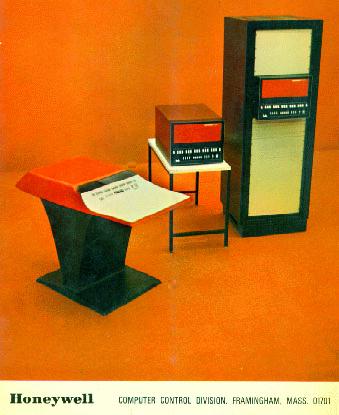
I have two unmodified Honeywell DDP-516 computers available for trade
in the Netherlands. Both were still performing their original job (in
the USA) back in 2000 and are in excellent condition.
For years I've tried to locate other DDP-516 owners, but it seems I'm
the only person left on this planet with Honeywell DDP-516s. They are
pretty interesting minicomputers with a nice story...
Contact me directly if you are interested in working something out.
Sincerely,
Erik.
> I don't believe that anyone's mentioned mercury arc rectifiers yet as
> one application of mercury (and of course fascinating to watch!).
There was a 12 phase 800KVA MAR at Droitwich but that was just a big,
black, steel tank with porcelain insulated terminals. The last 'visible'
MARs I saw were at Daventry, 6 phase 500KVA with three rectifiers per
phase. Daventry has closed and most of the original building at Droitwich
has been demolished.
I know of one site where the remaining mercury, some 10s of gallons all
in glass demijohns, was 'lost' during building work. Of course the metal
you can detect in the new building base is all steel reinforcement bars,
honest.
Lee.
>Date: Sun, 19 Mar 2006 09:21:23 -0500
>From: Mike <kenziem at sympatico.ca>
>It's a Thunderscan,
>It came with a 512 Mac with the demo tape, and reset clip, and floppies
>still in the box. It powers up OK, but after a while goes blank, a tap to
>the side restores the screen.
One of the connectors for the cable which joins the logic board to
the analog board has a bad solder joint on Pin 1. It's the
connector on the analog board. This is an extremely common problem
on the old 512 and similar Macs. There's an extra screw in the
battery compartment for five total. Once you have the case open,
just remove the cardboard cover from the analog board, identify the
pin in question and rehabilitate the solder joint.
Unfortunately, I don't know anything about the Thunderscan. I saw
them back when, but never had one.
Jeff Walther
> Had this machine dropped on me last night...
> Style: A7-311
It is a Unisys A7 series
There was just a discussion about this on the list. It should
have an A-Series CPU board in it with the PC-ish stuff handling
I/O. The system ran OS-2.
threads:
History Check -- First CMOS mainframe
a few micro-A references
The HP LX series (95/100/200/700) palmtops were probably the most successful
80186-based computers. Several million of them were sold. Relevant to the
discussion of medical equipment, there was just a discussion on the HPLX
mailing list suggesting that the HP LX200 (MS-DOS 5.0) is still being sold
as part of some piece of medical equipment, although no one there could say
for certain. It was discontinued as a separate product in 1998.
Bob
Message: 13
Date: Thu, 23 Mar 2006 09:36:42 -0800
From: "Chuck Guzis" <cclist at sydex.com>
Subject: RE: who built the first 8086/88 based puter?
To: cctalk at classiccmp.org
On 3/23/2006 at 7:43 AM Cini, Richard wrote:
>I don't know where in the overall timeline this is but wasn't the Tandy
>2000 based on the 80186? It was introduced in 11/83 and ran an OEM version
of
>DOS 2.11.
Yes, and the 80186 was a marketing disaster for any company that tried to
turn it into a PC. The integrated peripherals, while generally better than
same facilities present on the PC aren't the least compatible. The wrong
thing in a world dominated by hardware-manipulating applications, such as
games, graphics utilities, backup programs, etc. I still have the Durango
80186 IO.SYS source for MS-DOS 1.25, as well as the OEM docs for 2.0.
All of this was a shame, because an 80186-based PC offers a pretty
substantial bang for the buck;
<snip>
Hi,
I came across this link
<http://classiccmp.org/pipermail/cctalk/2001-August/177990.html> via
Google and wondered if you could help me with an article in Personal
Computer World magazine Vol. 1, No. 1 ... I think it was the editorial
at the beginning of the magazine.
The editor was warning of the beginning of a new kind of "great divide"
between those who have and know how to use the new technology and those
who don't.
I would really appreciate a scan of that article if you wouldn't mind
doing that for me.
Many thanks,
Steve
Hello,
I read the fpllowing message.
http://www.classiccmp.org/pipermail/cctalk/2003-September/028192.html
> Anyone want these two dual-processor Pentium PCI/MCA servers I have here?
> They have some sort of TP ethernet on the motherboard, and they have some
> form of wide SCSI, along with hotswap drive cages, and I have a full load
> of trays for them. All in all, pretty nice systems. They are IBM PC
> Server 320's (8640-MDV). There's still reference disk and BIOS downloads
> available for them on ftp.pc.ibm.com. I'd hate to see these go to waste,
> but I need the space.
>
> If you feel like throwing a couple of dollars at me for them, it would be
> appreciated, as I am out of work right now, but it is not required nor
> expected.
>
> Peace... Sridhar
Do you still have the server?
Hitoshi Sasaki
>From: "Roy J. Tellason" <rtellason at blazenet.net>
>
>I have a mercury-wetted relay I salvaged out of something or other. Says so
>right on it. :-) It also indicates that it should be used in one specific
>physical orientation, too.
>
>So the advantage of those is speed?
Hi
No, it is that they don't bounce and that they don't need
a minimum current to clean the contacts. They are not
any faster than others.
Some are designed for high current operation. These look
like tubes with a coil around them. No bounce means less arcing.
Dwight
As long as we're on the business of firsts, what was the first operating
system to refer to mass storage devices by single letters, starting with
"A"? Does CP/M have this distinction? ISIS, IIRC used F0: and F1: for the
floppies.
Think of all of the keystrokes saved!
Cheers,
Chuck
Hello cctalkers,
Some changes are in the air for the Computer Collector Newsletter.
First, there is a new name. CCN is now (drum roll please) ...............
Technology Rewind. Within the next day or two, our domain of
http://news.computercollector.com will forward to
http://www.technologyrewind.com and that will be our primary address. Also,
for simplicity's sake, all of my posts to cctalk will just come from my
personal email account (evan at snarc.net).
Second, there will be some changes to the format. The changes are not
final, but we're toying with a couple of ideas, such as dropping the
subscription method and becoming a news web site rather than a newsletter
per se, or perhaps following the route of a news-oriented blog.
Of course, it will continue to be cost-free, with a news focus. (Anyone
have ideas for additional resources we can provide? The only restriction is
that we won't step on the toes of established resources such as cctalk, the
VCM, etc. -- we're not going to compete against our friends.)
We've given this a lot of thought already, so we hope the changes are well
received, but we do look forward to all comments and questions.
- Evan
You call the RL0[1,2] "big fat cables" ?
Wait until you see MASSBUS cables ... :-)
- Henk, PA8PDP.
> -----Original Message-----
> From: cctalk-bounces at classiccmp.org
> [mailto:cctalk-bounces at classiccmp.org] On Behalf Of Richard
> Sent: vrijdag 24 maart 2006 1:11
> To: General Discussion: On-Topic and Off-Topic Posts
> Subject: RL01 drive connector (was: What disk is this? eBay
> #8782293215)
>
> Speaking of emulating RL0{1,2} drives, if I wanted to attach
> some sort of drive emulator to the big fat cable attached to
> the RL01 drive, where would I get specifications on the
> signals in the cable?
>
> (Yes, I'm still thinking of how to emulate expensive things
> that may die so I don't have to kill them by operating them :-).
> --
> "The Direct3D Graphics Pipeline"-- code samples, sample chapter, FAQ:
> <http://www.xmission.com/~legalize/book/>
> Pilgrimage: Utah's annual demoparty
> <http://pilgrimage.scene.org>
>
>
This message and attachment(s) are intended solely for the use of the addressee and may contain information that is privileged, confidential or otherwise exempt from disclosure under applicable law.
If you are not the intended recipient or agent thereof responsible for delivering this message to the intended recipient, you are hereby notified that any dissemination, distribution, or copying of this communication is strictly prohibited.
If you have received this communication in error, please notify the sender immediately by telephone and with a "reply" message.
Thank you for your cooperation.
Today I met up with a gentleman from Kirkland, WA (Ian Greenhoe, who knows at least one of the moderators on this list) who needed to
pare down his collection due to domestic pressure.
HE STILL HAS some stuff, complete HP/Apollo 9000/700 systems with monitors/keyboards if anyone is interested - give me an e-mail and I can pass it on
Anyway, I got a bunch of Sun stuff, including a Sun 3/60 with mono monitor, keyboard, etc. just needs a monitor cable - contact me if you're interested I can't keep it.
One of the machines happened to be a ComputerVision CADDstation (Sun 3/160 [looks like], with several customish looking cards and fancy graphics). I think this came up
recently, so when I know a bit more I can post it.
The BIG good news is a box of disttapes (~60, haven't been through them yet but it includes ComputerVision stuff, SunOS 3.2 & some Sun unbundled stuff)
and 2 boxes of docs. I'm trying to figure out best way to get them scanned, need to inventory them, etc. I only have 2 boxes now, but will have the third.
Anyway, I need homes for (1) almost complete Sun 3/60 with monitor and keyboard, nice condition but one of the VME ejectors is broken.
and
(1) Siilicon Graphics Indy R5000SC/150 XL-8
If anyone wants the HP 9000/700s I can forward an E-mail
things that might be of interest, but might not:
1 PeeCee AT- class full tower case
all in the Seatle area
Does anyone have any experience with c64reloaded.com? I'm curious as
they seem to be the only US based seller that has MMC64's.
Zane
--
--
| Zane H. Healy | UNIX Systems Administrator |
| healyzh at aracnet.com (primary) | OpenVMS Enthusiast |
| MONK::HEALYZH (DECnet) | Classic Computer Collector |
+----------------------------------+----------------------------+
| Empire of the Petal Throne and Traveller Role Playing, |
| PDP-10 Emulation and Zane's Computer Museum. |
| http://www.aracnet.com/~healyzh/ |
> Speaking of emulating RL0{1,2} drives, if I wanted to attach some
sort
> of drive emulator to the big fat cable attached to the RL01 drive,
> where would I get specifications on the signals in the cable?
The controller and drive maintenance manuals, and schematics.
There isn't a spec that I know of that ever made it outside of DEC.
From memory, the control interface is synchronous serial data.
This was on comp.os.vms in case anyone here doesn't read it :
We have some old uVAXen that have an appointment with a trash compactor
unless someone can come and take them. Today is March 23, 2006, and
the uVAXen have only a few days left. The address is Nazareth, PA,
18064. Call 610-746-7426 and ask for William or Frank or write
williamba... at hotmail.com
William
Hi everyone,
I just made a frappr map for PDP11 owners. Put your machines in the
shoutout, and we can see where everyone is and what we have ;)
The URL is: http://www.frappr.com/pdp11owners
See you there!
Julian
> From: Dave Dunfield
> Reply To: General Discussion: On-Topic and Off-Topic Posts
> Sent: Wednesday, March 22, 2006 7:12 AM
> To: General Discussion: On-Topic and Off-Topic Posts
> Subject: Re: ImageDisk / PC FDCs & single-density
>
> TO ALL:
> Does anyone else have an Adaptec 1522A controller that you can try with my
> latest version of ImageDisk to see if you can read/write single-density
disks?
> I don't have this controller to test with, and I would like to confirm
that the
> problem is generic and not related to the one particular unit in question.
This may or may not help, but I have used a 1542c with imagedisk to create
mixed density floppies. Others have then used these to successfully create
new images.
I have at least 3 controllers that will work at SD with imagedisk. I have
tried ID in single density with about 15 different floppy controllers, and
have one more to test. Is there a FAQ about what controllers will write SD
images? If not, I'd gladly maintain a list.
Kelly
I could also use an optional lower tray (that sits underneath the printer)
for a Laserjet 4. I've you've got one, shoot me an E-mail.
Bob_lafleur at technologist.com
I'm looking for a duplex unit that works with an HP Laserjet 4 Plus or 4M
(HP C3157A). If anyone's got a dead Laserjet 4 with a duplex unit that
they're willing to part with, please E-mail me off-list. Thanks.
Bob_lafleur at technologist.com
Does anyone know what it is or who made it? Google isn't yielding
anything helpful here...
--
"The Direct3D Graphics Pipeline"-- code samples, sample chapter, FAQ:
<http://www.xmission.com/~legalize/book/>
Pilgrimage: Utah's annual demoparty
<http://pilgrimage.scene.org>
My memory is failing again. It's been maybe 15 years since I last fooled
with QIC02-interfaced drives and I'm trying to avoid doing homework that
I've probably done years ago.
I've got two QIC02 drive setups. One's a Tandberg TDC3650 drive connected
to a Alliance Technology ISA half-card.
The other's a Cipher CP125BA connected to a Wangtek 5150.
I'm guessing that the Wangtek card supports hardware compression (it's got
an 8085 on it), while the Alliance looks to be pretty minimalist.
So here's what I'm wondering. Without preferring any particular data
format (e.g. tar), what x86 platform has the best support for these things?
Linux? Xenix? MS-DOS? OS/2? Windows?
I've got the distinct feeling that I've been here before, but I can't
recall what I discovered.
Can anyone help me slice through the mental fog?
Thanks,
Chuck
WOW! What a unique unit.
Lot# 585
Gerber Scientific Model EF7.685 Line Tracing & Digitizing Machine,
Serial No. NONE,May 1980. Thee machine package consists of four
components. 1) Large-size 188" long by 89" wide plotter table. (1)
4-bay equipment rack. (1) Operator control console (with ancient CRT
terminals).(4)Cabinets containing spare parts. NOTE:The machine is
currently installed in a raised-floor computer room in the Bldg. The
exit path requires negotiating some tight turns to get the table out
of the room and into the main hallway for removal.
Location: Hazelwood, MO
<http://www.dovebid.com/assets/display.asp?ItemID=tbd175048>
current bid $200, ends in 1h31m
Includes ADM 3A(?) terminal!
--
"The Direct3D Graphics Pipeline"-- code samples, sample chapter, FAQ:
<http://www.xmission.com/~legalize/book/>
Pilgrimage: Utah's annual demoparty
<http://pilgrimage.scene.org>
This auction is going on right now with lots of individual boards in
the asset catalog. I didn't notice it until now, but many items are
expiring in the next couple of hours. Boards are things like:
- Motorola VME boards
- Tektronix logic analyzer boards
- older IBM PC boards (all ISA so far)
- Test equipment modules
- Data I/O programming modules
- Data acquisition boards
You'll have to browse individual lots to see all the stuff that's in
there.
A bunch have opening bids of $5, which is the lowest opening I've seen on
dovebid (most stuff opens at $50).
As always, caveat emptor, but if you collect design, test or
programming equipment, this looks like a good auction.
--
"The Direct3D Graphics Pipeline"-- code samples, sample chapter, FAQ:
<http://www.xmission.com/~legalize/book/>
Pilgrimage: Utah's annual demoparty
<http://pilgrimage.scene.org>
Do not contact me, this is from:
Bill Gronberg - wildwillieg at msn.com
"I have a CPU side panel tag for an IBM 3168, a top
bar for an IBM 370, a '70s floor puller, a computer
room self contained temperature gauge with a box of
the circular paper discs.
Lastly a never used (still in the sealed plastic bag
in the original box)-from a 1961 GE210 computer-a
3/4", 7 track, pre-blocked tape weighing in at 9
pounds in the canister. There is also an extra
canister."
__________________________________________________
Do You Yahoo!?
Tired of spam? Yahoo! Mail has the best spam protection around
http://mail.yahoo.com
We purchased a new CT scanner to match the one we currently have. The original has a SGI computer inside, running some type of UNIX, the newer one came with some type of Windows.
How about a little radiation controlled by your computer?
Mike
At 05:58 AM 3/24/06 +0800, you wrote:
>On 3/24/06, Jochen Kunz <jkunz at unixag-kl.fh-kl.de> wrote:
>> On Thu, 23 Mar 2006 11:05:09 -0800
>> jim stephens <jwstephens at msm.umr.edu> wrote:
>>
>> > there was a really nice little SMD 5 1/4" drive that came out that we
>> > had for a while too, which name escapes me too.
>> I have a 1 GB SMD 5 1/4" drive from Seagate. I should get it hooked up
>> to my PDP-11/73. But, on the other side, the 9" NEC SMD disk is so much
>> nicer. Especially the sound. When the heads move it sounds like someone
>> is hiting the platers with a hamer. The backstroke from the moving head
>> assembly is stong enough to get a DEC BA123 moving.
>> (Disk + BA123 = 100 kg) :-)
>> --
>>
>That's it! I *MUST* get a 9" disk!! :-)
>(just to see a BA123 "walk") :-)
>
>Heck why stop at 9"?
>ooh now I remember, shipping and electricity :-{
But you forgot about the free heating! :-)
Joe
The 7030/3CT (why do you suppose they recycled 7030? shouldn't it have been retired after Stretch?) is even ummm pokey with AIX 5.1
My 012/370 plods along fairly well with 4.3.3, though. I went into AIX with a bit of trepidation, having heard the BSDers whisper that it
really stood for Aix Isn't uniX, and that it was mostly "UNIX compatible".
4.3 (and perhaps the rest of the 4.x series) is pretty close, except for some weirdness in the /etc files (for which smit is a godsend
when you first start out). After banging my head against it a while, I have grown to admire it. I should get a faster machine, however.
(interesting how RS6Ks and Alphas seem to hold their value much better than SGI/Sun/HPPAs)
> Keep mercury away from structural aluminum, stuff eats it alive.
As does lead, so no writing on aluminium with real lead pencils.
> What do people and or companies do with the stuff anymore?
I use it to stop people casually stealing my big Marmite jar, it's
just over 400cc in volume but now weighs over 5Kg.
Lee.
FWIW
I dug these out the other day. Two of them are Programmer Vs and one is
a Programmer Satellite. I took some pictures of them and posted them at
<http://www.classiccmp.org/hp/Data%20IO%205/>. Note that the two
Programmer Vs have different keypads!
Anybody know what the story on the Programmer Satellite is?
Joe
>> What's so bad about that? Mercury is about as dangerous as lead.
> But organic mercury salts are much more dangerous,
As are organic lead salts, the native metal though is most dangerous if
you drop it on an extremity.
> and there are definitely people out there that are stupid enough to
> generate them.
For them we have natural selection. 8^)=
> Didn't we have this discussion not too long ago?
Not me, unless decades of soldering has done for my memory.
Lee.
> -----Original Message-----
> From: Patrick Finnegan [mailto:pat at computer-refuge.org]
> Sent: Wednesday, March 22, 2006 9:04 PM
> On Wed, Mar 22, 2006 at 07:57:30PM -0500, Kelly Leavitt wrote:
> > > From: Dave Dunfield [mailto:dave06a at dunfield.com]
> > > Sent: Wednesday, March 22, 2006 2:54 PM
> >
> > > > This may or may not help, but I have used a 1542c with
> > > > imagedisk to create mixed density floppies. Others have
> > > > then used these to successfully create new images.
> > > >
> > >
> > > Interesting - I have a 1542 which does not work with
> > > ImageDisk or TeleDisk/TESTSD
> > > at single-density - the user reporting the problems also has
> > > a 1542 which does not
> > > work with any of the three programs ... Mine is a '1542CF' -
> > > I assumed the 'F' ment
> > > "with floppy" ... Is this the same as yours?
> >
> >
> > Sorry, my confusion. I have used an Adaptec '1542B' (no F)
> bios copyright is
> > 1988 (checksum BB00) with mcode copyright 1990 (checksum
> F3F7). I have read
> > and written mixed density images using the floppy portion of this
> > controller. This is a 16-bit ISA SCSI controller with a big 50 pin
> > centronics type connector on the bracket.
>
> It might be more useful to know what kind of floppy chip it
> uses, rather
> than what BIOS/uCode it has installed..
>
National Semiconductor DP8473
52 pin plcc
Theoretically supports 4 drives.
Datasheet:
http://www.ortodoxism.ro/datasheets/nationalsemiconductor/DS009384.PDF
Kelly
> From: Dave Dunfield [mailto:dave06a at dunfield.com]
> Sent: Wednesday, March 22, 2006 2:54 PM
> > This may or may not help, but I have used a 1542c with
> > imagedisk to create mixed density floppies. Others have
> > then used these to successfully create new images.
> >
>
> Interesting - I have a 1542 which does not work with
> ImageDisk or TeleDisk/TESTSD
> at single-density - the user reporting the problems also has
> a 1542 which does not
> work with any of the three programs ... Mine is a '1542CF' -
> I assumed the 'F' ment
> "with floppy" ... Is this the same as yours?
Sorry, my confusion. I have used an Adaptec '1542B' (no F) bios copyright is
1988 (checksum BB00) with mcode copyright 1990 (checksum F3F7). I have read
and written mixed density images using the floppy portion of this
controller. This is a 16-bit ISA SCSI controller with a big 50 pin
centronics type connector on the bracket.
>
> > I have at least 3 controllers that will work at SD with
> imagedisk. I have
> > tried ID in single density with about 15 different floppy
> controllers, and
> > have one more to test. Is there a FAQ about what
> controllers will write SD
> > images? If not, I'd gladly maintain a list.
>
> I've found 6-7 that work OK - and I've been adding them to
> the documentaion.
> Feedback on what other controllers do and don't work would be
> appreciated,
> however as noted here - some controllers seem to work for
> some people and
> not others (more likely, there are "minor" version variations
> in the controller).
>
Here is what has worked for me:
Adaptec 1542B (as primary and secondary) BIOS: BB00 MCODE: F3F7
LCS-6625 REV:A2 copyright 1992 - This is a german made 4 floppy controller
that autmatically works under 6.22 to give you 4 floppy drives. Tthe second
two use the "standard" secondary floppy port and come up as E and F for me.
C & D are hard drives and G is the CD-ROM drive in this machine. Works the
same under Linux. I also have a scan of the manual that the maufacturer was
kind enough to send along (just last year).
ACER MIO-400KF - works as primary only. The jumper settings for this are
available in TheRef99.
> So far - every controller I've tried that passes Chuck's
> "testsd" program
> also works for me with ImageDisk at single-density - the case
> I have been
> discussing is the only one I am aware of where this has not
> been the case.
>
I have one more to test. Are the above notes enough for you to go on? Do you
want me to try "testsd" on any of them?
Kelly
Richard asks:
So what do hospitals do with all that gear that they've had in
pristine lab conditions for years when they upgrade and no longer need
it?
I've never seen any sort of surplus venue for this sort of thing.
--
I can't speak for all of them, but I do have a cousin who has made a decent
living for 30 years by refurbing this equipment and reselling to smaller
hospitals or even off shore. He has built up a network of customers in the
Pacific Northwest that contacts him any time something becomes surplus.
His specialty is X-Ray and MRI, but any kind of medical electronics is fair
game. The cost of medical equipment is such that even 20 year old
electronics is state of the art to smaller, isolated hospitals.
Billy
For all Apple II questions, start with the FAQ:
http://home.swbell.net/rubywand/A2FAQs1START.html
> What are the various options available for
> getting disk images onto media that an Apple ][
> can read?
What disk images are you starting with? .SHK,
.SDK, .DSK, .PO, .DO, .IMG, .HDV, .NIB, .2MG, or
other disk image file?
What hardware are you starting with? Apple II,
II+, IIe, IIc, IIgs? PC? Macintosh?
For 5.25" disks, the simplest and cheapest setup
is a real Apple II to write the disk. You can
get the data there via the game controller port,
a serial port, or over a network. Hardware to
write Apple II disks using a PC exists but is
rare. The Mac hardware is an Apple IIe card.
For 3.5" disks, the rules are different.
Another way is a compact flash drive. You can
remove the CF card and plug it into a PC to
transfer files.
--
Paul R. Santa-Maria
Monroe, Michigan USA
On 3/22/06, Zane H. Healy <healyzh at aracnet.com> wrote:
> Are you sure you have the part number correct? Are you sure that
> isn't a PCXGA-AV?
No. It's staring at me right now.
PCXAG-AV
155-0189-20 2360268 RevC
ACCELGRAPHICS INC. (c)1996 FALCON BOARD
I think it's a DEC OEM from AccelGraphics Inc.
> 4a. What DEC/Compaq video cards for the Alpha aren't supported by OpenVMS?
>
> PBXGA-JA DEC864
> PBXGI-AA PowerStorm 4D40T
> PBXGI-AB PowerStorm 4D50T
> PBXGI-AD PowerStorm 4D51T
> PBXGI-AC PowerStorm 4D60T
>
Hey! If the above isn't supported by OVMS, then what OS supports these? Tru64?
Especially the high-end PowerStorms...
I have this LOOONG PCI graphics card circa 1996 (phew...just made it
to be on-topic :-))
with DEC part number PCXAG-AV. It has a acceleragraphics sticker on
its main GPU.
Google says this was an option for the DEC Personal Workstations
series... this means only on Windows NT (the 64bit version)!! *sigh*
However, being an optimistic person, I'm gonna ask:
Are there any other OSes out that can use this card (the ex-DECcie who
gave me this told me that this was an incredibly expensive card when
bought new)? Can it use in a Intel box or do I have to stick to an
Alpha box?
A search for manual turns up zilch..
I'd be happy to run in on any other OS than WNT; i.e. VMS, Tru64, DU,
OSF, *BSD, even Linux.
Just happen to have a copy of "The Selectric Interface" in front of
me; $5 &S in case anyone wants it. Note that it's _not_ about converting
a normal Selectric to an I/O device, but about interfacing a 2740, 2980 &
Dura models, which are already I/O devices (albeit with 24, 48, or 115V
actuators) to an ASCII parallel port.
Kilobaud had a pair of articles (Dec/79 & Jan/80), but that too was about
converting an I/O unit (specifically, from a BCD (6 bit) code machine to
Correspondence code). There were some other codes in use as well in
other models; I had a couple and never could find a correct ball for them.
And yes, there were certainly many Rube Goldberg approaches to interfacing
a Selectric; I even recall seeing one of the solenoids-over-the-keyboard ones
in action way back when...
That was probably my post you referred to earlier about the Redactron mag
card system; unfortunately the typewriter is long gone, and the mag card drives
are spoken for. Redactron used a Selectric mechanism with a TTL level
interface already built in, useful in case someone ever runs across one.
While we're on the topic, a while back I sent a Selectric service manual to
someone who sometimes lurks on this list and he'd promised to make it available
on the Web (hint, hint... ;-)
mike
-----------Original message:
Message: 30
Date: Tue, 21 Mar 2006 16:14:50 -0800
From: "Chuck Guzis" <cclist at sydex.com>
Subject: RE: Where have all the Selectrics gone?
To: cctalk at classiccmp.org
Message-ID: <200603211614500612.2FE3FE84 at 10.0.0.252>
Content-Type: text/plain; charset="ISO-8859-1"
Kilobaud is a great guess!
I opened up the June 1983 Issue of Microcomputing and, on, page 138,
there's an ad for a book called "The Selectric Interface":. Quoting:
--------------------------------------------
Daisy wheel quality without daisy wheel expense.
You need the quality print that a daisy wheel printer provides but the
thought of buying one makes your wallet wilt. The Selectric(tm) Interface,
a step-by-step guide to interfacing an IBM Selectric I/O writer to your
microcomputer.will give you that quality for a fraction of the price.
George Young, co-author of Microcomputing magazine's "Kilobaud Klassroom"
series, offers a low-cost alternative to buying a daisy-wheel printer.
<snip>
ISBN 0-88006-051-4 $12.97 from Wayne Green, Inc.
-------------------------------------------
So we know that I/O Selectrics were still plentiful enough in 1983 to
warrant publishing a book on interfacing them.
Cheers,
Chuck
Wang Laboratories had their own modifications that they did to standard
Selectric Type I electric typewriters that allowed them to be automated.
The automation was very complete, including the ability to set/clear
tabs, and turn the unit on and off.
The modifications involved making the cabinet "deeper", allowing room in
the bottom of the machine for the solenoids and switches that provided
the ability to actuate and report status. A "spacer" wraparound filled
the gap between the upper cabinet and the base.
The Model 601/701 was a standalone "deep" Selectric that would interface
to Wang 600 or 700-series calculators. These were output-only devices.
The Model 602/702 had further modifications which involved modifying the
space mechanism so that spaces were "microspaces", and a stepper motor
was connected to the platen to allow forward and reverse indexing in
small steps, along with the same modifications made to the 601/701,
which allowed the device to be used as a plotter, that could also do
full formatted annotation and text output. Again, these were
output-only devices.
There was also the Model 611/711 I/O writer. This was a further
modified Selectric Type I that had all of the modifications of the
601/701 Output Writers, but also allowed keypresses on the keyboard to
be encoded into signals which could be communicated to the connected
calculator, allowing fully interactive I/O for the calculator.
Lastly, there was a "portable" version of the 601/701 and 602/702 Output
Writers that provided a padded, shipping-proof carrying case that
allowed the devices to be shipped around easily and safely.
Some information on these can be found at the following links:
http://pail.bensene.com/a-wang701.htmlhttp://pail.bensene.com/a-wang711.htmlhttp://pail.bensene.com/m-wang711.htmlhttp://pail.bensene.com/a-wang702.html
I have an operational Wang 701 Output Writer, and a Wang 711 I/O Writer.
Keeping these machines operational is a bit of a challenge, as they are
quite temperamental keeping the linkages all in adjustment. My guess is
that Wang service technicians spent a lot of time adjusting these
instruments. They operate at a quoted maximum rate of 15 characters per
second, but more practically, it's somewhere around 13 CPS driven by a
Wang 720C calculator.
I found a local guy who knows Selectrics inside and out, and had him do
a complete service on the Selectric that makes up the 701 Output Writer,
and he said that in "those days", he serviced a lot of the Wang-modified
devices. He also said that Anderson-Jacobsen also had a similar
(perhaps OEM'd from Wang) modified Selectric that could be used as a
computer console or terminal.
Rick Bensene
The Old Calculator Web Museum
http://oldcalculatormuseum.com
Beavercreek, Oregon
Hey Guys,
This afternoon I'm cleaning up a Sony GDM-1602 monitor. I have the case
disassembled, and have washed all but the largest pieces. The base is a
very nice rotating and tilting design. The rotation taken place because
the plastic tilting assembly rides on a flat sheet metal base. The
contact area is a circular plastic ridge that was lubed with an
clear-ish amber grease.
What kind of grease should I use to re-lube this? I want to provide
adequate lubrication between the plastic and steel, but I don't want
something that will hurt the plastic. I was thinking about using
dielectric grease, since it shouldn't harm plastic, won't melt out, and
isn't too messy. However, it's designed as a moisture barrier, not
really as a lubricant, I believe. Thoughts anyone?
Thanks,
Chad Fernandez
Michigan, USA
I have a couple of Mitsubishi P60W Video printers (anybody want one?)
and they have a remote jack (as well as a print button of course), so
that'd be one way of printing from the Endoscope itself. Can't see much
use for an embedded print signal though; seems to me that could cause
all kinds of problems.
mike
--------------Original message:
From: jim stephens <jwstephens at msm.umr.edu>
Subject: Re: OT: video signal question
>Bert Thomas wrote:
>>Hi,
>>
>> Can anyone tell me how the trigger signal is
>>embedded in the video signal?
>>
>>
>The Sony units I have seen, are have the Sony Mavica name, and have
>a remote control bus that is used to trigger the prints. I would look for
>a control line to the printer, from the video source, unless they had
>a very specialized printer of some sort. There is the problem of having
>the print signal embedded in your video format, if you had several printers
>attached, having them all print.
My Trendata 1000 Selectric terminal went in a garage sale years ago. Here is
a picture of me at the terminal.
http://www.swtpc.com/mholley/MySystem/MySystemPhoto.htm
A local computer store near Seattle sold these for about $900 in 1978.
Several people in the Northwest Computer Society got them. We had low cost
access to time-sharing on a PDP-11/70 at night that supported the terminal.
I still have the documents and software if you want to hook one up to a
SWTPC 6800 computer.
Here is a photo from the IBM 2741 Communication Terminal manual.
http://www.swtpc.com/mholley/MySystem/IBM_2741.jpg
Michael Holley
www.swtpc.com/mholley
Kilobaud is probably a good guess.
I do remember that the kit I saw had a table in PROM that looked up
a "tilt" and "rotation" for the Selectric Ball.
It was clunky, but a bit more elegant than "104 solenoids".
-----Original Message-----
From: cctalk-bounces at classiccmp.org
[mailto:cctalk-bounces at classiccmp.org]On Behalf Of Fred Cisin
Sent: Tuesday, March 21, 2006 4:43 PM
To: General Discussion: On-Topic and Off-Topic Posts
Subject: RE: Where have all the Selectrics gone?
On Tue, 21 Mar 2006, Kapteyn, Rob wrote:
> It would be cool ...
> ... but can't recall what publication it was in ...
> Byte, Dr. Dobbs, Computer Notes ???
> I suspect that someone else on this list might have seen it...
I think that it may have been Kilobaud.
There was an outfit in Walnut Creek that sold a conversion kit that
mounted under the Selectric. Fairly complex, and required tinkering to
keep it running.
There were also a number of units that consisted of boxes full of
solenoids that sat on top of the keyboard, such as KGS80 and Rochester
Dynatyper.
At the West Coast Computer Faire, around about the 5th or 6th one, there
was an outfit demo'ing a unit with lots of pulleys and fishing line, that
was printing on a MANUAL typewriter.
It would be cool ...
... but can't recall what publication it was in ...
Byte, Dr. Dobbs, Computer Notes ???
I suspect that someone else on this list might have seen it...
-----Original Message-----
From: cctalk-bounces at classiccmp.org
[mailto:cctalk-bounces at classiccmp.org]On Behalf Of Richard
Sent: Tuesday, March 21, 2006 1:53 PM
To: General Discussion: On-Topic and Off-Topic Posts
Subject: Re: Where have all the Selectrics gone?
In article <B40C900E19E7B04E832685A1E13E10EF1378A0F6 at MSXMAIL.cboent.cboe.com>,
"Kapteyn, Rob" <kapteynr at cboe.com> writes:
> There was also an article in a hobbyist magazine explaining how to do
> a homebrew conversion of a Selectric typewriter to make a computer printer.
Given that I now see Selectrics in thrift stores fairly often, that
would be a cool article to see. Do you have a copy still?
--
"The Direct3D Graphics Pipeline"-- code samples, sample chapter, FAQ:
<http://www.xmission.com/~legalize/book/>
Pilgrimage: Utah's annual demoparty
<http://pilgrimage.scene.org>
On recordable CDs, the data is on the label side and scratches can remove
the data. On DVDs, the data is inside the media, between two layers of
plastic. Scratches cannot permanently destroy the data proper as they can
with CDs. The risk is that DVDs can delaminate, which will destroy them.
Also, air getting in between the two plastic layers laminated together (with
the data between them) can destroy the data by oxidizing the dye layer.
This form of failure occurs from the outside in. A logical suggestion that
is often made is to not use the last 10% to 20% of the media to increase
it's resistance to this form of deterioration. Also, it is critical to
avoid any storage or handling that flexes the media even slightly.
I don't buy the "spiral track" argument that was made against optical media.
These are "random access" media, not sequential access. If you don't
believe it, put a full data CD or DVD into your drive and read any file from
the CD. You can hear the "seeking", and the time required to get to a file
is clearly nothing like the time that would be required to read from the
start of the disc to the selected file. The condition of the middle of the
disc has no bearing on the readability of data at the end of the disc
unless, on a particular disc, a directory or some other critical data
structure just happens to fall in a defective area.
I think that most of the problems that we see are really with bad burners,
and this can mean marginally bad burners (no indication of a problem, but
the laser is weak and the media is not heated to the proper temperature, and
may subsequently "fade" as a consequence). My own experience (I repair
computers and see more drives than most people) have convinced me to stay
with Samsung for CDs and Pioneer for DVDs (although Pioneer had one bad
model, the "09's").
Other than that, I'm convinced that well burned optical media is the best
storage media we have ever had, but I think that the media is the very least
of the issues. Burning, storage and handling, I think, are every bit as
important as the media itself.
Two very important rules: NEVER use "RW" media of any kind, and never use
"packet writing" to burn your media (e.g. stick with ISO-compatible
formats).
Is there any interest in old literature? I went into a file cabinet last
night looking for something else and ran across a bit. If it is of interest,
I'll do some digging and see what all else I have that may be of interest,
but here's one example:
In a folder labeled "Digital Equipment Corporation" :-)
A brochure labeled "PDP-11 Microcomputer Members of the PDP-11 Family"
A smallish brochure "Introducing Fierce Competition for 8-Bit SBC's" with the
inside saying"Digital's new 16-bit FALCON" and an actual-size picture of the
card.
A spec sheet "Falcon SBC=11/21 Single Board Computer"
MRV11 Option Bulletin: "EPROM/PROM/ROM Module"
PB11 Option Bulletin: "Universal PROM Programmer"
Brochure: "Microcomputer Products Selection Guide" including a very nice table
"Backplane Selector"
Brochure: "Announcing a new dimension in microcomputers: LSI-11/2"
Anybody want this stuff? Shall I keep digging?
--
Member of the toughest, meanest, deadliest, most unrelenting -- and
ablest -- form of life in this section of space, a critter that can
be killed but can't be tamed. --Robert A. Heinlein, "The Puppet Masters"
-
Information is more dangerous than cannon to a society ruled by lies. --James
M Dakin
Hi
I have Timeworks Data Manager vs 1.1 for Atari.
I need to convert files from this format into files which can be manipulated
using software available for Mac or PC.
Thanks for your help.
Brenton White. Sydney Australia
I have a Hazeltine 1420 in very good cosmetic condition, but it does not
power up. I have a working one and little desire to spend time to fix this
one.
I'd rather this not go to the dumpster... anyone want it for the cost of
shipping?
Jay
I'm snipping this to just a bit near the beginning that I think may be of some
interest to folks in here:
---------- Forwarded Message ----------
Subject: The Embedded Muse 127
Date: Tuesday 21 March 2006 04:42 pm
From: Jack Ganssle <jack at ganssle.com>
To: embedded at ganssle.com
The Embedded Muse
---------------------------------------------------------------
Embedded Muse 127 Copyright 2006 TGG March 21, 2006
---------------------------------------------------------------
You may redistribute this newsletter for noncommercial purposes. For
commercial use contact info at ganssle.com.
EDITOR: Jack Ganssle, jack at ganssle.com
CONTENTS:
- Editor's Notes
- Test Driven Development
- Yet More on Tools
- Jobs!
- Joke for the Week
- About The Embedded Muse
Editor's Notes
--------------
<...>
This Computerworld story
(http://www.computerworld.com/hardwaretopics/hardware/story/0,10801,108568,00
.html?source=x10 ) is an interview with J. Presper Eckert about the birth of
Eniac.
Fascinating stuff for computer history buffs. The article's author is
a professor at the University of the Virgin Islands. now that's a job I want!
<...>
--
Member of the toughest, meanest, deadliest, most unrelenting -- and
ablest -- form of life in this section of space, a critter that can
be killed but can't be tamed. --Robert A. Heinlein, "The Puppet Masters"
-
Information is more dangerous than cannon to a society ruled by lies. --James
M Dakin