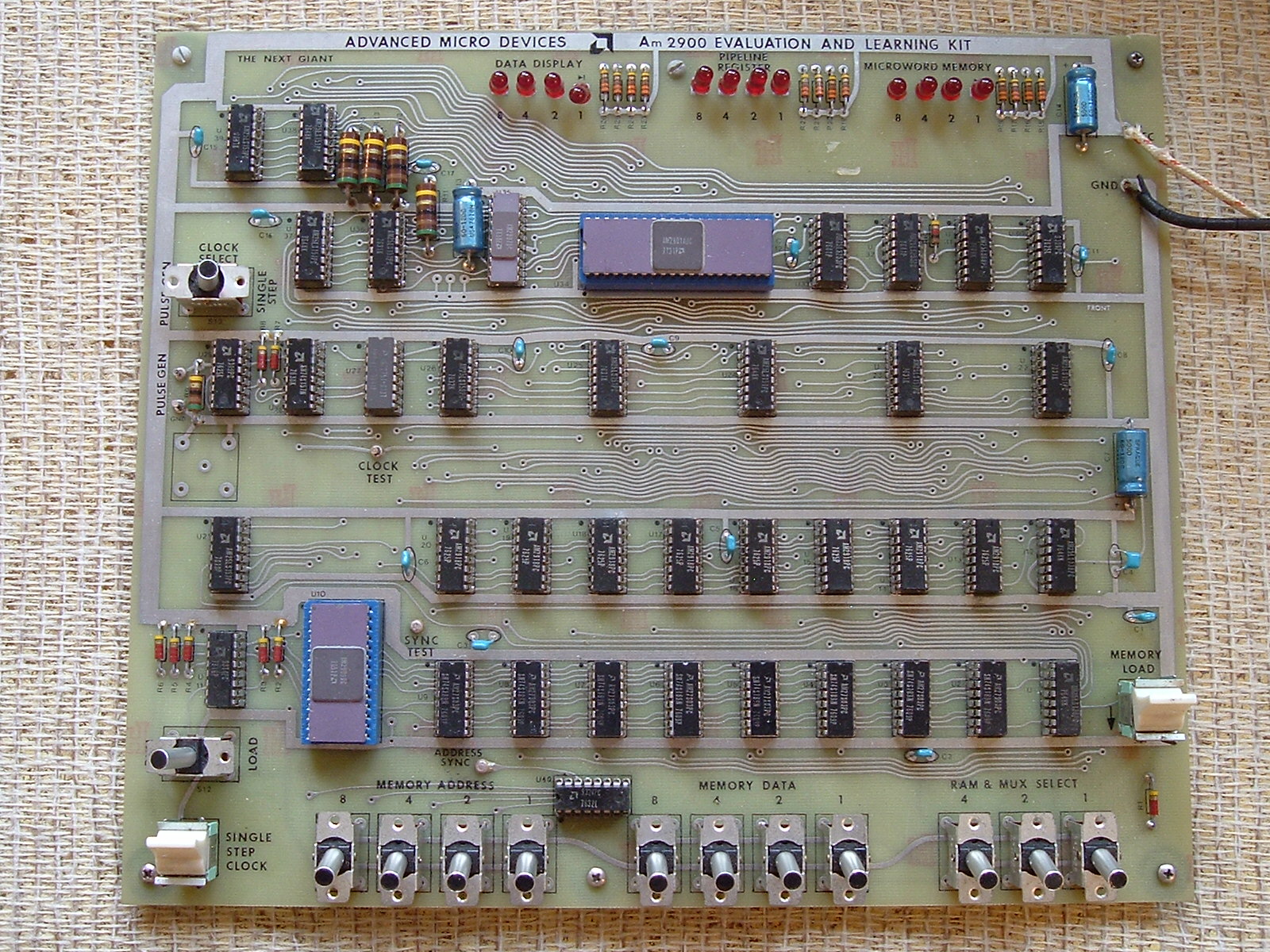
A momentus event happened 40 years ago around this time, July 1975,
the world's first computer store opened in West Los Angeles, called
Arrow Head Computer Store, tag-lined, 'The Computer Store'. It was
opened by Dick Heiser. How time has flown by!
Murray :)
I have the following Sun hardware which I?d like to find a good home for:
Sparc 2
Sparc Classic
An Ultra 10 tower
CRT
A couple of external hard disks, CD drives, and tape drive
A Sun motherboard of unknown type
A few mice/keyboards
A box of software
The Sparc 2, classic, and Ultra 10 towers all worked the last time I used them.
Any interested takers, please let me know. I?d prefer that someone take it all.
I live in Hillsboro, OR and would prefer not to ship anything.
Thanks,
Corey J. Anderson
As Fred Cisin writes:
"Yes, as usual, all such claims are meaningless without term definitions.
What Murray was referring to was arguably the first PERSONAL computer
store, and run as a retail storefront.
IBM did do some retail sales, although they might not have called it
"retail", out of their building.
Even "first" and "store" could use some restrictive definition:
Do sales out of a living room count?
garage?
corner of another kind of store?
(there already seems to be an exclusion of mail-order)
If a grocery store clears space in an aisle does that count?
Did Ed Roberts have a front counter, and handle walk-in?
Assembled working systems? or do kits count?
Signing lease?
Acquiring retail inventory?
Opening of doors to the public?
First retail sale?
First Order? or
First Delivery?"
****************************************
What I was attempting to say in my post was that the first computer
store was a retail outlet that sold MICROCOMPUTERS, and/or PERSONAL
computers and/or SMALL computers all we could carry around without
doing physical detriment to one?s self.[I shopped at Canada's first
computer store on 44 Eglinton West, Toronto, and to this day I'm not
sure of the name or date it started] I realize there?s many a
definition of what one could call a computer store but I would
describe it as a ?unique? place that sold computers exculsively as
I?ve described herein.
We?re talking only a limited number of machines available as of
mid-1975. (Please refer to my book: A Historical Research Guide to the
Microcomputer: Small Computers of a Bygone Era, p. 43.) Prior, one had
mail-order option only or as major computer corporations, IBM, DEC,
etc., selling ?computers? or computer parts/peripherals as a retail
operation in name only as Fred describes above. Hobbyists as far as I
know didn?t buy from IBM or DEC(well, maybe rich ones bought their
mini-computers) and when computer stores opened hobbyists had a
hand-holding-entity to further their interest in a new industry. This
changed somewhat when Tandy(Radio Shack), et al. came on the scene.
Happy computing.
Murray :)
That does sound like a MITS serial no. The K is for Kit as opposed to factory assembled.
"drlegendre ." <drlegendre at gmail.com> wrote:
>What's the significance of "3462K", as is hand-written on the 8080 CPU
>board?
>
>Is that a serial?
>
>On Sat, Jul 25, 2015 at 1:29 PM, Brent Hilpert <hilpert at cs.ubc.ca> wrote:
>
>> On 2015-Jul-25, at 8:33 AM, Bill Sudbrink wrote:
>> > Dwight wrote:
>> >> Dave, you were going to tell us where you found it?
>> >> Dwight
>> >
>> > Probably in Larry Niven's Altair?
>>
>> Indeed, it's in one of his flickr photos of the LN Altair.
>>
>> https://www.flickr.com/photos/32548582 at N02/sets/72157653950476154/with/19938469936/
>>
>>
Hey Guys, Looking for an XT Compatible Keyboard for this Commodore Colt
Let me know what you have. Ive got lots of trading fotter as well. Or cash
Thanks
Steve
Just tested the C16, Its free to anyone who wants it and can fix it.
Just pay shipping, Or if you are attending VCFMW I can put it in the
pile of stuff to come.
Some progress on the PDP-12. We borrowed a TU56 tape head from the TU56 in
the warehouse and replaced the broken right head. We reran ran
MAINDEC-12-D3AE-PB PDP-12 TAPE CONTROL TEST, PART 1 OF 2. The diag runs OK,
so at least the timing track in the borrowed tape head is OK.
We reran MAINDEC-12-D3FB-D Tape Data Test. This diag searches for the block
number, but rocks the tape back and forth after finding the block. If you
put the tape a long way from the beginning of the tape the diag will move
the tape in the correct direction. We connected Warren's logic analyzer to
the data signals that from the tape heads and the register outputs that
have the current block number.
It looks like there are glitches on Data Track 1. We swapped the G882
modules in F07 and F09 for tracks D1 and D3. D1 looks much better Swaped
the G882 modules back to the original slots and both D1 and D3 look OK.
Maybe just a bad connection between the G882 module's gold fingers and the
backplane's tin connector contacts. Now it looks like the current block
number in the tape controller logic is reasonable, and it looks like it can
find blocks on the tape.
The Tape Data Testdiag still does not work, so next week we debug the write
& read logic in the LINCtape controller.
--
Michael Thompson
On 2015-Jul-25, at 8:33 AM, Bill Sudbrink wrote:
> Dwight wrote:
>> Dave, you were going to tell us where you found it?
>> Dwight
>
> Probably in Larry Niven's Altair?
Indeed, it's in one of his flickr photos of the LN Altair.
https://www.flickr.com/photos/32548582 at N02/sets/72157653950476154/with/19938469936/
A colleague was adamant that the Apple LaserWriter worked with the Apple Lisa; my counter was I thought he was likely confusing his memory with the Mac XL which via Macworks and LocalTalk could use the LaserWriter drivers to print although more slowly due to the 3MHz speed difference (Mac XL at 5MHz, Macintosh Plus at 8Mhz).
I found some evidence in InfoWorld that states that the LaserWriter would not be supported on Lisa Office System 7/7.
https://books.google.com.au/books?id=6i4EAAAAMBAJ&lpg=PA13&ots=iH8F7zeaO_&d…
short version: https://goo.gl/O1jokf
Anyone know different? would Lisa 7/7 been unable to support the LaserWriter due to other software limitations?
guess it was worth more than $5 Huh?
In a message dated 7/25/2015 1:51:42 P.M. US Mountain Standard Time,
aek at bitsavers.org writes:
Just came across his original listing
http://www.ebay.com/itm/281747887309
Disturbingly, the ICs are pulled out of their sockets
On 7/25/15 8:27 AM, Al Kossow wrote:
>
>
> On 7/25/15 8:24 AM, Al Kossow wrote:
>>
>>
>> On 7/24/15 1:14 PM, pdaguytom . wrote:
>>> Back on TAS for just shy of a grand with free shipping.
>>>
>>>
>> and someone bought it
>> http://www.ebay.com/itm/281757114979
>>
>>
> I've probably seen a dozen of them for sale in the 25+ years of watching
> this stuff, and what I've never seen is any software for either this or
the
> 68000 models.
>
>
>
>On 7/25/15 8:24 AM, Al Kossow wrote:
>>
>>
>> On 7/24/15 1:14 PM, pdaguytom . wrote:
>>> Back on TAS for just shy of a grand with free shipping.
>>>
>>>
>> and someone bought it
>> http://www.ebay.com/itm/281757114979
>>
>>
>I've probably seen a dozen of them for sale in the 25+ years of watching
>this stuff, and what I've never seen is any software for either this or the
>68000 models.
Was there any software of note for Chromatics?
My first employer had already spent a fortune on one of the Z80 ones when I started in 1979 or so. It had some flavour of BASIC in ROM. I'm not sure the floppies were working by the time I arrived. It was owned by the electronics hardware design people. The software tools people (where I was) did all the serious work on PDP11 (RSX/IAS and RT11) and eventually VMS.
I left there in the mid 1980s. As far as I could tell the Chromatics had never really been used for anything more complex than a limited functionality large screen teletype emulator. Instead, low end LSI11 (including VT103) had been used for any serious work around the lab or around the factory, until PCs started to take over. I liked VT103s, but not so much the TU58s (we were one of the many sites that wrote something RSP-compatible that allowed use of centralised "remote disks" via serial lines, instead of the actual TU58s).
There's a bit more software (and documentation) for the PDP11 stuff, thank you :)
One thing the software people did buy in the mid 1980s which was great to watch was an Envision dot matrix tabletop colour printer/plotter, and an accompanying colour terminal (far superior to the VT24x of the same era). The printer used four separate ribbons and multiple passes over each line of text (if necessary) and spoke HPGL iirc as well as private text-mode escape sequences. The terminal was VT compatible and Tektronix 401x compatible at rather higher resolution. Nice stuff, but at maybe ?3000 each they probably didn't sell many.
By that stage the Chromatics had vanished into a dark dusty corner.
regards
John Wallace
regards
John Wallace
Can someone identify this S100 SRAM card? I can tell that it's a 16K SRAM
board made up of MM2114 chips. Virtual beer to the first person who
guesses where I found it.
--
David Griffith
dave at 661.org
A: Because it fouls the order in which people normally read text.
Q: Why is top-posting such a bad thing?
A: Top-posting.
Q: What is the most annoying thing in e-mail?
I'm interested in, if you can ship overseas
-------- Messaggio originale --------
Da: Mike Stein <mhs.stein at gmail.com>
Data:24/07/2015 18:21 (GMT+01:00)
A: "General Discussion: On-Topic and Off-Topic Posts" <cctalk at classiccmp.org>
Oggetto: IBM RT memory boards
I've got 4 4Mx32 memory boards here from an old RT
(AFAIR) in case anybody has a use for them.
Each board has 8 512Kx40 (32 bits + 8 ECC) modules
(20 pcs. 4x256).
Edge connector is DS 42+49
m
NO... HAS NOT STARTED YET!
ED#
.
In a message dated 7/24/2015 8:32:50 P.M. US Mountain Standard Time,
jason at textfiles.com writes:
Already removed.
On Fri, Jul 24, 2015 at 10:14 PM, <dave at 661.org> wrote:
>
> An Altair 8800 that once belonged to Larry Niven is up for auction.
>
> Larry Niven has long been a member of the Los Angeles Science Fantasy
> Society (www.lasfs.org). This group has existed since 1934 and was the
> starting point for many science fiction and fantasy authors. Larry Niven
is
> one of them. This computer was purchased by him, but mainly used by his
> wife. In time, she got a newer computer and this one was made the club
> computer. It served in that capacity for many years until it too was
> replaced and was taken in by another club member who didn't want to see
it
> parted out or thrown away. Fast-forward to 2008. I was contacted by that
> other club member to liquidate his collection. We went to Larry Niven's
> house whereupon he autographed this computer on the lid and the rear.
>
> I don't know if the drive unit was used by the Nivens with this computer,
> but it matches and is from the same collection.
>
> I also don't know where the client went. I haven't heard from him in
> years.
>
> You can see pictures in high resolution at
>
https://www.flickr.com/photos/32548582 at N02/sets/72157653950476154/with/19938469936/
>
> The auction is here (will be live July 25 at 3pm pacific)
> http://www.ebay.com/itm/231632418798
>
>
> --
> David Griffith
> dave at 661.org
>
> A: Because it fouls the order in which people normally read text.
> Q: Why is top-posting such a bad thing?
> A: Top-posting.
> Q: What is the most annoying thing in e-mail?
>
I have an RT and may be interested.
Mike Stein <mhs.stein at gmail.com> wrote:
>I've got 4 4Mx32 memory boards here from an old RT
>(AFAIR) in case anybody has a use for them.
>
>Each board has 8 512Kx40 (32 bits + 8 ECC) modules
>(20 pcs. 4x256).
>
>Edge connector is DS 42+49
>
>m
>
right on!
In a message dated 7/24/2015 12:32:14 P.M. US Mountain Standard Time,
cisin at xenosoft.com writes:
Yes, as usual, all such claims are meaningless without term definitions.
What Murray was referring to was arguably the first PERSONAL computer
store, and run as a retail storefront.
IBM did do some retail sales, although they might not have called it
"retail", out of their building.
Even "first" and "store" could use some restrictive definition:
Do sales out of a living room count?
garage?
corner of another kind of store?
(there already seems to be an exclusion of mail-order)
If a grocery store clears space in an aisle does that count?
Did Ed Roberts have a front counter, and handle walk-in?
Assembled working systems? or do kits count?
Signing lease?
Acquiring retail inventory?
Opening of doors to the public?
First retail sale?
First Order? or
First Delivery?
> From: Josh Dersch
> the seller and I failed to reach an agreement
You were very nice to try and work with the person; if they couldn't take that
on board, and in return come to some agreement that you could be happy with,
they're being some combinations of greedy and unreasonable.
I have to agree with other people: an open auction was held, and the value of
the item was determined by that to be.... $5. End of story.
Noel
>
>
> Date: Thu, 23 Jul 2015 15:27:04 -0600
> From: Eric Smith <spacewar at gmail.com>
> Subject: Re: PDP 11 gear finally moved
>
> There's no artifact safety issue for the PDP-1 power supplies. They
> use a ferroresonant transformer, rectifiers, and filter capacitors.
> If any of those fail, the machine won't work properly, but it won't be
> damaged.
>
The AC capacitor attached to the ferroresonant transformer can have a
spectacular failure mode where it hisses, sparks, and sprays (probably PCB
laden) oil on everything. As you said, all that will happen is the output
voltage goes low and it probably blows a fuse.
--
Michael Thompson
5 reference manuals to give away:
- 64 Sound and Graphics
- Machine Language for the Commodore 64, 128, and Other Commodore Computers
- Commodore 128 Reference Guide for Programmers
- Commodore 128 Assembly Language Programming
- Mapping the Commodore 128
They're in good shape! Pic here:
https://dl.dropboxusercontent.com/u/15435633/commodore_reference_manuals.jpg
I'm willing to mail them within Canada or the US. I'd love to see these go
to someone who'll appreciate them. Remove the Commodore computer names and
email me at neilVIC20harvey at gmailC64.com
be interesting to see a list of the first 10 shops?
is there any chronology out there?
Ed# wwww.smecc.org
In a message dated 7/24/2015 8:38:23 A.M. US Mountain Standard Time,
billdegnan at gmail.com writes:
I have some slides of the IBM Customer Center from 1980, recently
scanned and I need to put them online. Yes, you could buy things like
system 36/38, Displaywriters, typewriters, printers, etc. Just before
the IBM PC. By 1980 the portable 5100 was not present, but I am sure
you could buy a 5100 from a customer center in 1975. Good point. I
think the original poster was referring to one of the first
independent microcomputer stores. There is a huge bias assumption
towards "first [micro]computer" whatever, conveniently ignoring the
huge volume of mini and mainframes sold at the same time.
On Fri, Jul 24, 2015 at 11:29 AM, Stefan Skoglund
<stefan.skoglund at agj.net> wrote:
> tor 2015-07-23 klockan 13:11 -0400 skrev Murray McCullough:
>> A momentus event happened 40 years ago around this time, July 1975,
>> the world's first computer store opened in West Los Angeles, called
>> Arrow Head Computer Store, tag-lined, 'The Computer Store'. It was
>> opened by Dick Heiser. How time has flown by!
>>
>> Murray :)
>
> Doesn't IBM's showroom in New York City counts ?
>
> I think it was possible to walk in there and strike a deal for an 360 !
>
> The salesmen force and Thomas Watson was upstairs.
>
--
Bill
vintagecomputer.net
> From: Lyle Bickley
> we tested each capacitor for capacitance and ESR
> ...
> Each power supply had to meet it's specifications .. (every test was
> logged and documented).
> ...
> Every year we do a complete DEC specified preventative maintenance on
> the PDP-1 which includes testing every power supply for voltage,
> stability and ripple.
When you tested the caps, did you all write down all the results? (I see you
logged the power supply results, so I'm guessing you all likely did for the
caps too, but you didn't say explicitly.) You all haven't by any chance gone
back and re-measured any of those caps, have you? (Again, standard PM likely
doesn't include measuring individual components - although if you're not
seeing any drift in the results, that's likely a sign that the components
aren't 'evolving'.)
If so, that would be really informative data about the longevity of these
particular electrolytics.
I say "these particular" because I'm starting to suspect that different
electrolytics behave differently - likely because of fine details of internal
construction, chemistry, etc. And it might even be details that the
manufacturers were not aware of.
I am reminded of a story (which I don't have time to chase down, to make sure
I have the details right) from the SR-71, or maybe it was some NASA gear.
Things all of a sudden started to fail in a way they had not before; after a
great deal of investigation, it turned out something really minor had changed
in the water supply to the manufacturing facility (perhaps they had started
doing municipal fluoridation, I think).
Noel
Eric, a friend pointed me to your inspiring ClassicCMP post about
getting your 432 online. The photos of your home-made QUIP socket were
really cool.
I reached out today because I've been wanting to hack on a 432 emulator
for some years, ever since I found some contemporary textbooks about the
architecture. Unfortunately, object code in good condition is very hard
to find.
I've been working on some floppy images, but they were taken using a
non-MDS floppy drive from very poor quality media. Progress is slow.
I was wondering if I could have a copy of your microcode dump. I
realize, being microcode, it is not object code in the most meaningful
sense of the word, but it's a lot more than I've been able to locate so far.
Hi all,
Question to the group...not a vintage computer problem. A problem with a
much newer system. An Acer Aspire desktop about 10 years old. I'm trying
to sell it and reset windows (vista) to factory original. It locked up'd
during that process and I reset it. Seems the BIOS is now corrupted. I
need to re-flash the BIOS and to do that I need a bootable CD disk.
I have tried several times to format a brand new disk and make it a boot
disk. Problem is the format option under Windows 8 doesn't allow me to
click that make boot disk option. Any ideas on how to create a boot disk for a
windows vista system? Once I have the boot disk, it's a simple matter to
copy the BIOS files to that disk and re-flash the system. Once it is
started again, I can see what's up with the original Vista or whether i need to
do a full re-load.
I would like any ideas anyone has to offer. I have lots of computer gear
and need to "cull the heard", too much space and I'm moving soon. I hate
to see a buyer slip away.
You can email me directly at _local52mixer at aol.com_
(mailto:local52mixer at aol.com) _or_ (mailto:local52mixer at or) call my cell...732-530-1924.
Thanks in advance,
BD
In a message dated 7/24/2015 1:18:09 A.M. Eastern Daylight Time,
tothwolf at concentric.net writes:
On Wed, 22 Jul 2015, Chuck Guzis wrote:
> On 07/22/2015 10:09 PM, Tothwolf wrote:
>
>> One example I can give are some Pentium P55C architecture (Socket 7)
>> systems which I've been running with minimal downtime for ~15 years.
>> The original power supplies with their original (and relatively low
>> quality) capacitors lasted about 15 to 17 years (I think the
>> manufacture date code stamped on the oldest one was 1998) before the
>> systems began to develop stability issues, requiring me to rebuild the
>> power supplies with new capacitors. I fully expect that the
>> replacements would last even longer than 20 years, however I rather
>> doubt I'll be running those computers by then.
>
> Does anyone have much experience with the so-called "solid electrolyte"
> electrolytics? Fvor replacing vintage caps, they're probably not a
> viable choice as they're mostly SMT, but just wondering...
I believe there are a few webpages out there written by people who have
tried it. From what I remember reading about them years ago, they had no
success when they tried to use them as replacements in switch mode power
supplies (no surprise, since the solid polymer parts they attempted to use
had way to low of ripple current rating for that application) but had
better results with certain PC motherboards.
I use solid polymers as replacements in some applications, and as they
continue to decrease in cost, I've been considering using them more for
replacement of aging SMD aluminum electrolytics. One application where I
particularly like solid polymers is for replacement of the vcore regulator
filter capacitors on Pentium 4 industrial single board computers (yes, the
P4 is still /widely/ used and extremely common in that market, although it
is slowly being replaced by the Core Duo). The original aluminum
electrolytics in that application are usually 6.3V rated parts while the
solid polymer replacements are 2.5V or 4V (vcore is under 2V).
In addition to long term stability, another major benefit to solid
polymers is that unlike aluminum electrolytics and solid tantalums, solid
aluminum polymers they can be used at their full rated voltage with no ill
effects. The only real downside that I know of for a solid polymer is that
they have an incredibly low ESR (less than 0.01 ohm), which can actually
upset older circuit designs which were not designed for capacitors with
such a low ESR.
Devin here, I had asked for advice on how to move a PDP 11 as well as how
to lock the heads on the RL Drives. It was quite a move. Ive never driven
in a large city before, dealing with traffic was more trouble than it was
to move and load up the equipment. Anyhow, i put a few images of what I got
up on a postimage gallery, which can be viewed here :
http://postimg.org/gallery/1xuwq2s6y/
It was at least working for a hour or so....
I was trying to enter a short program at the front panel and there was a
clicking sound followed by a burning smell. I cut the power, the front
panel is unresponsive now, so I'm going to need to look over the power
supply for starters. He did include a second empty PDP 11/34 chassis,
perhaps the power supply in that one is in better condition.
--Devin
> From: Josh Dersch
> I spent some time debating that last night and this morning. Chalk it
> up to me feeling charitable this week ... I thought I'd give the guy a
> break.
Well, the question is, how important is this gear to you? If you've been
looking for one for a decade, that's different from if you just saw it and
said 'that looks cool'. If the latter, yeah, you can be quite charitable.
Which would mean, e.g. that you could agree to pass on enforcing the contract
if the seller agrees to immediately re-list the item in another open auction,
with a minimum reasonable reserve (I'd say $50, myself), and absolute
commitment to go through with the sale, no matter what. After all, an open
auction _is_ the current _real value_ for something.
And they should understand that if they persist in selecting 'local pickup
only', the value of the piece drops by about 75% - or more - it's cutting the
size of the pool of bidders by like 95% (LA area population / total US
population) by doing so.
Noel
All,
forwarded from Cindy at Electronics Plus. Contact eaustin in NY directly if you are interested. No connection, just forwarding.
- Mark
Begin forwarded message:
From: <sales at elecplus.com<mailto:sales at elecplus.com>>
Subject: Old gear avail in NY
Date: July 22, 2015 at 12:49:02 PM CDT
To: Mark Tapley <mtapley at swri.edu<mailto:mtapley at swri.edu>>
I still can't post to the list!
We are looking for wholesale buyers of legacy (early 90?s) PC parts & accessories:
IBM, Tandy, Amiga, Packard Bell, Gateway 2000, etc
Motherboards
Sound Cards - Creative Sound Blaster
Display / Video cards
Hard Drives ? Seagate, Conner, WD, IBM <2GB
Keyboards
& more
Items can be tested before sale if necessary.
Please email eaustin at sunnking.com<mailto:eaustin at sunnking.com> if you are interested in purchasing these or similar items in quantity. Thanks!
He is in NY.
Cindy
The silence may have led you to believe that it was all over. Oh no...
The 10th Vintage Computer Festival is a GO!
Bigger, bolder, nerdier than ever, a wonderful way to tack on our
second digit, VCFMW10 will be held August 29-30 at the Holiday Inn
Chicago-Elk Grove Village. A remarkable convergence of amenities and
price have come together in this spot. Among the features:
- A single 4550 sqft banquet hall - at long last, VCFMW and ECCC shall
truly be one!
- First-floor facilities - no more elevator rides or Level of Discharge!
- 11'x12' loading doors that open direct to the parking lot - you
could drive a truck right into the ballroom, but don't!
- A separate room for talks, videos, quiet time, etc - like we're a
real conference or something!
- No (known) conflicts with holidays, wives' birthdays or other local events!
- The quaint, vaguely Blade Runner-esque surroundings of industrial
parks, truck depots and factories - just the way we like it!
- An on-site restaurant, pool, exercise room, outdoor firepit/smoking
area, shuttle buses to/from the airport and Woodfield mall, close
proximity to fast-food and the two greatest Chicago eateries,
Portillo's and Lou Malnati's! (Seriously, those two alone are reason
enough to attend.)
I have updated the http://vcfmw.org web page and FAQ with most of the
information we have so far. Please give them a read before posting
questions. Hotel room rates will be slightly higher than last year's
$79 at the Fairfield Inn; I am still negotiating the block rate. Due
to the restaurant being on-site, there will be no continental
breakfast. Sorry :(
Now the hard sell: all of this geek-luxury does not come without a
price. Some of you know that the deal we had at the Heron Point was
extraordinary and unheard-of in the event hosting business. Since the
HP no longer rents to the public, we were faced with the choice of
resting on our successful nine-year record or figuring out a way for
the show to go on. And go on it shall...with your help. Without
getting into specifics, the cost of putting on VCFMW has more than
doubled - and we are getting a bargain if our comparison shopping is
to be trusted.
Donation links have been set up on the main VCFMW page for PayPal and
GoFundMe sites. Please use the GFM only if you do not have a PayPal
account, as GFM charges us a fee. If you'd prefer to donate in
person, contact me directly. I will get you a receipt (sorry, we're
not a 501.3c yet, so it won't be tax-free.) The main site features
our non-patented Donate-o-Meter which will (more-or-less) track our
progress. We have a lot of time to reach our goal as payment is not
due until the day of the show.
Extra money raised will be either spent on bonus features for the show
(more space, pizza bar, etc.) or put into a fund for next year. We
will engange with the community as much as possible before making any
decsion regarding extra funds.
There will be much to do between now and August - a new floor plan to
design, tables to allocate, speakers to recruit. But our first big
task is one where everyone can help: let's get the word out! Many of
you are on forums that I am not, so spread the news: the show will go
on!
-j
> From: william degnan
> I told him start with buy it now for $2000 with best offer
And there's the key to the situation. The seller thought they were going to
get big dineros for it, and.... not so much.
Which is likely a good part of why they aren't being reasonable in the
post-sale negotiations with Josh.
> because you're asking for the item to be shipped, the seller can refuse
> on that ground
Err, the listing does say:
"I dont wanna have to mess with shipping, but if you absolutely need it
shipped we can work something out."
So I don't think that dog will hunt.
But, just to close that door, is there anyone in the LA area who can, in
fact, go pick this thing up, and ship it off to Josh? That would leave the
seller without a leg.
But the seller does only have a feedback of 4, so maybe they really are
clueless about eBay.
But the bottom line is that the _reality_ is that honouring the contract with
Josh is _not_ going to cost the seller a lot of money - because in an _open
auction_, it went for.... $5.
Noel
I told the person that they will get more $$ if they prepare in
advance to ship, etc. People don't care and /or are lazy sometimes.
b
On Thu, Jul 23, 2015 at 11:21 AM, Bill Sudbrink <wh.sudbrink at verizon.net> wrote:
>> I spoke with the person, told him it was historic, looked up some info
>> on the machine and when it was produced, etc. VERY surprised it sold
>> for $5. Total bargain.
>
> That's what "local pickup only" will do to an auction.
> There's a Vector MZ for 99 cents right now for the same reason.
>
> Bill S.
>
>
--
Bill
vintagecomputer.net
>
> On Dec 17, 2014, at 7:35 AM, Al Kossow wrote:
>
> > I should have one, somewhere.. Bear or Earl probably have one as well.
>
> Apparently I don't have an XY472, or at least one doesn't show in
> inventory. I was totally ready to jump in and save the day, too!
>
> ok
> bear.
I'll try to check tonight when I get home... spreadsheet says I have 8
Xylogics SMD controllers... have to see if any is an XY472.
Earl the Squirrel
In honour of the 30th anniversary. Anyone want this handbuch? In good
condition, some staining on front cover but no dog-ears or creases.
Free for the cost of postage from the Czech Republic.
--
Liam Proven ? Profile: http://lproven.livejournal.com/profile
Email: lproven at cix.co.uk ? GMail/G+/Twitter/Flickr/Facebook: lproven
MSN: lproven at hotmail.com ? Skype/AIM/Yahoo/LinkedIn: liamproven
Cell/Mobiles: +44 7939-087884 (UK) ? +420 702 829 053 (?R)
> From: Tothwolf
> How do you know those aluminum electrolytic capacitors are functioning
> just as good as they did when they were new? Unless you've tested them
> out of circuit ...
> ... aluminum electrolytic capacitors by their very electrochemical
> nature degrade as they age and as they are used.
I am way out of my knowledge range in this discussion, but here's something I
wanted to ask about: how do you reconcile this observation (assertion?) with
the observations from several people (e.g. the PDP-1 people) that they _have_
measured the electrolytics in their power supplies, and despite being N
decades old (where N ~= 5), they are _still_ within specs? If the very nature
of electrolytics mandates that they degrade, how are these still meeting
specs?
I'm very confused...
Noel
Previously I posted photos of a Zilog Z8-02 MPD running a copy of the
Z8671 BASIC subset ROM code on a breadboard. The Z8-02 was packaged in
a ceramic leadless QUIP package, and I have only one good QUIP socket,
so I made an adapter that the QUIP socket can plug into, which then
has a very wide 64-DIP footprint for ease of prototyping. The bottom
of the adapter has footprints for surface-mount decopling capacitors
very close to all of the QUIP socket pins; the SMT capacitors are
installed depending on the specifc chip for which the adapter is
configured.
Although the Z8-02 is totally unrelated to the Intel iAPX 432, this
served as validation that I can make a usable QUIP socket adapter.
The iAPX 432 General Data Processor consists of two chips, the 43201
instruction unit and the 43202 execution unit, both packaged in the
ceramic leadless QUIP. Since I only have one QUIP socket, I plan to
make sockets using pogo pins and a machined or 3d-printed frame. For
now, I have just wired up the 43201 on a breadboard in microcode ROM
dump mode, and captured the ROM contents using a logic analyzer.
Photos:
https://www.flickr.com/photos/22368471 at N04/sets/72157653865063443
The 43201 has 4K words of 16 bits of vertical microcode ROM, however
the top-level control is not done by the microcode ROM, but rather by
a bunch of PLAs and hardwired logic. Many of the simpler 432
instructions are executed without use of the microcode ROM at all.
Microcode routines are invoked in response to specific conditions or
more complex instructions, and the routine entry addresses come from
those PLAs, so it is fairly difficult to interpret the contents of the
microcode ROM. While I can identify many of the entry points, I only
have been able to determine what a few of them actually do, such as a
few of the floating point instructions, and one of the simplest object
instructions. However, eventually I hope that study of the ROM dump
will shed some light on a few dark corners of the architecture left
unspecified by the otherwise fairly comprehensive iAPX 432 General
Data Processor Architecture Reference Manual.
I have a design in progress for an iAPX 432 test system using a
MicroZed board. This is based on the Xilinx Zynq, which has ARM
Cortex-A9 processor hard cores as well as a substantial amount of FPGA
fabric. The MicroZed will plug into my board, which will have
level-shifters and such, as well as the QUIP sockets for the 43201 and
43202. The FPGA will be programmed to act as a memory controller for
the 432 packet bus, as well as a logic analyzer for both that bus and
the interchip bus used for microinstructions and status.
There is not known to be any surviving coherent release of iAPX 432
software, so I'm developing my own software from scratch. It is a
large task, because the iAPX 432 architecture is completely
object-oriented (implemented by the microcode and hardware), and there
have to be several dozen properly formed system objects in memory just
to execute the simplest program.
I expect that my first attempts to get the iAPX 432 to execute a code
image I have generated will result in failure. The 432 architecture
provides for a lot of software fault recovery, but if the system
objects are not properly set up for the fault condition, it will
assert the FATAL pin and halt. (This is the same concept as a double
bus fault on more conventional processors.) By studying the bus
activity leading up to the halt, I hope to be able to determine what
problem with the memory image led to the halt.
> From: Guy Sotomayor
> I haven't looked, but I think the Unibus and QBus are comparable in
> terms of pin count.
Well... the QBUS does have those shared address/data lines, so its 'raw'
count (i.e. number of wired-or broadcast bus lines) is somewhat lower (-16
data pins, but +4 address lines, plus various other differences).
Depending on the details that may, or may not, translate into a lower pin
count to the FPGA. E.g. if one has separate input and output pins for
address/data lines (one needs all 4 functions for doing both incoming slave
mode, and DMA), it can add up.
So, I noticed that on some QBUS cards DEC used a quad transceiver with
tri-state output (on the card side), the AM2908PC. It has separate tri-state
drive enable, and bus drive enable, pins. The FPGA we were looking at
supports bi-directional pins (i.e. tri-state output, plus input), so I
conceived the hack of tying the transceiver's input and output pins together,
and routing them into bi-directional pins on the FPGA. As long as one doesn't
turn on the tri-state drive and the QBUS drive enable at the same time
(forming a feedback loop at the transceiver chip), it _should_ work OK.
(Mandatory observation about theory and practise included at this point...)
So that reduces the number of pins needed by half. (Although I guess one
could pull the same hack with the UNIBUS, _iff_ the 2908 can work as a UNIBUS
transceiver; analog electrically, the two seem to be pretty identical.)
One can further observe that on the QBUS, A and D are shared, so one doesn't
need separate A and D pins. One cannot do that with the UNIBUS, since they
way DATO works, the A and D lines have to be driven at the same time (with
different values, of course).
Noel
> From: tony duell
> it's quite possible they started off at the top end of that range, have
> deteriorated over the years, and are still within spec. Of course
> nobody can prove that (unless there are records of the values meaured
> 50 years ago)
Well, I don't know about 50 years, but I know some of the restorations (where
people said they checked that their electrolytics were still withina spec)
were a while back, so _iff_ they have records of what they measured, it would
be interesting to see if there's any drift from then, to now. But I have no
idea what numbers they have, they'd have to speak to that.
> I have no idea what was measured. The capacitance value is not the
> whole story by any means. In fact the most important thing most of the
> time is ESR
Again, I have no idea what they measured, so they'd have to respond on that.
Noel
>
> Date: Mon, 20 Jul 2015 14:11:46 +0000
> From: tony duell <ard at p850ug1.demon.co.uk>
> Subject: RE: PDP 11 gear finally moved
> >
> > Replace - yes, *especially* if you don't have a big budget. Aluminum
> > electrolytic capacitors are CHEAP and easy to obtain. Replacement
> > semiconductors by comparison are expensive and can be quite difficult to
> > find.
>
The RICM ignored the sage advice from experts and reformed the
electrolytics in the PDP-12 that we are currently working on. This decision
was based on our past experience on other restorations, the lack of
replacements in the same physical size, and the very high cost of the
replacements. So far the system is behaving nicely.
We have had several spectacular failures of the AC caps with the
ferroresonant circuit in DEC power supplies. We regularly replace the AC
caps because they are available and inexpensive.
--
Michael Thompson
As I mentioned previously, I took some time off from working on the
MEM11 for the past several months.
I had some time over the past few days, so I spent it working on the
simulator.
Right now all of the J1 instructions seem to simulate properly.
Everything related to the basic simulator
also seems to be functional. I still have work to do to write code for
the simulated I/O (it's all stubbed
out at the moment). The way that I'm implementing the I/O, is that it's
pretty modular. All of the
fundamental code structures are there, I just have to write the
"handlers" for the particular I/O devices.
I wrote the majority of the J1 simulator to be H/W agnostic (as far as
the I/O is concerned), the I/O
at this point will match what I expect to be in the actual MEM11 H/W.
Here's what the simulator currently supports:
- All command functionality is present and functional. These are the
way that one interacts with
the simulator. The commands include things like:
- loading files into J1 memory or FRAM
- dumping memory locations from J1 memory or FRAM
- modifying memory locations in J1 memory or FRAM
- setting, listing and clearing breakpoints
- starting execution
- single stepping execution
- dumping the data & return stacks
- starting and stopping instruction tracing
- All of the J1 instructions now seem to execute correctly (lots of
typo's and other subtle bugs)
- Exceptions work now. This allows the J1 program to do something
"silly" and the simulator
won't crash (had enough of that already while I was debugging the
simulator!).
It'll report what the J1 program did that was "silly" (ie
unaligned memory accesses, etc).
- It also contains a reasonable "help" system.
I've written an instruction test program that tests out all of the J1
instructions and it is "self checking".
That is, it will throw an exception (unaligned address) if the result of
the instruction test isn't what
was expected. To determine what failed, I look at the address where the
exception occurred and
reference the test program listing to determine which test failed. I
verified that it is indeed operating
correctly by hand checking via the instruction trace file that it was
doing the "right things".
I had originally started debugging by single stepping through the
program but after the test program
grew to over a few dozen instructions, it became too tedious for me to
ensure that I was accurately
verifying the instruction execution. This is where the instruction
trace file became invaluable.
The next thing to do is to work on the simulated I/O. Once I'm
confident that all of that is working
then I can go about debugging all of the code I've already written for
the MEM11 itself. The simulator
should give me a pretty good environment for debugging, especially when
compared to the actual HW.
Oh, and of course everything (simulator, MEM11 firmware and tools for
the build environment) are all
written in forth. ;-)
TTFN - Guy
Folks,
With the help of my local rescue buddy (Jeff) we had a pretty busy week
rescuing a big chunk of things from basements.
(and saw a lots of other interesting things... a 90% assembled Rutan EZ in
one basement and a very cool, oscilloscope that
would probably have have had a lot of folks drooling...a KS-15512-L5 made
for Western Electric by Polarad Electronics
...we DID ask about it, but so far he's holding on to it.. but we did get a
couple of tube radios for a local AHCS member)
I had to pay for some of the material (and both had a "take it all/most"
sort of requirement) so my goal is to at least cover
my costs (the Wife lets me keep doing so if I keep it at a $0 or positive
number... and so far, I have...amazingly enough).
Keep that in mind... this isn't going to be a give away... but I'm not
trying to make a living here, just didn't want to see stuff
end up in the scrap heap. And if I can keep a couple machines. And to be
honest, after looking thru all of this, I'm simply
not going to have time to restore all of it... the project list is long
enough...
Here's the list:
1x HP 85 B (plus 3 modules, I'll have to check them out in further detail)
1x HP 9816 with 9131 dual disk drive
4x Otrona Attache's (and a huge plastic tub of original replacement
parts... a first look indicates enough to build at least 1 more machine)
Some of these have the 8086 accessory board that allows it to run MS-DOS
(along with the CPU it normally runs with it's Z80)
1x Wang Model 370 Calculating System with a Model 372 Data Storage System.
2x SOL 20's (and a couple of Micropolis 720 DSDD blue drives for one... )
1x Zenith H-19 (this may have been updated to a newer model, I haven't dug
into it much)
1x Mitsubishi MP-2010 Laptop
And there is a pile of SW... believe I have at least a boot disk for each.
I've not tried to power anything up (it was a busy week driving around town
picking up stuff) except for one Otrona which did
seem to have some life, but didn't boot or show anything on the screen.
But I haven't checked inside anything so could be simple
(And yes, I only tried powering it on because of the HUGE box of spare
parts... so was willing to have something emit the magic
smoke.... the curiosity simply was too much :-) ) There are a few assorted
terminals and various spare parts that I got as well.
If you're interested in anything ping me... and we can see if we can work
out details/trade/etc. Pictures can be sent
or posted... again, not enough time to get that done yet.
One other thing, I'm hoping to get to VCF MW (or at least be able to have
someone who is going carry some things)
so if you're going to be there, I we could use that to save shipping. I
don't have a problem shipping either.
EarltheSquirrel.
> From: Guy Sotomayor
> I took some time off from working on the MEM11 ... I had some time over
> the past few days, so I spent it working on the simulator.
Excellent news!
> Right now all of the J1 instructions seem to simulate properly.
I had to go hunt up your original message:
http://www.classiccmp.org/pipermail/cctalk/2015-January/002879.html
to refresh my memory as to exactly what a 'J1' was!
It was interesting to re-read your original message; I and a couple of other
people are looking into doing a QBUS card to provide access to modern
non-volatile storage (SD cards, USB thumb drives), and in discussing the
internal design, we'd planned on an FPGA, and a separate micro-controller.
Your concept to have the 'micro-controller' _in_ the FPGA is interesting! The
only problem, from our point of view, is the 'limited' number of FPGA pins
(the QBUS interface alone is ~50 pins) - at least, without going to a BGA
part, which we view as undesirable.
> Everything related to the basic simulator also seems to be functional.
I'm curious as to your reasoning in doing a custom simulator (OK, it's all
fun :-). I do understand having _a_ simulator (writing all the software
involved on the card will be much easier if you don't have to deal with a
flaky/new hardware), but since the J1 is in the FPGA, couldn't you just use
the FPGA simulator? Or is it too slow to emulate a good-sized J1 program?
Noel
PS: When we get down to detailed design, we'll have to get the specs on your
light panel interface; we'd like to be able to drive the same light panel
(for exactly the same uses :-), to avoid re-building the wheel.
Hi Guys
As usual I try to keep you updated on front panel
progress.
(Always supposing I know where I am!!)
I now have _prototype_ white seperation artwork for four front PDP8 panels
1. pdp8/e Type A
2. pdp8/e Type B
3. pdp8/f
4. pdp8/m
I am doing all four together as they share the same basic plexiglass panel.
There's a lot to do to to get to the point they can be silkscreened.
I have put all four as they now stand in a file (.svg) and if you email
me direct I'll send it to you.
Rod
I have an IBM 5120 desktop computer to give away, but it has no circuit cards, so it won't work as-is.
Danger- it weighs 100 pounds.
Located in Orange County, CA 92656
Dave Tumey sent us a new rubber hammer for the Teletype. This is the part
that pushes the print drum against the ribbon and paper to print. These are
newly molded parts that have not been available for decades. Works very
nicely.
The ripple on the power supplies is still going lower as we put more run
time on the system. The power supplies are now within spec.
Warren wrote a better memory checkerboard program that shows the bits that
were being picked up or dropped in the MQ register. We tried adjusting the
STROBE FIELD 0 delay about +/- 100nS, but there was no setting that
resulted in completely working memory. Changing the delay did change the
location and number of bits that were picked up or dropped. Since the
failing addresses were all above 1000 we tried replacing the G221 modules
in slots C07 and C08. There was no change. We suspect that we have a
problem in the inhibit circuits.
Warren made an Arduino based programmable baud rate generator that works
for both serial ports. After some debugging, it works nicely.
The donor dropped off the work table that goes in front of the PDP-12. We
need to loosen the rusted feet so it will fit under the front panel.
--
Michael Thompson
Greetings folks. I'm on a mission to get some replacement bulbs for my
2100A/S machines. The official part is 2140-0364 (38 of them per machine).
Google appears to indicate that an identical replacement is CM7361-200. One
of my old parts donor 2100's has both OL-783BP and OL-783BPC, but I don't
know if those are completely identical and the previous owner may have just
put something "close" in them instead (particularly important is estimated
life, the 2140-0364 are around 10,000 hours I think, other replacement parts
appear to be a lot less life-hours).
I'm not looking to replace just a few bulbs, as I have a few spares on hand
already. I'm looking to buy around 50 or 100 to just have inventory, and in
case I decide to fully restore the two 2100's that are currently donor
machines and get them fully running.
Has anyone already found a good source/price for these? Given the number of
bulbs per machine, cheaper is better :) I may have to go to one of those
bulk purchase parts places, in which case I'd probably need an order of 1000
or so. If I have to go that route, anyone with 2100's want spare bulb sets
and willing to go in with me on it?
Just as an FYI for HP bulb related stuff...
I just purchased 30 bulbs for my 7970E tape drive status lights. They were
$0.28 each bulb (sold in 10 packs for $2.81). Those were:
Eiko - 382 mini indicator lamp - 14 volt - 0.08 amp - T1.75 bulb - midget
flanged base
I just put in an order for the HP 2940 rack (these are the older
off-grey/greenish racks) power switch bulbs. those were:
GE & Eiko - 1819 sc1 - 28 volt - 40ma - T3.25, miniature bayonet (BA9s)
Best,
J
for some reason I remember using a piece of plastic tubing?
Ed# _www.smecc.org_ (http://www.smecc.org)
In a message dated 7/20/2015 11:13:32 A.M. US Mountain Standard Time,
jwest at classiccmp.org writes:
What I'd really like, is one of those "light bulb replacement tools" for
the
2100 :)
As anyone knows who has replaced them before, it's a bit of a frustrating
pain to get them inserted just right given clearences and such :)
I'm not positive, but I seem to recall back in foggy memory that there was
actually a tool for this.
J
Folks,
I didn't realise there'd been a clasiccmp server meltdown, wondered why I
wasn't getting mails :)
We still have a few AS4100s out there in the field and CPU fans are
becoming scarce, so being canny we sourced some *almost* identical
replacements to no avail.
Original spec for the fan is 12V 0.17A, our replacements are 12V 0.18A and
the console still reports them as failed. I've sanity checked by using a
processor board with a good fan and still nothing. Could the 0.01A cause
THAT much of an issue? The wiring is a good 3" longer too but I didn't
think that would cause problems either.
Any help appreciated.
--
adrian/witchy
Owner of Binary Dinosaurs, the UK's biggest home computer collection?
www.binarydinosaurs.co.uk
what is condition of the mod 100 trs 80? more concerned abut visual as
it would go in a tools of the journalist over at the univ or if anyone
else has one they could toss in a box and send this way. They were one of
the early "issued items" to some reporters to phone home stories. When
about it... the 'tools of the journalist' throughout the ages makes for a
pretty interesting display especially when you take in to account print,
radio and television.
the dec may be to much to box and mess with and I certainly can't
make the road trip although it has to be better than our 104 degree
weather here!
Ed# www.smecc.org
In a message dated 7/20/2015 12:22:27 A.M. US Mountain Standard Time,
hilpert at cs.ubc.ca writes:
On 2015-Jul-19, at 10:45 PM, couryhouse wrote:
> What are you going to do with it?Looking. For a wt78 but.... this fell
in our lap....
While I did expect DEC-anything would attract more interest, I was
figuring people would have read my message from earlier in the day, here's the
extract/backgrounder:
So my house sold yesterday after < 3 days on the market (the market here
is nuts).
I have about two months to move, so a bunch of stuff has to disappear.
Location is the Vancouver, BC, Canada region (Port Moody more precisely).
Most of this stuff is larger and I'm not going to have a lot of time to
pack & ship, so local pickup is expected.
If there is competition for something I guess it goes to the one willing
to offer the greater number of bucks,
otherwise items are free as the alternative destination is recycling/scrap.
Any bucks involved are not because I expect a lot (or anything), but just
to sort out who 'values' it the most
if there is multiple interest in an item.
I reserve the right to be whimsical in any decision.
At this point three (distant) parties have inquired about this item.
No, I don't want to scrap it, but I can't make promises for shipping
something this size at this time.
If someone is "really interested" (you have the other bits for example),
let me know.
Shipping just the CPU board may be another option.
(There has been no interest in all the other stuff at this point except
the TRS-80 M100 and a question about the XT-clone.)
> -------- Original message --------
> From: Brent Hilpert <hilpert at cs.ubc.ca>
> Date: 07/19/2015 9:29 PM (GMT-07:00)
> To: "General Discussion: On-Topic and Off-Topic Posts"
<cctalk at classiccmp.org>
> Subject: Re: moving cleanout - partial DECmate I / VT278
>
> Further to my earlier message today, something else to go:
>
> DECmate I / VT278 monitor & CPU
>
> This is the VT100 monitor/housing with the 6120-PDP8-microproc-based
CPU board in one of the logic slots.
> Sadly, missing the keyboard and floppies unit, so it's not complete.
>
> IIRC, I faked a keyboard-present signal at the keyboard-jack some
time ago and got it to produce some boot text on the screen.
>
> See for example: http://so-much-stuff.com/pdp8/decmateI/decmateI.php
>
> . . found my notes about it from 2011:
>
> ------------------------------
>
> DEC DECMate VT278-AC
>
> 1983
>
> System:
>
> ? LSI PDP-8 in VT100 case.
> ? 6120 microprocessor (D1-6120-9 8)
> ? 6 * SIP memory modules w 4 chips each (21-17559-AA / 8252 DP)
> ? 2 * 6402 (UART)
> ? 2 * 6121 (PIO)
> ? SND 5027 D (video controller)
>
> Pros & Cons:
>
> ? CON: Missing disk drive.
> ? CON: Missing keyboard.
>
> 2011 Jul: Powered up. PWR-OK and CPU-OK LEDs lit, CRT filament lit. No
raster. Schematic obtained from bitsavers. No video or sync signals from
processor board to monitor board. CG CHAR CLK to CRT Controller chip is
present (1.5MHz), but no sync signals out from CRT Controller. ROM, CPU, CRTC
socketed chips rocked for contact, no change. CRT Controller may not be
getting initialised in initial ROM boot process.
>
> Connecting ring (data) to tip (+12V) on keyboard connector after
power-up brings up SET-UP message and flashing cursor after several seconds.
>
> ------------------------------
>
What are you going to do with it?Looking. For a wt78 but.... this fell in our lap....
Sent from my Verizon Wireless 4G LTE smartphone
-------- Original message --------
From: Brent Hilpert <hilpert at cs.ubc.ca>
Date: 07/19/2015 9:29 PM (GMT-07:00)
To: "General Discussion: On-Topic and Off-Topic Posts" <cctalk at classiccmp.org>
Subject: Re: moving cleanout - partial DECmate I / VT278
Further to my earlier message today, something else to go:
DECmate I / VT278 monitor & CPU
This is the VT100 monitor/housing with the 6120-PDP8-microproc-based CPU board in one of the logic slots.
Sadly, missing the keyboard and floppies unit, so it's not complete.
IIRC, I faked a keyboard-present signal at the keyboard-jack some time ago and got it to produce some boot text on the screen.
See for example:? http://so-much-stuff.com/pdp8/decmateI/decmateI.php
. . found my notes about it from 2011:
------------------------------
DEC DECMate VT278-AC
1983
System:
? LSI PDP-8 in VT100 case.
? 6120 microprocessor (D1-6120-9 8)
? 6 * SIP memory modules w 4 chips each (21-17559-AA / 8252 DP)
? 2 * 6402 (UART)
? 2 * 6121 (PIO)
? SND 5027 D (video controller)
Pros & Cons:
? CON: Missing disk drive.
? CON: Missing keyboard.
2011 Jul: Powered up. PWR-OK and CPU-OK LEDs lit, CRT filament lit. No raster. Schematic obtained from bitsavers. No video or sync signals from processor board to monitor board. CG CHAR CLK to CRT Controller chip is present (1.5MHz), but no sync signals out from CRT Controller. ROM, CPU, CRTC socketed chips rocked for contact, no change. CRT Controller may not be getting initialised in initial ROM boot process.
Connecting ring (data) to tip (+12V) on keyboard connector after power-up brings up SET-UP message and flashing cursor after several seconds.
------------------------------
Is anyone aware of any published detailed designs of Multibus
arbitration circuitry, NOT using the Intel bus arbiter chips (e.g.,
8218, 8219, 8289, 82289)? I know various vendors making Multibus CPU
cards for non-Intel CPUs (e.g., 68K or NS 32K) sometimes designed
their own arbiters out of TTL and/or PALs, but I haven't found any
schematics. The only thing I've found so far is an application note "A
Multibus Arbiter Design for 10 MHz Processors" in the 1988 AMD PAL
Device Handbook, but I'd like to see other examples.
I'm considering designing a Multibus I/O card that needs to be a bus
master, and while an 8289 or 82C89 would do what I want, they're
relatively hard to find and expensive, so I'd rather just do it in my
FPGA, with suitable buffering to meet the Multibus electrical specs.
It appears that the inner workings of the Intel 8289 arbiter are
documented in US patent 4,257,095.
The Intel MDS-800 circa 1975 used a bunch of TTL, but it was pretty
tightly intertwined with 8080-specific logic, and since the MDS-800
predated the Multibus spec and has a few obvious differences from it,
I don't think it serves as a particularly good bus arbiter design
example.
Well, all I can say is that my experience differs. I have had newer capacitors fail, and old ones, too, of course, but nothing points to wholesale replacement as a cost or time effective strategy, especially on something like an Altair. FWIW, I don't run my vintage machines all that often. Of course reforming a bad capacitor, whatever the failure mode, is going to be useless.
Tothwolf <tothwolf at concentric.net> wrote:
>On Fri, 17 Jul 2015, Jay Jaeger wrote:
>> On 7/17/2015 1:33 PM, Rich Alderson wrote:
>>
>>>> It is generally a good idea to re-form electrolytic capacitors in
>>>> power supplies, and to bench check the power supplies (under some kind
>>>> of load) before actually applying power to the whole unit.
>>>
>>> It is always a good idea to replace electrolytic capacitors in power
>>> supplies. The rest of the advice is sound.
>>>
>> Replace - no, I don't agree - especially not for those of us who don't
>> have the kind of budget that your organization has. In my experience,
>> for equipment of this quality and vintage, 95% or more of the time an
>> hour to a few hours of re-forming is all that is necessary - and as Tony
>> has pointed out, even that is not often really necessary.
>
>Replace - yes, *especially* if you don't have a big budget. Aluminum
>electrolytic capacitors are CHEAP and easy to obtain. Replacement
>semiconductors by comparison are expensive and can be quite difficult to
>find.
>
>While it might be worthwhile reforming a special purpose NOS electrolytic
>that isn't much older than 15-20 years old, reforming 20-30 year old
>heavily used (read: past usable service life; evaporation of the
>electrolyte, corrosion of the foils and especially foil to terminal
>junctions, etc) is a complete and total waste of time.
>
>Ironically, 20-30 years ago this same mindset used to persist with people
>who collected vacuum tube (valve) based radios and television, however
>that attitude no longer seems to be present in those communities today
>(not worth risking an irreplaceable transformer or inductor over
>$5.00-$10.00 worth of aluminum electrolytics).
So my house sold yesterday after < 3 days on the market (the market here is nuts).
I have about two months to move, so a bunch of stuff has to disappear.
Location is the Vancouver, BC, Canada region (Port Moody more precisely).
Most of this stuff is larger and I'm not going to have a lot of time to pack & ship, so local pickup is expected.
If there is competition for something I guess it goes to the one willing to offer the greater number of bucks,
otherwise items are free as the alternative destination is recycling/scrap.
Any bucks involved are not because I expect a lot (or anything), but just to sort out who 'values' it the most
if there is multiple interest in an item.
I reserve the right to be whimsical in any decision.
The following is 'off-the-top-of-my-head', I haven't examined this stuff in awhile.
If someone would like a photo of something, let me know.
Additional stuff may filter out in the near future.
======== XTs
IBM 5160 (XT)
- CPU with one floppy and hard drive, but the hard drive is flaky (booted from floppy last time I checked)
- clicky-keyboard with special coloured keycaps for some video-editing system, still functions as normal keyboard,
missing one keycap (whatever is immed. below the RETURN key)
- IBM 5151 green-phosphor monitor
XT-class clone
labeled "IDM Research X88 Turbo"
not readily bootable, IIRC the 'multi-function' board was damaged by battery leakage,
the hard drive is flaky on this one too, IIRC
might be consider for parts/modules or as a base to complete an XT
- with keyboard & amber-phosphor monitor
======== Macs
Mac Quadra 605 / LC475
68040 pizza box
- with ADB keyboard and mouse
- no monitor
Mac Performa 5300CD
beige all-in-one, kind of the all-in-one predecessor to the original iMac
- with ADB keyboard and mouse
Mac PowerPC tower
beige G3
- with ADB keyboard and mouse
- no monitor
yes, bland and unexciting, the redeeming point is it's kind of a "multi-medium machine":
zip drive
floppy drive
CD-ROM drive
SCSI bus
IDE bus
RS-232
USB
ethernet
some video/audio IO
original iMac Rev A
'the very first iMac model', bondi-blue of course
- complete with puck mouse, the proper keyboard and the proper 'clear' power cable
- original Mac OS8 install media and box
I think it has 40 or 60MB of memory but could really do with more - a couple of memory sticks were zapped as I was swapping them testing another machine.
I'm not completely sure how many ADB keyboard/mouse sets there are, at least 2.
======== NTSC monitors
4 green-phosphor 12" NTSC monitors.
I think 2 of them will go and I may hang on to 2.
Typically used with late-70s / early-80's micros.
I have to hang on to one of them to go with my SWTPC CT-1024 terminal, for example.
One of them (NEC) was originally sold in a package with and used with an Apple II.
======== TRS-80s
2 or 3 TRS-80 CoCos
TRS-80 Model 100
the laptop
TRS-80 portable/luggable
I'd have to check/confirm on this one, it was at the radio museum, if it's there it should go.
======== bonus
circa-1980 colour TV, 13-14"
If you really want the authentic (i.e. awful) RF-modulated-display experience from your vintage 80's micro, without the mass of a 17,19,21" CRT, this could be it.
=================================
=================================
The one from my 510 does not supply the main +5V, all the other voltages
are present. Does someone have a schematic for that one, would me more
easy.
I have uploaded pictures here: http://basicfour.de/mai510-PSU/small/
Thanks a lot
Armin
I'm doing another run of boards.
The description of the board changes and the expected price are at:
http://www.pdp8online.com/mfm/board_revb.shtml
If you desire any please respond by email not to list with
1) How many bare boards you wish. I will assume production boards unless
you state how many of the ENIG boards available now you wish. Production
boards may be a monthish.
2) If you wish the surface mount chips installed on the bare boards.
3) How many fully assembled boards you wish. The PCB is included.
4) For fully assembled boards do you wish a BeagleBone Black (BBB) provided
with it.
5) Any questions you have.
> From: Paul Koning
>> I have a hard time coming up with other machines with the same level
>> of impact/influence, in terms of CPU internal architecture. Maybe
>> Atlas, or the 801?
> CDC 6600, of course.
I guess I don't know the 6600 that well (I have the book, and have skimmed it
in the past). What are the novel features in the 6600 that were widely
adopted by other machines? (I listed the Atlas because of paging, and the 801
because of RISC.)
Noel
We received more documentation from the donor last week so we were able to
run the processor LINC instruction tests. The new docs are already scanned
and on Bitsavers. The LINC diags failed, but we quickly found the bad M160
flip-chip and now both LINC diags run OK.
We continued debugging the "LGP GP=GPC PRESET" problem in the TC12 LINCtape
controller in the PDP-12. After LOTS of signal chasing we eventually found
that the timing track signals in the right TU56 tape head are open. I had
the same problem with the TU56 in my PDP-8/e and the tape head is probably
impossible to fix.
--
Michael Thompson
Hi Folks,
I need help hunting down an item.
This is a keyboard that shipped with a few AT&T / Teletype terminals with a 6-pin RJ connector.
I recently obtained a BLIT terminal and would like to find a keyboard (and mouse- the red lady bug one- if possible- but the keyboard is quite necessary)
Also any advice on how to deal with screen rot would be appreciated.
Thanks,
- Ian
Looking for an MC68451 datasheet (or scan). Most of the ones that turn
up from the usual database sites are actually for the MC68450 DMA
controller, which is entirely unrelated. The only one I found that is
actually for the MC68451 was "Advance Information" from a databook,
and did not include the pin grid (R or RC suffix) pinout. There was a
"loose" (not in databook) datasheet that is more recent, labeled
"Preliminary" rather than "Advance Information", and later versions of
that include the pin grid pinout. Does anyone have that?
I've got one each of the Heurikon HK 68/ME-2 and HK 68/M10-3 multibus
boards. There are brochures on bitsavers, but does anyone have
documentation, schematics, or software for either of these?
It also would be nice to get documentation, or at least switch and
jumper settings, for the Micro Memory Inc. MM-9000 Multibus/iLBX RAM
board. I have the 4MB version, using 144 256K DRAMs (includes parity),
but there was apparently also a 1MB version using 64K DRAMs. Aside
>from the DRAMs I expect the difference is in the jumper or switch
settings.
Anyone got an ISO handy? Trying to get my 3000/400 up; V7.0 firmware; and
it does not like the OpenVMS V8.4 ISOs I got from HP ... I do have a valid
Hobbyist license ... please chat with me off-list?
Thanks,
Sean
Hi Guys!
I now have prototype artwork for the two types of 8/e
front panel.
They differ only in the switch markings.
They do both have the same extra (but cosmetic only) features over the
first run.
Regards
Rod
On Fri, Jul 3, 2015 at 10:26 AM, Terry Stewart <terry at webweavers.co.nz>
wrote:
> Hi,
>
> I'm engaged in a Retrochallenge project where I'm recoding my
> classic-computers.org.nz site to make it suitable for mobile platforms.
> I want to modernise the code as well, making it as close to HTML5 standard
> as I can
>
>
Since I did ask about this, some on this list might be interested in my
progress with this project.
The pages are still a long way from conforming to strict HTML5 standards
but at least they are now all mobile-friendy.
http://www.classic-computers.org.nz/blog/2015-06-29-recoding-classic-comput…
Cheers
Terry (Tez)
The RICM Learning Lab was nice and cool today so we spent the afternoon
chasing the "LGP GP=GPC PRESET" in the TC12 LINCtape controller. With a
logic analyzer connected to lots of the TC12 signals were were able to
chase down the signal that is causing the fault. We are now not sure if the
signal behavior we observed is the correct behavior, and there is a fault
elsewhere. More debugging time and more studying of the documentation is
required.
--
Michael Thompson
Howdy,
Went on a rescue last night and while there were three machines I knew of
(a PDP-11 that I'll give more details on later, haven't looked at boards,
etc, since it was part of a
Particle Measuring System, an HP 85-ish machine and a slightly later HP
machine) there was one thing that I hadn't known about... (aside from the
very cool old GE 'scope that
the guy is keeping... )
A Wang Model 370 Calculating System with a Model 372 Data Storage System.
Gotta say this is the oldest thing I've picked up (1967 it came out). No
idea if it powers up or not...
Definitely needs a cleaning (basement, fairly dusty unit) but before I did
anything, was wondering if there are any experts out there that have
worked on one of these before who'd be willing to share any helpful hints
on verifying this is working...
Thanks...
EarltheSquirrel
> From: tony duell
> The problem comes if the blank is 'restricted'. ...
> I would be surprised if the blank for the 11/05/GT40 key was restricted.
It's not; IYWR I recently had a bunch of 11/05 keys made for people here, and
it just used a standard blank. (In fact, there were several different ones
that worked; it's a very short key, and there are different length blanks.)
Noel
think I have a drawer of them somewhere... HP keys as well.
Wonder how many 'buyers ' are out there!? ed#
In a message dated 7/15/2015 10:50:33 P.M. US Mountain Standard Time,
cclist at sydex.com writes:
On 07/15/2015 09:50 PM, jwsmobile wrote:
> If you found someone making the keys, then that is at variance with what
> is going on in general, as I called several locksmiths and all of them
> sing the same tune w/o prompting. The ACE way or the highway.
Oh, I'll bet that there's someone in the far East who'd be more than
happy to make you a bucketful.
Or you can visit the World-Wide-Black-Market:
http://www.bumpmylock.com/chicago-ace-tubular-lock-key-blank-137.html
And even better, I suspect a locksmith may, for a fee, get you one of
these:
http://www.hpcworld.com/Print/pocket_cut-up/manual.pdf
Or maybe there's a Chinese clone maker who'll sell you one.
In these days of electronic key-cards and whatnot, an ordinary key can
hardly be considered high tech security.
--Chuck
> On 7/14/2015 7:36 PM, Jon Elson wrote:
> On the system 360 CPUs, they did not use flip-flops like we are used
> to, today. They used latches ... Since these were discrete transistor
> implementations, a real flip-flop was too expensive, but a latch could
> be implemented in about 6 transistors, I think.
> The 11/45 used TTL ICs, so real FFs were available in that technology,
> although they may have used latches as well.
This confused me a bit, until I realized that you were using "latch" for what
I think of as 'SR flip-flop', and "flip-flop" for 'D and JK flip-flops'.
Guess that shows how long ago I did hardware... :-)
To be a bit more detailed, on the 360's, were those latches 'simple' SR flops
(i.e. un-gated), or were they gated?
Noel
ok and added item there is min size for the min price too... so if
you can fit it in the footprint same charge
probably as they were sending the palletized stuff as padded.
I have had ties I needed some padded and there was still a min. amount
of poundage open so I put palletized stuff on with the wrapped but
that was because it would have cost the same for the padded without the
palletized.
rule if you send anything padded van all will be billed as padded
van even if was a palate load of paint cans full of dog crap etc etc....
Ed#
In a message dated 7/15/2015 7:08:18 P.M. US Mountain Standard Time,
COURYHOUSE at aol.com writes:
probably as they were sending the palletized stuff as padded.
I have had ties I needed some padded and there was still a min. amount
of poundage open so I put palletized stuff on with the wrapped but
that was because it would have cost the same for the padded without the
palletized.
rule if you send anything padded van all will be billed as padded
van even if was a palate load of paint cans full of dog crap etc etc....
Ed#
In a message dated 7/15/2015 5:26:09 P.M. US Mountain Standard Time,
useddec at gmail.com writes:
I've used move it (CTS) since the 70s for padded van service and some
freight. I need some pallets moved and they quoted me today what I thought
was a rather high price.
I've seen here and talked with people who talked of other freight
forwarders and shipping companies but can't find them now.
Any suggestions?
I know prices vary with zip codes.
Thanks, Paul
probably as they were sending the palletized stuff as padded.
I have had ties I needed some padded and there was still a min. amount
of poundage open so I put palletized stuff on with the wrapped but
that was because it would have cost the same for the padded without the
palletized.
rule if you send anything padded van all will be billed as padded
van even if was a palate load of paint cans full of dog crap etc etc....
Ed#
In a message dated 7/15/2015 5:26:09 P.M. US Mountain Standard Time,
useddec at gmail.com writes:
I've used move it (CTS) since the 70s for padded van service and some
freight. I need some pallets moved and they quoted me today what I thought
was a rather high price.
I've seen here and talked with people who talked of other freight
forwarders and shipping companies but can't find them now.
Any suggestions?
I know prices vary with zip codes.
Thanks, Paul
I've used move it (CTS) since the 70s for padded van service and some
freight. I need some pallets moved and they quoted me today what I thought
was a rather high price.
I've seen here and talked with people who talked of other freight
forwarders and shipping companies but can't find them now.
Any suggestions?
I know prices vary with zip codes.
Thanks, Paul
I'm continuing to sell off most of my remaining collection. Here's what I
have available at the moment:
DEC TX78U
Data Point Disc Drive
Four Phase Systems IV90
Honeywell DPS-6
IBM 3420 x2
IBM 3803
IBM Scalable Power Parallel System 9076
Microdata Royal E
Nuclear Data 9900
PDP 11/44
PDP 11/05
Plexus P75
Photos:
http://vintagetech.com/sales/Big%20Iron/
Also:
Friden 132
Heathkit H11
IMSAI 8080
Kennedy 1600
Polymorphic Systems POLY88
SWTPC 6800
UniCom 141P (yes, Intel 4004 based calculator)
Photos and information:
http://vintagetech.com/sales/
Also have:
LNW Rsearch LNW80 + System Expansion
Canon Cat + printer
Olivetti Programma 101
(no photos yet but available upon request)
I'm adding more to the inventory. If there's something you're looking for
then please e-mail me, I might have it available.
--
Sellam ibn Abraham VintageTech
------------------------------------------------------------------------------
International Man of Intrigue and Danger http://www.vintagetech.com
Whatsoever a man soweth, that shall he also reap. The truth is always simple.
* * * NOTICE * * *
Due to the insecure nature of the medium over which this message has
been transmitted, no statement made in this writing may be considered
reliable for any purpose either express or implied. The contents of
this message are appropriate for entertainment and/or informational
purposes only. The right of the people to be secure in their papers
against unreasonable searches and seizures shall not be violated.
> From: Sean Caron
> Many examples of blinkenlights eye candy throughout computer history
It wasn't _just_ eye candy; it was a real help in problem debugging (when the
machine was stopped), and you could tell a lot about what the machine was
doing (when it was running) from the way the lights changed.
When the overall machine cost came down, they were too expensive to be worth
what they cost, though.
Speaking of lights for feedback, anyone remember the 'run bar' - or whatever
they called it, my memory fails me - on the display on the Lisp Machines?
Actually, it was a series, IIRC - one for the CPU, one for the disk, etc. The
machine didn't have LEDs, but it used short lines on the bit-map display
instead.
IIRC, the idea was copied from the Knight TV's on MIT-AI. (Which I believe
were the first-ever bit-mapped displays - anyone know of an earlier one?)
Noel
Hi,
My search for any info on a Grid Systems 2260 Convertible Laptop/Tablet has so far been unsuccessful. I am looking for a user manual / repair manual / ads etc. Any help/pointers would be greatly appreciated. Also, if anyone has a power supply and/or accessories for this that they are willing to part with, please contact me off-list
thanks
--
alex
I am selling off my last PDP-1 replica front panel. This is a fully
functional replica PDP-1 front panel attached to the SIMH PDP-1 simulator
running on a PC via a custom interface. It functions almost exactly like
an actual PDP-1 front panel. You can deposit code/data from the front
panel switches into the simulator memory, read it out by the same, and use
the function switches to load virtual "paper tape".
This is a fully assembled unit, ready for play. Comes with the simulator
PC. Just add a monitor and you have yourself as close to a working PDP-1
as you're probably ever going to get.
Photos/videos and other data available upon request.
Ships from Livermore, California, or you pick up for free tutorial.
Shipping costs should be no more than $60 for ground.
Asking price is $3,800.
--
Sellam ibn Abraham VintageTech
------------------------------------------------------------------------------
International Man of Intrigue and Danger http://www.vintagetech.com
Whatsoever a man soweth, that shall he also reap. The truth is always simple.
* * * NOTICE * * *
Due to the insecure nature of the medium over which this message has
been transmitted, no statement made in this writing may be considered
reliable for any purpose either express or implied. The contents of
this message are appropriate for entertainment and/or informational
purposes only. The right of the people to be secure in their papers
against unreasonable searches and seizures shall not be violated.
From: Sherman Foy
> Re: the 12, you were either in LINC mode or PDP mode at any given time.
> These were NOT "parallel processors".
I don't disagree. I was speaking of the LINC-8, which was a very different
machine inside - it really was an 8 _and_ a LINC in a single box. The front
console actually had a complete PDP-8 console _and_ a complete LINC console,
side by side - two sets of lights, two sets of switches, etc.
> I can't vouch for this on a LINC-8 machine, but I thought it was similar.
Nope. Check out the manual I cited. Well, the LINC-8 and -12 might be similar
(almost identical, probably) from the _programming_ point of view, but the
hardware was organized totally differently (above).
Noel
Dug back in my mailbox and Richard Cornwell was looking at this circa 2008-11. There was
some work by JAM to OCR the listings. I don't remember if it was greenbar, and if the background
was causing problems. The color scanner I use now does color dropout but it would be a PITA to
rescan everything.
> From: Jay Jaeger
> I am going to attempt to do the same for IBM's 1410 computer - a really
> big effort.
Now, the IBM machine you (or someone) should _really_ do is the IBM Stretch
(7030); although judged a commercial failure at the time, in retrospect it's
clearly one of the most ground-breaking designs of all time. (In fact, I have
a hard time coming up with other machines with the same level of
impact/influence, in terms of CPU internal architecture. Maybe Atlas, or the
801?)
Noel
ATT has gone wierded out on attachments for the moment, so I'm dumping all this into a long text ramble
Jim:
Please forward these observations to the appropriate parties, copying me. I am having trouble sorting out who started the thread and who is receiving replies.
I will respond directly to anyone w/ questions, to the best of my ability and experience. I believe that I see some discrepancies, as I think others are also questioning some assumptions.
To: group
I own and did operate a PDP-12; having written unique PDP-12 code, I disagree: the 2 modes "ping-ponged". I think some of the thoughts here are based on reading the books and thinking in "hardware mode" and not considering actual operation or the software implementations.
I have done the full experience: ownership, hardware integration, commissioning, running and developing custom code of both PDP-12's and PDP-8's. I still own 1 PDP-12 and 4+ PDP-8's.
Re: the 12, you were either in LINC mode or PDP mode at any given time. These were NOT "parallel processors". You called the LINC IOT instruction to switch from PDP mode to LINC mode; then you "returned" to PDP mode by making the PDP call in LINC code. Usually, you briefly switched to LINC mode to run the peripherals. Most of the code that you ran was PDP code. The TU-55/6's needed LINC code and so did the VR-12, for instance.
It is possible that something written for the LINC would be run in LINC mode for high percentages of the time. That code might have some "patches" that ran in PDP mode after review and revision.
It could be that such code was modified from LINC code to a PDP-12 routine using the 12 as a "development system" to test and implement such patches.
The PDP-12 switch selected which mode you STARTED FROM, IIRC. Once you had launched and were running code, you had to switch via code calls in the routines.
I can't vouch for this on a LINC-8 machine, but I thought it was similar.
I wrote my own "Mag Tape Boot Loader" in my trials and tribulations while my 12 was running. The following is an excerpt from my account of that experience. Note the PDP versus LINC calls inline in the code.
<quote>
My Boot loader [MTBL] code used the followings syntax. It resided at the high end address of a page, was toggled in via Front Panel and a Front Panel "Start Switch" launched the code. It called the Mag Tape and rewrote itself over the corrupted memory. I think I had another routine to update the Mag Tape locations periodically, after rewrites.
I can't remember the LINC syntax and would have to look those up in the reference manuals. (Don't leave the launch address without them.)
Comments are posted after the code [in this case], to allow for inevitable corruption by non column friendly text machinery.
************************
* MAG TAPE BOOT LOADER *
************************
CLA
LINC
LIF 0
LDF 0
AXO
RCG
DATA
PDP
JMP I+1
DATA
Comments, added here due to not being in "column mode"
/MAG TAPE BOOT ROUTINE;
/MUST BE PRESENT IN TAPE
/BLOCK 273; WILL BE OVER-
/WRITTEN ON USE.
/WHEN CALLED THIS CODE READS
/TAPE BLOCKS 270-273 TO
/MEMORY BLOCKS 0-3.
/TO USE:
/ 1) LEFT SW TO 1760
/ 2) START LEFT SW
/RESTART ADDRESS
Sherman, 12 owner
shermanfoy at att.net
<endquote>
The longer narrative in a Word doc is attached.
A PDP-8 WILL NOT run LINC code: that is also by ownership & experience & hardware troubleshooting-debug & handwriting machine code. I did ALL of that in one session of working on a design flaw in the 8-E [also F & M] machines.
Again, the PDP-12 does not run the two modes CONCURRENTLY, rather they run CONSECUTIVELY. I am borrowing the legalese for terms of sentencing, as it lends itself well to this description.
And again, I am doing this from actual ownership and experience of getting hardware running, hand-coding and debugging custom routines. Of course, I did this after researching and reading instruction sets from the programming manuals and poring through sample code listings.
Further, as I previously mentioned, I cannot vouch these thoughts and descriptions for the LINC-8. If I understand this correctly, the "straight LINC" would also share the use of LINC only code characteristic w/ the PDP-8's use of the PDP only code characteristic.
My 12 is in storage and would be a "year out" to operation at any given time. That assumes that it has not suffered deterioration from its "put in storage running" status. It has always been stored in dry storage. Another major obstacle is simply finding the proper floorspace to mount its large footprint environmentally.
If I am encouraged and/or flogged, I may bring the 12 machine out of retirement. I expect that my path will be to launch a PDP-8M [perhaps a PDP-8E] first and then bring the PDP-12's VR-12 out and try to interface it w/ an IBM PC. There is a local "moral imperative" to resurrect SpaceWars :)
I also intend to try to make a TU-56HM STANDALONE Mag tape talk to the PC machine. The TU-56 Standalone mode is a rare beast and can be found in the FOOTNOTES on the TU-56 drawings. I do not believe there was a complete document for the Standalone machine. I seem to have the requisite TU-56 hardware, but I am not sure of the interfacing and cabling. Code would likely be written in C from a DOS environment on the PC.
This would, likely be analogous to some of the TU-58 modes of operation, which were based on serial ports. I also have several pieces of TU-58, including a VT-103 machine.
These projects could be described as ambitious. We need some more SoCal DECnutz.
<quote>
Then I discussed my 12 running time:
The "12 monster" had Core Memory, which, like an elephant, doesn't forget. It had about 100 pounds of Sola Constant Voltage Transformer. These combos are good for brownouts.
It had a Power Fail Auto Restart Option [PFAR, my acronym]. I learned the hard way on a PDP-11/44: don't screw with it and it will restore itself when the power come back.
Also, the power supply had three gigantic electrolytics, about the size of thermos bottles. These guys were significant fractions of a Farad 40 YEARS BEFORE SUPERCAPS. The decay rate of the power supply was fantastic. This provided major "headroom" on the RC time constant that the PFAR used. One thing done with this was to turnoff the Write Amps for the Core Memory on Power Fail detection.
All in all, blackout/brownout, the 12 was ready. I had a block level blackout happen and when the power came back on, restarted in "mid sentence" of the code I was bumming.
I wrote my own version of a "Monitor", that I called MON-12. It was based on ODT-8. I originally keyed it in from the front panel, hundreds of lines. I wrote the documentation as I went. I stripped out the Paper Tape stuff, since the 12 didn't have one and I would have to add an extra cabinet; later???
The 12 had two TU-55's. Tape-tape copy was an obvious feature. But I always wondered why they didn't use a TU-56 Dual Transport and put a Paper Tape in the main cabinet. I have two TU-56's and a stack of PC-0X's patiently waiting in the warehouse.
Somewhere along the way, I got to where I could edit from the keyboard. I also started work on an ambitious "block mode copy" function.
If you can see this coming, I developed code that would "eat itself". After toggling this in from the Front Panel three times, I decided to take a cue from the Paper Tape stuff I had removed from ODT. I wrote a Mag Tape Boot Loader [MTBL, my acronym]. The 12 implementation for the Mag Tape used LINC code, not a TU-55 IOT set of calls.
My Boot loader [MTBL] code used the followings syntax. It resided at the high end address of a page, was toggled in via Front Panel and a Front Panel "Start Switch" launched the code. It called the Mag Tape and rewrote itself over the corrupted memory. I think I had another routine to update the Mag Tape locations periodically, after rewrites.
I can't remember the LINC syntax and would have to look those up in the reference manuals. (Don't leave the launch address without them.)
Comments are posted after the code [in this case], to allow for inevitable corruption by non column friendly text machinery.
************************
* MAG TAPE BOOT LOADER *
************************
CLA
LINC
LIF 0
LDF 0
AXO
RCG
DATA
PDP
JMP I+1
DATA
/MAG TAPE BOOT ROUTINE;
/MUST BE PRESENT IN TAPE
/BLOCK 273; WILL BE OVER-
/WRITTEN ON USE.
/WHEN CALLED THIS CODE READS
/TAPE BLOCKS 270-273 TO
/MEMORY BLOCKS 0-3.
/TO USE:
/ 1) LEFT SW TO 1760
/ 2) START LEFT SW
/RESTART ADDRESS
Sherman, 12 owner
shermanfoy at att.net
<endquote>
> On Jul 13, 2015, at 8:52 PM, Johnny Billquist <bqt at update.uu.se> wrote:
> ??? What segments??? The PDP-11 have a plain simple page table. No
> segments anywhere in sight. And each page is 8K.
I know the processor handbook calls them 'pages', but I can't think of any
other machine where pages are variable size. (I know of a couple which offer
_two_ page sizes, but none that have a field per page which specifies the
length of the page.)
They really are more like what most machines call 'segments'. I know Unix
doesn't use them that way (because it has such a simple-minded memory model),
but other systems do - e.g. MERT.
Noel
Clearing out more of the collection that never gets used- everything
works perfectly and is cosmetically in good condition. Prices are make
an offer, i just want to see this stuff go to a good home
Apple IIGS ROM 03
4MB RAM Card
CFFA 3000 Card
2x 3.5inch FDDs
1x 5.25inch FDD
AE Conserver- Allows you to sit 2 Floppy drives under the monitor and
functions as a power strip
Commodore 64
C64NIC+
ZoomFloppy
SD2IEC Interface with 8GB SD Card
JiffyDOS
Cart Slot Expander from Jim Brain
1701 Monitor
2x 1541 FDDs
Mac Performa 631CD
64MB RAM
500MB HDD
Ethernet Card
Matching 15inch Monitor
NeXT Mono Slab
20MB RAM
2GB HDD
Frog Monitor
Non ADB Keyboard & Mouse
HP 9000/712
96MB RAM 1GB HDD
NeXTSTEP 3.3 Installed
Sun SparcStation 5
64MB RAM
36GB HDD
OpenStep 4.2 Installed
3 Intel OpenStep 4.2 Boxes
Dell Dimension XPS T450
128MB RAM
10GB HDD
Rage 3D Video
SoundBlaster Awe32
USB Card- Supported in OpenStep 4.2
Dell Dimension 233mhz
32MB RAM
4GB HDD
Networking
OpenStep 4.2 Installed
Needs SB 16 Card for Audio
HP Pavilion 6630
Celeron 500mhz
64MB RAM
3C905 Network Card
Running OpenStep 4.2
Needs SB 16 Card for Audio
DOS/Win Gaming Rigs
Dell Dimension L1000R
Windows 98SE
256MB RAM
20GB HDD
Rage 128 Video
Dell Dimension L667R
128MB RAM
15GB HDD
Rage 128 Video.
IBM AT Clone
40MB HDD
640K RAM
5.25 and 3.5 Drives
Parts & Stuff
10 36GB SCA SCSI Hard Drives
Sun Caddy Load external SCSI CD-ROM
Sony External SCSI CD-ROM
4x Zip Drives, 2 Parallel 2 SCSI with 20 zip disks
Syquest EZ135 Drive with 15 Carts
Medium Flat rate boxes filled with DSDD 3.5inch Disks 5.25inch Disks and
3.5in HD Disks
6 Large totes filled with SCSI Cables, AC Adapters, Ethernet Cables,
You name it
There is honestly too much to list.. Thats just a sampling of whats here
in parts and accessories.
Thanks
Steve
> From: Johnny Billquist
> While the pages are variable in length, each page starts at an 8K
> virtual address boundary.
Which is another difference between PDP-11 'pages', and real pages as used on
every other machine of the period which had virtual memory: normally, page
sizes were small, ranging from 512 bytes to 1K words. No other machine was
even _close_ to 8KB.
In other machines, the page was the fundamental unit of memory allocation; on
PDP-11's, that unit is the click (0100 bytes).
> If you only had one page, and that page covered the full virtual
> address space, then I would agree that it was a segment model.
That's only true in the brain-damaged x86 model, in which 'segments' were
added as a kludge to expand the address space.
If you study _real_ segmented architecture machines, like the GE645, NS32K,
etc you will discover that in them, a segment is a fixed-size chunk of the
total (much larger) address space, and they start at fixed offsets in that
space. A segment which is less than full-sized leaves a gap in the address
space before the (fixed) start of the next segment.
All of which sounds just like the 'pages' in the PDP-11...
Noel
Hello Everybody
In the course of doing the artwork for 8/e
type B I have turned up some more variations.
The list now looks like this:
1. Switch position markings
2. Line round switch area
3. The EMA title block isolated from the other titles
4. Lines between groups of three lamps
5. lab8/e instead of pdp8/e
So far I can't find any reasons as to why these variations seem to be
random.
The only thing that is not cosmetic is the two types of switch position.
I am minded to add all of variatons (excluding lab8/e) because they seem
progressive:
No line round the switch area becomes line round the switch
area
EMA title attached becomes EMA title detached
No lines between lamps becomes lines between lamps
Then produce two versions based on the switch position
The issue is of course small batch costs.
Comments gentlemen please
Rod
Hi folks,
I'm looking to buy at whatever price is fair a GRiD Compass (Not the DOS
based ones) computer of any model-- and perhaps condition- as I may be able
to repair
I recently missed an ebay auction, which was sad.
Let me know,
Thanks,
- Ian
-----
Background.
About a year or so, I purchased my first GRiD compass (1129) off another
list member. I quickly gained two impressions:
1) The non MS-DOS based GRiD OS is really freakin' cool.
2) The documentation for these machines is nonexistent.
I've recently acquired an 8086 ICE. My goal is to reverse engineer the
machine and operating system to a reasonable degree, in order to glean
enough information to enable the following tasks:
1) (High priority) Build a somewhat modern toolchain for GRiD OS
2) (This might be something I never get to) Build an emulator of the GRiD.
Unfortunately, I don't want to-
A) Have to leave my main machine taken apart, or constantly
reassemble-disassemble it to attach it to the ICE.
B) Develop for a system I have no spares for.
Would love if someone who has an extra one of these they haven't used for a
while would be willing to part with it or trade for it.
In addition to whatever we work out, I'll toss in a free GRiDcase 3 to help
with separation anxiety stemming from black magnesium computers.
--
Ian Finder
(206) 395-MIPS
ian.finder at gmail.com
Kind reader
I have two manuals labelled STSC APL*PLUS System for VAX VMS: User's
Manual and Reference Manual which were sent to me a number of years ago
as paper copies - I now have the ability to easily scan these into PDF
format.
Would these be of interest to anyone? There is a PC version archived
here http://www.math.uwaterloo.ca/apl_archives/apl/apl-plus/ that might
benefit from the additional documentation. I've contacted Lee about this.
I am interested if anyone has any history of this software (there are
some general references out there about the STSC Mainframe and later PC
versions) - and indeed if the software survived at all.
Was VAX/VMS APL based on this version?
Regards, Mark.
I have an interesting brochure, that is not on bitsavers (that I can find),
for the Digital " IDACS 11/07 Industrial Control System "
This is a stand-alone-capable UNIBUS PDP 11 industrial system made for
analog and digital inputs with RSX-11C software, FORTRAN, PDP-11 DOS,
COMTEX-11.
If this is something not well-known I can post a scan of the sales brochure.
- Bill
> From: Rich Alderson
> Changing from PDP-8 operation to LINC operation was a matter of a
> physical switch.
Err, not according to the "Small Computer Handbook" (1967 Edition), which
covers the LINC-8 in detail - at least, as I understand it? See, for instance,
pg. 307 "A LINC HALT instruction will also stop the LINC and return control to
the PDP-8." And see also the "Operational Summary", pp. 308-309, and Chapter
7, "LINC - PDP-8 Intercommunication".
Reading the handbook, it _seems_ like, in theory at least, the two machines
could run simultaneously (albeit contending for memory bandwidth), although
the canonical programming approach was to have one pause while the other
ran. Or perhaps that supposition is incorrect, and the two couldn't correctly
deal with contention for memory (although the LINC used the standard PDP-8
'data break' mechanism for access to memory, which was used by DMA devices
such as disks, so the -8 should have been able to deal with it; perhaps the
LINC couldn't); or perhaps there was some vital piece of circuitry shared by
both?
I wonder if any LINC-8's still exist?
> "PDP-8/i + LINC hybrid"
The bone I have with that description (which may be technically correct) is
that it implies that prior to the PDP-12, there were only the two separate
machines (PDP-8 and LINC).
But I know I'm a stickler for small details... :-)
Noel
There a re a couple of systems that used a 68000 in a Unix type environment.? I have worked on both.The first is an Altos ACS68000 system that used a 68000 and 4 (four, count'em) 68451 mmu units.? The way it did the memory allocation was to use "stack probes" to trip up a memory fault interrupt.? These probes were simple 'TST' instructions that indicated where the stack would grow to.? These instructions were easily "restarted" since they didn't change the register contents.? Subsequent instructions would have no memory faults and everything would be working nicely.
The Rasio Shack Model 16 used the same system, but had a cruder MMU that had two offset and two limit registers.? The operating system was Xenix and worked OK, but the methods for memory management were not the best, but considering the hardware worked OK.
The C compiler (from what I understand) was a precursor to GCC and had the stack probes code built in.? It was part of the activation record code.
So, yes you can run a Unix style operating system on a 68000, you just need to be creative.? I don't know how others did it.? Yes, the 68010 (or later) was the solution to all the problems.
>
> Date: Mon, 13 Jul 2015 01:52:09 -0400
> From: "Kip Koon" <computerdoc at sc.rr.com>
> Subject: RE: PDP-12 at the RICM
>
> Hi Michael,
> I would be most interested in finding out more about this effort. Do you
> have ongoing pictures documenting this effort? I'd love to have a PDP 8,
> 11, 12 someday, but I don't have the space for something like that much
> less the cost involved so I'll have to be satisfied with emulators on my PC
> or eventually building one or more of these systems with current technology
> like the SBC6120 if memory serves. Are there other possible alternatives?
> I used a PDP-8/E in high school and college and have been quite interested
> in the high capability PDPs like the PDP-11 Series for starters. I didn't
> know there were PDP 12 Series computers. Are there other PDP series
> computers as well? Congratulations on your restoration efforts! I wish I
> could see what all you guys have been and are up to! Take care my friends.
>
> Kip Koon
> computerdoc at sc.rr.com
> http://www.cocopedia.com/wiki/index.php/Kip_Koon
>
Kip,
I don't think that there is an emulator for the PDP-12 so you will need to
find a real one.
Details on the PDP-12 are here:
http://www.ricomputermuseum.org/Home/equipment/dec-pdp-12
A running blog on the restoration is here:
http://www.ricomputermuseum.org/Home/equipment/dec-pdp-12/dec-pdp-12-restor…
Michael Thompson
>
> Date: Sun, 12 Jul 2015 16:10:10 -0500
> From: Jay Jaeger <cube1 at charter.net>
> Subject: Re: PDP-12 at the RICM
>
> BTW, if there are particular cards you need / are bad, in addition to
> the actual PDP-12, I have the backplanes and cards for a 2nd one, so if
> you need something, we could probably work something out.
>
> JRJ
>
Jay,
We will keep you in mind if we can't repair a flip-chip.
--
Michael Thompson
> From: Rich Alderson
> PDP-12 12-bit word, PDP-8/i + LINC hybrid
Err, DEC sold a PDP-8/LINC hybrid themselves (interesting machine, it's
covered in one of the standard PDP-8 processor manuals), before the PDP-12
came out; the -12 was basically a re-engineered version of the 8/LINC.
Noel