now I know what ours is worth!
$ed
In a message dated 11/7/2016 5:55:19 P.M. US Mountain Standard Time,
jwsmail at jwsss.com writes:
Looks like someone put in a high enough bid to hold onto the 11/20 that
went today. I guessed an amount around what it went for would be what
I'd pay, so don't know if I'd have gotten it or not, but didn't try
since that was around the 3500 dollar level. (it sold for $2961).
The fun thing is the buyer is also buying vintage clothing and the like
according to Epay's useless buyer history it gives out now.
There were three other bidders that doubled the price in the last 8
seconds.
It was a nice machine, though the seller said it had developed a problem
in the memory.
thanks
jim
http://www.ebay.com/itm/222300550527
On Mon, Nov 7, 2016 at 11:44 AM, Ian S. King <isking at uw.edu> wrote:
> I love reading stories of component-level repair.
>
Assuming my notes and sketchy memory make any sense:
One of my PDP 8a CPU boards (the M8315) passed all the self tests I could
toggle in, EXCEPT, it would ignore HLT instructions. It'd just blow right
through them. That'll get you questioning your sanity real quick.
Several hours of squinting at schematics said I'm looking for the STOPL
signal - I found three or four places, one of which involved a ROM (at
least my notes say there is a ROM involved). Uh oh. Page 3-17 of the
microprocessor user manual lists when STOPL is asserted. Basically, front
panel or HLT. Page 4-39 has the logic for the front panel, and that was
enough to narrow it down to one instance of STOPL in the schematics, in the
middle of page H-9. E39 (an 8881 aka 7439) or E33 (a 7402). I swapped
those two out, repaired the trace that I busted, and viola! HLT now
works. I vaguely remember it was the 8881 at fault.
BTW, I'm open to suggestions as to how to even begin debugging an HP 1000 E
Series. There seems to be a case holding a power supply in the way of any
access to the motherboard. The machine fails to exit the 'counting' self
test right after power up. I plan on writing up a better description once
it gets cold and snowy out, so don't feel bad if you don't see this plea
for help.
Cheers!
b
I do a regular contest on RetroBattlestations called BASIC Week which is a sort of tribute to the days when it was common for programs to be published in books and magazines and people would type them into their computers. One of the neat things about distributing software through type-in listings is that there?s no need for working disk drives or tape drives, or to do complicated things like get a serial connection working and find a way to transfer files. If a computer has built-in BASIC just turn it on and start typing!
Past programs have displayed vector graphics, silly text screen animations, and a couple of games. This time around the program is called Winchester Drive and the concept is to explore a mansion to see what you can find. I decided this time around to try out true sprites and made a version for both the Apple II and Commodore 128.
I wanted to do a Commodore 64 version but couldn't find any line drawing routines written in assembly anywhere! I thought for sure in the last 33 years some book or magazine somewhere would have written a couple of simple routines to clear the graphics screen and draw some lines that you could POKE in and then call with SYS. Oh well, I will leave the C64 version to someone else. :-)
The challenge is more about honor and glory and getting an excuse to show off old computers and/or skills with porting, but I do give out vinyl decals & stickers for prizes (http://imgur.com/a/iAS5T).
I know that the TI-99/4A, Atari 400/800, Coleco Adam, MSX, and maybe some others also had sprites. Sprites aren?t really needed for porting to other systems, they?re just an easy way to move the player around the screen. The program could definitely be ported to systems that use simple character graphics or even plain text screens.
The complete source code has been posted to github, and you can see the full rules and check out other submissions here:
https://redd.it/3ko0nd
--
Follow me on twitter: @FozzTexx
Check out my blog: http://insentricity.com
Hi all,
finally found myself a SAGE II.
(no software)
Anybody could help me out with the floppies for it?
Was there a kermit version for it?
Cheers & thanks
Whoops, looks like I sent this to the wrong cct*** email, apologies!
My interest in video terminals has been awoken again, and I am again searching for one.
I like the look/size of the VT220s, very nice and compact!
Anybody have extra DEC or IBM terminals in Toronto (Canada) ? I?m probably somewhat interested!
-brian
So I'm working my way (more slowly than I probably should be) through my
systems, ditching ancient on-board batteries before they leak...
In the case of the Mac SE's, are there any critical settings which I should
make a note of before removing the on-board battery? Should I expect any
issues trying to run the machines without? (I'm not inclined to replace
batteries unless I have to, just so I don't have to worry about replacement
again in x years time)
cheers
Jules
>On 2014-10-26 3:07 PM, Toby Thain wrote:
>>* On 21/10/14 7:38 AM, Noel Chiappa wrote:
*>>>* > From: Toby Thain
*>>>>>>* > Looking to see what the internal self-test returns as an error
*>>>* code
*>>>* > (that can be done with console ODT, it doesn't need a program) is
*>>>* > probably the first step in diagnosing.
*>>>*...
*>>* OK, after powerup, the bits of the VAR register (e/w/p 2000192c) are
*>>* D800, i.e. the test result bits VAR12:10 are 1,1,0 - meaning RAM test
*>>* failed.
*>
>Hi all,
>
>As an update to this project, I can report that the DELQA has been
>repaired with four new static RAM chips, and now the MicroVAX II's
>network is fully working (including netboot).
>
>Credit due to Joe Zatarski (joe_z) who did a beautiful job of
>desoldering and putting sockets in for the four RAM chips.
>
>--Toby
Glad to have helped :)
Joe Zatarski
>>>>* I must be doing something wrong running the test manually, though -
*>>>>>>>* d/w/p 2000192c 2000
*>>>>* Just leaves 2000 in the VAR register, permanently.
*>>>>* --Toby
*>>>>>>>>>>* Noel
*>>>>>>>
A very interesting story.
Now we do need detailed information, schematics, maintenance procedures and software for C1,C2,C38 as well for SPP systems. My SPP1600XA, which I used e.g. to heat my cellar stopped operation due to breaking the voltage limit using psu_util.
@Camiel: would you like to swap one of your C1 for an X or S-Class? My S-Class is using 48 PA-Risc processors.
Andreas
> Am 07.11.2016 um 14:50 schrieb steve wallach <steve.wallach at gmail.com>:
>
> all correct
>
> actually the story goes as follows
>
> .he had his sabattical year coming. however, he would still go into his office to use the convex.
>
> .so i offered him a FREE return C1 (returned after an upgrade to a C2). he would have to pay for the maintenance and pay for the electrical system needed in his basement.
>
> .prof jameson is brilliant and people all over the world would come to visit him. during his sabattical they would come to his house and he delighted in showing them his OWN SUPERCOMPUTER in his basement. also after his sabbtaical finished.
>
> .we sold several systems based on his use of the convex.
>
> .when he presented papers, he always said, ?i ran these simulations on my own convex supercomputer in my basement?. we got an enormous amount of press and good will.
>
>
>
> ---
> + Ex-Convex Mailing List, list at ex-convex.org, http://www.ex-convex.org/
> + To unsubscribe, send an email to leave-ex-convex at ex-convex.org
> + To subscribe, send an email to join-ex-convex at ex-convex.org
Folks,
I think I know the answer to this before I even ask, and that answer will be
'got a schematic' to which the answer's 'no and I doubt one exists any more'
but...
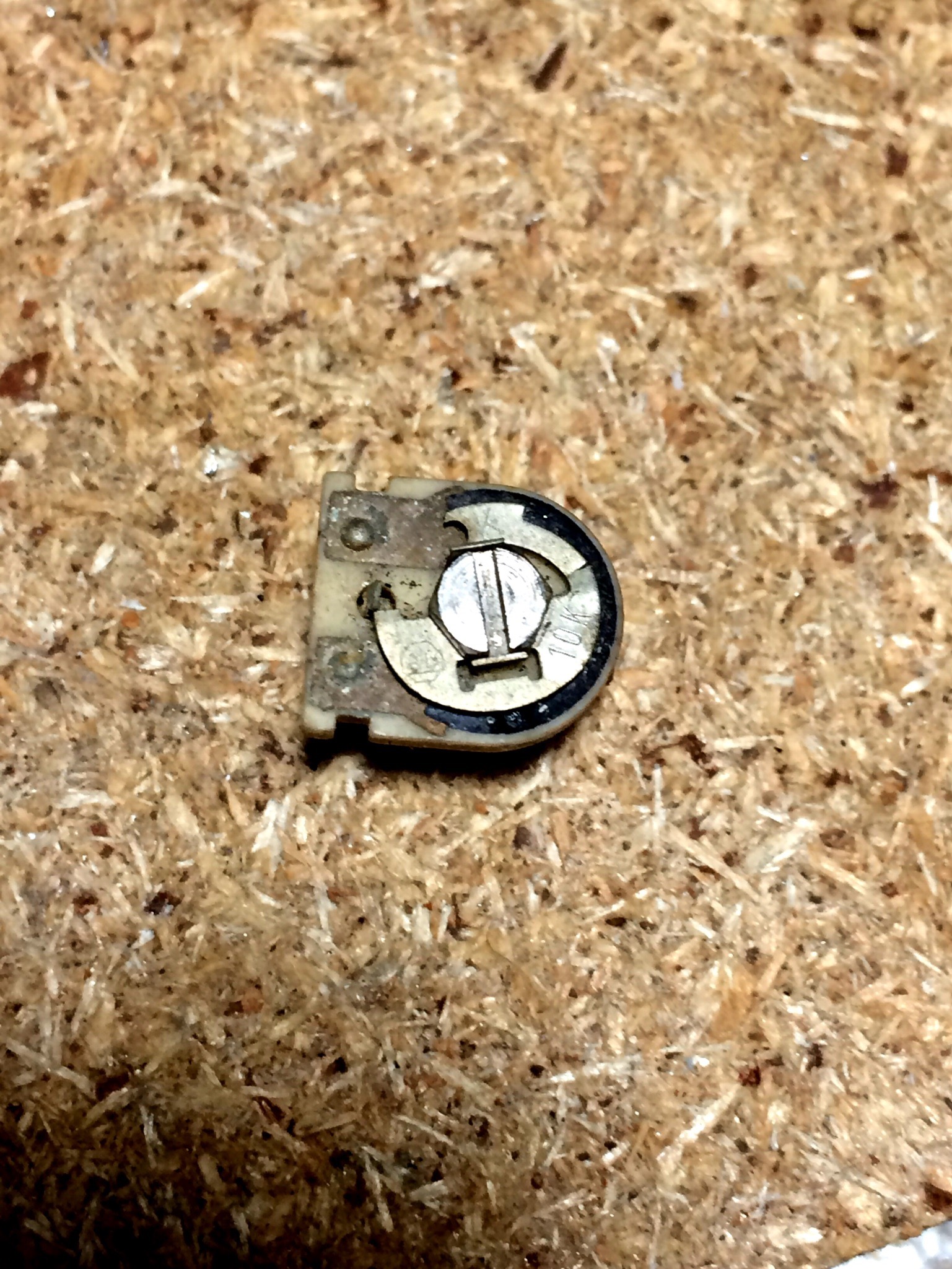
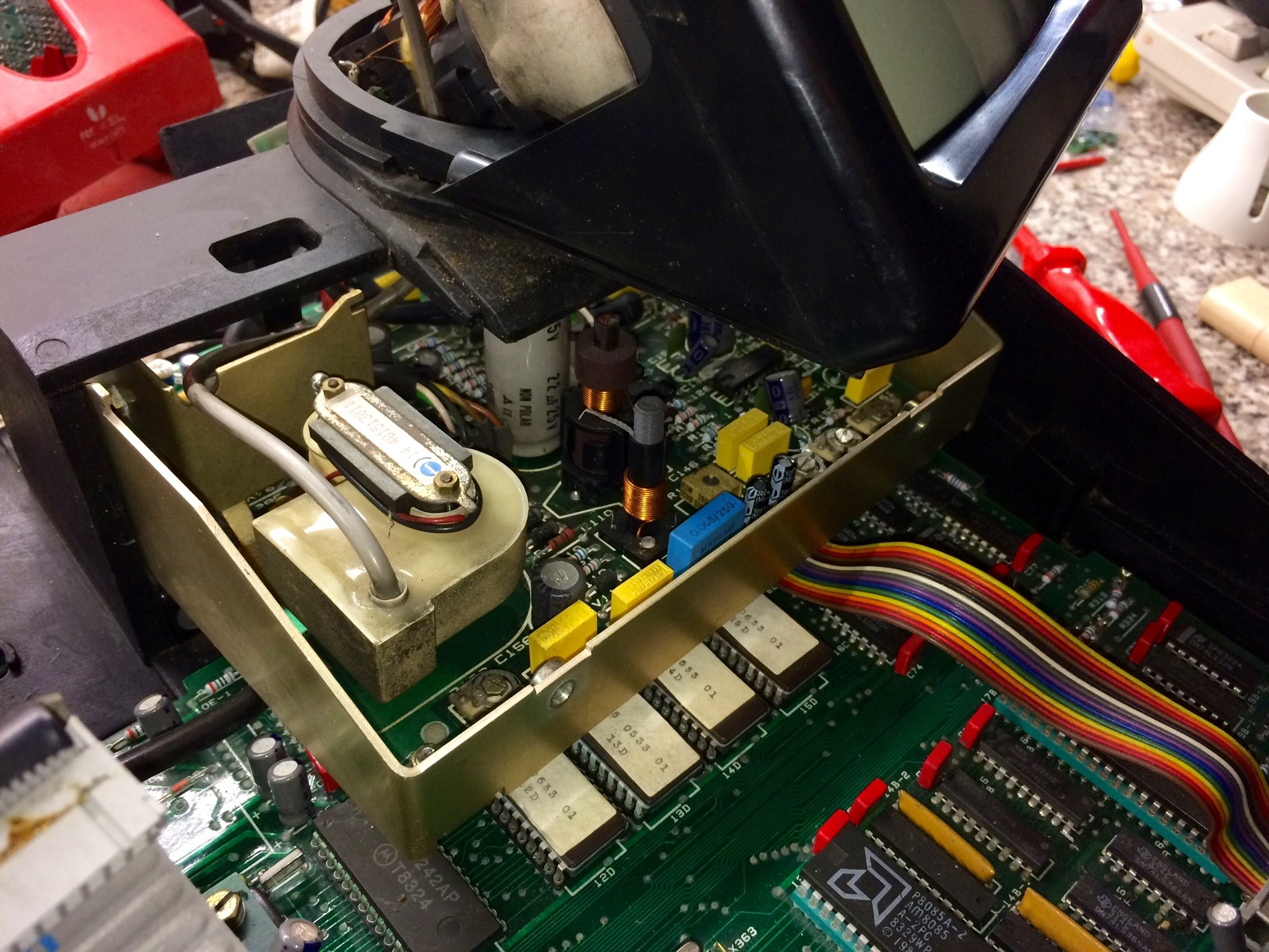
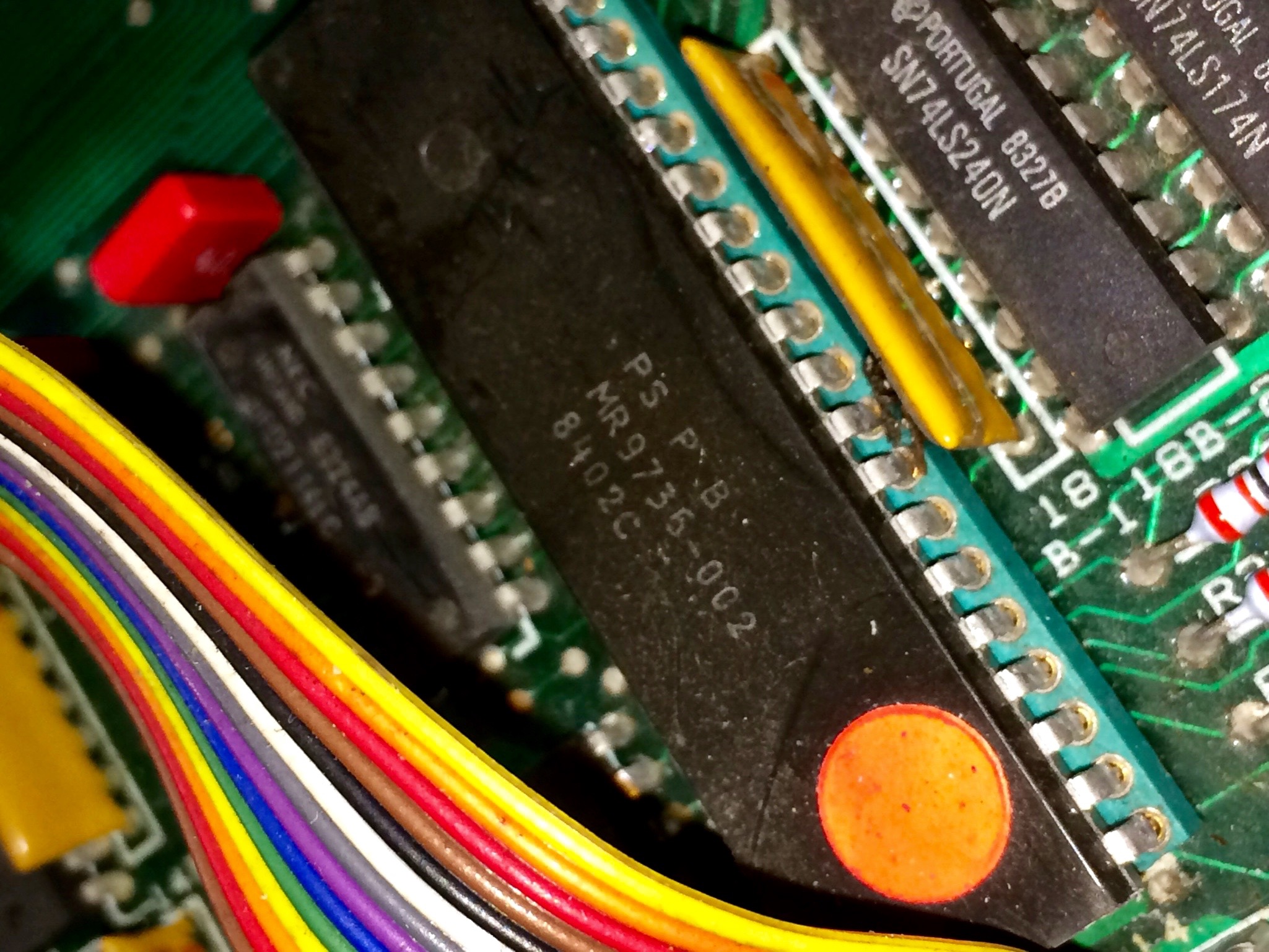
My recent Executel addition has a 5" screen with associated analogue board
that seems to be powered from a display chip I can't find any info on, and
at least one of the adjustment potentiometers has suffered metal fatigue and
broken:
http://www.binarydinosaurs.co.uk/STCExecutelScreenPot.jpghttp://www.binarydinosaurs.co.uk/STCExecutelAnalogueBoard.jpghttp://www.binarydinosaurs.co.uk/STCExecutelDisplayChip.jpg
I've replaced it with a seemingly common 10K modern part that I had in my
spares box but it's unknown whether the display worked at all prior to it
being put in very damp storage, also the rating of the failed pot isn't
known but the capacitor next to it is 50V.
I've also removed, checked and replaced out of spec capacitors, one of them
was a 680nF 50V radial. I could only find a 63V PET version on cpc's website
and did much reading on differing capacitor types, concluding that it SHOULD
be OK.
Power supply is known good because it's one of my working ones, the original
is still dead.
Hence the question - am I wasting my time without a schematic for this
analogue board?
Cheers!
--
Adrian/Witchy
Binary Dinosaurs creator/curator
Www.binarydinosaurs.co.uk - the UK's biggest private home computer
collection?